

How I Came to Open an English Pub in a Field in Eastern Croatia
November 2, 2019 - An authentic UK telephone box in Europe's oldest town, an English pub in a Slavonian field, Yorkshire puddings in a Vinkovci restaurant, and Croatia's first cider apple orchard. Meet Steve Gaunt, the man behind a little bit of Yorkshire in eastern Croatia.
Croatia never ceases to amaze, but my recent trips to eastern Croatia have made me realise that I will spend several lifetimes in this beautiful country and never get to know it completely. My first visit to Vinkovci, the oldest continuously inhabited town in Europe, started with a very bizarre sight - an authentic British phone box.
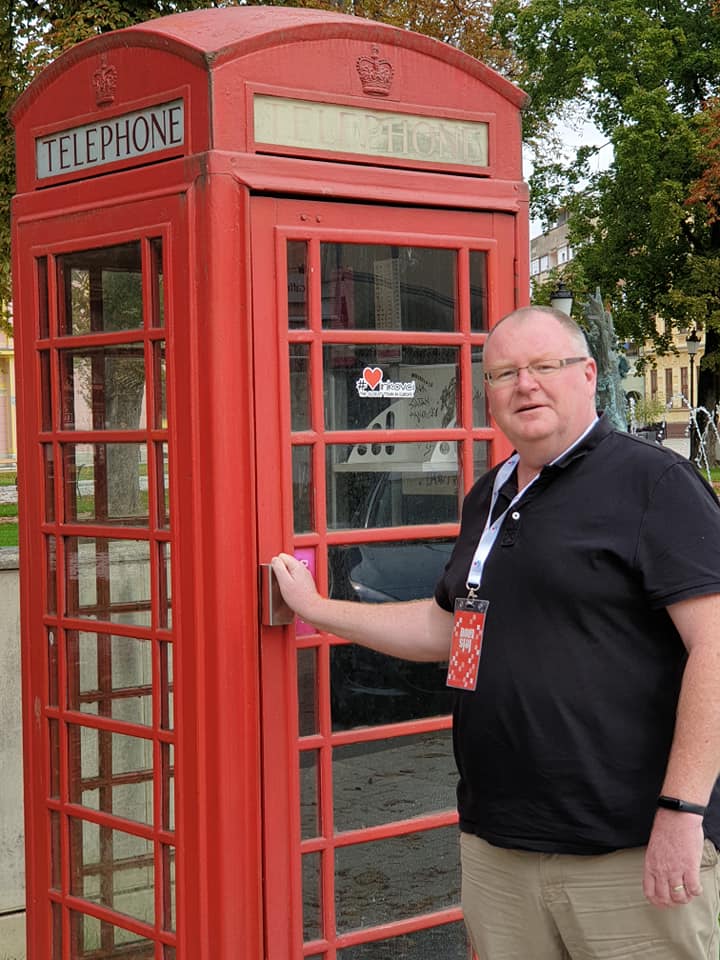
Little did I know that the phone box was just the start of it. After asking a few questions, I learned about a Vinkovci restaurant which used to serve Yorkshire puddings, found myself searching for - and finding - a truly authentic English pub in a field in a village just outside Vinkovci, which is also home to Croatia's first cider apple orchard.
And the link to all of these weird and wonderfully random British things was due to one man from Leeds called Steve Gaunt. Although I have yet to meet Steve in the flesh, I have a feeling that will change soon, and I am grateful to him for finding the time for an email interview, in which he explains why there is a British phone box in Vinkovci, why he opened a pub in a field in the middle of nowhere. And much, much more.
1. One of my recent surprises visiting eastern Slavonia was finding a little slice of Yorkshire in Vinkovci. It started with a British phone box in the middle of town and ended with me in a field in a nearby village standing outside an authentic-looking English pub called The White Boar. And you are the chap responsible for it all. Tell us briefly how you came to be a Yorkshireman in Vinkovci for almost 30 years.
Back in 1991 when war broke out here, I was the overseas operations manager for a UK travel company and had the responsibility for running all aspects of overseas operations and troubleshooting. I was in Slovenia when it kicked off there. I decided to go to Croatia in the offseason to see how I could help and ended up in the fledgling army with a bunch of other Brits. That was early November 1991.
I was badly wounded in June 1992, spent three months in hospital, then went back to the UK, worked a while to raise cash then came back here on Christmas Day 1992 and started to piece some kind of new life together. I got Croatian citizenship in June 1993 and also became a photo reporter, eventually becoming hugely successful; almost every day I had a front-page photo in one paper or another.
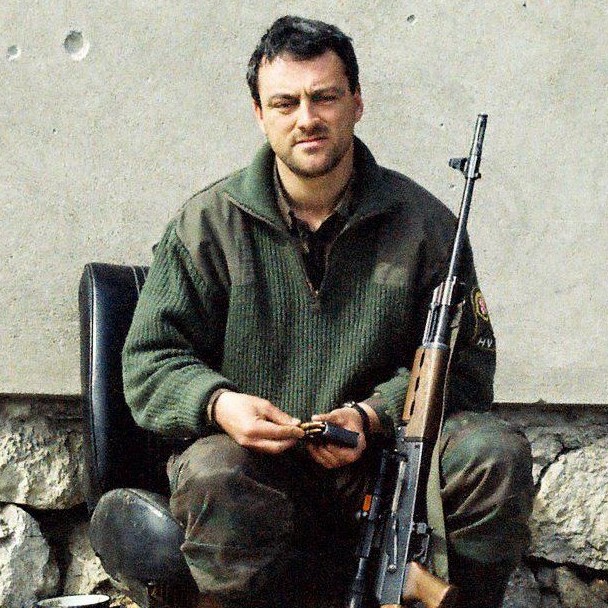
I was captured by Serbs in 1993 whilst on assignment and charged with spying. I was only a month in there but it was the worst time of my life. I started working for the museum on digs and such then married a young local girl and she had six children in seven years.
I keep fit building additions to my buildings and metal detecting. My collection in Vinkovci Museum is valued in six figures. I also build old fashioned HTML5 based websites for small organisations which gives me a little pocket money. The rest of the time I spend shouting at Croatians that I am not responsible for Bleiburg.
(A keen metal detecting enthusiast, Steve organises a metal detecting rally - here he is being interviewed about it.)
2. And before we talk about the pub, what is the story with the telephone box?
The telephone box was an off-hand joke. After the war had quietened down, aid came from various organisations. One of these was CARE (Croatian Aid & Relief Expedition) based in South Wales. This organisation along with others brought in tons of stuff in a most disorganised fashion. After meetings with them we organised them to adopt a village (Cerić) and bring what they needed at the time of progress with resettling in their devastated village, things like tools and materials in the beginning, toys, and other non-essential items at the end.
This worked well and after 4 years they thanked me and asked me what I wanted for myself. Taken aback, I said a barrel of Tetley's bitter or a phone box. Not thinking to hear from them again, I got a call telling me the truck with the phone box was on its way. I went to see the mayor and he jumped at the chance to have it. As there had been a public telephone on the spot where mine now stands, we had no bureaucratic problems. I only insisted that the light should work and that a phone was installed.
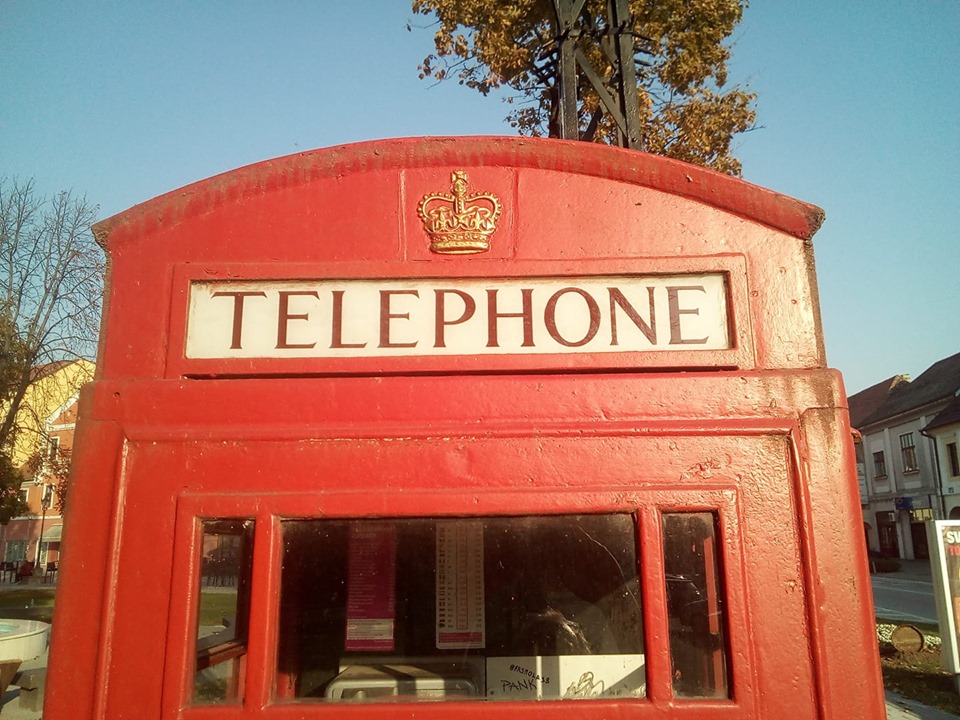
I recently found some gold paint and so touched up the phone box since your visit. As you can see, it makes all the difference.
3. And before we talk about the pub, I also heard a rumour that you introduced Yorkshire puddings to the menu of a Vinkovci restaurant. True, and what was the story if yes? How did locals take to them?
Yes, it is true, Yorkshire puddings were once served in a Vinkovci restaurant. It was called Ruža ( sadly gone now) and they learned very quickly how to make the perfect Yorkshire pudding. If only I could get them onto making pies in this country... People liked the puddings, but this was just after the war, business was slow, and money short. The restaurant eventually closed.
4. And so to the pub, which really took me back to rural England. Tell us about the idea and the realisation. Getting anything built in Croatia is a challenge, and I assume that an English pub might have involved some additional fun and games.
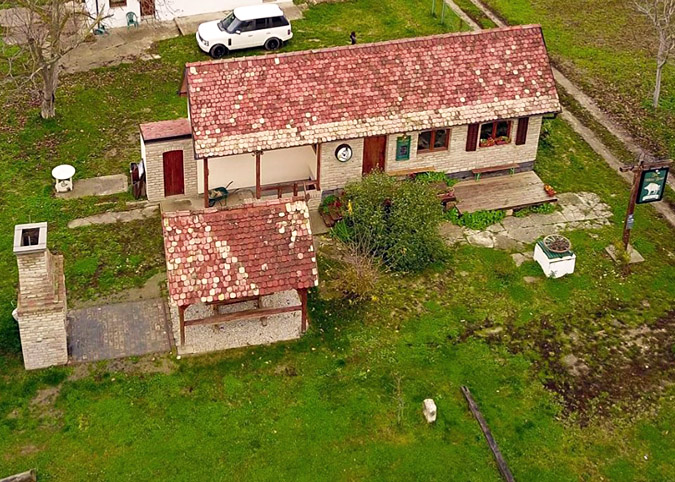
I know you had problems with paperwork in Dalmatia, but I can actually transfer ownership of land or a house in Vinkovci in a single working day. I just sold a house for one English friend to another English friend, despite the shadow of Brexit.
So, one day a local guy who was my sergeant in the war asked if I wanted to buy his land. Well I had no money, but agreed to take a look. As you know from your visit, it was a bit of a lonely spot and I wan't sure, but the plot was in the building zone. Just before we left I heard a nightingale sing from a plum tree at the end and that swung it.
He wanted 2400 euro and I offered to pay 100 a month for two years. He refused, but called me the next day and said OK. Later on, he reduced the price if I could pay the rest immediately and by luck I had some money then and paid up. Then I started building a small wood-framed house at the end of the plot, which is the little white house at the end of the field.
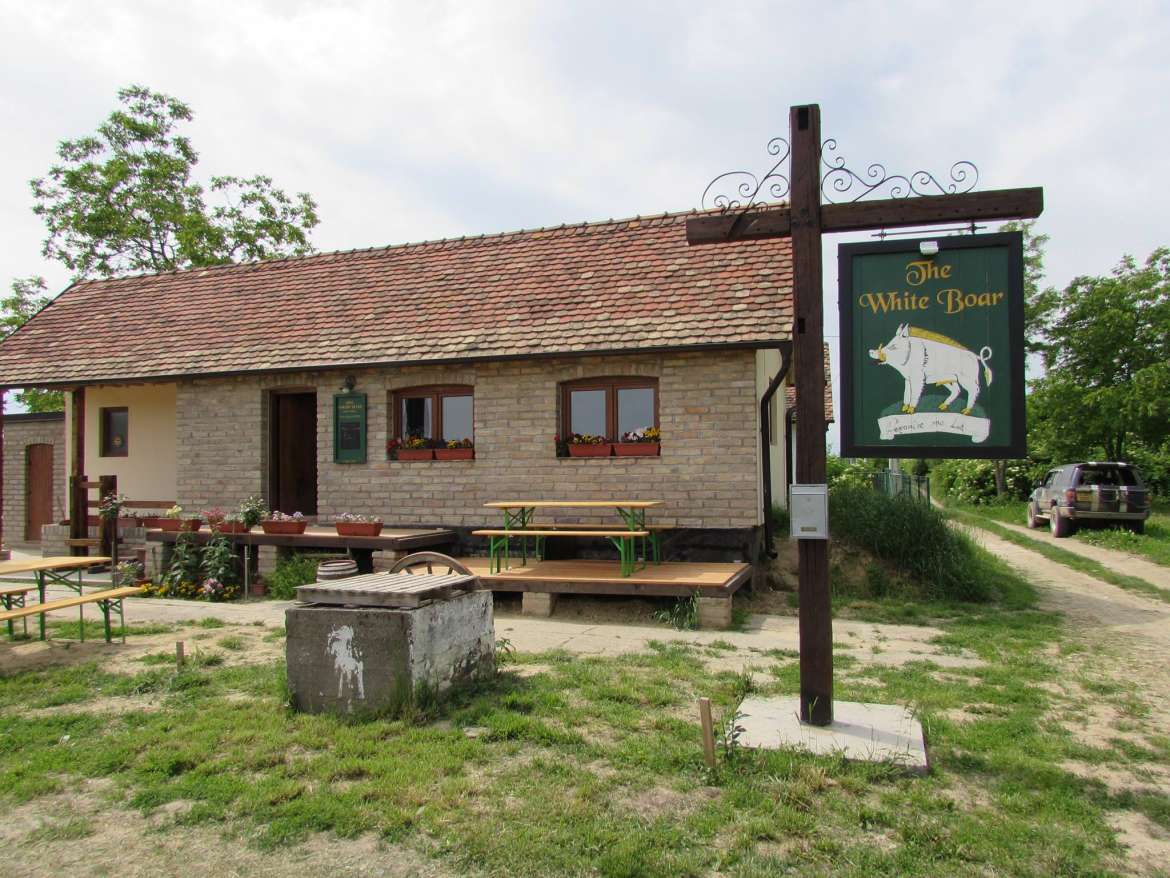
Now this plot was in an area that was an abandoned hamlet and all the plots but the one over the path from the pub were for sale, but at a price. This was 2013. Then I was approached by the widow who owned the house where the pub now stands and that came with two plots. She wanted 3000 euro and I had the money borrowed and paid before an hour was up!
I knocked down the old house and put in a cellar, then built the old house back where it was. I had dabbled with brewing before and thought it would be a fine idea to have my own little pub for it (we have a flat in Vinkovci so didn't need a place to live as such). I had also planted cider apple trees and hoped that they might thrive and let me make cider (again, mainly for myself).
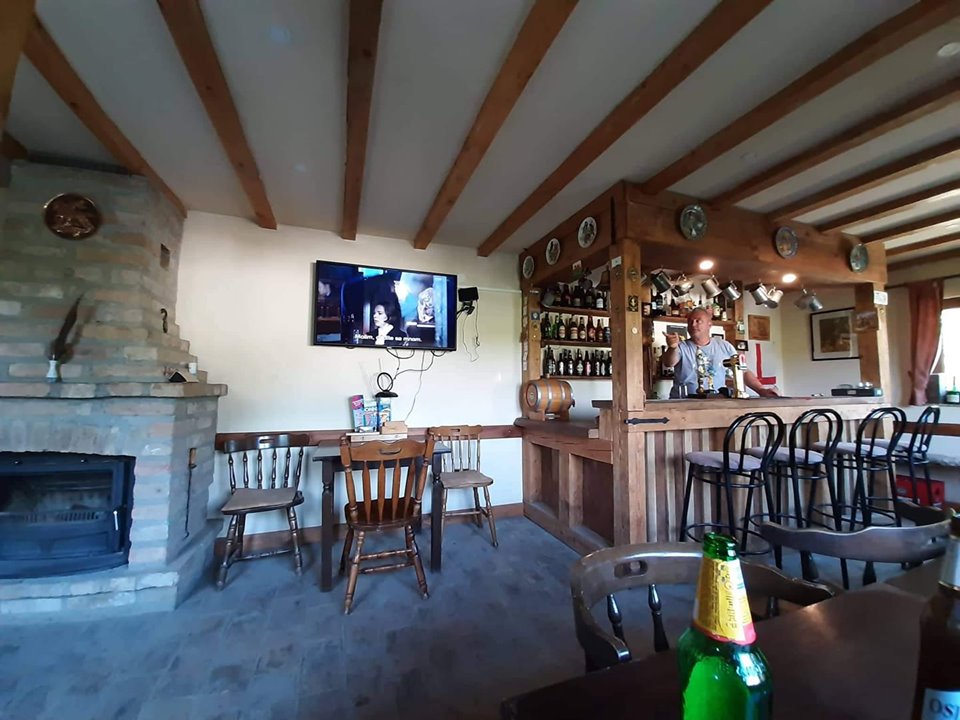
I got the electric company to put up 18 poles to run electric there and that doubled the value of the land for me and all my neighbours. I finished the pub with the help of my children in March 2016.
Meanwhile, fellow metal detectorists had been visiting from the UK including Gordon Heritage of Discovery Channel fame. Gordon wanted to move nearby so we got the cottage to the left of the White House and fixed it up fior him. Two others came and took the house behind the pub, which we rebuilt in 2016 and another mate took a house over the railway line where the little horses are. So now we had an English village.
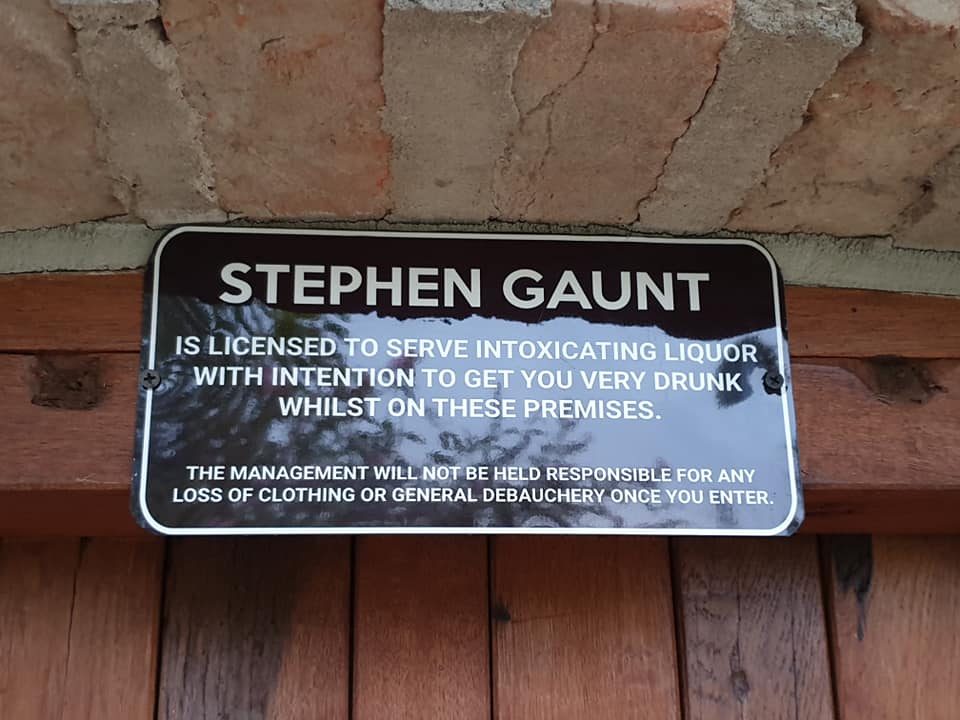
5. You have a really great beer selection on offer. Tell us about it and how hard it is to maintain stocks and get deliveries. There can't be many Yorkshire beers being shipped to eastern Croatia.
British beer comes in haphazardly, every visitor always brings me a load. Some can even be bought in Lidl. But I don't rely on them, there is a decent local brewer who listens to me and he produces two good ales. But where the Croats are concerned, they don't care much and will drink any Croatian beers, which are getting better and more varied.
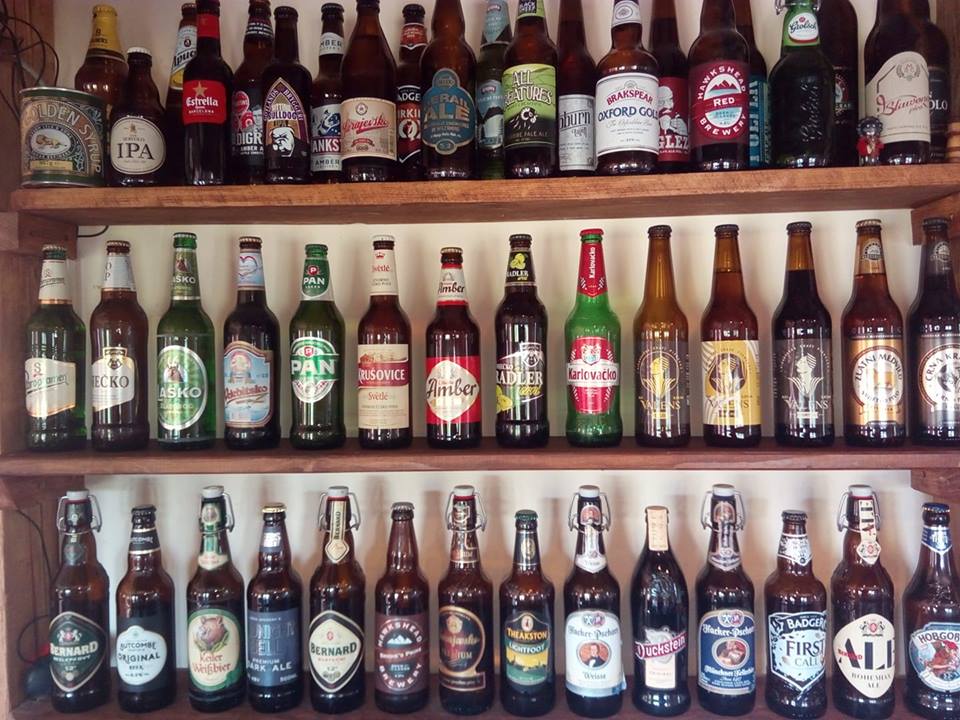
I only put draught on when there is something important happening, such as a private party, a detecting rally, or the event we have on the 18th of November each year when foreign volunteers attend the event in Vukovar then party at my pub.
(The foreign volunteers who fought for Croatia in the video above)
6. How is business? I assume you have a loyal set of regulars. Do many people know about the pub and do you get passing tourist traffic?
There is not much business outside organised events because I can't always have someone there. Locals don't often come, but enjoy it when they do. Whilst waiting for you we had some locals and folk from Knin, Delnice and Osijek. My second son always has partied there but that doesn't put anything in my pocket. To be honest I wouldn't want to run it as a business, far too demanding. I am happy as it is. You can see more about the pub on the Facebook page. There is also a website.
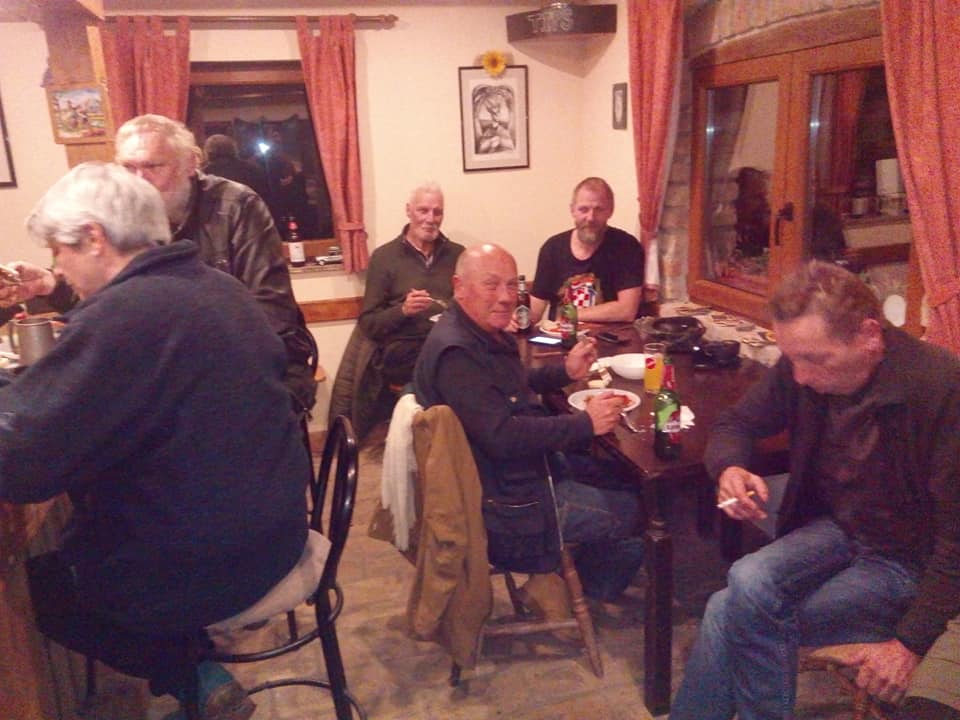
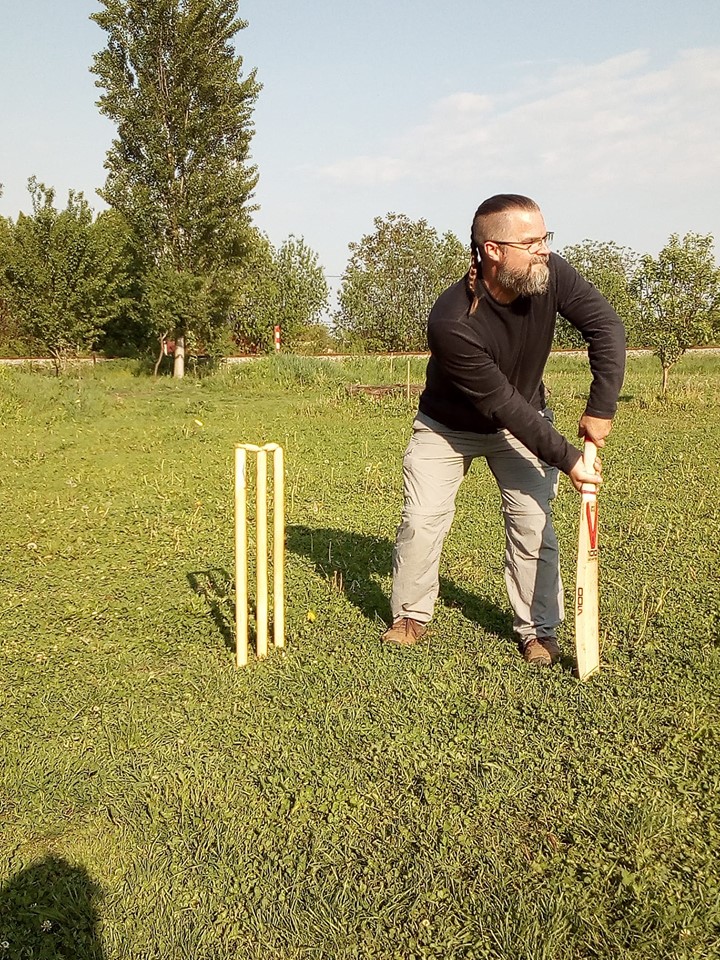
7. Did I see cricket on the pub's Facebook page? And cider production?
Well I have the equipment and myself and another local English volunteer and invalid, Rodney Morgan, like cricket, though we can't play, but we get the gear out and try every now and then until broken roof tiles and car windows puts us off.
I ilke cider. I thought I would make Croatia's first cider orchard so planted about 50 trees and set about the great and painful five-year experiment to see which (if any) English varieties would thrive, or at least survive. I got a chap in the UK to send cuttings and I grafted them onto local varieties, and now have about 10 different ones, two of which show promise, though the drought of the last three years has set them back some.
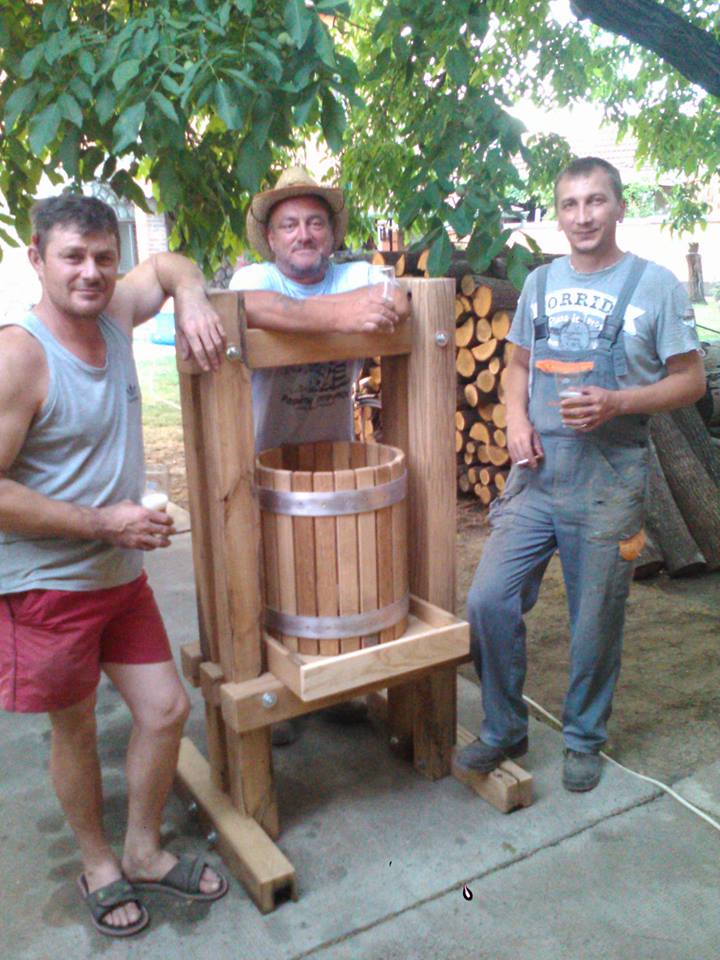
I got just 12 litres of juice from this year's meagre crop, but if I can make it work, I have customers for every drop I can make.
Anyway, Gordon will buy brewing gear so if the cider doesn't pan out, then we will make beer (the thing with my English neighbours is, they are rich and I am poor, at least financially).
8. For those wanting to come for a pint and meet a Yorkshire legend, tell us where the pub is and how to find it.
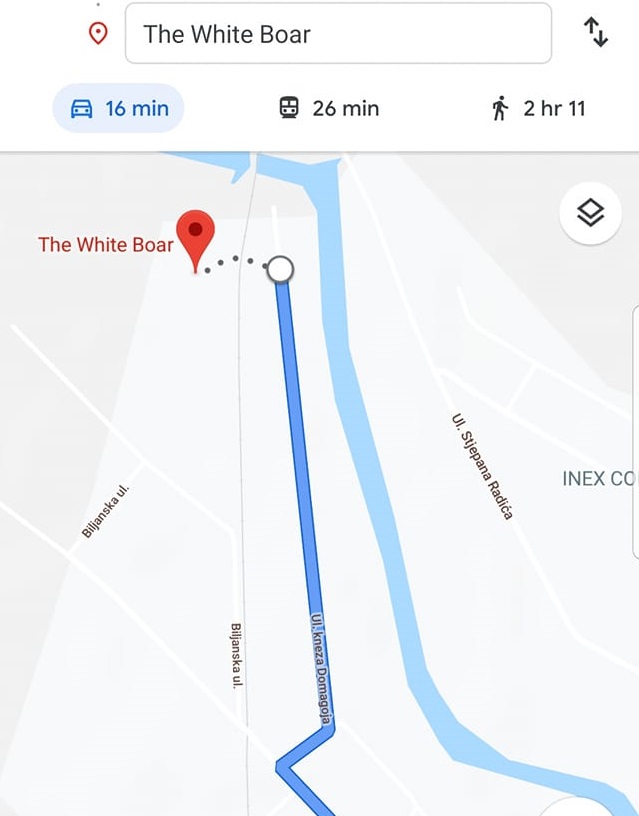
The pub SHOULD be easy to find, I have put it on Google maps but they continually refuse to correct the errors in the street layout and naming. 'Here we go' maps have it perfect now.
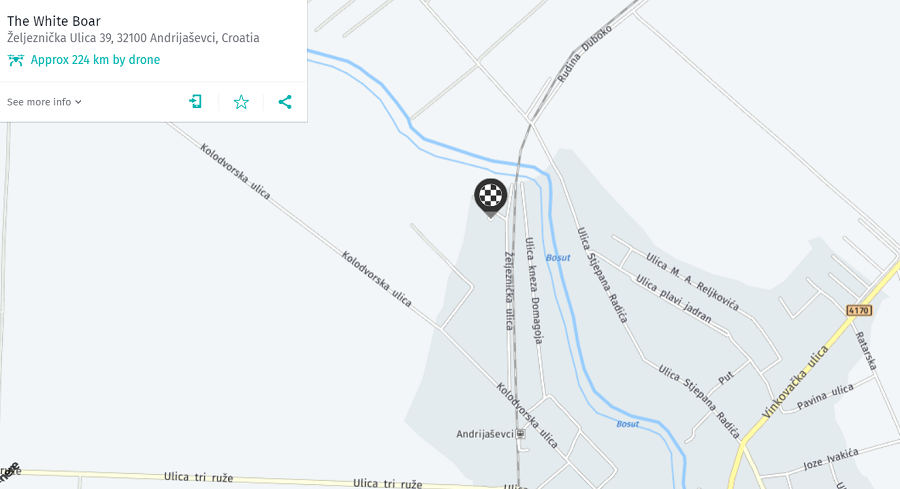
This is the correct location above, and below what Google Maps will give you. You need to take the path to the left of the railway line, whereas Google sends you on the right.
I am on my land almost every day, that is always something to do (check out my Facebook page) and it gives me a quiet place to write and update my books (I have published a book on medieval rings, because nobody else had). There is also my diary of the war, just basic stuff, but it sold well in Croatian language and some other published projects.
Željeznička Ulica 39, Andrijaševci
Call 098 667 527
And this is how I eventually found The White Boar.
Finding Steve's pub was just one of many discoveries on my recent trip to Slavonia. Check out 9 other things I learned while visiting during Days of Croatian Tourism.
Croatia Wants to Pass on “Enlargement Torch” During Its EU Presidency
ZAGREB, November 2, 2019 - The issue of EU reforms can proceed in parallel with enlargement and Croatia will try to show that enlargement is a credible process as it is one of the most successful European policies, Croatian ambassador Gordan Bakota has said, adding that Croatia has a special responsibility to pass on the torch of enlargement during its EU presidency.
"It is very complex to achieve EU unity on such topics, but we will do our best to show how important enlargement is for the transformation of countries, and we... regret that North Macedonia and Albania were not given a date for opening accession negotiations," he told Danas daily of Saturday on the occasion of Croatia's six-month EU presidency as of January 1, 2020.
Bakota said he regretted "perhaps a historic omission because the EU had the responsibility for enlargement to move on." He added, however, that "steps forward will be made" during Croatia's presidency, both regarding the opening of negotiations with North Macedonia and Albania and the continuation of Serbia's EU integration.
He said Croatia also wanted to see Bosnia and Herzegovina "make progress on the Euro-Atlantic journey."
Bakota noted that Croatia would start its EU presidency "at a very interesting time" because the EU would have new institutions, because of Brexit which "will certainly be one of the main topics," and because of talks on the 2021-27 financial framework.
He also mentioned the protection of the EU's external borders, calling that very important for Schengen and for maintaining security. He recalled that the European Commission recently assessed that Croatia met the criteria for joining the Schengen Area of free travel.
"The enlargement policy, which is of special importance for Serbia, has outstanding importance for the European Union and its global role," Bakota said.
In the first half of May 2020, Croatia will organise a Western Balkans Summit "because we place enlargement very high on our presidency agenda," he said, adding that Croatia looks on enlargement "as a transforming power for every society."
He assessed Serbia-Croatia relations as "complex" and said it was very important that "there is uninterrupted dialogue." "It's impossible to expect Serbia and Croatia to resolve all outstanding issues overnight. We'd like Serbian-Croatian relations to always have a strong European context, which is why enlargement and the spirit of enlargement are significant."
He recalled the mixed groups and commissions in charge of dealing with outstanding issues, saying the "most sensitive issue" were the people gone missing in the 1990s war. It is time the families find out what happened to their dearest ones, he added.
Bakota said there was "certain progress" in dealing with the problems of the Serb minority in Croatia and the Croatian in Serbia, adding that it was very important the two minorities "exchange experiences and recommend to the governments what to do."
Ethnic minorities are "the best bridge between the two countries," he said, adding that his and Croatia's position was "that both minorities must feel very good and that this should be regulated in the European spirit, by meeting the commitments from the treaty on minority rights.
A key issue is to ensure political mandates for the Croat minority in Serbia's state and local governments, Bakota said.
"The Serb minority has three guaranteed seats in the Croatian parliament, it also has a score of representatives at local level as well as state secretaries in ministries. It's a very good solution and it should be applied in Serbia also," he said, recalling that in Croatia "the Serb minority is a government coalition partner, which is extremely important, while (in Serbia) that's not the case."
More news about Croatia and the EU can be found in the Politics section.
Parliament Speaker Jandroković Visits China
ZAGREB, November 2, 2019 - Parliament Speaker Gordan Jandroković is paying an official visit to China from 2 to 6 November and during his stay in that Asian country he will travel to Shanghai and Beijing, reads the Sabor's press release.
The Croatian official will commence his visit with his reception by the Chairman of the Standing Committee of the National People's Congress, Li Zhanshu, in the capital city.
During his stay in Beijing, Jandroković is due to hold meetings with the Huawei company's top executives and attend an exhibition about China's achievements and progress in the last 70 years.
The Sabor speaker will be at the helm of Croatia's delegation at the second International Import Expo that starts in Shanghai on Tuesday.
In that city, Jandroković is expected to hold a speech on the role of governments in creation of regulations, opening of markets, and prospects of multinational companies.
He will be one of the guests at the special dinner to be hosted by Chinese President Xi Jinping in Shanghai within China International Import Expo.
On the last day of his visit, 6 November, Jandroković will take part in a Chinese-Croatian business forum in that the most populous urban area in China.
More news about relations between Croatia and China can be found in the Politics section.
Non-EU Citizens Come to Croatia Mainly for Employment Reasons
ZAGREB, November 2, 2019 - Last year, the European Union issued 3.22 million residence permits for non-EU citizens and the figures show that a majority of those non-EU citizens who moved to Croatia in 2018 did it for employment reasons, the Večernji List daily reported on Saturday.
The European Commission states that "in 2018, some 3.2 million residence permits were issued across the EU to people from non-member countries, and that the main reason for a first residence permit being issued in the EU was for family reasons (915 000 first residence permits)."
The permits are issued for employment-related reasons, family-related reasons, education as well as for subsidiary protection and asylum.
Poland with 328 000 permits was by far the leading destination in the EU-28 for those seeking to obtain a residence permit for employment-related reasons. Most non-EU residents seeking employment in Poland were Ukrainians, according to the Večernji List's report.
"The next most common destination was the United Kingdom (108 000 permits issued for employment-related reasons), followed by Germany (68 000) and Spain (58 000)," the Commission has reported.
"First residence permits issued for employment-related reasons represented more than half of the total number of permits issued in Croatia (90.3%), Lithuania (77.5 %), Slovenia (71.0 %), Slovakia (66.5 %), Malta (59.3 %), Hungary (56.6%) and Poland (51.6 %)," according to the data provided by the EC.
Employment-related reasons also accounted for the highest shares (but not an absolute majority) of the total number of permits issued in Czechia, Cyprus, Latvia, Romania, Estonia and Denmark, says the EC.
As for education-related reasons, the top destination for the non-EU citizens was the United Kingdom.
The report by the EC reads that the UK "was by far the most common destination in the EU-28 for students from non-member countries."
"In 2018, there were 190 000 first residence permits issued in the United Kingdom for education-related reasons; this represented three tenths (29.6 %) of all the permits issued for education-related reasons in the EU-28 and 42.2 % of the total number of permits issued in the United Kingdom."
"In relative terms, education-related reasons accounted for the highest share of the total number of permits issued in Ireland (60.5 %)."
The Zagreb-based Večernji List reported that only 495 non-EU residents arrived in Croatia in 2018 for education-related reasons, according to statistics about EU first residence permits.
More news about Croatia and the EU can be found in the Politics section.
Plenković Hopeful Border Dispute with Slovenia Won't Affect Croatia's Schengen Bid
ZAGREB, November 2, 2019 - Prime Minister Andrej Plenković said in an interview which the Euronews television news network broadcast on Friday that he believed that Slovenia would not block Croatia's accession to the passport-free Schengen Area over their border dispute, adding that the dispute was irrelevant in that context.
"First of all, the border dispute between Croatia and Slovenia is an open issue that we have on the agenda for the last 30 years. Had this been a condition for any of the two countries to join the EU or to join the Schengen, then Slovenia would not have entered either, in either of the two inner cycles."
"Our firm belief is that Schengen membership for Croatia should be completely separated from a bilateral border issue between the two countries. For us it is the Savudrija Bay, for them, it is the Piran Bay. At the end of the day, we can find a solution," Plenković said in his response to the reporter's question whether due to "the open dispute with Slovenia over the Gulf of Piran" the Slovenian side might even veto Croatia's way to the Schengen Zone if there is no solution.
Plenković expressed confidence that the two countries can find a solution. "What we are saying towards our Slovenian neighbours 'we have an open issue, there are ways to solve it, peaceful ways, good neighbourly relations and a solution that can be acceptable for both sides, unrelated with our Schengen ambitions."
Upon the reporter's remark that Croatia recently got a green light from the European Commission for the Schengen Zone and that the decision came "as a surprise to many because lately, Europe seems to be closing in rather than opening up," the premier said that "first of all, the decision of the college of the European Commission, of Jean-Claude Juncker’s Commission in Strasbourg last week is actually a fruit of four years hard work by Croatia, by fulfilling the criteria which are structured in eight different chapters of the so-called Schengen acquis."
"In every (all) of these chapters, we have managed to elevate the readiness of Croatia to be part of Schengen. So this was a very thorough technical evaluation by the Commission services."
In response to the reporter's comment that Croatia has a long coastline, including 1,300 kilometres of border with non-EU countries which prompted her to ask Plenković if Croatia considered any special measures to protect its borders, he answered "Not only considered, but we have put them in place."
"Croatia has very much invested in the capabilities of our police force. We have 6,500 police officers fully trained and equipped to guard the external EU border, which is the Schengen border. We have not opted either for walls or barricades or barb wires, unlike some other countries, because we felt first of all that the relationship that we have with Bosnia- Herzegovina, in particular, was not the adequate way to guard the border. So we are cooperating between the police services of Croatia, of Bosnia- Herzegovina, of Croatia and Serbian Croatian Montenegro."
Plenković also dismissed accusations levelled by some NGOs say about "police violence against immigrants".
The premier says: "We have always respected the Croatian law, we have respected the highest standards, but we are also protecting our border. Any allegation that we have heard, it has been investigated. So far when it comes to the behaviour of our policemen we can only praise their efforts for guarding not only the Croatian border but also guarding the border of all the other EU member states which are behind us."
More news about Croatia and the Schengen area can be found in the Politics section.
Cultural and Creative Potential: EC Proclaims Pula Best in Croatia
The City of Pula is one of beautiful Istria's most popular gems, and it seems that this is being recognised not only by tourist stakeholders here in Croatia, but by the European Commission (EC) itself. Far from being the typical ''sunshine and sea'' destination, although it does have that too, this gorgeous Istrian city has caught the eye of the EC for its potential in culture and creativity.
Potential is a word everyone loves to throw around here in Croatia, because we all love to talk and not really do a great deal (read more about that here), but seeing the country finally begin to expand from being the ''sunshine and sea'' destination that it has unfortunately clung to the label of for so many years is encouraging indeed, and Pula is taking the lead.
As Glas Istre writes on the 31st of October, 2019, in terms of its cultural and creative potential, the City of Pula is the best city of up to 250,000 inhabitants in all of Croatia, according to a European Commission study based on numerous quantitative and, to a lesser extent, qualitative indicators.
In its category, Pula surpassed Osijek, Split and especially Rijeka, which is at the very bottom of the list, although it won the title of European Capital of Culture 2020.
In this category, 87 cities were rated and the best result was earned by Bern with an index of 46.9. Beautiful Pula finished 27th with an index of 25.6, Osijek came 62nd with an index of 19, Split came 71st with an index of 17.7 and Rijeka, to say it is set to be the capital of culture next year, came a rather surprising 76th place, with an index of 15.9.
In competition with cities with over one million inhabitants and in the overall competition, the French capital of Paris was ranked first with an index of 66, the best city from 500,000 to one million inhabitants was Copenhagen with an index of 46.8. In that group, Zagreb finished 32nd with an index of 21, meaning Pula even managed to outrank Zagreb.
Zurich is the top city with a population of 250,000 to 500,000 with an index of 49.3.
Indicators such as the number of cinemas, theatres and museums, the number of overnight stays generated by foreign tourists, the number of cinema-goers and museum visitors, content satisfaction, the percentage of employees in the arts, culture, entertainment, media and communication fields, the number of patents, the number of job openings in new media and communication(s) companies, and the number of graduates in arts and humanities courses were taken into account.
In addition to all of the above, the percentage born abroad of the total population and the percentage of population who unreservedly agreed with the statement that "the presence of foreigners is good for this city" and "foreigners living in this city are well integrated'' and so on was also deemed positive.
A total of 190 cities were rated.
Make sure to follow our dedicated travel and lifestyle pages for much more.
PHOTOS: CroDrone Captures Incredible Aerial Images of All Saints Day around Dalmatia
November 2, 2019 - Croatia marked All Saints Day on November 1 by heading to the cemeteries to honor those who are no longer with us. A look at how the holiday was marked across Dalmatia.
You might have noticed that on Friday, much of Croatia came to a halt to mark All Saints Day, observed as a national holiday in the country. It is a day where people across the country flock to cemeteries to light candles, lay flowers, and pay respect to the loved ones lost.
It is a holiday where bus lines are rerouted to facilitate travel for those going to the cemetery, where taxi companies will offer discounted or free fares, and where many of the nation's largest shopping malls will close their doors.
Even a few days before the holiday, you'll notice locals heading to flower sellers lined along the streets, or to commercial supermarkets, to beat the rush and ensure they have the best bouquet to honor the dead.
As you can imagine, the images from November 1 are anything but bleak - and CroDrone captured just how colorful the holiday is across Croatia.
Check out how All Saints Day looked in Imotski, Imotski Poljice, Split, Runovici, Zagvozd, and Dugopolje in Dalmatia.
To read more about lifestyle in Croatia, follow TCN’s dedicated page.
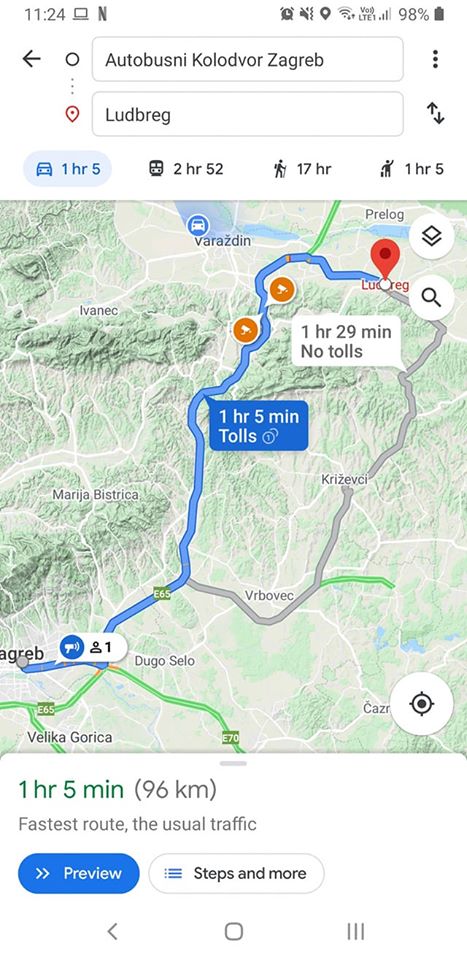
Ludbreg, Croatia's Miracle Town: Vatican-Recognised Unlike Medjugorje
November 2, 2019 - More than a million religious tourists visit Medjugorje every year, even though the Vatican has not authenticated anything there, but few know about the only Vatican-authenticated miracle in Croatia which can be visited. Meet the Eucharistic Miracle in Ludbreg.
My first visit to Croatia in what was then Yugoslavia was back in 1988. I remember overnighting in Zagreb before heading to the destination which was the main purpose of the trip.
Medjugorje.
As I was the product of nine years of Jesuit education in a British boarding school, the Catholic faith was never far away. Indeed, so strong was the influence that I went to voluntary mass six times a week at 07:20 before lessons began, and I even contemplated becoming a priest at one stage. And so when I learned of the alleged apparitions in Medjugorje, I knew I had to visit this miraculous place.
But when I arrived, there was nothing concrete to see. Apart, of course, from apartments, so many apartments. This was a small village which had exploded in just eight years after six children claimed to have been visited by the Virgin Mary while tending goats. More apparitions occurred, and the Virgin Mary sends a message to one of the (now adult) visionaries on the 25th of each month. But there was nothing to see, apart from the hill where the sightings allegedly happened, and a big church in the centre of town which became the religious focal point.
The religious tourism industry - for it is an industry - has transformed Medjugorje, which now welcomes over a million religious tourists a year, the majority of whom spend a few days. Think about that for a second - one small town in Hercegovina attracts 5% of Croatia's entire tourist arrivals each year, and it attracts them 12 months a year.
I have spent a lot of time in Medjugorje over the years. It is a place which sharply divides opinion between those who are fervent believers in the apparitions to those who are equally fervently convinced that the whole thing is an elaborate con which has become a great money-making machine for all. My opinions are not relevant, but one which is is the opinion of the Catholic church itself and the Vatican in particular. And this is where I got really surprised, especially as I read somewhere that Medjugorje is apparently the second most visited Catholic destination for religious tourism in Europe, possibly the world, I can't remember.
And yet neither the local bishop or the Vatican itself has officially endorsed it. Indeed, the local bishop has gone on record to state the apparitions are not credible, as recently as last year.
And even without this official endorsement, still more than a million people come each year - that is a tourism miracle in itself. I have met many people who have been to Medjugorje, and there is no doubting their beliefs or that being there gives them peace.
In terms of a religious tourism destination, the numbers are incredible.
Every time I have driven away from Medjugorje over the years, I wonder what Croatian tourism would make of a fully authenticated miracle by the Vatican.
And then I found out that one exists, fully authenticated by the Vatican. In Ludbreg in Varazdin County.
The Real Presence website gives a great overview of the history of Ludbreg's miracle.
In 1411 at Ludbreg, in the chapel of the Count Batthyany’s castle, a priest was celebrating Mass, during the consecration of the wine, the priest doubted the truth of transubstantiation, and the wine in the chalice turned into Blood. Not knowing what to do, the priest embedded this relic in the wall behind the main altar. The workman who did the job was sworn to silence. The priest also kept it secret and revealed it only at the time of his death. After the priest’s revelation, news quickly spread and people started coming on pilgrimage to Ludbreg. The Holy See later had the relic of the miracle brought to Rome, where it remained for several years. The people of Ludbreg and the surrounding area, however, continued to make pilgrimages to the castle chapel.
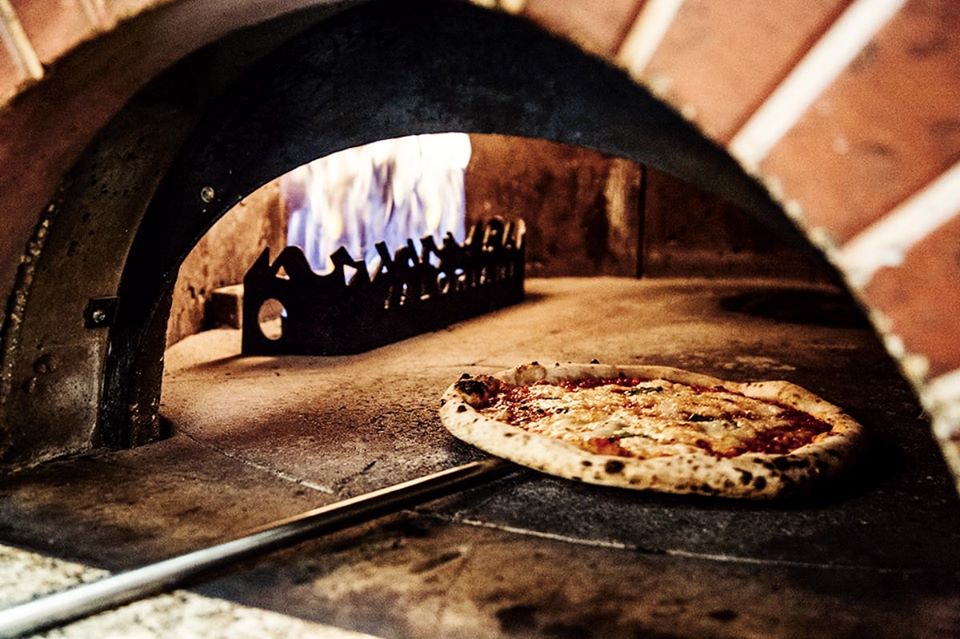
In the early 1500s, during the pontificate of Pope Julius II, a commission was convened in Ludbreg to investigate the facts connected with the Eucharistic miracle. Many people testified that they had received marvelous cures while praying in the relic’s presence. On April 14, 1513, Pope Leo X published a Bull permitting veneration off the holy relic which he himself had carried in procession several times through the streets of Rome. The relic was later returned to Croatia.
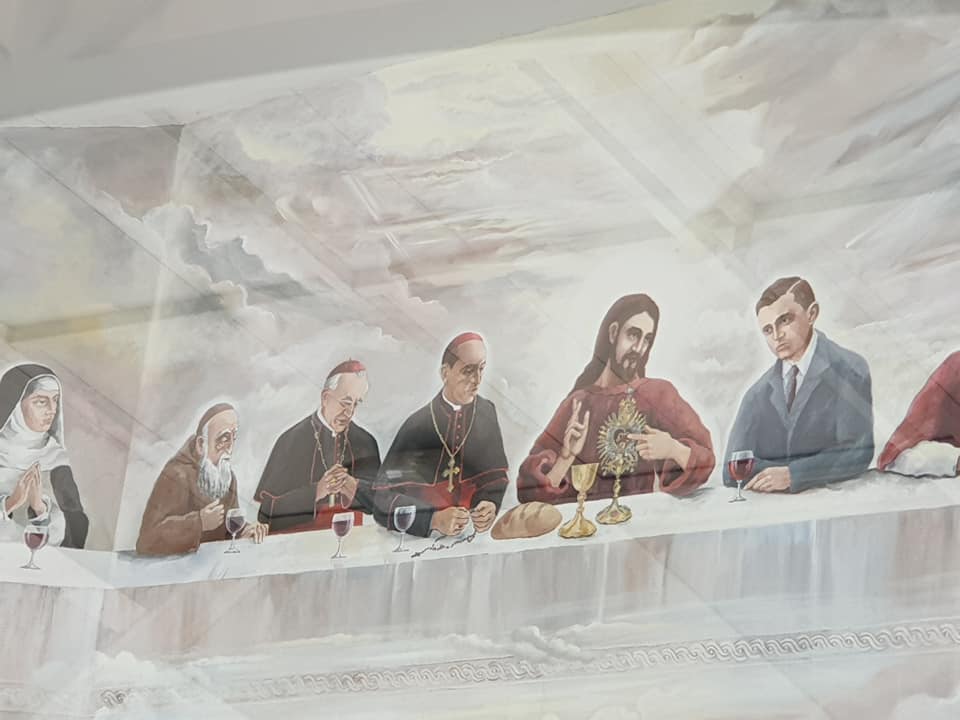
In the 18th century northern Croatia was ravaged by the plague. The people turned to God to call upon His help, and the Croatian Parliament did the same. During the session held on December 15, 1739 in the city of Varazdin, they vowed to build a chapel at Ludbreg in honor of the miracle if the plague ended. The plague was averted, but the promise vow was only fulfilled in 1994, when democracy was restored in Croatia. In 2005 in the votive chapel, the artist Marijan Jakubin painted a large fresco of the Last Supper in which Croatian saints and blesseds were drawn in place of the Apostles. St. John was replaced with Blessed Ivan Merz, who was included among the 18 most important Eucharistic saints in the Church’s history during the Synod of Bishops held in Rome in 2005. In the painting, Christ is holding in His hand a monstrance containing the relic of the Eucharistic miracle.
Croatian speakers can learn more about the miracle in the video above.
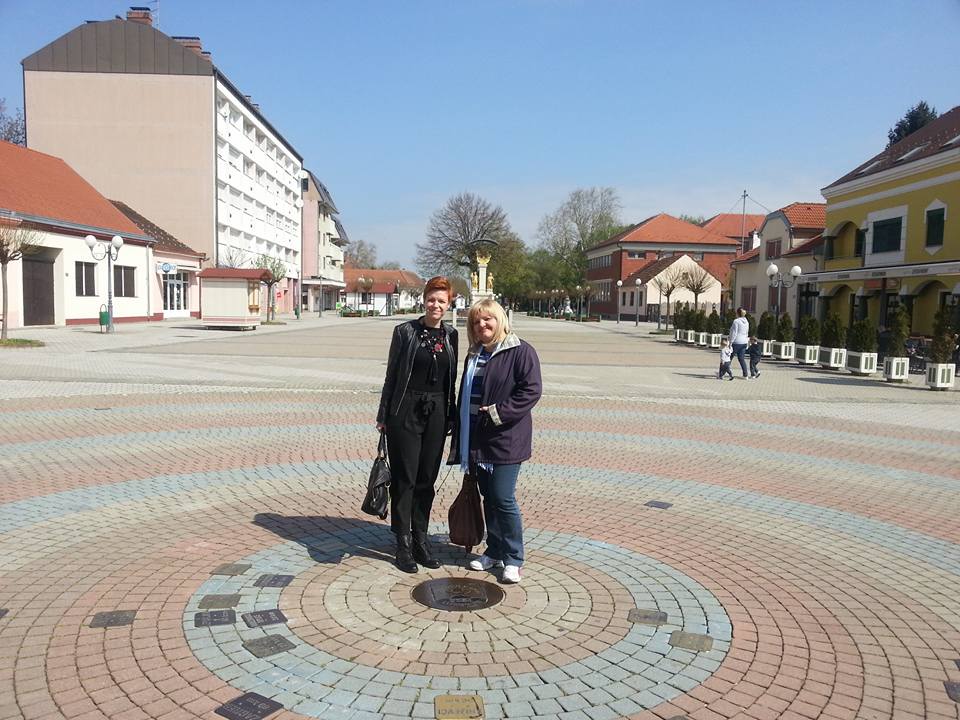
And this is where things got rather extraordinary, to me at least. I have asked a LOT of Catholic friends here in recent days if they know about the Ludbreg miracle. Most only knew about Ludbreg as the centre of the world, others knew that there was some kind of pilgrimage in September, but a miracle? The only Vatican-authenticated one in all Croatia that you can actually visit? Not one person.
Amazing.
And yet people DO know about it, at least 100,000 people. For that is the number of pilgrims who gather in Ludbreg each year in the first week of September for a special commemoration of the miracle in the park in front of the church constructed in 1994. Check out some footage from this year's pilgrimage above.
And for the rest of the year, apart from Easter, the church and the park are completely unused.
The park comes with its own Stations of the Cross.
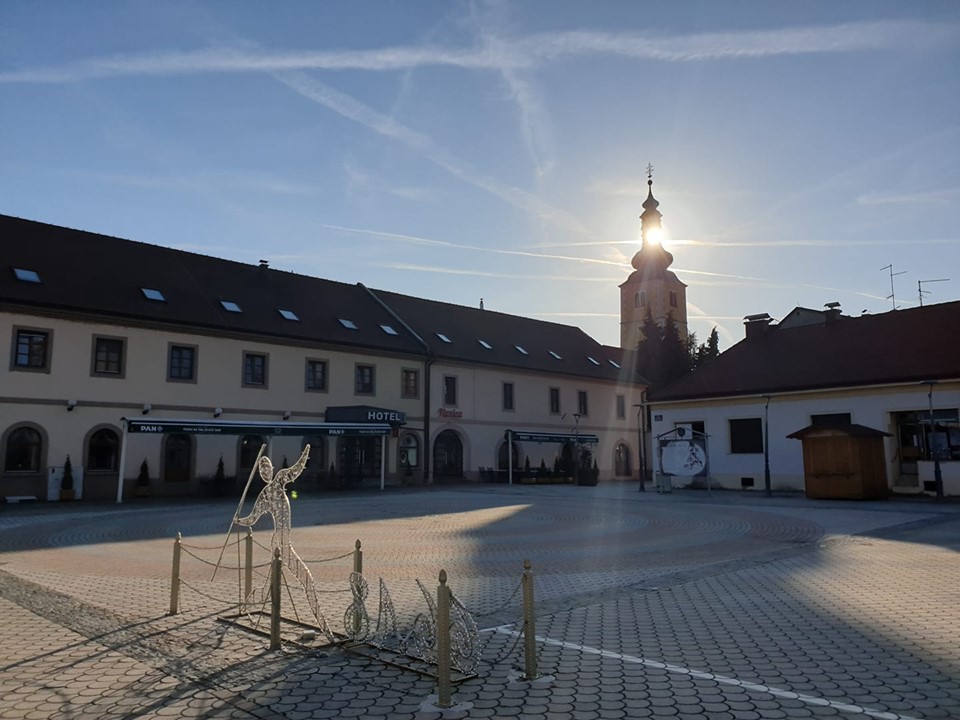
The 1994 church, however, is not where the miracle chalice is held. It is to be found in the Most Holy Trinity Church in the centre of town, just off the main square and the centre of the world.
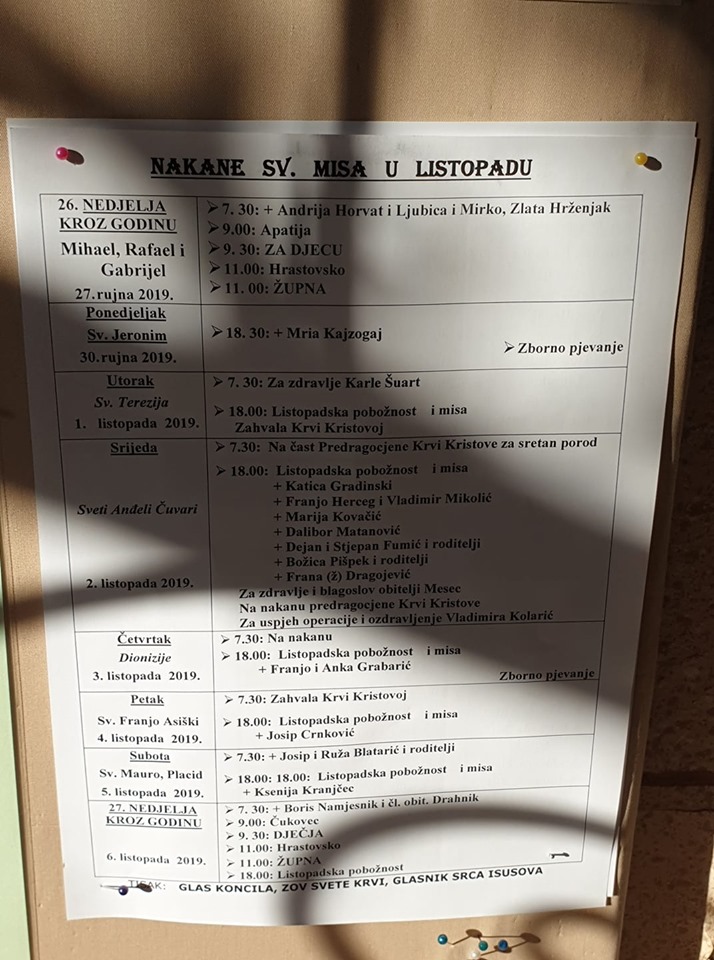
One of the challenges of seeing the miracle chalice is that the church is closed a lot of the time, but with a little careful planning it can be visited every day. For mass is held daily, the chance to worship in the presence of Croatia's only authenticated miracle. Mass times for October above - making this information available online and in English would be easy to do.
And it turns out that this is exactly what is already happening, but on a very limited scale. Ludbreg has a steady trickle of tourists from Poland, I learned. They arrive by bus and spend the night in Ludbreg before attending mass in the morning and continuing their journey to their end destination - Medjugorje. From the town with the authenticated miracle to the town without Vatican approval but with over a million tourists a year.
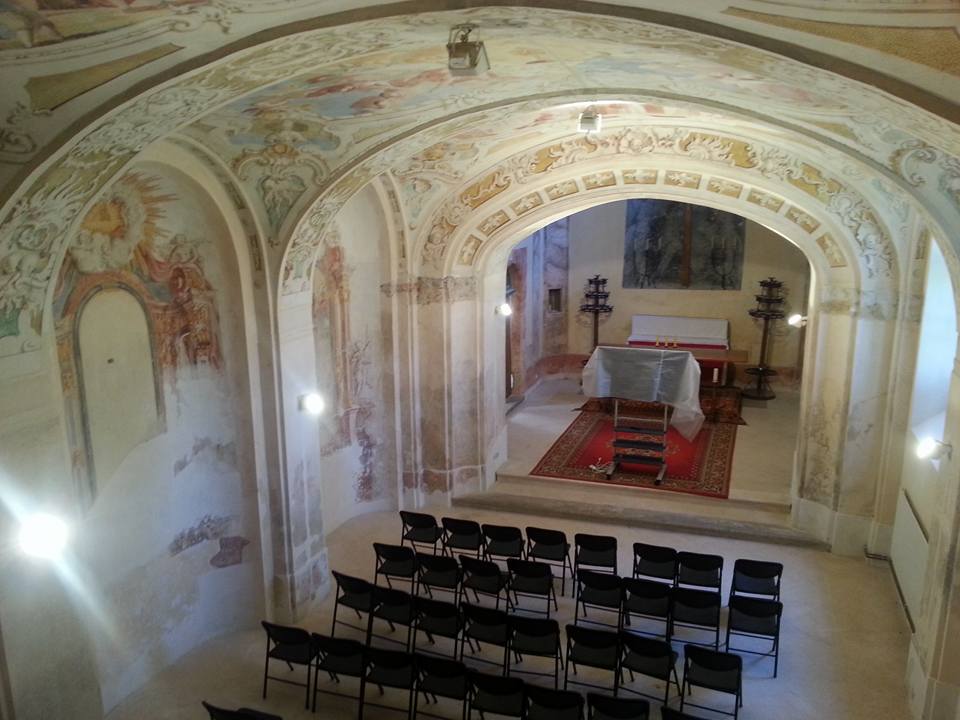
From what I learned during my last visit to Ludbreg, although the Polish pilgrims go to mass in Ludbreg, they do not visit the original chapel where the miracle took place.
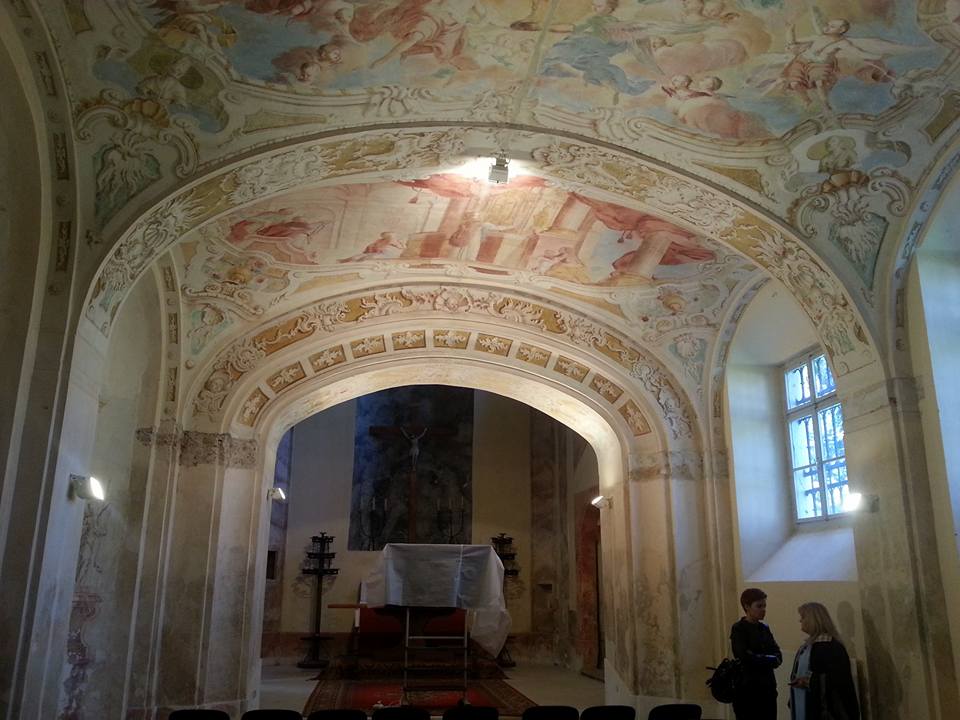
Which is a shame, as it is REALLY pretty and has some rather fascinating things to see is the small exhibition area behind it.
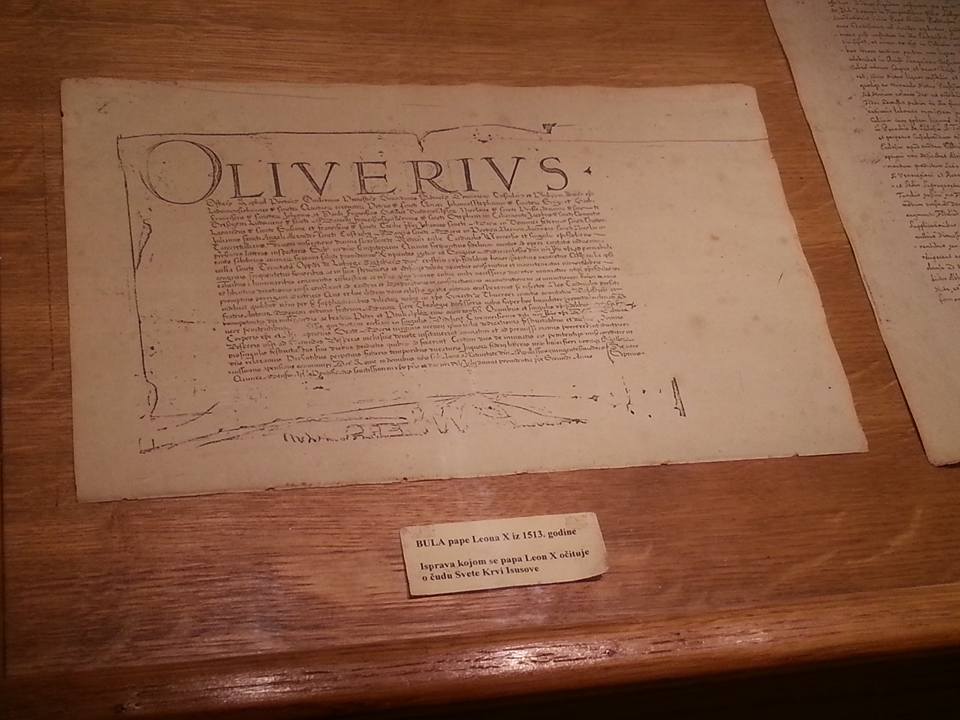
Including the papal bull of Pope Leo X in 1513.
Religious tourism is a niche product, and it is not for everyone, but as Medjugorje has proved, it motivates people to travel. And as Croatia looks to extend its season and develop tourism in continental Croatia, is it sitting once more on a hidden jewel, this time in the niche of religious tourism? If religious tourists from Poland are already coming to Ludbreg, that is proof that this incredible little story is attractive to the niche market. The fact that it is 7.5 hours from Medjugorje and not far off the bus routes of many pilgrims going to Medjugorje by bus from Central Europe surely means that there is a market with captive audience to be developed. Word of mouth passes quickly in such niche markets, and if the majority of Catholics even in Croatia know almost nothing about the Ludbreg miracle, one assumes the same is true elsewhere. But some Poles know about it and are sufficiently interested to visit with the current set up. As I understand it, they are also able to have the mass said in Polish by their accompanying priest.
Imagine if Ludbreg could expand its religious content, as well as better promotion of its authenticated miracle. While nobody is suggesting we have a new Medjugorje in terms of tourist arrivals, that current Polish trickle could turn into a very steady stream. A little thought into better use of the current religious offering in Ludbreg and better promotion is pretty much all that is required.
And the components are already there. Instead of just mass and then an onward journey that the Polish tourists currently experience, include a tour of the original chapel with its gorgeous frescoes. Visit the exhibition by the chapel and learn about the papal bull and more. Stroll over through the park to the 1994 church built in belated thanks for averting an 18th-century plague. Do the Stations of the Cross in the park, then learn more about Croatia's saints in the unique Last Supper fresco to be found at this church. And then perhaps an early lunch - choose from Croatian, Italian, Mexican and American cuisine at the appropriately named Hotel Raj across from the park - Raj in Croatian means 'heaven.'
Too fanciful? I personally don't think so, especially as the Polish pilgrims have already proven the interest.
As I was driving away from Ludbreg, I thought of the possibilities of religious tourism and realised that this is a tourism niche that has been largely overlooked until now. Croatia has some INCREDIBLE religious sites (Blaca Monastery on Brac, say no more) and processions (Za Krizen on Hvar, The Assumption of Mary in Sinj), and some wondrous occurrences that are not certified as miracles (Our Lady of Trsat, the Black Madonna of Marija Bistrica). And yet there is no central exhibition centre or museum where one can learn about Croatia's diverse and truly fascinating religious heritage. So why not build create one and give even more content to visitors. And where better than in the Croatian Miracle Town of Ludbreg - developing tourism continental Croatia and developing a year-round religious tourism niche at the same time? But that perhaps is a topic for another day.
Croatian Company Infinum Goes From .Hr to .Com Thanks to Determination
As Novac writes on the 1st of November, 2019, the Croatian company Infinum, which, by the way, operates not only here in the Republic of Croatia, but all over the world, said that simply changing their web domain from infinum.hr to infinum.com saw great changes follow.
''We started the company back while we were still students with lots of ideas but very shallow pockets, so we had to be careful what we spent. Since we started in Croatia, we got the ''.hr'' domain for free. But to expand our business abroad, we needed a country-specific domain,'' Tomislav Car wrote on the Infinum website, adding that he and his colleague, Matej Špoler, had decided in this context to buy the .co domain because it was the "closest" to .com, which was still too expensive for them at the time.
But as many as 495 of the top 500 American companies in 2016 had the .com domain, he points out, so it seemed to the two that this was one of the conditions for a successful business, and as Infinum grew, so did Car and Špoler's investment opportunities. When the company reached a figure of 30 employees, they decided it was time to take a step further. Still, the infinum.com domain was taken.
''Alexander had a software development company of the same name and had no intention of selling us the domain name. His clients knew him by that name, so the change was risky,'' recalled Tomislav Car, who was not stopped by this obstacle on the way to his desired address for the company's website.
Instead, he sent mail to Alexander five to six times a year for the entire seven years and each time offered him more money for the letter 'm' in the domain name. While the Croatian company Infinum was growing and enjoying more business success, the American company of the same name decided to change its focus, so the name of the company no longer meant that much. Still, Car claims, "Alexander wasn't ready to give up his domain."
''It made sense. We were the only buyer, and he was the only seller. My first offer was 3,000 US dollars while his counter offer was 100,000 US dollars. Our seven-year bargaining would even embarrass the traders from Istanbul's Bazaar,'' said the co-founder of Infinum, adding that after these painstaking and lengthy negotiations, they paid 25,000 US dollars for the letter.
Yet, he believes, it has paid off. Search engines like Google, as Car explained, are well known for ranking domains not related to a particular country when listing results.
Make sure to follow our dedicated Made in Croatia and business pages for much more.
100 Films, 12 Programs, 11 Days: Zagreb Film Festival Returns for 17th Edition
November 2, 2019 - One hundred films, 12 programs, 11 days, 8 Zagreb venues and 20 cities all over Croatia, is this year’s Zagreb Film Festival in numbers.
T.portal writes that the 17th edition of the Zagreb Film Festival opens on November 7 at Lauba and will last until November 17 at various locations across the capital, including the Tuskanac Cinema, KIC Hall, Museum of Contemporary Art, Dubrava National University, Travno Cultural Center, Croatian Music Institute, F22 - New Academic Stage and HUB385.
Zagreb Film Festival Director Boris T. Matic opened the press conference at the Croatian Music Institute and announced that the visual identity of this year’s festival is dedicated to the Europa Cinema and its distinctive colorful neon lights., which closed to the public just a few months ago.
"We are only seventeen years old, feeling younger and younger, our colleagues from other places have received us, and we are extremely fortunate that our sponsors, regardless of the whole situation, firmly believed in us and stayed with us," Matic said at the press conference.
This year’s festival will last a record eleven days in order to screen the hundred films and honor contracts with sponsors and patrons. 'We are a bit displaced and we were on our knees, but with our heads up and our hearts full, we are moving on. We hope the audience will be happy,” Matic said, referring to the painful closing of the Europa Cinema.
This year’s Golden Pram program will showcase 11 feature films, 10 international and 10 Croatian short films from the Checkers program. The competition brings as many as four Oscar nominees - Russian, Belgian, Colombian and Danish, the winner of the Sundance Audience Award, the Best Debut of Cannes Criticism Week, the winner of the Sarajevo Film Festival and others.
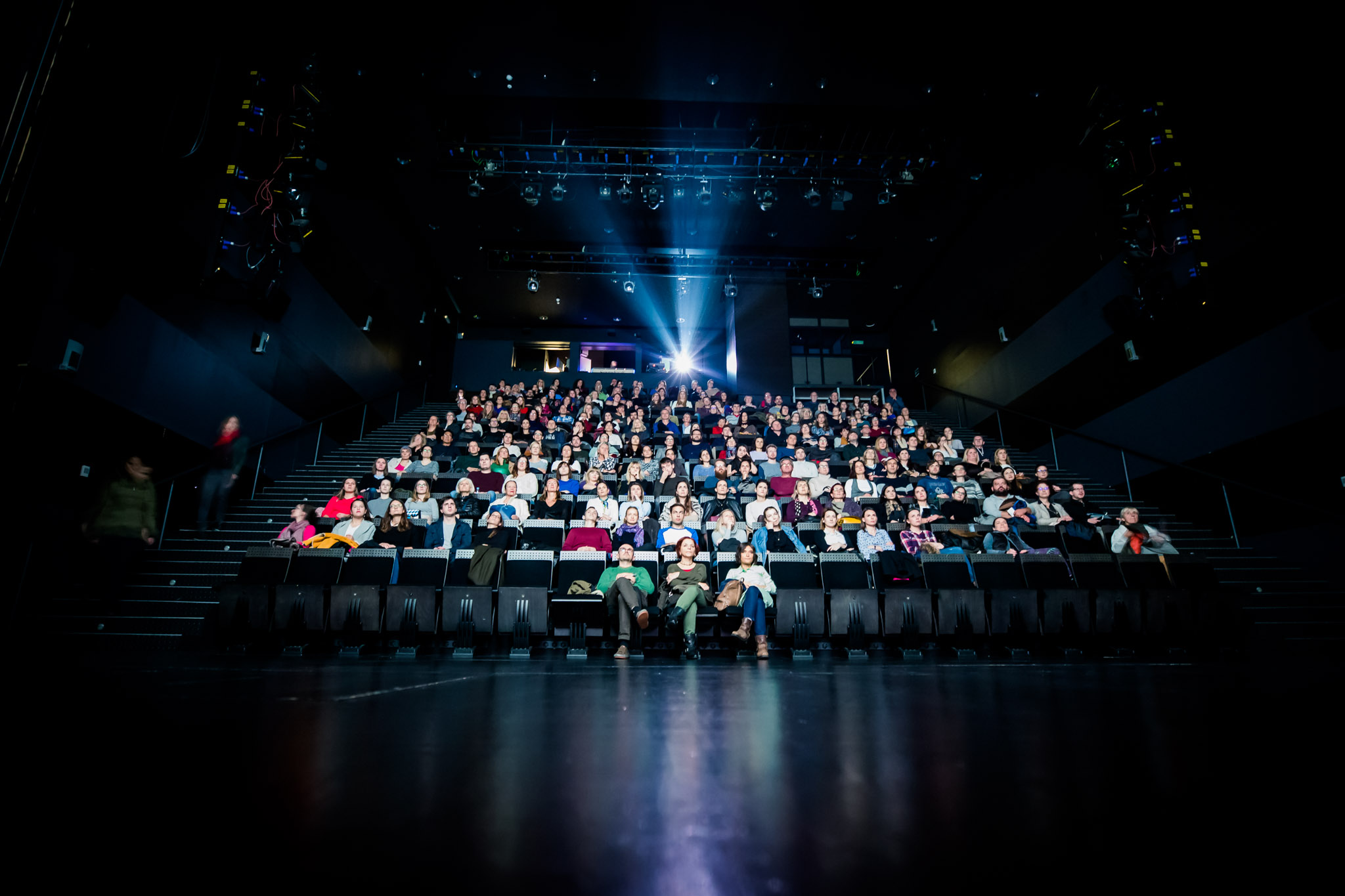
The program also gives insight into the five most important European cinematographies – France, Italy, Germany, United Kingdom and Spain, boasts a children’s program, 'My First Film', which presents debut works by great directors who have passed away in the last two years, 'LUX Film Days', 'Fragments from the Exile', 'Two Berlins' and 'Festivals from the Spotlight'. You can explore the Zagreb Film Festival program in its entirety here.
Richard Breskovic, director of the Marketing Division at Hrvatski Telekom, said they were proud to be a part of the festival, which is of great importance for Croatian cinema and Croatian culture. "We are not someone who gives up and is afraid, the festival has good content and that is why we continue to support it," he said. Hrvatski Telekom is the general sponsor of the festival and, traditionally, delivers exclusive film content through the MAXtv platform with films from ZFF, and through the MAXtv To Go service.
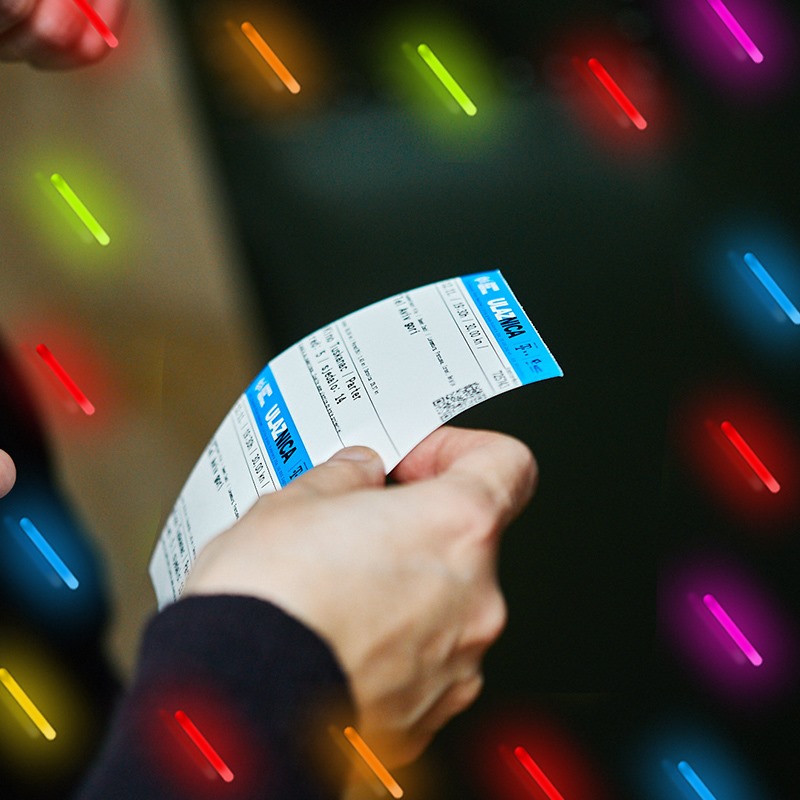
As part of the Zagreb Film Festival program travels in November, part of the program will be shown in 20 Croatian cities, including Bjelovar, Dubrovnik, Ivanec, Koprivnica, Prelog, Rijeka, Rovinj, Samobor, Slatina, Split, Šibenik, Varaždin, Velika Gorica, Zadar , Sv. Ivan Zelini, Hvar, Omiš, Bol, Podgora and Imotski.
To read more about lifestyle in Croatia, follow TCN’s dedicated page.