

First-of-its-Kind Wind Organ to Enhance Neretva Valley Tourism
October 27, 2019 - After the sea organ in Zadar, Croatia will receive another similar attraction next year - a wind organ in the Neretva Valley.
Namely, a wind organ is being built above Rogotin near Ploce in the Neretva Valley. The project is also a successful case of utilizing European funds - of the 3 million kuna needed to construct it, Brussels will finance 80% of the costs, HRT reports.
The wind organ will be built as part of the edu-eco complex on Tovro hill, which is part of the project "Promoting the Sustainable Development of the Natural Heritage of the Neretva Valley". The prefect of Dubrovnik-Neretva County, when signing the contract for the project, emphasized that with the implementation of this project, the area of the Neretva Valley will gain new values in the form of tourism, and educational and cultural content.
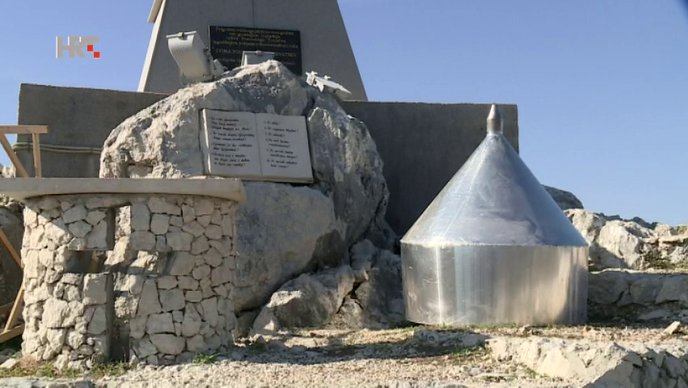
HRT Screenshot
The conceptual design and the unique wind organ project were done by Ploce engineer Zeljko Skoric. The principle of operation is the same as that of all other organs. "Three pairs of seven instruments play where each pipe has a different length, on which the tonality of the organs themselves depends,” he said.
"In terms of the power of the organ and the sound it will produce, this is one particular experience that no one has encountered yet, at least as far as we know. It's unknown to the contractor and us,” emphasized Ante Sunjic, a resident of Rogotin.
"I hope that Rogotin will be raised to a much higher tourist level and that we will get a lot with this," said Marin Glamuzina.
When the works are completed, the Rogotin wind organ will become a tourist attraction, and by all accounts, the first of its kind in the world.
You can check out a video of Tovro hill below.
To read more about travel in Croatia, follow TCN’s dedicated page.
Croatia Women's Water Polo Team Qualifies for Euro 2020!
October 27, 2019 - Croatia will have two national teams at the European Water Polo Championships in Budapest next January!
Namely, Croatia’s female side won their second qualifying match against Portugal in Sibenik on Saturday and thus qualified as one of the 12 women's teams in Europe next year. The victory can be attributed to the second and third quarter of Saturday’s game, when Croatia led for the first time by 2 and 3 goals, respectively.
Portugal led from the start (0:1), though Domina Butic and Ema Carevic quickly reversed the result (2:1). Machado equalized (2:2), to which Miljkovic answered with a goal for the new lead (3:2). Portugal closed the first quarter with a goal for 3:3.
Although Croatia wasn’t particularly good at realizing their chances with a player up, Portugal was even weaker, mostly due to Croatia’s defense, headed by the goalkeeper Ratkovic.
In the second quarter with a 3:3 result, Lousa failed to realize a five-meter shot for Portugal, and from that moment, Croatia began to improve. By the end of that stretch, Domina Butic scored her second goal, and a minute before halftime, Emma Miljkovic led Croatia to a 5:3 advantage. When Ana Miroslavic scored for 6:3 before the end of the match, Croatia could already begin celebrating. Especially when Portugal's best player, Ines Braga, earned her third personal foul four minutes before the final buzzer.
For the third consecutive European Championship and fourth time ever, Croatia will have two national teams in the tournament.
The Croatia women's national team coach Mario Caleta did not hide his enthusiasm for the win.
“In Sibenik, in front of our audience, we qualified for the European Championships. We got together here for the first time two months ago, and have completed this action in the most successful way possible. First of all, we had a solid defense, which brought victory, and that's why I won't single out any players. They are all deserving. Now the girls will take a little break before reuniting in mid-December to begin preparations for the European Championships. The group is basically ideal; we have the chance for a spot in the quarterfinal, and that will be our goal.”
In addition to the match between Croatia and Portugal, other qualifying games for the European Championships in Budapest were played on Saturday night. Germany, Israel, Slovakia, France, and Serbia also qualified for the Euros next year.
Other results: Germany - Romania 14:11, Switzerland - Israel 10:16 (6:13), Turkey - Slovakia 9:16 (9:19), Serbia - Czech Republic 19: 8 (25: 6) and Ukraine - France 6:13 (1:20).
The results of the first matches are in parenthesis.
The European Championships will be held in Budapest from January 12 to 26, 2020.
Source: HVS
To read more about sport in Croatia, follow TCN’s dedicated page.
Number of Social Assistance Users in Croatia Drops Because of Emigration
As Novac/Marina Klepo writes on the 26th of October, 2019, in Croatia last year, the guaranteed minimum benefit (which is just a less understood name for social assistance) was received by 1.7 percent of the total population, the lowest share in the last 20 years and probably the lowest share of the population covered by this benefit in the EU.
The reason for the fall in the number and share of social assistance recipients is undoubtedly the large amount of emigration and indeed a certain degree of economic recovery in recent years. However, the figures on the share of recipients by city are perhaps the most forthcoming in showcasing the consequences of many years of unequal development of the state.
Croatia is spatially among the smaller European countries, but the differences between the regions - and often within the regions themselves - are quite incredible: in Knin, for example, 10 times more of the population receives social help than in Šibenik, a mere 50 kilometers away from the county seat, and it's almost 60 times higher than in Pag, Buzet or Korčula. On the island of Pag, 12 out of 5,396 residents receive social assistance, or 0.2 percent of the population. In Obrovac, however, with a population similar to Pag, 242, or 4.2 percent, are on social care, which equals to about 20 times more than in Pag.
Both cities fall under the same Social Welfare Centre in Zadar, a city where the recipient's share is equivalent to 0.6 percent of the population.
The analysis of the share of social assistance recipients clearly spatially divides the state: on the one hand there's the the coast and north of the country, on the other, the east and inland.
In the northern counties - Krapina-Zagorje, Zagreb, and Varaždin - the proportion of recipients in any covered area rarely, if at all, exceeds 1 percent of the population. It is important to note that the proportion of recipients does not refer solely to the territory of the aforementioned cities, but to the territory covered by the social welfare centre in that city, which usually involves a much wider area. This is also explained by the high share of recipients in Čakovec - more than 4 percent - because it also includes poorer Roma settlements.
The city of Knin still has the largest share of recipients, with every 9th inhabitant, or 11.7 percent of them, living on social welfare. Neither city is close to Knin as recipient: Topusko is second with 6.7 percent of recipients receiving this benefit.
Make sure to follow our dedicated politics page for more.
Lesina to Lesina 2019: Connecting Hvar to Italy by Kayak
October 26, 2019 - Hvar adventure tourism takes to the open seas, as Hvar and Italy are connected by kayak in Lesina 2 Lesina 2019.
I have a good friend from Hvar called Vese. She is an adrenaline freak and is always up to something crazy. Now the owner of the successful And Adventure active tourism agency, she was one of the pioneers of adventure tourism on Hvar with the first such agency back in 2005.
Just following her on Facebook made me feel a lot healthier, and her guys were always up to something crazy.
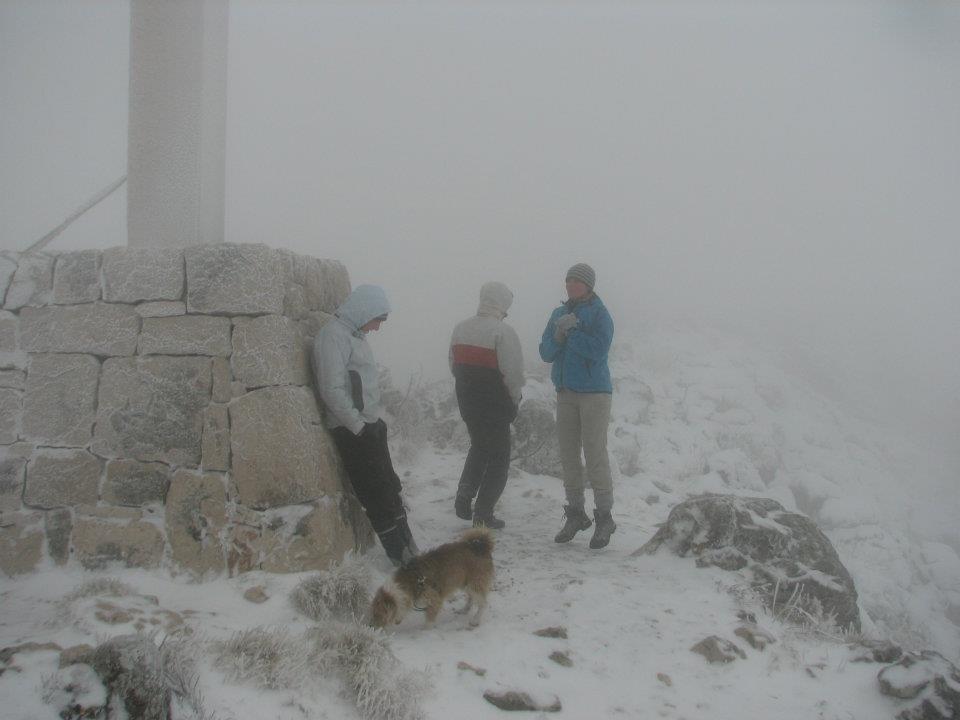
Such as time we all awoke on February 4, 2012 to find the entire island of Hvar covered in snow. While most sensible people stayed inside, those guys decided to jog on up to Sveti Nikola, the peak of the island.
So when I heard of a project to connect Hvar (whose former name was Lesina in Venetian times) with Lesina in Italy, I had a feeling that Vese's agency might be involved. And so it proved - here are details of the planned trip as previously featured on TCN).
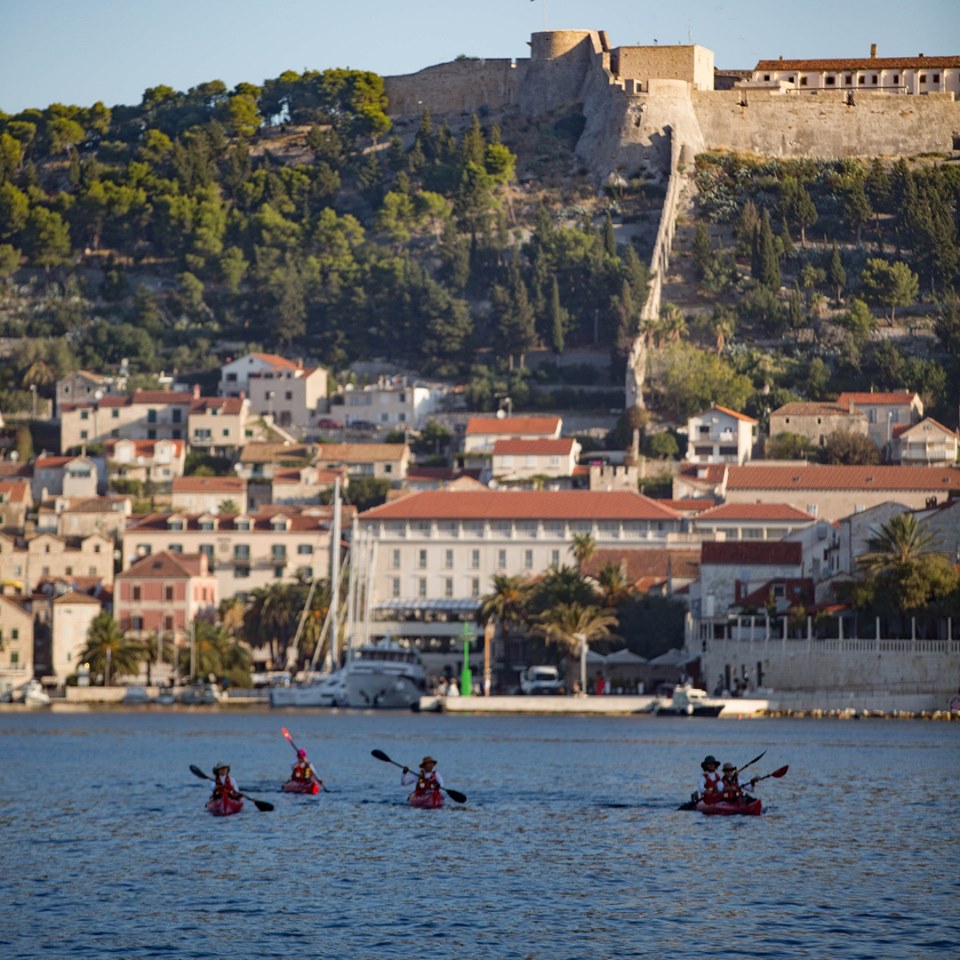
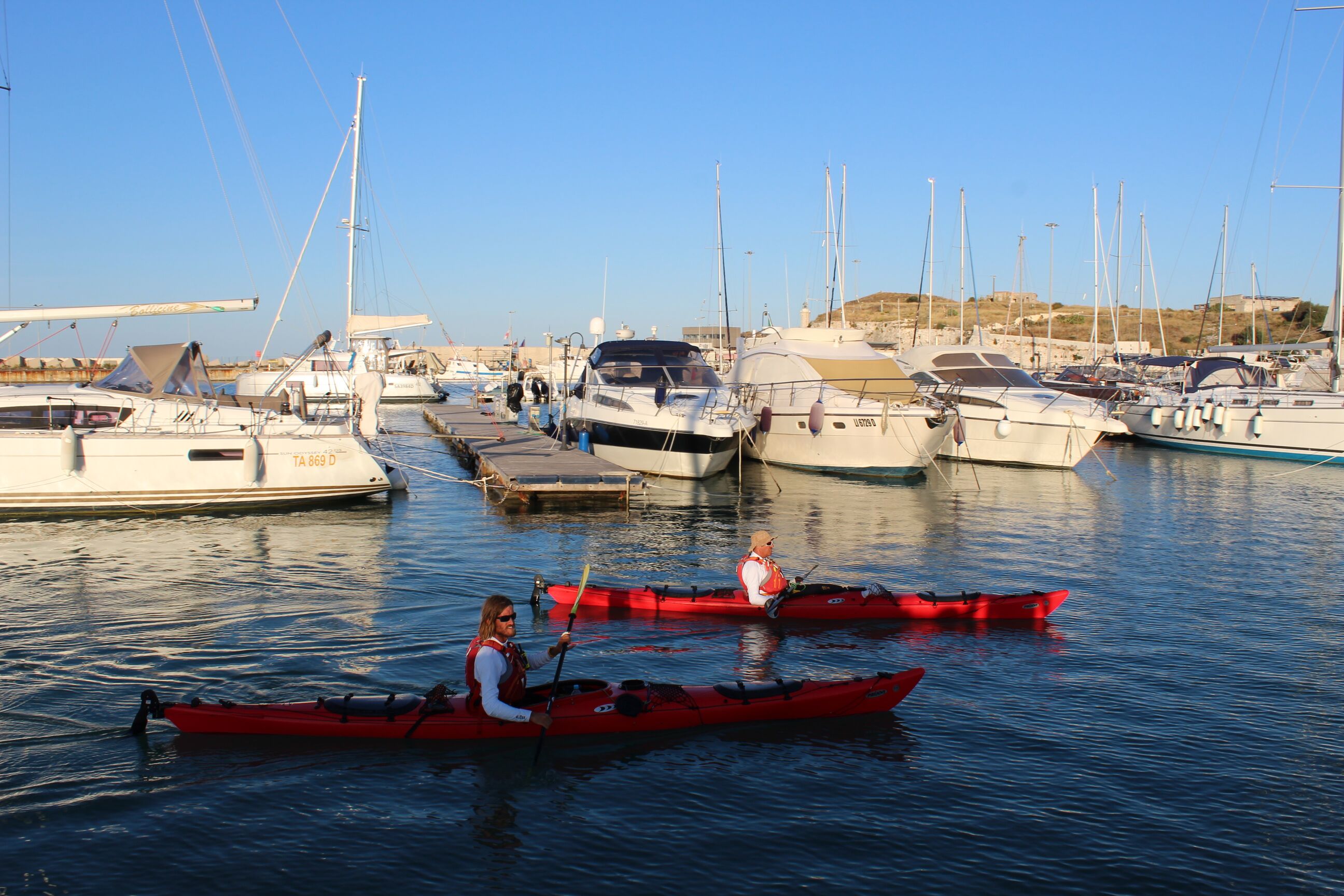
It was always going to be a challenging trip, even in perfect weather conditions, something hard to guarantee in mid-October, and the trip certainly started brightly enough from Hvar Town, above.
The Lesina 2 Lesina team posted a daily update of their progress, which I will reproduce below:
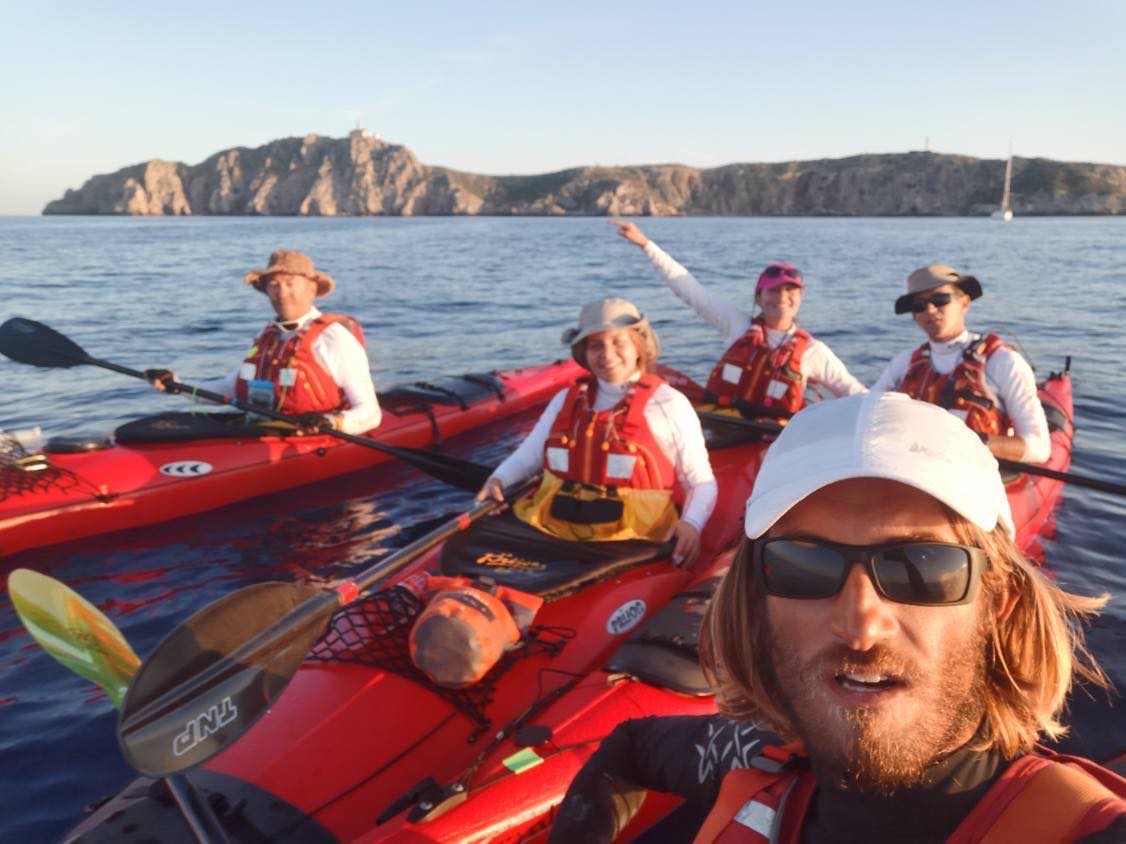
DAY 1:
We started on Tuesday 15th of October at 8am from Hvar! Weather was good but all the time jugo was increasing so we had to cut the day a bit shorter than planned! We paddled 15Nm all the way to Proizd (near Vela Luka) where we left kayaks and continued on a support boat to Vela Luka for overnight. Successful day!
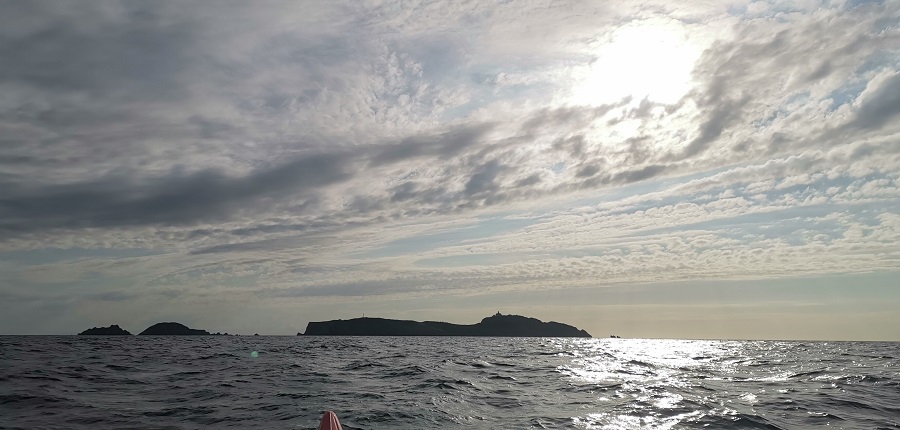
DAY 2:
Second day jugo increased too much for safe kayaking and there was no option for safe mooring for the support boat so we had a hard time to bring a decision to stop kayaking. Final call was to sail to Ubli in Lastovo and spend a night there and the next day get to Sušac. We had to move forward with no delays as the weather forecast was showing changes in upcoming days!
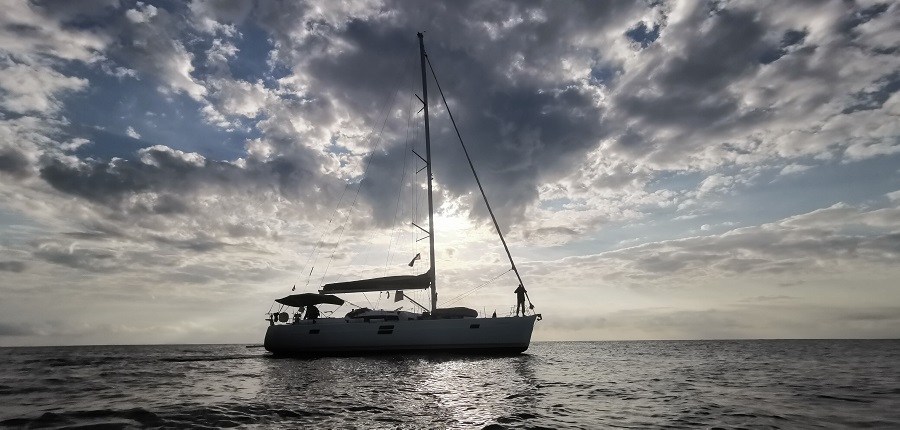
DAY 3:
Our skipper started from Ubli around 5am and we were at Sušac ready for what we thought was the longest day! We started paddling from Sušac to Palagruža, about 25Nm and about 7,5 hours. Struggling with waves, some winds but at least it was in a favourable direction. We arrived at Palagruža just before sunset! Perfect time to witness how magnificent it is.. as it is from different world! We found a safe mooring spot for overnight, got in the boat as we had to make plan what to do next... Looking at the weather and keeping on mind safe mooring spots for our support boat we have decided to alter the original plan!
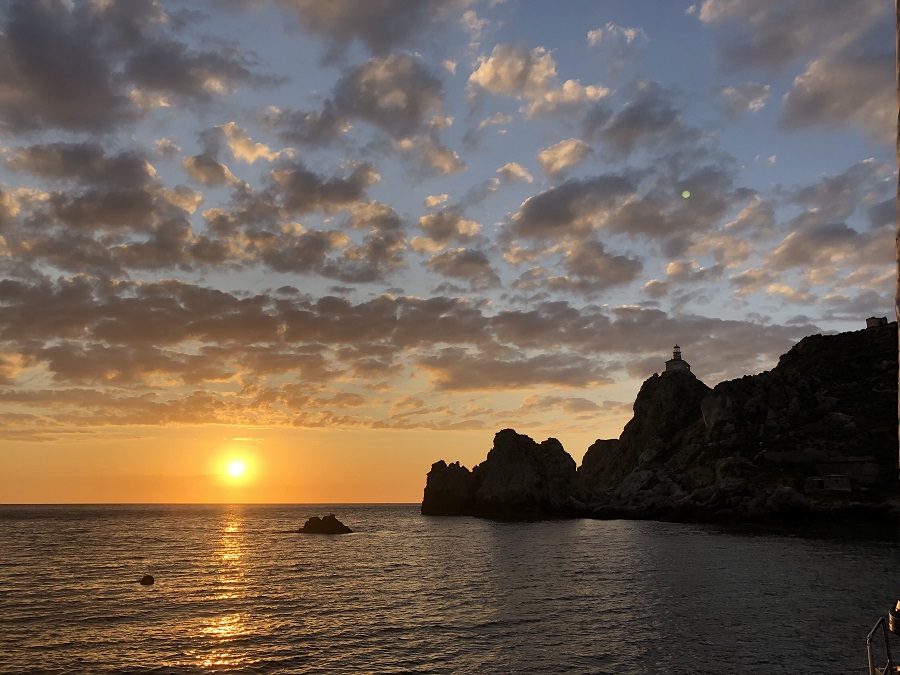
DAY 4:
This was the longest day! As we had to rush to make sure the weather will still be favorable for our return we decided to cut a day, but that meant that we will skip visiting Lesina. So instead of adding one more night on Tremiti islands (about 23Nm to Pianosa) we have decided to go for 31Nm to Vieste. This was also the most beautiful day! Calm, almost no winds until we came closer to Italy and jugo started to pick up. About 10 hours of the open sea until we finally reached Vieste and connected Hvar with Italy!!
Truly a wonderful journey!
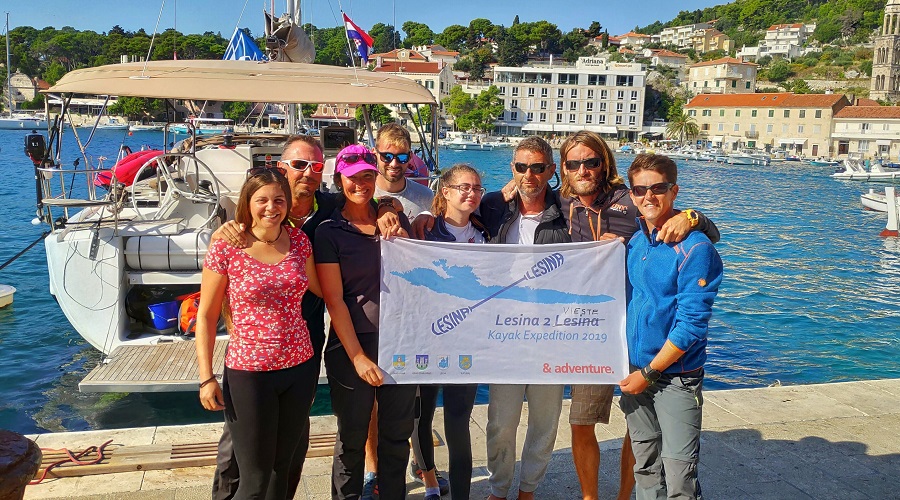
Participants: andAdventure sea kayaking team: Kristian Marovic, Vedran Medvesek, Veselka Huljic, Anamaria Šparica and Georges Buj from TZ Hvar + AndAdventure support crew on the sailing boat: Capitan Goran Treursic, his beautiful daughter, Tina Treursic, who was making sure our stomach is full and happy, young skipper Filip Biočina.
Sponsors: Visit Hvar, Grad Hvar / Hvar Town, Visit Jelsa, Visit Stari Grad Hvar and Hula Hula Hvar official.
Congratulations to all. I feel quite exhausted just following it all.
And the good news is that you don't have to go all the way to Italy if you fancy a little kayaking in Dalmatia next summer. Check out the Kayaking with Vese experience in the video below.
Is the Grass Greener in Ireland? A Croatian Expat View After 5 Years Abroad
October 26, 2019 - With so many Croats in Ireland, and many more making the move, is the grass really greener? Some Croatian reflections as a 5-year anniversary in Ireland approaches.
Croatia's entry to the EU back in 2013 brought many changes to the country, one of which was easier access to job opportunities in other EU countries. With initial UK restrictions on jobs for Croatians, many Croats headed to the only other English-speaking EU country, Ireland. A trickle turned to a wave, and the Emerald Isle has seen thousands of Croatia move to Ireland in the last few years.
Among them is occasional TCN contributor Lidija Ivanek SiLa, who has been writing for us since 2016. As her 5 years in Ireland approaches, I asked her what it was like for Croatians moving there, and was the grass really greener. Some great responses, honestly pointing out the positives and negatives, which will hopefully prove useful one way or the other for those contemplating the move.
1. Firstly, tell us about your own Irish journey. How long have you been there and why did you move?
It is almost five years that we live in Ireland. Me and my husband moved to Ireland on Valentine’s day 2015. How romantic, you would think, right? Little did I know that this is a time of the worst storms in Ireland. Did I mention, we drove all the way from Croatia to Ireland and were taking a ferry from Wales to Ireland? So, crossing the Irish Sea in the middle of the night with waves up to 10 meters, not for the faint-hearted.
Why did we move? Job, plain and simple. Well, my husband is in a sought-after business, the holy grail – IT. When he posted his CV online, headhunters spotted him and interviews start coming. But, before all that, there was a decision to move out of Croatia. You have to know that I was born in Zagreb and the type of person who thought would never move out of Croatia, one who fought for and believed in Croatia, while my husband was born in Germany and spent his early childhood years there. He was more inclined to move.
In the end, our decision was based on the situation around us, falling economy in the country, inability to live a normal life and the general feeling of depression and all-in-all negative attitudes. To work in Croatia you have to be tough, everything is more complicated and people are disheartened and lose courage. That and a few more things were the reasons to move. When the decision was made, the wheels started rolling. A job that was interesting to my husband was offered to him and he accepted it. We even managed to rent the house in Ireland while still in Croatia.
Why Ireland in particular? My hubby already had a colleague in Cork who was telling him that this is the best place to be if you are in IT. There are plenty of IT companies and they are constantly on the lookout for new talent. So we moved to County Cork and we are living in Kinsale, a small town at the beginning of the majestic Wild Atlantic Way.

2. Cast your mind back - what were your expectations back then and have they been realised?
We didn’t have any grand expectations. It was more of an adventure. We had hopes that it will be better than the one we were leaving behind. It was the idea that if we don’t do something now, soon it would be too late as we are not in our prime years anymore. I would say, we did get more than expected. My husband advanced in his work. He is respected at work. I am an artist, I can work and create anywhere in the world. But even for me it is more “normal” to be artist here than in Croatia. In Croatia there is a general feeling that what you have studied is what defines you. It is almost impossible to change your profession multiple times in life and not be considered odd. I was a doctor of veterinary medicine once, but not anymore. I am an artist, printmaker, painter, digital artist, photographer, and writer now. But that doesn’t define me. That attitude is more normal in Ireland than in Croatia. If you are happy, and can make a living from what you do, it’s ok. That’s Ireland.
3. What was better about moving to Ireland, and what was worse?
Life is here less stressful than in Croatia. We are not bombarded with political news every single day. If you only read Croatian newspapers it seems that every day in Croatia some terrible and horrifying news is happening. In a way it looks like the media didn’t move far from war journalism and is constantly hungry for drama. We don’t have that feeling in Ireland at all. The only drama we have here is when we have Atlantic storms and people freak out about the shortage of bread in the supermarkets, lol.
We’ve met a lot of wonderful, inspiring people and they are from all over the world. The experience of different cultures in one place was a bit frightening at first, but then it became one of the best things here. The Irish tax system is a blessing after you have experienced the Croatian one. It is just easier to work. If the Inland Revenue owes you tax at the end of the year, they will return it immediately. In Croatia you need to beg, wait, and hope to get your money back.
That was all good, but here comes the bad stuff. Of course there is bad in Ireland too.
The Health system is a disaster. Really, no kidding. Expensive and not effective like it was in Croatia. Roads here are mainly for rally drivers. Narrow streets, potholes and the worst of all are the drivers. I mean Irish (not all of course) are in general poor drivers.
If you want to go on a vacation outside Ireland, you have to fly, but yes, flights to a lot of popular summer destinations are inexpensive. Sadly Croatia is not one of them.And last, but not least – the housing crisis. There are not enough apartments & houses for all people wanting to live here. Prices are on the rise. Rents are horrendous.
Buildings are poorly built. Insulations are often non-existent. I mentioned the weather a bit before. Well, my hubby is fine with the cold, damp, windy weather. I am not that keen on that. Winters for me are the hardest, when we have one storm after another and often can’t see the blue sky for weeks. But then when it is sunny, then it is really nice and beautiful and you would never consider living anywhere else.
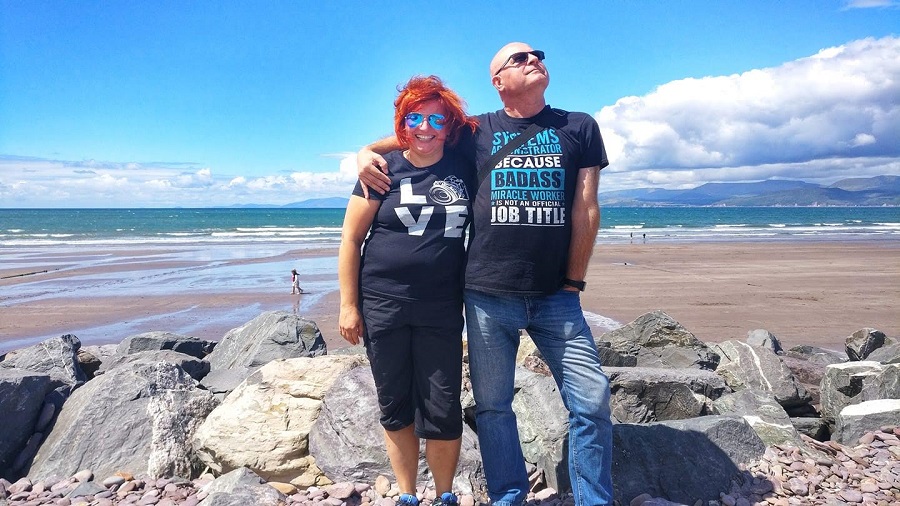
4. How has your view of Croatia changed with your new viewpoint from abroad?
Oh dear, that is a tough one. We are trying to visit Croatia twice every year and I can see that some things did change, but not a lot. Depending on what area we have visited, we heard different stories. We moved with the idea to return to Croatia eventually. We still plan to return, I just don’t know when. While so many experts moved out, soon it will be a perfect time to come back. Companies will be forced to rethink their behaviour and offer better deals. That’s a bitter joke circling around. The sad truth is, they’ll probably hire cheap, and less educated people just to fill the spots.
5. Let's look at the huge influx of young Croatians coming to Ireland in the last few years. Without reverting to stereotypes, how would you categorise them? What kinds of people are coming?
I mean, what is a huge influx of young? The truth is all age groups arrived in Ireland in the recent 4 years. When we arrived in Kinsale, there was only one Croatian woman here before us. Now I don’t know them anymore. It is that many. They are coming from all professions, with different plans and ideas. Some are coming only during the tourist season and work in the hospitality business. Some are coming and staying, getting married here, buying houses, having kids. I hate categorising people. How can you categorize different life stories? They are all people with hopes, plans, ideas, coming here to improve their own life, the best way they can.
6. For those thinking of making the move, tell us about the process. How easy is it to find work, a place to stay, a support network?
These days it is more difficult to start a new life in Ireland. Brexit just worsened an already difficult housing situation. A lot of people have moved from the UK to Ireland in recent months. The Government’s “most optimistic statement” on the housing crisis reveals that the problem will get worse at least until 2022, Focus Ireland has said. If they still want to move, the best way to do so would be to have someone here already, so they can stay with them till they find their own place. About jobs, to the best of my knowledge there are still open positions in IT, the pharmaceutical sector, the always needy hospitality sector, and nursing homes.
7. Finding a job may be easy, but how about a job to match the qualifications of the new arrivals?
As in any country, there is a demand for certain qualifications while others not so much. If you are willing to work, it doesn’t matter that much here that you are not holding a certain certificate or diploma. Speaking the language is a must. I did hear about some people washing dishes in restaurants without speaking any word of English, but that is the exception rather than the norm. Croatians still hold a respectable title here, which is that of a hard-working and positive people. How ironic, knowing that at home the same people weren’t treated with that kind of respect.
8. Weighing up everything, do you think the grass is greener in Ireland?
We didn’t regret our move. For us it was the best thing that we could do in the given moment. The Republic of Ireland is not a paradise on Earth. It is a society with very colourful people, a place of optimism and growth, but still in constant change like the weather.
You can read more from Lidija Ivanek SiLa via her TCN profile.
Have you emigrated from Croatia in the last few years and interested in sharing your experiences, good and bad? Contact us at This email address is being protected from spambots. You need JavaScript enabled to view it., subject title Greener Grass.
Rijeka Launches Free Mobile Application for Public Transport
October 26, 2019 - The free Android app CityBus Rijeka is now available to residents and visitors of the city.
HRTurizam writes that using the available data through the open data portal of the City of Rijeka, Zadar company Smart Solutions came to the idea that after developing the mobile application for the City of Zadar, they would implement the same for Rijeka. This app is a unique guide to public transport in the entire Primorje-Gorski Kotar County. It is currently available for free download through the Google Play Store.
The application displays marked bus stops in the Primorje-Gorski Kotar County area, information about travel distances and the next 3 bus lines arriving, the routes of all city and suburban Autotrolej bus lines, a timetable of all city, suburban and night Autotrolej bus lines with the desired date showing all transit stops and estimated arrival times, an overview of all city, suburban and nightAutotrolej bus lines with associated stops, a view of important marked taxi stops in Rijeka and the parking zones in Rijeka with information about payment.You can also find a display of information on vacant spaces in closed parking lots, the latest information regarding urban public transport in Primorje-Gorski Kotar County, and locations where you can purchase bus maps with working hours. The application is available in several languages, and in addition to Croatian, users can choose English, Italian, German and Hungarian.
The idea for the CityBus Zadar app originated at the Google I / O Extended Hackathon held in mid-May 2017 in Zadar. After more than two years of running the application in the Zadar County area, it has reached almost 10,000 downloads, but there has been a lack of crucial support from local institutions to move on. Because of this, Smart Solutions Zadar decided to transfer the existing system to other cities within the Republic of Croatia. Given the availability of data, they opted for Rijeka, although several similar applications have already been developed in the city and county. The app itself is intended as a guide to public transport for citizens and tourists throughout Primorje-Gorski Kotar County.
Data on routes and marked stops are taken from the open data portal of the City of Rijeka and will be updated and modified if any deficiencies are noticed. The desire is to implement this application in other cities in Croatia. It also aims to encourage other market players to become actively involved in the development and implementation of similar solutions.
To read more about travel in Croatia, follow TCN’s dedicated page.
Croatia Handball Teams Meet Germany for Friendly Rematch in Hanover
October 26, 2019 - After the friendly spectacle at Arena Zagreb earlier this week, the handball teams of Croatia and Germany met again, this time in Hanover.
On Saturday, the men’s and women’s teams of Croatia and Germany hit the court of a sold-out TUI Arena, where almost 10,000 spectators came to support their sides in a friendly rematch.
Unlike in Zagreb, the men’s teams played first, precisely at 2:30 pm on Saturday. But not unlike the duel in Zagreb, it was another close battle that saw Croatia lose 24:23. Recall, Croatia lost 25:26 in Zagreb.
Coach Lino Cervar made three changes to the team compared to the Zagreb game. Instead of Zlatko Horvat, Kristijan Beciri and Marin Jelinic, it was Fran Meta, Marin Maric, and Lovro Mihic to travel to Hanover.
Luka Stepancic led Croatia with five goals, while Uwe Gensheimer celebrated his 33rd birthday with six goals for Germany.
"I think we can be pleased with today's game; we missed a seven-meter shot when the time ran out. I think we have shown great strength compared to Zagreb, the defense was much better and we can be pleased with the performance here in front of 12,000 people. I don't think they outplayed us, and we deserved more than defeat. Although Matanovic missed in the end, I have to praise them as well as the younger players. I think we are on the right track, we mean well, we are doing well. We need to be calm so that there are no injuries, to correct our mistakes and make the players in the clubs better prepared,” said coach Lino Cervar after the game.
Recall, the men’s handball side is preparing for the European Championships, which begins on January 9, 2020, and is played in three countries - Austria, Norway, and Sweden. Croatia is in Group A to be played in Graz, along with Belarus, Montenegro, and Serbia.
The women's teams played in the second event of the day, at 5:30 pm. While the Croatia and Germany drew at Arena Zagreb, in Hanover, it was Germany to win 32:23.
The most efficient for Croatia was Ivana Dezic with nine goals, while Slavica Schuster and Stela Posavec scored three each. Antje Lauenroth and Alicia Stolle scored six for Germany.
Moree soon...
To read more about sport in Croatia, follow TCN’s dedicated page.
SDP Wants to Set Up Anti-Corruption Alliance
ZAGREB, October 26, 2019 - Addressing a meeting of his party's main committee in Zagreb on Saturday, Social Democrat (SDP) leader Davor Bernardić said that Prime Minister Andrej Plenković was an obstacle for Croatia's admission to the Schengen passport-free area, and added that this opposition party would start forming a large anti-corruption alliance.
"A detailed, complex and comprehensive report made by the European Commission on a state of affairs in Croatia reads that a crucial condition for Croatia's entry into the Schengen Area is the fight for the widespread corruption in our country," Bernardić said adding that a half of the Plenković cabinet had had to step down due to suspected corruption.
The opposition leader said that the strengthening of independent institutions, including the National Conflict of Interest Commission, was also a prerequisite for Croatia's Schengen bid.
In this context Bernardić accused Plenković of exerting pressure on that commission, claiming that therefore this was an obstacle for Croatia's admission to the Schengen Area. He reiterated criticism over the fact that the parliament's Grand Chamber would be rented to the European People's Party (EPP) for a meeting if its political assembly on 19 November.
Bernardić said that it is the HDZ (Croatian Democratic Union) "that is leasing the whole of Croatia and destroying it."
This past Tuesday the European Commission assessed that Croatia met the conditions for joining the Schengen Area and asked the Council of the EU to include Croatia in the area without internal border controls.
"The European Commission considers that, based on the results of the Schengen evaluation process initiated in 2016, Croatia has taken the measures needed to ensure that the necessary conditions for the full application of the Schengen rules and standards are met," a press release said.
"Croatia will need to continue working on the implementation of all ongoing actions, in particular its management of the external borders, to ensure that these conditions continue to be met. The Commission also today confirms that Croatia continues to fulfil the commitments, linked to the Schengen rules, that it undertook in the accession negotiations," reads the press release issued by the EC.
The Commission's evaluation on technical preparedness is not enough for joining but it is a prerequisite for the member states to make a political decision on the accession.
More SDP news can be found in the Politics section.
Conference on Migrations and Xenophobia in EU Held in Split
ZAGREB, October 26, 2019 - An international conference on globalisation of migrations and xenophobia in the European Union took place in Split on Saturday and on that occasion "Demos Migrant Portal", a database on migrations and demography in three languages – Croatian, German and English – was presented.
The conference, which brought together researchers from Croatia and abroad, was organised by the Zagreb-based Institute for Migration and Ethnic Studies and the Faculty of Humanities and Social Sciences of the University of Split.
Researcher Anđelko Milardović of the Zagreb institute said that in the event that European Union criticised too much the policy of the Turkish government, one could expect a scenario of changes in migratory routes.
He warned about possible "social chaos" in the Mediterranean and the Balkans in that scenario.
Milardović spoke about anti-migration political parties "as the children of the 21st century". "This is a totally new type of political parties as reaction to the globalisation of migrations," said the Croatian researcher.
Branka Likić Brborić of the Institute for Research on Migration, Ethnicity and Society (REMESO) in Sweden, said that all in Europe needed migrations, underlining that the developed European countries need migrants as workforce.
She sees an anti-migrant climate as a smoke screen and said that it could lead to deepening inequalities inside and between countries in Europe and in the world.
More news about migrant crisis can be found in the Politics section.
Croatia Marks 40 Years Since Addition of Dubrovnik, Split and Plitvice to World Heritage List
ZAGREB, October 26, 2019 - Croatia's Ministry of Culture on Friday recalled that 40 years ago, UNESCO added the first three Croatian sites to its list of World Heritage sites: Diocletian’s Palace in Split, Dubrovnik's Old Town and the Plitvice Lakes, the oldest and the most visited national park in the country.
Since then, seven more Croatian sites have listed as World Heritage sites: St James Cathedral built in the Adriatic town of Šibenik in the 16th century, the old town of Trogir near Split, the Episcopal Complex of the Euphrasian Basilica in the Istrian town of Poreč, and the Stari Grad Plain on the Dalmatian island of Hvar.
Among those seven sites there are three multinational nominations: the medieval tombstones and graveyards called "Stečci", scattered in Croatia, Bosnia and Herzegovina and some parts of Montenegro and Serbia; the defensive system of Zadar and St Nicholas Fortress in Šibenik, that is six defensive walls built by the Republic of Venice between 15th and 17th century along the Adriatic coast, and this kind of fortifications can be found in Italy and Montenegro.
Croatia is also part of the Primeval Beech Forests of the Carpathians and Other Regions of Europe. Primeval Beech Forests of the Carpathians is the largest UNESCO World Heritage site in Europe, extending across 12 countries. The Croatian part of the Carpathians make the Paklenica and Northern Velebit national parks.
Croatia boasts a particularly rich intangible heritage, and 17 examples of this heritage are on the UNESCO list of intangible heritage.
Some of the most famous entries are lacemaking in Croatia, the Sinjska Alka knights' tournament in Sinj, and Klapa music, a form of traditional a cappella singing in Dalmatia.
More news about UNESCO heritage can be found in the Lifestyle section.