

Split Tourist Board Looks to San Sebastian Model for 365 Tourism
October 24, 2019 - The Split Tourist Board is looking at the model of San Sebastian, Spain, to develop 365 tourism in the city.
Organized by the Split Tourist Board, Dalmatinski Portal reports that representatives of private renters, hoteliers, travel agencies, camps and museums visited tourism representatives in the city of San Sebastian, Spain, where they exchanged their experiences of managing a tourist destination that successfully realized year-round tourism.
The Donostia - San Sebastian Tourism Organization prepared a series of presentations for the Split representatives for them to get acquainted with the products of the city and the wider region. This especially focused on congress tourism they are successfully developing, as well as ways to attract guests all year long. By the size and population, this Spanish city is most similar to Split, with its strategic commitment to year-round tourism based on the offer of culture and gastronomy, and according to Trip Advisor, next to Bilbao, San Sebastian was selected as the best European destination.
Among the various topics in destination management, the development of musical events was particularly discussed. In addition to investing in destination development, San Sebastian has an average hotel occupancy of 300 days a year. Thus, as part of this visit, Split's tourism representatives had the opportunity to hear and see their experiences in managing the destination that led to such business results.
San Sebastian cooperates with the Tourism and Hospitality School in educational and tourism experiences, which presented an opportunity to exchange knowledge and skills, especially in light of the fact that in the first nine months of this year, the number of overnights by Spanish guests in Split increased by 20 percent compared to last year.
Recall, Alijana Vukšić, director of the Split Tourist Board, revealed that 837,125 guests visited Split in the first nine months of 2019, with almost 2.5 million tourist overnights achieved. Thus, 67,000 more guests chose Split for their holiday than last year.
American tourists make up the biggest market for Split, followed by the United Kingdom. The U.S. and U.K. tourists are followed by the French, Germans, Australians, Spanish, and Italians.
To read more about travel in Croatia, follow TCN’s dedicated page.
Dr Prem Jagyasi Interview on the Croatian Medical Tourism Industry
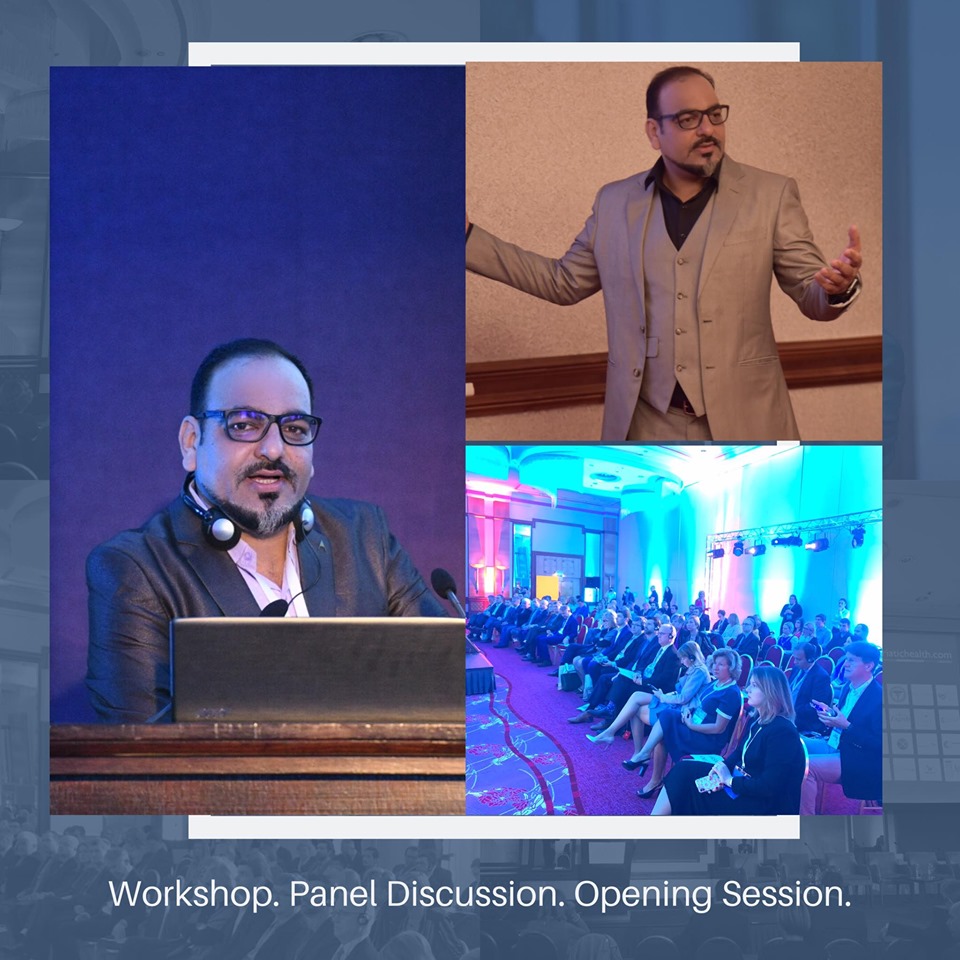
October 23, 2019 - The 3rd Adriatic Health, Sport and Tourism Investment Forum concluded yesterday. TCN caught up with one of the keynote speakers, Dr Prem Jagyasi, to learn more about his thoughts on the direction of Croatia's medical tourism industry.
Tell us firstly about your relationship with Croatia as you seem to be more and more of a regular visitor here.
It is a good thing that Croatia wants to develop medical tourism in a structured way. I see that the ministries of health, tourism and economy are becoming engaged to develop a strategy for health tourism, and that is what brings me here – to help that process along.
We know that there are many challenges and obstacles to be overcome, but I really think Croatia has great potential. They can be a leader in Europe, and they can also attract the American retiree market. There are over 100 million pensioners in the United States. A proportion of them could come to Croatia and bring up to 2.5 billion dollars of business to Croatia.
It was interesting yesterday to see the Pasman project, for example, where they are planning to put in the facilities and content to offer to these senior citizens from abroad. There are challenges ahead, but things are moving in the right direction. So my interest is in working with both the potential and the challenges here in Croatia.
I would like to add that this has been a really excellent conference - some great speakers and panelists from all over the world. It has been a pleasure to participate once again.
There was a phrase used in the conference that the region could become the 'Adriatic Florida.' Do you think that this is a realistic aspiration?
I don't see the need to repeat Florida, first of all, or call it that. I loved the phrase by Vlasta Brozicevic of Terme Selce, who suggested 'the Pearl of Europe.' A pearl for sports, wellness and healthcare, I really liked that term.
Croatia really has everything – resources, infrastructure, technology. All the components are in place, but it is still not easy for them to bring all the stakeholders together.
You travel all over the medical tourism world. Where should Croatia be looking to learn from to improve its medical tourism industry?
Every country gives us something different and beautiful to learn. So we have Malaysia, Thailand, Jordan, Turkey, some parts of India, how they have developed their industries.
Malaysia has developed the best structure of how public and private hospitals should work together to develop the brand, activities and strategy. Having said that, Malaysia gets most of its patients from one country – neighbouring Indonesia – so it is not truly a global destination yet, but things are changing.
Then we look at Turkey. Turkey has invested heavily and has major stakeholders such as Turkish Airlines. They have also had huge private investment. Turkey, by the way, has more patient to bed ratio than anywhere in the world. They have done a great job on promotion but you do not see the internal conflicts as there is no body which deals with everything, as you have in Malaysia. So Malaysia is a great example of one central body, but Turkey has some great promotional activities, as well as much bigger investment.
Then you look at Jordan, and see how well the private hospital association is working. They are very strong, and they are defining the prices. Jordan is also very well-known for bringing all its talent back to the country. Most of the medical professionals who study abroad return home to practice.
So I think we have separate things to learn from different countries. From Thailand we can learn about managing the political and diplomatic relationships, for example. They have a lot of business through the diplomatic embassies. And then look at Mexico, which has built an entire industry servicing the American market. It is a great example of building an industry based on the target market. So I don't think there is one destination which gives all the answers but there are many bits to cherry-pick from different destinations.
How strong is the brand of Croatia as a medical tourism destination within the industry? I was in Kuala Lumpur recently and the brand of the Malaysia Healthcare Travel Council is just so focused. It is fantastic. And then here you have the excellent Kvarner Health Cluster, Losinj, Island of Vitality, Zagreb, even Bagatin Clinic on its own at various international fairs, but rarely under the umbrella of Croatia.
Yes, this is a very big issue which Croatia needs to address. If you look at Malaysia, they have built a one-brand name. Having a different cluster under one brand name might be a beautiful idea, but having a different brand and promoting the two separately will not work or be good for Croatia. There is respect for Croatian medical excellence within the industry, but there is almost no brand recognition of Croatia as of now. So while the respect is there, the popularity, usability and reachability are not.
Because of the lack of visibility, Croatia is missing out on some of its potential target markets. I see very little activity here from the Gulf, for example, which is a US$ 5 billion industry, much of which is spent in Europe.
This idea of regional clusters could work, but only under a national Croatian umbrella.
So how visible is Croatia at the main international medical tourism fairs?
There is very little visibility from the Croatian government side. There are private clinics, in particular Bagatin Clinic, which is very visible in many conferences and fairs. The Croatian government should do more PPP projects, as was done in places like Turkey. There they took 10-15 clinics and hospitals and took them to participate in fairs. This is something I have not seen much of from Croatia. There are some segmented examples, but nothing coordinated.
Speaking of Bagatin Clinic, CEO Ognjen Bagatin recently announced that his clinic was hosting the first ever patient experience conference in Europe, in Dubrovnik in March, including presentation from Cleveland Clinic. One private clinic doing so much for the national industry. What are your thoughts?
Not only that but Bagatin Clinic has put so much investment into capacity building, improving their own team and others around them, as well as bringing the patient experience conference to Dubrovnik with Cleveland Clinic involved. It clearly shows that a private clinic can bring so much value to the brand of Croatia. They have won so many awards, not only in the marketing. I have personally visited their clinic and it is excellent on all levels. The quality, the focus, the design – it is all incredible. That could be a beautiful case study for other private hospitals and clinics.
You can connect with Dr Prem Jagyasi via his website.
To learn more about the Adriatic Health, Sport and Tourism Investment Forum, click here.
To learn more about the forum organisers, including their other initiatives to develop medical tourism in the Adriatic, visit the Medical Group Ltd website.
To follow the latest from the Croatian medical tourism story, follow the dedicated TCN section.
Gligora Cheese Factory from Pag Island Wins 8 Medals!
At this year's World Cheese Awards competition, Sirana Gligora (Gligora Cheese Factory), from Pag island was given a total of 8 medals!
The competition was held in Bergamo in Italy, and a record-setting 3,804 competed for the awards. In such a respectable competition, the Croatian cheesemaker was able to get 4 gold medals, 2 silvers and 2 bronze medals. Gold medals were awarded to Pag Cheese, Likotin affinated in maraska cherries, Kolan affinated in olives and Cow ashes cheese. The silvers and bronzes went to the mustard cheese, Žigljen and Liburjan cheeses.
This is the most medals won by a Croatian cheese factory at this year's WCA.
Šime Gligora, the owner of the factory, said that this serves as a confirmation of the continuing excellence of the protected cheese from Pag. Last year, at the same competition, they received a Supergold award, and this year at the Great Taste Awards in London they received the highest possible three stars.
He added that they are very happy that their affinated cheeses, such as sheep's Likotin affinated in maraska cherry keep getting the highest awards. That is also an additional incentive to continue making and improving them.
Two months ago, they affinated the cheese in maraska cherry, and currently, the process is being performed with the wine and olives. Such methods and techniques in cheese-making are quite unknown in Croatia, so awards like these help make those unique and innovative products more recognisable to the Croatian consumers. He highlighted their completely new product, cheese with mustard, which hasn't even hit the shelves in Croatian stores, which was also given a silver medal at this event.
The Gligora cheese factory wants its customers to know that they will continue making the highest-quality cheeses and that they're hoping to keep winning awards at upcoming cheese and food competitions. They've recently opened their delis in Zagreb, more specifically in the Arena and Cvjetni shopping malls, and they're currently finalising the preparations for the opening of their new "Cheese & Deli" store in the centre of Split.
Croatia Handball Teams Face Germany in Friendly at Arena Zagreb
October 23, 2019 - The men’s and women’s Croatia handball teams hit the court at Arena Zagreb on Wednesday for a friendly against Germany. The women's side drew, while the men's battle saw Germany win 25:26.
The female side was the first to play on Thursday, which resulted in a 21:21 draw against Germany.
This is a great result for Croatia, who was without their players from abroad and Podravka, and with seven debutants.
Croatia trailed behind Germany for most of the game - however, 45 seconds before the end, Kristina Prkacin scored the equalizing goal. Germany was unable to score until the end and the women’s Croatia handball side recorded an excellent result in their first appearance at the Arena.
The heroine of the game was goalkeeper Tea Pijevic who booked 15 saves. Four goals were scored by Dora Kalaus and Ivana Dežić, while Andrea Simara was 3/3. The best for Germany was Emily Bolk with five goals.
Recall, coach Nenad Sostaric is using this test match to prepare for EURO 2020 qualifications.
The men's side met Germany directly after the women's teams drew. In a close battle, it was Germany to finish on top 25:26.
After a draw in the first half, Germany led 16:20 in the second, though Lino Cervar’s side found a way back into the game. In the last attack, Croatia had a chance to equalize, but Sebetic failed to score.
Vlado Matanovic led Croatia with five goals, while Luka Stepancic and David Mandic each scored four. Sego recorded nine saves in goal. Tobias Reichman scored five goals to be the best for Germany.
Recall, the men’s handball side is preparing for the European Championships, which begins on January 9, 2020, and is played in three countries - Austria, Norway, and Sweden. Croatia is in Group A to be played in Graz, along with Belarus, Montenegro, and Serbia.
Both Croatia handball teams head to Hanover for a rematch in three days.
To read more about sport in Croatia, follow TCN’s dedicated page.
Computer Fraud on Steady Rise in Croatia, Police Say
ZAGREB, October 23, 2019 - Computer fraud has been on a steady rise in Croatia, the Police Directorate told a press conference on Wednesday on the occasion of European Cyber Security Month.
"In the first nine months of this year we recorded a rise in computer fraud of 10 percent compared to the same period last year. Most of the reported cases related to so-called CEO fraud where a person impersonating the CEO of the targeted company sends an email to the accounts department to transfer a sum of money to another account. There are also increasing reports of so-called Nigerian prince scams where naive citizens are asked to pay hefty sums," said Renato Grgurić, chief of cyber security at the Police Directorate.
Given that perpetrators of such crimes are from African countries, police have difficulty tracking them down because of a poor exchange of information with police services in those countries, while information exchanges with EU countries via Europol are more than good, he said.
Citizens were advised to be extra cautious when sharing personal data on social media and to make online payments using only secure websites. "Any suspected attempt of fraud should be immediately reported to the police," Grgurić said.
Svan Hlača of the National Computer Emergency Response Team (CERT) underlined the importance of raising public awareness of cyber security, with emphasis on network and information security.
He said that this year the National CERT would focus on maintaining the high level of security for internet users and using modern information and communications technologies given that the number of non-technical incidents relating to fraud, unsolicited emails and harassment was on a steady rise.
More IT news can be found in the Lifestyle section.
Lessons from Poland: How to Develop Medical Tourism in Central Europe
October 23, 2019 - Lessons from Poland, the latest opportunity for Croatia's medical tourism chiefs to learn best practices from another country, but is anyone listening?
Sometimes the clearest lessons come from the most unlikely of places.
The 3rd Adriatic Health, Sport & Tourism Investment Forum concluded in Zagreb yesterday. It was a very stimulating event for me personally n terms of international contacts made, as well as being extremely well supported by some impressive international expert speakers, two Croatian government ministers, high-profile characters from the world of Croatian sport such as Davor Suker and Marin Cilic, and others. But the presentation which caught my eye and was the most important for those with an interest in developing medical tourism in Croatia came from a less celebrated source.
The medical tourism industry of Poland.
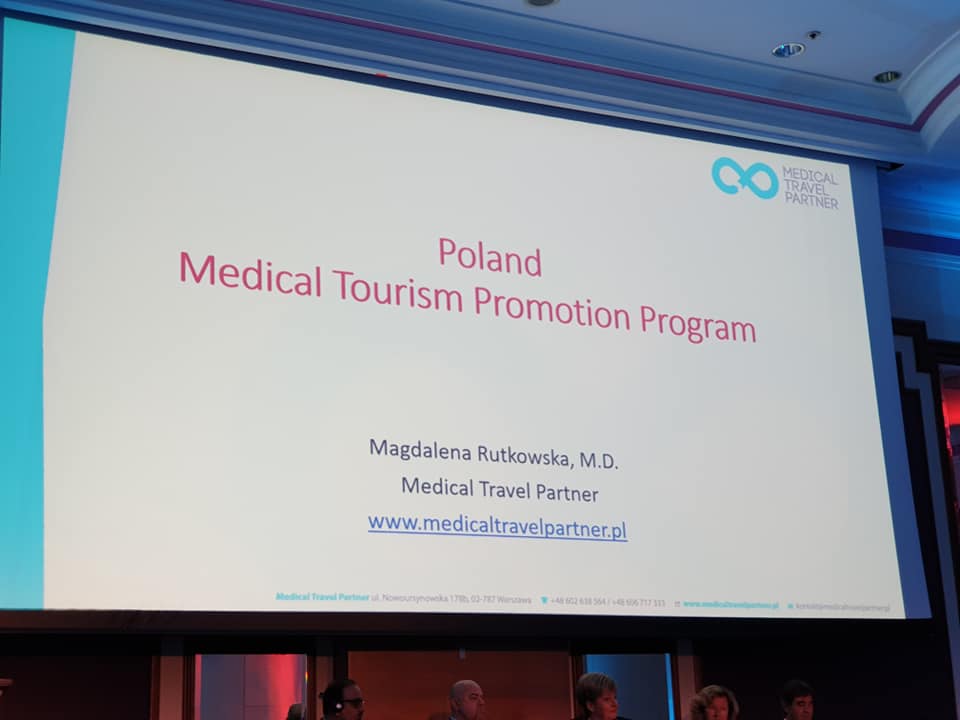
I am still learning about the global medical tourism industry and was not aware that Poland even had a significant medical tourism industry, let alone one which was allocated time to present at the conference, but from the moment I saw the first slide of Dr. Magdalena Rutkowska's presentation I was hooked.
Poland Medical Tourism Programme. That had a nice, unified and national feel for a medical tourism brand. A little like the Malaysia Healthcare Travel Council. And very unlike the way Croatia presents its medical tourism industry internationally.
International trade fairs may come across the Kvarner Health Cluster, Losinj, the Island of Vitality, Zagreb, Bagatin Clinic (the most active Croatian clinic nationally and internationally), but Croatia Medical Tourism Programme? A concept almost unheard of. Such a simple and obvious step and one that Croatia has yet to master.
But Poland had gone further than branding its industry on a national level, much further. Let's agree that Poland is not the number one medical tourism destination in the world, and its potential is less than Croatia's but in terms of what it is doing to realise its potential, it has a LOT of lessons for its Adriatic neighbour.
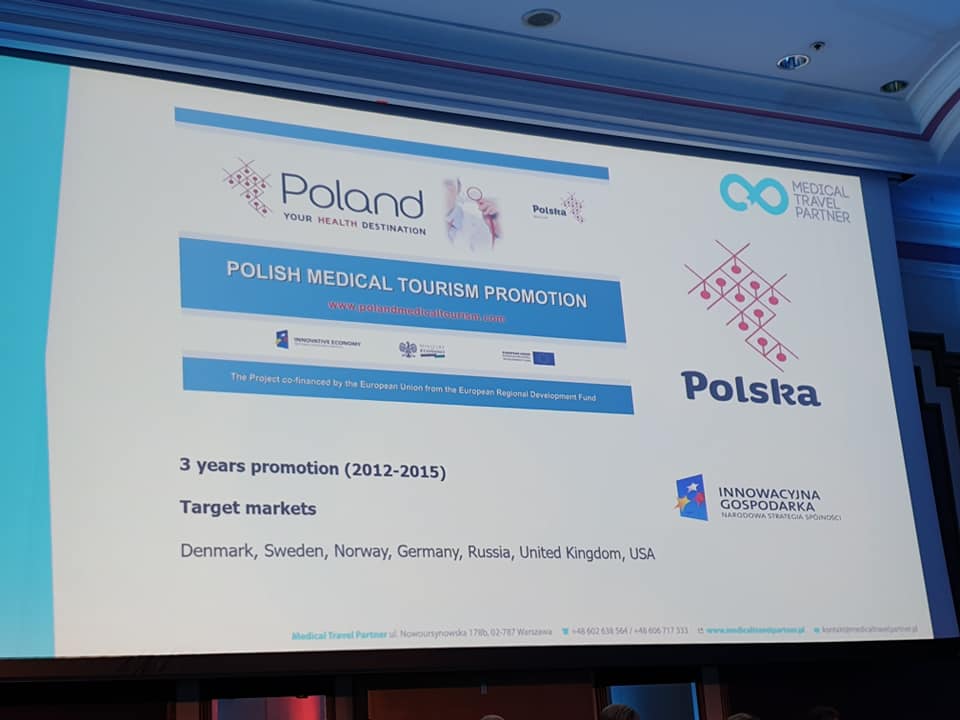
I almost feel stupid celebrating Poland's success, because all they have done is implement a common sense approach with determination, an approach which has not only brought tangible success, but at zero cost to the Polish taxpayer, and resulting in the approach being expanded and extended.
A concept which could - and SHOULD - so easily be taking place in Croatia, the country which has medical tourism at the heart of its 7-year tourism strategy of 2013, but which has yet to deliver anything concrete. Simply following Poland's example would be an excellent way to start, and I found Magdalena after her presentation to learn more.
The 3-year medical promotional project worth 5 million euro of EU money between 2012 and 2015 had its origins back in 2010 when some of Poland's private clinics started to lobby the government to do more to promote the medical tourism industry. After concerted pressure, the Polish government decided to include medical tourism in 15 sector tenders. Magdalena Rutkowska and her team stepped forward and Medical Travel Partner Poland became the implementing agency of the project. Initial target countries were Denmark,Germany, Norway, Sweden, UK, USA and Russia.
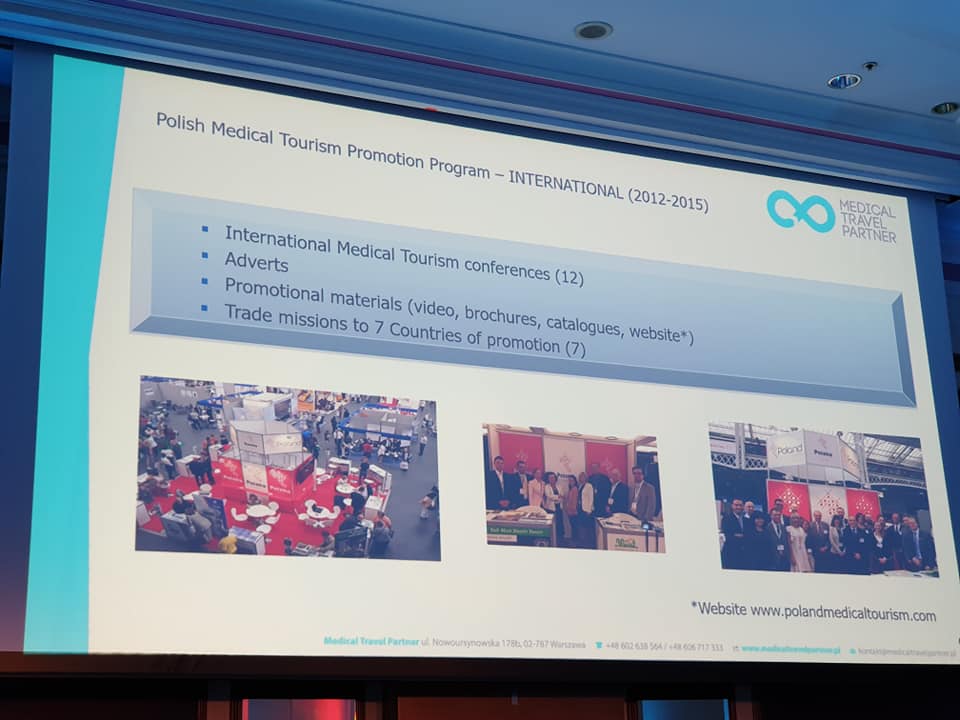
Brand Poland went on tour.
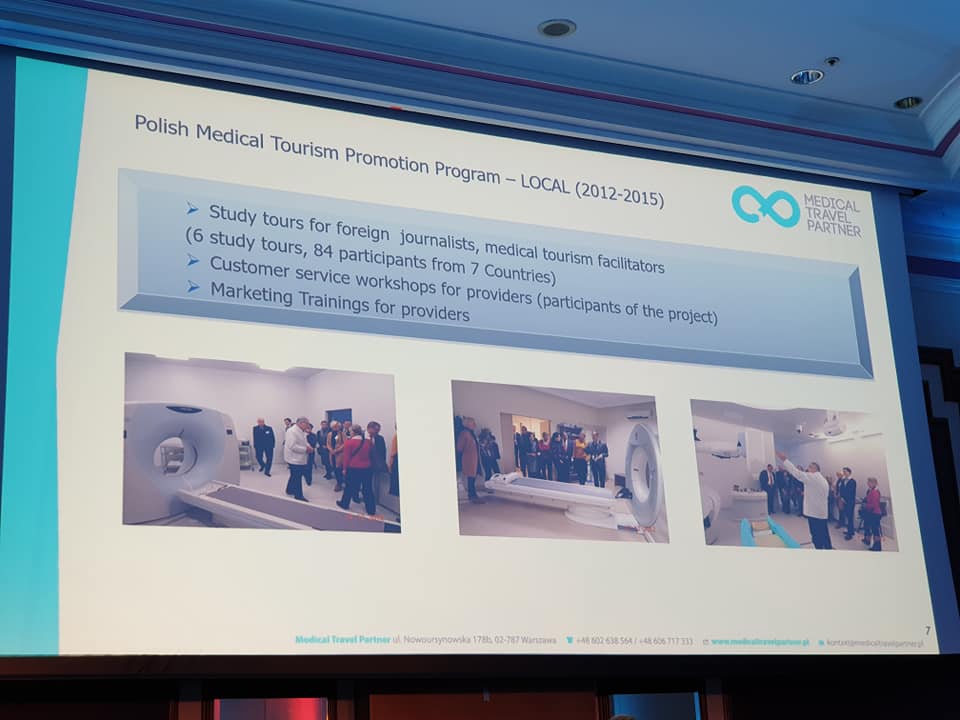
And Brand Poland played host, as well as capacity building and strengthening the brand with the participating stakeholders.
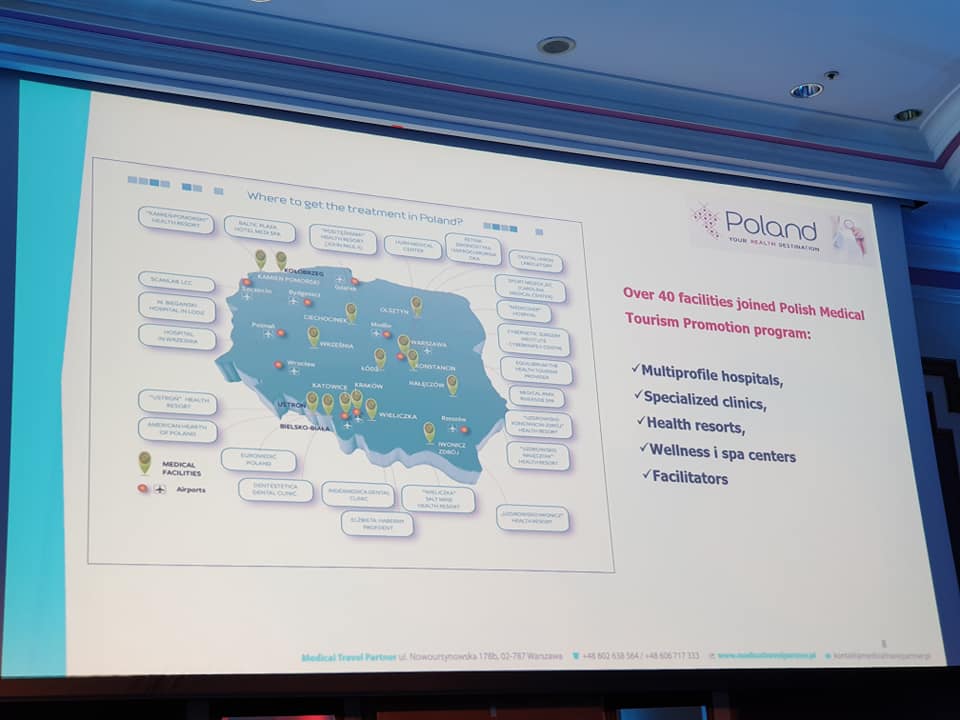
Some 40 clinics took part in the first phase of the project, investing their money in the joint promotion of Poland's brand as a medical tourism destination. Some 75% of their investment costs were reimbursed from the EU.
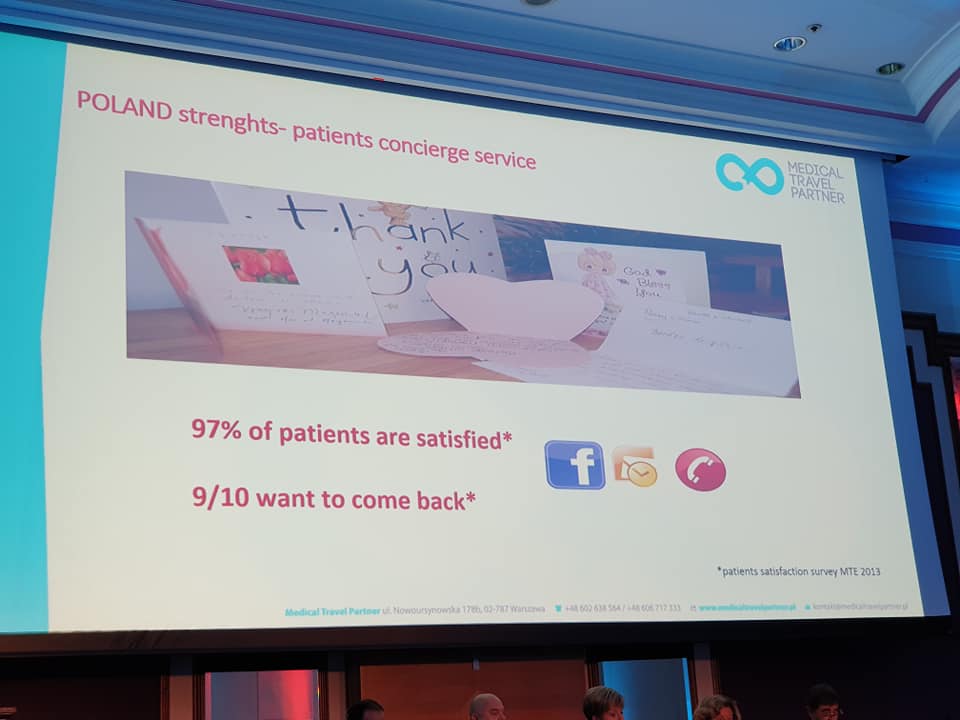
The project included feedback from the medical tourists who came to Poland during that period.
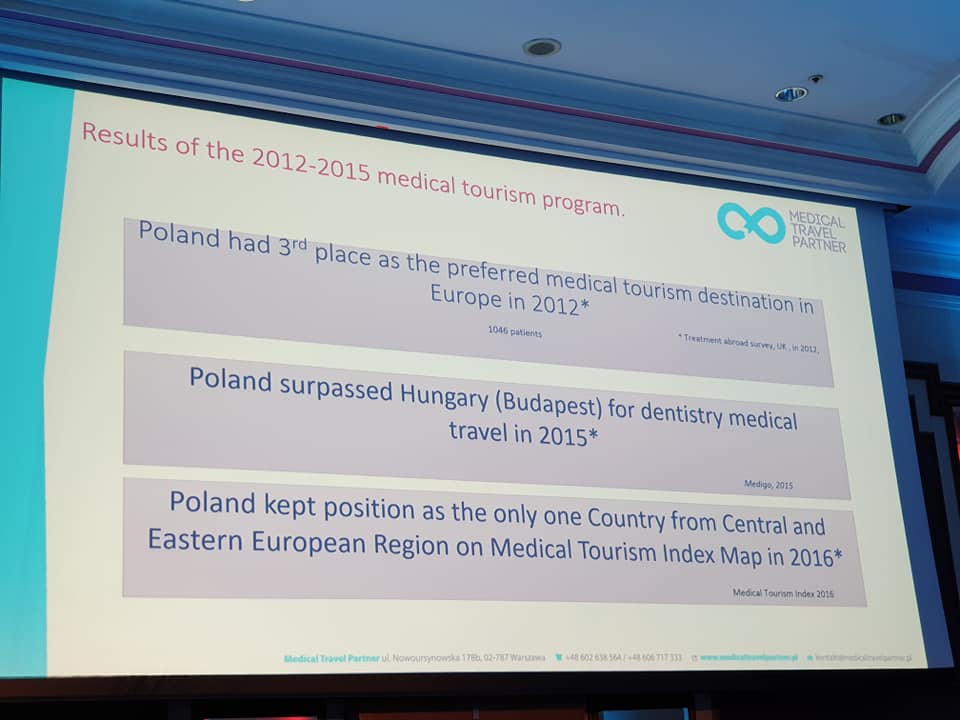
And there were some initial results for which Poland can be proud.
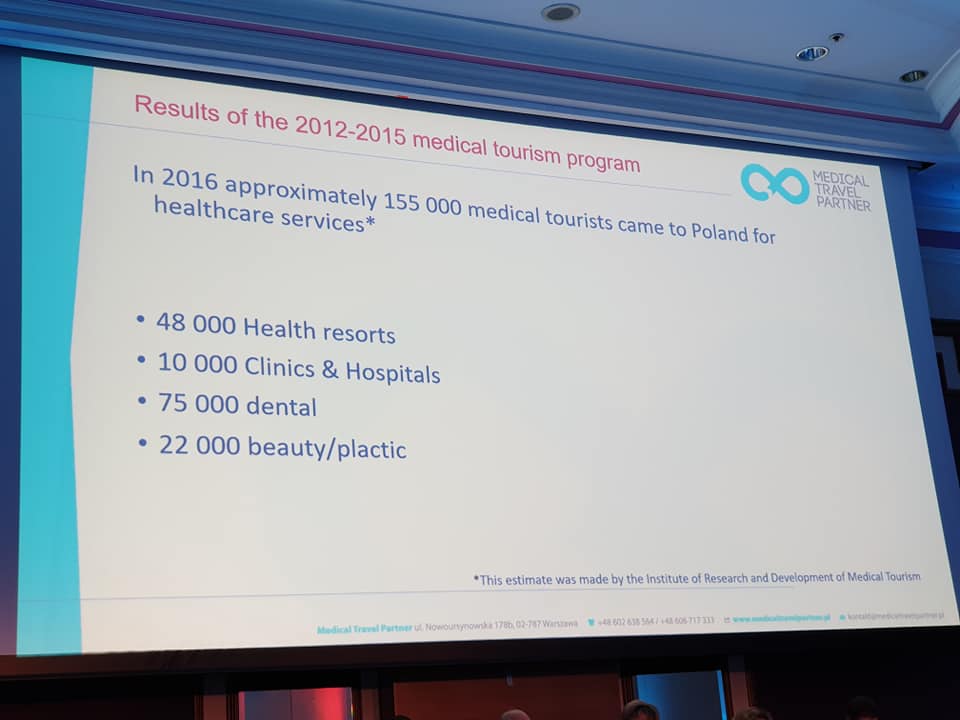
The numbers may be small for now, but the foundations being built are very solid. You can learn more about the results of the initial phase here.
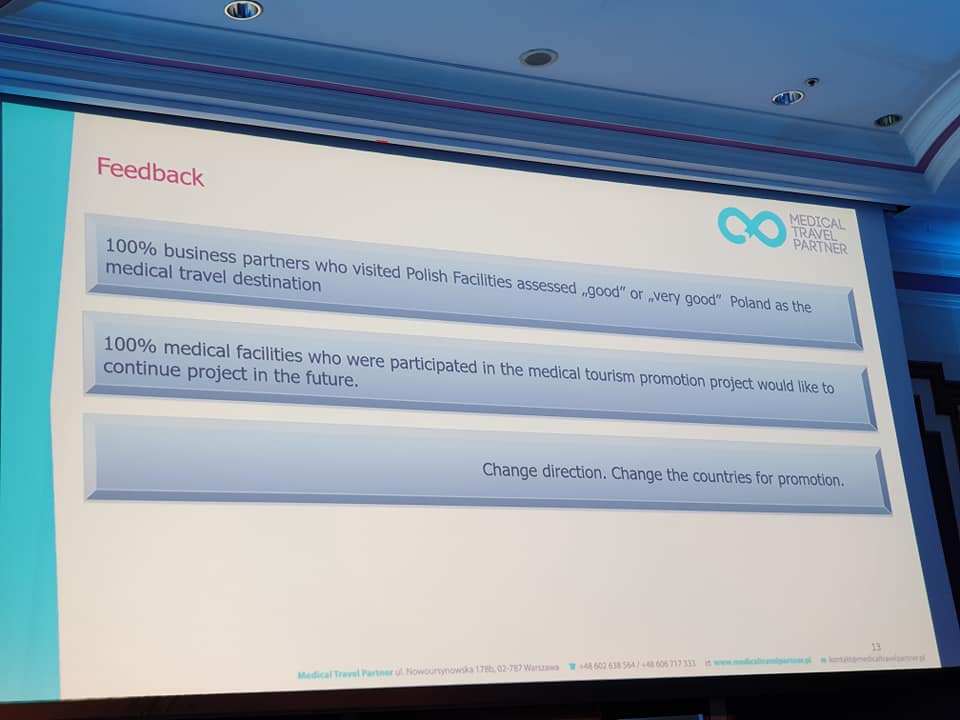
After the first 3-year phase, the project continued. Additional target countries were added, as the EU wanted Poland to look at attracting tourists from non-EU countries.
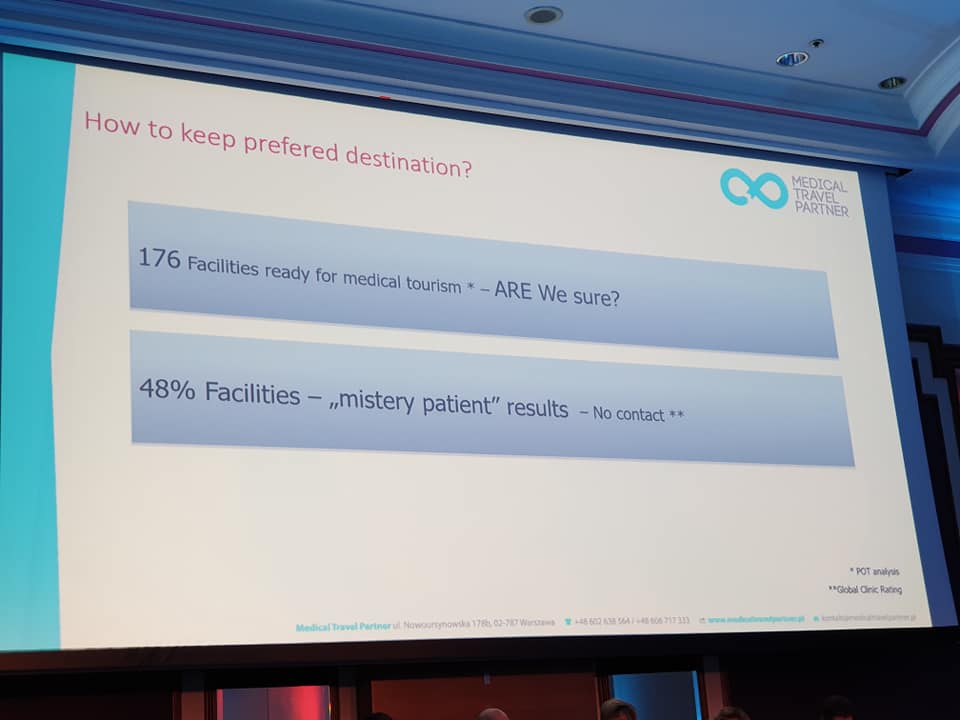
Interest from clinics was strong, with some 176 interested in participating, a significant increase from the initial 40.
While progress has been made, there is still plenty to do, of course. As part of its ongoing quality control, mystery shoppers tasted the response rate to enquiries from the participating clinics - there was no reply from 48 of them. So clearly some work to be done - train these clinics to be appropriately responsive or exclude them from the project.
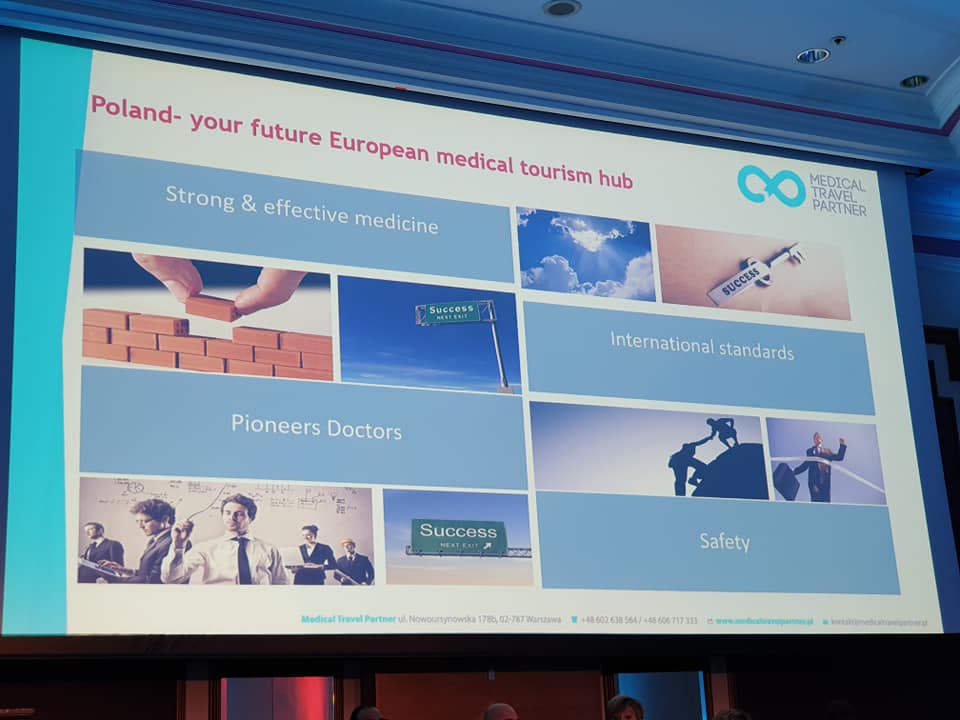
Small steps, but concrete ones, and an emerging national brand, with a clear vision of the future direction.
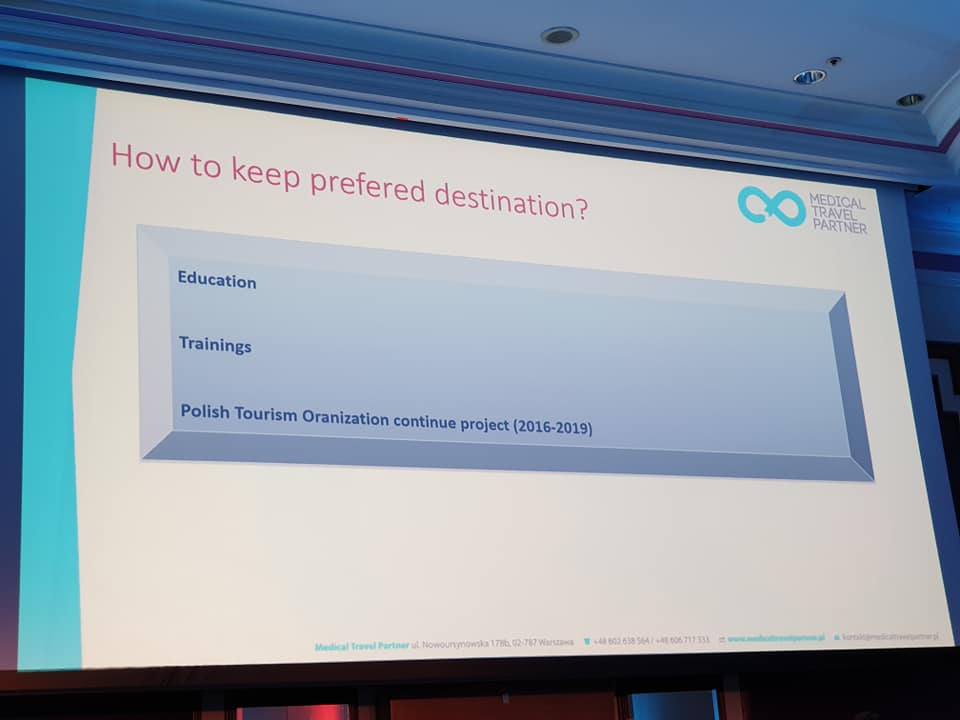
And after the initial success, more official interest and partnership, with the second phase under the umbrella of the Polish Tourism Organization.
The timeframe from project concept and submission to approval and commencing - just six months, although it should be noted that the money took longer to arrive and so many projects were initially financed by Poland and then reimbursed by the EU.
Could it happen in Croatia?
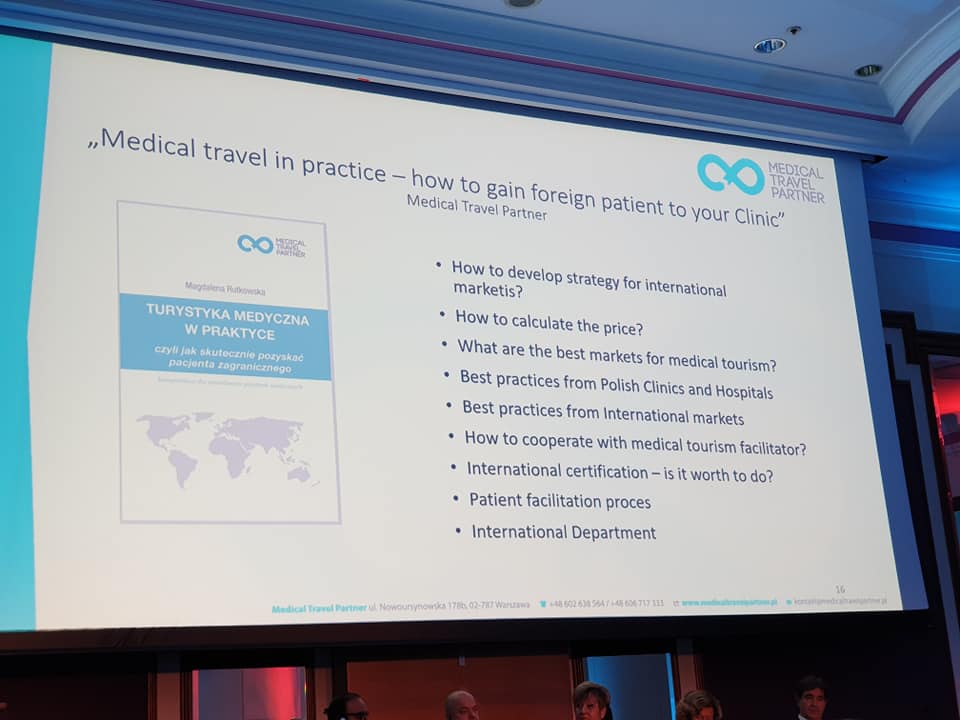
Poland's journey is a process of learning and trial and error. There were some expectations which failed to materialise, whereas other unexpected market opportunities arose. They had high expectations of the rich Polish diaspora in places such as the United States, but this has so far failed to provide a lucrative source of clients. On the other hand, simply by being present at international trade fairs and networking, new markets in former Soviet replublics such as Tajikistan and Uzbekistan have materialised.
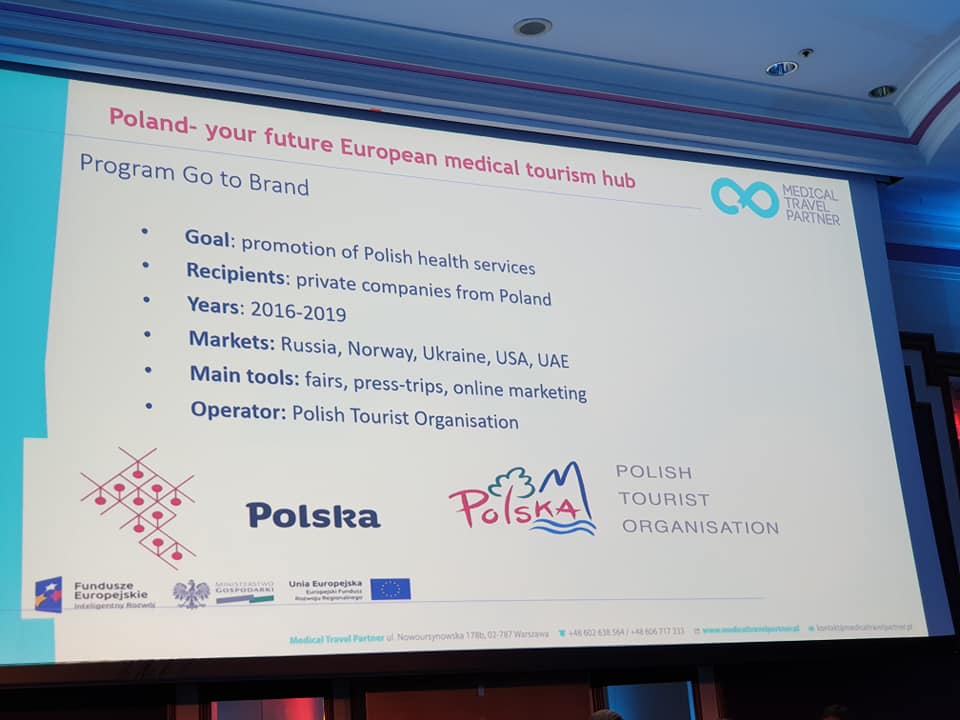
For many participants, I am sure that this Polish presentation will not rank as one of the top moments of what was an excellent conference, but for me it was the most useful lesson of all for those with a genuine interest in moving Croatian medical tourism forward to the level it should be at to realise its considerable potential.
And then, a rare moment later in the conference - questions to the panelists allowed from the floor, something that happens all too rarely. I decided to raise my hand, firstly to congratulate Magdalena on an excellent presentation, and then to address my question to fellow panelist, Robert Pende, Croatian Assistant Minister of Tourism.
"Assistant Minister, I have lived in your country for 17 years now and have heard one word more than any other when talking about developing Croatia's future - potential. Croatian tourism has so much potential, the medical tourism industry has so much potential etc. Medical tourism has been at the heart of your 2013 - 2020 medical tourism strategy for almost 7 years now. Putting the word 'potential' aside for a moment, and having listened to the excellent and very concrete example from Poland, can you give us any similar concrete examples of projects undertaken in that time, and what were the results?"
I will leave you to guess the response.
To learn more about the forum organisers, including their other initiatives to develop medical tourism in the Adriatic, visit the Medical Group Ltd website.
Learn more about Polish medical tourism in the video below, and to follow the latest from the Croatian medical tourism journey, follow the dedicated TCN section.
Why Does Croatia Have So Much Potential When Switzerland Has None?
It is fast becoming the Croatian 'P' word.
P for Potential.
Croatia has so much potential.
Croatian tourism has so much potential.
Croatian medical tourism has so much potential.
Everywhere you look, Croatia has potential, and nowhere more so than listening to government ministers and officials trying to be upbeat and justify whatever it is that they do all day. There is lots of potential, good times are just around the corner.
Golf has great potential in Croatia, for example. It is why despite having a 7-year plan back in 2013 to build 30 new golf courses by 2020 with a sum total of zero started or even close to beginning to start that Croatia hosted no less than THREE golf tourism conferences this year alone. Although nothing has happened for years, the conferences gave us a great opportunity to talk about the potential of Croatia once again.
Having spent rather more time than is perhaps healthy listening to government officials in recent months talking about the potential in sectors of Croatia's tourism, economy and other walks of life, I am coming to the conclusion that one of the biggest problems in Croatia these days is actually its potential.
For it is used as a tool to hide the fact that nothing - or nothing positive - is actually happening.
I have used the example of golf before. Let me be clear that I am not advocating the building of golf courses in Croatia. I don't know enough about the issue to decide whether or not golf tourism is a winner or sensible strategy for Croatia. But presumably the bods who run Croatian tourism are convinced as it is in their strategy in a big way.
Someone - I think Matija Babic - posted a question on Facebook some time ago asking why Croatia had so much potential when nobody ever talked about the potential of countries such as Switzerland.
The answer, of course, is that where potential for something existed in countries such as Switzerland, some entrepreneur or ministry realised that potential to improve the country. Potential was converted into something concrete that could be touched, felt, and benefited from.
Not in Croatia, for we live off potential and not concrete progress.
"One of the crucial, essential development projects is also the golf project, which has been part of the development strategy for a number of years, since 1999."
1999! In all that time only one golf course now in function has opened in Croatia. There were 30 planned in 2013, to be built by 2020, and presumably many more planned in strategic plans before that but never built. Mr. Pende is still the Assistant Minister and has so far attended no less than three golf tourism conferences in 2019 alone, where the potential of golf tourism is being lauded. 20 years of potential and nothing but potential to show for it - you wouldn't get that in Switzerland...
By chance, Assistant Minister Pende was a panel speaker at the 3rd Adriatic Health, Sport and Tourism Investment Forum in Zagreb this week, where the potential of Croatia's medical tourism industry was one of the key discussion topics. After hearing about so much potential, it was rather refreshing - and somewhat unusual - to listen to something concrete - Dr. Magdalena Rutkowska's excellent presentation on how Poland is developing its medical tourism identity using EU funds. Even more unusually for a conference in Croatia, there was time for questions to the panel from the floor. I raised my hand.
"Assistant Minister, I have lived in your country for 17 years now and have heard one word more than any other when talking about developing Croatia's future - potential. Croatian tourism has so much potential, the medical tourism industry has so much potential etc. Medical tourism has been at the heart of your 2013 - 2020 medical tourism strategy for almost 7 years now. Putting the word 'potential' aside for a moment, and having listened to the excellent and very concrete example from Poland, can you give us any similar concrete examples of projects undertaken in that time, and what were the results?"
There was a short silence, followed by words, lots of words, including liberal use of the 'P' word, but no concrete examples that I or other delegates noticed when I asked others for their interpretations afterwards.
But there is lots of potential.
I am coming to the conclusion that one of the things that is slowly killing Croatia is its extraordinary potential. And I invite you to join me in a little experiment. The next time you hear someone talking about Croatia's potential in something, challenge them (and yourself) to come up with some concrete example of something that has been done to turn that potential into something more tangible. Especially if they are a government official.
For only by stopping to hide behind Croatia's wonderful potential will we actually get to work and do something concrete.
And who knows, maybe have something in common with Switzerland and be a land of no potential.
I, for one, would welcome life without the 'P' word.
INA Extracts 21 Billion Cubic Metres of Gas from Northern Adriatic
ZAGREB, October 23, 2019 - The INA oil and gas company on Wednesday marked the 20th anniversary of continued production of natural gas in the Adriatic Sea.
"In the last 20 years over 21 billion cubic metres of gas has been extracted by 18 platforms in the northern Adriatic. These figures encourage us to make further progress in the exploration and exploitation of hydrocarbons in Croatia, primarily in the northern Adriatic which offers the potential which I believe we will know how to use," Environment and Energy Minister Tomislav Ćorić said at a ceremony held on the Ivana A platform, located 36 kilometres from the nearest mainland.
Ćorić stressed that hydrocarbon exploration and exploitation was being conducted in line with the highest environmental protection and safety standards. "Successful projects like this testify to the importance of strategic and responsible management of resources with a view to developing the economy and increasing the share of domestic production."
Ćorić visited the platform in the company of INA CEO Sandor Fasimon and the head of the Agency for Hydrocarbons, Marijan Krpan.
Fasimon said: "The purpose of our oil and gas exploration and production activities is to maximise the existing potential domestically, both offshore and onshore. We have incorporated this into our development plans because 15 years from now we want to be proud of our company and remain a reliable partner to the Croatian economy."
Krpan said that the Northern Adriatic project was very demanding in terms of technology and concept and that it put Croatia among countries with the know-how for offshore hydrocarbon production.
Ćorić recalled that INA had begun hydrocarbon exploitation in the northern Adriatic in 1999 and that it was an excellent move. He said that currently 1.1 million cubic metres were extracted daily or about 400 million annually, which is about 15-20 percent of domestic consumption.
"In the last few years we have launched several campaigns for hydrocarbon exploration and exploitation, all of them onshore. The northern Adriatic offers certain potential and I'm sure we will know how to use it in the future," the minister said.
Asked about the LNG terminal, Ćorić said that it was being built and that it would be operational at the end of 2020. He noted that the LNG terminal would help meet Croatian needs for gas and diversify supply routes for Europe. "The exploitation of hydrocarbons is one way of reducing Croatia's energy dependence, the other being the construction of alternative infrastructure," Ćorić said.
More news about gas in Croatia can be found in the Business section.
From Citluk to the NBA: Story of Ivica Zubac
October 23, 2019 - The 22-year old Croatian basketball player Ivica Zubac dreamt of playing for the local Brotnja team in his hometown of Čitluk in front of 1,000 people, but that never became a reality. Today, a different dream turned into reality.
First, Zubac was drafted in June 2016 to the Los Angeles Lakers, but now he is a member of their rival, the Los Angeles Clippers, and is ready to take the NBA by storm.
Many NBA fans hadn’t heard of Ivica Zubac before 23 June 2016 when the Lakers selected the 7'1" center as the 32nd pick in the Draft, but this season he should be the Clippers' starting center.
Zubac grew up in Citluk, a small town in Bosnia and Herzegovina that is just east of the Croatian border. Even though he has duel citizenship, Zubac identifies 100 percent as a Croatian.
"I live in the part of Bosnia-Herzegovina, where we are the only Croatians, and we are the proudest in the world," said Zubac for nba.com in February 2017. "Croatia means everything to us."
At the age of 7, Zubac started practicing together with older kids up to age 15. Just like everyone from his town, he wanted to be just like Zoran Planinic, a former professional basketball player who played for the New Jersey Nets in the NBA and who happens to be Zubac’s second cousin on his father’s side.
Soon enough, with a lot of practice, Zubac started playing really good and scoring 30 or 40 points per game for Brotnjo where he used to play as a youngster. His good performances didn’t go unnoticed as Cibona, a top Croatian League club, invited him to play in a tournament when he was 13.
Zubac said in 2017: “So we went to a tournament in Hungary, and I didn't do much. I scored like two points in five games, and I was thinking, ‘Oh man, I didn't do good, they aren't going to take me.’ But then they called me for another tournament in the middle of the season and I played better. And then for another tournament, and I played better again. Then they asked me to move there and start high school in Croatia.
When I started to play basketball, the gym in Citluk was always full of 1,000 people, and my only dream was to play in front of those people with Brotjo for the senior team.”
Zubac didn’t start well as for his first two years, nobody paid attention to him. When he was 15, he started playing better. However, he had an injury and missed a year. He started slowly coming back at the age of 17 when Cibona loaned him to a Croatian First Division Team, Velika
Gorica, where he averaged 16 or 17 points per game. He was brought back to Cibona on loan, but still didn’t play much. Unexpectedly, that summer came his arrival moment.
Zubac explained two years ago: “I was supposed to be the backup center for the Croatian National Team at the Under 19 World Championships. But the expected starter got injured, and I started and played really good. I think I was the second or third scorer in the championships. We made it to the final and barely lost to the USA in overtime. After that, everybody knew. I realized, wow, I (really) can go to the NBA one day.”
The following season, Cibona promised Zubac that he would play a lot, but he sprained his MCL and was out for two months. On his return, he didn’t play much, so he asked his agent to change the team, and in February 2016, Zubac joined Mega Leks in the Serbian League. A few months later, he entered the Draft, despite a lot of scouts telling him to stay one more year in Europe.
“But I told my agent my dream was to play in the NBA, in the best league against the best players. I wanted to prove myself. And I didn't want to waste a year. A lot of things could happen. I could get injured, who knows? So I said I'm going to the NBA right now, as soon as they draft me,” Zubac said in 2017.
Zubac was selected as the 32nd overall pick in the 2016 NBA draft by the Lakers. On 7 July, he signed with the Lakers and joined the team for the 2016 NBA Summer League. In his rookie season, he started only 11 games but managed to write his name in the history books.
On 13 March 2017, in a 129-101 loss to the Denver Nuggets, Zubac became the youngest player in the Lakers history with 25 points in a double-double. That night at the age of 19, he scored 25 points and made 11 rebounds and achieved history, but Zubac still put his team first.
“The record means nothing, I scored 25, but we lost by 30 points. It does not mean anything. I would score 5 points and contribute to a win than score 25 and lose”, Zubac said that night.
Two weeks later, he was ruled out for the rest of the season with a high ankle sprain in his right ankle. The following season, Zubac had multiple assignments with the South Bay Lakers, the Lakers’ NBA G League affiliate, due to limited playing time in the regular season.
In his last season for the Lakers, Zubac appeared in 33 games (12 starts), averaging career-highs in points (8.5), rebounds (4.9), field goal percentage (.580) and free-throw percentage (.864) in 15.6 minutes.
However, the Croatian didn’t stick with Lakers for too long as the Clippers acquired him and forward Michael Beasley from Lakers in exchange for center Mike Muscala in February of this year. This season, Zubac should be the Clippers’ starting center and he already began the season on a positive note. In the last night’s opening game of the season, Zubac was a starter for the Clippers in their 112–102 win over his former team, Lakers. The Croatian had eight points on perfect 4/4 shooting in 10 minutes spent on the court.
To read more about sport in Croatia, follow TCN's dedicated page.
WTA Elite Trophy: Donna Vekic Ends Run in Zhuhai, Still Hope for Martic
October 23, 2019 - Croatian tennis player Donna Vekic also suffered a defeat in her second match of the WTA Elite Trophy tournament in Zhuhai, China, and thus finished her 2019 tennis season.
Namely, HRT writes that in the 2nd round of the Azalea group, the 23-year-old Osijek native lost to 19-year-old Ukrainian Dayana Yastremska 7-6 (6), 6- 2 after an hour and 35 minutes of play.
Donna Vekic thus lost with the same result in both of her appearances in Zhuhai. Recall, on Tuesday, she fell 7-6, 6-2 to Dutch player Kiki Bertens, and Vekic ended her performance in the last place of the group.
Against Yastremska, Vekic missed several opportunities in the first set, and at 4-4, she had two chances to break her opponent. Still, the young Ukrainian’s brilliant attack killed the hopes of Vekic. In the tie-break, Vekic reached two consecutive set points at 6-4, but then Yastremska scored four points in a row with her excellent forehand for the comeback.
Vekic took out her frustration from losing the first set on her racket, though that did not help her continue any better in the duel. The first break of the entire match didn’t come until the fifth game when Yastremska reached a 3-2 lead with a great forehand attack, and after Vekic missed the chance to return to the match in the next game after missing a backhand, it was clear that Yastremska would secure the victory. Vekic did not use any of the three break points she had in the duel. Vekic achieved a first-serve percentage of 68% and only won six games to Yastremska's 13.
Thanks for being with us this week! @DonnaVekic have finished her season after the loss to Yastremska at #Zhuhai today.
— WTA Elite Trophy (@WTAEliteTrophy) October 23, 2019
Best luck for 2020! @WTA #WTAEliteTrophy #WETZ19 pic.twitter.com/Tk5zUtUXr0
But not all hope is lost for Croatia’s female tennis players - the competition in Zhuhai also features Petra Martic, who will have her first appearance in the Orchid group on Thursday against American Madison Keys. Chinese tennis player Saisai Zheng is also in this group, and in her first match of the group on Tuesday, Zheng outplayed Keys 6-4, 6-2.
To read more about sport in Croatia, follow TCN’s dedicated page.