

Laura Lisac Wins Karate World Bronze in Chile, though Lack of Funds Nearly Stopped Her from Going
October 25, 2019 - Laura Lisac, 15, qualified for the World Cadet Karate, Junior & U21 Championships in Chile after winning first place at the Croatia Open in the Cadet Female Kumite +54kg, but couldn’t afford to travel to South America.
The Croatian Karate Federation (CKF) covered 40% of the costs for the trip, while the other 60% should have been covered by Laura’s family, who couldn’t afford it. They appealed to the public, who magnificently chipped in and sent Laura to the World Cup where she won third place.
But just two weeks ago, Laura’s dream and a trip to Chile was in jeopardy. Her dad has Multiple Sclerosis, which is a condition that can affect the brain and spinal cord, causing a wide range of potential symptoms, including problems with vision, arm or leg movement, sensation or balance while her mom works at two jobs in order to provide food for the family. Therefore, the Lisac family couldn’t afford the trip.
Thankfully, there is always someone willing to help, and that’s exactly what friends of the family did. They decided to raise funds for Laura’s trip to the World Cup with the power of social media.
“We kindly ask you to help one girl attend the World Karate Championship in Chile. The federation covers 40% of the costs of the trip, and the family has to come up with the remaining 60%. The total cost is 12,458 kuna, while the federation will pay 4,983 kuna and the candidates themselves must pay the difference of 7,475 kuna.
“Laura’s dad suffers from MS and is on long-term sick leave and her mom works two jobs to cover the financial needs of the family. In addition to the everyday expenses that each family incurs, the additional costs are Laura’s appearances in numerous competitions. As she is very successful and talented, we want to help her in achieving her dream to become a successful athlete, to the pride of all Rijeka residents,” one post on Facebook read.
A few days later, this appeal brought success and happiness to the Lisac family. A Multiple Sclerosis Society helped in sharing the plea while the organization “Koga briga” decided to pay the costs of the trip, the family announced on Facebook.
The CKF main secretary Darko Šimunec said at that time: “It’s true that the federation has only covered part of the costs because we don’t have money for everything. We would have if we only send the best competitors to such tournaments, but we felt it was better to give a chance for everyone to attend.
“So, the rest of the costs are covered by the club or city sports associations, not parents. It has never happened to us that an athlete doesn’t go to the competition because the family has no money.”
This story received an even more positive spin when Laura won the bronze medal this week after winning four matches in a row, first beating Enni Lydman from Finland 3-1, then Amy Lopez from Ecuador 3-0, Canadian Alina Altinabaeva 2-0 and finally Venera Zhaxybayeva of Kazakhstan 5-0.
To read more about sport in Croatia, follow TCN's dedicated page.
36 Hours in Rijeka with The New York Times
October 25, 2019 - The New York Times' Alex Crevar reveals all about his 36-hour trip to Rijeka.
"If the coastal regions of Croatia have become tourist stars, then Rijeka, a working-class port city in the Adriatic, is grossly underestimated. It came as a surprise, then, that this city, whose outline combines the Habsburg decadence with the cranes of the shipyard, was proclaimed the European Capital of Culture for 2020 over other Croatian candidates like Dubrovnik and Split,” writes The New York Times in their Rijeka report.
"36 Hours in Rijeka" covered almost every corner of the city through the eyes of American journalist Alex Crevar.
Crevar writes that Rijeka is known for its tumultuous carnival celebrations and alternative vibe, and that it has been a port and shipyard for centuries. "It combines Roman legacy, Italian influence, Austro-Hungarian architecture and the 'decaying' Yugoslav industry.
This resulted in a unique blend of sights, cuisine and nightlife. With a series of events set for the 2020 celebrations beginning in February and the five-star Hilton Hotel opening next summer, it seems that this Croatian port is ready to swap its cranes for a spot under the spotlight."
Cervar begins on Friday afternoon at the Petar Kružić staircase towards the 13th century Trsat Castle. The hilltop offers panoramic views of the Kvarner Bay, the islands and the eastern coast of the Istrian peninsula. "Below is Rijeka - ruled by seven countries since World War I, beautiful in its dissonance.
Green domes amidst terracotta roofs and Renaissance, Baroque and Art Noveau buildings. Italian villas, empty 19th-century warehouses and communist-era blocks fill the space between,” he continues.
Naming a quote by architect Idis Turat: "Rijeka has always had a peripheral existence between empires. In a way, this is an advantage as we 're-invent' the city."
The author takes us back to the center, where he stops at the Cont pub and drinks a "homemade lager". He then crosses the Rjecina river and reaches the Croatian National Theatre Ivan pl. Zajc for a show. The theater is said to be a neo-Baroque building with 650 seats, built in 1885 that depicts "Croatian and Italian dramas, ballets and operas."
Crevar then suggests Konoba na Kantunu for dinner. “Take a table inside the tavern, which is decorated with colorful local canvases, or on the terrace, next to the canal.
Start with a cold octopus, shrimp and squid salad. Order a glass of Zlahtina from the island of Krk and grilled beef served with Swiss cheese and potatoes. For dessert, homemade apple, plum or pear strudel with whipped cream. Lunch for two costs around 450 kuna,” he adds.
On Saturday, Crevar begins with a walk through Korzo, Rijeka’s central pedestrian passage. “Visit the Samovar Bar, a cafe with more than a hundred teas. Pass by the building that is now a chocolate shop, where young Fiorello H. La Guardia served as a US consultant from 1984 to 1906.
Then continue along the coastal side to the town market. Explore open-air kiosks and tables full of fruits and vegetables surrounding three 19th-century iron pavilions selling meats, cheeses, fresh bread, liqueurs, hazelnuts and fresh fish."
"During Austro-Hungary, Rijeka exported everything - from sugar and paper to playing cards and torpedoes, which were invented here. Start your search for modern local design here in the oldest part of the city - near the remains of Roman Tarsatica.
Inside the shop Sta Da? you will find branded T-shirts, bags and backpacks created from recycled bicycle tubes. You will then arrive at the Bruketa Small Gallery, the city's oldest private gallery, which opened in 1974. It specializes in individually made ceramics - from watches, vases and lamps to dining sets."
Crevar also states that around the corner is "Croatia in a Box", selling handmade crafts (from bags, dresses and necklaces to soap) made of wood. He explains that the concept of this store is summed up in the name. "Create your own version of Croatia in a box. The combination leans toward gastronomy and includes olive oil, wine, sausages, cheese, truffles and chocolate."
The author continues that nothing is more local than the Konoba Fiume. "This is the kind of restaurant where fishermen sit with lawyers and port workers share a table with politicians," adding that although medium-priced meals are served ("like homemade shrimp and truffle pasta”), you should close the menu and say one word - brodetto. “And if you ask nicely, you can add juicy shrimp for about 90 kuna.”
The NYT reporter then heads to the "eclectic harbor" and the Maritime and History Museum of the Croatian Littoral at the Renaissance Governor's Palace. He says the exhibits include Bronze Age discoveries, an interactive model of the city, ancient ship records, and a life jacket from the Titanic.
Crevar continued to "PEEK & POKE," a museum of old computers and information technology that contains more than seven thousand “objects of technological nostalgia." Then onto the Museum of Modern and Contemporary Art "which is housed in a complex that once included a sugar factory and a tobacco factory."
Saturday evening begins at Bard, "one of the first real pubs in the city when it opened in 1998" whose "hobbit-like" interior has not changed. Sitting on the terrace, he mentions the Rijeka Cathedral and the Rijeka tunnel built before World War II.
"Take the river that used to be the border between Italy and Yugoslavia, between the world wars, to dinner at Konoba Nebuloza. The NYT praises the offer, which includes “travarica, shrimp risotto, polenta, and red Istrian Teran."
"It seems like everyone in Rijeka is either a DJ or they are in a band," Crevar said. He added that for a better understanding of the city vibe, it is necessary to make a circle along the river and the former industrial zone. "Begin the evening with a Niksic beer at the Caffe Bar Skradin, a family-owned place to drink full of memorabilia that includes old radios and tickets from 1964."
He then heads to the Tunel, which "blends art exhibitions, jazz and alternatives with a local dance rhythm." He ends the evening at “Zivot”, which "spins electronic and house in a disco decorated with family photographs from Yugoslavia in the 1980s."
You can read the full report at The New York Times.
Translated from Novi List
To read more about travel in Croatia, follow TCN’s dedicated page.
Zoran Milanović Heading to Ireland to Talk to Croats Living There
As Novi list/Drazen Ciglenecki writes on the 25th of October, 2019, SDP's presidential candidate Zoran Milanović wants to talk to Croats who have emigrated to Ireland's second largest city in recent years, claiming that he is ''not going there to get votes''.
The Croatian presidential election campaign has, rather unsurprisingly, sunk into near-total monotony. There is nothing going on with it, there are no confrontations between candidates, which is of major interest to citizens and the media everywhere, so it is not surprising that the public has lost interest in this election race almost entirely. The current campaign is still monitored mainly at the level of the results of surveys that are published periodically. It is up to nobody else but the presidential candidates themselves to arouse more public interest in the upcoming elections.
President Kolinda Grabar-Kitarović has not changed any part of her approach to the elections after announcing her official candidacy three weeks ago. She is still distanced from the campaign.
Miroslav Škoro is trying to add a certain international dimension to his candidacy, but for many people it's become more amusing to watch than anything else.
This week the singer stayed at the European Parliament in Strasbourg, where he spoke to members of the European Conservatives and Reformists (ECR) faction about his own vision for Croatia within the European Union. The visit was organised by MEP Ruža Tomašić, who supports Škoro, and belongs to this parliamentary group to the right of the European Peoples Party (EPP).
Zoran Milanović has been paying visits to different areas in Croatia and making comments on daily political developments, and we've learned that he will soon travel to Cork, Ireland. He isn't planning on giving up on it all and moving there, but plans to talk with Croats who have moved there over the last few years.
In his election headquarters, they emphasised the fact that Milanović isn't ''going there to get votes'', since it is highly unlikely that anyone living in Cork will travel 250 kilometres to Dublin just to vote at the Croatian Embassy there. In addition, very few Croats in Ireland participate in the elections at all.
HDZ strongly attacked the former government headed by Zoran Milanović for the level of emigration from Croatia after the country officially joined the EU back in July 2013, but this worrying trend has not stopped with the change of government. The President of the Republic of Croatia was particularly engaged in this matter, warning the Government of Andrej Plenković that he must adopt demographic measures that would at least mitigate the scale of emigration.
''We stopped the military aggression, Croatia won. However, today, especially Slavonia, Croatia is at risk again. It is threatened with emigration and extinction,'' Kolinda Grabar-Kitarović once said firmly.
In her meetings with Croats living abroad, she constantly urges them to return, and she told them a month ago in Pittsburgh, "Croatia is calling you." Zoran Milanović has repeatedly spoken about this issue during the campaign, denying that people are being evicted because of a specific government. However, he also managed to find a culprit in HDZ.
''Croatia is a country where there is no equality, no equal chance of success. We see it every day and that's why people leave. They leave because they see that, even when they put in a lot of effort into something and when they play by the rules, there's no success. Unfortunately, this is a consequence of a Croatia which has been suffering under HDZ for thirty years. HDZ is a cartel, if you're with them, you'll succeed if you are not, you have no chance,'' the SDP presidential candidate said this summer.
Emigration of young people has been emerging as one of the most difficult problems in Croatia, so Milanović claims that he wants to hear directly from the people who left their homeland about what prompted them to do so, and what their chances of coming back look like.
It is estimated that about 20,000 Croats live in Ireland today, of which about 125,000 are located in Cork. Half a year ago, they wrote to the Embassy in Dublin and the Ministry of Science and Education in Croatia requesting the opening of a Croatian school in Cork, given that their children were forgetting how to speak Croatian.
Make sure to follow our dedicated politics page for much more.
Dubrovnik to become First City in Croatia with 100% Electric Car Sharing System
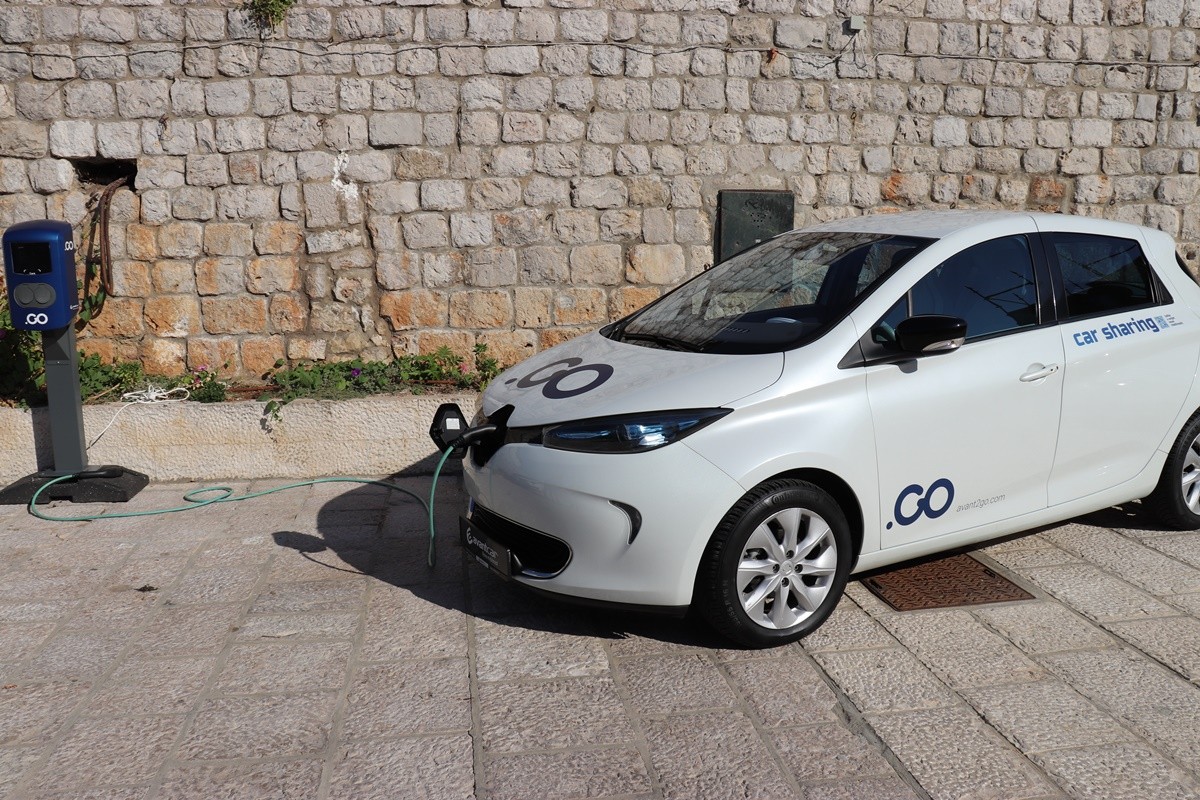
October 25, 2019 - Car sharing is recognized around the world as a quality alternative to ownership, and an excellent upgrade to the public transportation network. Thus, the city of Dubrovnik will become the first in Croatia to boast a 100% electric car-sharing system.
Namely, HRTurizam reports that the first thirty Avant2Go vehicles will soon be deployed in seven locations around Dubrovnik.
It is estimated that one car in this system can replace more than ten privately-owned vehicles, and the value of this is particularly evident in cities such as Dubrovnik, in which transport infrastructure is hugely burdened.
Grad Dubrovnik
“The city of Dubrovnik is systematically working to address the problems of traffic. In this regard, we have initiated numerous projects, primarily aimed at our fellow citizens. Among them is the first comprehensive smart parking in Croatia, for which we were awarded the first prize in the Smart City category this year. This is a sequel to the story. The car-sharing project has fully integrated into our vision of the city's development, which is why we have supported its implementation in Dubrovnik, which thus becomes a pilot project and once again takes the lead in introducing new technologies and smart solutions to raise the standard of living of its citizens. We believe that this service will help to unburden transport infrastructure and parking, which is currently one of our main focuses, and includes all other positive aspects that the City strives for, such as sustainability, energy efficiency, and environmental protection,” said Mato Franković, mayor of Dubrovnik.
Dubrovnik's new car-sharing service is called Avant2Go and is led by Avant car, the leading provider of this service in the region.
"Electric mobility and co-sharing vehicles are currently the biggest global trends in the automotive industry. We believe that the 100% electric car-sharing Avant2Go will meet the needs of locals and their city. Among the main benefits of the system are noise-free driving and emissions, the availability of the service to a wide range of people, easy use of the service 24/7 via smartphones, and secured parking spaces,” said Matej Cer, founder of Avant car.
Grad Dubrovnik
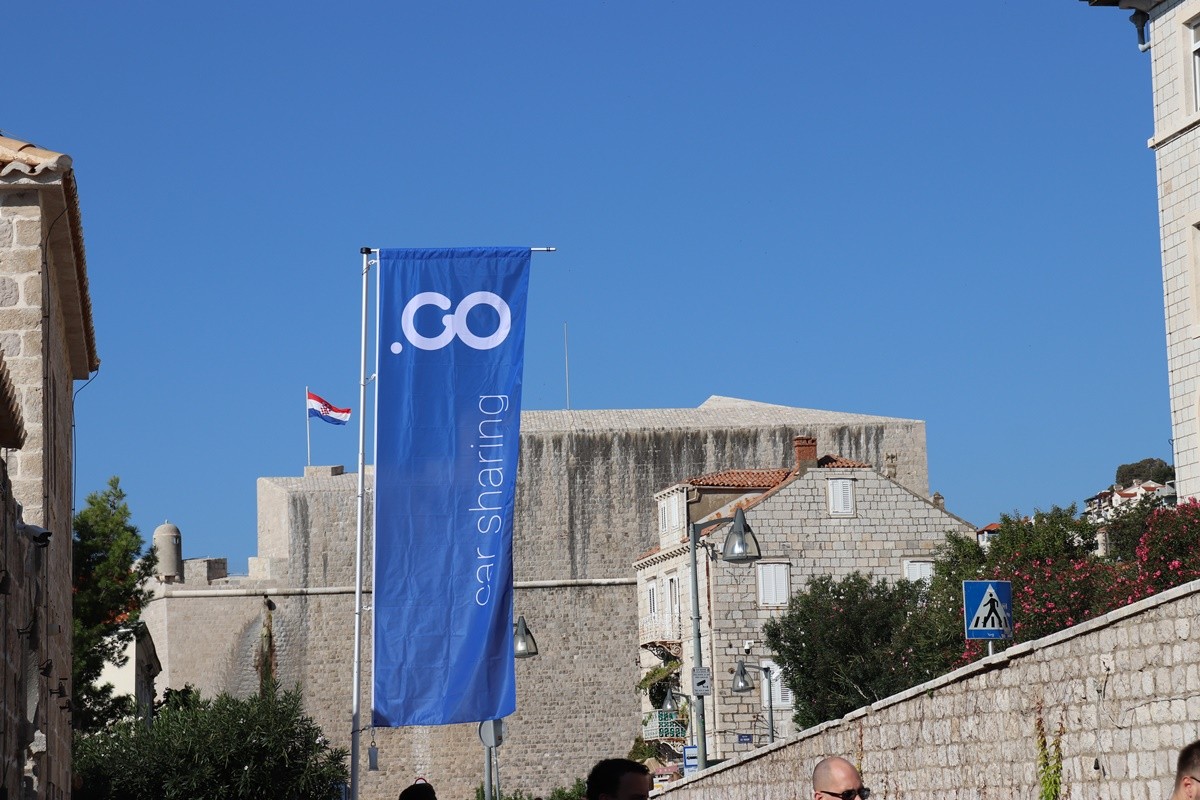
The vehicles will be deployed in seven locations in the city from the second half of November at Dubrovnik Airport, Gruz Harbor, by the cable car leading to Srđ, the Public Garage, in Lapad, and at the Rixos and One Suite parking lots.
For starters, there will be thirty vehicles available, and mostly the Renault ZOEa models. The fleet and number of locations where the cars can be picked up and dropped off will increase in line with the needs of users, adds Avant.
Car sharing is a service intended for Dubrovnik residents and their guests, since tourism destinations must systematically develop the diversity and complementarity of mobility services.
"At the same time, Dubrovnik is one of the most demanding cities in terms of traffic optimization, but also a jewel of cultural heritage. Services such as car-sharing should, therefore, serve the development of mobility but also contribute to the sustainability of Dubrovnik. This project strategically links vital parts of the city to the most important traffic hubs. This makes Dubrovnik even stronger and more environmentally friendly with the rest of the world,” said Vladimir Markulin, director of Avant in Croatia.
The vehicles are booked, unlocked, and paid for with the mobile application. As an upgrade to public transport, car-sharing will contribute to relieving traffic in an environmentally friendly way, while giving citizens easy access to the roads without needing to own a car.
To read more about lifestyle in Croatia, follow TCN’s dedicated page.
Innovator from Imotski Wins Prestigious Award, Attracts Investor Attention
As Slobodna Dalmacija/Braco Cosic writes on the 25th of October, 2019, young innovator Mario Ljubičić from Runovići near Imotski in Split-Dalmatia County managed to win the prestigious Grand Prix award at the 17th Arca International Innovation Fair in Zagreb.
In collaboration with his cousin Ivan Ljubičić, the author of the bicycle software, he won this prestigious award in a competition of more than 200 innovators from across twenty European countries. Mario Ljubičić exhibited his "talking bike", which is as impressive as is the conditions its young creator has put behind it when it comes to potential investors.
Croatian innovation quite clearly knows no bounts, and despite the doom and gloom the media loves to pedal, there is a lot to be proud of in this little but extremely talented little country. This, yet another success story started not from Zagreb, but from the rugged Dalmatian hinterland, more specifically the Imotski region. This young innovator presented his invention and stated quite clearly that although he has had offers from abroad, he wants to stay right where he is - in Imotski.
''I must admit that this is the greatest recognition in my career as an innovator, but also the greatest recognition for the Faust Vrančić Society from Šibenik, through which I went to the Zagreb Fair. I can say that the experts who evaluated the innovation were really delighted with what my cousin Ivan and I presented. With my electric car, I have won gold and first prizes at many trade shows, but this year's "Arca" Grand Prix award is the very top of the top. I was not even aware of the actual importance of this award,'' said the Imotski-based inventor.
''At the fair, I also received specific offers from investors, but my first and basic condition was that if we were already going into bicycle production, that it would need to be done in the Imotski region and that young people from our region should be employed as part of the project. Now I'm going to start making about twenty copies of the "talking bike" and I've already found subcontractors for individual parts. The most important things I do alone and everything else will be assembled here in Runovići,'' concluded Mario Ljubičić.
Make sure to follow our dedicated Made in Croatia page for much more on Croatian innovation.
Vucedol Era: When Eastern Croatian Settlements Most Important in All Europe
October 24, 2019 - One of the greatest archaeological treasures of South-East Europe lies on the banks of the Danube in eastern Croatia, as it has for more than 5,000 years. Meet Vucedol.
Have you heard of Vucedol?
And if you have, do you now what it is exaclty? A town, a village, a region, a culture, a people?
Perhaps you are like me and had heard of Vudecol, knew that it had something to do with an ancient civilisation close to the Danube, and that there was a museum somewhere out there in eastern Croatia.
It was time to fill in this embarrassing gap in my knowledge about eastern Croatia, and a visit to the Vucedol Culture Museum was put on the list of our recent HeadOnEast family visit to discover the wonders of Slavonia and surrounding areas last weekend.
I was stunned by what I found.
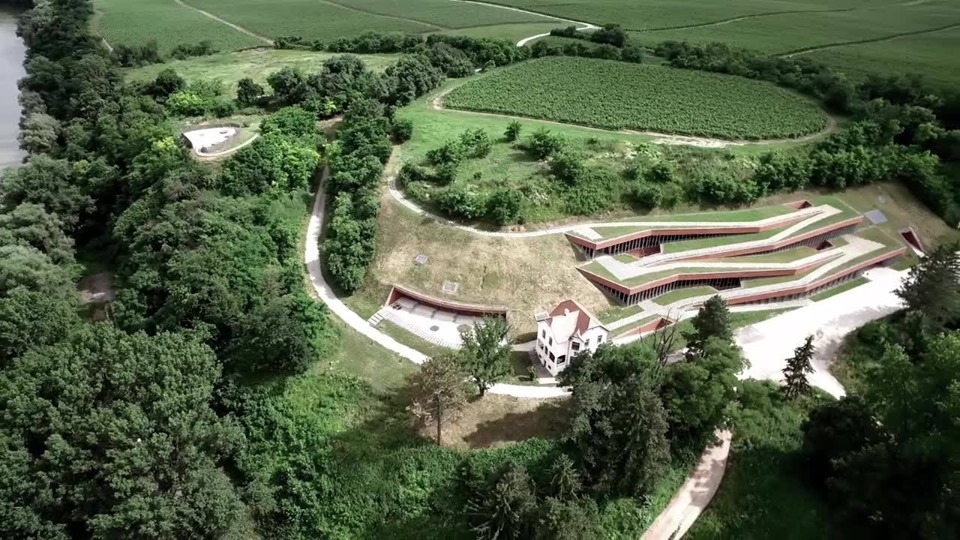
It turns out that Vucedol is a small settlement these days just south of Vukovar. Located on the Danube, it is a sleepy place, but one which once was among the most important settlements in all Europe with a civilisation s advanced as any in the world.
The right bank of the River Danube in eastern Croatia was settled by people of the Vučedol culture in the early third millennium B.C. This leading cultural formation between 3000 and 2500 B.C. strongly influenced the other cultures of the time and has left noticeable marks on the entire heritage of Europe. It coexisted with the Sumerian period in Mesopotamia, the building of pyramids in Egypt, and the early layers of Troy. The Vučedolians were the first people to have mastered time—the first culture that made a calendar! The first astronomers to read the secrets of the heavens. It is shameful how little we today know of the images above our heads… Pit 6, which was later re-numbered as Grave 3, was dug 4 meters away from the edge of the lowest floor of the Vučedol culture. In the grave, or rather, tomb, a total of eight bodies were found. Especially noteworthy among the large number of ceramic finds is the terrine, the most artistically decorated one of all those found so far in the Vučedol culture. On the night of 9 March 2889 B.C., having just passed through the Pleiades, the planets Venus and Mars found themselves in conjunction visible from Earth as a close approach or “posture of love”.
Introduction to the film about Vucedol - The Prehistoric Night of Venus and Mars.
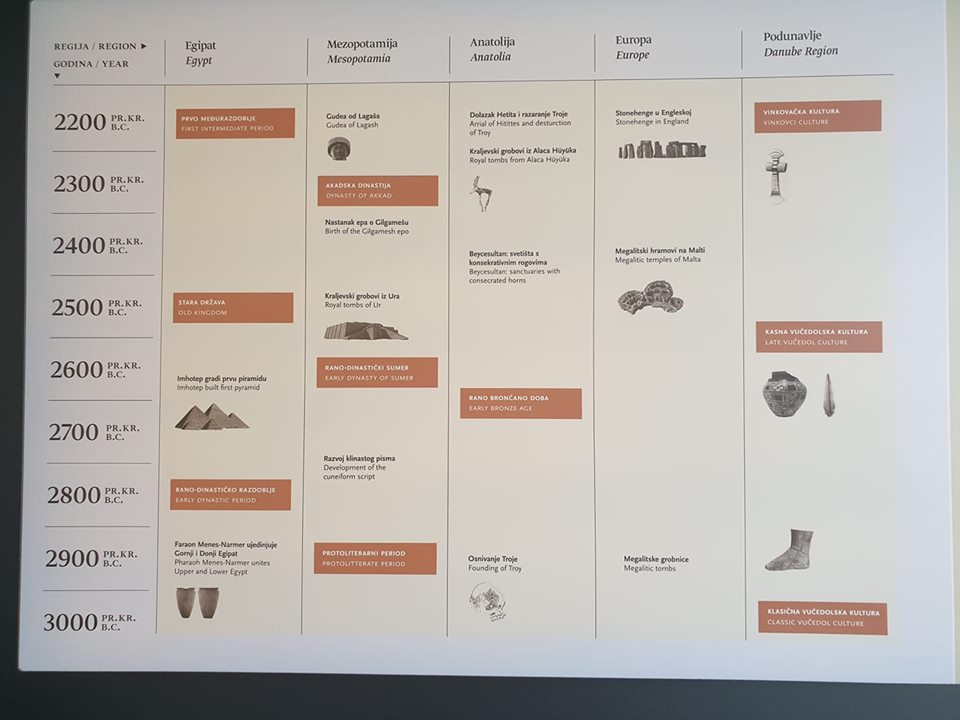
If you look at the timeframe of ancient sites, Vucedol does indeed appear to be very advanced.
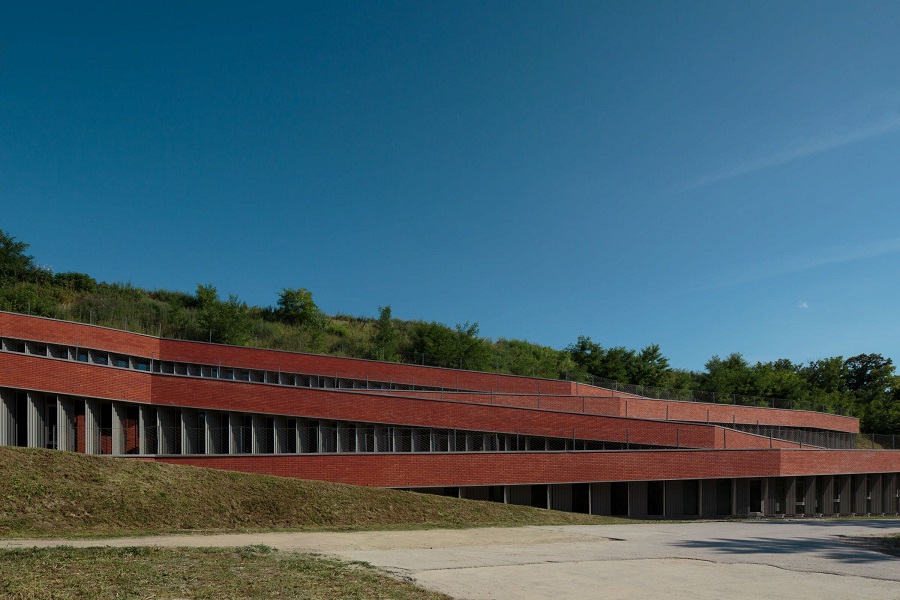
A rather excellent museum, the Vucedol Culture Museum opened in 2015 on the banks of the Danube next to some of the Vucedol excavation sites.
And rather a fascinating little place it is, which has so far been visited by more than 200,000 people, a number that should increase considerably as tourism in the east develops, and should better connections to existing tourism materialise. Vukovar is 6km away, for example, and received tens of thousands of river cruise tourists each year, but almost none make it to Vucedol.
And they are really missing out, for there are some really FASCINATING things inside, all of which make up part of the Vucedol culture, which I found incredible for its sophistication all those years ago.
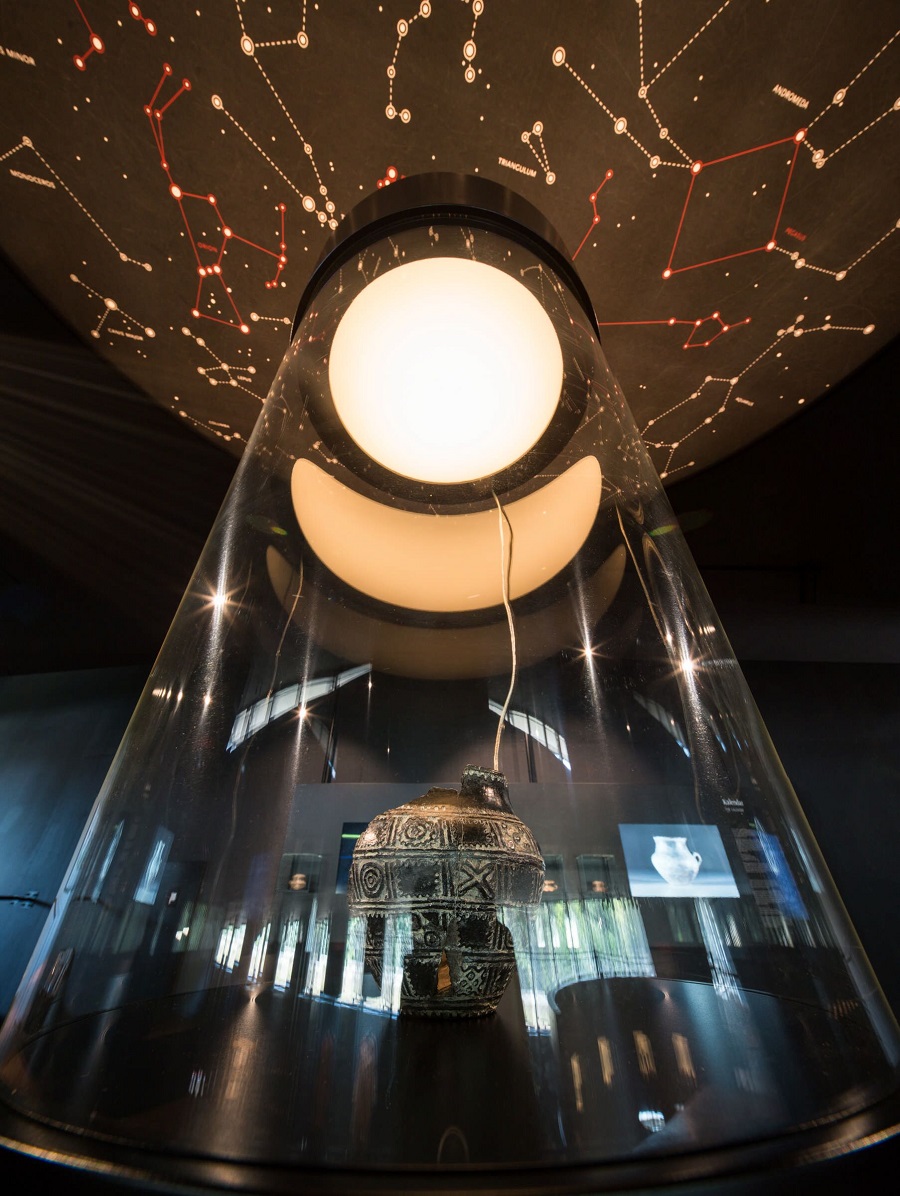
(All the good photos in this article, including this one, by Romulic & Stojcic)
For Vucedol culture is home to the oldest calendar in Europe, an example of which was found on a pot in nearby Vinkovci, itself the oldest continuously inhabited town in Europe, dating back 8,300 years. Here are 10 things to know about Vinkovci from a recent TCN visit.
The Orion calendar is based on the constellation of the stars, as you can see in this brief video above.
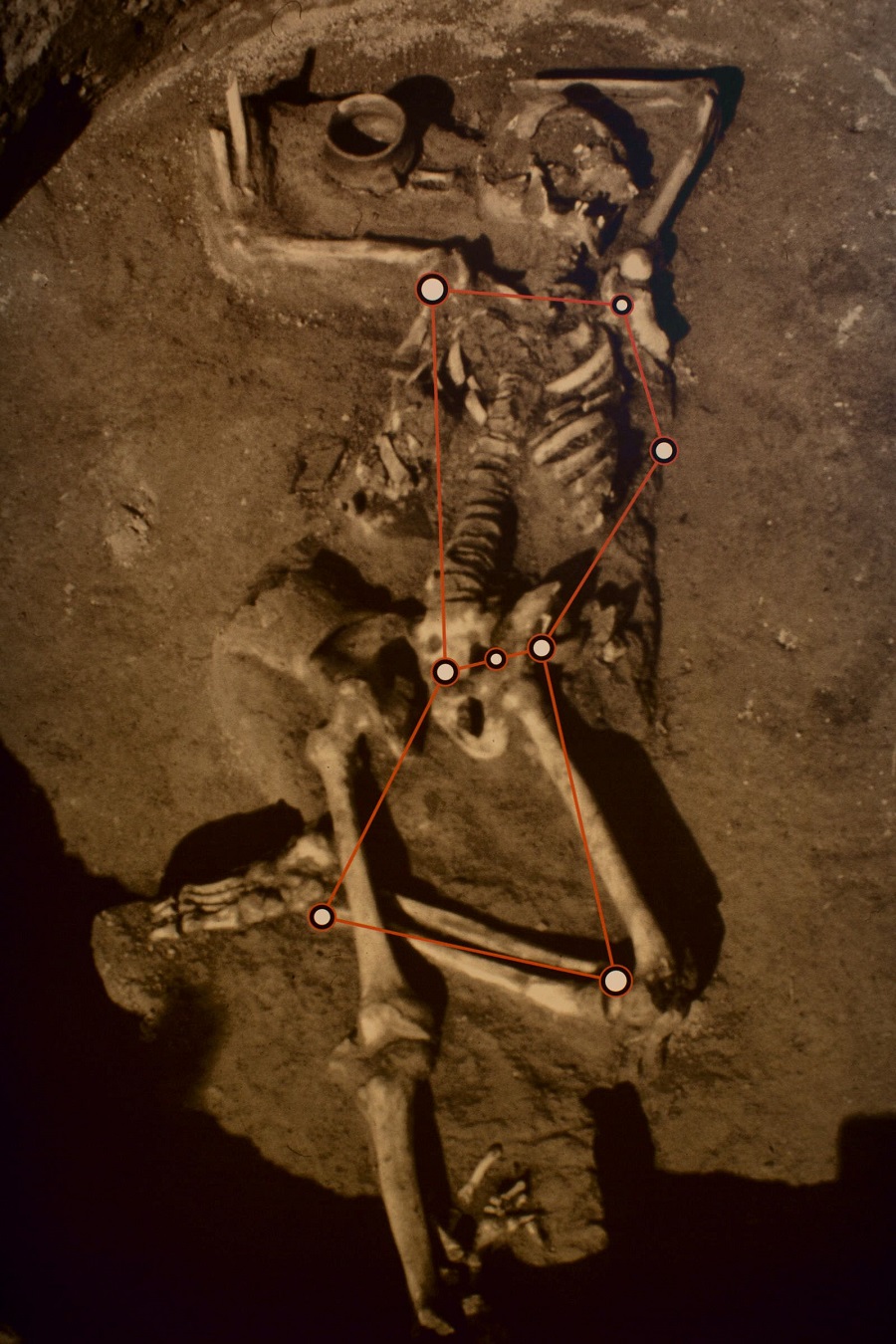
And there are theories that the stars played a role in the practice of human sacrifice after studying some of the skeletons recovered from the Vucedol site.
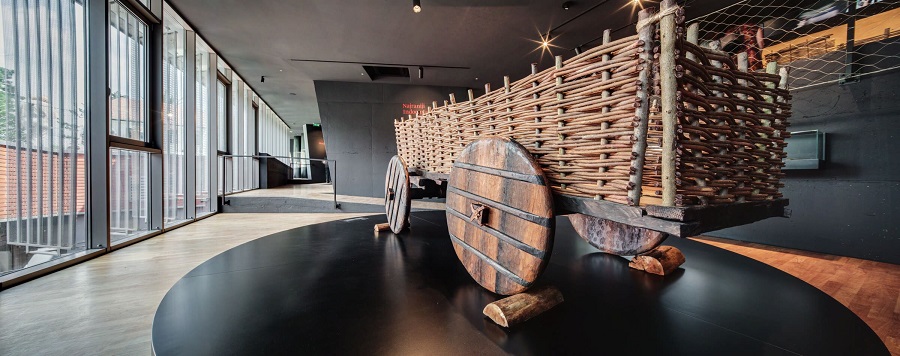
Given that the height of Vucedol culture was some 5,000 years ago, they seemed to be very advanced for that era looking at the exhibits of findings on display. And it is tantalising indeed to speculate what else is still to be found - only 10% has been excavated so far.
Among the exhibits is a life-size exhibit of a Vucedol cart, which was pulled by oxen, but much more interesting...
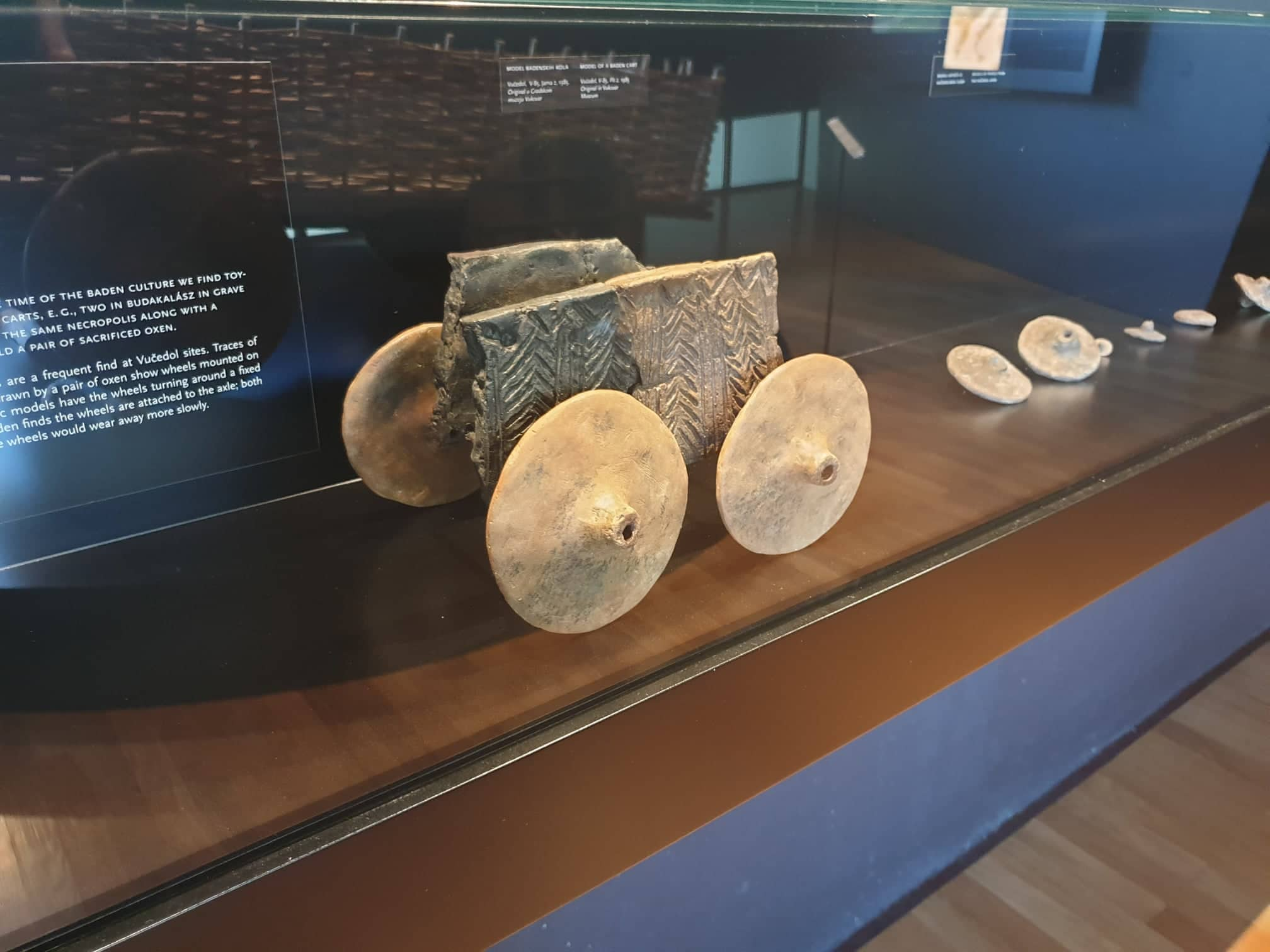
... was this tiny model, an original. A prototype or kids' toy?
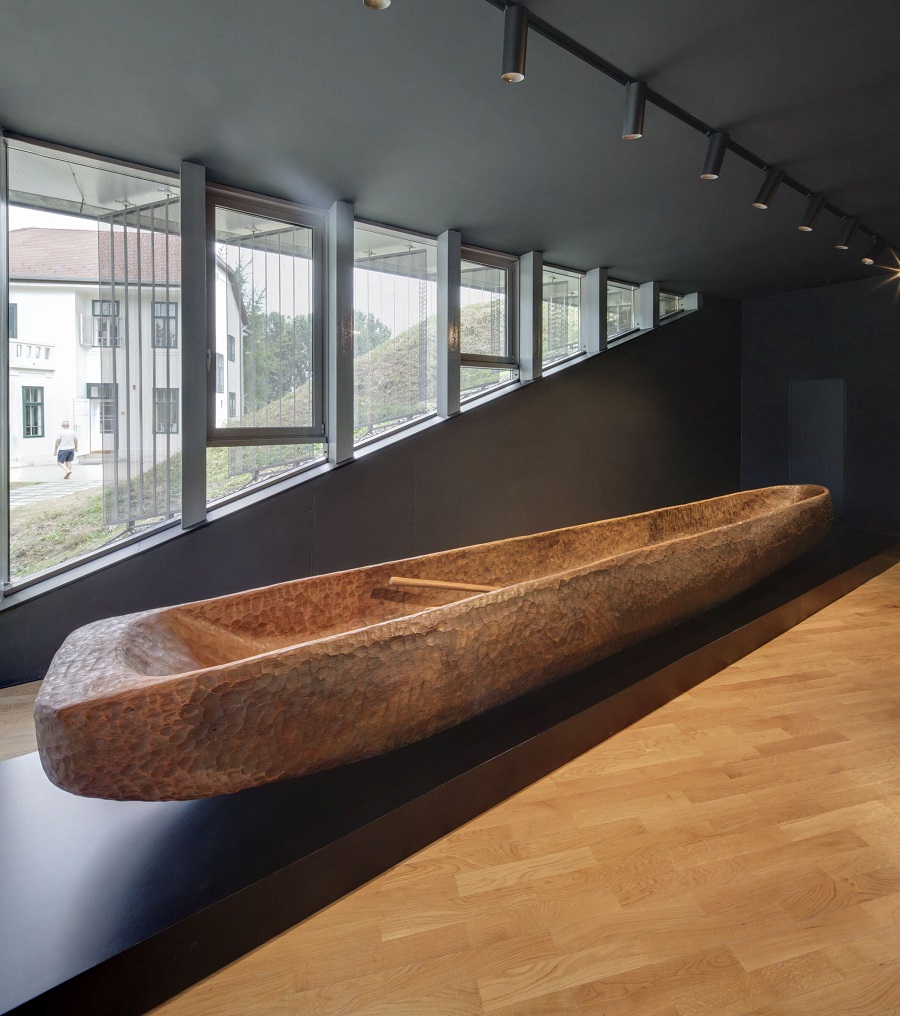
And there was river transport - these beautiful wooden boats cut from one tree, complete with oars.
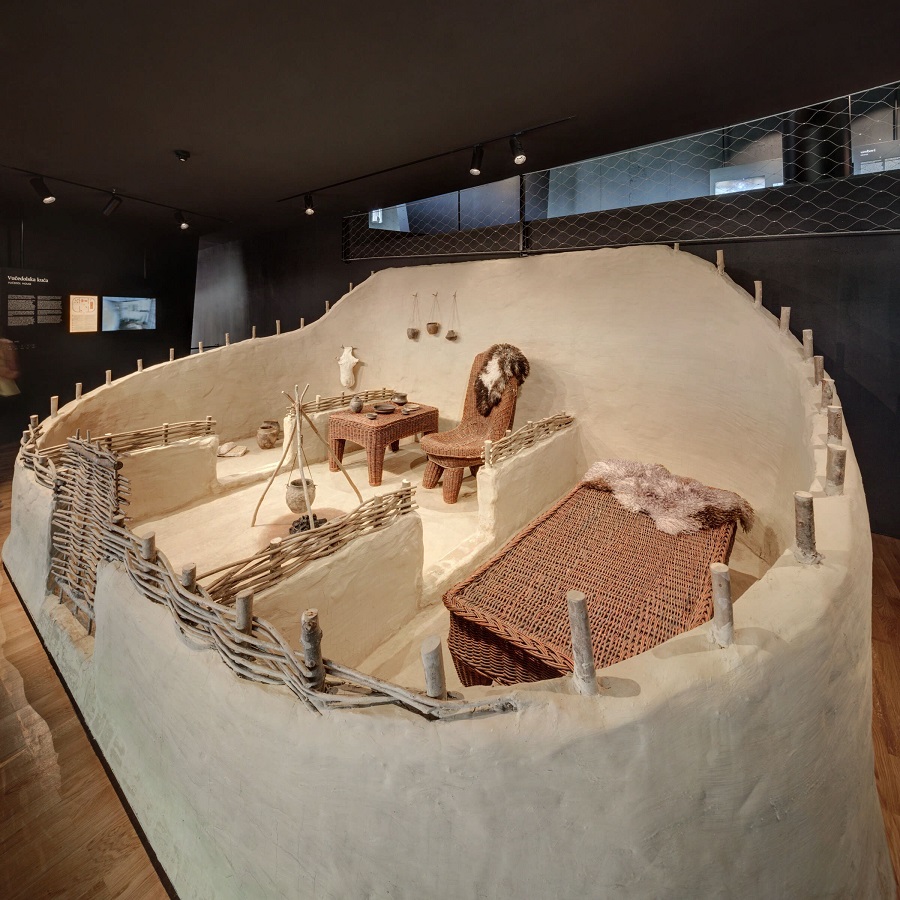
A reconstruction of a Vucedol house.
Get more of a feeling from this reconstruction video of the original Vucedol settlements.
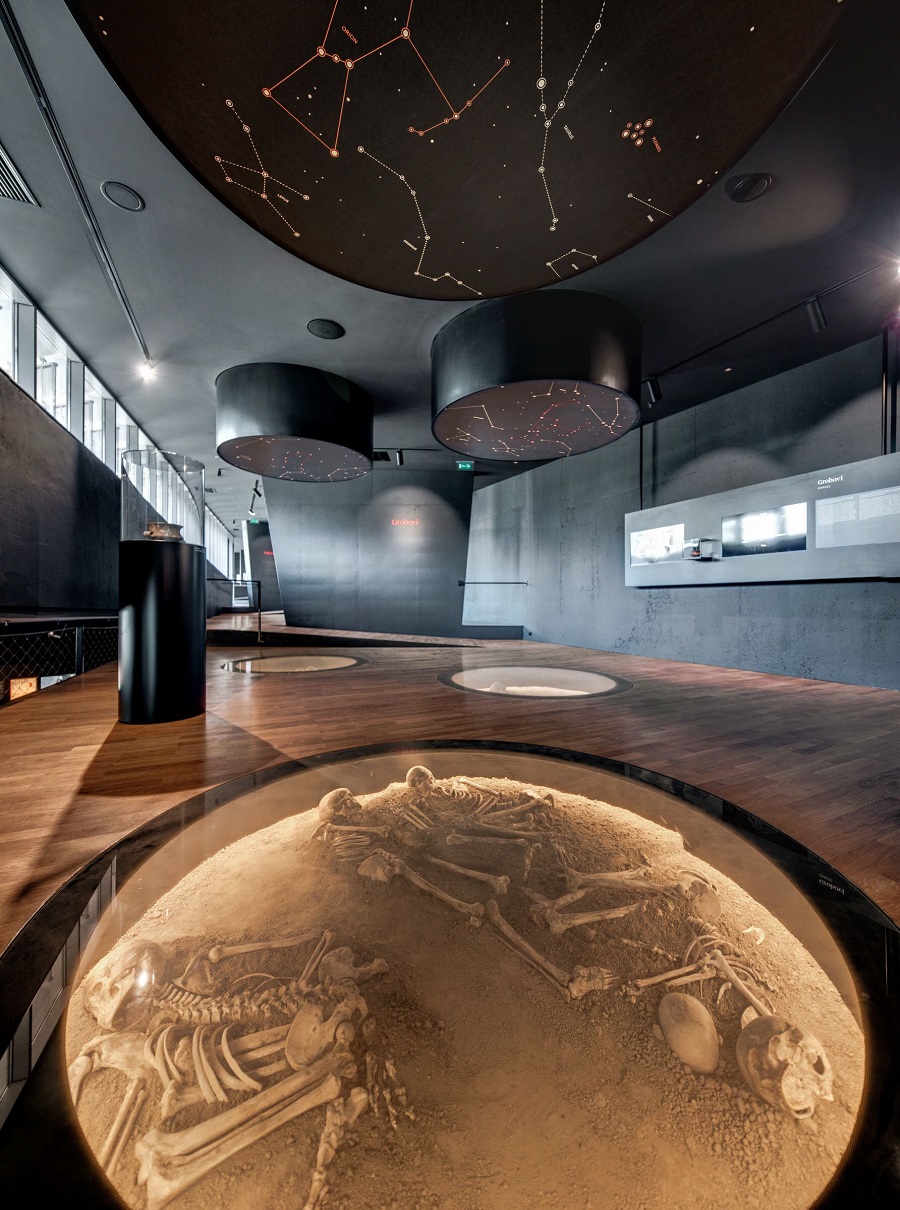
The museum itself has won awards for its design, and I really liked the layout as we moved between its 19 rooms.
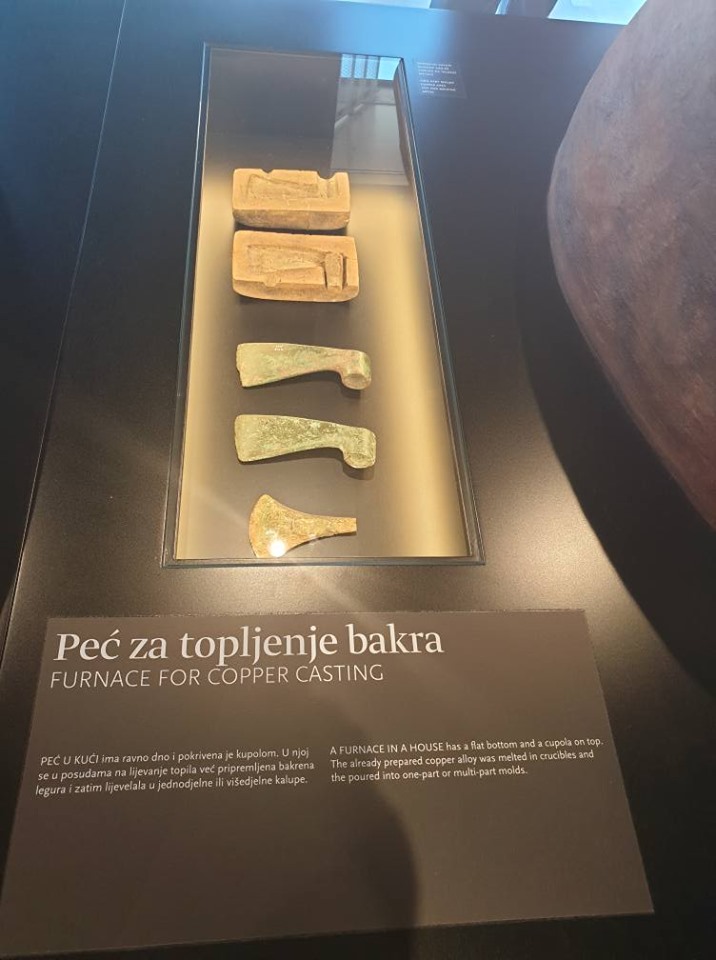
And the content kept on coming...
Another find in Vinkovci, the oldest continuously inhabited town in Europe - the first example of metal casting.
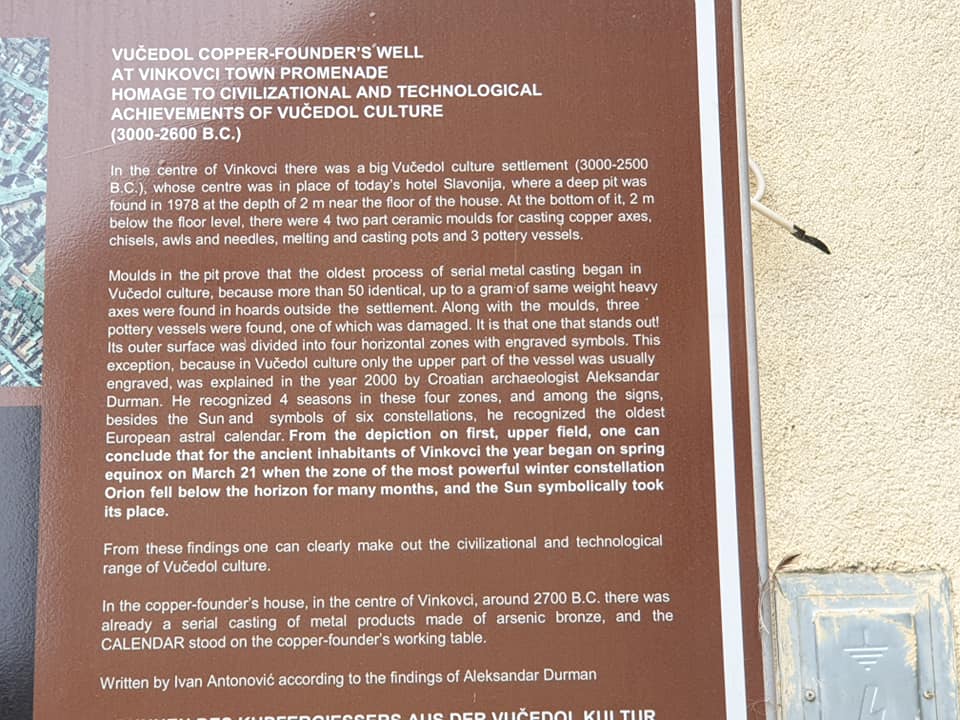
The copper-founders had a shaman-like status within the community, and they lived away from the main settlements.

A relatively recent discovery from last year - the first case of the infamous Croatian chequers, which adorn the national flag and which were seen by billions on the shirts of the heroic Croatian national team during the World Cup Final last summer.
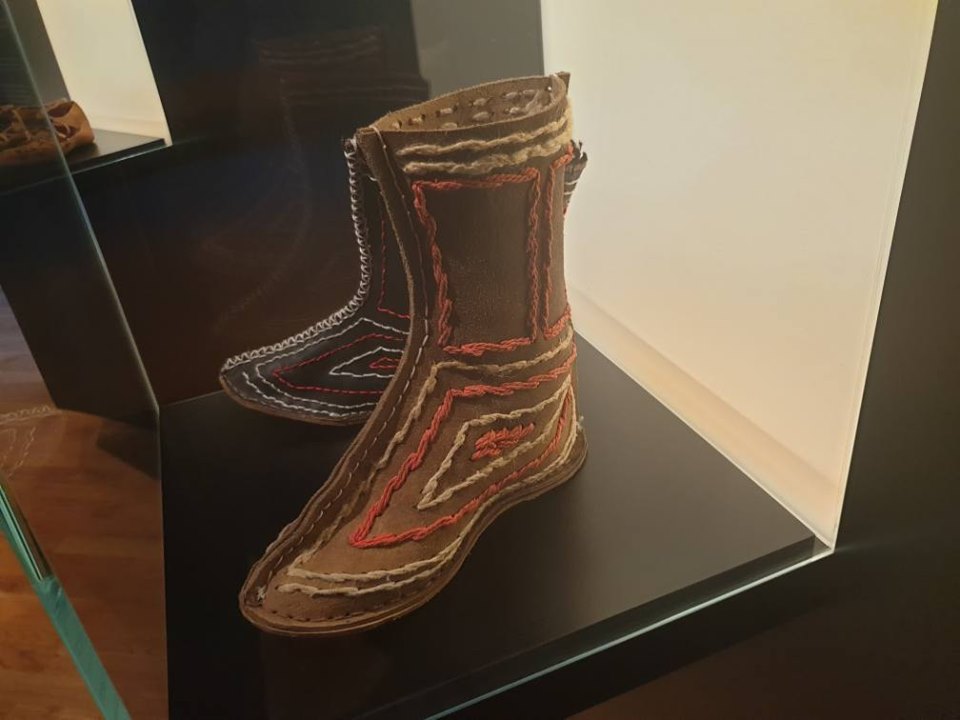
I was surprised by the sophistication and vibrancy of Vucedol fashion - remember we are going back 5,000 years. They were the first to have shoes designed for left and right, apparently.
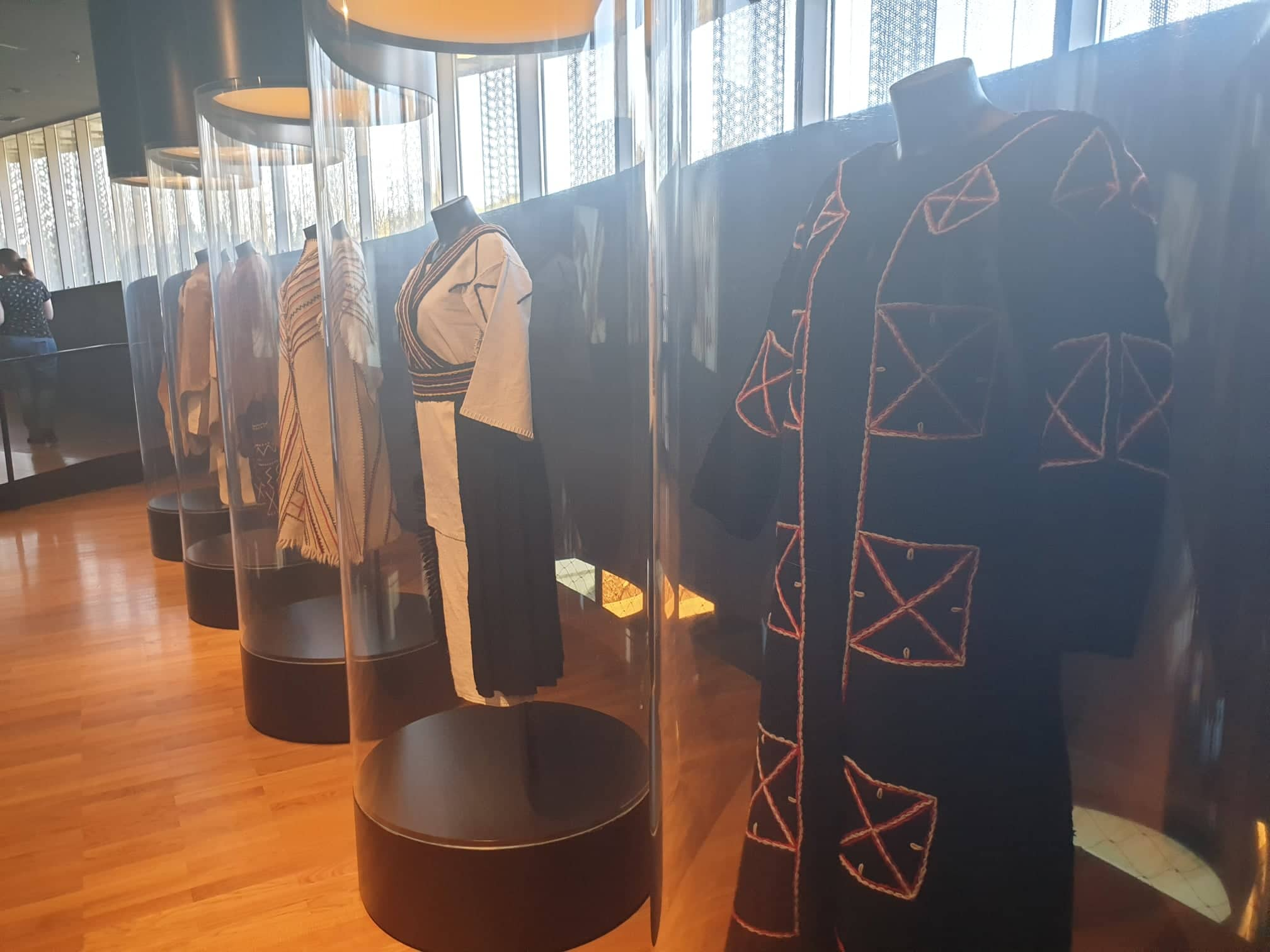
And the dresses of the women would not look out of place in traditional Croatian folklore dress today. How cool would it be for a big fashion house today to come up with a Vucedol range inspired by the designs of five millennia ago?
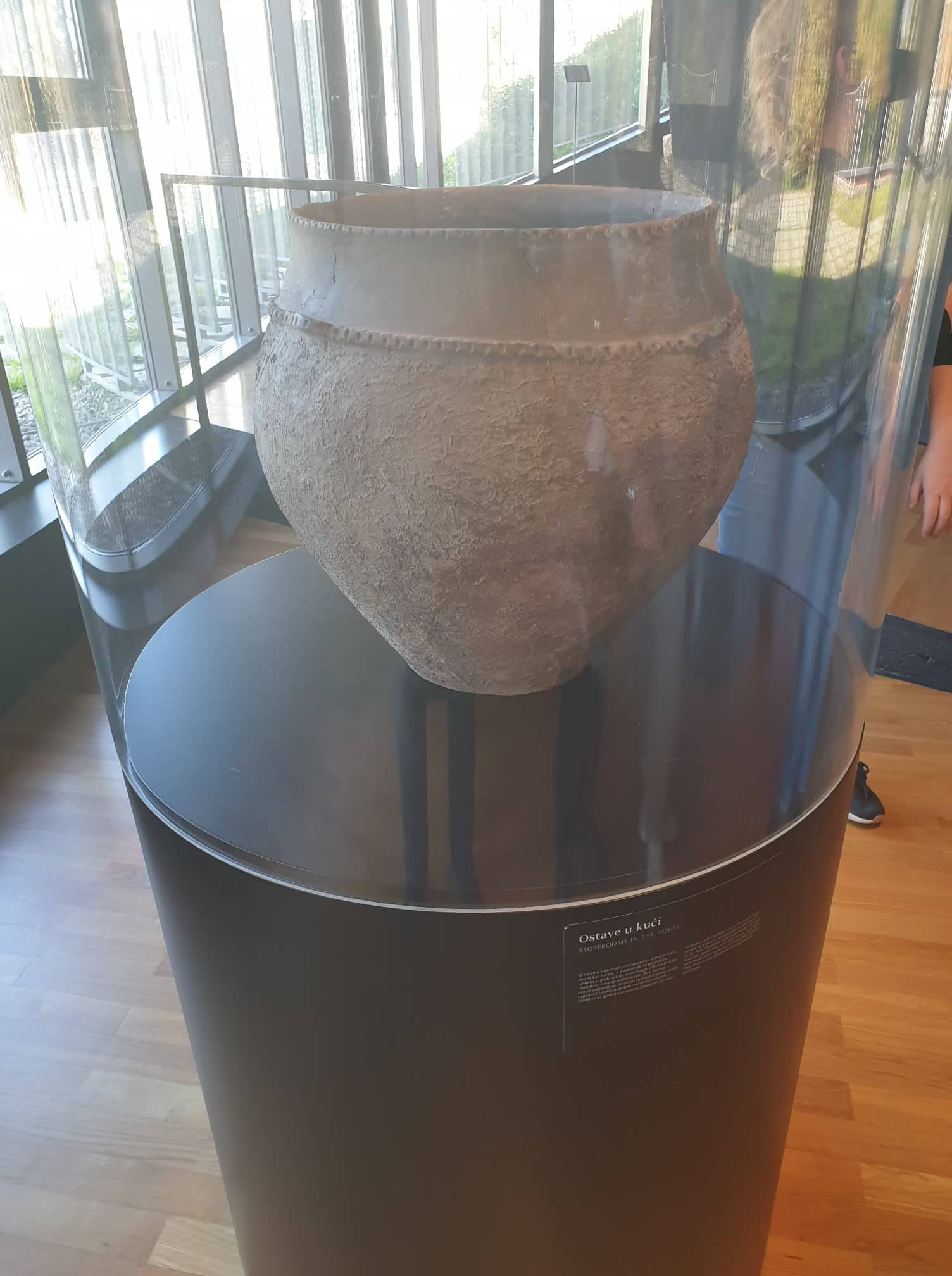
And a rather important pot for beer lovers - evidence of beer brewing dating back to 3,000 BC.
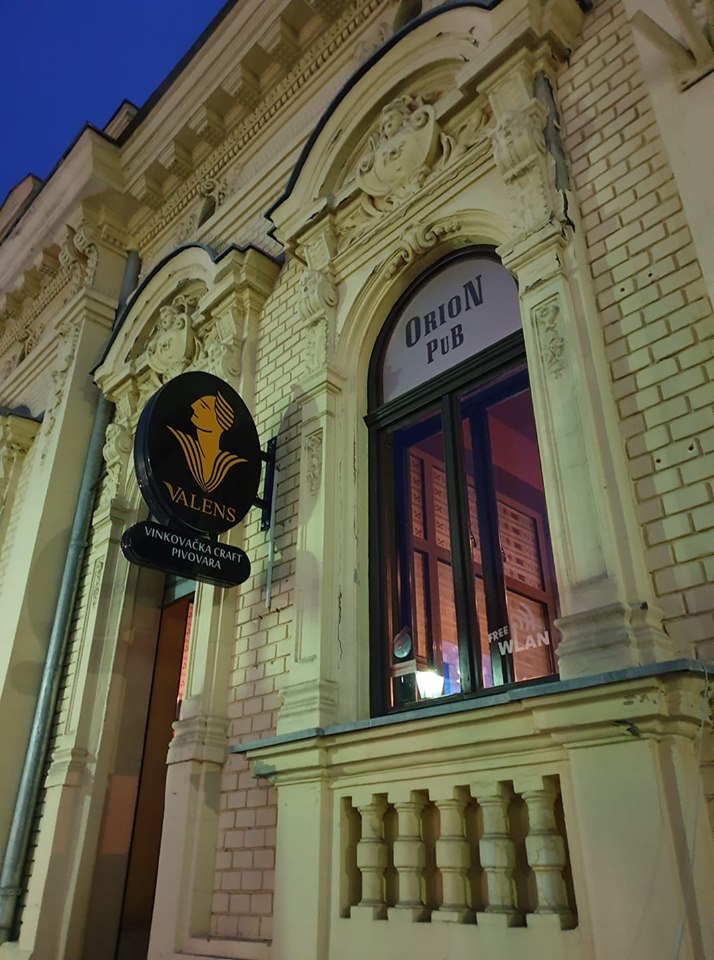
Beer was obviously popular in these parts throughout history. That oldest town Vinkovci was the birthplace of no less than two Roman Emperors, once of whom - Valens - was such a beer lover that he earned the nickname of Sabaiarius, or 'Beer Belly.' His legend lives on through the excellent Valens craft beer of Vinkovci, which you can find in the town's Orion bar (named after the oldest calendar in Europe).
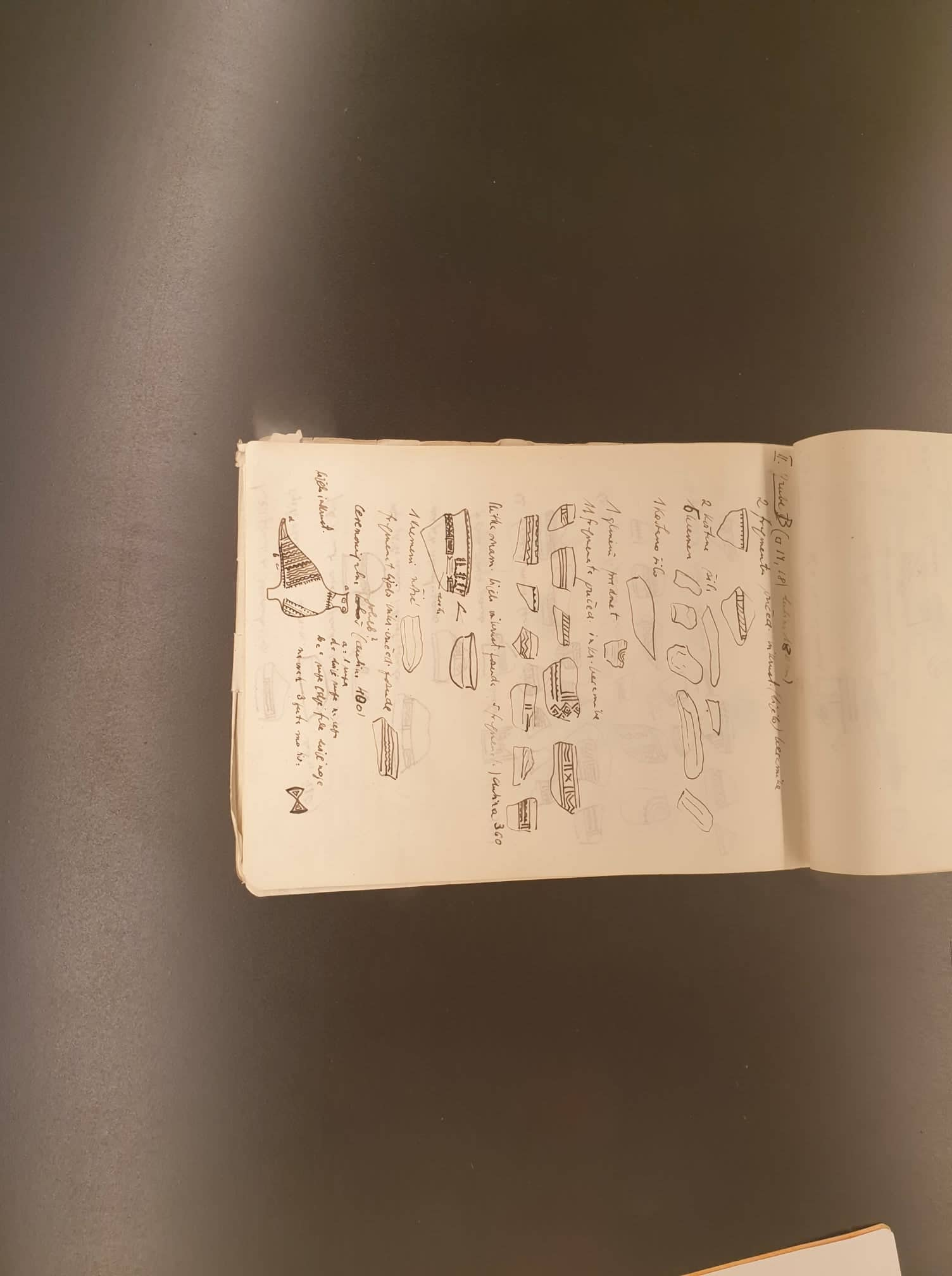
Included in the exhibits are some of the original scribblings of the early archaeologists, and you can see the famous Vucedol dove, which became a symbol of peace for Vukovar. In actual fact, the latest thinking is that was not a dove, but a partridge, due to the drawings, but also due to the partridge's tendency to limp when protecting its nest - similar to the limping copper-smelting shamans affected by arsenic from the metal.
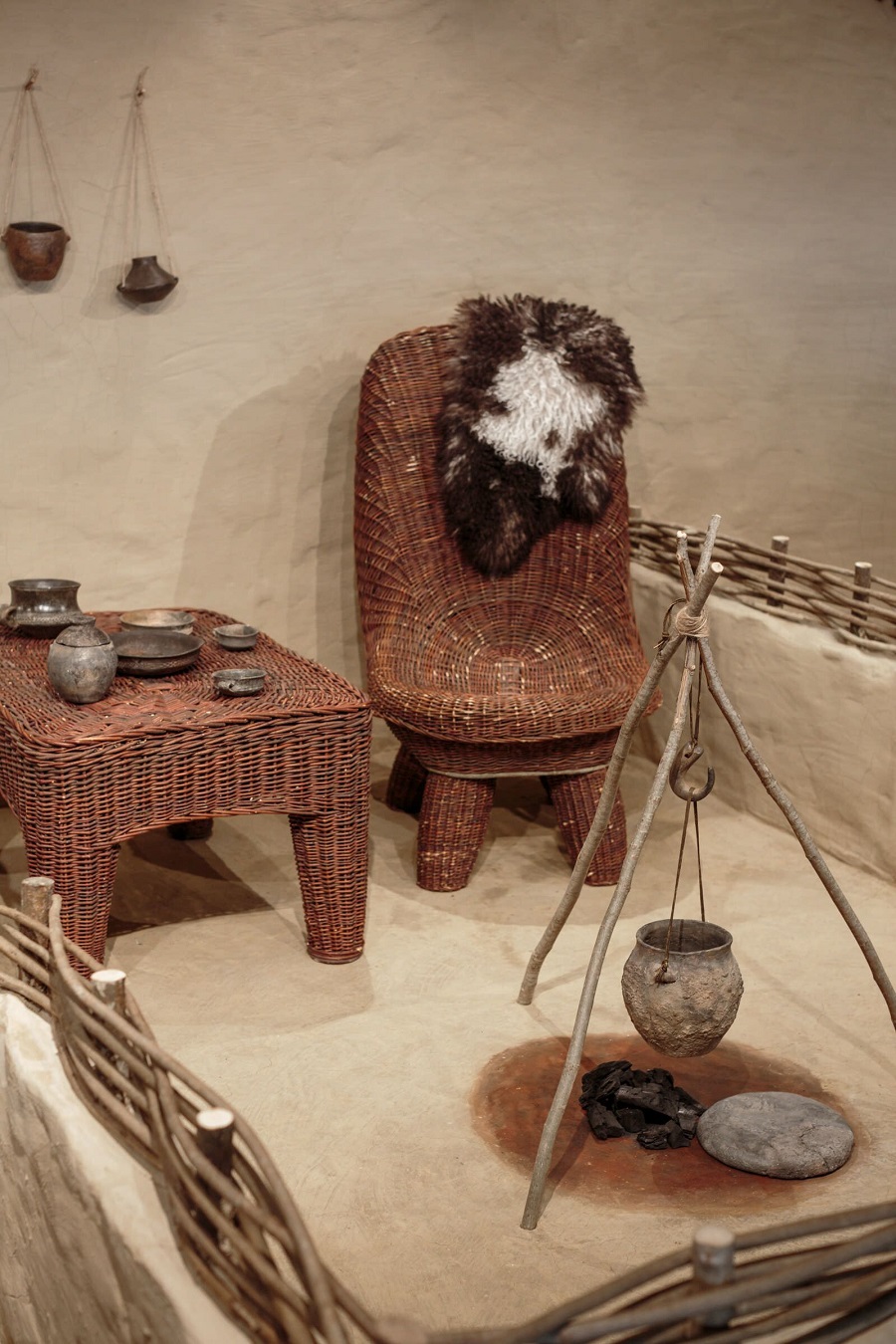
Domestic life in Vucedol.
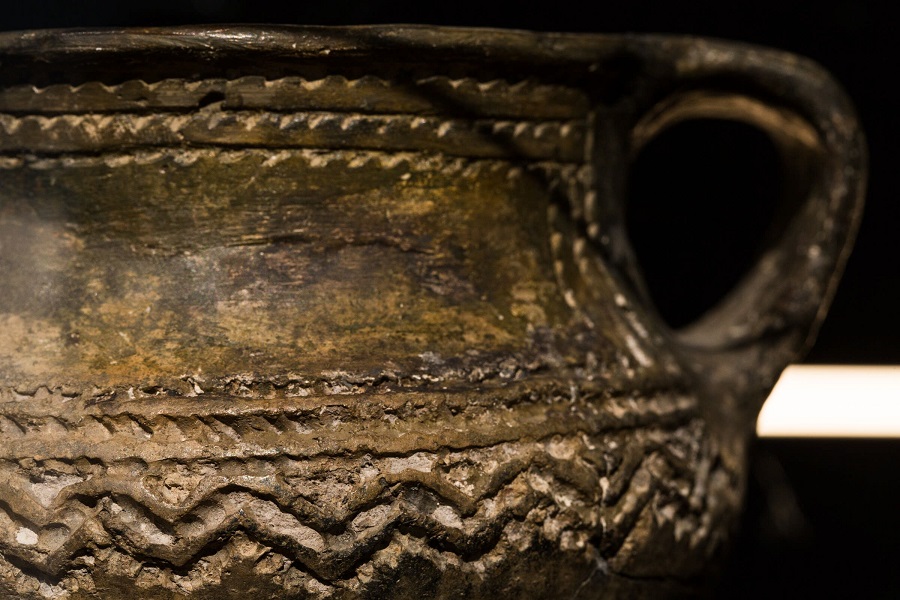
According to our guide, although Vucedol culture is centred in eastern Croatia, it was migratory and there is evidence of it elsewhere in 14 countries. Part of those regional differences is reflected in the pottery. Eastern Croatia is VERY flat and that was reflected in flatter lines in the designs, whereas more mountainous regions had their topography represented on the pottery accordingly.
And excavation is ongoing on a limited budget. Some of the supporters of a recent project, above.
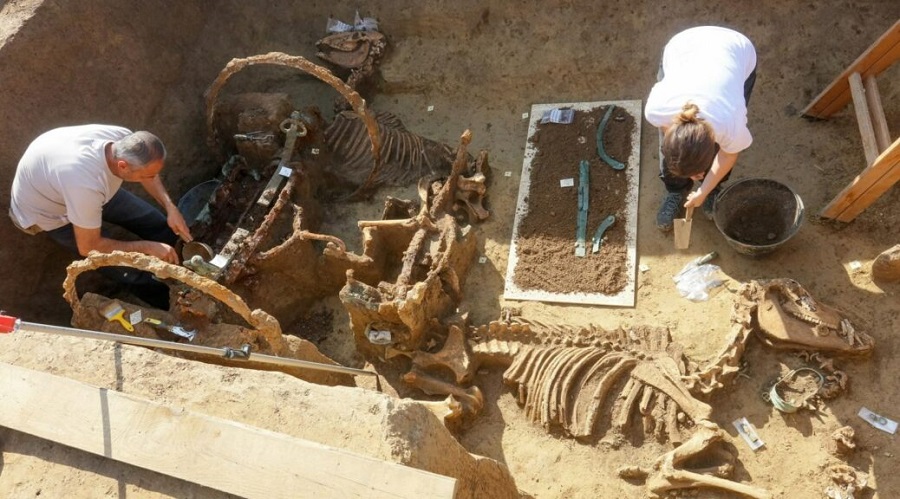
And while it is mouthwatering to contemplate what more remains to be found, when you combine the riches of the surrounding area, the potential for discovery of one of the most important sites in Europe is surely there. Here is one such post-Vucedol discovery earlier this month near Vinkovci, for example - an intact Roman chariot with horse.
As I am far from an authority on the subject, I leave you with some videos from Vucedol, including this one with some of the ongoing excavation.
A journey back in time with reenactments.
And Vucedol in 4k and from the air.
To follow the latest from Vucedol and any new discoveries, follow the dedicated TCN section.
Government Pleased with Progress in Doing Business Ranking
ZAGREB, October 25, 2019 - Finance Minister Zdravko Marić and Croatian National Bank (HNB) Governor Boris Vujčić said that the progress made by Croatia in the latest Doing Business report was good news and that it should be taken as an encouragement for further reform.
Croatia has continued to improve its business regulations and is catching up with global regulatory best practices, the World Bank said on Thursday. Croatia placed 51st among 190 countries in the ease of doing business ranking, moving up from 58th spot last year.
Marić told reporters that the report provided a good picture and a good comparison with other countries in terms of where Croatia stands and in what direction it should be going. He said that all should be done to ease the conditions for doing business as a prerequisite for economic growth.
The minister said that the progress made was due to methodological adjustments and reforms that had been made in the last year, primarily with regard to starting a business, the transfer of ownership and obtaining a building permit.
"This improvement is good news and should encourage us all to continue in this direction. We should not be satisfied now and say, this is good, we have improved our rating, but should look forward," Marić said, adding that further progress should be made in structural reform.
Marić recently led a Croatian delegation to the annual meetings of the World Bank and the International Monetary Fund in Washington. He said that Croatia would continue to use World Bank loans for projects such as modernisation of land registries and further development of the judiciary for the purposes of the economy.
Vujčić said that the Doing Business report was a very important indicator of competitiveness and business climate. "I don't think we should be satisfied with 51st place, but should move on and make the economy even more competitive and further improve the business environment," the central bank governor said.
More news about doing business in Croatia can be found in the Business section.
Croatian, US Defence Ministers Meet
ZAGREB, October 25, 2019 - Croatian Defence Minister Damir Krstičević met his US counterpart Mark Esper in Brussels on Thursday ahead of a meeting of NATO defence ministers, and this was their first meeting.
The two officials confirmed the high level of relations between Croatia and the United States, which is a key ally in defence and security, and underlined the commitment to continuing the successful defence cooperation, the Croatian Defence Ministry said in a press release.
Krstičević said Croatia was a responsible partner and committed ally, and Esper commended its contribution to NATO's peace support missions, activities and operations.
Krstičević informed Esper about plans for the development of the Croatian army and thanked him for US donations and support for its modernisation. Esper said the US was willing to continue supporting the development of the Croatian army's capabilities.
The priorities of the Croatia-US defense cooperation are defined in three areas - building the Croatian army's defense capabilities through joint exercises and training; contributing to international security through participation in NATO's peace support and cooperation operations and missions; and promoting stability in Southeast Europe by cooperating within the US-Adriatic Charter and by jointly assisting NATO aspirants, the ministry said.
The two officials also talked about global and regional security and politics.
On Thursday and Friday, NATO's 29 defense ministers are discussing outlays for defence, participation in NATO's peace support operations and missions, preparedness, and hybrid threats.
More news about relations between Croatia and the United States can be found in the Politics section.
Jandroković Calls on CoE Parliament Speakers to Preserve European Project
ZAGREB, October 25, 2019 - Croatian Parliament Speaker Gordan Jandroković called on his counterparts from Council of Europe member states on Thursday to act together in order to avoid new divisions and preserve the European project, announcing that Croatia would promote the UN 2030 Agenda for Sustainable Development during its presidency of the Council of the European Union in the first half of 2020.
Through continuous and constructive dialogue, mutual understanding and common action we can avoid divisions and preserve unity, he said in Strasbourg in a debate called "Our Common European Home: the next 70 years".
Earlier divisions brought us into the simplified trap of populism and criticism of everything that has been so carefully built for the past 70 years, Jandroković said.
One of the CoE's achievements is the single system of the European Convention on Human Rights and all the related instruments which focus on the protection of human dignity, he added.
Croatia's CoE membership benefited Croatian citizens. The CoE's role was especially invaluable in light of the efforts we invested on our path to membership of the EU, which we will chair in about two months, he said.
Jandroković also spoke in a debate on the UN's sustainable development goals. The Sustainable Development Goals Index ranks Croatia 22nd out of 162 countries, which gives us a good chance to become one of the leaders in the transition towards sustainability, he said.
He mentioned Croatia's first sustainable development documents, saying parliament adopted the Environmental Protection Declaration in 1992, only five months after Croatia was internationally recognised.
Currently in force is the 2009 Sustainable Development Strategy, while a national development strategy until 2030 is being drawn up.
The "Croatia as we want it" strategy will encompass priorities and contribute to the sustainable development and demographic revival of Croatia in the coming decade, Jandroković said.
Croatia will promote the UN 2030 Agenda for Sustainable Development while chairing the Council of the EU next year, he said. The goals include ending poverty and hunger and promoting prosperity, peace, partnership and environmental protection.
Although the Agenda is not legally binding and the goals are being implemented slowly, he called on his counterparts to exchange opinions on how to step up the Agenda's progress. In that way, he said, we can revive the political momentum and initial enthusiasm.
More news about Council of Europe can be found in the Politics section.
Croatia National Team Reuniting Again to Help Croatian Children
October 25, 2019 - For the second year in a row, the Vatreno Srce Foundation, founded more than ten years ago by the players and staff of the Croatia national football team, will hold a donation campaign to raise funds for the treatment and education of children in Croatia.
HRT reports that the action will take place on November 11th with a broadcast on HRT 2 starting at 8 pm. Donations will also be collected through a call center featuring Croatia national team members, staff members, and numerous public figures as well as friends of the national team.
Ahead of the decisive qualifying match for EURO 2020 against Slovakia on November 16 at Rujevica stadium, the 2018 World Cup finalists will rejoin forces and help raise money for the Pediatric Clinic of the Kantrida Children's Hospital and for 'Step to Life' (Korak u život), which helps children without adequate parental care to continue their university education.
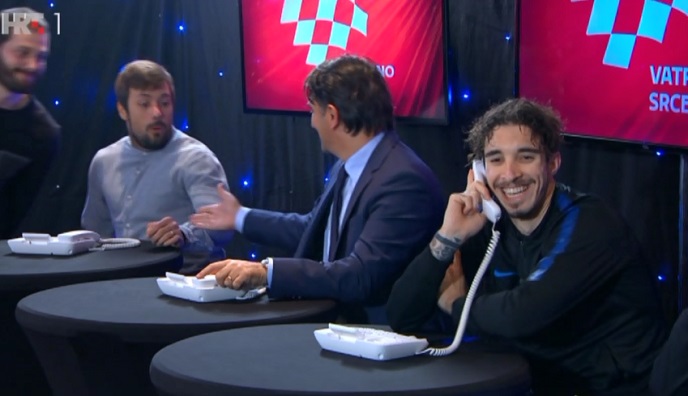
HRT screenshot 2018
“In the last two years on the Croatia national team bench, I have convinced myself that our national team has an incredibly big heart. They have shown it a lot of times on the pitch, and that is why they are great football players, but they also show it off the pitch, and that is why they are great people.
I am looking forward to a new donor dinner. I urge all fans to make their contribution this time from the heart and show that they are always with the team, both in the stadiums and in these actions,” said coach Zlatko Dalic, who is also a member of the Foundation's Board of Directors.
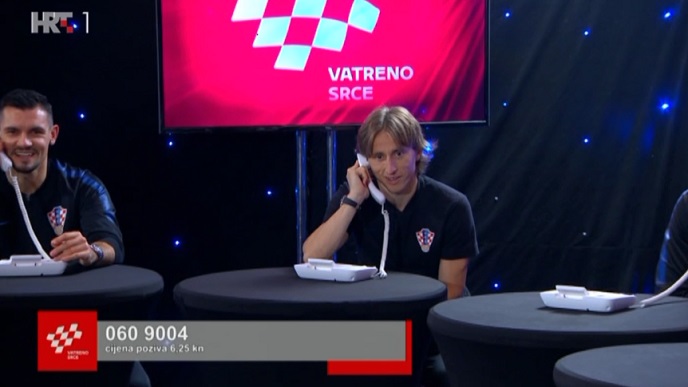
HRT screenshot 2018
“Participating in the Vatreno Srce Foundation is one of the most important roles of every captain of the Croatia national team, and on behalf of teammates, I can say that we are proud to be socially engaged in this way, as a team, to help children and the youth. Maybe, thanks to the popularity of football, we are many role models. Still, the biggest heroes are the children who are heroically battling diseases and the youth who do not have the right conditions for education. I am convinced that our fans agree with that and, therefore, I urge them to support the Vatreno Srce Foundation again,” said Croatia captain Luka Modric.
To read more about sport in Croatia, follow TCN’s dedicated page.