

Get to Know Your Country: Free Guided Tour Successfully Held in Sinj
January 13, 2020 - To mark the International Recognition Day of the Republic of Croatia, and as part of the project "Get to Know Your Country", on Sunday, January 12, 2020, a free guided tour was successfully held in the town of Sinj.
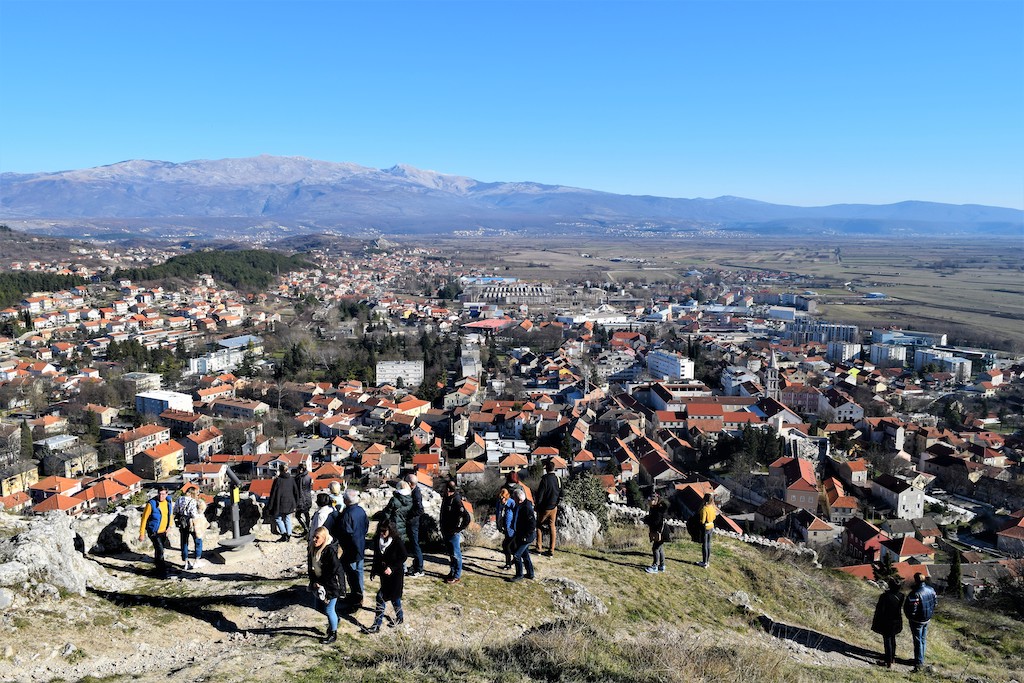
The action was launched by the Croatian Tourist Guide Association (ZDTVH) with the support of the Croatian National Tourist Board. The Sinj City Tourist Board, together with the Sini - Osinium Association of Tour Guides, also joined the action. In all the cities involved - 50 this year - free tourist guides began at exactly the same time, at noon.
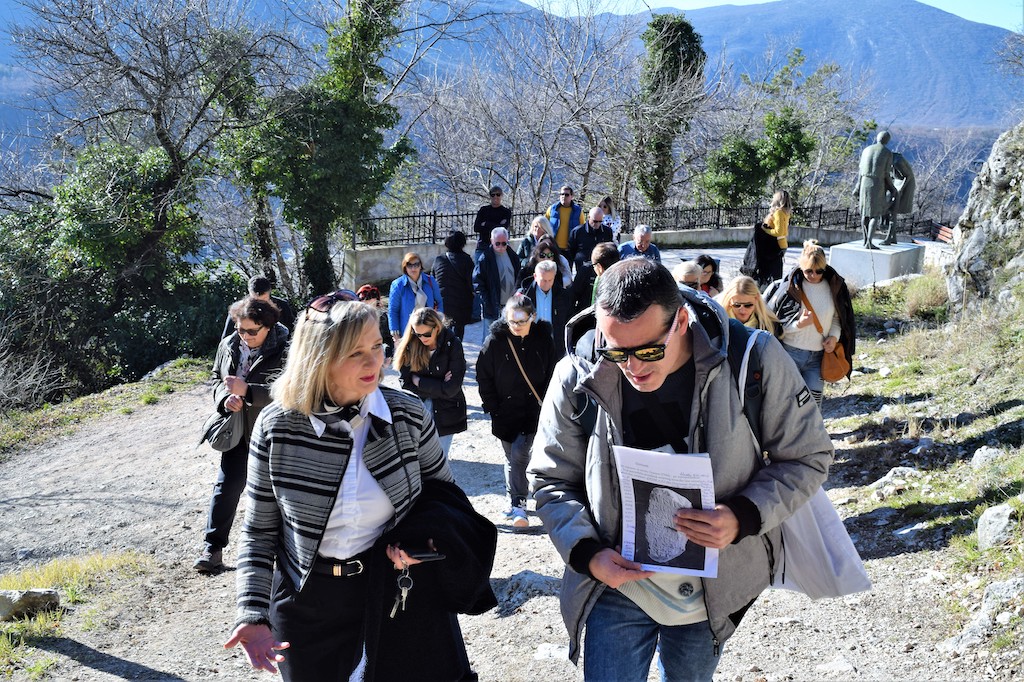
As part of the action, the participants toured numerous city sights accompanied by local tour guide Nenad Pavic. This year, the group planned to visit the Grad fortress and the Sinjska Alka Museum. However, the group could not visit the Sinjska Alka Museum, as the electricity supply in Sinj was temporarily interrupted.
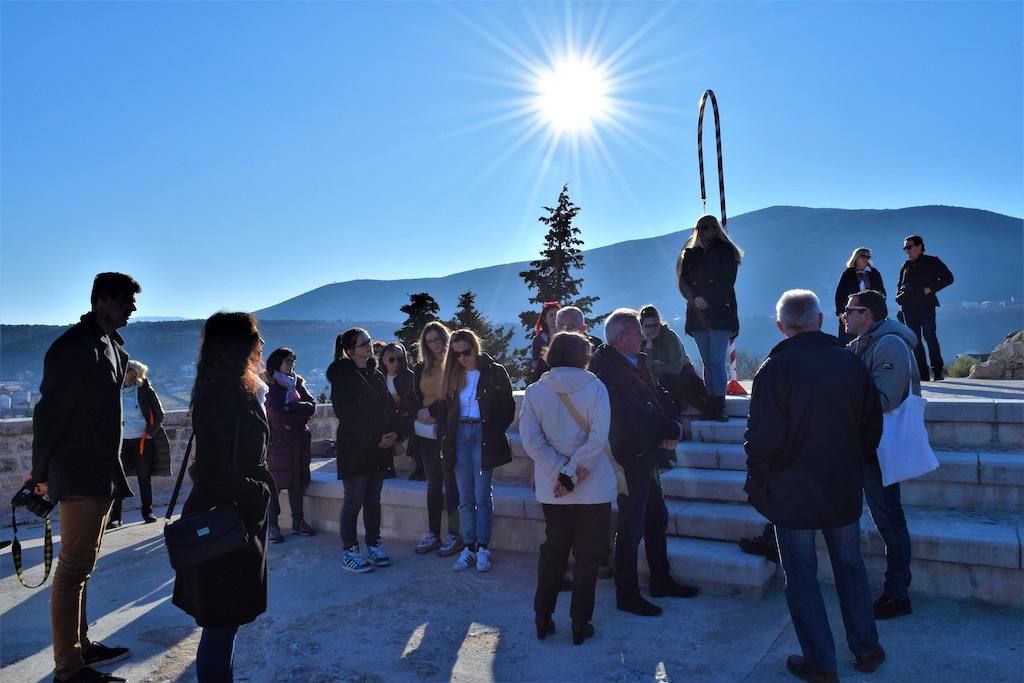
Therefore, instead of the Sinjska Alka Museum, a tour of the Kamičak fort followed. A special surprise to all participants was the presence of ZDTVH President Mrs. Kristina Nuić Prka, who is one of the initiators of this action and many other similar projects.
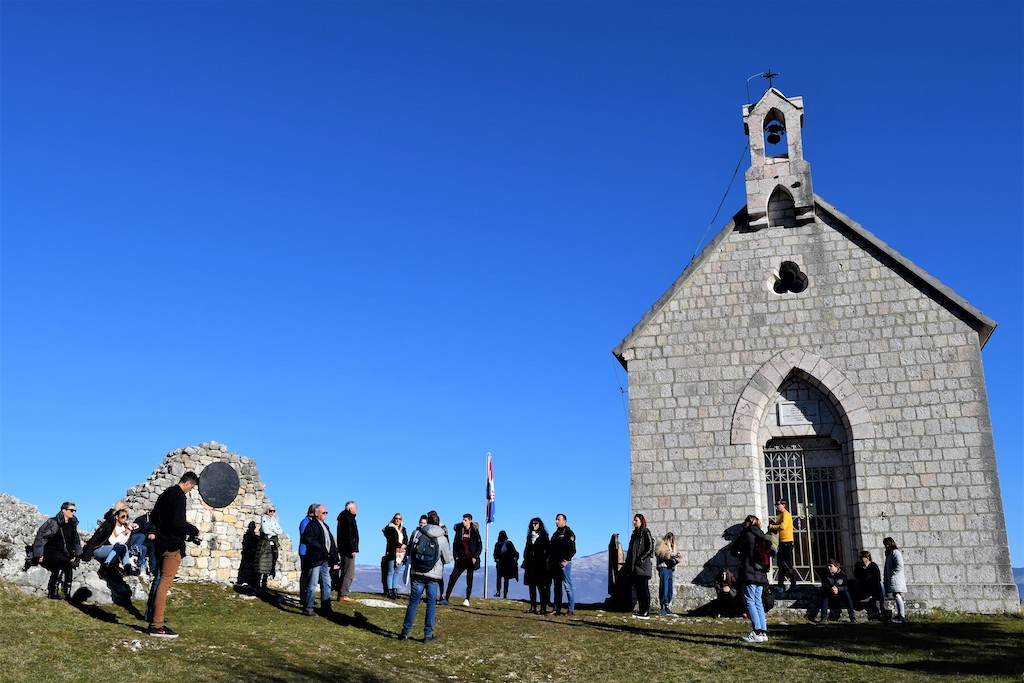
During the three-hour guided tour, the participants from the cities of Solin, Split, Trogir, Vodice and Sinj were able to learn more about the town of Sinj, its inhabitants, history, and its famous historical figures and events. Particular emphasis was placed at the Stations of the Cross at the Grad fortress, and the historical events of 1715 during the miraculous defense of the city against the Ottomans. The three-hour tour of the city ended with a visit to the Kamičak fort, where the group learned all about this symbol of the town of Sinj.
The Sinj Tourist Board thanks everyone who participated and helped to make this project a reality!
To read more about Inland Dalmatia, follow TCN's dedicated page.
Techno Park: Bjelovar-Bilogora County Getting 21.5 Million Kuna Project
As Korana Sutlic/Novac writes on the 12th of January, 2020, the Garešnica Techno Park is designed as a building that offers a large number of independent office spaces that companies and individuals can rent and customise to suit their needs. It was built at the initiative of the Town of Garešnica in order to enable the residents, as well as other interested parties, to develop the local business climate and is the work of the company 3E projects d.o.o.
The aim of the Techno Park is to encourage the development of entrepreneurship, and the construction of this facility has allowed for the renting of business premises on favourable lease terms with the use of a conference room, free internet and other benefits.
''Inside the facility, spaces for entrepreneurial support institutions are also foreseen, and all the planned facilities are complementary. The construction of the hall, Agro Park Garešnica in the second part of the plot is planned, which would complete the town's efforts to provide complete services for the development of entrepreneurship and agronomy,'' said Mirjana Miloševski Ntontos, an architect and urban planner at 3E projekti d.o.o.
Customers can customise their business premises to their needs. Offices of different sizes and for different users are located in the Techno Park building, with common rooms and spaces intended for a computer classroom, a conference room for up to fifty users and a kitchenette with a meeting room.
Within the Techno Park building, the business premises are divided into three units. In the right wing of the building, on the ground floor and on the first floor, there are five commercial premises for rent on each floor, separated as separate units by a door from communications and common areas. The business premises - offices for the work of three Entrepreneurial Support Institutions (PPIs) are located on the first floor and this unit is separated by a door from the rest of the building. The largest office is the director's office, partly highlighted by a cantilever from the building's corps that overlooks the access to the Techno Park.
The roof terrace, which is designed as a space for employees to socialise, as well as for preparing various events such as lectures, screenings and outdoor workshops, exits the kitchenette with a space for socialising. The ground floor is planned to accommodate a bistro for employees of the entire entrepreneurial zone with a capacity of up to fifty guests, with a partially covered terrace.
''The facility is located within the Kapelica Business Zone in Garešnica, in the immediate vicinity of the biogas power plant, so when working on the idea and design, this circumstance was used so that the by-product of the biogas plant is used to power the Techno Park,'' explained Mirjana Miloševski Ntontos.
Through the design and construction of the building, energy efficiency improvements have sought to reduce greenhouse gas emissions as much as possible. The goal, as the architect explained, is to produce as much energy as is needed to reduce the release of carbon dioxide and other harmful gases into the atmosphere.
The building was designed to avoid heat accumulation inside the building itself during the warm summer months and heat loss during the winter months. Materials of excellent insulating properties for the facade were selected, an efficient ventilation system and heating systems were installed, using renewable energy sources. Thus, 74.3 percent of the total energy for the operation of the system in the building was generated from renewable energy sources,'' the architect pointed out.
All construction products that were installed in the building were selected for the rational use of energy and thermal protection. For the purpose of the functioning of the facility, in addition to conventional energy sources, all other available sources have been used, such as hot water as a by-product of the biogas plant, solar collectors, photovoltaic cells and heat pumps, meaning that the Techno Park building resulted from the synergy of various innovative solutions.
The “Construction and Equipping of the Garešnica Techno Park” project was financed under the Competitiveness and Cohesion 2014-2020 operational programme.
92 percent of the project's cost was financed with European Union money, and the rest was provided by the Town of Garesnica. The main designer of the Techno park is architect Branka Petković, and the associates are Jelena Šimat, Evangelos Georgios Ntontos and Mirjana Miloševski Ntontos. The landscape project was designed by architects Darija Breitenberger, Nikolina Krešo, Tanja Udovč and Mate Rupić.
Make sure to follow our dedicated business page for more.
Poor Economic Climate Slowing Down Opening of Croatian Companies
As Adriano Milovan/Novac writes on the 12th of January, 2020, the poor entrepreneurial/economic climate, money worries and mass emigration are increasingly reflected in the dynamics of opening new Croatian companies and businesses.
According to Fina's data, about a thousand fewer Croatian companies and trades were founded through Hitro.hr last year than were founded back in 2018, which is a startling decrease of almost 15 percent.
During 2019, a total of 5914 Croatian companies were established through Hitro.hr, according to Fina's data. Just one year earlier, 6822 Croatian companies and other types of businesses were established through the same service, while back in 2017, the number of established Croatian business entities through that service stood at a much higher 7081. A decrease was also present in 2018 compared to 2017, but it accelerated significantly last year.
Crafts (obrti) recorded a particularly large decline: while 245 were established through Hitro.hr in 2017 and 128 in 2018, only 48 were established through the service last year.
The number of established simple limited liability companies is also down from 2018. In 2018, 4347 were established through Hitro.hr, while 3498 were founded last year, equalling almost a fifth less. On the other hand, in 2019, the number of limited liability companies increased slightly. Back in 2018, 2347 were established through the Hitro.hr service, and 2368 were established last year, which is equal to about one percent more.
Last year, economists were pointing their fingers at a poor and discouraging entrepreneurial climate in Croatia, but also to mass emigration and the demographic crisis, which led to the absence of entrepreneurs in some Croatian municipalities. In addition, they warn that Croatia is too large a public sector, which displaces private initiative. In these circumstances, nothing, not even the ability to quickly start a business through Hitro.hr, can help that much.
''It's a combination of a number of factors which have been present in Croatia for more than two decades now, which have further enhanced emigration. The Croatian economy is simply not an incentive for startups,'' says Damir Novotny, a well known economic analyst.
Novotny points out that in Croatia there are limited possibilities for financing new entrepreneurial ideas through venture capital funds, which in the west play a large role in the first entrepreneurial steps of people with ideas, but who lack the money to navigate entrepreneurial waters. In addition, Novotny adds, the incentives for self-employment provided by the state to the unemployed are relatively small here. In other words, the development of entrepreneurship in Croatia is a major obstacle to an underdeveloped infrastructure, with a particular focus on finance, although some progress has recently been made in this area.
However, Novotny sees perhaps a greater obstacle to a stronger development of entrepreneurship in Croatia in the staggering amount of bureaucracy. Administrative barriers in Croatia remain large and cumbersome, he warns, and regulations are complicated and often changing.
''The entrepreneurial climate in our country is still bad. When abroad, when it comes to administration, you've got the "see you once a year" rule, in our country, it's common for inspections to come knocking on the doors of Croatian companies as soon as they start business, and there are visits that entrepreneurs have to make to various government institutions,'' Novotny notes.
He believes that young people should be directed more towards entrepreneurial waters, so that their goal is not to look for jobs in the public sector after graduation, but to decide to start their own businesses. Although changes have taken place in recent years, they are still, according to economists, insufficient.
Until these changes occur, Croatia will continue to be perceived by the world as a country where it is difficult and expensive for business owners to play, with the state playing a major role in economic life.
Make sure to follow our dedicated business page for much more on Croatian companies, entrepreneurs, products and services.
Croatia EU Presidency: Zagreb Apartment Rentals Fail Expectations
The Croatia takeover of the six-month rotating presidency of the European Union has not impacted the real estate rental market in Zagreb the way many had expected, at least in terms of renting out high-priced attractive apartments in the center of the city and nearby areas.
Very High Zagreb Expectations Have Fizzled
As reported by ZagrebInfo on December 2, 2019; several Zagreb landlords had evicted their long-term tenants to cash in on higher Western EU monthly rental prices, leaving their stunned evicted tenants to scramble for alternative housing. Unfortunately, that much-hyped cash cow has failed to produce any real milk.
Realtors and Zagreb Landlords Surprised by Lack of Interest
“Expectations were very high, and many Zagreb residents have been calling us off the hook. They’ve eagerly left their information and addresses, and emphasized that they would move out of their apartments in top city locations immediately if they could rent them out for a half year, but there hasn’t been any interest. Seduced by the thought of a possible apartment shortage in Zagreb during the EU presidency, some owners even preemptively raised their rental prices,” observed Lana Mihaljinec Knežević, owner of Zagreb West Agency.
Boro Vujović, Director of the Opereta agency confirmed similar observations.
“The owners long-term apartment rental properties had big expectations, but nothing significant has happened. We have only rented two apartments for this purpose (EU government officials),” Vujović revealed to Korana Sutlić/Novac/Jutarnji List on January 12, 2020.
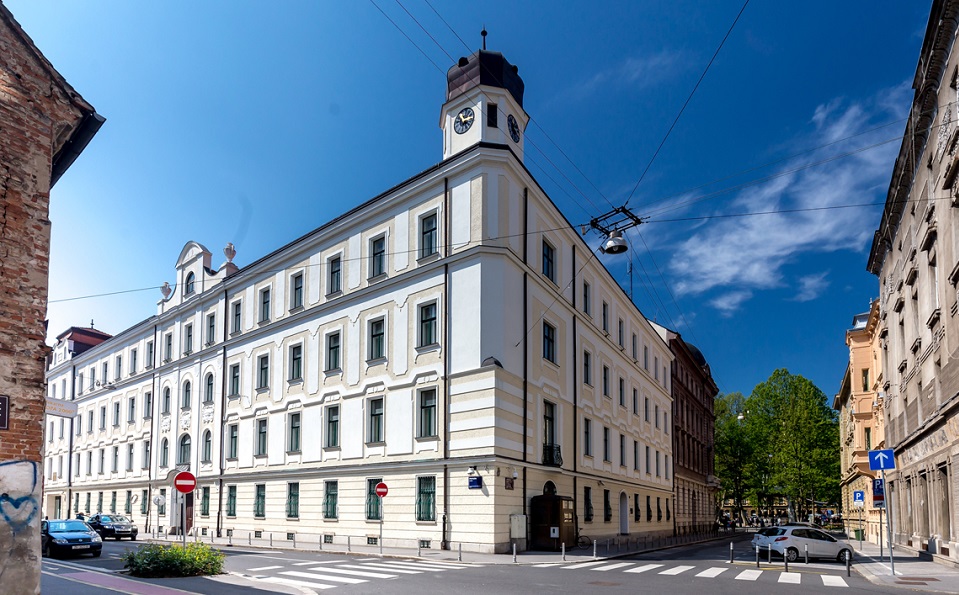
Zagreb West Agency
Croatia EU Administration Run Locally: Guests Not Long-Term
Lana Mihaljinec Knežević explained that the administration associated with the rotating presidency is run from Croatia with domestic resources. The guests who arrive from other EU states are not permanent guests, but occasionally show up to attend various meetings, summits and similar events.
Several apartments were reserved in the center of the city for these occasions, but nothing significant has happened for quite a while. These rentals (for EU government officials) can be counted on just one hand.
“For the time being, we just haven’t seen any interest in this area. We certainly expected interest, but nothing has happened. And we do not see an increase in the number of reservations compared with last year,” said Igor Kordić, co-founder of Irundo, a leading short-term rental company in Croatia. They handle several apartment rental properties in the center of Zagreb.
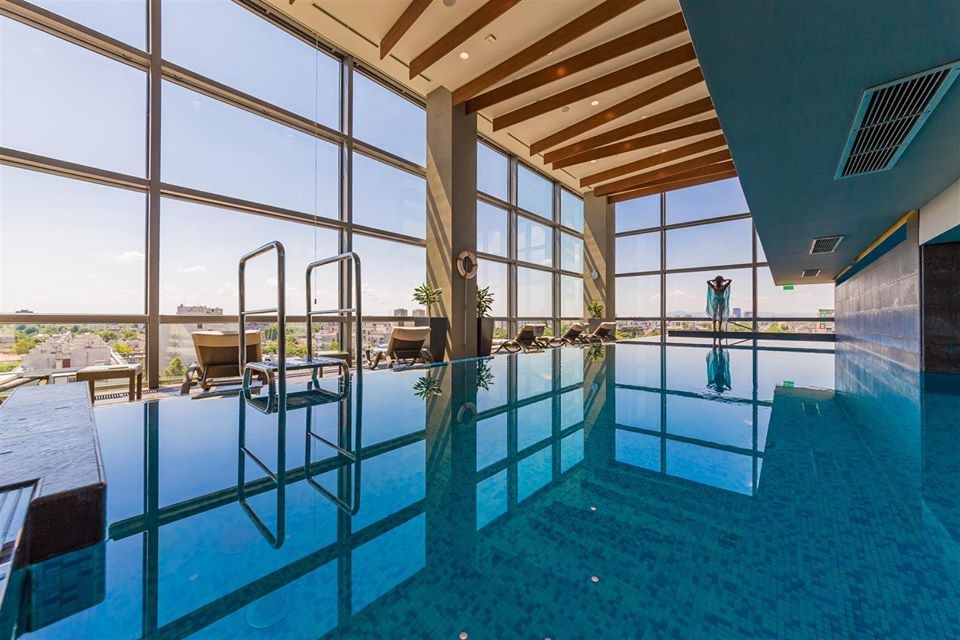
Hilton Double Tree Gets Fifth Star for EU Arrivals
Five Star Hotels in Big Demand: One Hotel Gets Fifth Star
Shortly before the beginning of the EU presidency, several ministries sought five-star hotels in Zagreb for short-term guest accommodations. For this reason, some hotels recently underwent upgrades, like the Hilton Double Tree Hotel, which became a five-star hotel.
HUP Zagreb indicated that highest category hotels, including The Westin Zagreb and Sheraton Zagreb, have generated the most interest during Croatia’s EU presidency. They are both reporting a high occupancy rate during the this 6-month period, as are their other high category hotels: Panorama Zagreb and International.
“Our hotels have a highly capable team of professionals who have hosted numerous international conferences and summits for many years, and our hotels, restaurants and conference halls are prepared for these upcoming events. Regarding our presentation of Croatia’s gastronomic options, we will be preparing special menus for the EU delegates to showcase our diverse selection of cuisine,” says Sara Valentić of the Marketing Department from the Croatian Consulate General in Zagreb.
Four Star Downtown Hotels Seeing Very Little Traffic
However, not all high-category hotels in Zagreb are in the same situation.
“We have not yet encountered any interested guests associated with the EU Council Presidency. It’s possible that one of them could occasionally stay with us for a short time, but we are not seeing that right now,” said Tomislav Kuliš , Director of the Palace Hotel, a four-star hotel located on Zrinjevac Park, right in the heart of the Croatian metropolis.
Follow our Travel page to keep updated on real and anticipated tourism opportunities in Croatia.

Residence in Croatia: The Approval and Permit Pick Up Procedure
January the 12th, 2020 - I've written extensively on the process of gaining residence in Croatia, citizenship laws and processes, from gaining residence in Croatia to naturalising, to citizenship by marriage, descent, special interest, the latest amendments to the Law on Croatian Citizenship and much more, but what about when your residence application is actually approved?
It's surprising how often people find themselves in a bit of a pickle (for want of a better word) when their residence is approved and they're given a little white sheet of paper with a government stamp on it and their name, address and other details on it from a kind, friendly and knowledgeable administrative clerk at MUP.
Many questions I see from expats in Croatia are about what exactly needs to be done when they've either been told, or they've managed to work out that their application for residence in Croatia has been approved.
Now that you've jumped through the administrative, bureaucratic hoops, provided every document you didn't even know you had and been given the green light, just what do you do next?
Whether you're applying for temporary residence for the first time or you're a somewhat seasoned ''MUP goer'' and you're applying for your permanent residence status after five years of temporary residence, hearing of your approval and actually getting your hands on that little ID card is another hurdle.
I'm confused, am I applying for a visa or a residence permit?
In Croatia, residence permits are not visas. If you need a visa to enter Croatia as a tourist, then that is an entrance visa. If you want to reside in Croatia and apply to do so and are approved, you will receive a residence permit, or a stay and work permit, depending on the basis of your application. Visas and permits are not the same thing.
I left my phone number and/or my email address when I applied for temporary/permanent residence. Will I be contacted?
If you're a third country national (from outside of the EEA), you'll be contacted when your application has been approved, if more documentation is required, or if MUP want you to come for an interview in person. If you're an EEA citizen, you will more than likely be approved there and then, but it's worth noting that this isn't always the case.
MUP have my address as I needed to register it when I applied for temporary/permanent residence in Croatia. Will MUP pay me a visit?
Maybe. There is no definitive answer to this and it varies from person to person, nationality to nationality and situation to situation. Non EEA nationals report being visited by MUP much more than EEA nationals do. These visits take place at random and are often done as part of a residence application before it is approved, however, it has been known to happen when the person already has an approval, it sometimes happens when they already have their residence cards in their hands. As said, there's no definitive answer to this question, nor is there much apparent logic to it.
I applied for temporary/permanent residence weeks ago and have heard nothing from MUP, what should I do?
If you're an EEA citizen, this scenario is much less likely as EU law states that you have a right to residence based on freedom of movement and are therefore usually approved either instantly or very quickly after. For third country nationals, however, things are a bit different as EU law doesn't guarantee you a right to residence because you're not an EU citizen. You're governed by Croatian national law only. Your approval can therefore take a long time to receive, so it's not abnormal if you get radio silence from MUP for weeks, sometimes even longer. If you're concerned, you can always pay them a visit to ask about the progress of your application.
Rest assured, though, you will be contacted eventually.
My temporary/permanent residence was approved and I've been given a piece of white paper with my details and a stamp on it by MUP, what next?
This white piece of paper is your temporary ID while your actual biometric residence permit with your photo, OIB, address and card expiration date is being made. Don't lose this piece of paper as you'll need it when you go to pick up your ID card.
How long does it take for my ID card to be made?
Usually around 3-4 weeks.
Why did I have to provide my fingerprints upon approval?
The Republic of Croatia requires every person living there legally to provide their fingerprints to the state to be placed on a database. You will be asked when you're first approved for temporary residence, and then again when you're approved for permanent residence.
MUP have my phone number and my email address, I've been approved and they let me know, but when I went to provide my photo and fingerprints and collect my white sheet of paper/temporary ID, they didn't tell me when to come back for my card...
The time for residence permits to be made is typically 3-4 weeks, as stated above, and you will likely not be told when yours is there and ready to pick up. Sometimes people are called or emailed to let them know it's ready, but do not count on this, it isn't the norm.
How long should I wait before going back to MUP to ask if my ID card is ready/go and pick it up?
Give it about a month or so before going back in person.
Do I need to go back in person to pick up my ID card or will MUP mail it to me?
MUP will never mail you an ID card. You need to go in person to pick it up with your little white piece of paper you were given upon approval, and sign another piece of paper to declare that you have come to collect your residence permit.
Make sure to follow our lifestyle page for more information on residence in Croatia and much more.
Croatian Filmmakers Vrdoljak: Debts for Failed 'General' Film
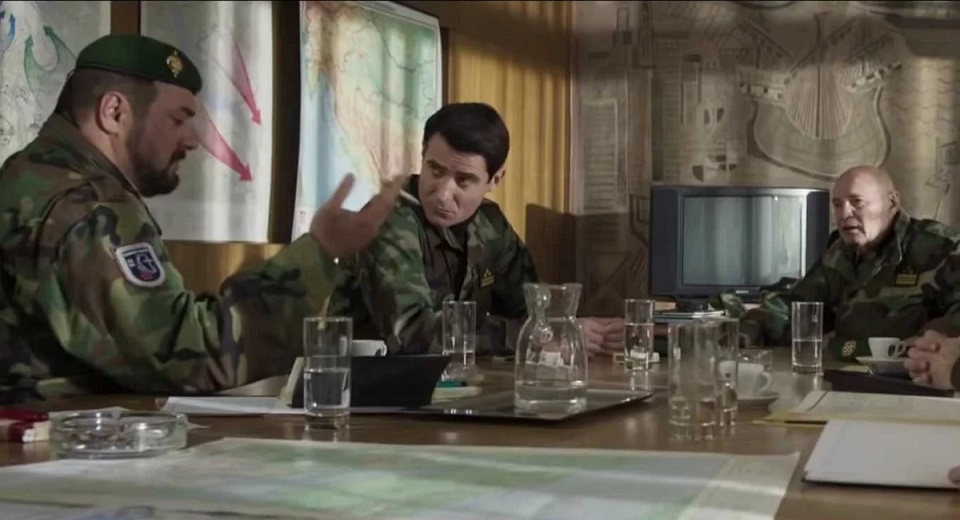
Goran Navojec and Mustafa Nadarević are among the most famous names on a list of people and companies to whom the producers, Antun and Andrija Vrdoljak, of the failed Croatian film and TV series ‘General’ are indebted.
Navojec agreed to speak publicly in a written statement to Vladimir Matijanić/Index on January 10, 2020; and Mustafa Nadarević confirmed his claims.
Unpaid production debts are dragging on for ‘General’ even though producers had a massive budget compared to other Croatian productions. Croatian Radio Television (HRT) alone gave them 9.6 million HRK (1.3 million EUR), the Croatian Audiovisual Center provided 4.2 million HRK (565,000 EUR), and Index wouldn't dare assume how much the Ministry of Defense and numerous local government units, which are credited in the series, paid them or how they provided assistance. Index also contacted the Ministry of Defense regarding the cost of filming ‘General’ and will provide their response if and when they receive it.
It’s worth pointing out that that Vrdoljak was credited as a screenwriter, director and co-producer. Second in line is Goran Višnjić, who enjoyed considerable success in the United States and played Ante Gotovina in the film and series. The executive producer is Antun's son, Andrija Vrdoljak, and the series and film were credited to Kiklop film, along with Croatian Radio and Television. According to court records, the owners of Kiklop film are also Antun and Andrija Vrdoljak, the latter of whom is credited as director.
Navojec: My Relationship with Producers Will End in Court
Here's what Navojec wrote to Index about Vrdoljak's debts.
"My relationship with the producers of the movie and TV series ‘General', or Kiklop film, will unfortunately finish in court because two-and-a-half years after filming ended, and an equally long payment deadline, I still have not been paid a portion of my fees. I was paid a part of my fee after a two year wait. My esteemed colleague and friend, Mr. Mustafa Nadarević, veteran of Croatian cinema and theater, is still waiting for his payment. There are also others waiting too and they are not actors: Gripfilm company, in charge of stage effects; Mario Knezović, co-producer in Bosnia and Herzegovina; and Ivan Maloča of Interfilm, whose cameras filmed ‘General,’” Navojec wrote to us.
"It's About Croatian Taxpayer Money"
"It is incomprehensible to me that those in charge of the HRT and HAVC publicly funded joint project, which at one time had received a designation of project of state importance, treat their associates this way by not paying them. Because taxpayer money is involved, I think it is time to speak up regarding this topic. Neither HRT nor HAVC are legally responsible for this situation because we all signed a contract with Kiklop film, but the responsibility of the producer is in question as well as the mechanism for monitoring the spending of public funds.
“If they release my work into the public domain at home and abroad without fulfilling my financial obligations, or the obligations of those without whom there would have been no final product, then we are all in serious trouble. After two years, and in good faith, I communicated regularly with the producer and patiently considered their reasons for the late payment, which were mainly directed towards HRT and HAVC. The producers were supposedly expecting a payment of settlement funds from them, but I eventually decided to resolve the issue through legal means and filed a motion for payment enforcement based on a credible document. An enforcement order was issued and then the producer lodged an unfounded complaint on the same grounds, solely because of the reason for payment delay," Navojec writes in a statement.
Index contacted everyone mentioned in Navojac's statement and they have confirmed his allegations. Nadarević agreed to allow Index to mention his name, while Knezović, Maloča and Siladi from Gripfilm provided more specific details. Knezović received 20,000 EUR from the Bosnian Cinematography Foundation and spent 48,000 EUR which the producers were aware of. He eventually had to cover the excess costs himself. Gripfilm claims an unpaid bill of 420,000 HRK (56,500 EUR) and has initiated foreclosure proceedings, but Maloča refused to say how much the Vrdoljaks owe him, "certainly more than 100,000 HRK (13,400 EUR)," he claims.
Vrdoljak Team and HAVC Won’t Talk, HRT Saying Little
Index sent Andrija Vrdoljak an email which he did not respond to. They also called him, but he didn’t answer, just like his father, Antun Vrdoljak. So far, the Croatian Audiovisual Center (HAVC) has not responded to Index's emails, and Index has asked whether the producer of ‘General’ has provided them with a final financial report. HRT, however, decided to provide a short reply:
"HRT has nothing to do with the relationship between the producer of Kiklop film and HAVC. HRT fulfilled its obligations to an independent producer and acquired the right to use the work and broadcast the work in accordance with the acquired rights. The independent producer provided a spending statement," which indicates that they are the only party who doesn’t have an objection to ‘General’.
HRT Claimed that ‘General’ Would be ‘Very Well Received by Audience’
Just over three years ago, people from HRT were much more talkative. Their website also contains information on signing the contract with Kiklop film for filming the movie and television series ‘The General’, based on the screenplay by Antun Vrdoljak, which is based on the book by Nenad Ivankovic ‘Warrior, Adventurer and General’. The contract was signed by Andrija Vrdoljak and Siniša Kovačić, then acting director-general of HRT.
Kovačić remarked that, upon his arrival at the helm of HRT, "for some reason this project was not among the most important, but during our initial meetings we decided to change that. This is an extremely important project for us," Kovačić emphasized, and the visionary predicted that ‘General’ would "be very well received by the audience because of the strong writing team behind the script and direction team, which have already produced numerous blockbuster films and TV series."
Kovačić left HRT, in the meantime, and ‘General’ has proven to be a total artistic and financial failure. And HRT, regardless of that failure, is still broadcasting it during prime-time hours.
“This is Croatia,” Index concludes.
Check out our Lifestyle page to follow the releases, successes, failures and unpaid debts of films made in Croatia.
Croatia's EU Presidency New Chance for SE Europe
ZAGREB, January 12, 2020 - Croatian Ambassador to Bosnia and Herzegovina Ivan Sabolić has said BiH will have Croatia's full support on its European integration path during Croatia's presidency of the Council of the European Union in the first half of this year.
EU membership is BiH's strategic goal and the desire of a significant part of its population, he said on Saturday at an event which the Croatian Embassy in Sarajevo organised on the occasion of Croatia's EU presidency.
"Croatia is willing to help BiH on that path with its fresh negotiating process experience as well as its status as a European Union member state. We will push for Bosnia and Herzegovina's possible progress towards candidate status," Sabolić said.
Croatia now has the chance, in partnership with the member states and all institutions, to make its special contribution to Europe and one of the priorities is strengthening the European prospects of Southeast Europe, he added.
"We will push for the continuation of a consistent, effective and credible enlargement policy based on the confirmed European perspective of the candidates and the potential candidates, with the full meeting of the defined criteria. As the youngest member state, we are aware of the transforming power of the accession process. The European idea of unity encourages change, suppresses the syndromes and myths of the past, introduces new rules and new values."
Sabolić said it was clear that European unification could not end before all the Southeast European countries gradually became EU members. Therefore, he said, enlargement should be confirmed as a component of the idea of a united Europe.
"We can talk about the pace but we must not bring the goal into question. It's a process in which no one must give up. It's necessary to encourage constant and persevering dialogue. It's a door we want to keep open," he said.
More news about Croatia and the EU can be found in the Politics section.
Croatia Calls for Sustainable, Responsible Tourism
ZAGREB, January 12, 2020 - Croatia considers sustainable and responsible tourism important and during the Croatian presidency of the Council of the European Union, the Tourism Ministry plans to draw up a document in which the member-states and the European Commission will be called upon to cooperate in promoting the development of such tourism, the ministry has told Hina.
Promoting sustainable tourism and the sustainability of coastal and island communities is one of the elements included in the programme of the Croatian six-month rotating EU presidency, and Croatia will put an emphasis on promoting the diversity of the tourist trade, synergy of local communities and tourists, and reduction of seasonality of tourist demand as well as on the implementation of ICT within tourism systems.
Croatia believes that tourism should assume a more conspicuous part in European policies and institutions and will propose the development of a European tourist brand for the joint promotion of member-states in far-away markets.
"All that fits in the first strategic goal of the Croatian presidency, a Europe that grows in a balanced, sustainable and inclusive way," Tourism Minister Gari Cappelli says.
He points out the importance of development of specific types of tourism such as health tourism, cyclotourism, river tourism and so on, that can considerably contribute to the prosperity of the local population and direct travellers to some new destinations outside well-known ones, the minister says.
He recalls that the development of sustainable and responsible tourism can contribute to efforts to protect endangered species, preserve the tangible and intangible heritage as well as to address the issue of excessive tourism.
Apart from documents on sustainable forms of tourism, meetings on this topic will also be organised by Croatia during its EU presidency.
The tourism ministry plans to hold a meeting of the Competitiveness Council (COMPET) in the format of tourism as well as two more events in Croatia.
The two events in question are a meeting of European experts in tourism in March 2020, which includes a trip to the Croatian regions of Slavonia, Baranja and Srijem, and a ministerial conference on 27-28 April in Dubrovnik, in which the Ministry wants to include member countries of the OECD which participate in the OECD's Tourism Committee.
Prior to all those events, Minister Capelli will participate in a ministerial conference in Madrid which will be held on 21 January, a day before FITUR, the largest tourism fair in Spain. He announced that he will personally invite his counterparts to the Dubrovnik conference during the Madrid conference.
"We think that tourism, due to its importance for the economy in general, deserves a better and a more conspicuous spot, as well as an independent organisational unit within the European Commission, in order for us to have a more professional support for activities and initiatives necessary for contemporary tourism. As for financing in tourism, possibilities will be opened through various funds and programmes, as well as within the current EU multiannual financial framework," Capelli says.
He also reveals that in case a consensus is reached between all member states, a €300 million fund will be established for sustainable tourism within the Single Market Programme.
As for positioning tourism within EU bodies, he says that meetings of the Competitiveness Council in the tourism format have started.
"Finland dedicated its six-month presidency to discussions on the digitisation of the tourism sector, while Croatia will continue to accentuate all segments of sustainable and responsible tourism development and establish a financial framework for tourism," concludes Cappelli.
Croatia assumed the EU presidency from Finland.
More news about Croatian tourism can be found in the Travel section.
Rijeka Carnival to Take Place from 17 January to 26 February
RIJEKA, January 12, 2020 - This year's Carnival in the northern Adriatic city of Rijeka again starts on St. Anthony's Day on 17 January and ends on Ash Wednesday on 26 February, when the Pust effigy will pay for all the evils of the previous year.
The Rijeka Carnival, the 37th in a row, traditionally begins on St. Anthony's Day, when masked revellers blow the horn and start their reign. However, in the wider Rijeka region, the Carnival begins on the first Saturday after Epiphany.
On the first day of the Carnival, which will be held under the slogan "Be what you want!", the key to the city will be formally handed over to the master of the carnival, and the Carnival Queen will be elected.
The Carnival programme will include many parties and various masked events, such as the Masked Paris-Bakar Rally, a snowboarding race in the city centre, a charity masked ball and Laughing Days.
The merry Children's Carnival Parade has been announced for 8 February, while the great finale of the Rijeka Carnival, the International Carnival Parade, in which local and foreign traditional and urban carnival groups are expected to participate with thousands of masks and numerous allegorical floats, will take place on 23 February.
More Rijeka carnival news can be found in the Lifestyle section.
Turning Contacts into Contracts: 4th Adria Business Network Announced at FORUM Zagreb
January 12, 2020 -Everyone is invited to the 4th Adria Business Network, organized by entrepreneurs Željka Barišić and Kristina Krstinić, which will be held on February 5,2020, at 6 pm at the FORUM Zagreb Convention Center, Radnička cesta 50.
Guest speaker Dace Ulste will lead the first part of the event. Ulste is known for bringing together and helping Croatian entrepreneurs effectively reach new clients and business opportunities through mutual personal recommendations using a BNI structured and focused business networking system. BNI, the world's largest and most successful business networking network, which currently has 250,000 actively involved businesses from 80 countries, came to Croatia six years ago.

Through BNI’s activities, Croatian entrepreneurs, through personal mutual recommendations, have concluded transactions worth over EUR 8 million, without any commissions. The result shows that Dace Ulste is an expert in business networking, and her specialty is referral marketing, which gives entrepreneurs the tools to grow their business and work smarter, not harder. More information on business networking in Croatia can be found at www.bni-zagrebeast.com or globally at www.bni.com
The second part of the event features one-minute pitches, or personal presentations, of all participants present.
Finally, in an informal gathering with quality wines from the sponsors, all participants will have the opportunity to exchange experiences with the guest lecturer and other attendees.
Seating is limited and you can secure your spot on time by signing up at https://www.entrio.hr/event/turning-contacts-into-contracts-7374
The Adria Business Network event takes place every month and lasts an average of 2 hours. You can find out more about the event here.
To read more about business in Croatia, follow TCN’s dedicated page.