

Croatia Police Allegations: Zagreb Hostel Disputes Nigerian Students' Story
Did the Croatia police (MUP) really abduct two Nigerian students who were legally at a sports competition in Croatia, on a tram just steps away from their hostel in the middle of Zagreb, and banish them to Bosnia?
Kenneth Chinedu Eboh and Uchenna Alexandro Abia, two Nigerian students who came to Pula to compete in table tennis, claim that that is exactly what happened, while MUP claims in a statement that they had checked out of their hostel, the name of which has now been revealed. They allegedly departed the HI Youth Hostel in Zagreb with their passports on November 18 and arrived in Bosnia illegally. However, MUP claims that they still do not know how the students got to Bosnia.
Over the past two days, this alleged expulsion has captured the media attention of Croatia and neighboring states. And, the story has now reached the rest of Europe after it was published in The Guardian yesterday.
Croatia Police and Nigerian Students Not Telling Whole Story
Based upon what is known so far, neither MUP nor the Nigerian students are telling the whole story, according to Gordan Duhaček/Index on December 5, 2019.
It has been confirmed that Nigerian students have obtained a visa for Croatia at the embassy in Pretoria and that they entered the country legally. They stayed at the Veli Joze Hotel in Pula while competing in table tennis at the 5th World InterUniversities Championships. However, their version of events regarding their alleged detention and forcible expulsion from Zagreb to Bosnia have not yet been corroborated.
The Nigerian students ended up in a migrant camp in Velika Kladuša in Bosnia, but were they really expelled by the Croatian police under the threat of violence? That cannot be confirmed, because the claim is based solely on the testimony of two students and has not been substantiated with evidence. And did the Croatian police really abduct them on a Zagreb tram, in front of other riders, in the middle of the city? That allegation has not been confirmed either, but MUP could easily inspect surveillance cameras on Zagreb trams and inform the public of their findings.
Nigerian Students' Story Conflicts with MUP and Hostel Account
The most suspicious part of Eboh and Abijah’s story is that they do not remember the name of their hostel in Zagreb. Then, as they claim, a friend from Croatia sent them their passports, which he collected at the hostel reception desk. Those passports arrived by mail in Velika Kladuša on November 25, which has been confirmed by independent sources from the field. How did that friend know which hostel to go to if they couldn’t tell him the name? Did he stay with them in the same hostel? And what is the name of the friend who sent them their passports?
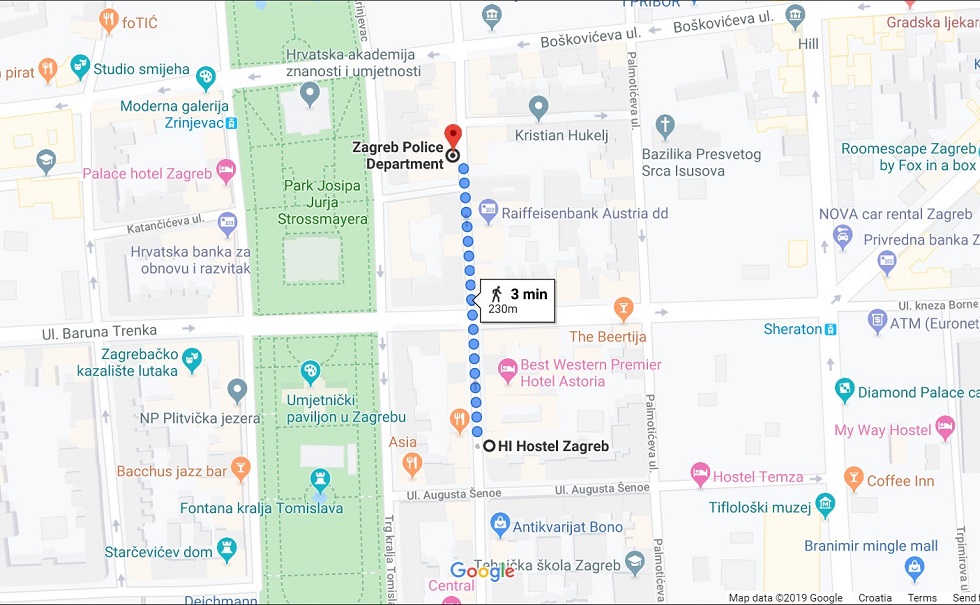
According to Vecernji List and other sources, the students stayed at the HI Youth Hostel on Petrinjska Ulica 77. That hostel is a mere 230m, or a 3-minute walk, from the MUP central office on the same street at Petrinjska Ulica 30, which casts doubt on the students' claim that the Croatian police wouldn't be bothered with confirming their travel documents at the HI Youth Hostel. According to their allegations, they were taken instead to the MUP central station 230m away.
Students Took Their Passports and Luggage Upon Check-out
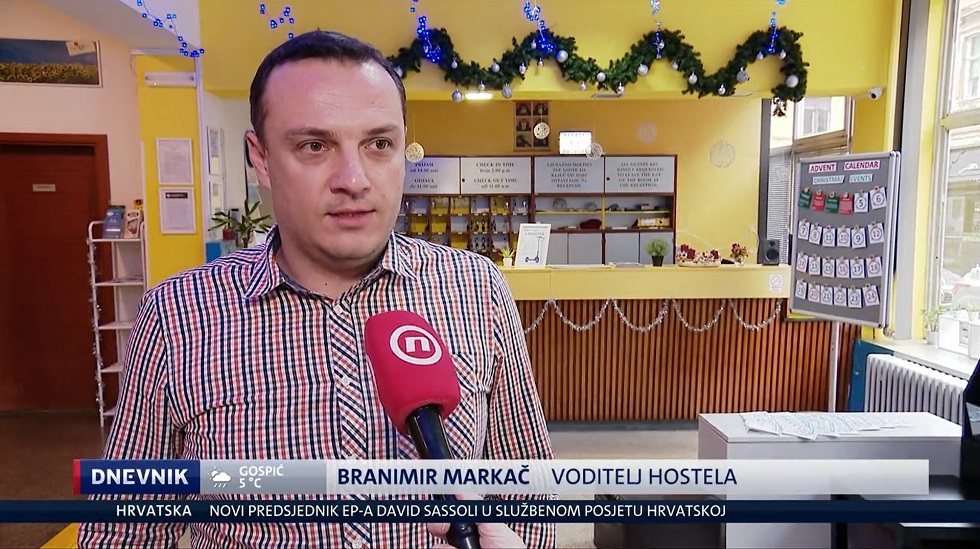
Hostel manager Branimir Markač confirmed in an interview with Dnevnik Nove TV that the students spent two nights at his hostel in Downtown Zagreb, checking in on November 16 (rather than November 17 as the students claim) and noted that they spent some of their time in the hostel lobby. They asked the front desk for some information; like the location of the nearest exchange office. After spending their first night and day at the hostel and taking side trips around town; the two Nigerians decided to extend their stay another night, which they did at 22:23h on November 17. Markač says he has their bill as evidence. They checked out of the hostel on November 18 at 11:00h and didn’t leave anything behind. This conflicts with the students’ claim that they were abducted by Croatian police on the evening of November 17, and sent to Bosnia, with their travel documents and luggage remaining at the hostel.
"Absolutely no one came to the hostel for their travel documents, nor would we ever hand over anybody else's belongings," Markač emphasized.
MUP has also claimed that Eboh and Abia left the hostel for an unknown destination, after checking out, taking their passports and paying their bills.
Who sent their passports to Velika Kladuša?
Is the friend who sent the Nigerian students their passports by mail (allegedly after retrieving them from the HI Youth hostel) their colleague from Nigeria? He also stayed in Croatia after his six-day visa expired and requested asylum with his passport at the MUP central station (230m from the hostel) on November 27, after reporting his passport lost at the same station on November 18. The police know his name but have not yet published it. He is likely being housed Hotel Porin, a reception center for asylum seekers in Zagreb, but police have been silent regarding his identity and whereabouts.
Were Smugglers involved?
According to Gordan Duhaček/Index; there is only one scenario in which the Croatian police might not be guilty of expelling Eboh and Abijah. Suppose that the Nigerian students went to the sports competition in Pula with the sole intention of staying illegally in the European Union after their six-day visa expired. Like most migrants, they don’t want to stay in Croatia, but want to go to one of the larger and more economically successful EU member states, so they paid smugglers, who are undoubtedly working throughout the region, to transfer them to Italy or Slovenia, i.e. to the Schengen free movement zone in the European Union.
Sources have confirmed that the students' arrived at the competions without rackets or sports equipment and lost every match. However, Hajdi Karakaš/Jutarnji List reports that other competitors considered them to be good-natured and pleasant to be around.
Smugglers Often Deceive Migrants
As Duhaček points out, there have been many reports of smugglers deceiving their "clients" and not taking them to the destinations they had promised. In that context, it's possible that the Nigerian students paid smugglers to take them to Slovenia or Italy but were tricked and brought to the Bosnian border. There the smugglers told them to walk through the forest where they would reach Italy or Slovenia.
Of course, Eboh and Abia followed instructions, and only when they came across migrants at Velika Kladuša did they realize that they had been duped and taken to Bosnia instead. There, they heard stories from other migrants about the aggressive pushback policy implemented by the Croatian police. That policy, as reported by The Guardian and other media outlets, involves bring migrants in vans back to the Bosnian border and illegally expelling them there under the threat of violence. With that information, they theoretically constructed the story they have shared Bosnia portal Žurnal and other media outlets.
Apparent Lack of Border Control
But even if that’s what really happened, it remains unclear how it was possible for a smuggler to take the Nigerian students to the Bosnian border, a border monitored 24 hours a day by drones, thermal cameras and thousands of police officers, and remain completely undetected.
In other words, the only scenario in which the Croatian police are not guilty is the same scenario in which the Croatian police are utterly incompetent, according to Duhaček.
Another Scenario Which Implicates Both Parties
Another possible scenario, which would involve wrongdoing by MUP and the Nigerian students, has the Nigerian students leaving their passports somewhere (or with their unidentified friend) after checking out of the HI Youth Hostel and setting off for Slovenia or Italy without travel documents. Croatian police intercept them somewhere outside of Zagreb and take them for illegal migrants, particularly after they were not able to furnish their travel documents. The Croatian police then put them in a van with other illegal migrants and forcibly expel them at the Bosnian border.
According to this second scenario, Eboh and Abia understand that admitting that they had set out for Slovenia or Italy without travel documents would identify them as illegal migrants regardless of the conduct of the Croatian police, perhaps compromising their chances of being granted asylum. Their unidentified friend (perhaps their Nigerian colleague in Zagreb) held on to their travel documents and sent them to Velika Kladuša after learning that things had not gone as planned.
Regardless of circumstance, if Zagreb police randomly pulled two people of color off of a tram, in the middle of Zagreb, and in an area frequented by tourists from all over the world; Croatia has a much more serious problem to contend with.
For updates on this story, the activities of the Croatian police (MUP) and the migrant crisis in Croatia; follow our Politics page here.
Croatia Attaches Importance to EU Membership Prospects of Its Neighbours
ZAGREB, December 6, 2019 - The Croatian Parliament will emphasise through its activities the priorities of the Croatian presidency of the European Union and special emphasis will be placed on the membership prospects of Western Balkan countries that wish to join the EU, Parliament Speaker Gordan Jandroković said on Thursday.
Jandroković was attending a conference of European Parliament presidents in Zagreb, which also involved European Parliament President David Sassoli and the chairs of political groups in the European Parliament.
"What is important to us is to emphasise through the parliamentary dimension the priorities of the Croatian presidency - a Europe that develops and connects, that cares about security and that is influential in the world. But of particular importance to us are the membership prospects of our neighbours that aspire to become EU members," Jandroković told the press ahead of a meeting with Sassoli and representatives of the political groups in the European Parliament.
He expressed hope that the Western Balkans summit, which will be held in Zagreb in May, would send positive messages to all the countries aspiring to join the EU. "We on our part as Parliament will try to give an added value to it," he said.
Sassoli and the leaders of all political groups in the European Parliament were on an official visit to Zagreb on Thursday to discuss with the Croatian leadership the priorities of the Croatian presidency of the EU in the first half of next year.
More news about Croatia and the EU can be found in the Politics section.
Breaches of Right to Effective Investigation Account for 5% of Croatian Cases at ECHR
ZAGREB, December 6, 2019 - Ksenija Turković, a Croatian judge at the European Court of Human Rights (ECHR), said on Thursday that by the end of 2018 the ECHR had passed 22 verdicts for breaches of the right to an effective investigation against Croatia, which accounts for around 5% of all ECHR verdicts related to Croatia.
Turković was speaking at a conference of the Croatian Association for Criminal Sciences and Practice.
Breaches of articles of the European Convention for the Protection of Human Rights and Fundamental Freedoms concerning the effectiveness of investigations are among the more frequent cases from Croatia that were adjudicated by the ECHR, it was said at the event, which focused on ways to strengthen the effectiveness of criminal proceedings by applying ECHR standards.
The event brought together researchers, representatives of prosecutorial authorities, judges and criminal lawyers as well as representatives of other high judicial institutions in Croatia and Europe.
The association's president, Zlata Đurđević, said that by the end of 2018, 22 cases of violation of the right to an effective investigation had been determined in cases from Croatia. The figure includes a number of cases of war crimes against civilians and cases from other areas, she said.
ECHR judge Turković said that the 22 cases in which the effectiveness of the investigation was violated accounted for around 5% of all ECHR verdicts against Croatia, which, she said, was not a negligible percentage.
She said that in terms of their number, that type of violations stood out considering that there was not one dominant group of cases from Croatia and the cases were varied.
Turković said one of the reasons for the high number of such cases was the fact that Croatia lacked its own mechanism to deal with breaches of the right to an effective investigation, so all such cases immediately ended up before the ECHR.
She expressed hope a solution would be found soon, noting that the Constitutional Court had been considering issues related to investigation effectiveness since 2014.
More human rights news can be found in the Politics section.
Government and Public Servants Unions Sign Agreements on Pay Rise
ZAGREB, December 6, 2019 - An annex to the Basic Collective Agreement for public servants and a wage supplement agreement for education sector employees was signed in Government House on Thursday.
The annex to the Basic Collective Agreement for public servants was signed by Labour and Pension System Minister Josip Aladrović and representatives of nine trade unions.
"After a longer period of time we have decided to sign the annex to the Basic Collective Agreement and we must express our satisfaction. The negotiations were not simple, they were demanding, however we did find a compromise solution. We have accepted it so that our people, after a certain number of years, could have higher base pay next year," said Anica Prašnjak, president of the nurses' union.
The wage supplement agreement for education sector employees was signed by Science and Education Minister Blaženka Divjak and education union representatives.
Prime Minister Andrej Plenković said his government has shown that it has continued to implement its consistent policy of increasing salaries through the base pay and annexes to the Basic Collective Agreement.
"During this government's term, salaries in state administration and public services will have gone up 18.3 percent by October 2020," Plenković said.
More news about the public sector can be found in the Politics section.
Lino Cervar Announces Player List for 2020 European Handball Championship
December 6, 2019 - Croatia handball coach Lino Cervar has announced a list of 28 players who have been officially reported to the European Handball Federation for the 2020 European Championship, hosted by Austria, Norway and Sweden.
HRT reports that on the road to Graz, where Croatia plays the first round of competition against Montenegro, Belarus and Serbia, the Croatia coach will lead 16 players from this list. Everyone else will be waiting for their chance if someone gets injured or sick during the tournament and can be used at any time.
The first phase of preparations for the European Championship begins on December 17 with a gathering in Zagreb. This is where the players will stay and train until December 23. The lineup for this reunion will be announced at the beginning of the week when the National League matches are over, that is, when we can see the condition of the players and if there are any injuries.
After a short break, the team will reunite on December 26 from December 30. This part of the preparations will be held in Porec.
The final gathering is on New Year's Day itself when the third and final phase of preparations for EURO 2020 begins. Players from the German Bundesliga will join the team in Porec then. As part of the preparations, the Croatian Cup will be held, with Bosnia and Qatar in addition to Croatia.
The preparations in Porec will end on January 7, 2020, followed by a return to Zagreb, from which the team will travel to Graz the next day.
The confirmed players are as follows:
1. ŠEGO MARIN, MONTPELLIER HB
2. AŠANIN MATEJ, HC PPD ZAGREB
3. ŠUNJIĆ MATE, US IVRY HANDBALL
4. CAR MORENO, HC NEXE
5. HORVAT ZLATKO, HC PPD ZAGREB
6. MATANOVIĆ VLADO, HC GORENJE VELENJE
7. VIDA IVAN, HC NEXE
8. MILETA FRAN, HC NEXE
9. MIHIĆ LOVRO, ORLEN WISLA PLOCK
10. MANDIĆ DAVID, HC PPD ZAGREB
11. RAVNIĆ VALENTINO, HC PPD ZAGREB
12. JELINIĆ MARIN, HC NEXE
13. MUSA ŽELJKO, SC MAGDEBURG
14. MARIĆ MARINO, MT MELSUNGEN
15. ŠIPIĆ MARIN, HC PPD ZAGREB
16. BROZOVIĆ ILIJA, HC HANNOVER – BURGDORF
17. DUVNJAK DOMAGOJ, THW KIEL
18. MAMIĆ MARKO, HC LEIPZIG
19. ŠARAC JOSIP, HC CELJE PIVOVARNA LAŠKO
20. HRSTIĆ MATEJ, RK PPD ZAGREB
21. KUDUZ ANTE, DINAMO BUCURESTI
22. GADŽA ANTE, RK PPD ZAGREB
23. CINDRIĆ LUKA, BARCA
24. KARAČIĆ IGOR, PGE VIVE KIELCE
25. STEPANČIĆ LUKA, MOL-PICK SZEGED
26. ŠEBETIĆ LUKA, TREMBLAY EN FRANCE HANDBALL
27. MARTINOVIĆ IVAN, HC HANNOVER – BURGDORF
28. VEKIĆ JOSIP, RK PPD ZAGREB
To read more about sport in Croatia, follow TCN’s dedicated page.
Venatus Jones, Championing Croatia's Small Entrepreneur
December 5, 2019 - A diaspora group championing the small Croatian entrepreneur while fighting the ghosts of socialism. Meet Venatus Jones.
After Agrokor’s Borgs and tales of other advisors cashing in big bucks in shady deals, it’s understandable that business consultants don’t have a good name in Croatia. In fact, following the likes of Kutle, Kerum and Todoric, it’s understandable that Croatians don’t care much for entrepreneurs either.
Venatus Jones, founded by diaspora returnee Eugene Brcic Jones over a year, ago is bent on changing that, offering to make business consulting and coaching accessible to all micro, small and medium enterprises - not just those with deep pockets.

“Our aim is to generate a huge social impact,” said Eugene, a consultant with stints in global giants Vodafone, Red Bull, Heineken and KPMG. “We want to create a massive shift to transform the entire business mentality in Croatia, to get rid of the old socialist mindset and allow genuine free-market attitudes of the West to take over.”
Most businesses here have only heard or studied how the economy works in America, or Germany, or any country in the West, but not many have actually lived and worked in free-markets. Few have run businesses in a strongly competitive environment, where the forces of supply and demand, quality and efficiency, determine which products and services reign supreme, which businesses survive and thrive and which ones flop and fail.

The Croatian system can best be described as crony capitalism and it really needs an army of consultants who have democracy and capitalism ingrained in their DNA to share know-how and promote ethical business practices.
Entrepreneurs need to abandon old ways of working through a “rodjo,” “veze i poznanstva,” “nekog svog,” and embrace concepts like strategy, development, innovation, planning, leadership, teamwork as well as new tools in management, marketing and sales.

It’s a lofty goal, what makes Venatus Jones think they can pull this off?
“After returning to Croatia and struggling to find the best way to make a living for myself and my family, I realised the biggest asset I had to sell was myself, my knowledge and my experience from living and working many years in both Australia and Croatia, but also across the world. I then sat down and developed a 40-week model based on all my mistakes and lessons and blended it all together with golden standards in Western economies, from leading consultancies like McKinsey, Boston, Accenture and AT Kearney among others.”
So what sets Venatus Jones apart?
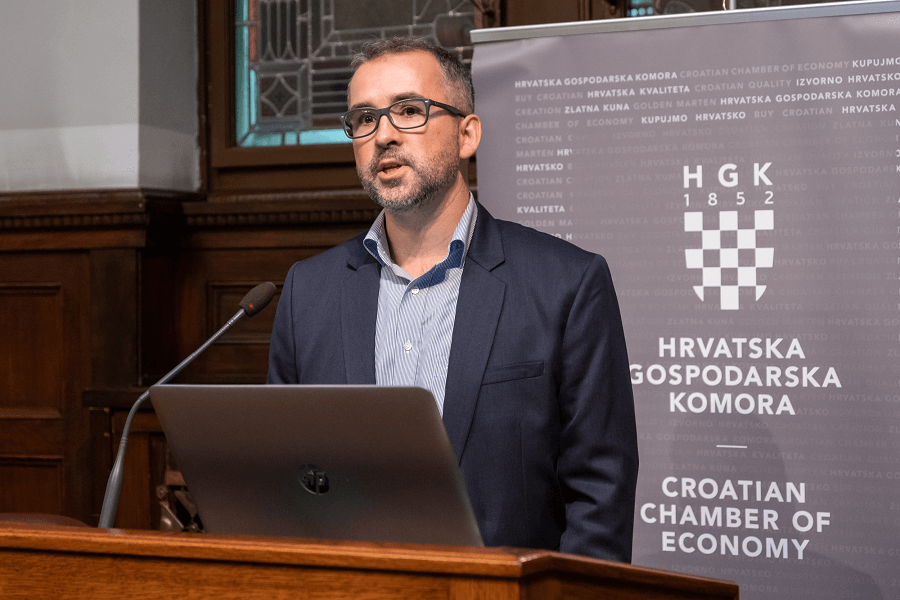
Venatus Jones is run by returnees from diaspora - Gerhard Saric, an operations and EU Funds expert from Germany, Aleksandra Papac, a banking and finance professional from Australia, and Mark Mocnaj, a business coaching and performance specialist from Canada. Chairman of the organisation is Stjepo Bartulica, an American, who heads the libertarian think tank Centre for Renewal of Culture (COK) and was former advisor to President Ivo Josipovic and Prime Minister Tihomir Oreskovic.
“Typically, our parents, friends of our parents and cousins had businesses, so we are driven by a strong passion to help the little man, the average entrepreneur who is doing well, but needs a little bit of extra support to lift their business to the next level,” said Gerhard, who grew up in Germany but has studied and worked extensively in the U.S.
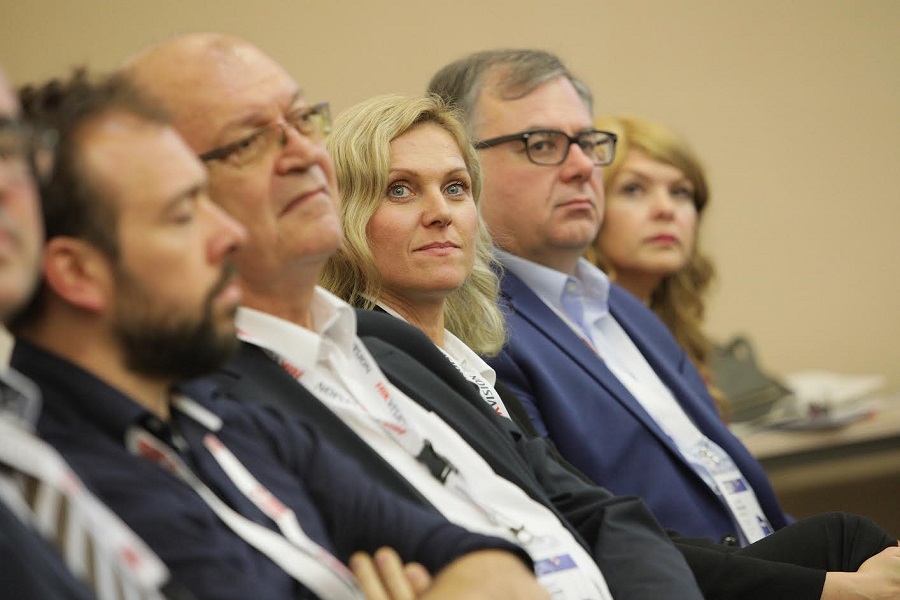
Former Australian Ambassador for Women in Business Aleksandra fled Bosnia during the war and lived in Germany before settling in Australia. Her father started a painting business, while many of her cousins had successful businesses ranging from restaurants to trades in the construction industry.
“Small businesses are the backbone of any economy. The wellbeing of so many families rely on small business owners. It is also where young people learn values about hard work and sacrifice,” she said. “The difference we bring to businesses in Croatia is that we understand the challenges entrepreneurs face on a personal level and we can quickly identify the steps that need to be implemented to help companies prosper.”
Mark, who was most recently a senior aviation executive and worked across the U.S for a leading coaching and performance agency, thinks that value for money is the main driver.
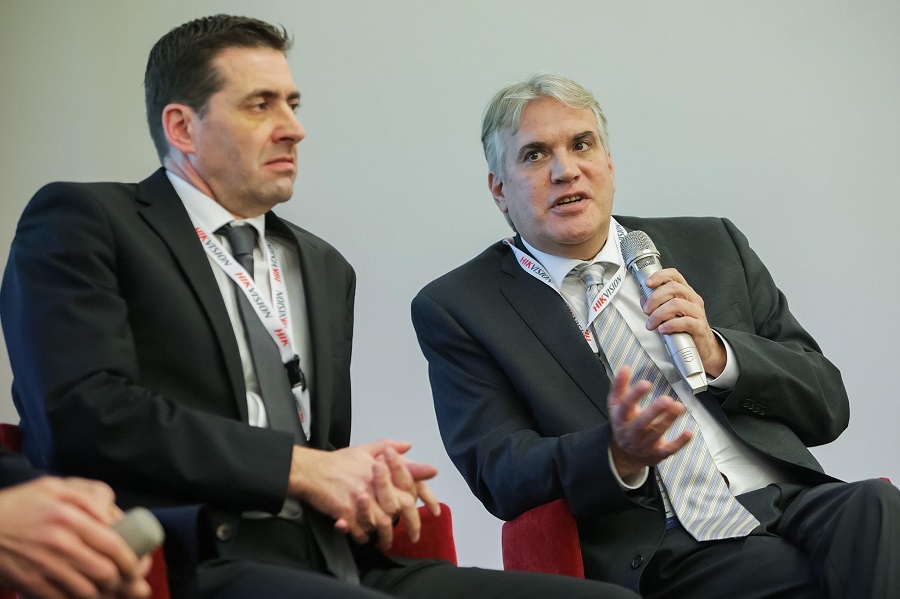
“In all honesty, business is all about the bottom line,” he said. “Our clients get over 100 years of combined international expertise for the price of a cleaner. We don’t lock clients into contracts, so they only keep us if they see value. It’s that simple: No money, no honey!”
Indeed, Venatus Jones is growing and its client base is more than impressive.
Bagatin Clinic was Venatus Jones’ first client, while other notable partnerships were forged with the Museum of Illusions, cosmetics upstart Skintegra, paper conglomerate Velpapir, restaurant chain Curry Bowl, hotel app RoomOrders, chocolate confectionary Vrsna and scientific research centre Rudjer Boskovic.
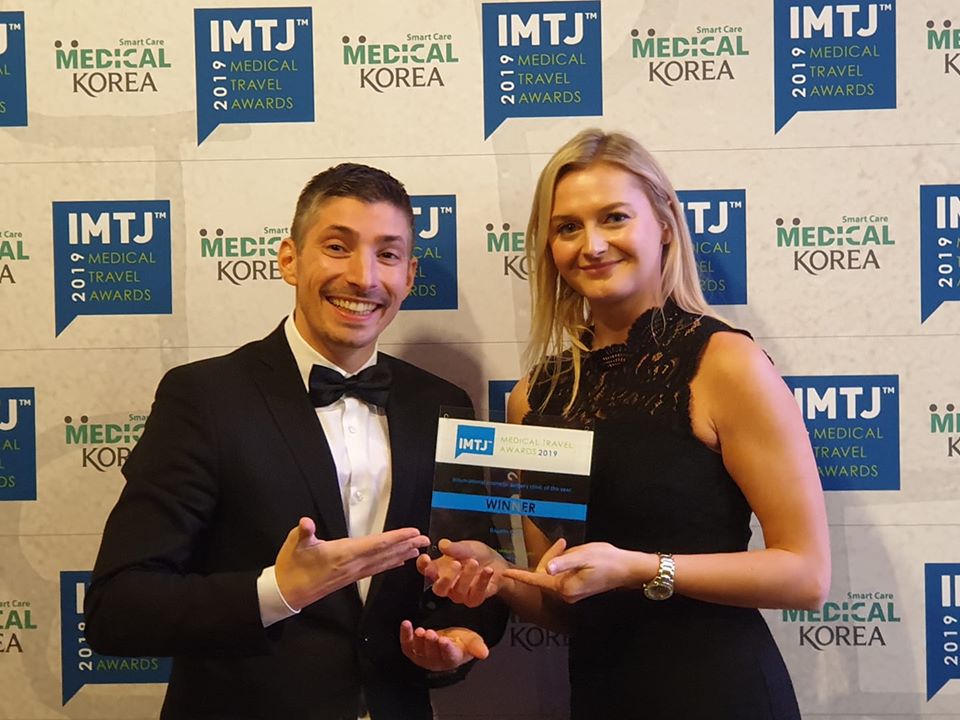
(Bagatin Clinic was the first client of Ventus Jones - here they are in Berlin at IMTJ 2019, having just won International Cosmetic Surgery Clinic of the Year - full story here.)
“Most of our clients are unknown and will remain under the radar, yet we particularly enjoy working for them, fixing common problems and identifying potential for growth,” Eugene said. “Our job is like a relationship, you work hard to gain trust and build respect. Business owners usually have dependent families closely involved in the company so positive results and success goes beyond professional satisfaction, it feels like we are helping more than just individuals.”
Gerhard, who has worked for USAID in Kosovo and other development agencies in the Balkans believes the Venatus Jones model will expand into neighbouring countries, which are experiencing difficulties overcoming the same socialist legacies as Croatia.
“It’s likely we will experience a labour shortage mid to late next year,” Gerhard said, revealing plans to recruit more staff from diaspora. “We want to be a bridge between the homeland and Croatian immigrants. Hopefully this will lead to securing an investor interested in high social as well as financial return.”
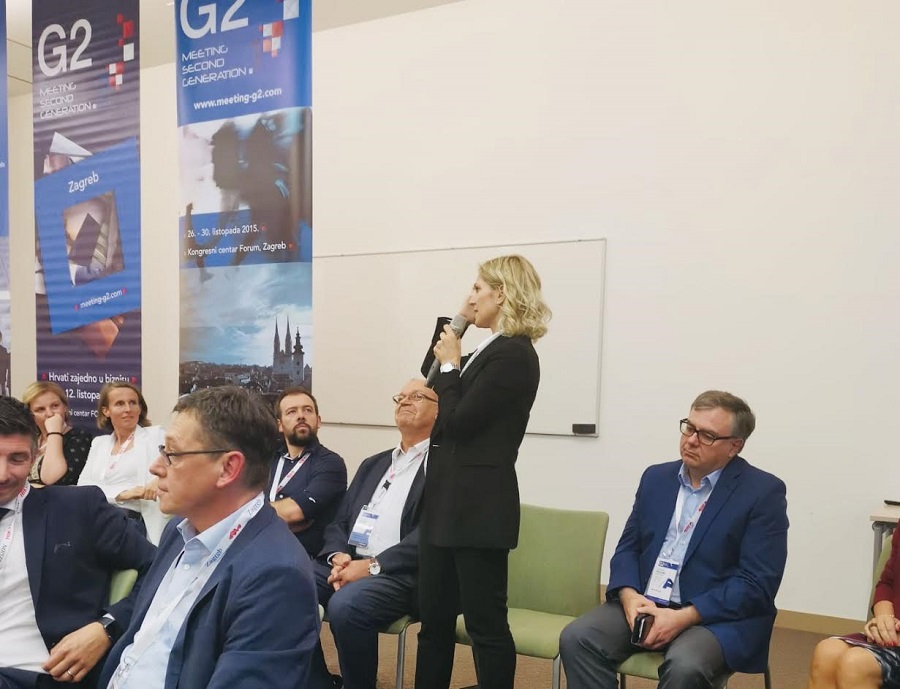
We have a project in mind, to provide a job, salary and shelter as soon as new employees arrive to Croatia, so they have all the necessary prerequisites to successfully assimilate to Croatian life.” he said.
“Off the plane, straight to your apartment and work on Monday morning,” Gerhard concluded. “We need more German efficiency!”
Premiere Tasting of Young Škrlet Wines at Zagreb Advent
Unique opportunity to taste nine young Škrlet wines in one place: Advent evening organized by the Moslavina Škrlet Association.
The foremost Škrlet producers of Moslavina region will premiere their 2019 harvest Škrlet wines to wine lovers at the Forum Gallery in Teslina 16, on Friday, 6th of December, 2019, from 17 to 22h.
Five medals from the recent Decanter awards for Škrlet wines are proof this variety is claiming its deserved spot on the wine list of Croatia and the world, one out of 120 indigenous Croatian varieties.
Visitors will have the opportunity to be the first to taste 9 young Škrlet wines from the 2019 harvest, one of them produced jointly by the Association members.
The ticket price is 60 kuna, including wine tasting and meeting the winemakers. Visitors will also be able to purchase promotional materials with the Škrlet brand.
The entire event has been financially supported by Zagreb County.

Avax Starts Constructing Ston Road Within Pelješac Bridge Project
ZAGREB, December 5, 2019 - The Croatian state-run road operator Hrvatske Ceste (HC) stated on Thursday that earlier in the morning the Greek Avax company had started constructing a ring-road at Ston on the peninsula of Pelješac, which is part of the Pelješac Bridge project aimed at improving Dalmatia's road connectivity.
The Ston ring-road, consisting of the Šparagovići/Zaradeže-Prapratno and Prapratno-Doli sub-sections, is estimated at 511.5 million kuna without Value Added Tax (VAT).
The HC expects Avax to build the 18-kilometre-long ring road within 28 months.
The Šparagovići/Zaradeže-Prapratno sub-section includes a viaduct, and the Prapratno-Doli subsection two tunnels and two bridges.
A month ago, a group consisting of Strabag AG and Strabag d.o.o., started construction work on their part of access roads to the future Pelješac Bridge.
The Duboka-Šparagovići/Zaradeže section, to be built by that group, is 12.05 kilometres long and its construction will take 33 months. This segment of the network of access roads costs 478.3 million kuna without VAT.
As many as 410 Chinese and 60 Croatian workers have been hired to build the Pelješac Bridge. In addition, 21 vessels are being used for undersea work.
The bridge in southernmost Croatia is being built by the China Bridge and Road Corporation. The EU is co-financing 85% of the construction cost and Croatia the rest.
More news about the Pelješac Bridge can be found in the Business section.
Croatia Will Need to Reconcile Views on Multiannual Financial Framework
ZAGREB, December 5, 2019 - During its European Union presidency in the first half of next year Croatia will need to reconcile different interests regarding the Multiannual Financial Framework (MFF), notably the differences in the views of the European Parliament and the countries that contribute the most to the EU budget, Prime Minister Andrej Plenković said after meeting with European Parliament President David Sassoli in Zagreb on Thursday.
Plenković and Sassoli held a joint press conference after a meeting between the Croatian government and the Conference of Presidents of the European Parliament.
"At this moment there is indeed a great difference between the goals set by the European Parliament and what is going on at the level of the Council or the member states. That's why the task of Croatia, along with the Council led by Charles Michel, will be to reconcile these interests so that that the next MFF could be smoothly implemented as of January 2021," Plenković said.
He said that the member states are divided into net contributors to the EU budget which are more conservative about the MFF and net beneficiaries and recipients of EU funding, including Croatia, which want considerable funds for traditional policies such as cohesion and agriculture.
"This is a key match between the conservative position of those that give the most, the middle position of member states that want considerable funds for cohesion policy and agriculture, and the ambition of the European Parliament, which says that if we are to confront the challenges facing Europe today, such as climate change or security, these funds must be higher," the Croatian PM said.
Sassoli said that the European Parliament wanted the next seven-year budget to support the programme of the European Commission led by Ursula von der Leyen.
The European Parliament wants an ambitious budget, one that will make it possible for the Union to deliver on its priorities, he added.
He said he wanted a Europe that grows, a Europe that can create jobs, keep its industry and achieve a transition to a green economy.
Sassoli said that a balance needed to be established between different views, but also that the European Commission's initiatives needed to be financed. None of the European governments can allow the Commission to fail, he stressed.
Sassoli condemned the conservative views on the MFF, noting that the European Parliament was not satisfied with the views of current EU president Finland.
He said that the MFF is a political issue of "our vision of Europe" and that the budget talks should also include "a little bit of heart and not just mathematics."
Plenković added that Croatia's goal was to help reach an agreement and avoid this issue being passed on to the German presidency. "The MFF must be sustainable, a compromise will be demanding and difficult," Plenković said, noting the fact that the United Kingdom, a large contributor to the EU budget, was leaving the Union.
Plenković and Sassoli are agreed that EU enlargement should continue. "We share the view that we should find a way to unblock negotiations with Albania and North Macedonia," the Croatian PM said.
Sassoli supported Croatia's ambition to join the Schengen area.
More news about Croatia and the EU can be found in the Politics section.
City for All Seasons: Dubrovnik Answers to Offseason with Open Restaurants, Flights, Winter Festival
December 5, 2019 - Dubrovnik tackles the winter blues with restaurant promotions, seasonal flights, and a packed winter program for guests.
HRTurizam reports that given the increasing number of international and domestic flights during the winter months and the interest and increase in the number of visitors, this winter, the Dubrovnik Tourist Board prepared promotional activities and printed a monthly leaflet "Winter restaurants" containing a list of open restaurants, pizzerias, and fast food during December. The leaflet includes special working hours, so that guests are as informed as possible and that outdoor restaurants are better promoted.
The Tourist Board also conducted a Facebook campaign in a dozen foreign markets with the most significant number of guests coming to Dubrovnik during the winter months, as well as locally for visitors located in Dubrovnik.
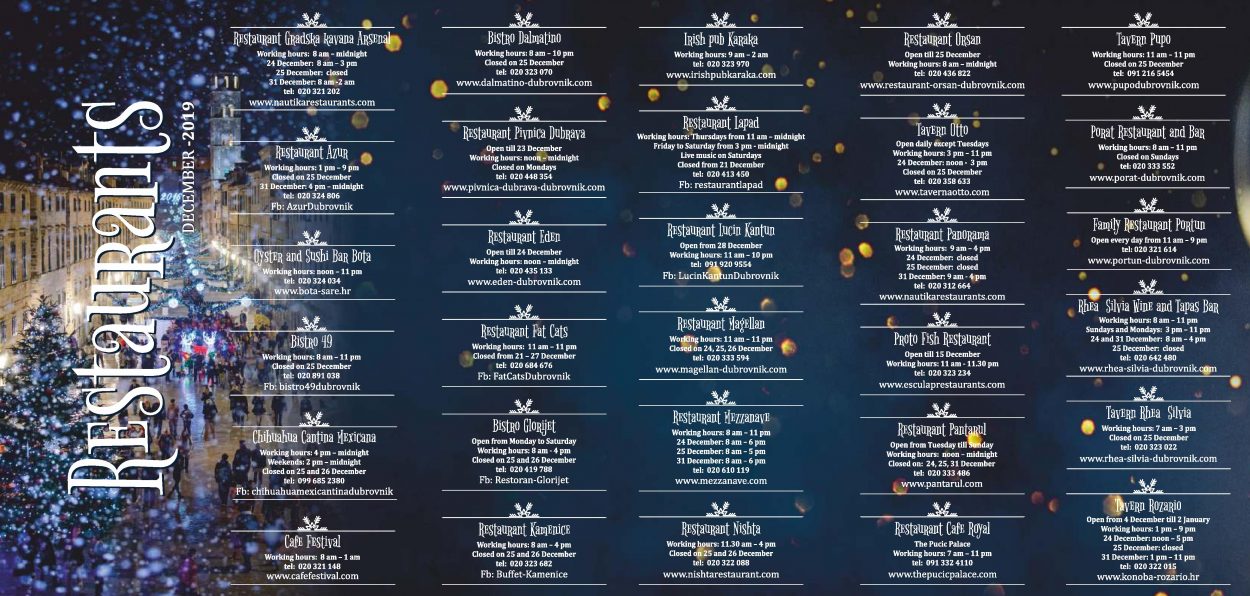
The leaflet can be downloaded at the Tourist Board website, at the Tourist Information Offices of Pile and Gruz, and in all open Dubrovnik hotels. You can see the leaflet here.
Furthermore, during the 2019/2020 winter season, the Adriatic pearl will be connected with the most foreign destinations so far, seven in particular.
Thus, Croatia Airlines, in addition to its scheduled flights to Zagreb, will run a connection from Frankfurt, British Airways from London, and Vueling from Rome and Barcelona. For the second time in the winter, LOT will connect Dubrovnik and Warsaw, Aegean Airlines from Athens, while Turkish Airlines will continue to operate from Istanbul.
Of course, content must be the primary motive for arrivals. Thus, the City, the Tourist Board, and the Dubrovnik Summer Festival have prepared a cultural, entertainment, gastronomic, and music program for visitors of all ages as part of the sixth edition of the Dubrovnik Winter Festival, which will run until January 6, 2020.
This year, the City decided to reduce the public area for catering tables and chairs by 10% for all facilities that use 25,00 m2 or more. Also, the lease term of public areas has increased to 5 years, which will certainly bring some security to Dubrovnik caterers.
To prolong the tourist season, the City has also proposed a measure that should encourage restaurant owners in the Old Town to work in the winter months.
Following the new amendments to the Decision on the lease of public spaces in Article 6, a paragraph on rent exemption for caterers in the Old Town has been added if the caterers operate in the winter months.
The measure refers to a rent exemption for caterers predominantly serving meals (restaurants, taverns, pizzerias) in the historic core, if they carry on with their business from December 1, 2019, to February 29, 2020.
Goran Rihelj writes that this Dubrovnik winter story is finally meaningful and connected, but there is still a lot of room for growth. This is only the first step and a prerequisite for strategic development and therefore long-term success, since tourism and the concept of the destination are much more than accommodation and restaurants.

A well-rounded tourism product and strategic development is the only real path to sustainable development; a term Croatia is just discovering and learning. Rihelj adds that in the 21st century, everything is available to us, we have all the potential, preconditions and resources, and it is up to us to connect all the dots and tell our authentic story. While everyone is fighting for every tourist, both globally and in a strong and competitive European market, those who are innovative, creative, proactive and are primarily concerned with market development will prevail.
Rihelj continues that supporting Dubrovnik is the first step towards a complete story, but the real work is just beginning - from the website to expand the tourist offer to the entire Dubrovnik area through integrated tourist products. In particular, Peljesac, for example, has and offers excellent facilities and products that chronically lack in the Dubrovnik tourist offer, and which complement each other perfectly. That is why, Rihelj adds, that Dubrovnik should use its media and financial power to promote and develop the wider area, not just itself. That is where the winning formula lies in how to extend the number of days guests stay in Dubrovnik or Dubrovnik-Neretva County, as tourist spending increases and, most importantly, offers quality and authentic content to guests. Content that directly affects the guests' level of overall satisfaction with the destination.
Rihelj concludes that we have high expectations from Dubrovnik as Croatia’s top destination, which has to be one of the signposts for how and in what direction Croatia develops. Dubrovnik must be a leader in tourism.
To read more about travel in Croatia, follow TCN’s dedicated page.