

Medjimurjeplet Seeks Stronger Export Position With Significant Investments
As Darko Bicak/Poslovni Dnevnik writes on the 5th of December, 2019, although the Čakovec-based company Medjimurjeplet has built its brand and business on the production of quality furniture for outdoor spaces based on wood and metal, in recent years, an increasing part of their business has been the production of parquet, windows and doors.
So far, these assortments have in principle been separated through various presentation and sales channels, but today they have been integrated through their concept stores in Zagreb and in Munich. Just last week, an exhibition and sales centre was opened in Zagreb, which houses almost the entire collection of their companies - Međimurjeplet, Pana and Pana Windows.
Although the companies have not been formally consolidated as a group, it is a business “empire” created by Alojzije Sobočanac, which is increasingly being taken over by his daughters Nikolina Babić and Ana Marija Sobočanec Dalić.
“Our entire range is based on the concept of ''living with nature'', ie, high quality and natural materials, various combinations of wood and aluminum, while we have no PVC in our offer. Investments in the modernisation of the window and door factory, Pana Windows in Čakovec, and the new Pana multilayer factory in Turopolje, will greatly increase our capacity and competitiveness on foreign markets,'' says Ana Marija Sobočanec Dalić.
She added that 90 percent of their parquet flooring is currently exported, as are 50 percent of their windows and doors, while in the case of furniture, that figure stands at around 20 percent. In the coming period, they plan to put even more emphasis on exports, especially in the area of doors and windows, which is why they have set up a company in Germany. Medjimurjeplet's most important export markets are those of Austria, Germany and Switzerland, and in the furniture segment, they also have significant cooperation with Italy, from which they import a part of their non-production range.
In the past year, they have invested 13 million kuna in the modernisation of Pana Windows, while a joint investment with Austria's Weitzer Parkett in the new Pana factory near Velika Gorica stands at more than 70 million kuna (10 million euros). Each partner secured half the amount, and the factory should start operating as of January the 1st, 2020. Although Medjimurjeplet was the base from which the expansion to take over Pana started some 20 years ago, today the furniture factory is actually the smallest member of this business family.
Namely, Medjimurjeplet has around 30 employees and 27 million kuna in revenue, while the Pana parquet factory already generates 70 million kuna with 160 workers, which will be further increased by a new factory and around 50 new employees. Pana Windows, on the other hand, has 55 employees and 20 million kuna in revenue, which will certainly be enhanced by modernising the factory and boosting exports. Here in Croatia, the company mostly cooperates with architectural offices and construction companies, although they also have more and more inquiries and orders from private individuals.
''We're most represented in the projects of high-end hotels, restaurants and residential and commercial buildings. One of our significant partners is VMD, which has used us for all its projects, and one of them is their Blok Bužanova on the ground floor in which we've set up our Concept store in Zagreb,'' pointed out Ana Marija Sobočanec Dalić.
Make sure to follow our dedicated business and Made in Croatia pages for much more.
Croatian Artificial Intelligence: Siri Who? Meet Barica
This unique system from Croatia speaks Croatian and its possibilities can also be applied in tourism, trade, the hospitality industry, and even further. Meet Barica.
As Poslovni Dnevnik/Sergej Novosel Vuckovic writes on the 6th of December, 2019, a lot of physical work and skills in assembling components and an enormous mental effort with the application of expert knowledge led to Barica. Or - as it was born - B.A.R.I.C.A.
In the continental Croatian town of Varaždin, more specifically at the Faculty of Organisation and Informatics (FOI), Barica was ''baptised'' as artificial intelligence by the ''father'' Prof. Dr. Markus Schatten from FOI, and the "mother", former student Tajana Šokec.
The entire team of scientists and students within AILab at FOI is also responsible for Barica coming into the world. The ''being'' in question has a name which signifies something in English: Beautiful ARtificial Intelligence Cognitive Agent (the acronym B.A.R.I.C.A., or Barica as it's informally known). It is a cognitive artificial intelligence agent who currently resides in the aforementioned Varaždin faculty's hall, where it informs students and visitors about professors, schedules and more.
''The ''culprit'' responsible for the creation of the system is Tomislav Kotnik, editor-in-chief of Vidi magazine, who asked me to give a lecture on artificial intelligence at the BIG3 conference. He asked me if I could use some attractive avatar/chat bot/artificial intelligence. After searching for solutions that were not satisfactory, I decided to implement my own artificial intelligence, which will speak to me in Croatian during a lecture.
One sleepless weekend later, the first version of Barica was born. I showed the system to my colleagues and students and it aroused great interest from them. At the Faculty of Artificial Intelligence Laboratory (AILab), we refined and expanded it, and the even the board fell victim to Barica's charm, so it received an official ''workplace'' at the faculty,'' explained Schatten, emphasising the merits of everyone on the team, as well as the aforementioned Tajana Šokec, who also received an award in regard to Barica.
Schatten himself implemented the framework of the system, and this first required a Hadwer modification, which included what could be referred to as a kind of carpentry work. An old makeup cabinet was purchased, as was an old television, a bakelite telephone and a computer.
"I bought some stuff that had already been used through ads, I found some stuff in the trash, everything is completely recycled parts, except for a monitor bought by the college. I repaired the makeup cabinet, removed the mirror, disassembled the TV and shortened it down, installed the monitor, disassembled the phone, connected the headphones to the PC cable and mounted it all, everything was turned white to give a quasi shabby chic and retro look, so the physical incarnation was created in a month and a half,'' the Varazdin professor explained, adding that the software part, which is more intellectual, lasted about half a year and that the idea was still developing.
Technologically and software-wise, Barica, has a system for text-to-speech, a natural language processing system, speech synthesis, generated video expression for the face and lips (lip sync, animation made with a tool from an ordinary static image), faculty knowledge and a graphical interface. One of Barica's most important features is that it works in the Croatian language, which was the main reason for its emergence, as such systems are very rare, as was pointed out by the lecturer of Theoretical and Applied Fundamentals of Information Sciences of FOI.
"I have no information that there is any similar system in Croatia in higher education institutions," he stated. Barica answers four questions as a basic aid to students and that is its main function, but Schatten says she has a much larger vocabulary and that the plans are to work on that.
Could Barica or maybe some future T.E.F. become a ''professor'' and thus replace him and other people?
"So far, only partially. The technology of talking agents like Barica and artificial intelligence generally has its limitations. We can do a lot, but we can't do much moe [than we have]. A (good) system can give a lecture and even respond to students' questions related to the material, but it cannot respond to unforeseen situations or creatively solve a new problem. Although artificial intelligence technology seems to be very close to human intelligence, we're still very far from it. This, of course, doesn't mean that very useful systems cannot be built with the help of artificial intelligence,'' concluded Prof.Dr. Markus Schatten.
Make sure to follow our dedicated Made in Croatia page for much more.
Pazin, Poreč and Medulin Partake in Europe Goes Local Project
As Glas Istre/Cristian Bruno Galic writes on the 7th of December, 2019, the training for the Europe goes local project was attended by representatives of seventeen local and regional self-government units, who, with examples of good practice, had to draw up an individual plan for youth work, which would improve relations between youth and local city governments.
As part of the project "Europe Goes Local - Representatives of the youth at the local level", representatives of the Istrian cities of Poreč and Pazin, as well as the Istrian Municipality of Medulin and the Pula Association "ZUM" participated in the second cycle of training of local and regional self-government units, which was held in Marija Bistrica. Europe goes local's aim is to empower local and regional self-government units to create an enabling environment for the development of youth work at the more intimate, local level.
The participants from the aforementioned areas of Istria also attended the final conference of the project "Take the money and do something for the youth: A participatory budget for the active participation of youth in the local community" which was held in Zabok.
There are numerous examples of how cities and municipalities influence the improvement of young people's living conditions - some through support for youth organisations and some through activities carried out on their own.
The EGL project is currently one of Europe's largest projects in the field of youth work and is implemented by the Agency for Mobility and EU Programs in cooperation with the partner National agencies in Europe for the Erasmus + program.
The Europe goes local project initiated long-term cooperation with the aim of improving the quality of work with young people, in particular by strengthening cooperation between different stakeholders in the field.
Pazin was represented by Anton Finderle, Poreč was represented by Ena Beaković and Lea Štifanić, the Municipality of Medulin was represented by Suzana Racan Stern and Ana Žufić, and the ZUM Association from Pula was represented by Aleksandra Lera, all of whom received certificates of non-formal learning in the field of youth (Youthpass) at the end.
Make sure to follow our dedicated lifestyle and politics pages for much more.
Drazen Grgic from Sibenik to Attempt Atlantic Ocean Crossing Again
As SibenikIN writes on the 6th of December, 2019, Sibenik doctor Drazen Grgic has announced that he will attempt to cross the Atlantic ocean in a sailboat once again, heading from the Dalmatian city of Sibenik all the way to Brazil. He called the project ''Clean Sea, Clean Heart'', and it is primarily aimed at raising public awareness of the problem of plastic pollution in the world's seas and oceans.
''Back in October 2018, I sailed from Sibenik to Brazil (Fernando de Noronha Islands) solo for the first time for the ''Clean Sea, Clean Heart'' environmental campaign supported by the City of Sibenik, the Sibenik Tourist Board and D-Marin Mandalina, which was aimed at raising public awareness of the problems of marine pollution, primarily by plastic. In recent decades, we've witnessed a hitherto unknown problem that is increasingly taking place in all seas across the world and threatening to endanger entire ecosystems in the sea.
Plastic has become so cheap and accessible that nobody even thinks how dangerous it can be to the environment, and when thrown away as waste, one way or another, sooner or later, it reaches the sea where in the course of time it breaks down into microplastics, ie, tiny fragments of plastic which are bound by various toxins, which are then inadvertently fed to sea creatures and thus endanger their survival, and ultimately ours is at stake,'' said Dr. Drazen Grgic when presenting his new venture.
As stated, Drazen Grgic had already embarked on this same adventure once but ended up turning around and returning home to Sibenik, primarily because of bad weather conditions in the Mediterranean.
Drazen stated that this season he has a new sailboat and some other extras that made it easier for him to manage it have been added, and he now has another crew member, Branimir Vlaj, a successful businessman and sea lover, who has been on and around ships and out at sea for more than half a century.
There have also been some new ropes, shackles and electronic devices installed for navigating and improving navigation safety. This year, the same route as the one attempted back in 2018 has been defined, from Sibenik down to Brazil, more precisely the Fernando de Noronha Islands, which is one of the most famous protected marine areas and the pearl of the Atlantic, something akin to Croatia's gorgeous Kornati islands.
''We are sailing for the same purpose, to raise public attention of the need to preserve the sea, with a special emphasis placed on educating our young people who need to learn from a young age about the importance of preserving the sea as a habitat for living beings and not just as a resourcesfor economic exploitation,'' reports Morski, transmitting Drazen's words.
Make sure to follow our dedicated lifestyle page for much more.
Commemoration Held for Zec Family
ZAGREB, December 8, 2019 - The Documenta Centre for Dealing with the Past and the Serb National Council (SNV) held a commemoration for Marija, Aleksandra and Mihajlo Zec who had been killed on Mount Medvednica, overlooking Zagreb, 28 years ago on Saturday, saying that they would ask the city authorities to name a Zagreb square or street after 12-year-old Aleksandra.
They said they would also ask the city authorities to put up a memorial plaque on the Adolfovac mountain lodge where Aleksandra and her mother Marija were shot dead by members of a special police unit under Tomislav Merčep.
Members of the unit came to the home of the Zec family in Zagreb's Trešnjevka district shortly after 11pm on 7 December 1991 and shot dead 38-year-old Mihajlo Zec as he tried to escape. Marija and Aleksandra, who witnessed the murder, were then taken in a van to Adolfovac where they were killed and the mountain lodge later burned down.
Shortly after the police found the bodies, the members of Merčep's unit Munib Suljić, Igor Mikola, Siniša Rimac, Nebojša Hodak and Snežana Živanović were arrested. Some of them confessed to the murders before an investigating judge, but at trial it was found that they did not have a lawyer present during their interviews with the investigating judge as required by law. Their earlier statements were thrown out and they were released.
Aleksandra, Marija and Mihajlo Zec are buried in Mihajlo's place of birth Gornja Dragotinja, near Prijedor, northwestern Bosnia and Herzegovina.
Journalist Drago Pilsel said at the commemoration that their murder "is one of the most shameful chapters in modern Croatian history."
"Some of the murderers later advanced in their careers and were even decorated by the then President Franjo Tuđman, which brings into question the defensive nature of the Homeland War," Pilsel said.
The head of Documenta, Vesna Teršelić, wondered if Croatian politicians and citizens "will remember not just the victims of the Homeland War, for whom Parliament has designated a special date in the calendar, but also all the children, more than 400 of them, killed in the Homeland War."
Speaking on behalf of the SNV, Saša Milošević said that the 1990s was "not just a glorious period, but also a very sad, dark, tragic and shameful period of Croatian history."
The Documenta and SNV representatives laid a wreath and lit three candles, members of the public laid roses, and a minute's silence was observed for the dead.
Among those attending were Zoran Pusić of the Antifascist League and the Civic Committee on Human Rights, and SNV president and member of Parliament Milorad Pupovac.
More news about Serbs in Croatia can be found in the Politics section.
Over £18,000 Raised at Sotheby's Istrian White Truffle Auction in London
December 8, 2019 - A superb evening was held at the exclusive Harry’s Bar in London in cooperation with the Istria Tourist Board to celebrate the Istrian white truffle.
While it was no easy task to impress several of the finest London gourmands, they were enchanted by the Istrian feast, the most exquisite white truffles, excellent wines and, of course, Istrian extra-virgin olive oil. In the end, it was a fantastic night for all.
Glas Istre writes that the Chairman of Sotheby's UK auction Lord Harry Dalmeny revealed that more than £18,000 was raised for three charities from the evening, and not only was this an exclusive promotion of Istria in London, but a significant breakthrough for the tourist boards and the counties of Istria.
All the proceeds from the auction (£18,300) will go to charity. The Veruda Day Care Center for Rehabilitation in Pula was selected on the Croatian side, which will receive a sum of £12,100. In addition to the amounts auctioned in three auction rounds - six small truffles were sold for £2,800, one medium and one small for £2,600, and a two-day truffle experience package in Istria for £3,500. Furthermore, an anonymous London millionaire donated an extra £3,200 to the famous Veruda Center.
From the UK institutions, donations will go to The Felix Project, which supplies fresh and nutritious food to more than 300 London-based charities, providing 6.5 million meals a year, and to Chain of Hope, which provides life-saving heart treatments.
“Having the president of Sotheby's as an Istrian truffle auctioneer is a great honor for us. We managed to join one of the most luxurious private clubs, Harry's Bar, Sotheby's, as the world's largest auction house and the Istrian truffle, as one of the best truffles in the world. We don't just have time to promote ourselves through classic communication models because then it would take ten years. We take the shortcut, straight to the strongest, so that we shorten the journey towards promoting and raising the reputation of the Istrian destination. If this is the opening tonight, then the closing will be next year with the ATP Master Series, the tennis spectacle at the Arena. Both events really guarantee that we are clearly targeting higher spending power audiences, with tennis that originated in England and is widespread in our country, and with truffles known around the world as the culmination of gastronomy,” said Denis Ivošević, director of the Istria Tourist Board.
As for the "conquest" of the British market, these two major events were preceded by a series of other actions. In the last three to four years, Ivošević points out, they have significantly increased air arrivals to Istria, from virtually all London airports, except City. From all five other airports, five different airlines fly to Pula, from national carrier British Airways flying from Heathrow to EasyJet from Gatwick and Southend, Ryanair from Stansted, TUI UK and Jet2.com from Gatwick. When they secured the flights, two years ago, the Istria Tourist Board contracted a collaboration with the London-based PR agency Fox Communication, and for two years in a row, much has been written about Istria, with a focus on London and its surroundings.
The Istria truffle was also the star of the dinner at Harry's Bar, which was enjoyed by about 70 guests. Under the expert guidance of Italian restaurant manager Luciano Porcu, paired with Kozlovic's Teran and Malvasia and Chiavalon extra virgin oil, scallops, homemade tagliolini, and veal piccata were served, and finally toasted panettone, chocolate sorbet and zabaglione. With these top delicacies and the spirited Lord Dalmeny, the truffle auction began, which were brought to London by representatives of Zigante Truffles. The star of the evening, the biggest truffle of the season in Istria, weighing 375 grams, went to an anonymous London buyer for £3,800.
“To me, this is really fantastic, something different that we haven't seen yet. Such events, with auctions, really target a specific group, deep-pocket guests. The Istrian County Tourist Board has managed to combine a lot of things, including gastronomy, selected clientele and humanitarian actions. The engagement of Sotheby's has definitely raised the level of the whole event, and if someone wants to target such an audience, a little more sophisticated, richer, with more refined taste, then this is definitely the right approach. Istria is recognized as a gastronomic destination, among others. The British appreciate our cuisine and we want to talk more about it. We see great potential for the growing interest in Istria on the British market,” said Darija Reić, director of the Croatian National Tourist Board representative office in London, and also a guest at the Istrian dinner.
Croatia, says Reić, is yet to be discovered, especially by the upper classes of British society. After Dubrovnik and Split-Dalmatia County, especially the islands, Istria is the third most sought after destination by Brits. They are guests for the pre and post-season since they prefer nautical, active and gastronomic tourism, and in recent years, Advent trips have become more and more popular, as have Zagreb, Dubrovnik and Split, as increasingly popular destinations for British tourists in the winter.
“Despite Brexit, this year we had an increase of 4% in tourist traffic from Britain. What Brexit brings is still a big unknown, more may be known after the December 12 election, but the British love to travel and won't give up on it. It was agreed that British airlines and tour operators would be able to travel and fly within the EU by the end of 2020 under the same conditions. So in the year ahead, there are no major changes, and what will matter is the strength of their currency, which is related to Brexit, and I think they will turn to more countries that do not have the euro, which Croatia should use,” Reić explained.
Denis Ivošević spoke about his strategy to return Istria to the British market.
“The last time a similar event took place was more than twelve years ago when Italian truffles from Alba were auctioned. This fact is not surprising given that most good restaurants are held by Italian managers, chefs, entrepreneurs. How ubiquitous and strong the Italian brand is can be seen every step of the way in London, so we are at the beginning. We have a long way to go; we have to be persistent and ubiquitous,” Ivošević concluded.
You can read the full piece here.
To read more about lifestyle in Croatia, follow TCN’s dedicated page.
Bratislava Names Street After Vukovar, Marking the Bond Between Cities
December 8, 2019 - The capital of Slovakia is the first city outside of former Yugoslavia to name a street after the Croatian hero city, Vukovar!
N1 and the Croatian State Office for Croats Abroad report that the honor of unveiling the street nameplate in the Devínska Nová Ves Municipality on Friday went to Vukovar Mayor Ivan Penava and the Mayor of that municipality, Darius Krajčir, who initiated the idea and also has Croatian roots.
"The Danube River connects Bratislava and Vukovar, Vukovar is a symbol of all Croats in the world, and this act is an expression of true respect and friendship towards the heroic city," said Mayor Krajčir, stating that the municipality of Devínska Nová Ves has always been a municipality with a Croatian population, and through history has still been called Croatian.
Central State Office for Croats Abroad
Mayor Penava expressed great gratitude but also pride because this Slovakian street now bears the name of the Croatian hero city.
"This is not just about the street, but about what is behind it. This act speaks to Croats who came here 500 years ago and managed to preserve their language and culture, their consciousness about their nationality and Croatian roots, about the Homeland War, the symbolism and power of Vukovar and its significance for all of the Croatian people. My heart is full to be among my people in such a beautiful setting,” he noted.
The Croatian ambassador to Slovakia, Alexander Heina, also could not hide his satisfaction.
"When a street in Croatia is called Vukovar, it is an act of recognition, but an action we expect. But when something like this happens outside the borders of Croatia, it is something special, something that needs to be recognized, because it proves the truth about the destruction of Vukovar and what happened during the Homeland War outside of Croatia,” Heina emphasized.
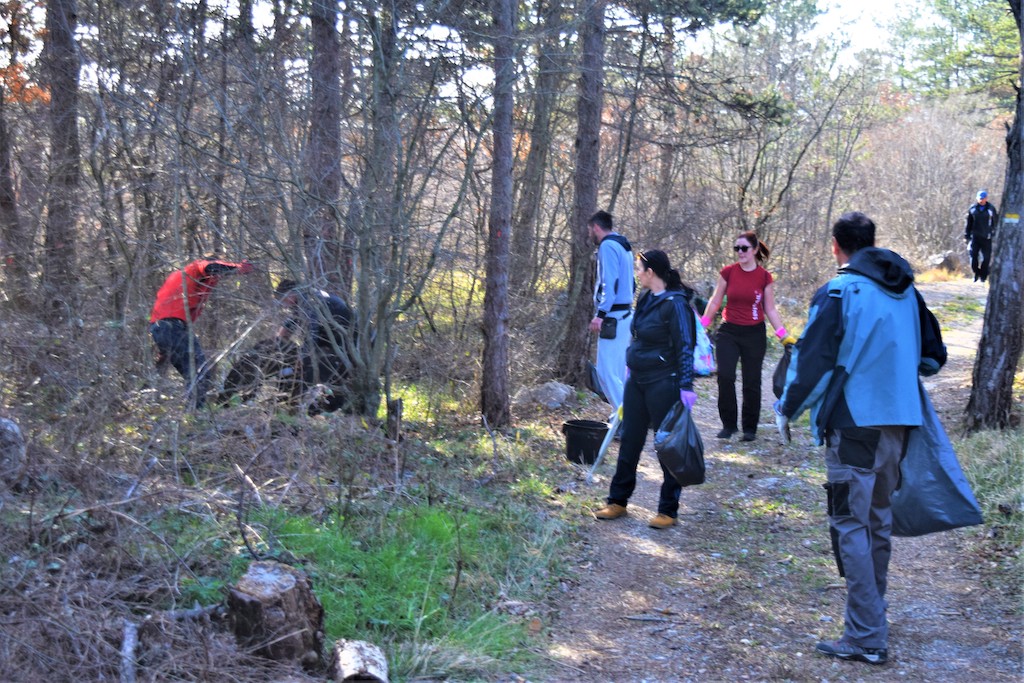
Central State Office for Croats Abroad
A reception and commemorative program were organized for guests from Croatia in the Municipality of Devínska Nová Ves along with a visit to the Museum of Croatian Culture, built with donations from the governments of the two countries in Devínsko Novo Selo.
Just a few days ago, another issue was positively resolved for the Croatian national minority in Slovakia, which is a quality and long-term solution to the status of the building of the Museum of Croatian Culture in Slovakia. Societies and associations of the Croatian national minority in Slovakia have thus obtained legal certainty for the long-term use of the building for 99 years, which has become and remains the center of Croatian events, joint meetings and activities. A lasting solution to this issue is of great importance to the Croats in Slovakia.
To read more about made in Croatia, follow TCN's dedicated page.
CORRECTION: The first version of this article stated that Bratislava was the first city outside Croatia to name a street after Vukovar, as is written in the official PR material by the Government Office for Croatians Abroad. We've since fact-checked that statement, and found that Belgrade, Mostar, Skopje, Petrovaradin, and Bačka Palanka (at least those are the towns we're aware of when writing this correction) also have streets named after Vukovar. We are thus correcting that mistake.
Filip Hrgovic Knocks Out Eric Molina to Win Biggest Fight of His Career!
December 7, 2019 - Filip Hrgovic defended his WBC International Heavyweight belt on Saturday after knocking out Eric Molina at the Diriyah Arena in Saudi Arabia.
Index.hr reports that Filip Hrgovic knocked out Eric Molina in the third round of the ‘Clash On The Dunes’ on Saturday to remain the WBC International Heavyweight champion. The Croatian boxer dominated the whole fight, leaving the American boxer with little hope.
Molina was knocked down twice, once in the first and second in the second round.
Hrgovic started strong in the third round, threw a few heavy punches, and after less than a minute, managed to knock out Molina.
After the fight and proclamation of Hrgovic as the winner, the Croatian boxer made a statement calling out the biggest names in boxing.
"I am pleased with my performance; I have a lot of respect for Molina, who agreed to fight against me when no one wanted. Thanks to my coaches, promoters and thank you to Saudi Arabia for making this event possible," Hrgovic said after the fight, and commented on the fact that Molina complained that some of his strikes were in unauthorized areas:
"This is a war, and I used all the weapons. He turned his back on me, this is a regular hit, there is a judge so let him punish me if I was wrong,” he added.
He then asked the world's best to fight this promising boxer from Croatia.
“This is my wish from the beginning of my career, and I hope that one of the warriors will come and fight. This is a dangerous sport, I am convinced of my skills and moving forward, I believe that I can become a world champion, but I could also never become one,” concluded Hrgovic.
To read more about sport in Croatia, follow TCN's dedicated page.
Interview with Vanja Černjul, Zagreb-born Hollywood Cinematographer
Vanja Černjul is a well-known Hollywood cinematographer and director of photography who gave an in-depth interview with Zoran Vitas for the Večernji list.
The reason for this interview is the upcoming NEM Zagreb event, which will take place in Zagreb between the 11th and 13th of December. We're used to NEM happening in Dubrovnik during the spring, but now we get the chance to see the Zagreb edition of the event during the winter. Vanja Černjul will be at the event, participating at the panel, which discusses the influence of the production process on the basic idea of a show. He's never been in Dubrovnik for NEM events, so he's happy he's able to come to the Zagreb one and see some old friends.
He talked about his last finished project, Here Today, a film with Billy Crystal, how they met, and the stories he read as he prepared to work with this juggernaut of the entertainment industry. Vanja Černjul says he learned a lot from Billy Crystal, not just about film-making, but also about what he wants the next 20 years of his life to be like. He also talked about his experience while filming The Deuce, a hit David Simon's series, where he was also the director of photography. He said that he'd hoped he would get the chance to work on the show from the first time he heard about the D. Simon show about prostitution and the pornographic underworld of Manhattan in the seventies. It sounded like an ideal project, as it allowed him to do more research, which he enjoys, especially in preparation for the historical drama. As he prepared for Netflix's Marco Polo series, he learned a lot about the Middle Ages in Asia. Currently, he's working on a Jullian Fellowes project called Gilded Age, taking place in late-19-century New York, and the research for that show brings him much joy.
When asked to compare the experiences of working on many different shows, such as 30 Rock, Orange is the New Black, Marco Polo, Bored to Death, and many others, he says it's difficult to compare as those took place in different stages of his career. They were all challenging, and each of them helped shape him as a professional, but also his personal life. He commented on the films being made in Croatia, saying that those lacked authenticity for a long time. He says that the critical event for Croatian film happened in Pula last summer, when "The Diary of Dijana Budisavljević" won the most significant awards, which brought back some of his faith in Croatian film, but in Croatia in general.
When asked if he watches many shows and which are his favorites, he says that being a voting member of the Academies, which award the Oscars and the Emmy awards, he needs to see everything relevant for those votes. This year, he also saw a lot of European production. He rarely watches TV shows which don't have the defined dramatic structure, so he enjoys limited or mini-series. This year, he says, he was thrilled with HBO's Chernobyl, which managed to tell a great tale from our history and also talk about the modern societies like the USA or the UK.
He commented on the changes on television, with the growth of numerous streaming services, saying that the current age for TV can be compared with the invention of the steam engine in the industrial revolution. He adds that it's known how much people are willing to spend on the content a month, and the market is not going to grow much. With many different streaming services (Netflix, Amazon, Apple, Disney, AT&T, NBC...), a short-term perspective for the industry is excellent. However, it's difficult to find anywhere in the world, crews available to work on your productions at the level needed, as everybody is booked. Traditionally, many production companies worked in Prague or Budapest, because it was cheaper and where they could find workers, but those are also overbooked. That's why countries like Croatia get to have a slice of the pie, and many of his friends from the industry worked in Croatia, and they were all satisfied with the working conditions here. The situation will, however, not be like this forever: as soon as the streaming wars are finished, not many will survive, and the number of projects will drop. No party lasts forever.
In the end, Vanja Černjul talked about his past as a war journalist and reporter, and he says that he found himself in that situation by accident, and he never planned for it to be his career. He just graduated from the Academy of Dramatic Arts, there were many reporters from all major networks in Zagreb to cover the war(s) and were recruiting the local talent to help them. At first, he was invested in what he was doing, feeling like it was important for his country. Still, after his closest friend died in Bosnia as a cameraman for BBC, he soon got disillusioned and turned into a cynic. That made him leave that profession.
Mario Rendulić Becomes Member of Board of Silk Road Chamber of Commerce
Croatian businessman and lobbyist, Mario Rendulić, current President of the Chinese Southeast European Business Association (CSEBA) was just elected to the Executive Board of the Silk Road Chamber of International Commerce (SRCIC).
The fourth annual summit of businesses from various countries connected through the Silk Road is taking place in the Chinese town of Xi'an, where the leadership of the SRCIC association is located currently. At the moment, the Chamber consists of 218 organisational members from 82 countries, including national chambers of commerce, business associations, and other major international business platforms, named after the Silk Road, a network of trade routes that has connected the East and West since the 2nd century BC. The summit held this week took a closer look at everything SRCIC managed to achieve in the last four years, since its inception.
It was said that SRCIC sees its position as a bridge between governments and businesses. This gathering allowed the members to take stock of the work by the members, concrete results of their long-lasting Belt and Road Initiative and current challenges in the global economy. Of those challenges, protectionism and one-sided commerce, ever-increasing instability in the economies, climate crisis, and others were discussed.
The members of the association again selected Lu Jianzhong for yet another term at the position of the President of SRCIC. Stjepan Mesić, former Croatian President in two terms, was given the SRCIC lifetime achievement award, for all the work he's done since SRCIC was founded, and for his role as a senior adviser in the association.
Chinese Southeast European Business Association (CSEBA) reported that Mario Rendulić's election into the SRCIC Executive Board proves that CSEBA's work promoting SRCIC and BRI has been recognized. They've had actual, tangible success in their endeavors to create the business bonds between China, Croatia and the region of Southeastern Europe, and now that is also being recognized.