

Zagreb to Bjelovar in One Hour: Croatia Railways Opens New Track
The train ride from Bjelovar to Zagreb via the new Sveti Ivan Žabno - Gradec railway section will be free of charge from December 15 until the end of the year, as a way to celebrate the opening of the new track in Croatia, the first after more than 50 years.
According to zagrebinfo on December 10, 2019 - the agreement on transport co-financing was signed on Monday by Damir Bajs, representing Bjelovarsko-bilogorski county, and the President of Croatia Railways Passenger Transport, Zeljko Ukić. The co-financing for the free railway ticket is at a fifty-fifty ratio, and will apply to all passengers who depart from Bjelovar station to Zagreb via the new Sveti Ivan Žabno – Gradec railway line.
Zagreb to Bjelovar Ticket Prices Reduced for 2020
“The project our county launched 20 years ago has finally been completed. The Sveti Ivan Žabno - Gradec line is one of the most valuable EU projects in this region of Croatia, and it will allow Bjelovar residents to enjoy a suburban-like commute time to Zagreb,” Bajs revealed.
He added that the new railway line brings Bjelovarsko-bilogorski county out of transportation isolation. "I am also looking forward to the new trains which will provide passengers with an enhanced travel experience," Bajs added.
Zeljko Ukić, President of Croatia Railways Passenger Transport, explained that, after free travel ends at the beginning of 2020, next year’s ticket price will be reduced by ten to 25 percent, since the journey from Bjelovar to Zagreb has been shortened by about 15 kilometers.
Zagreb to Bjelovar in 50 Minutes
“I believe that the new railway will mean a lot for the Bjelovarsko-bilogorski, Koprivnica-Križevci and Zagreb counties. The travel time to Zagreb has been reduced to one hour and 11 minutes. When construction is completed on the second track of the Dugo Selo – Križevci railway line it will be further reduced to 50 minutes," Ukić pointed out. He added that seven daily trains will run on the new Zagreb – Bjelovar route, while five will run on the route from Bjelovar to Zagreb. The existing trains will be equipped with air-conditioning, and we are introducing a tilting train. Passengers will certainly enjoy a much more pleasant travel experience, especially during summer months,” he added.
The new Sveti Ivan Žabno – Gradec line is just over 12 kilometers long, with construction costs totaling 240 Million HRK (32.3 Million EUR), with 85 percent of those costs covered by EU funds.
Follow our Travel page for more information on transportation infrastructure improvements in Croatia.
Zlatko Dalic: Croatia Has Not Used 2018 World Cup Success
December 11, 2019 - The first conference titled 'All Faces of Sport' was held on Tuesday at the Croatian Chamber of Commerce in Zagreb. Croatia national football team coach Zlatko Dalic was one of the participants.
“Everything we invest in sports will repeatedly come back to us through better citizens' health and greater productivity at work,” the first conference revealed, which was held on Tuesday at the Croatian Chamber of Commerce, reports Index.hr.
"The successes of our athletes in major competitions are disproportionate to the size and population of our country, and if we had as many talented business people as we did athletes, what would our end be," said the Croatian Chamber of Commerce President Luka Burilovic, welcoming the conference participants.
Along with several prominent figures from Croatia’s economic and sports life, the conference was also attended by the coach of the national football team, Zlatko Dalic, who emphasized that we made little use of the great success at the World Cup in Russia.
"After the big words and the euphoria of winning second place in the world, we almost did not achieve anything after that, because not only are we nowhere near the construction of a national stadium, but today many tourists at Zagreb Advent can’t buy the recognizable checkered jersey anywhere,” Dalic said and concluded that the biggest gains of the World Cup success are the unity of the people and that several young people have started playing football.
Croatian Olympic Committee President Zlatko Matesa said Croatia does not need a national stadium but a functioning football stadium.
"We have national stadiums in Split, Rijeka, Osijek, Pula, Varazdin, Zagreb and all other cities where the football team plays, and we must use the funds from Europe to build sports infrastructure, as Slovenia did," Matesa said, emphasizing that the halls that were built for the 2009 World Cup in handball are rarely used for sports purposes and are repaid from the funds intended for sports.
Mayor of Split Andro Krstulovic Opara said that Split boasts the title of "the sportiest city in the world and the surrounding area", and allocates 93 million kuna or nine percent of the budget for sports, while the city of Zagreb allocates 11 times more.
Finance Minister Zdravko Maric said that as much as the state invests in sports, it will never be adequate for all the benefits we receive from sports.
"This government has doubled its funding for sports, which will exceed 400 million kuna in the Olympic year. I am aware that by the percentage of allocations we are among the poorest in Europe. Still, nevertheless, we have much more reason to look forward to the success of our athletes than the citizens of countries that are much more dedicated to sports,” concluded Minister Maric.
The chairman of the Zagreb Holding Board Ana Stoic Deban said that the company looks after 160 sports facilities.
"The Maksimir stadium is still far from being built and we will first get new pools in Spansko, Dubrava and Salata in Zagreb, because all the pools have the necessary documentation and contracts for contractors and are in the final stage," said Stoic Deban.
The Vice President of the Croatian Chamber of Commerce and one of the organizers of the conference, Mirjana Cagalj, emphasized that sport at the European level generates more than two percent of the GDP and that Croatia is still far from that average.
"We must invest in sports infrastructure, but also to provide a sufficient number of professional people for the development of sports as an industry," Cagalj said.
To read more about sport in Croatia, follow TCN’s dedicated page.
Zadar Airport to be Among Most Beautiful in Croatia: Preliminary Design of Split Architect Revealed
December 11, 2019 - Zadar Airport and the Zadar Society of Architects have organized an exhibition of the offers for the preliminary architectural and urban design of the Zadar Airport passenger terminal.
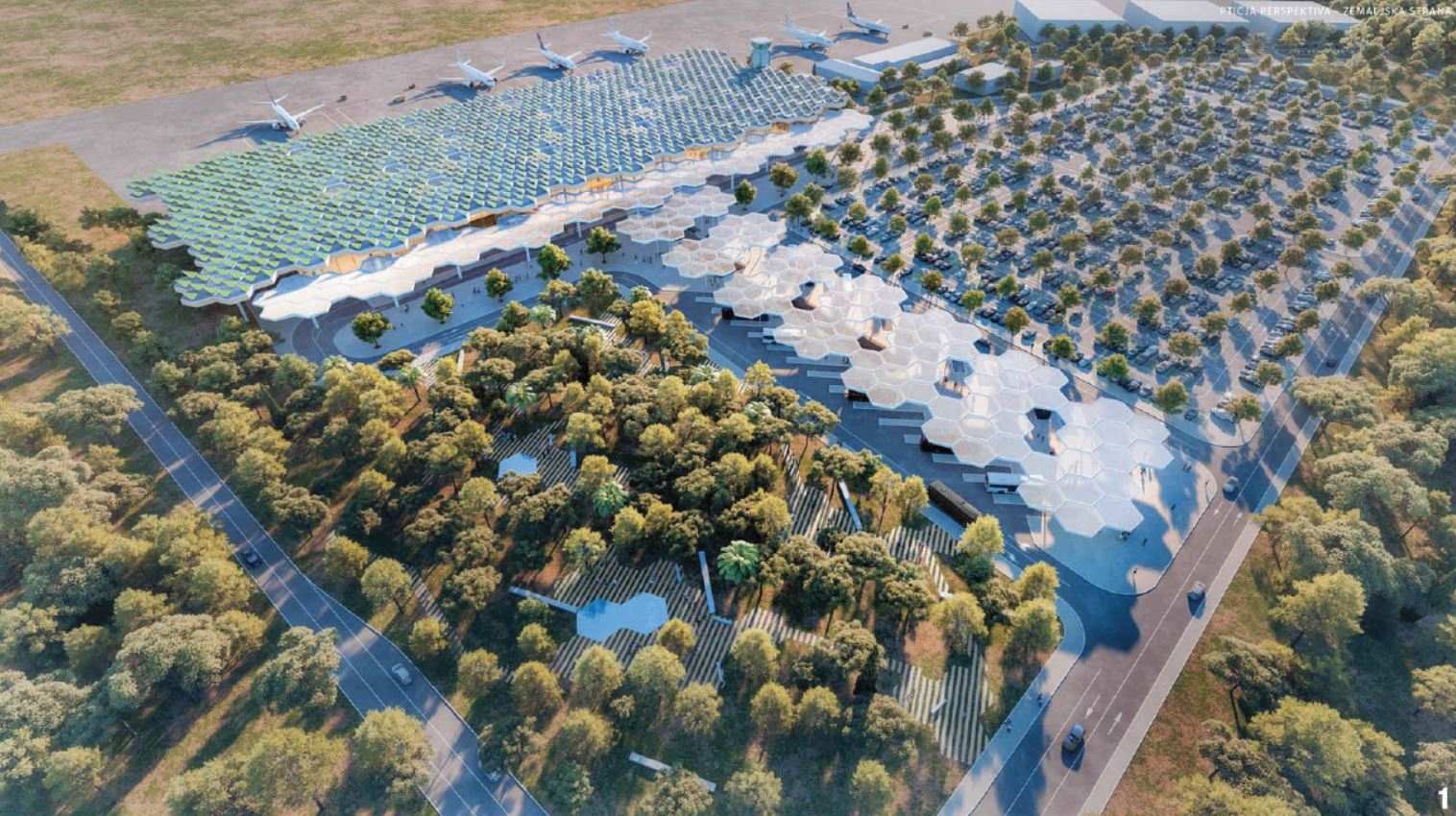
Dalmacija Danas reports that the winning conceptual design of the Zadar Airport passenger terminal was presented to the Zadar public on Monday. Ten ideas were submitted to the competition conducted by the Zadar Society of Architects in Zadar, and finally the work of a team led by Split architect Ante Kuzmanić was selected.
This solution, which can be viewed at the Museum of Ancient Glass, allows construction in phases that will not interfere with the operation of the airport - which was one of the main conditions. The value of the project is around 500 million kuna, and works in the first phase could start in a year. As it was heard at the grand opening of the exhibition, Zadar should get one of the most beautiful airports in Croatia.
“I am extremely pleased, the first-class work is such that it allows for many years of development, provides us with the modularity of the building at any time as a whole and that after its full construction, it also allows for further expansion while retaining a unique construction,” said Josip Klišmanić, director of Zadar Airport.
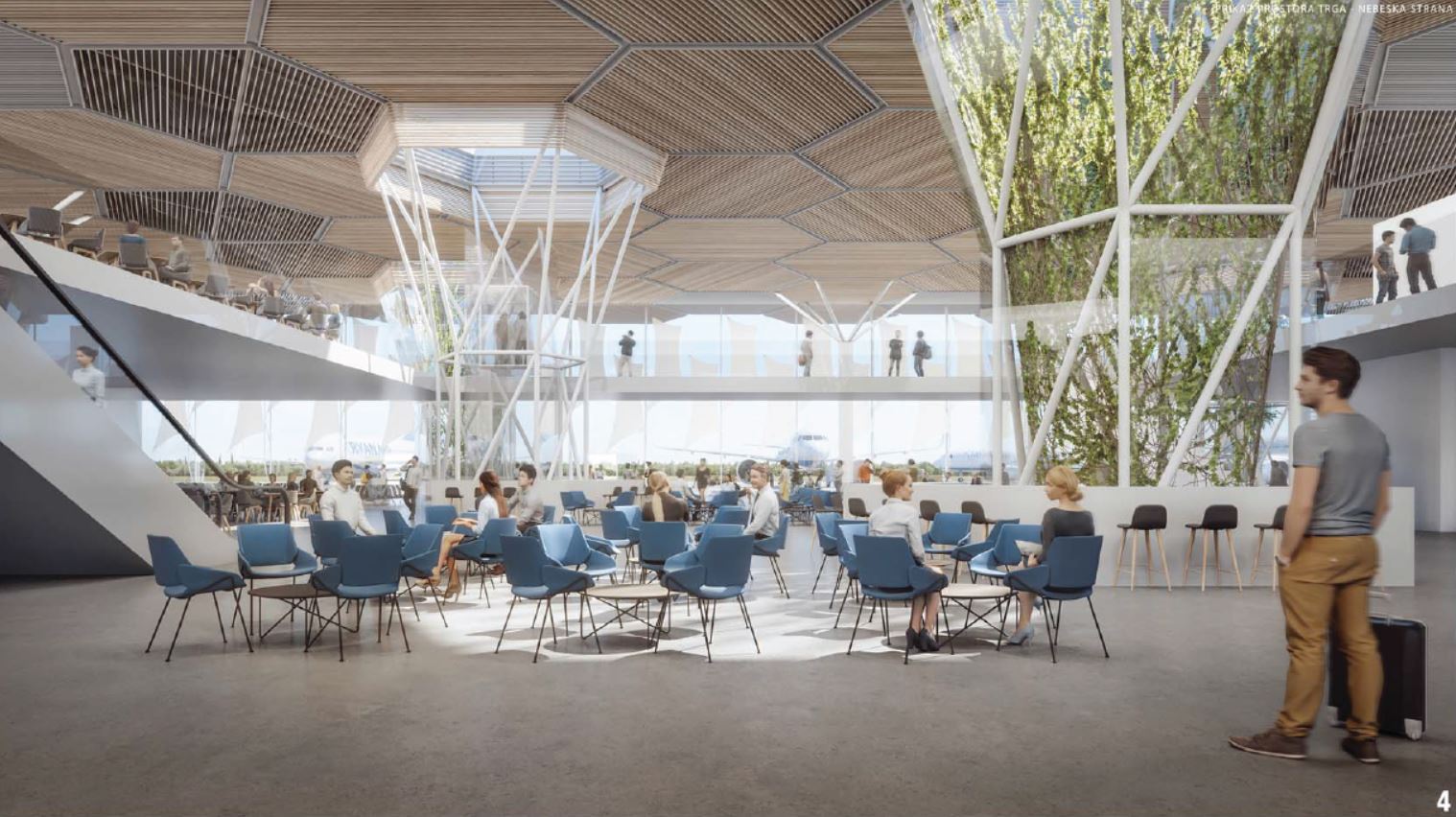
“The virtue of this work is that it is somehow homey, because its giant waiting rooms almost look like living rooms; there are light pillars in which bamboo, trees, and lavender grow… which also contributes to the feeling that you are not in a barrack or container of some kind, but that you are in a living room,” said jury member Goran Rako.
“What inspired us most was the pine forest through which we access the harbor and the landscape of Ravni kotari. We felt that there should be no steps that would corrupt that landscape. In this way, we practically retracted the nature with this roof, in some way, with this detail of the pillar, and at the same time maintained the relationship with the glass membrane towards nature," said Ante Kuzmanić, who with his team, offered the best solution for renovating the passenger terminal of Zadar Airport.
The organizer of this competition was the Zadar Society of Architects.
“This is certainly one of the most challenging projects we have worked on, because when we look at the types of content we can design for the airport, with the fact that we are becoming a Schengen border, there are so many conditions that you have to satisfy, there are so many roads that intersect, that's why teams of people worked on this,” said the president of the Society, architect Petar Kozina.
You can see the designs below.

To read more about travel in Croatia, follow TCN’s dedicated page.
Port of Rijeka to Become Largest Container Port in Northern Adriatic?
The Port of Rijeka was once booming with industry, as was the ''city that flows'' itself, but as times changed, so did the port and its purposes and capabilities. Over the last 100 years, Rijeka has ''changed hands'' and been in many different countries, it has seen the collapse of the Austro-Hungarian Empire, monarchy and much more, and the Port of Rijeka has taken the brunt of every fall.
Could this large port located on the Kvarner Gulf, the very first written records of which date way back to the year 1281, become the largest container port in the entire Northern Adriatic area? That's the aim.
As Morski writes on the 10th of December, 2019, the main goal for the Port of Rijeka during the period between 2025 and 2027 is to become the largest container port in the North Adriatic.
This was stated at the pre-Christmas gathering of the leading people working at the Port of Rijeka Authority with their concessionaires, contractors and various other business associates.
Director Denis Vukorepa has shown investments in Rijeka's port pool in slideshows amounting to more than 600 million euros, Radio Rijeka reported.
A lot has been invested in the formerly busy Port of Rijeka, said Vukorepa, adding that that is why they have arranged the port of Bršica so that the loading on of timber and other stock can be completed at an even faster rate. The concession of Zagrebačka obala is yet to come. The concession will last thirty years if the concessionaire doesn't request an extension to that allocated time period, and if he does want that, then he will get a concession for fifty years.
Works at Brajdica are set to follow, and this is part of the investment in port infrastructure and buildings, proper arrangement is also awaited by the Port of Bakar. It is expected that as many as forty parge passenger cruisers will come to visit the Port of Rijeka next year, when the city is the European Capital of Culture for 2020.
Make sure to follow our dedicated lifestyle and business pages for much more.
Chinese Investor Pays More Than Million Kuna for Land in Kumrovec
As Poslovni Dnevnik writes on the 10th of December, 2019, the company Zhongya Real Estate (Nekretnine), whose Chinese co-owner is Jiang Yu, paid a massive 1.14 million kuna for some construction land covering nearly 27,000 square metres in Kumrovec.
The construction land the Chinese investor has now paid in full for is Josip Broz Tito's hometown, is in the immediate vicinity of the controversial former political school, more specifically hotel Zagorje, located in Krapina-Zagorje County in the northern part of the country, close to the Sutla river and the Croatian-Slovenian border.
This payment regards a plot of land for which Zhongya Real Estate signed a contract with the Ministry of State Property back at the end of October this year, and paying the price for the land was one of the Chinese's arguments in the sense that the aforementioned company would also fulfill its obligations to take over the former political school, for which they had already requested a delay in payments twice previously.
As we reported last month, the Croatian Government approved Yu's latest request for a payment deadline extension and the new payment date was the 31st of December, 2019. Had the investor failed to pay for the land in Kumrovec by the aforementioned date, the hefty advance payment would have been kept by the government regardless of the investor's next move.
The land in Kumrovec has now been paid for in full, meaning that the obligation to pay and the deadline were both fulfilled and met by the Chinese investor.
The eventually agreed price investor Jiang Yu needed to pay stood at an enormous 14.09 million euros, according to a report from Vecernji list.
As mentioned, Yu asked for an extension of the payment deadline, explaining that the current tensions in Hong Kong made it difficult to transfer money abroad.
Make sure to follow our dedicated business page for much more.
Future Shapers: Tokić Among Top 50 Most Innovative Companies in Europe
December 10, 2019 - The leading Croatian car parts seller Tokić was recognised on the London Stock Exchange as one of the Future Shapers, organisations which "shape the future, thanks to their transformational innovations and international expansion".
The strong innovative processes and the highest standards implemented into the everyday business are what got Tokić the prestigious title of "Future Shaper". This is the first one for a Croatian company, reflecting the business strategy in a company that has undergone a serious transformation in a remarkably short time. In two years they have increased their income by 48% and the number of employees by 45%, which required a shift in the internal structure as well.
Tokić was one of 320 European companies taking part in the strictly structured ELITE program by the London Stock Exchange. Recently it was put on the list of top 50 Future Shapers, the companies that shape the market's future, transform the industry through innovation by achieving remarkable business results and financial growth.
''The digital era in which we live has enabled us to open ourselves to innovation – both in terms of products and in terms of business processes. In Tokić, we were enthusiastic enough about our core business and curious enough to see what can be achieved using technology in what we love and know how to do. We put together a team of experienced and talented people on all levels; they are now the foundation of our business and one of the key cogs that put us into the elite group of Future Shapers,'' Ivan Gadže, Tokić CEO told tportal.
''Our ramified business network was a challenge when it came to implementing change – implementation of the new structure of management of people and processes. At the same time the constant contact with our buyers on the field, hearing how they feel about technologies, what types of services they expect, how we can solve their problems in the digital era, that is what was the main force behind this turn.'' Gadže concludes.
The ELITE program brings together companies from different business sectors, which share innovation, opening up to new technologies and markets as well as implementing significant changes in their business. The London Stock Exchange explains that Tokić too 'shapes the future thanks to their transformational innovations and international expansion.'
Today Tokić is the leading Croatian company dedicated to the innovative technologies in the car parts industry, the biggest sales chain of the car parts in Croatia, and authorised importer and distributor for over 230 of the world's leading producers of parts for all types of personal and cargo vehicles. In their 30 years, they've grown from a family business into a regional leader, and their logistics and distribution centre in Sesvete is on the same level as the leading European companies in the car industry.
They also opened the Tokić Education Centre, expanding their business into the education sphere. Today they provide highly sophisticated education and upgrades to the existing knowledge and skills in the areas of car mechanics and car electrics. That also makes them the first company bringing the new dimension into the vocational education, using the modern European standards in the vocational specialisation of workshops and educational institutions. It's still a company owned 100% by the family, they employ over 600 employees in over 110 stores throughout Croatia, offering over 200,000 different items by the well-known producers and brands.
Read more about successful Croatian businesses on TCN.
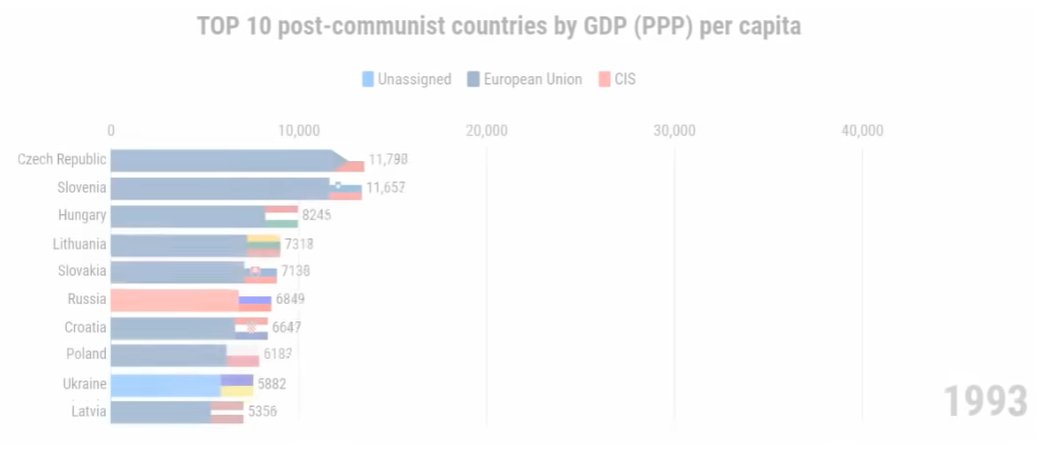
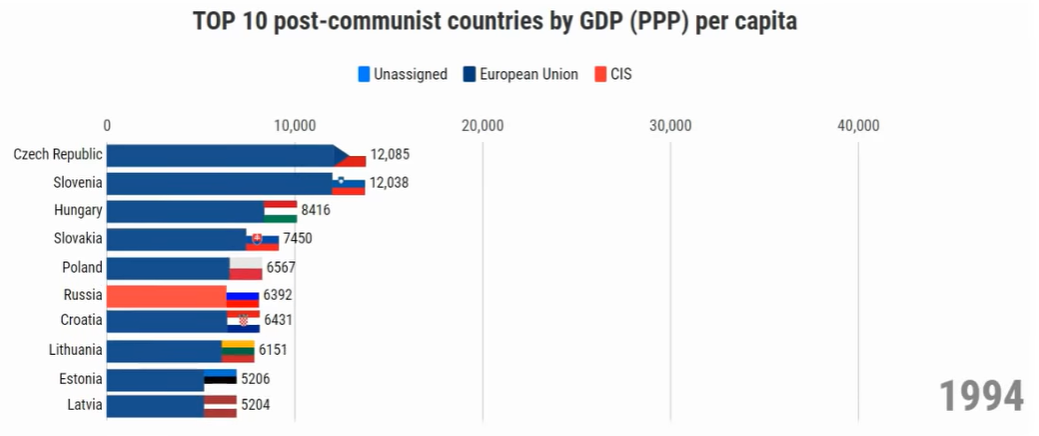
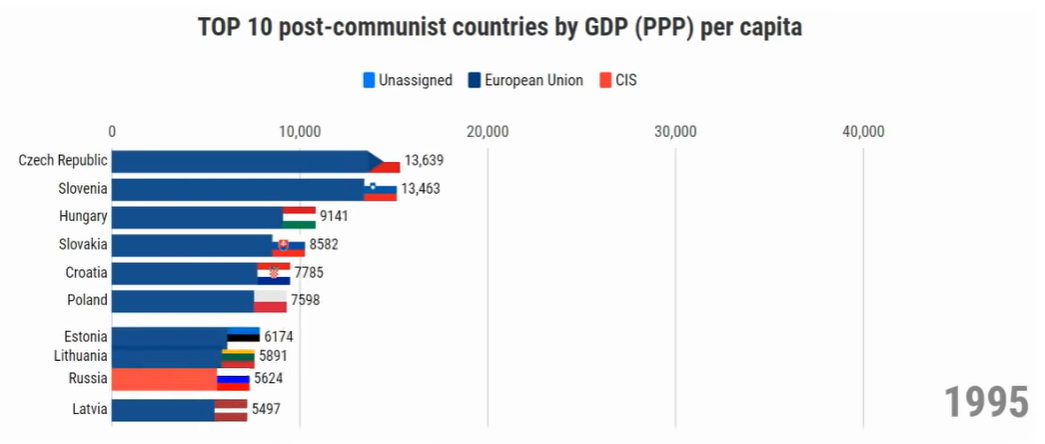
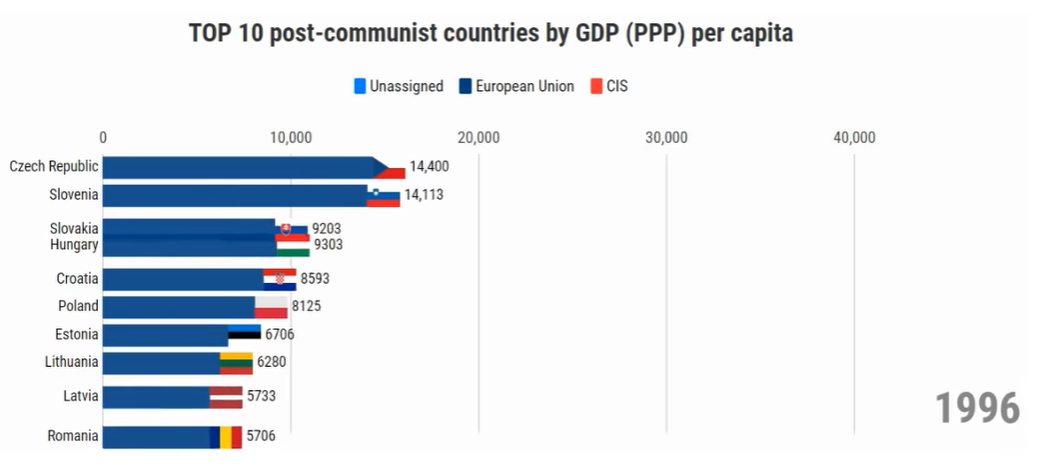
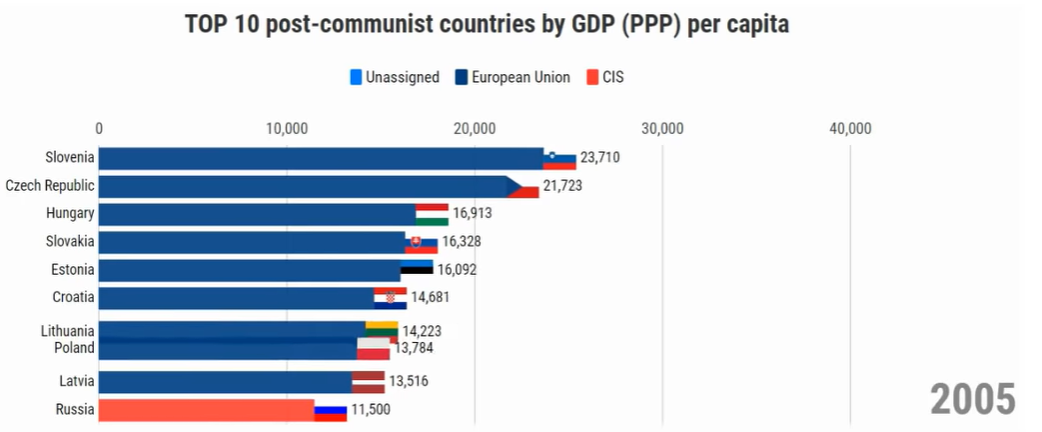
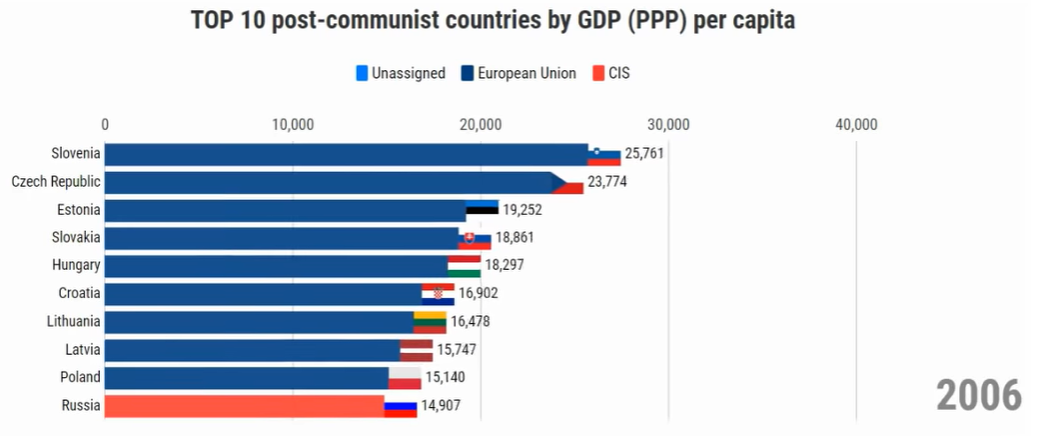
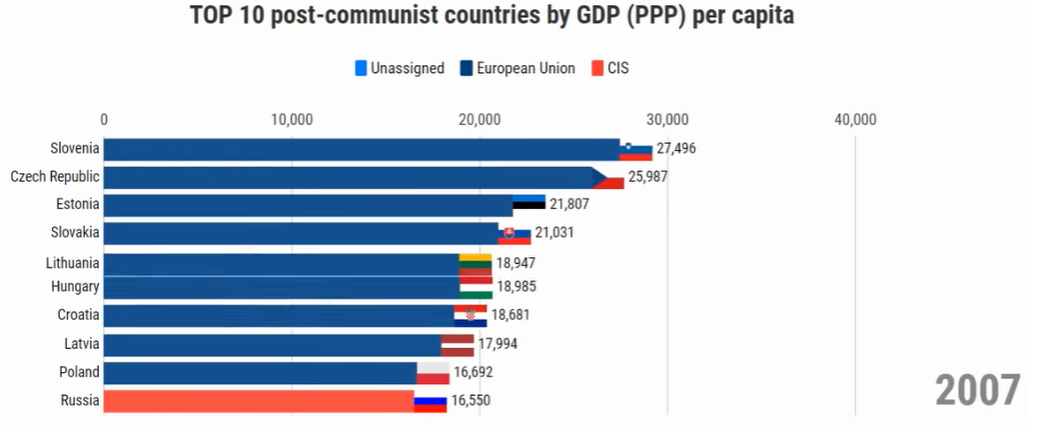
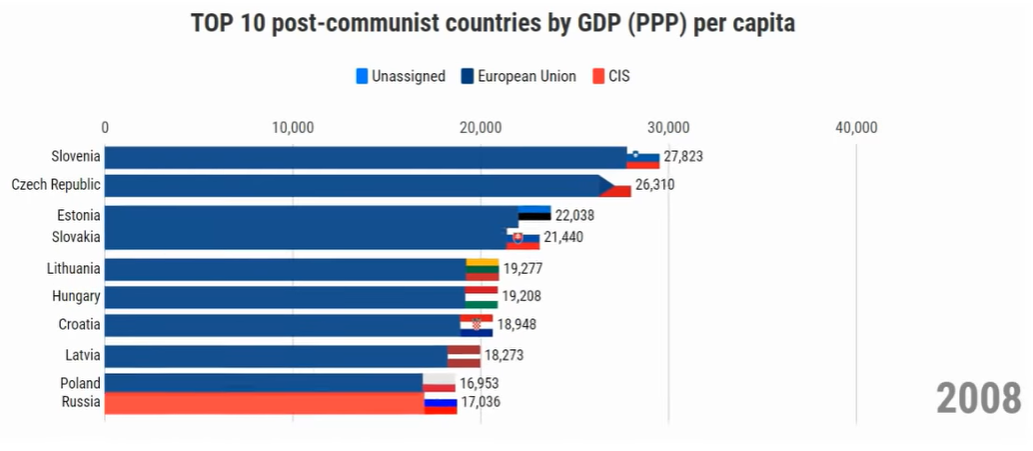
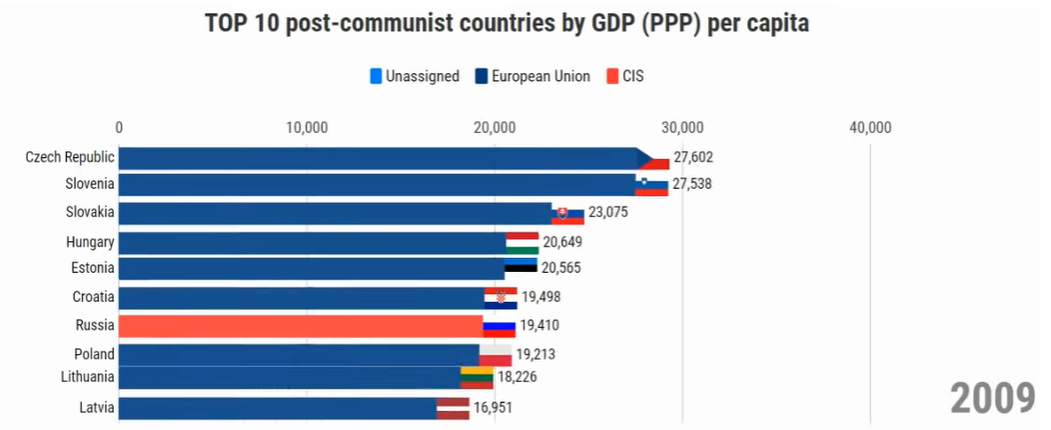
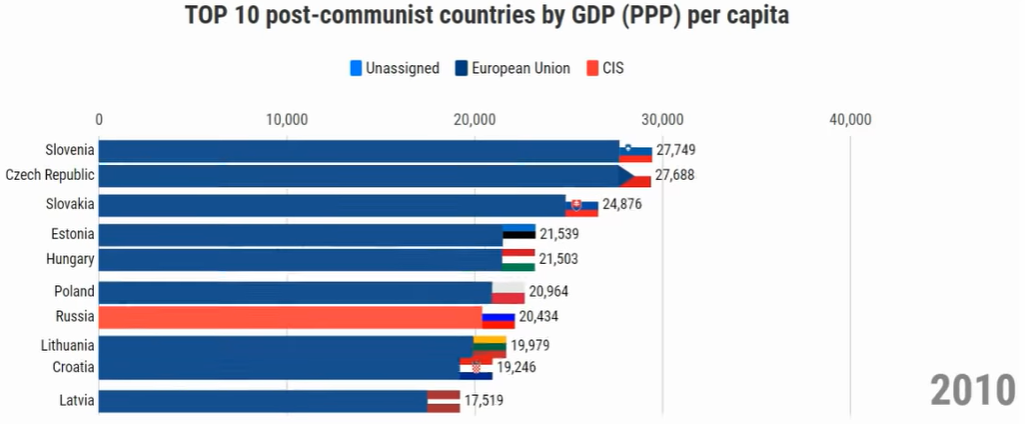
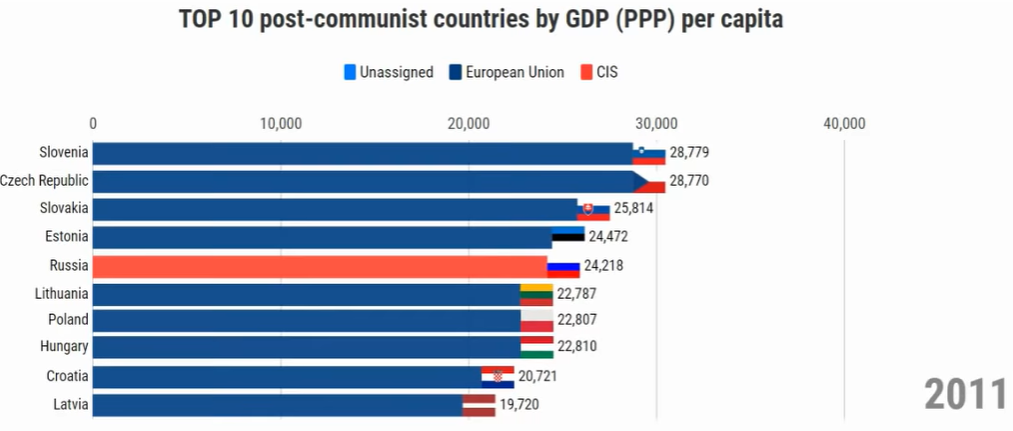
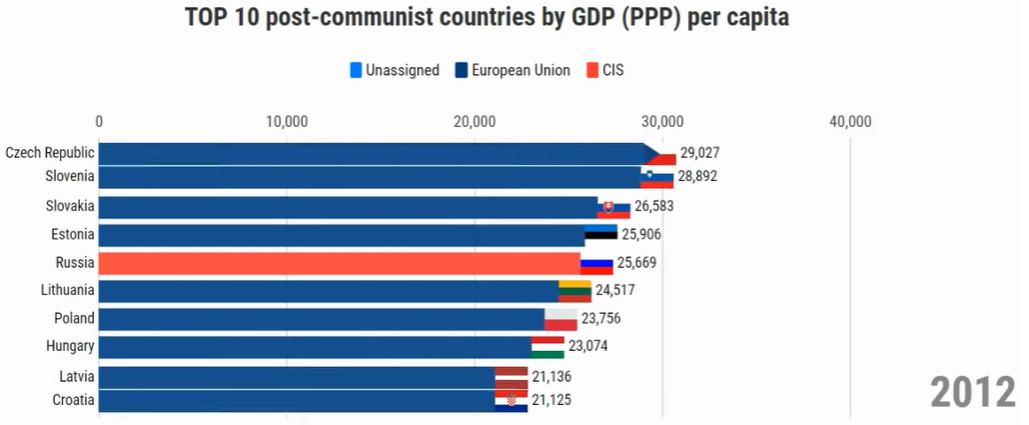
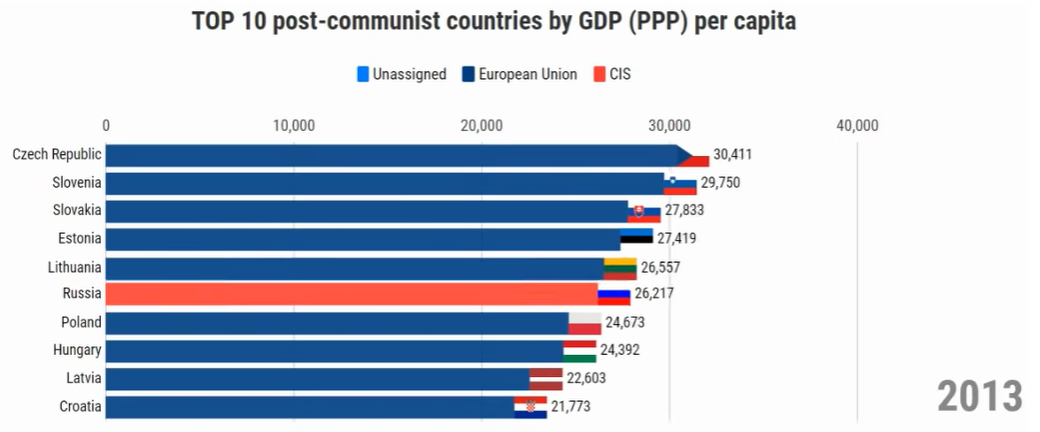
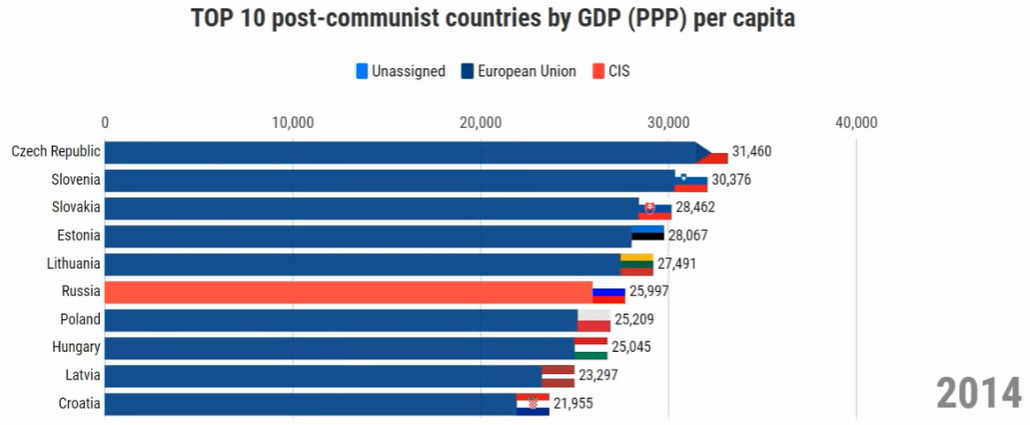
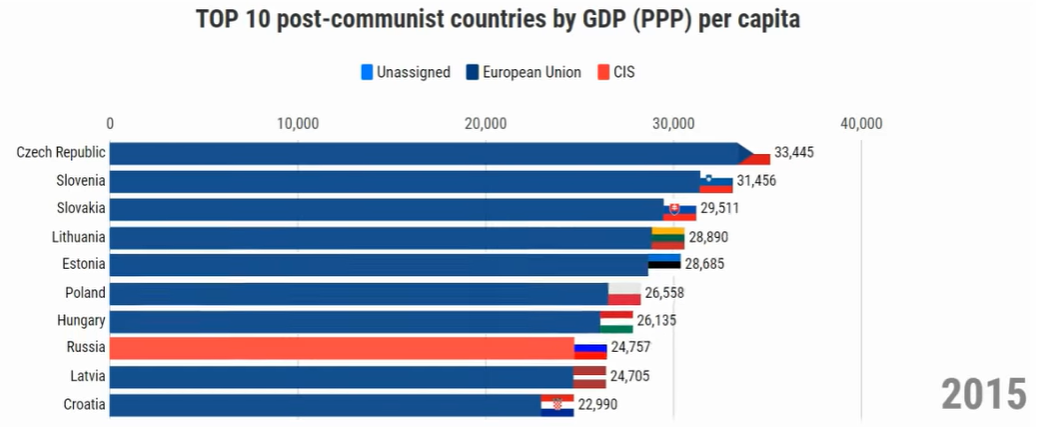
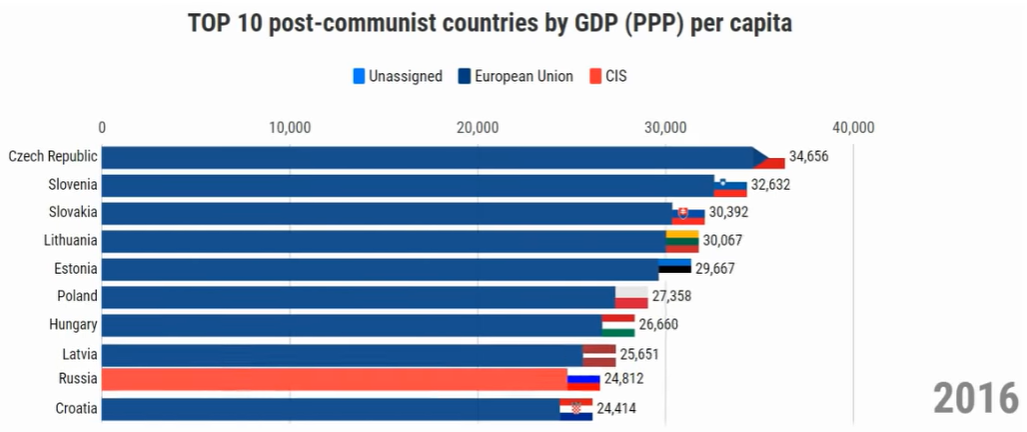
Top 10 Post-Communist Countries by GDP Year by Year (1992-2017)
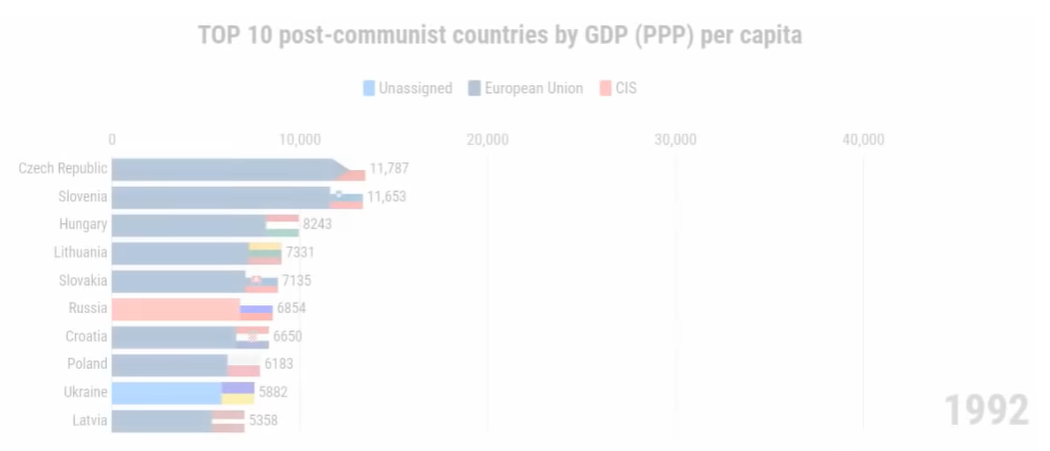
December 10, 2019 - How have the economies of Eastern and Central Europe been growing since the collapse of Communism? An interesting GDP per capita comparison year by year from 1992 to 2017.
The fall of the Berlin wall and all that followed brought immense change to Eastern and Central Europe, with some countries adapting better than others, some affected by war, others embracing the digital age. A very interesting video timeline of how those economies have fared from 1992 to 2007 was covered by Index today in this great video below.
Another way to look at the data, in much slower time, is year by year, chart by chart, to see how Croatia has fared with neighbouring countries in terms of GDP per capita from 1992 to 2017. No need for words or commentary from me - information about the data from Lionwork Statistics is at the bottom of the article.
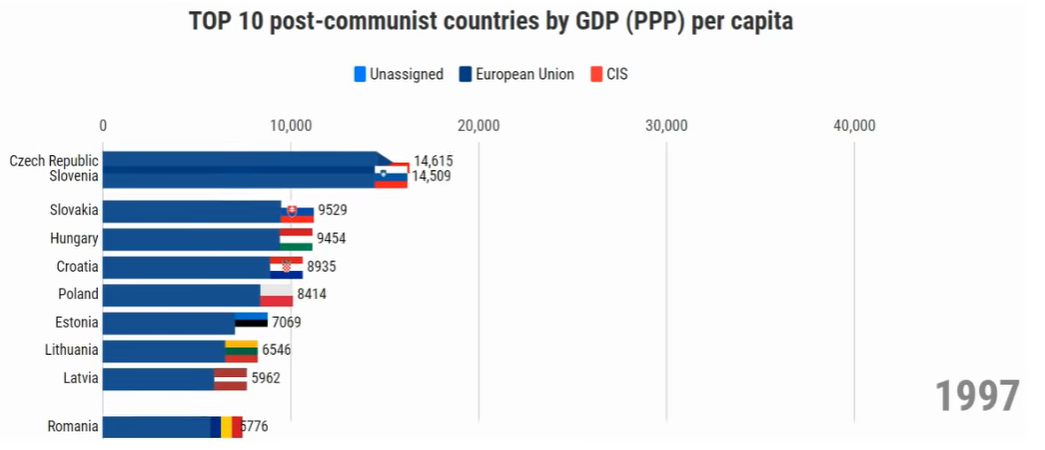
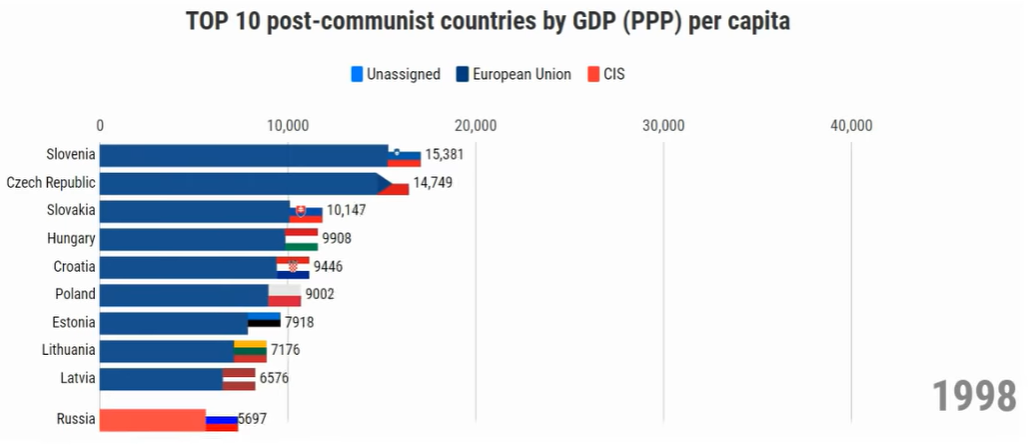
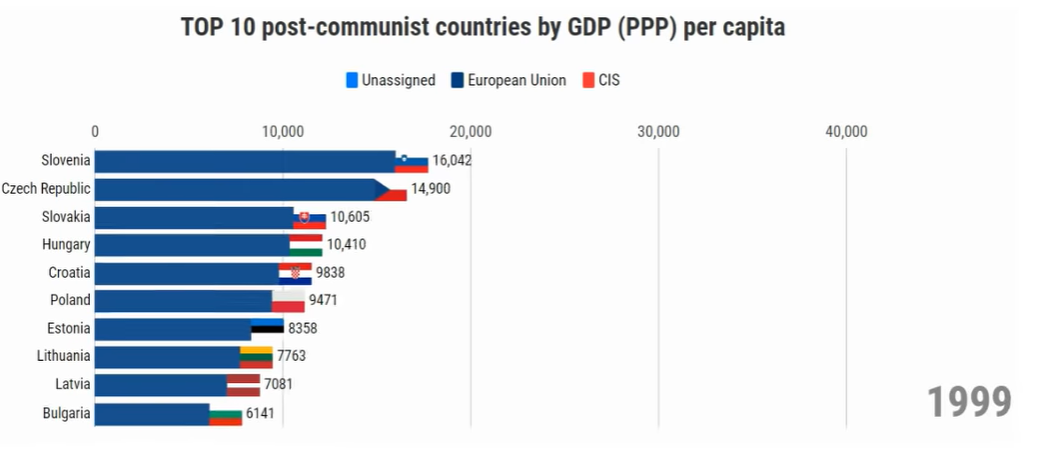
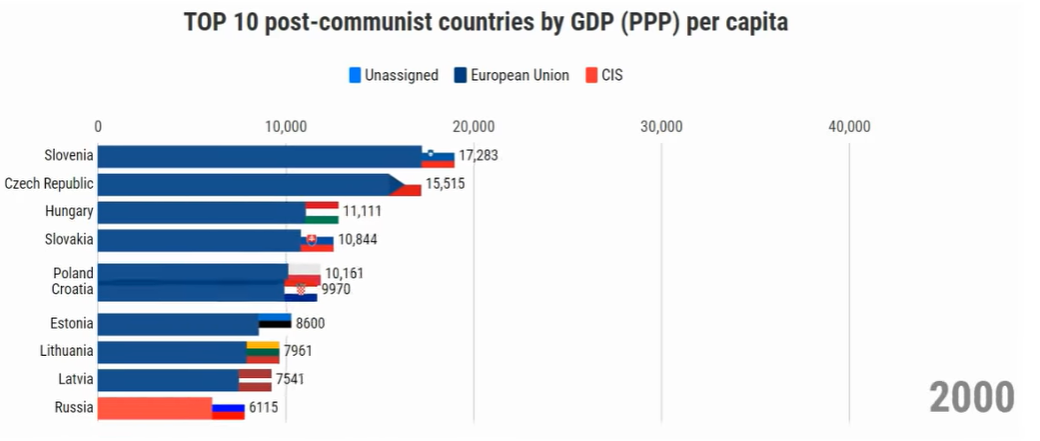
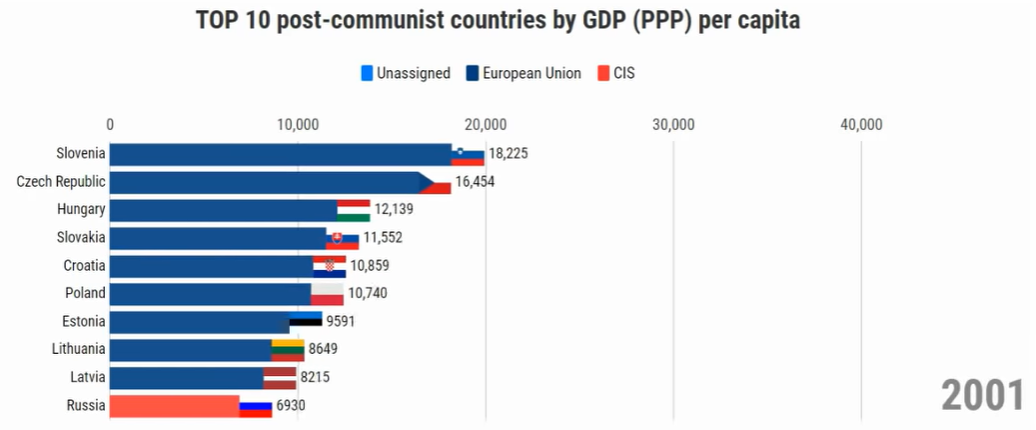
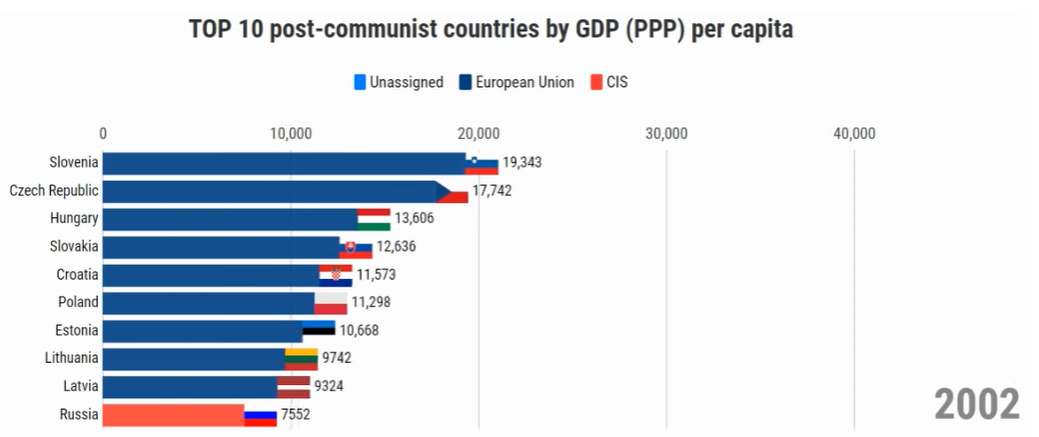
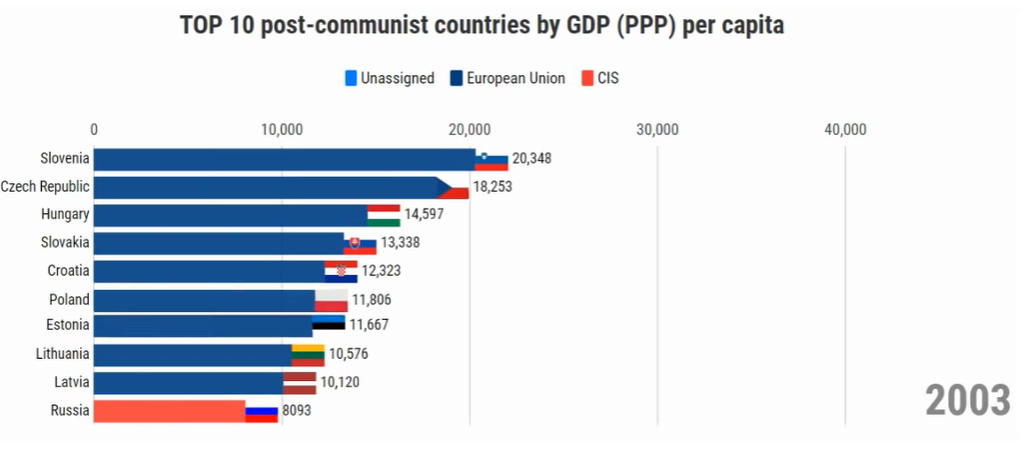
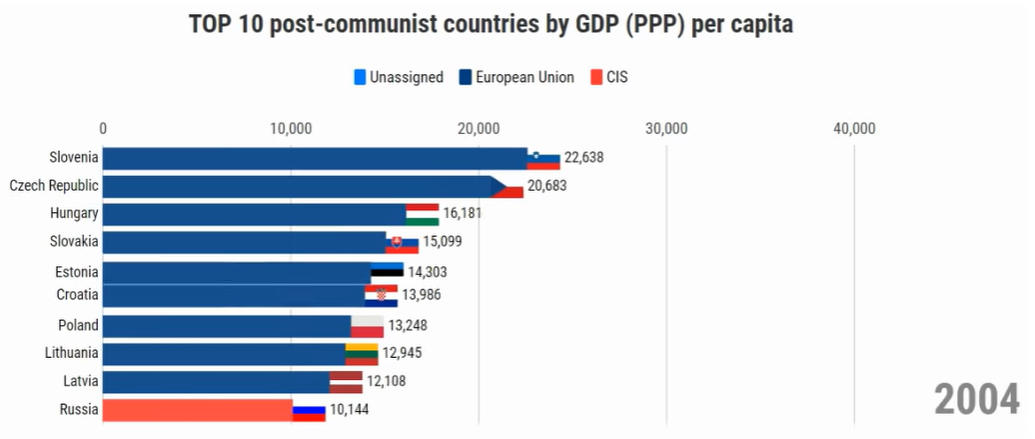
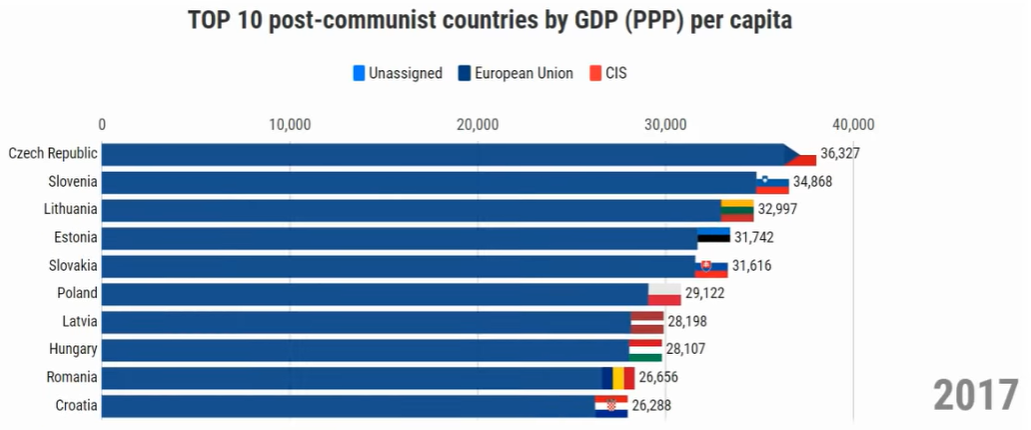
About the data (from Lionwork Statistics YouTube post):
Which post-communist economy performed the best during the last 25 years? What statistical data tells us about the journey of these young democracies. Let's see and discuss.
CAUTION:
1. There were no data available for Slovenia, Croatia, Latvia, Lithuania, and Estonia until 1995. In these cases, the average growth rate of the nearest region was used to calculate the estimated value. In the case of Estonia, data are shown from 1993, since no similar region is present due to geographical placement.
2. The comparison includes Albania, North Macedonia, Montenegro, Serbia, Bosnia and Herzegovina Slovenia, Lithuania, Latvia, Estonia, Hungary, Slovakia, Czech Republic, Poland, Croatia, Bulgaria, Romania, Moldova, Belarus, Russia, and Ukraine. Some never made it to the Top 10 during the time period.
3. GDP (PPP) is a measure which consists of crude income compared to prices of goods in countries or regions. Value widely represents the economic position of individuals and is usually considered as a pretty accurate statistic. Numbers may vary from one source to another based on a methodical approach to the collection of data.
4. Numbers present are the average of all individuals including children, students, unemployed and retired expressed in international USD value to date (19.04.2019).
Architecture of Early Modern Adriatic First Croatian Humanities Project Funded by ERC
ZAGREB, December 10, 2019 - Architectural culture of the eastern Adriatic between the 15th and 18th centuries is the first Croatian humanities projects to receive funding from the European Research Council (ERC), Zagreb's Faculty of Humanities and Social Sciences said on Tuesday.
The project, led by Jasenka Gudelj of the Faculty of Humanities and Social Sciences, is one of the 78 projects selected among 674 that were submitted in the field of social sciences and humanities. The projects are financed by the ERC from a 600-million-euro budget through the Horizon 2020 programme.
"We expect that the results of five years of work will help in safeguarding and evaluating the early medieval architectural heritage of the Adriatic. We are excited about this success and the possibilities that are opening up for us," Gudelj said.
The research team includes Ana Marinković and Neven Jovanović from the Faculty of Social Sciences and Humanities in Zagreb, Laris Borić from the University of Zadar and five young researchers. They will be working with the Archaeological Museum of Istria in Pula, the Croatian Museum of Architecture, the National and University Library, and other Croatian and foreign institutions.
More science news can be found in the Lifestyle section.
Croatian Military Equipment Factories Showcase Their Products in Sarajevo
ZAGREB, December 10, 2019 - Croatian arms, ammunition and military equipment factories showcased their products at a presentation in Sarajevo on Tuesday intended for potential buyers in Bosnia and Herzegovina and foreign diplomats accredited in that country.
Croatian assistant defence minister Roman Mikulić said that the Croatian defence production had reached about €200 million annually and that it employed about 3,000 people. He expressed satisfaction that the HS Produkt company was successful on demanding markets such as the United States where more than 5 million HS semi-automatic pistols have been sold to date.
"I can proudly say that our companies have become global bywords for innovation and quality. The Croatian defence industry still has a lot of room for advancement and development," Mikulić said during the presentation, organised in cooperation with the Defence Ministry of Bosnia and Herzegovina.
He said that Bosnian companies such as Igman, Pretis and Pobjeda had for years been manufacturing infantry and artillery ammunition for the Croatian army. To date, Croatia has imported 68 million kuna (9.2 million euro) worth of ammunition manufactured by these factories, and over 11 million kuna (1.5 million euro) this year alone.
Croatia's ambassador to Bosnia and Herzegovina, Ivan Sabolić, said that the Croatian defence industry was one of the drivers of the national economy.
"Croatian defence industry products are already used by the IT sector and the food and pharmaceutical industries. This exhibition is a good opportunity for defence companies from the Federation and Republika Srpska and their colleagues from Croatia to find models for even better business results," Sabolić said.
More news about relations between Croatia and Bosnia and Herzegovina can be found in the Politics section.
How Do Special Programs and Events Impact Offer of City? A Look at Split
December 10, 2019 - What is the real impact of special programs on the development of a city's tourist offer? A look at Split.
HRTurizam writes that during Advent, all major Croatian cities offer several special events and programs - and in the last few years, increasing attention has been given to this part of the tourist offer, in which tourist boards play a major role as leaders of destination management.
With this in mind, the first scientific study of special city programs was conducted in the function of growth and development of the offer of the city of Split. The authors of the research are Doctorandus Dino Bruža and Master of Economics and Professor Andreja Rudančić, Ph.D., who presented the research findings at the International Scientific Conference "International Management Research" in May 2017 in Opatija.
Scientific work on this topic has been published in the book INTERDISCIPLINARY MANAGEMENT RESEARCH XIII., Barković, Dražen; Runzheimer, Bodo, editor (s), Opatija: Faculty of Economics in Osijek; Hochschule Pforzheim, 2017 (p.121-138).
The purpose of this scientific research is to show the real impact and role of programs and implementing special city programs on the development of the tourist offer of the city of Split, primarily from the aspect of the Split Tourist Board.
Author Dino Bruža emphasizes that the aim of the paper is to determine to what extent and in what way specific city programs affect the increase of revenues, and the extent of the level of tourist expectations and satisfaction, through the analysis of key tourism indicators. He also points out that special city programs in the tourist offer of the destination represent a unique experience on the market
“There are two main goals of implementing specific city programs: to increase economic effects on the one hand and to increase the level of tourist satisfaction on the other. Contemporary tourists have a high degree of expectation, which is a great challenge in creating tourism experiences. Event management, in this case, represents a significant segment of destination management, which deals with the planning, organization, guiding, management, and control of these special programs.
In addition to contributing to the volume of content offered, special city programs also affect extending the tourist season, that is, reducing the seasonality of tourism and hospitality businesses, increasing revenues and attracting new guests while retaining existing tourists. Executing special city programs has a multiplier effect, as it, directly and indirectly, affects revenue growth, encourages additional hiring of skilled personnel, creates a virtual platform for a large number of manufacturers and providers of products and services and affects the development of the entire destination. That is why there is a need for strategic planning of special programs and for monitoring their success, and for providing all the necessary resources for re-implementation,” said Dino Bruža, adding that with this approach, the city of Split becomes a unique tourist destination, offering a whole range of special events and programs.
Dino Bruža also notes that in organizing special events and programs, special attention should be paid to implementing information and communication technology, for several reasons.
“The focus of this scientific research is on the interdependence of information management, communication technology and designing special programs. Opportunities and ICT impact assessments on the business performance and competitiveness of the specific program need to be continually conducted. As the author states, the number of special programs is growing at an unprecedented rate, various management, control and leadership models are being used, but what is common to most is the inevitable adaptation to current trends in information and communication technology. Specific programs by themselves did not play a major role in the past, but served solely to increase spending, which is still one of the goals today. However, a new goal is emerging today, for the program to be an end in itself and to take on the existing "empty" part that occurs in the offer of every segment on the market,” said Bruža.
In accordance with all the above, author Dino Bruža is conducting new scientific research in order to produce a doctoral dissertation, whose results he will present in his doctoral thesis, which he will defend at the Faculty of Economics in Osijek.
To read more about travel in Croatia, follow TCN's dedicated page.