

Nigerian Government Official: Students Will Return Home from Croatia
Contrary to recent reports that the Bosnian government would be sending two Nigerian students, Abia Uchenna Alexandro and Eboh Kenneth Chinedu, back to their homeland directly from Bosnia, a senior Nigerian government official has confirmed in a press release today that the students will fly back to Nigeria from Zagreb, Croatia instead.
Accusations Against Croatian Police
According to the students’ uncorroborated account, they were approached by Croatian police in Zagreb on the evening of November 17, not allowed to return to their hostel to retrieve their passports and were taken instead to the nearby police station. From there, they were put inro a van with illegal migrants and sent to the Bosnian border where they were forced at gunpoint to enter Bosnia. The Croatian police and manager of the HI Youth Hostel, where the students stayed, have disputed the students’ version of events.
Fear of Returning to Croatia
According to N1 Bosnia on December 11, 2019 – Dragan Mektić, Bosnian Minister of Security explained that the students would be returned to Nigeria directly from Bosnia via the AVR voluntary repatriation program. He noted that the students had expressed fear of returning to Croatia. The students also insisted, in interviews with Žurnal and The Guardian, that they would not return to Croatia without UN escorts. However, a top Nigerian government official has confirmed today that the students will, in fact, be returning to Nigeria from Croatia.
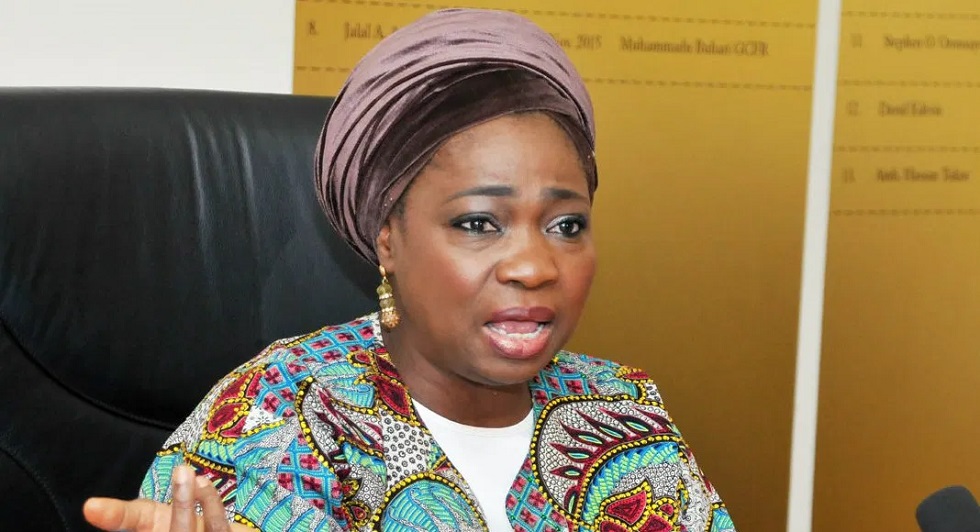
Chairman/CEO of Nigerians in Diaspora Commission Statement
The statement, which was released two hours ago by Abdur-Rahman Balogun, Head Media & Public/Relations, on behalf of the Hon. Abike Dabiri-Erewa, Chairman/CEO of Nigerians in Diaspora Commission (NIDCOM), addressed a few of the details surrounding the students’ trip to Croatia. She noted that the Nigerian Mission in Hungary has been involved in securing their return to Nigeria. Recall that the Chairman had disputed portions of the students' account as reported by The Guardian after that article appeared in The Cable, a Nigerian portal.
“The Minister of Foreign Affairs is on this matter. It’s not as straightforward as you have reported, but the Minister has personally intervened. We should give an update as the intervention continues,” she revealed in a tweet on Saturday, December 7.
Didn’t Inform Nigerian Table Tennis Federation
According to today's statement, five students went to the Fifth World InterUniversities Championships in Pula to compete in table tennis. She also pointed out that they attended the event without the knowledge of the Nigerian Table Tennis Federation. She confirmed Croatian police reports that two had returned to Nigeria after the competition and that another student had applied for asylum in Croatia.
Must use Return Tickets Not Seek Asylum
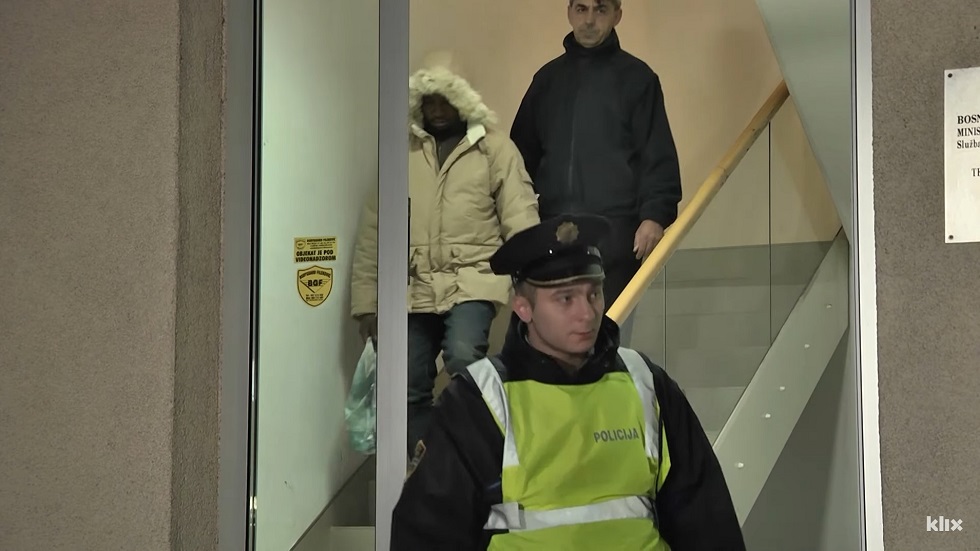
She emphasized that, as condition of their release, the two students, who are currently being held in Bosnia, must use their return flight tickets from Zagreb and cannot seek asylum in Croatia. While she acknowledged that the Croatian police had denied the students’ allegations, she also noted that Mr. Geoffrey Onyeama, the Hon. Minister of Foreign Affairs of Nigeria, has demanded a full investigation into the incident. She noted that the students are expected to arrive in Croatia anytime from today December 13, 2019.
The statement, which is printed in full below, can be found here.
The Chairman/CEO, Nigerians in Diaspora Commission, (NIDCOM) Hon. Abike Dabiri-Erewa has assured that the two Nigerians in Bosnia Camps are hale and hearty and are expected to return to Croatia anytime from today Friday Dec. 13, 2019 preparatory to come back to Nigeria.
This was sequel to series of diplomatic interventions from the Nigerian Mission in Hungary and Mr. Geoffrey Onyema, Hon. Minister of Foreign Affairs, who directed for full investigations to be carried out.
It will be recalled that two students of the Federal University of Technology, Owerri (FUTO), Abia Alexandro Uchenna and Eboh Kenneth Chinedu, who attended an international table tennis competition in Croatia, ended up in a Bosnian refugee camp.
She said arrangements have been concluded to send the two Nigerians back to Croatia anytime from today, Friday December 13, 2019, adding that the Nigerian Mission in Hungary has taken steps to ensure that the matter is resolved, and the welfare of the two Nigerians protected.
She said that five of them went for the table tennis event without the knowledge of the Nigerian Table Tennis Federation, two returned over two weeks ago, three of them stayed back while one already applied for asylum.
Although the Croatia Authorities through our Ambassador in Budapest denied the allegation involving maltreatment by the Croatian Police, the Hon. Minister of Foreign Affairs, Mr. Geoffrey Onyeama has demanded full investigation into the matter.
She said the conditions attached to their release include usage of their return tickets from Zagreb, Croatia back to Nigeria and must not seek Asylum in Croatia, just as one of them did already.
Dabiri-Erewa appealed to Nigerians to always inform relevant authorities whenever they go on such trips outside the country and be of good behaviour.
According to a report, Abia Alexandro Uchenna, Eboh Kenneth Chinedu, and three other students, arrived in Zagreb, capital of Croatia, on November 12, for the fifth world inter-university championships held in the country.
They were allegedly arrested while taking a walk around the country’s capital on November 18 as they couldn’t produce relevant documents to the police.
The police officers were reported to have transferred the students to the country’s Bosnia-Herzegovina border, where Croatian authorities had gathered a group of illegal migrants attempting to cross into the country.
Signed,
Abdur-Rahman Balogun
Head Media & Public/Relations
Follow our Politics page for updates regarding this story and the migrant crisis in Croatia.
Photos: City of Split Reveals Potential Designs of New Pazar and Fish Market
December 13, 2019 - It’s no surprise that the green market or ‘pazar’ in Split is due for an upgrade, and the famous fish market has become too small for today's needs. Thus, the City of Split has set out to renovate both city symbols to maintain their primary functions - selling fish and food products - while preserving the recognizable images of the city.
The City of Split writes that Mayor Andro Krstulovic Opara and architect Dinko Peracic, in front of the architectural office ARP, presented two architectural and spatial studies for the design of pa zar and the fish market.
Concerning pazar, the conclusions showed that it is optimal to keep the trade of produce on platforms under the existing deciduous trees and parasols, while improving conditions by bettering the equipment and arranging and organizing the space with new trees. Dairy, meat and similar products, which require controlled conditions, would be concentrated east of the St. Dominic monastery. In the southern part, it would be optimal to form fixed buildings that would spatially separate the market from the waterfront, but also provide good pedestrian connectivity, and accommodate non-food items.
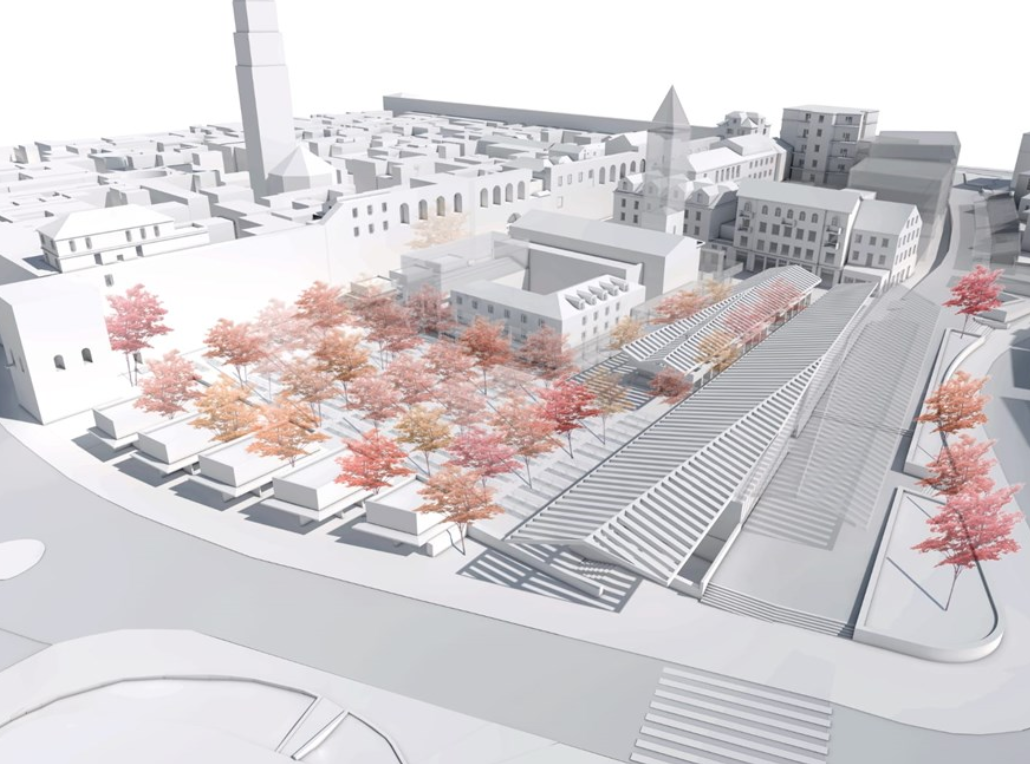
Of particular importance for pazar to function is opening the pedestrian traffic that is now blocked by kiosks, and Hrvojeva Street would be transformed into a full-width pedestrian zone. Sellers would only be allowed to operate with mobile equipment set up under strict guidelines.
The fish market, considering all the architectural options, would be expanded to Marmontova with a new section of the same height, and the old and the new part of the market would constitute one complete building. The front of the fish market requires a veranda that would protect customers at the entrance, protect the glass facades from the sun, and bring new quality to Marmontova’s public space. Thus, this upgraded section would become, as appropriate, a covered square used for other purposes outside the opening hours of the fish market.
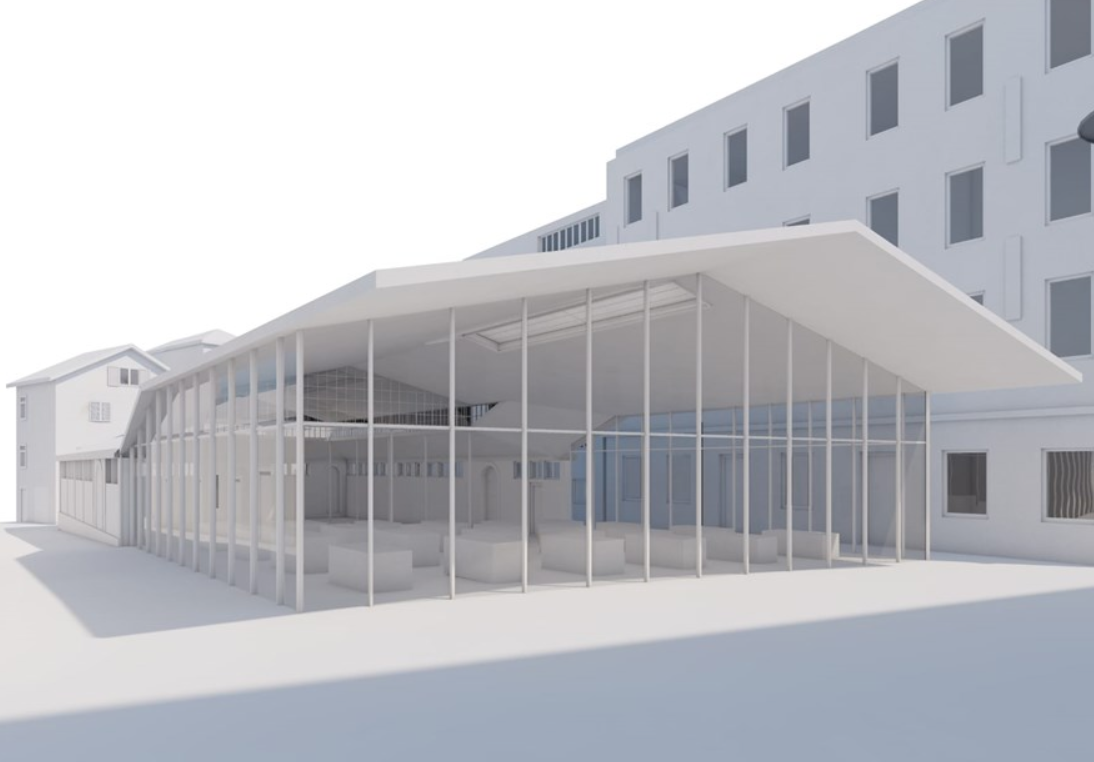
By expanding and opening the fish market, the city receives new content, based on all its traditional values. Its equipment would be adapted to the modern conditions of selling fish on stainless counters, and all necessary service facilities would be installed inside the fish market as a separate element.
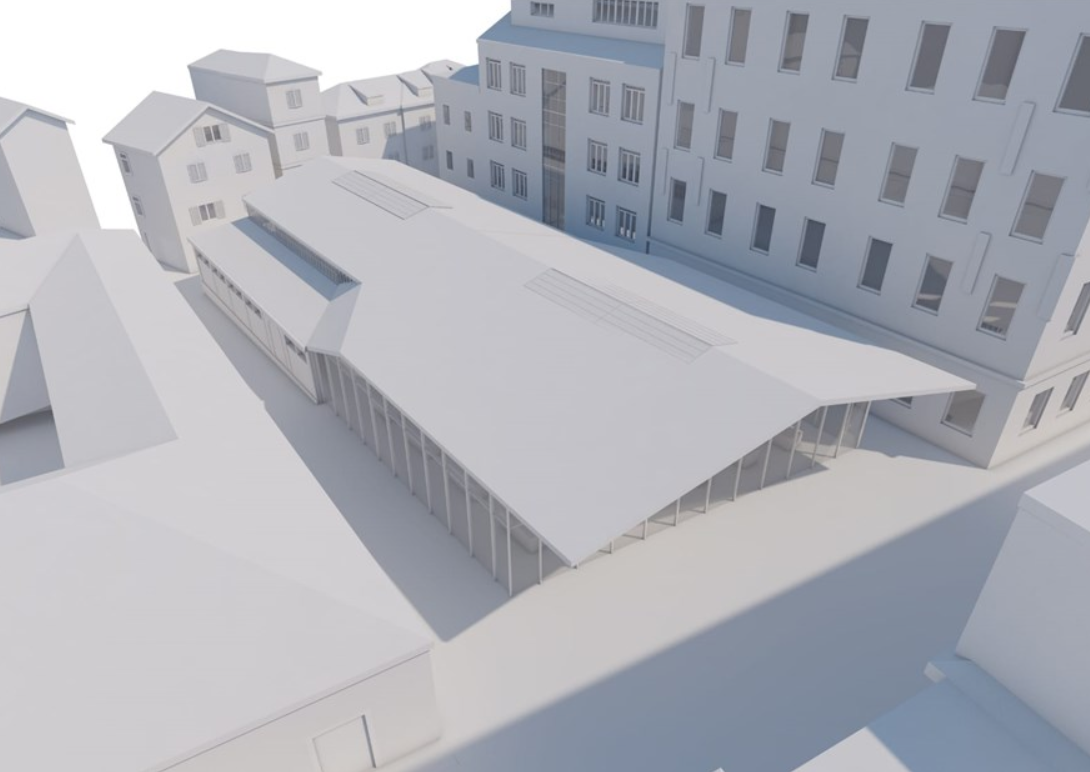
As Peracic emphasized, these are not finished conceptual designs, but more about the intelligence of the space, which contains everything necessary for the realization of these projects to succeed:
“It is important not to fall into complete solutions, but to see what is needed. We did it; this is the basis for the future design.”
"More detailed planning of the realization of these projects can now begin, we are considering the stages of renovation to enable its efficient realization, but more importantly, to ensure that the pazar and fish market operate during the works,” the mayor added.
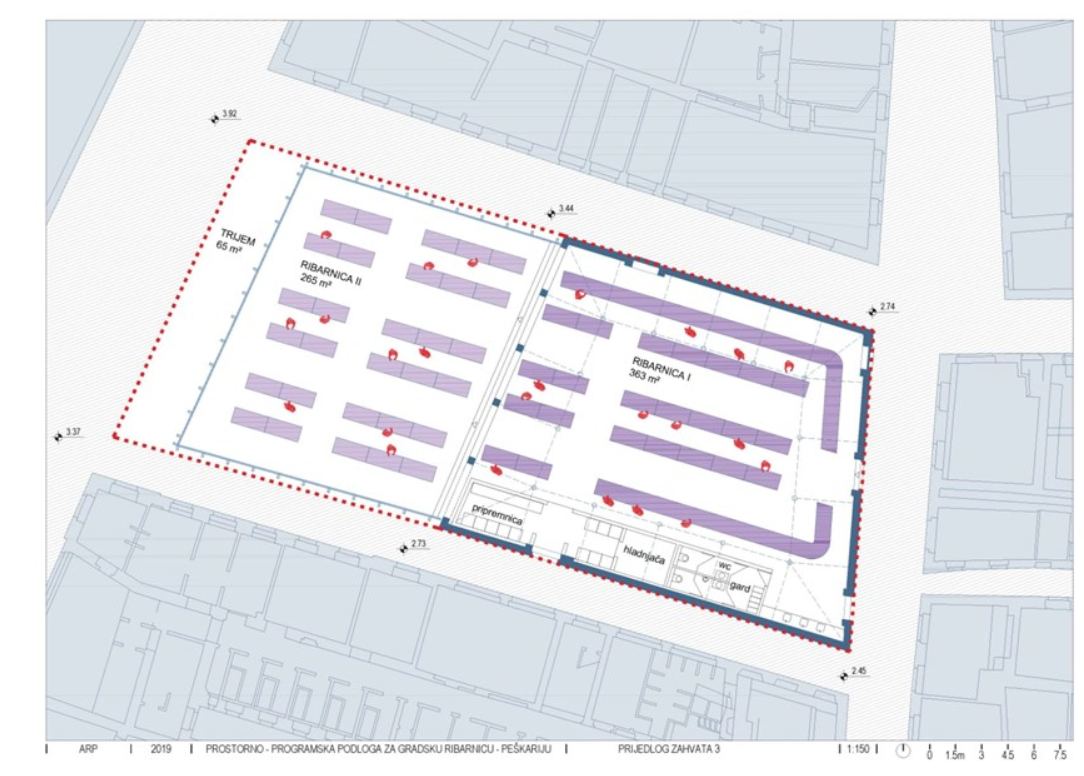
In order to qualitatively prepare for these renovations, several additional preliminary activities are planned before the next stages of the project documentation is prepared. These include detailed planning of terms of sales points in cooperation with the vendors, defining precise conditions for the development of architectural design in cooperation with the Conservation Department, making a snapshot of the existing state of the building and installations, preparing conservation studies, drafting project documentation through the procurement process, business plan and securing funding.
To read more about lifestyle in Croatia, follow TCN’s dedicated page.
GLAS Wants to Regulate Electric Scooters
ZAGREB, December 13, 2019 - The GLAS opposition party has sent to parliament a bill of amendments to the law on road traffic safety to regulate electric scooters, which the current law list among pedestrians, and prevent accidents.
GLAS warns that for driving an electric scooter, some of which can reach a speed of 40/h, it is not required to have a driver's licence, helmet or high visibility vest, and that they drive without restrictions on the pavement, bike paths, roads and motorways.
GLAS proposes introducing the name "small electric vehicle" for electric scooters, and welcomes their use as they do not pollute the environment or congest traffic.
"Some countries have noticed in time the increase in the number of these vehicles and have regulated them by law. Given the trends, there will be more and more of them here as well, so it's better to immediately regulate them and prevent possible accidents, instead of changing the law in fast track procedure," MP Anka Mrak Taritaš told the press on Thursday.
MP Nada Turina Đurić said having a completely unregulated area was worse than having a poor law.
"With the amendments, we wish to restrict the behaviour of these new participants in traffic because in Zagreb there are already thousands of them. We propose that they must use existing bike paths, so we call on cities to designate more bike paths. Where there are no bike paths, they should use the pavement, and only when neither is available, they would be allowed to use roads, but only in urban areas, definitely not in long-distance traffic. That's why we call on local governments to take a more active part in regulating this type of traffic," she said.
The bill bans electric scooter drivers from consuming alcohol, obliges them to wear high visibility vests and helmets and to light their vehicles.
"We wish to limit the speed and increase safety, we wish to legalise all that because now, if an accident happens, it's not clear how to treat scooter drivers," Turina Đurić said.
More transportation news can be found in the Lifestyle section.
Plenković, Macron Discuss Bilateral Relations, EU Enlargement
ZAGREB, December 13, 2019 - Croatian Prime Minister Andrej Plenković met with French President Emmanuel Macron on the margins of the European Union's summit meeting in Brussels on Thursday evening for the talks on the bilateral relations and on the policy for further enlargement of the European Union.
The Plenković-Macron talks focused also on the prospects of two aspirants – North Macedonia and Albania – of being admitted to the European Union.
This past October, France, together with the Netherlands and Denmark, vetoed the opening of the accession talks with Skopje and Tirana, insisting on the overhaul of the negotiating process. Therefore, the European Council failed to reach a unanimous decision on opening the accession negotiations with those two candidates, despite the fact that the European Commission gave a green-light for the start of their membership talks.
Croatia, which is chairing the European Union in the first half of 2020, is going to organise a summit meeting between the EU and six south-eastern European aspirants in Zagreb in early May.
To this end, Croatia would like to reach a consensus among the EU member-states so that North Macedonia and Albania could continue their European journey, which would be a positive signal to the other candidates in their neighbourhood.
Plenković and Macron also agreed to resume their talks in early January in Paris.
During the first day of the two-day summit meeting in Brussels, the Croatia's premier held several bilateral meetings and some of his interlocutors were the president of the European People's Party (EPP), Donald Tusk, and the European Council President, Charles Macron.
On Friday, Plenković is expected to meet the Executive Vice President of the European Commission for a Europe Fit for the Digital Age, Margrethe Vestager, as well as the new Finnish Prime Minister Sanna Marin. Finland is the current chair of the EU.
On Thursday evening, the EC President Charles Michel announced that at the summit all the member-states except Poland agreed on carbon neutrality until 2050.
"In the light of the latest available science and of the need to step up global climate action, the European Council endorses the objective of achieving a climate-neutral EU by 2050, in line with the objectives of the Paris Agreement. One Member State, at this stage, cannot commit to implement this objective as far as it is concerned, and the European Council will come back to this in June 2020," reads one of the conclusions of the European Council.
Also, the participants in the summit meeting agreed on extending by six more months economic sanctions imposed on Russia. EU sanctions targeting Russia's finance, energy and defence industries will stay in place until mid-2020. The decision comes after the leaders of Russia and Ukraine met in Paris to seek a solution to Ukraine conflict.
More news about relations between Croatia and France can be found in the Politics section.
Zagreb Suburb Dubrava Building 42.9 Million HRK Indoor Pool
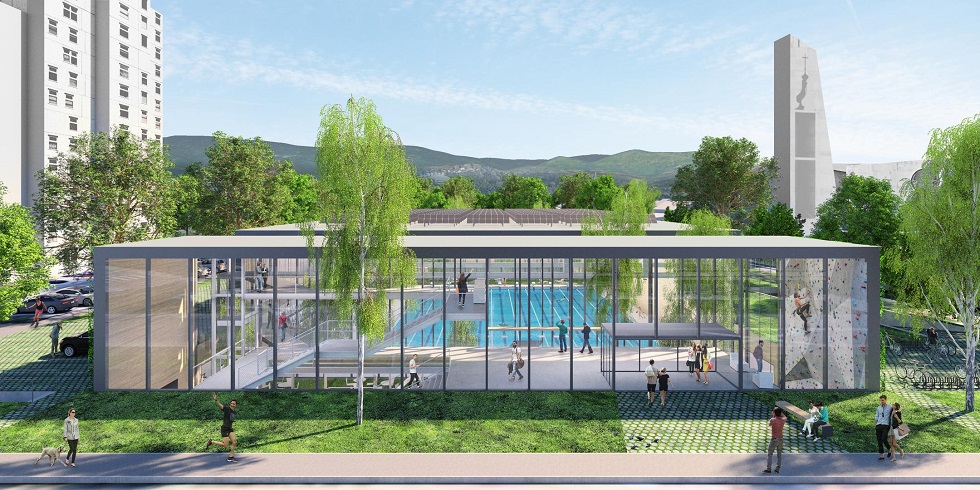
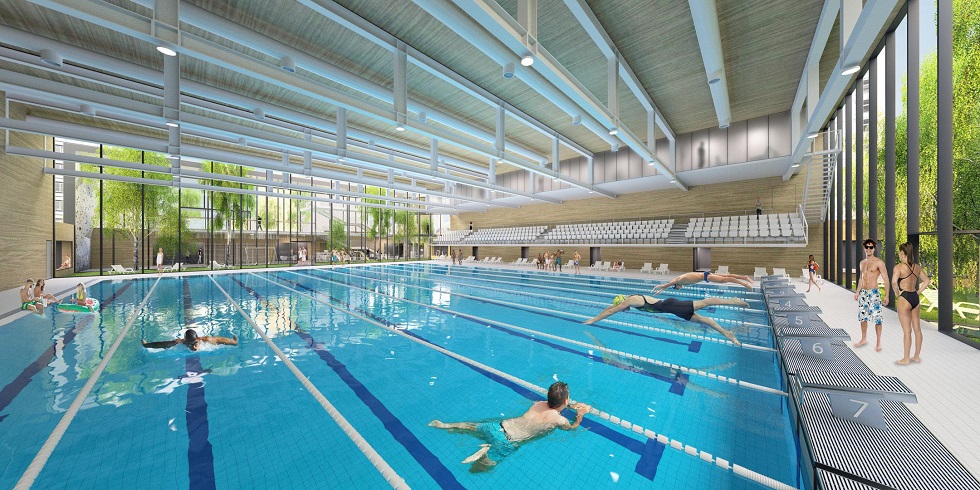
The Zagreb suburb of Dubrava will be getting a new indoor pool and construction is set to begin in 2020. Here is what the massive complex valued at HRK 42.9m (5.77 Million EUR) will look like.
“We are compensating for the lack of natural light and ventilation of the building by dividing it into three pavilions, which are created by introducing two atriums, where trees will be planted,” the Dubrava pool architects explained to Petra Balija/Večernji List on December 11, 2019.
Zagreb Based Radionica Arhitekture Submits Winning Proposal
The pool complex will be nestled between two tall buildings. On one side there will be a 12-story residential skyscraper, and on the other a church with a bell tower that pierces the sky. The location of the future swimming pool in Dubrava, at the corner of Aleja Blaž Jurišića and Križni put ulica, helped dictate the appearance of the building. It was designed by the Radionica arhitekture (Architecture Workshop) team headed by renowned architect Goran Rako. Thirty-three proposals were received in less than two months; the duration of the competition announced by the City of Zagreb. The second prize went to the BIRO Architectural Office and the third to Hrvoje Njirić, Marko Gusić and Irma Šmuc. Construction is expected begin next year, according to reports from the city. The time of year for laying the foundation will be determined in subsequent planning meetings now that the winning proposal has been selected, officials from the Gornja Dubrava district added.
Dubrava Pool Complex Will Have Three Pavilions
Considering that it will be surrounded by taller buildings, the pool building should be as close to the ground as possible, the Radionica arhitekture team thought. Therefore, they designed a low elevation building which will be nestled among taller structures. They will erect "dams", or walls without openings facing east and west, to prevent neighbors from looking in at bathers in the swimming pools.
The Radionica arhitekture team included a "double" cafe on the ground floor of the building, where guests can enter in shoes from the lobby, and bathers can enter through the atrium barefoot or with flip-flops.
“We compensate for the lack of natural light and ventilation within the building by dividing it into three pavilions, which are created by introducing two atriums, where trees will be planted,” the architects point out.
Pool and Locker Room on Subterranean Level
They also wanted to place the pool and locker room on the same floor. Since there wasn’t any space on the ground floor, they solved the problem by lowering both to the subterranean level. In addition to a large sports and recreation pool and a smaller educational and rehabilitation pool, the complex will house a sauna, ballet and choreography hall, 250-person capacity theater, fitness center, breastfeeding area and children’s changing room.
Energy Efficient Design and Water Reclamation System
Putting part of the building underground will enhance energy independence and efficiency, so that building warms up more slowly during summer months and cools down more slowly in winter. In addition, they will install photovoltaic panels, underfloor heating, and a ceiling cooling system. High-efficiency LED lighting will be controlled automatically by the amount of available daylight. Rainwater will be collected from the roof. The complex will also recycle wastewater from showers, washbasins and mechanical structures and use it for flushing toilets and maintaining external surfaces. The estimated cost of the project is 42.9 million HRK (5.77 Million EUR), excluding VAT. This investment will add value and a fresh perspective to the neighborhood, says Damir Oniško, the mayor of the district.
For more information on upcoming architecture competitions and building projects in Croatia, follow our Lifestyle page here.
Outlook Origins Directors Talk About Opening New Chapter in Tisno
December 13, 2019 - TCN caught up with the directors of the Outlook music festival to learn more about the first release of Outlook Origins next summer.
After a decade establishing itself as the most iconic and essential bass music event in Croatia, 2020 sees Outlook Festival open an innovative new chapter with the announcement of Outlook Origins. This all-new proposition for 2020 takes place across three special locations; The Garden Resort in Tisno for the main festival, world-famous Barbarella's for after-parties, and St Michaels Fortress for an all-new and very special opening concert.
TCN caught up with the organizers to learn more.
After a decade of Outlook Festival in Pula, you open a new chapter next summer in Tisno. What was the reasoning behind moving locations?
Outlook has been putting on Festivals in Croatia now for twelve years. Starting our journey at The Garden (Petrcane) in 2008 and eventually arriving at the gates of Fort Punta Christo in 2010. As event organisers (and music fans), we've been fortunate to hold some incredible parties with some of the biggest names in sound system culture, and do so in one of the most unique locations for events in the world. From massive opening concerts in Pula's 2000-year-old amphitheatre to the Harbour, Moat and Ballroom, our set-up at Fort Punta Christo offered people an experience unlike any other.
It's been an amazing experience for us in Pula and after ten years at the fort, we as organisers were keen to explore something new. Running such a massive event, welcoming thousands of music fans from across the globe takes a lot of work and a venue as unique as the Fort brings with it further challenges (safety, power, sound, production or beyond). We felt it was time to find a new challenge and explore other exciting routes to develop the festival and embrace sound system culture.
How will Outlook Origins be different compared with the previous editions of the Outlook Festival in Pula we know so well?
Outlook Origins explores a new model for us as a festival - one where we work closely with twelve of the scene's brightest names in sound system culture to curate our line-up. A festival line-up with some of our musical heroes working alongside - what could be better!
Exploring everything from drum and bass and dub, to reggae, roots, grime, garage and beyond, our curators will ensure the true scope of 'Outlook's' sound is represented. Alongside this, the festival becomes more intimate, offering the audience an opportunity to get up-close to the music and the artists. The Garden site is a well-loved home to many festivals, with an array of great facilities, food, drink and idyllic beach in which to enjoy outside of the music. Next summer, we'll add the Outlook touch to the site, with sound (Sinai Sound System), production, knowledge and workshops and much more still to be announced!
How will the opening concert at St. Michael’s Fortress in Sibenik compare to the Pula Arena?
This year is very much about moving forward and keeping our eyes on our plans for 2020. St. Michael's fortress is a spectacular venue with eye-dropping scenes surrounding it. It brings with it an opportunity for us as programmers to review our current model and find artists that are a perfect fit for such a space! Opening our festival the last couple of years with a massive concert (and one that has been held in a 2000-year-old amphitheatre) has been a dream - we're very excited to be able to do the same again for Outlook Origins, stay tuned for more information on the line-up early in the New Year.
What about Outlook Origins will festival-goers look forward to most next summer?
There will be lots to look forward to next year; we'll have stages of music programmed alongside our Curators bringing their favourite artists, sounds and party-starters with us to The Garden. The Outlook Boat parties will be back in full-force, as well as beach parties, after-parties and so much more. We're confident Outlook fans old and new will experience something unforgettable! There are lots more still to be revealed - keep your eyes on our channels early in the New Year!
Finally, a message to your fans in Croatia?
We are excited to be coming back to Croatia in summer next year and hope our audience are as excited about the change as we are. Outlook Origins represents something brand new for the festival, at a new location with lots of fresh ideas – we revel in our history and our time at the fort and feel extremely privileged to have found such a unique and unforgettable space to host our event over the last decade. We hope you'll join us all for the next chapter.
To read more about lifestyle in Croatia, follow TCN's dedicated page.
Flights to Croatia: AirBaltic to Rijeka and Dubrovnik, 11 New Ryanair Routes from Zadar
December 13, 2019 -The latest news from around Croatia’s airports for new flights to Croatia with updates from Rijeka, Dubrovnik, and Zadar.
HRTurizam reports that Dubrovnik and Rijeka will be directly connected to Vilnius, Lithuania's capital, in the coming year thanks to AirBaltic.
These flights will be active from the beginning of May until the end of October, i.e., the line for Rijeka will operate once a week on Thursdays, while the line for Dubrovnik will operate twice a week, on Thursdays and Saturdays.
Martin Gauss, CEO of AirBaltic, said they aim to provide the best connection in both directions for all three Baltic capitals. “When assessing which destinations will depart from the Baltic capitals, we first look for the most sought after among local travelers. This is why we provide additional input to local airports, offering new travel options. By next summer, we will already serve 16 destinations from Estonia, 11 from Lithuania and over 70 destinations from Latvia."
"This is great news and an announcement that supports further increasing the number of airlines and further enhancing the accessibility of Croatian destinations. The first flight will feature a large number of travel agents and journalists from the Baltics and Scandinavia to whom we will present Rijeka, Dubrovnik and Split,” said Croatian Tourist Board Director Kristjan Stanicic, adding that the new Airbus A220-300 fleet will operate on these routes.
HTZ added that the AirBaltic presentation brought together more than 100 agents and partners, including Kresimir Kedmenec, Ambassador of the Republic of Croatia to Lithuania, and Vedran Susic, Director of the HTZ Representative Office for Scandinavia, who organized a special presentation of the Croatian tourist agency deals with a focus on Rijeka and Dubrovnik.
In other flight news, Avio Radar reports that Europe’s largest carrier Ryanair announced a new base and 11 new routes from Zadar for the 2020 season. Namely, there are a total of 31 lines in the 2020 summer flight schedule, including 11 new routes to exciting destinations such as Aarhus, Cork, and Riga. The flight schedule begins in April 2020, is estimated to carry a total of 672,000 passengers annually, and create around 500 jobs in the various activities and services provided at Zadar Airport.
Ryanair is also opening a base with three Laudamotion aircraft in Zadar, representing an investment of about $300 million and directly creating 90 new jobs in Ryanair.
Ryanair’s 2020 summer flight schedule in Zadar brings:
- 3 Laudamotion base planes ($300 million investment)
- 11 new lines for Aarhus. (2), Bremen (3), Cork (2), Paris Beauvais (2), Kaunas (2), Liverpool (2), Maastricht (2), Riga (2), Toulouse (2), & Wroclaw (2)
- 31 lines in total
- 672,000 passengers annually (+50%)
- 90 new Ryanair jobs
- 500 on-site jobs
Eddie Wilson, CEO of Ryanair said:
“We are delighted to be opening our base in Zadar next summer as part of our efforts to contribute to the growth of transport, tourism, and jobs. Our 2020 flight schedule brings 31 lines, including 11 new lines, and we plan to carry a total of 672,000 passengers a year and generate 500 jobs in various industries in Zadar. Zadar and their guests can now buy the cheapest tickets and fly with the greenest/cleanest European airline on a total of 31 flights until the end of October 2020.”
Josip Klismanic, director of Zadar Airport added:
“The return of Ryanair’s base to Zadar with three aircraft is a great tribute to Zadar, both as an airport and as a destination. The growth of Ryanair’s offer to Zadar from all over Europe in recent years shows that Zadar and Croatia have something to offer our guests. Ryanair makes Zadar and Croatia much more accessible to Europe, but let’s not forget, it also makes Europe much closer to Zadar and Croatia. The announcements for 2020 justify our efforts to increase the level of service for our passengers by expanding the capacity of Zadar Airport and providing the preconditions for further growth. I do not doubt that Ryanair will play an essential role in that.
To read more about travel in Croatia, follow TCN’s dedicated page.
Croatian Entrepreneur Ivan Mrvoš Wins Award for Affordable and Clean Energy
As Marta Duic/Poslovni Dnevnik writes on the 12th of December, 2019, the talented and innovative Croatian entrepreneur Ivan Mrvoš, the founder and CEO of the remarkable company Include, one of the leading Croatian manufacturers of smart solutions, has won a prestigious award for his impressive efforts.
On Wednesday at the Croatian Music Institute, the Croatian entrepreneur attended the awards ceremony and took home an award. This award ceremony in the one in which National Geographic Croatia presented its awards to individuals, teams, companies and institutions that contribute the most to sustainability in the Republic of Croatia.
To be more specific, National Geographic Croatia presented a long-term project called "Žuti okvir" back at the beginning of this year, with the motto "We inspire people to care for their planet" attached to it. The United Nations (UN) has identified as many as seventeen sustainable development goals that will ensure the survival of both planet Earth and human civilisation, and if you operate within those seventeen categories, you could win an award.
Croatian entrepreneur Ivan Mrvoš therefore received an award in the category of ''affordable and clean energy", and his tireless determination to keep pushing his company, Include, further and further are likely to see many more awards from where that one came from.
"Four years ago, when we started our smart bench project and the company, we didn't expect that more than two million people would be using our products annually across 51 markets worldwide.
More than 1,300 of our products have produced over 40,000 kWh of energy from renewable sources so far, reducing CO2 production. This may not be a big figure today, but I believe that over the years, more and more of our products, which will also be based on renewable energy sources, will contribute to reducing CO2 globally and thus provide a better future for generations to come,'' Mrvoš said.
Make sure to follow our dedicated Made in Croatia and business pages for much more information on Croatian entrepreneurs, Croatian companies, products and services.
Corruption in Croatia: The Main Reasons Foreign Investors Withdraw
As Poslovni Dnevnik/Lucija Spiljak writes on the 12th of December, 2019, the Republic of Croatia loses more than ten percent of its GDP annually due to corruption, fraud and financial crime, and last year, according to the Corruption Perceptions Index, Croatia ranked a somewhat unimpressive 60th out of 180. Corruption in Croatia is rife, but what can we do to stop it, and what is being put in place to help?
Foreign investment should be (and indeed could be) a happy story indeed. This country boasts a wealth of opportunity and potential, but red tape, draconian laws and corruption in Croatia tend to put them off.
Yuri Sidorovich, Deloitte's foremost partner for forensics in the Adriatic region discussed the challenges of corruption in Croatia shortly after the International Fraud Awareness Week, which was rather symbolically held for the very first time in Croatia.
What are the main causes of and reasons for corruption and fraud?
Corruption and fraud are a social phenomenon triggered by a number of factors; from achieving sales goals and a lack of control, to factors that are more psychological in their nature, with the attitude of "why wouldn't I take what belongs to me?" In an environment with high levels of tolerance for corruption, these factors are of course heightened. Poorly developed corporate governance mechanisms, the ineffective prosecution of perpetrators, and large social disparities create a ground for corruption that gradually enters all pores of society.
Then where do we go from there, and how can we restore confidence in the system?
We must first admit that we have a problem. It's human nature to close our eyes to problems and to look for solutions when they are already "burning" away. This is also true of corruption, and despite its long history, only 25 years ago did any serious analysis really begin. What are the solutions? All models of theoretical fraud risk management emphasise the role of those at the top and management in this process, which must be driven by positive examples and dedicated to problem solving. It’s a key factor in starting something, moving forward and getting the right resources. There are no quick fixes with a magic effect. We must firmly decide that we want to change things and insist on investing in instruments to raise awareness and combat corruption. We all know that trust is something we can lose quickly and that it's hard to regain. Unfortunately, we're currently in a situation where confidence is at a very low level and it will take a lot of effort to repair this image.
What about the judiciary?
Penalties and sanctions are certainly an important deterrent to corruption, but only if they're implemented systematically. Unlike in countries with Anglo-Saxon law, a major problem in our environment is that we don't enforce laws effectively. If we just look at the numbers and amount of settlements that companies pay for open cases of violations of the American anti-corruption FCPA law, we can see that these are multimillion dollar amounts, they even go into the billions, and they're a sore spot for even the world's largest corporations. The resources that these companies invest in preventing corruption and ensuring business coherence are, of course, at a completely different level than what we're used to. We need to prosecute individuals, but the responsibility of legal entities for crimes is also important, which we must begin to recognise and sanction. Unfortunately, there is still the impression that the courts don't have sufficient power to deal with financial crime professionally and apolitically.
Where does Croatia rank on Transparency International's corruption perceptions index?
According to the Corruption Perceptions Index 2018 survey, Croatia ranks 60th out of 180, it's in the company of countries such as Saudi Arabia, Cuba and Romania.
This index measures the perception of corruption in the public sector by experts and businessmen, therefore it doesn't reflect the general state of this problem in the country. More than the general index, we should be interested in the health situation, on how much we invest in public infrastructure and how we can solve specific problems in the most neglected industries. Some serious analyses are lacking here that would provide a foundation and focus on narrower areas.
What is Deloitte's involvement in fighting corruption, fraud and financial crime in the region, and what are the results?
As the world's largest consulting firm, we're privileged to be able to observe good practices in a wide variety of environments. In doing so, we can see that awareness-raising measures are one of the priorities in the fight against corruption. It was in this area that Deloitte was particularly engaged. As part of International Fraud Awareness Week, we've taken the initiative and created a forum for relevant stakeholders looking to contribute to something positive in the process. We're all aware that the result of our work will not be visible tomorrow, maybe it won't be visible even in another five years, but we do hope that one day we'll be able to look back and see that we've done something right. As for the attitude of companies towards this problem, we're seeing progress today. More and more companies are looking to set up anonymous reporting lines for irregularities, increase employee awareness and get early detection capabilities with advanced analytics tools and the like. These measures will certainly contribute to raising awareness in corporate governance.
How do the challenges you cite affect the system, the economy and the confidence of foreign investors?
There are various estimates of the effects of corruption, including those that say that we're losing more than 10 percent of our GDP annually owing to corruption in Croatia. These macro estimates make it clear that we all pay the price of corruption.
What we see on a daily basis are cases where foreign investors withdraw from the purchase process because of the risk of business compliance and financial consequences, and for the same reasons, foreign companies terminate product distribution agreements. Foreign investors and business partners are extremely sensitive to any regulatory compliance issue and just aren't prepared to compromise there. I don't think it's a question of whether or not there will be investment, but what is the price we have to pay for it.
How to identify corruption coming from outside on time?
Corruption always has two sides; someone who offers something valuable and someone who will accept it and make biased decisions. No matter who from the outside is trying to influence, we can build a culture that will refuse such offers, but we can't expect such a mechanism to always work. The potential of technology must also be taken into account. The advancements in advanced analytics tools are truly remarkable, and we can expect to utilise solutions that offer criminal profiling of company-risk events here. This, in turn, will deter individuals from any wrongdoing and increase the integrity of the business.
Make sure to follow our dedicated business page for much more on what's being done to put a stop to corruption in Croatia.
Optical Network for Rural Croatia is 60 Million Euro Investment
As Bernard Ivezic/Poslovni Dnevnik writes on the 12th of December, 2019, the Croatian-Slovenian duo, 3t.Cable and Vahta, the very first in the European Union, have managed to come up with a viable business model for the construction of fiber optic networks in Istria, the Croatian littoral and neighbouring Slovenia. Rural Croatia is not having to simply go without, at least not this time.
Iskon Telecoms (HT Group), Terrakom and Fenice Telecom are ready to test the Rural Network Project (RUNE) out. They are the first beneficiaries of what is according to the choice of the European Commission (EC), the best European broadband project for 2019 in the category of ''innovative financing, business and investment models".
RUNE is a project to build an optical network of up to 110,000 households in rural Croatia, in Istria and the littoral and twice as many rural households in Croatia's neighbour to the north - Slovenia. It was jointly designed by the Croatian company 3t.Cable from Opatija and the Slovenian company Vahta from Sežana. As stated, this Croatian-Slovenian duo were the first in the entire European Union to come up with a viable business model, meaning to create a profitable business, out of building and renting an optical network in areas across rural Croatia, without using subsidies from EU funds.
So far, the main model for encouraging fiber optic expansion in rural Croatia, including mountainous areas, plains and islands, has been to subsidise such constructions by commercial operators. However, as they didn't manage to find much financial interest in such investments, despite the subsidies, access to high-speed internet, especially via optics, was limited to densely populated areas. RUNE plans to change this in the area of Istria and the littoral in the next three years, which is how long it will take to build this new optical network.
The estimated value of the project in Croatia alone goes up to to the eye-watering 60 million euro mark. For comparison, according to Hakom, this is almost the average value of HT, A1 and Tele2's investments together in the construction of all its networks in the first half of 2019. When this amount is added to investments in Slovenia, the estimated value of this fiber network goes up to a quarter of a billion euros, making it currently the largest greenfield telecommunications investment in all of Southeastern Europe.
Saša Ukić, the director of 3t.Cable and head of RUNE for Croatia, says that the reactions of the operators who are interested in offering services to households through their optical network are excellent, and that this will also reduce capital and some operating costs.
"We currently have three operators doing the testing - Fenice telecom, Iskon and Terrakom - everything is ready for the launch, and other operators on the market have expressed interest, and we have no doubt that they will enter their services into our network as well,'' says Ukić.
Saša Ukić explains that the central part of the future RUNE network is currently active, and that this is an existing 70 kilometre optical network built by 3t.Cable in Opatija, Matulji, Lovran and Kastav.
According to Hakom, 3.63 million citizens had fast internet access in Croatia in the first half of 2019, most of them accessing it via mobile phones on 3G and 4G signals. 1.15 million Croatian households had fast access through a fixed connection, of which only 100,000 households had optics with speeds exceeding 100 Mbit/s. Most surfs were up to 30 Mbit/s.
With the advent of RUNE, private entrepreneurs are also taking the initiative in this area. Ukić is convinced that the European Commission has recognised the importance of not only their financing model for building the network, but also their management of it, as they have agreed terms with an investor who is willing to wait a little longer for a return on their investment.
RUNE will be funded by the EU Investment Fund Connecting Europe Broadband Fund (CEBF), set up by the European Commission, the European Investment Bank (EIB), Germany's Kfw Bankengruppa, Italy's Cassa Depositi e Prestiti (CDP) and France's Caisse des Dépôts et consignations (CDC). The fund initially raised 420 million euros and is managed by Cube Infrastructure Managers.
"Interviews with Cube Infrastructure Managers lasted for longer than a year, and now that we've signed a project financing contract, we have started to build RUNE," stated Ukić, emphasising that they have been greatly assisted by local government units.
Make sure to follow our dedicated lifestyle and business pages for much more on projects being undertaken with rural Croatia in mind.