

Young Croat Achieves ''World Skills'' Success, But Under Foreign Flag
As Novac/Matija Boltizar writes on the 10th of November, 2019, Croatia has a world champion in concrete construction. His name is Mateo Grgić, he is just 22 years old, he is a native of Prgomelje, a small town near Bjelovar, and is a carpenter by profession. This talented Croat has experienced great success, but not under the flag of the country of his birth.
This news in itself is amazing owing to a couple of things. First of all, because of something called World Skills, where professionals show off their skills in, well, just about anything.
The first "Olympic Games for occupations" was organised after World War II, and during the last, otherwise the 45th edition, which was held in August in the Russian city of Kazan, featured more than 1,300 competitors from 69 countries.
The second amazing thing, which was referred to in the first sentence of this text, is why almost nobody in all of Croatia knows that for the past two months, the best carpenter in the world is a young Croat. The media space is filled with Croatia's sporting successes, from those planetary popular sports such as football or tennis, down to less popular ones, or perhaps it's better to say those with less attention, like taekwondo or shooting. The news of the victories of Croatian computer scientists and students can be found here and there, but why is there no room given to vocational professions? The answer lies in two facts.
Firstly, Mateo jokes that his skills aren't quite as attractive as Bruno Petković's talents with a football. Secondly, and more importantly, Mateo, a Croat, performed under the Austrian flag at World Skills. We can also say that this young Croat from near Bjelovar is the Jakov Fak among carpenters, that is, he's yet another Croat who achieved world success, but under the flag of another country.
Therefore, this story partly tells the problem of the emigration of young Croats who continue to leave the country to head abroad for better opportunities. Not surprisingly, Mateo's story begins with his passport, as at a mere 14 years old, he left Croatia for Vienna, where his father was already working.
''When I finished elementary school, there was a real crisis going on in Croatia. Everyone was out of work and I was afraid that when I finished high school I would just be going to sign on at the job centre. So I told myself, I'm going to try things out in Austria, and if I don't succeed, I can always come home,'' says Mateo.
He didn't speak German well, but he still enrolled in the ninth grade and successfully completed it, after which he entered a school for carpenters. He was initially recruited by the Austrian state-owned construction company Porr, who took him on to improve as he continued his education.
Namely, in Austria the practice is such that companies take on students who then learn through doing hands on work, and they get paid immediately for it. Mateo was already earning 700 euros a month at the age of 15, and by the end of the third year, his salary had increased to 1,700 euros per month. Thus, as a high school student, he was earning much more than the average Croatian salary, which was the first thing that brought him closer to Austria and thus even further away from Croatia. After that, things only improved.
The firm paid for him to earn his degree as a manager, making him one of the youngest workers to graduate from that school. He then ran smaller construction sites, and is now assistant manager at the currently largest construction site in Austria. He still returns to Croatia, but only to visit his family or for holidays.
While all of that is quite depressing indeed, it's time to say a little more about this young Croat's huge success, which is inevitably a great success for Croatia. Not every country can boast that they bred the best young carpenter on the planet. This year, the honour is shared by two countries.
Mateo performed with Austrian Alexander Krutzler in Kazan in Russia, and they won gold jointly. The two met back in 2016, when they made their first appearance at the World Skills National Championships. They were third then, but two years later the company resubmitted them for the championship. Then they won first place and were as such placed in Russia.
As for World Skills, we referred to it a little earlier on in this article that it's otherwise the Occupation Olympics, and that title really is justified. Expert workers carried their flags at the opening ceremony, with some 45,000 spectators cheering for them at the packed Kazan Arena, the stadium where Brazil and Belgium played in the quarterfinals of the World Cup last summer. Moreover, if you look at the photos from this year's World Skills, you will at first think that this is a high-budget concert or sporting competition that has had millions spent on it.
And now what interests us all - what does the competition for concrete construction actually look like?
''You walk into a huge seventy-square-foot hall and you have your own space where you work. You get an assignment and all the competitors do the same thing. For everything we had to do, we had 22 hours that were divided into four days, and when you get up on that stage, you don't think about anything else but work,'' says Mateo.
They had all the tools at their disposal and had to do everything by themselves from scratch. Otherwise, one such job requires between 50 and 60 hours for some extremely valuable and skilled workers. Mateo and Alexander did it all in half the time, with a deviation of only 50 millimetres from the design required.
Before Russia, they had been training for five weeks with a trainer. He said they practiced at +40 degrees in July, building nine and a half tonnes of material each time. They also had a fitness program, their own physical therapist, and mental training, all just like real professional athletes. All this effort eventually resulted in the pair winning a gold medal.
''I'll never forget the moment when they declared us the winners. I remember, I just heard ''gold'', turned around and saw my name on the screen. Although there were 50,000 people in the stadium, I didn't see anyone,'' Mateo recalls. There followed a celebration and a return to Austria, where they were greeted as if they were Olympic champions. The company organised a celebration, they were received by the mayor of Vienna, and almost all representatives of the Austrian media sought an interview with the best carpenters in the world, one of which was a Croat who had won under their flag.
Job offers came soon after that. Worldwide companies have openly called Mateo, offering him excellently paid work. There were offers from Qatar and the United Arab Emirates, but he turned them down. He says that his company is doing well, and they have made everything possible for him. When he returned to his native Prgomelje, his family organised a feast for him, because it isn't every day that a small, continental Croatian village can boast about having ''created'' a world champion.
Only one local newspaper and one Catholic media portal reported that Croatia has a new world champion. And, two months later, Jutarnji list also reported on it, although Mateo says he didn't expect to be the subject of interest of the domestic media. Although he was born a Croat, he, as he himself says, is now Austrian.
''Croatia is my country and nothing would mean more to me than to win gold in its name. And, frankly, I do want to go back home, but first in Croatia, everything has to be the same as in Austria. I'm a Croat, I have Croatian citizenship and I want my children to be Croats, but Austria has allowed me to be everything that I am today. So, while on the one hand I want to go back, on the other I know that it's impossible. Not until the work is as appreciated as it is here,'' says Mateo, who plans to enroll in college to become an engineer next.
''Next year, the European Skills Championships will be held in Graz and I'd like to see Croatian carpenters perform at it. My coach and my company are ready to help Croatia so they can form their own team. We will enable them all so that Croatia can have its representatives in the Championships,'' says Mateo.
Make sure to follow our dedicated business page for more.
The Last Supper in Ludbreg, Croatia's Miracle Town: Meet the Croatian Saints
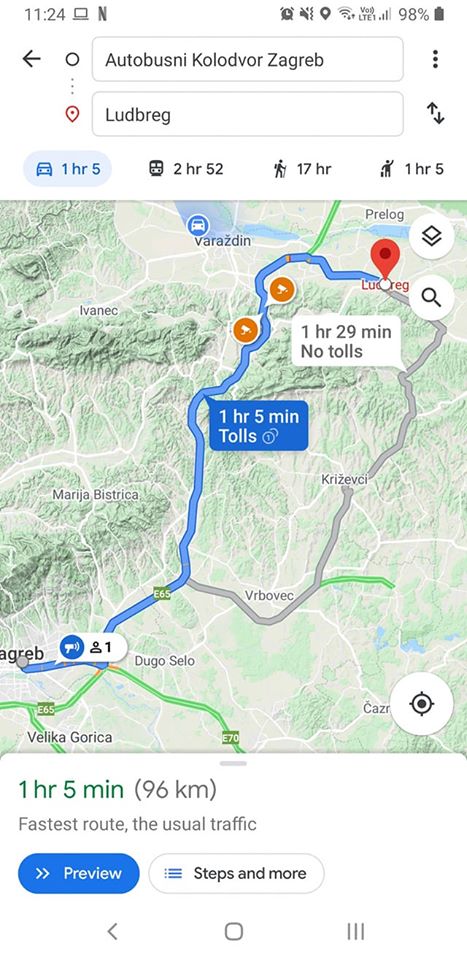
November 10, 2019 - The Last Supper in Ludbreg, the only town in Croatia with a physical miracle certified by the Vatican has an unusual fresco with the disciples of Jesus replaced by Croatian saints and holy people. So who exactly are they?
Almost everyone I have spoken to about this in Croatia in recent weeks has either had no idea whatsoever, or very limited knowledge, apart from about 2-3 people. With more than one million tourists a year in Medjugorje in neighbouring Bosnia and Herzegovina, very few religious pilgrims going there have ever heard of Ludbreg, a small town in Varazdin County just north of Zagreb. And yet, with the Vatican has yet to recognise anything in Medjugorje, Ludbreg is home to the only physical miracle in all Croatia which has been certified by the Vatican. You can read the original story in full here, but to recap:

The Real Presence website gives a great overview of the history of Ludbreg's miracle.
In 1411 at Ludbreg, in the chapel of the Count Batthyany’s castle, a priest was celebrating Mass, during the consecration of the wine, the priest doubted the truth of transubstantiation, and the wine in the chalice turned into Blood. Not knowing what to do, the priest embedded this relic in the wall behind the main altar. The workman who did the job was sworn to silence. The priest also kept it secret and revealed it only at the time of his death. After the priest’s revelation, news quickly spread and people started coming on pilgrimage to Ludbreg. The Holy See later had the relic of the miracle brought to Rome, where it remained for several years. The people of Ludbreg and the surrounding area, however, continued to make pilgrimages to the castle chapel.
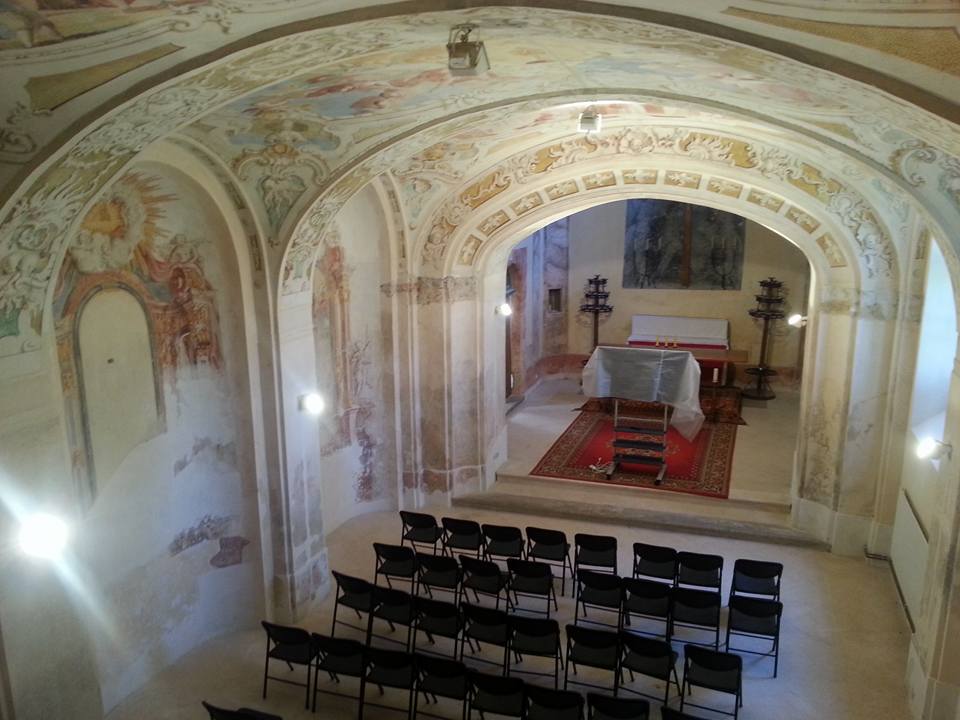
In the early 1500s, during the pontificate of Pope Julius II, a commission was convened in Ludbreg to investigate the facts connected with the Eucharistic miracle. Many people testified that they had received marvelous cures while praying in the relic’s presence. On April 14, 1513, Pope Leo X published a Bull permitting veneration off the holy relic which he himself had carried in procession several times through the streets of Rome. The relic was later returned to Croatia.
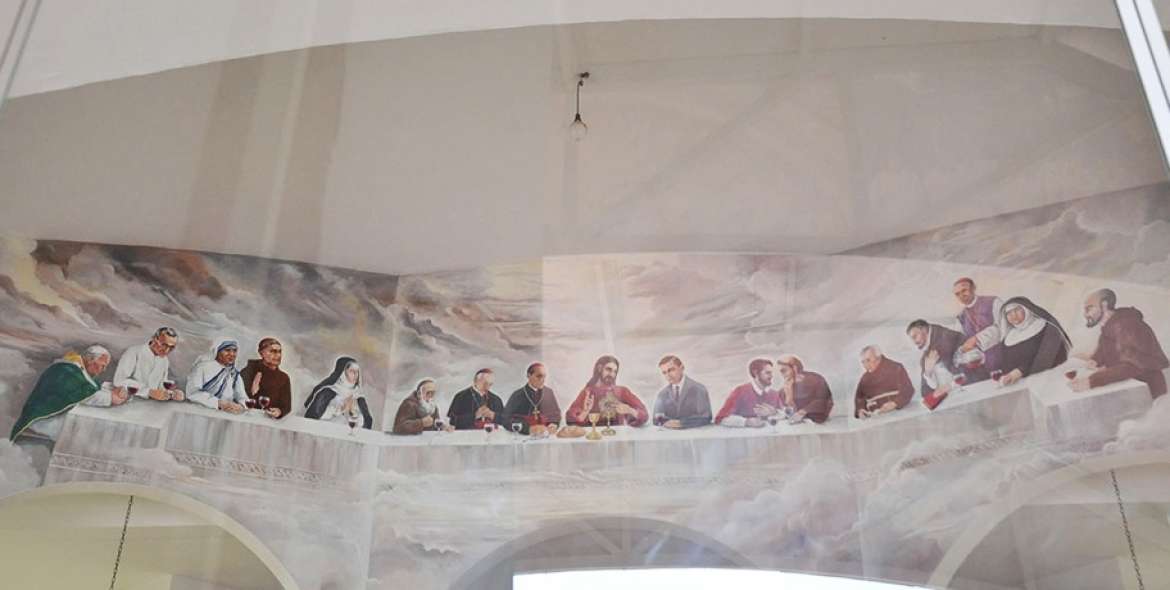
In the 18th century northern Croatia was ravaged by the plague. The people turned to God to call upon His help, and the Croatian Parliament did the same. During the session held on December 15, 1739 in the city of Varazdin, they vowed to build a chapel at Ludbreg in honor of the miracle if the plague ended. The plague was averted, but the promise vow was only fulfilled in 1994, when democracy was restored in Croatia. In 2005 in the votive chapel, the artist Marijan Jakubin painted a large fresco of the Last Supper in which Croatian saints and blesseds were drawn in place of the Apostles. St. John was replaced with Blessed Ivan Merz, who was included among the 18 most important Eucharistic saints in the Church’s history during the Synod of Bishops held in Rome in 2005. In the painting, Christ is holding in His hand a monstrance containing the relic of the Eucharistic miracle.
And that large fresco of Croatian saints and blesseds was incredible and very unique. I have never seen anything like it before. It was painted by Marijan Jakubin, an academic painter.
I have been to many churches in Croatia, but never seen anything like it.
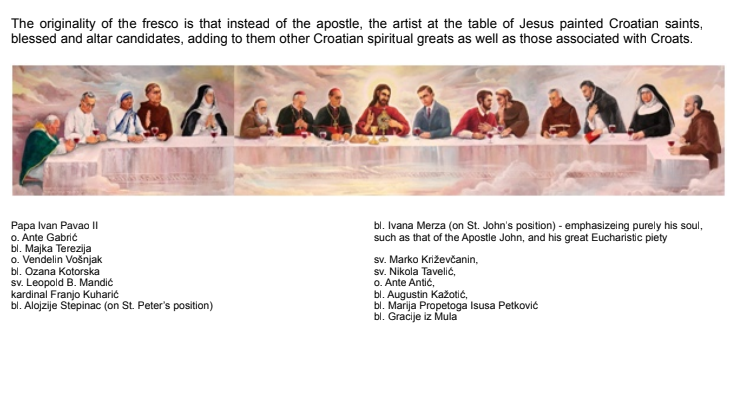
So who are the people with Jesus at this very Croatian Last Supper in Ludbreg? From left to right, there is a brief description of each, apart from the very famous ones, Pope John Paul II, Mother Teresa, and Cardinal Stepinac.
Pope John Paul II
Father Ante Gabric - Born in Metkovic in 1915, Gabric joined the Jesuits at an early age. On October 20, 1938, after obtaining special permission from his Jesuit superiors, Gabric left for India, his ‘promised land,’ by steamship, where he became a very close aid to Mother Teresa. Exactly fifty years later to the day, October 20, 1988, he passed away.
Mother Teresa
Brother Vendelin Vosnjak - Born in Slovenia in 1861, Vendelin Vosnjak joined the Franciscan Order in 1878 and was ordained a priest i n1884. The founder of the Croatian Franciscan Province of Sv. Cyril and Methodius in 1900, he encouraged the restoration of spiritual life, churches and monasteries, as well as the publication of religious magazines. He was proclaimed a servant of God in 2000, and the process of his canonisation is ongoing. He died in 1933.
Osanna of Cattaro was a Catholic visionary from Kotor born in 1493 and who died in 1565. She was a teenage convert from Orthodoxy and became a Dominican tertiary and was posthumously venerated as a saint in Kotor. She was later beatified in 1934.
Saint Leopold B. Mandic (also known as Leopold of Castelnuovo) was born in 1866 and died on 30 July 1942. He was a Croatian Capuchin friar and Catholic priest, who suffered from disabilities that would plague his speech and stature. He developed tremendous spiritual strength in spite of his disabilities and became extremely popular in his ministry as a confessor, often spending 12–15 hours in the confessional. Although Mandic wanted to be a missionary in Eastern Europe, he spent almost all his adult life in Italy, living in Padua from 1906 until his death. He also spent one year in an Italian prison during World War I, since he would not renounce his Croatian nationality.[2] He also dreamed unceasingly about reuniting the Catholic and Orthodox churches and going to the Orient. He became known as an Apostle of Confession and an Apostle of Unity. He made a famous prayer that is the forerunner of today's ecumenism.As a result of the bombing during World War II, the church and part of the friary where Mandic lived were demolished, but his cell and confessional were left unharmed. He had predicted this before his death, saying, "The church and the friary will be hit by the bombs, but not this little cell. Here God exercised so much mercy for people, it must remain as a monument to God's goodness." Pope Paul VI beatified Leopold on 2 May 1976. He was canonized by John Paul II during the General Assembly of the Synod of Bishops on 16 October 1983. Leopold is hailed as the "Apostle of Unity".
Cardinal Franjo Kuharic (15 April 1919 – 11 March 2002) was a Croatian Catholic cardinal, who served as the Archbishop of Zagreb from 1970 until his resignation in 1997. The cardinal was often referred to as the "Rock of Croatia" known for his defence of human rights and his urging of peace and forgiveness during the independence conflict and the Bosnian War. Kuharic was also a vocal supporter of the cause for the canonization of Cardinal Alojz Stepinac (who had ordained him as a priest in 1945) and worked to rehabilitate the image of the cardinal during his episcopate while working towards Stepinac's 1998 beatification held in Zagreb. His cause for canonization commenced on 11 March 2012 and he has been titled as a Servant of God.
Cardinal Alojz Stepinac
Blessed Ivan Merz (16 December 1896 – 10 May 1928) was a Croatian lay academic, beatified by Pope John Paul II on a visit at Banja Luka, Bosnia and Herzegovina on June 22, 2003. Ivan Merz promoted the liturgical movement in Croatia and together with Ivo Protulipac created a movement for the young people, “The Croatian union of the Eagles” (“Hrvatski orlovski savez)”, inspired by the “Eucharistic Crusade,” which he had encountered in France. The Director of the Confraternity, Dave Ceasar Dela Cruz was elected as the Vice Postulator of the Cause for the Canonization of Blessed Ivan Merz on 19 March 2008 by the Vatican through the Congregation for the Causes of Saints.
Saint Marko Krizevcanin was a Croatian Roman Catholic priest, professor of theology and missionary, who was active in the 17th century. In the course of the struggle between Catholicism and Calvinism in the region then, he was executed for his faith. He has been declared a saint by the Catholic Church, the third Croat to be so honored.
Nikola Tavelic was a Franciscan missionary who died a martyr's death in Jerusalem on November 14, 1391, a Croatian friar. He was beatified as part of Nicholas Tavelic, O.F.M. and companions, which included friars from Italy and France. All four members of his group have been declared saints by the Catholic Church, making Tavelic the first Croatian saint.
Ante Antic (Sepurine, Prvic Island, April 16, 1893 - Zagreb, March 4, 1965), Croatian Catholic priest, Franciscan, confessor, spiritual leader, servant of God, candidate for sainthood. There has been a process since 1984 to declare him a saint. The cause was opened by Cardinal Franjo Kuharic; the case has been taking place in Rome since 1995. More than 5,000 hearings have been recorded. He is one of the most beloved priests of the past century in Croatia. On May 5, 2015, he received the title of Holy Servant of God.
Augustin Kazotic (1260 – 3 August 1323) was a Dalmatian-Croatian Roman Catholic prelate and professed member from the Order of Preachers who served as the Bishop of Lucera from 1322 until his death. Kazotic was a humanist and orator who had served first as the Bishop of Zagreb from 1303 until 1322. Kazotic studied in Paris before returning to his homeland where he began working in the missions and preaching in modern Bosnia. He was one of the first humanist figures to appear in southern Croatia. His reputation for personal holiness remained noted long after his death; this resulted in Pope Innocent XII confirming the late bishop's beatification in 1700.
Marija Petkovic is also known as "The Blessed Mary of Jesus Crucifi ed Petkovic"; (Croatian: Marija od Propetoga Isusa Petkovic, Italian Maria Di Gesù Crocifisso), (10 December 1892 - 9 July 1966) was the founder of the Catholic Congregation of the Daughters of Mercy. She was recognized by the Roman Catholic Church as a Venerable Servant of God on 8 May 1998, and was beatified by Pope John Paul II on 6 June 2003.
Gracija Kotorski (Muo, Boka Kotorska, 27th of November 1438 - Venice, 9th of November 1508), a beatified Catholic, Augustinian monk, fisherman and seaman. Born as Pavao Krilovic. Until his thirties, he lived in Boka Kotorska as a fisherman. Then he went out into the world sailing just like a sailor. On his visit to Venice in 1454, he was delighted with the sermon of Blessed Šimun Kamerin, and he encouraged him to give up his worldly life and devote himself to a religious path. He went to the Augustinian monastery on Ortone Hill near Padua, where he remained for 15 years.
To follow the latest from Croatia's miracle town of Ludbreg, click here.
(With thanks to Miranda Milicic Bradbury for additional research)
Kolakušić: Croatians are Apolitical and Politically Illiterate
ZAGREB, November 10, 2019 - Presidential candidate Mislav Kolakušić said on Sunday that Croatians are apolitical and politically illiterate, and if he fails in the forthcoming presidential election, he will return to his duties as a member of the European Parliament.
"Unfortunately, most Croatian citizens have chosen to be apolitical and consider it a very good move. Well, my dear citizens, whether your family lives as they do in Norway or in the poorest African country is decided by politics and you decide who runs politics," Kolakušić, a former judge at the Zagreb Commercial Court, said in an interview with the N1 television channel.
"Croatians are absolutely politically illiterate," he said, but added that he continued to believe that important issues should be decided in referendums. He is confident, for example, that if there were a referendum on abolishing all taxes, citizens would be against.
He said he was in favour of a system that would allow holding several offices at once, adding that this would make it possible for the people to know who was responsible. He said that if the citizens voted for the Croatian Democratic Union (HDZ) or the Social Democratic Party (SDP) at the next parliamentary election, it would mean they did not want change.
"You can't change anything, because regardless of your will you lack these 76 votes in Parliament that decide. I didn't enter into politics to do something that makes no sense but to try to change things, and you can do that only if you have power. What business do I have in politics if the citizens choose one of the direct candidates of the HDZ or SDP in these elections? In that way they say they don't want change and why would I spoil their pleasure?" Kolakušić said.
"The people are always like their leader. Every nation decides on turning points in its development and is guided by its leader. The key is in Parliament, everything changes in Parliament," he added.
Kolakušić said that the Croatian parliamentary system is irreparable because political parties are financed from the state budget, which he would abolish and introduce financing through contributions by members. "If there are not enough interested members to join a club, then the club should not exist."
Commenting on other presidential candidates, he described Miroslav Škoro as a reserve candidate of the HDZ, while accusing the SDP's Zoran Milanović of being responsible for 300,000 citizens with blocked bank accounts during his premiership.
During the interview, Kolakušić criticised the media several times for poor-quality content and for turning into party mouthpieces rather than reporting facts.
"The media never asked me questions of vital importance to Croatia," he said, adding that he would attend presidential debates only if they were serious and focused on important issues.
Kolakušić said he had no intention of spending a penny on his election campaign, stressing that voters could find everything on the internet. "Our videos have got 55 million views via Facebook alone. If you want to inform yourself, there are places, and if you don't, then do as you please."
Kolakušić said he would sort out the lack of money for pensions by removing false pensioners, false war veterans and false disabled persons from the system. He believes that at least half of the veterans in the system are fake.
He also believes that counties should be abolished or reduced to only symbolic functions, that the government should have only ten ministries and not more than five agencies, and that the number of judges should be halved.
More news about presidential elections can be found in the Politics section.
Stier: Freedom and Secrecy of Correspondence Guaranteed and Inviolable
ZAGREB, November 10, 2019 - Following media reports that the Presidency of the ruling Croatian Democratic Union (HDZ) party has decided to sanction party members who use hate speech on social media, make threats or criticise the HDZ leadership, HDZ MP Davor Ivo Stier said that freedom and secrecy of correspondence are guaranteed and inviolable and called on his colleagues not to be afraid.
"After the fall of the Berlin Wall, the Croatian people rejected Communism and reaffirmed their centuries-long desire for independence in the democratic elections of 1990, as written in the Constitution. That's why in the Croatian Parliament this week we defended the proposal that 30 May be observed as Statehood Day. After 30 May 1990, democratic and civic freedoms were also guaranteed by the Christmas Constitution. Article 36 of the Constitution says: 'Freedom and secrecy of correspondence and all other forms of communication shall be guaranteed and inviolable.' Also, Article 6 reads: 'The internal organisation of political parties shall be in accordance with the fundamental constitutional democratic principles,'" Stier wrote on his Facebook page.
He said that the state or party authorities no longer have the right to monitor correspondence between citizens or internal communication between party members. He added that stories being floated around that such monitoring will be introduced are damaging not only to the party but also to all citizens and to democracy in Croatia, because "democracy implies responsibility and freedom from political intimidation."
"That's why nowadays, when we remember the fall of the Berlin Wall, the words of Holy John Paul II, which preceded the fall of Communism, ring even louder. 'Don't be afraid!'" Stier concluded.
The Večernji List newspaper said on Sunday that the HDZ Presidency has decided to sanction all party members who use WhatsApp, Viber and Facebook groups to spread hatred, make threats or just criticise the policy of the HDZ leadership and Prime Minister Andrej Plenković.
More HDZ news can be found in the Politics section.
Kristallnacht Commemorated in Zagreb
ZAGREB, November 10, 2019 - A ceremony commemorating Kristallnacht, or the Night of Broken Glass, and the Nazi pogrom of Jews in Germany and Austria on 9 November 1938 was held in Zagreb's Square of Victims of Fascism on Saturday evening, organised by the Croatian Antifascist League.
Addressing those gathered, the head of the coordinating committee of the Jewish communities in Croatia, Ognjen Kraus, said: "We are here to remember the Night of Broken Glass, to pay tribute to the victims of racial laws, not to allow equating Ustashism with antifascism, and to warn of the danger of xenophobia and nationalism which is on our doorstep."
Kraus warned of rising antisemitism in Europe, saying that armed Nazis had attacked a synagogue in the German city of Halle last month during the Jewish feast of Yom Kippur and that similar incidents were recorded elsewhere in Europe.
Kraus said that in Germany and Austria, or in any other Western European country, it was not possible to downplay or deny the existence of concentration camps during World War II and equate the victims of Nazism and antifascism, the Axis powers and the Allies, while in Croatia that was possible.
"The antifascist movement and the Ustasha movement, the victims and butchers, continue to be equated, and pseudohistorians continue to write a new history of Croatia, rehabilitating the NDH (Nazi-allied Independent State of Croatia). On the other hand, they are inventing crimes and the President is calling for a recount of the victims of the Jasenovac death camp. Why?" he said.
Kraus called the Croatian reality a disgrace, saying that the history of the children's concentration camps in Sisak and Jasenovac was being changed to portray them as reception centres where children were looked after, and adding that senior state officials attended a commemoration for victims of totalitarian regimes at a cemetery where Ustasha and German troops had been killed.
He drew attention to NDH and Nazi Germany symbols and hate graffiti that could be seen across Croatia and to physical attacks. He also mentioned the initiative to abolish Antifascist Struggle Day as a national holiday.
"This day was not mentioned in any of the television or radio programmes today. The event of global significance which actually marked the beginning of the Holocaust, or Shoah, and the Second World War, the worst thing that happened in the history of humankind," Kraus said.
In the Night of Broken Glass, over 1,300 people were killed, 1,400 synagogues and more than half of the buildings in the Jewish communities in Germany and Austria were destroyed or severely damaged, and 7,500 shops were ravaged. The next day, 10 November, over 30,000 men were taken to concentration camps, he recalled.
The ceremony was attended, among others, by Ombudsman Lora Vidović, Independent Democratic Serb Party leader Milorad Pupovac, Israeli Ambassador Ilan Mori and activist Rada Borić.
More info about events connected with the World War II can be found in the Politics section.
First KSW Event in Croatia Draws Over 11,000 MMA Fans to Arena Zagreb
November 10, 2019 - KSW 51 took place Saturday night, November 9 at the Arena Zagreb in Croatia. It was the first-ever KSW event in Croatia and over 11,000 fans watched live as Mariusz Pudzianowski showed everyone he still has it, defeating the much younger and faster Erko Jun with a second-round TKO win.


Sebastian Rudnicki/KSW
Former champion Borys Mankowski found his spot back on the winning sheet for the first time since 2016 with an impressive submission win over Vaso 'The Psycho' Bakocevic and Croatia's very own Antun Racic became the first-ever KSW bantamweight champion with a decision win over Damian Stasiak.

Sebastian Rudnicki/KSW
Other notable winners on the card were the undefeated Ivan Erslan and Cezary Kesik who move to 8-0 and 10-0, respectively, Daniel Torres achieved the biggest win of his career, and Ante Delija won the war of the giants with a second-round stoppage over Oli Thompson.
"This means everything to me in the world. After ten years in martial arts. I have to thank my team and you fans who have been great," Delija said in front of the entire arena.
Heavyweight
Mariusz Pudzianowski (13-7) def. Erko Jun (3-1) via TKO (punches), round 2, 1:42.
Co-Main Event
Catchweight 161 lb
Borys Mańkowski (20-8-1) def. Vaso Bakocevic (39-19-1) via submission (anaconda), round 1, 1:42.
Inaugural Bantamweight Title
Antun Racić (24-8-1) def. Damian Stasiak (11-7) via majority decision (47-47, 48-47, 48-46).
Featherweight
Daniel Torres (10-4) def. Filip Pejić (14-3-2) via unanimous decision (30-27 x 2, 29-28).
Middleweight
Cezary Kęsik (10-0) def. Aleksandar Ilić (12-3) via submission (rear naked choke), round 2, 4:25.
Lightweight
Roman Szymański (12-5) def. Milos Janicić (11-3) via unanimous decision (29-27x3).
Welterweight
Krystian Kaszubowski (8-1) def. Ivica Truscek (38-33) via split decision (29-28x2, 28-29).
Bantamweight
Sebastian Przybysz (6-2) def. Lemmy Krusić (20-7) via unanimous decision (29-28, 30-27, 30-26).
The Old Dame of Kvarner: 5 Things Not to Miss in Opatija
November 10, 2019
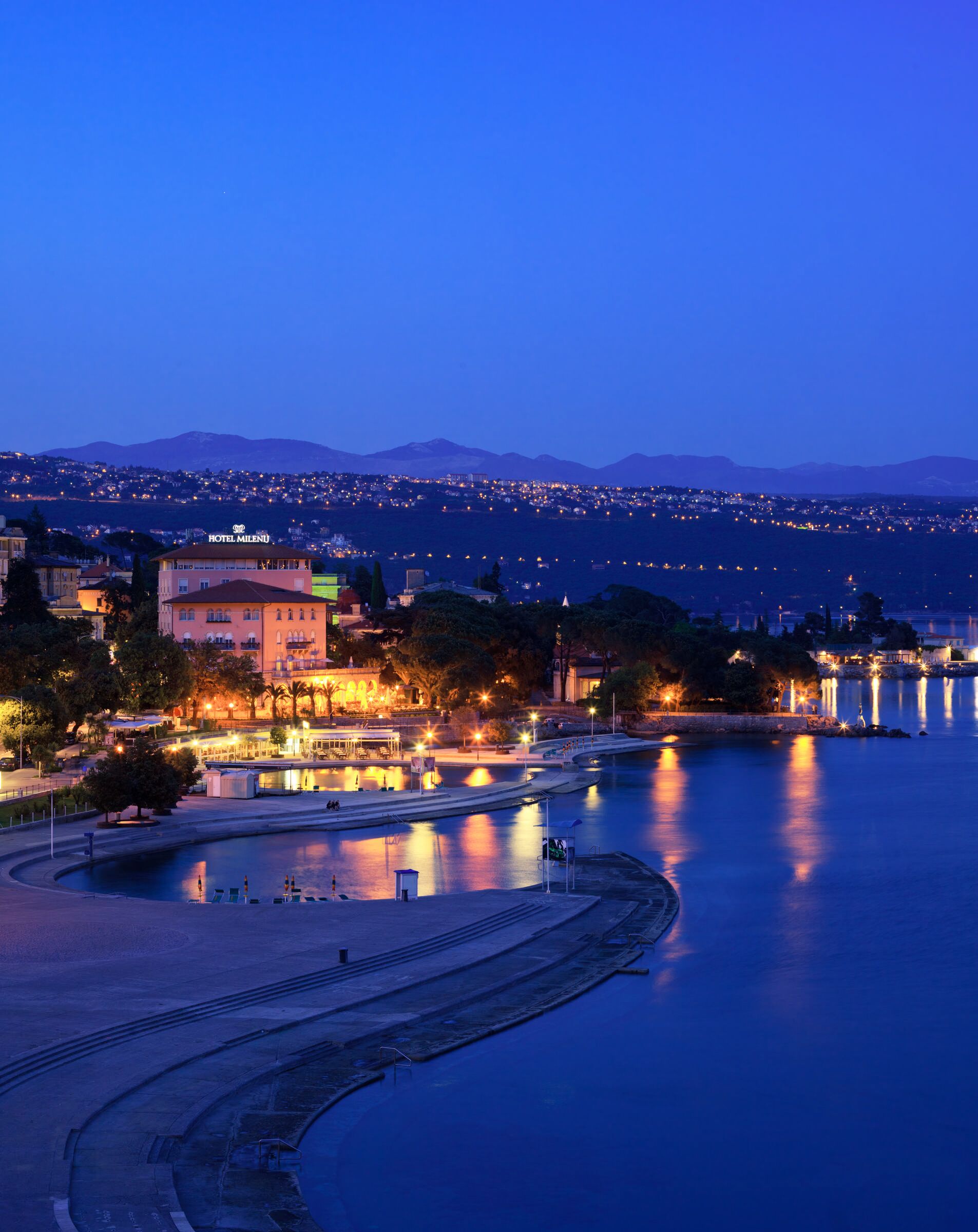
Nestled between the Učka mountain range and the Adriatic, Opatija has long been a tourist drawcard. Each year, thousands of visitors stay in the Habsburg-era hotels that line its main streets, enjoying a variety of restaurants and cafes, as well as museums, concerts and other attractions. Indeed, the good life seems to be ingrained in the town’s DNA. But there’s more to the pearl of the Kvarner Gulf than most people realise.
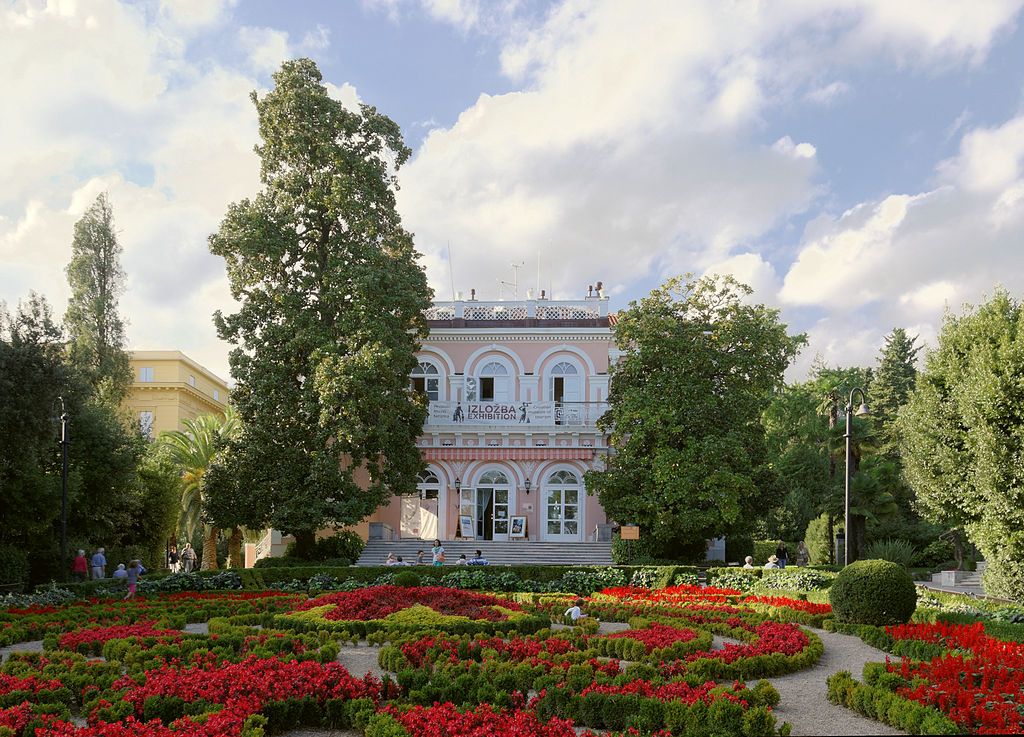
The Longest Riva in Croatia
Visitors to Croatia’s coastal towns will be familiar with the riva many of them have—a pedestrian promenade where locals chat and gossip while tourists hop from one restaurant or bar to another. While Split’s riva is probably the most well-known, Croatia’s longest riva actually runs through Opatija. Completed in the early twentieth century, the Lungomare stretches 12 kilometres from Volosko to Lovran. Stately Austro-Hungarian-era villas and overhanging branches of oak and laurel make a stroll along the Lungomare a memorable one. For a touch of glamour, visitors can check out the Lungomare’s Croatian Walk of Fame, Opatija’s answer to Hollywood’s Walk of Fame.
Roll Out the Red Carpet
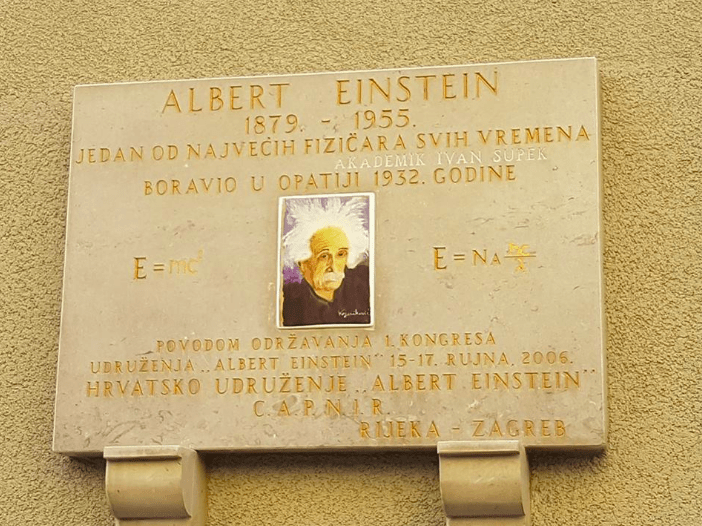
Wimbledon champion Goran Ivanišević isn’t the only A-lister to have graced Opatija’s streets. Up until the mid-twentieth century, Opatija’s history as a tourist resort made it a magnet for other people from the arts, science and culture. A mural in Opatija’s Angiolina Park reveals some of the celebrities who have visited Opatija over the decades: Hollywood actor Kirk Douglas, physicist Albert Einstein and writer James Joyce, among others. And with singers Diana Krall and Eros Ramazzotti performing in Opatija earlier this year, the legacy is set to continue.

Classic Cars
For another peek into the past, Opatija offers lovers of vintage automobiles the chance to see—and maybe even drive—their favourite set of wheels. Every June, members ofOpatija’s Liburnia Classic Club organise a rally that brings together some of the most stylish cars from yesteryear. From various Mercedes and Jaguar convertibles to the Aston Martin James Bond drove in Thunderball, the rally turns Opatija into a car show like no other.
Moho-who?
What could Opatija, earthquakes and the Moon have in common? Just check out the bust of Croatian seismologist Andrija Mohorovičić in Volosko, in the north of Opatija. Born in 1857, Mohorovičić was a precocious child who spoke four languages by his fifteenth birthday.Later, his discovery of the boundary between the Earth’s crust and mantle—the Mohorovičić discontinuity—and other work eventually led to a crater on the far side of the Moon being named after him.
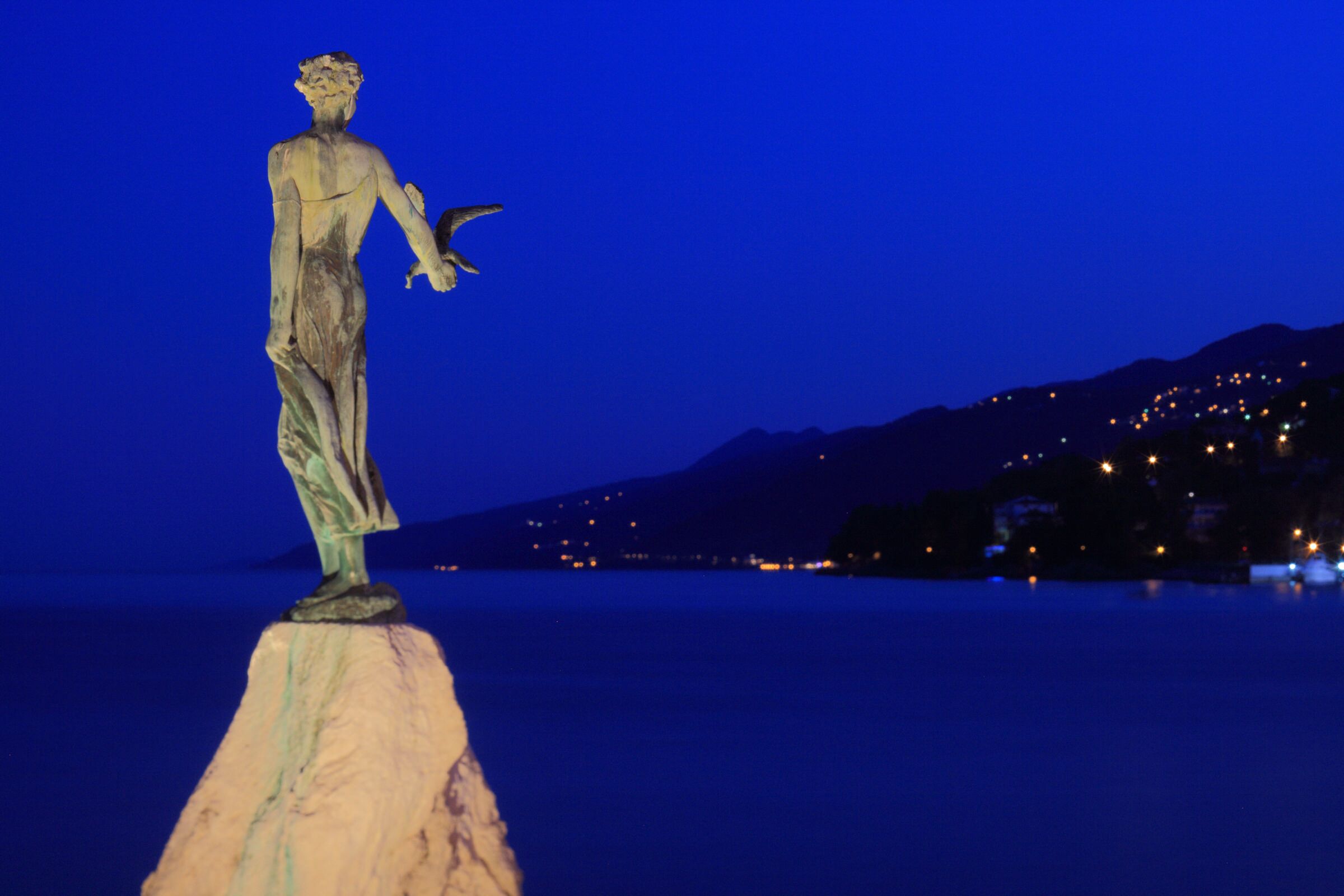
A Seagull’s View of the Adriatic
One of the most scenic views of Croatia can be found in Veprinac, a small settlement in the hills above Opatija. From the yard of Veprinac’s St Mark’s church, built in the middle ages, visitors’ eyes can soar above the Kvarner Gulf and the islands of Krk and Cres—and, on a clear day, to the Velebit mountains and the other Kvarner islands beyond.
For more about Opatija, follow the dedicated TCN section.
Independent MP Zlatko Hasanbegović Founds New Political Party
ZAGREB, November 10, 2019 - Zlatko Hasanbegović, an independent member of the Croatian Parliament, in Zagreb on Saturday founded a new political party, called the Bloc for Croatia, saying that the party would initiate creation of a firm bloc without which it would not be possible to form a new government after the next parliamentary election.
Addressing about 100 participants at the founding meeting of the new party, Hasanbegović said that the foundation of the Bloc for Croatia was an epilogue to the events of July this year when the Independents for Croatia party, of which he was the political secretary, split.
The split was caused by two electoral conventions held simultaneously, one in Zagreb led by Hasanbegović and the other in Zadar led by the president of the Independents for Croatia, Bruna Esih, who was re-elected the leader.
"The Ministry of Public Administration, ignoring the time limits set by the law, refuses to state its opinion on the legality of the so-called Zadar convention. The Bloc for Croatia is the new name of the old political platform that I advocated," Hasanbegović said.
He said that he was supported by four-fifths of the members of the Independents for Croatia, "including those who breathed intellectual, political and doctrinal substance into the Independents for Croatia."
Speaking of the Bloc's political platform, Hasanbegović said that the party would initiate creation of a firm pre-election bloc that would bring together political parties and individuals with similar "national, sovereigntist and freedom-loving views."
"I am certain that this bloc will achieve such a result at the next parliamentary election that without it, it will not be possible to form a new government," Hasanbegović said.
More news about Zlatko Hasanbegović can be found in the Politics section.
Japan Day Marked in Croatia
ZAGREB, November 10, 2019 - Japan Day was held at the Mimara Museum in Zagreb on Saturday ahead of the Olympic and Paralympic Games in Tokyo next year.
The event was organised by the Japanese Embassy and was addressed by Ambassador Misako Kaji, Croatian Olympic Committee (HOO) Chairman Zlatko Mateša and Croatian Paralympic Committee Chairman Ratko Kovacic.
Olympic contender Tin Srbić (gymnastics) and potential contenders Kristina Tomic (taekwondo) and Ana Lenard (karate) spoke about the Olympic Games, while Paralympics contenders Helena Dretar, Pavao Jozić (both table tennis) and Damir Juren (boccia) presented the Paralympic Games.
The Croatia House in Tokyo, organised on the premises of the Croatian Embassy, was presented by the HOO assistant secretary-general for marketing, Ranko Ćetković.
The event attracted great attention from members of the public, who waited in long queues to take pictures of themselves in traditional Japanese costumes, drink tea and familiarise themselves with the arts of ikebana and origami.
More news about relations between Croatia and Japan can be found in the Politics section.
English in Croatia: 2nd in World for Improvement, 2nd Best Spoken in Eastern, Central Europe
November 10, 2019 - Spoken English in Croatia is among the highest quality in the non-native-speaking world, and improving faster than almost anywhere, according to the 2019 EF EPI index.
Safety.
Lifestyle.
Natural beauty.
Excellent spoken English.
These are four key elements which Croatia possesses in abundance when looking to market itself on the global stage, and four key elements which will serve the country very well as the digital nomad era takes hold. Who wouldn't want to spend time in a safe, beautiful European country, with a relaxed lifestyle where English is widely spoken?
And it is official - English in Croatia IS excellent.
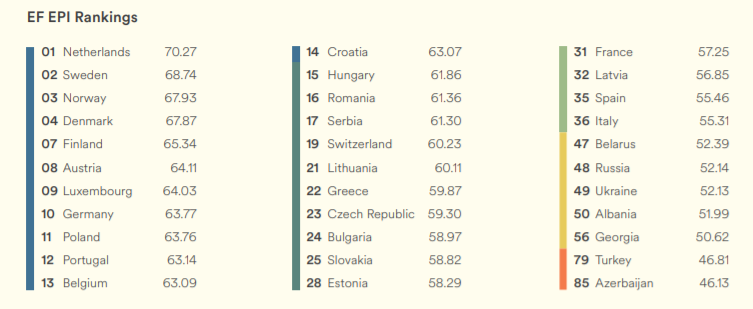
The latest 2019 EF EPI (English Proficiency Index) is out, and while the headline for many portals is that Croatia is 14th in the world outside non-native counties, looks a little deeper and see some even more encouraging trends.
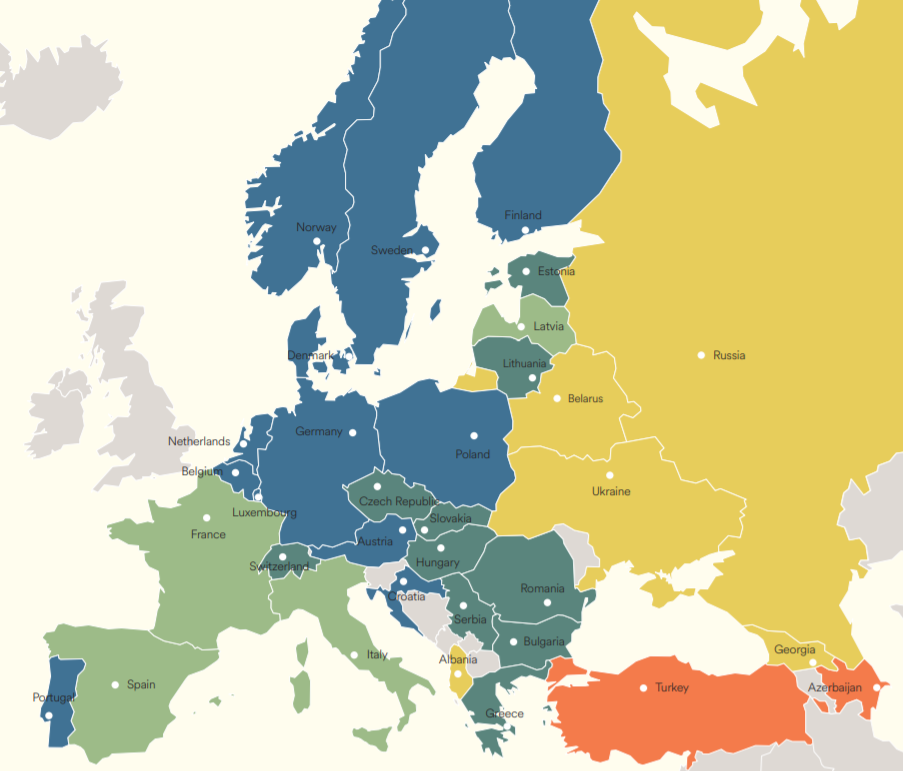
In the week that we celebrate 30 years since the collapse of the Berlin Wall, it is VERY encouraging to see that English in Croatia is spoken better than anywhere else in Central and Eastern Europe, apart from Poland.
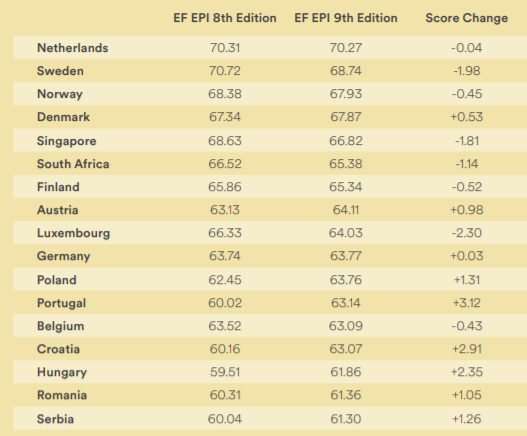
And not only that, but year on year, since the 2018 EF EPI index, English in Croatia has improved faster than anywhere else in the world in the EF index, apart from Portugal.
The EF SET is an online, adaptive English test of reading and listening skills. It is a standardized, objectively scored test designed to classify test takers’ language abilities into one of the six levels established by the Common European Framework of Reference (CEFR). The EF SET is available to any Internet user for free. For more information about the research and development of the EF SET, visit www.efset.org/research/.
EF EPI 2019 scores have been found to correlate strongly with TOEFL iBT 2017 scores (r=0.80) and IELTS Academic Test 2017 scores (r=0.74). These correlations show that, while these tests have different designs and test taker profiles, they reveal similar trends in national English proficiency.
Methodology
This ninth edition of the EF EPI is based on test data from more than 2,300,000 test takers around the world who took the EF Standard English Test (EF SET) or one of our English placement tests in 2018.
You can see the report in full here, and while English in Croatia is generally excellent, it is not quite perfect. Here are 25 common mistakes people make speaking English in Croatia, of which 'sitting on a coffee' is one of my favourite.
And of course, Croatian is far from easy for us foreigners - here are 25 of our common errors when attempting the impossible - speaking perfect Croatian.