

10th Festival of Science in Sinj to be Held this Month
November 11, 2019 - After nine successful years, the tenth anniversary of the Science Festival in Sinj will be held from November 19 to 23, 2019!
As usual, the festival organizers stubbornly continue at the highest level within the “4i concept": excellent scientists interacting directly with children and citizens intensively for five days in an innovative way, presenting their latest scientific and technical breakthroughs.
This year, festival visitors will hear first-hand from top scientists about the Higgs boson and the deepest secrets of matter, nanotechnology, antimatter, astronomy, but also about the considerable research on Sinj ticks and bacterial genes. This year is especially exciting for children, as there will be a night sky observation with telescopes, several workshops, the most beautiful experiments in physics, a quiz and competition in high school chemical startup, while the highlight of the program is on Saturday morning when physics comes to the kids at the Sinj pjaca.
In short: Sinj will become a Science City this year for five days!
The festival is sponsored by the President of the Republic of Croatia. You can find the list of guests here.
Everyone is invited to attend and help show Croatia’s youth that knowledge is the future through the best examples of people who have succeeded only with their knowledge and effort!
Maro Jokovic and Andro Buslje Nominated for Total Waterpolo Player 2019
November 11, 2019 - Andro Buslje and Maro Jokovic are fighting for the title of Total Waterpolo Player 2019 organized by the water polo portal of the same name.
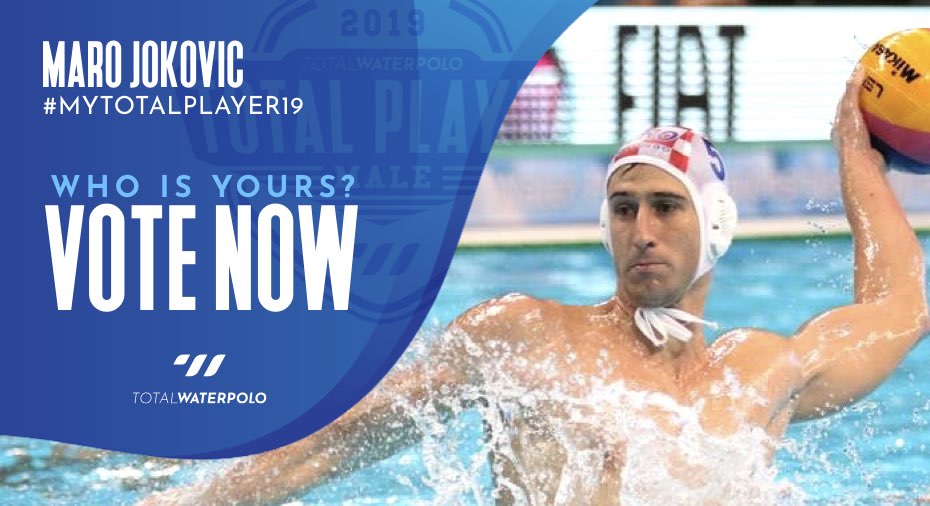
After Sandro Sukno became the first Croatian to win the Total Player title in 2017 and Luka Loncar won the title of the best center in the world for two years in a row, Croatian representatives once again have the opportunity to gain the highest individual recognition in water polo.
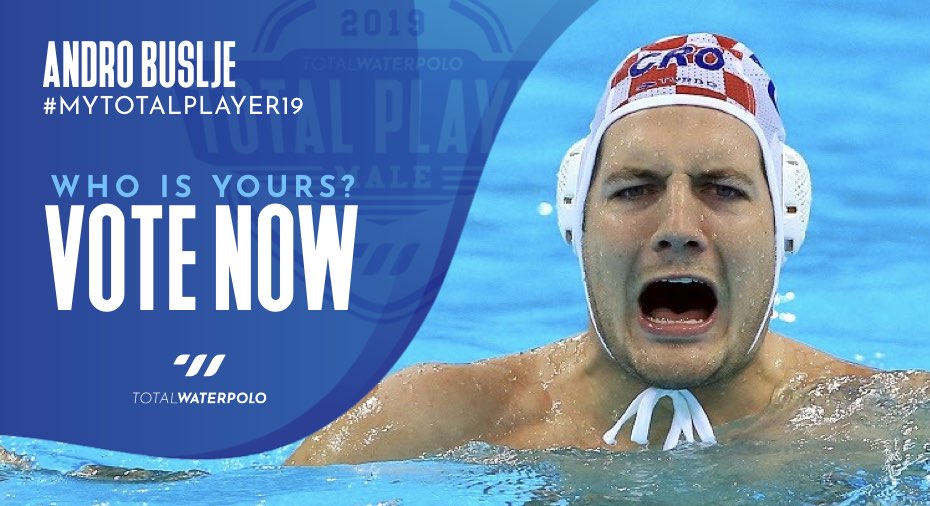
In choosing the best, along with the voices of the profession, the votes of the fans can be decisive. You can cast your vote for Croatia’s top water polo players on the official Total Waterpolo Player 2019 website by November 30, with the winner announcement taking place on December 16, 2019.

Interestingly, this year, there are eight Croatian representatives among the 77 jury representatives from 18 countries. In addition to men's and women's national team coaches, Ivica Tuck and Marija Caleta, votes will also be cast by coaches Zoran Bajic (HAVK Mladost), Ivan Asic (VK Jadran Split), Elvis Fatovic (Australia coach), Dean Bauer (Sport news), portal dance.hr, and Sandro Sukno (Total Player 2017), who joined Croatia’s national team staff last season after retirement. You can follow the expert jury's voices, which are published daily here.

Last year's winners include former Jug Dubrovnik player Felipe Perrone and Russian Ekaterina Prokofyeva.
About the Total Player Award:
The Total Waterpolo Player Award initiative originated from the water polo community in a bid to popularize the sport and enhance the sporting spirit among different countries. Taking into account the opinion of everyone who matters in water polo - like the fans, media, and coaches, the Total Waterpolo Player Award enables the best players to receive independent and professional recognition for their work over the past season.
To read more about sport in Croatia, follow TCN’s dedicated page.
Zlatko Dalic: Rakitic Potentially Ruled Out against Slovakia Due to Injury
November 11, 2019 - Croatia national team coach Zlatko Dalic announced the upcoming Euro qualifier against Slovakia.
The Croatia national team plays their final match for a spot in the Euro 2020 this Saturday. Croatia and Slovakia meet at 20:45 in Rijeka.
The national team gathered in Zagreb on Monday, followed by a trip to Opatija, which will be the team’s base until Saturday. Coach Zlatko Dalic has activated call ups Marko Rog and Josip Juranovic.
"We await the decisive match for the European Championships. We got them in Slovakia, but we should not be fooled by that match, because this will be one completely different. At the beginning of qualifications, we said that 15 points would be enough and so it is. But, no we are going to get a point, we are going to win. We are missing stoppers and we are looking for solutions there,” Dalic said at the beginning of his address to the media.
Shortly before the press conference, news arrived that Ivan Rakitic would most likely be unable to play due to injury. This time, his tendons are inflamed, which should result in about a week of rest. Rakitic did arrive in Zagreb and will be examined by national team doctors.
"Kramaric is coming, but he is returning to his club. Matej Mitrovic felt some problem at training. If the situation is questionable, we will not risk it. Ivan Rakitic felt something in his Achilles tendon, so we will take a look and if there is a problem, he will return to Barcelona. If Mitrovic doesn't play, then the options for the backs are Juranovic, Bartolec and Jedvaj.”
What does Dalic expect from Slovakia?
“Slovakia has the strongest midfield. Lobotka Hamsik, and Kucka. They play all the time, they are in shape, and we are expecting a big fight in the middle of the pitch. We have to stop Lobotka from organizing the game. It's risky, and we punished them in Slovakia, so I believe they won’t open completely this time. Our last line concerns me a little. We have to attack high, not defend."
Source: Index.hr
To read more about sport in Croatia, follow TCN’s dedicated page.
Croatian Companies Face Strong Competition and Require Innovation
Croatia's EU presidency during the first half of 2020 will be a great opportunity for our country, its promotion and the Croatian economy. Luka Burilović, President of the Croatian Chamber of Commerce (CCC), spoke with Novac/Adriano Milovan about the Croatian Presidency and about the challenges it faces within the new financial framework of the union and the use of EU funds. These topics were also the focus of today's conference titled: "Invest EU: Investment Incentives and Expectations for the Croatian EU Presidency", which was co-organized by Hanza Media at the Esplanade Hotel in Zagreb, where Burilović was a participant.
Croatia will soon assume the EU presidency. How do you evaluate the goals of the Presidency presented by Zagreb officials?
- The priorities of "Developing Europe" and "Connecting Europe" have distinct economic dimensions. With this we are sending a powerful message that economic growth and sustainable development are at the top of the list of national and European priorities in the upcoming period. These goals are achievable and, if realized, we can strengthen our position as a serious and successful partner in the international environment.
How do you view the Union enlargement process? After Croatia's accession to the EU, it appears that further enlargement is “on ice”, which can also be seen by the EU's decision not to open accession negotiations with Albania and Northern Macedonia. How should Croatia be positioned towards EU enlargements in Southeastern Europe and what could it contribute to the Croatian economy?
- EU enlargement is a politically, economically and security relevant topic. It is of importance to Croatia because this is a neighborhood with which we have certain unresolved issues, but also strong economic ties. The region has traditionally been an essential market for our businesses. It is our interest to continue the enlargement process, but it is not possible to predict accurately when, to what extent and with what dynamics this will occur. The fact remains that our "neighbors" are bound by long-term economic interests, regardless of whether they are EU members.
How is the Croatian Chamber of Commerce welcoming the Croatian Presidency of the European Union? What will it mean for the Chamber?
- Of course, the chairmanship is an opportunity to give the CCC events which it normally organizes even more meaning and resonance. An economic forum with significant players involved, regarding statesmen, institutions and companies, would certainly be a greater opportunity for cooperation. But it's secondary. It is much more important to see how we can influence policies. Our sectors analyze the needs of members to see how we can better promote our interests at the right moment. The question of all questions is, of course, budgeting. We have the potential to establish a better beginning position for our economy.
In Croatia, much has been said in recent years about fostering innovation. You recently pointed out that Croatia is a country with a long tradition of innovation which continues today. Nevertheless, the fact is that by spending less than one percent of the GDP on research and development, Croatia is at the very bottom of the EU and far from the EU average and proclaimed targets?
- A combination of factors is needed to change the situation. We begin from a situation that drives us to be creative, innovative and different from others in order to survive. We need a higher-quality scientific research community. We need a clear strategy and a stimulating financial framework for investment in research, development and innovation. Ultimately comes the part of the story with the highlights. We need to have resources available for investment and research and development.
In your opinion, what are Croatia's biggest innovations? What can we offer Europe and the world?
- As a small and open economy, Croatia is exposed to strong competitive pressures from the global market. For businesses to survive, they are compelled to find new and more effective solutions. Innovation is a necessity for us. Some of the advantages are having a quality academic staff in the faculties of technical and natural sciences and a strong IT sector, which is a prerequisite for development in today's digital age. The substantial amounts available from the EU research and development funds, which will continue to be available in the new financial framework, should not be neglected.
How do you evaluate the use of EU funds in Croatia so far? The government has boasted that major steps have been made here, but the European Commission figures show that we are still at the very bottom of EU rankings. Why is that so?
- The current value of the disbursed funds is at 28 percent, but we should bear in mind that funds from the existing financial reserves will be disbursed until the end of 2023, and I am optimistic about this realization. We know from the experience of entrepreneurs that they are plagued by inadequate competition and lack of information. They are also discouraged by the complicated procedures and duration of the evaluation process.
In which segments should we strengthen the use of union funds to make them an engine for economic development? And how do we reduce the portion that we must put back into the EU budget, which is about 10 percent of the withdrawn funds?
- These funds are not or should be a major impulse to stimulate significant economic growth. When it comes to areas requiring additional funding, it is about making a major investment in research and development with the goal of bringing as many innovations as possible to the EU to compete globally with countries such as the US and China.
Shortcomings in establishing procedures as well as in the implementation of those procedures have already been identified during the use of EU funds. Consideration should be given regarding how to make the process easier for applicants and users of funds.
What are the chances of Croatia establishing a new EU financial framework for 2027? As it stands now, less money will be allocated to us than within our current financial framework?
- Of course, within the framework of EU policies, Croatia sets its own priorities, i.e. the sectors and areas for which we will be able to spend EU funds. Therefore, the financial framework depends primarily on how we plan for the next financial period. The solution is to adopt the Croatian Development Strategy as soon as possible and propose operational programs based upon it. There is no doubt within the CCC, that the ecosystem for the development of entrepreneurship, innovation and exports must be at the top of our priorities.
Although Croatia has, cumulatively, attracted large foreign investments since independence, we still chronically lack greenfield investments, which would create jobs and stimulate exports. What should be done in this regard?
- Creating a stimulating investment environment is a process from the ground up. It requires a solid macroeconomic framework, tax policy, various targeted sectoral incentives and the availability of a quality workforce. It also requires a tailored education system for industry development, a dependable legislative framework, a geostrategic position, and transport connectivity...
It is imperative to open the door to new investments with high-value products, by making investments in research and development and the creation of products for export. Croatia is not an investment destination for cheap labor, nor should it be. We should target investors who will raise the standard of workforce that Croatian professionals already enjoy abroad, so that we could also achieve it in Croatia.
More information about Invest EU can be found here. And information about the Croatian Chamber of Commerce can be found here.
Please follow our business section for updates and developments in Croatia.
Zagreb Cyclists Organize Marathon for Vukovar
As reported by direktno, the Volunteer Cycling Society (DBD Potepuh) from Zagreb is organizing the Bicycle Marathon for Vukovar for the eighth year from November 15-18 to commemorate the victims of Vukovar. Fifty-two recreational cyclists from all over Croatia will ride about 350 km from Zagreb to Vukovar in three days, commemorating the anniversary of the breakdown of the city’s defense and paying tribute to the Croatian veterans and civilians killed during the siege and occupation.
The event begins on Friday, November 15th at 9:00 at Jelačić Square in Zagreb (the gathering of cyclists begins at 8:00) and they will bike to Kutina. On the second day, cyclists will again depart at 9:00 and ride from Kutina to Orubica, a picturesque village on the banks of the Sava River. On the third day, participants are expected to make their longest trek: 155 km from Orubica to Vukovar. On the fourth day, November 18th, which falls on the anniversary itself, the cyclists will be divided into two groups: those who have not been to Vukovar will visit the Memorial Cemetery and Ovcara, and the rest will join the memorial procession at the hospital. The participants will then return by train to Zagreb in the afternoon on the same day.
"Over the past seven years, the DBD Potepuh Vukovar Marathon has grown from a group ride of seventeen friends to the largest recreational cycling event commemorating the anniversary of the Homeland War, which we as organizers are particularly proud of," their statement read.
Although the association has been organizing group bicycle rides for several years in a row on the occasion of the military-police operations "Flash" and "Storm" (May 1 and August 5), the Vukovar marathon is regularly the most attended, despite happening during a colder time of the year and well outside of cycling season.
The Vukovar Cycling Marathon is not a race. Participants do not wear numbers or keep track of their time, but all ride together as a group at the same moderate pace. They carry the necessary provisions on their bicycles for a four-day trip away from home: a pad and a sleeping bag, cycling clothes for several days, "civilian" clothes for participating in the memorial procession, night riding and rain gear. "Despite these somewhat spartan conditions: cool riding temperatures and an insignificant registration fee, most of the participants are 'returnees' who have already participated in one (or more) of the DBD Potepuh cycling marathons. As organizers, this is our best confirmation of our work to date, and an impetus for organizing future similar recreational cycling meetings" the organizers added.
Information about the Volunteer Cycling Society (DBD Potepuh) and the marathon can be found here.
To stay informed on upcoming events in Croatia, follow our lifestyle page.
Zagreb Film Festival Breaks Attendance Records
As reported by zagrebinfo, tickets for films from the main competition program of this year's Zagreb Film Festival sold out during the first three days of the festival, and the audience is requesting 'additional tickets' for both morning and afternoon screenings.
The festival’s organizers also reported that they have sold ten percent more pre-sale tickets at the beginning of the festival. In addition to requests for additional tickets, they are continually getting inquiries as to whether the films will receive cinema distribution.
They note that the considerable interest once again shows that the Zagreb audience is very eager for new quality titles and is not ready to abandon the tradition of watching movies together.
The first sold-out season of tickets was opened by Taika Waititi's film “Jojo Rabbit” from the “Together Again” program, and all five screenings of the films from the main feature film competition at Tuškanac Cinema were sold out within the first three days.
"We are extremely pleased that our audience welcomed directors Ena Sendijarević and Ivana Mladenović on Friday and Saturday with such large numbers and interest at the screenings of their debut works 'Take Me Somewhere Nice' and 'Ivana the Terrible'." The organizers also noted that the films “Monos”, “Beanpole” and “Patrick” received an enthusiastic response and they expressed their gratitude to the audience.
The seventeenth edition of the Zagreb Film Festival offers more than a hundred films across 12 programs and runs through November 17th. There are 11 feature films, 10 international films and 10 Croatian short films from the “Checkers” program, which are in the race for the festival awards. The festival takes place in as many as eight Zagreb venues, and is being hosted in some twenty cities across Croatia.
A complete festival program and schedule can be found on the 2019 Zagreb Film Festival website.
Follow our dedicated lifestyle page for more information on events in Croatia.
Interpersonal Relations Most Important When Choosing a Job, Survey Shows
ZAGREB, November 11, 2019 - Two-thirds of respondents believe the most important thing when choosing a job are good interpersonal relations, followed by pay and working hours, according to the findings of a survey conducted by the MojPosao job-seeking website.
More than 1,000 respondents took part in the survey aimed at establishing the situation on the labour market. Fifty-one percent were employed, 43% jobless and 6% still in school.
Interpersonal relations are crucial when choosing a job for 69% of respondents, pay is of paramount importance to 62% and working hours to 46% of those interviewed.
Fifty-four percent believe knowledge and skills have the biggest impact on the chance of getting a job, while 20% believe it is work experience, 8% say luck is important and 6% believe good contacts and who you know is crucial.
Only 3% believe the degree of education is a decisive factor, while 2% believe that being a member of a political party plays a key role in getting a job.
Seventy percent of respondents plan to change their job in the next year, more than in a survey conducted in 2012 (52%). In 2012, 52% of respondents were afraid of losing their job, compared to only 18% now.
Sixty-four percent of respondents have been jobless over the past three months, 12% over the past three to six months and 7% over the past five years or longer.
Sixty-two percent are looking for any job, while 28% want a job only in their profession.
Forty-one percent who are still in school expect to look for a job less than three months after finishing school, 19% expect to find it in less than a month and 18% hope to find a job within six months of finishing school.
More business news can be found in the dedicated section.
HDZ Wants to Sanction Leadership Criticism, Not Everybody Agrees
ZAGREB, November 11, 2019 - The Croatian Democratic Union (HDZ) finds it unacceptable that any of its members should use hate speech or threats, the ruling party said on its Facebook account on Sunday, calling on its MP Davor Ivo Stier to state in public whether he supports hate speech and threats and accusing him of perfidiously misusing the messages of the late pope John Paul II.
Responding to Stier's Facebook post, the HDZ said that no one in the party "questions freedom and secrecy of correspondence and freedom of speech, especially not when it comes to members of the party."
However, it is unacceptable for any member to continually use hate speech and threats in groups organised under the name and symbols of the HDZ, such as calls for someone "to be impaled on a stick" or "shot in the head", and to openly incite members to support other parties and candidates and call on members not to vote for HDZ candidates, the party said.
"That is not, nor will it be, the policy of the HDZ, and if Davor Stier shares and supports such outpourings of hatred and threats directed at party colleagues, let him say so in public. It is therefore perfidious and pathetic of Stier to misuse the messages of John Paul II. Does Davor Stier think that John Paul II would consider such calls for lynching messages of freedom, peace and love?" the HDZ said.
Following media reports that the party Presidency had decided to sanction party members who used hate speech or threats or criticised the party leadership on social media, Stier recalled that freedom and secrecy of correspondence were guaranteed and inviolable under the Constitution and quoted John Paul II as saying before the fall of Communism "Don't be afraid!"
More HDZ news can be found in the Politics section.
Seabed Cleanup in Split Leads to Discovery of Three Hand Grenades
As Morski/Kristina Odzak writes on the 11th of November, 2019, an underwater cleanup which took place in Split has uncovered not only rubbish which needs to be removed and disposed of in the proper manner, but some rather unusual finds, too...
Beach and sea cleanups happen up and down the Croatian coast, typically during the pre and post seasons, with the occasional handful of them taking place at the height of summer, too, with many foreign tourists often offering a helping hand. These actions are environmentally fuelled, and the aim is to keep the glorious Croatian Adriatic sea clean, but from time to time, some unexpected finds pop up among the trash.
On Sunday, November the 10th, 2019, an ecological action was held in front of the Zenta nightclub as part of the project MY SEA (MOJE MORE).
The action was attended by about 100 people, including about forty divers (REK Hvidr, PIK Sailor, Split's public fire department and ERK Periska Ploče) as well as about fifty volunteers from OCEANUS, Rotaract Novi Split, CroMSIC Split and the Split Youth Club.
Despite the rain and wind which battered that part of the central Dalmatian coastline, 800 kilograms of garbage was recovered from the sea, and three hand grenades, often referred to as kinder eggs, were found and the police were notified. The situation was then dealt with professionally by deminers.
Other than explosives, most of the collected items were glass bottles, cans, various car tyres, but also a lot of "interesting" items like walking sticks, turntables, radios, and even water heaters.
The poor weather conditions didn't stop even locals who were passing by, who stopped to look in amazement watching all this waste be dragged from the sea, and some of them even joined the volunteers in sorting.
This particular environmental action was made possible by the Student Union of the University of Split, Split-Dalmatia County, Čistoća Split, and both the county and city tourist boards.
Follow our dedicated lifestyle page for much. If you're interested in both official and unofficial ways that Croatia works to take care of and preserve its environment, give Total Eco Croatia a follow.
Aircash: Very First Croatian Mobile Wallet Launched
Croatia is a paradoxical country at times. It boasts an outdated, draconian system that likes to throw obstacles wrapped in red tape in the path of success for entrepreneuers and their ideas, leading many of them to either give up or go elsewhere to operate under a different flag, but yet, so many startups and so much success can be found here in spite of an unfriendly and self-limiting system. Meet Aircash.
This impressive Croatian startup, Aircash, has 40,000 users and is already hot on the heels of the likes of Keks Pay and Revolut.
As Poslovni Dnevnik/Bernard Ivezic writes on the 10th of November, 2019, Aircash is the first Croatian fintech to launch its own mobile wallet. So far, mobile applications (apps) that allow you to replace your physical wallet with your mobile phone and thus pay that way were only offered by actual banks - Erste bank with KEKS Pay, Zagrebačka banka with Telekom Banking and mZaba, then come the likes of Revolut and Monesa.
Aircash is a little bit different from them all, in the sense that it isn't a bank but a new type of financial institution in itself. The Croatian National Bank (CNB/HNB) has now also granted it a full EU license for electronic money.
So far, only three companies have managed to ''get their hands'' on such a license: HT, PBZ Card and Erste Card Club. In addition to the first major regulatory success for a Croatian fintech, Aircash has also gained market success. The Aircash mobile app already has 40,000 users and is the third most popular fintech app in all of Croatia. For the sake of comparison, Keks Pay has 62,000 users and Revolut has 50,000 users, meaning Aircash is definitely on the right path.
Hrvoje Ćosić, the founder and director of Aircash, says they have been building their market position for just over two years now. In mid-2018, they had 15,000 users and a weekly turnover of 250,000 kuna in total.
"We now have 40,000 active users and 48,000 people have downloaded the app, while the traffic we worked with on a weekly basis last year is now our daily traffic and both indicators are growing," Ćosić says.
Make sure to follow our dedicated business and Made in Croatia pages for much more.