

Your Guide to Unique Eats of Advent in Split
December 9, 2019 - A closer look at the unique eats in Split for this winter’s Advent festivities.
The winter season is as much about the food as it is about celebrating the holidays or embracing the colder weather. It is a time when we can get creative with hearty dishes and hot drinks without worrying about having to show any skin… because our thick winter wear will hide any sight of our well-fed bellies.
Thus, this winter in Split, a selection of local restaurants, bars, and holiday houses on the Riva and Dardin have crafted unique takes on classic winter cuisine to dress up the Dalmatian capital’s offer this offseason.
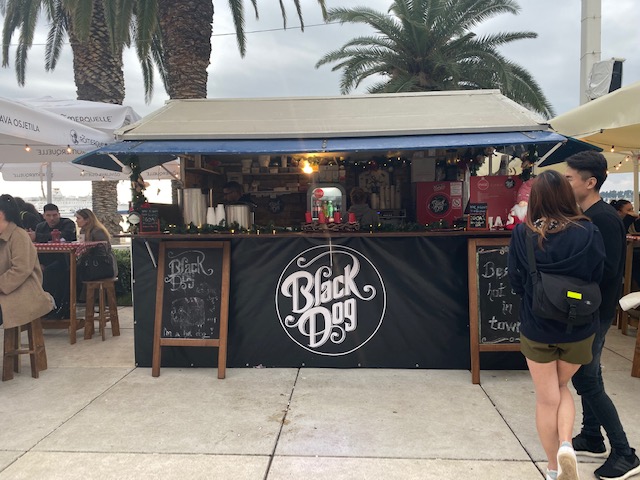
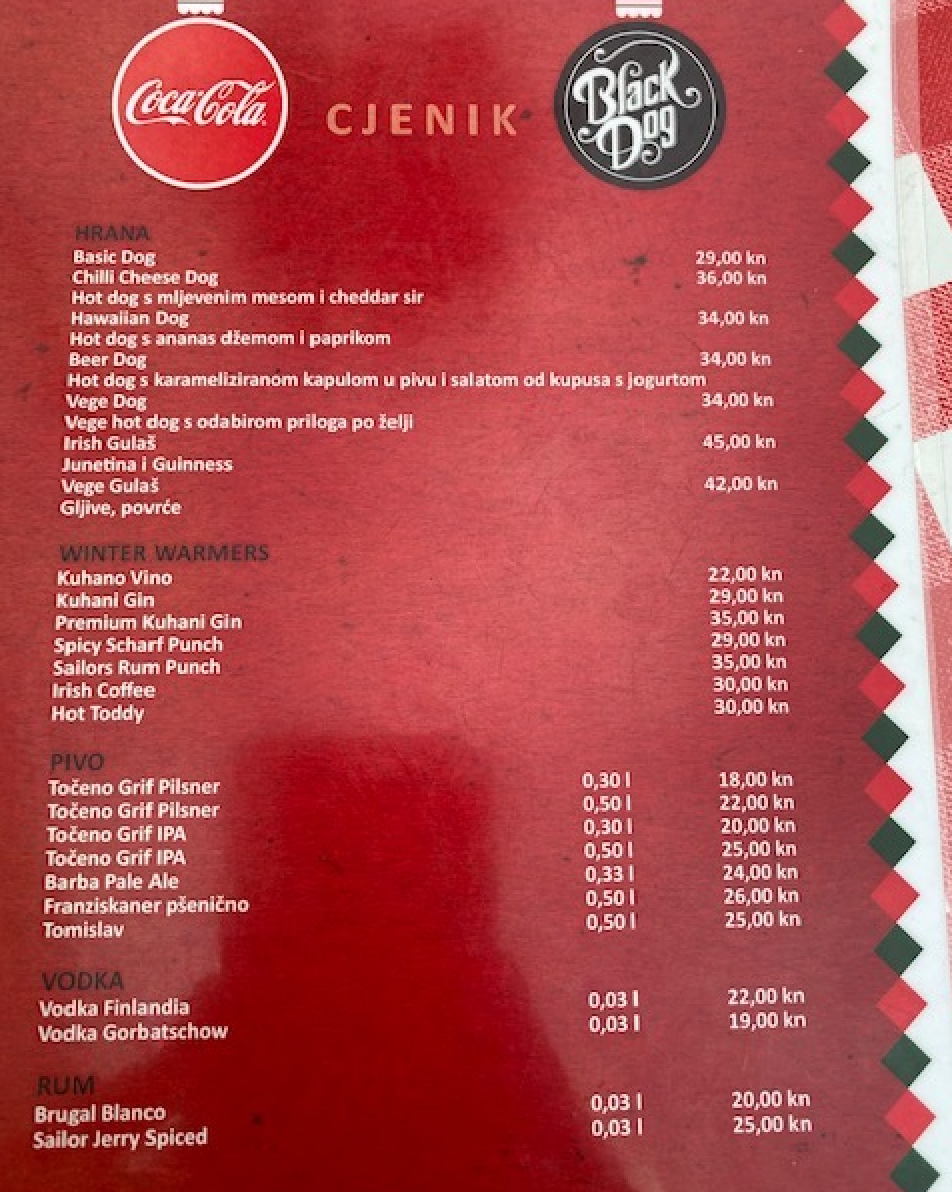
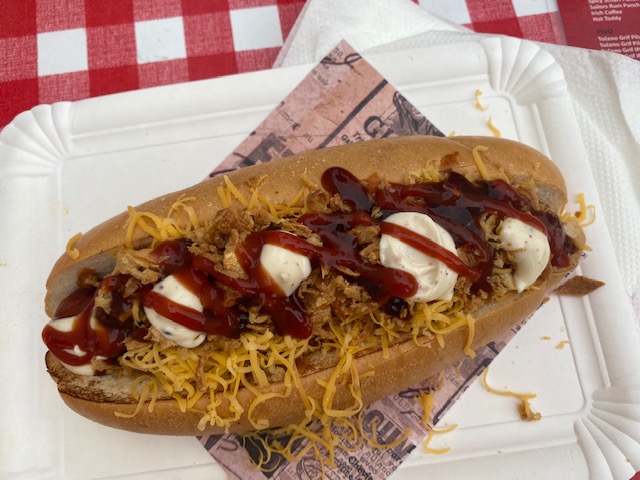
Like Split pub Black Dog, who you can find out on the Riva this winter, offering chili dogs and Hawaiian dogs with pineapple jam and peppers to Irish goulash made with Guinness.
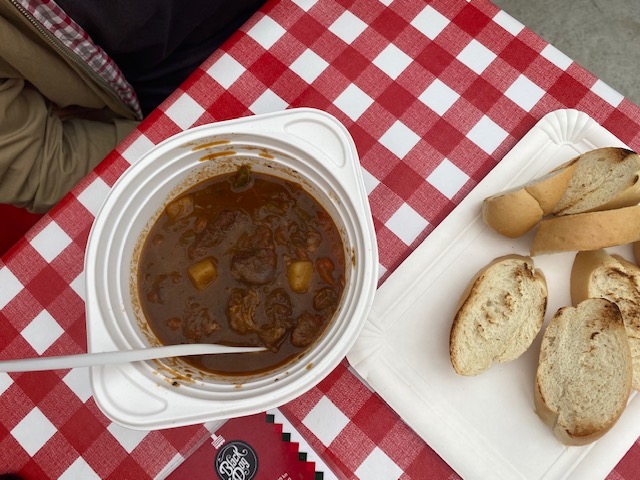
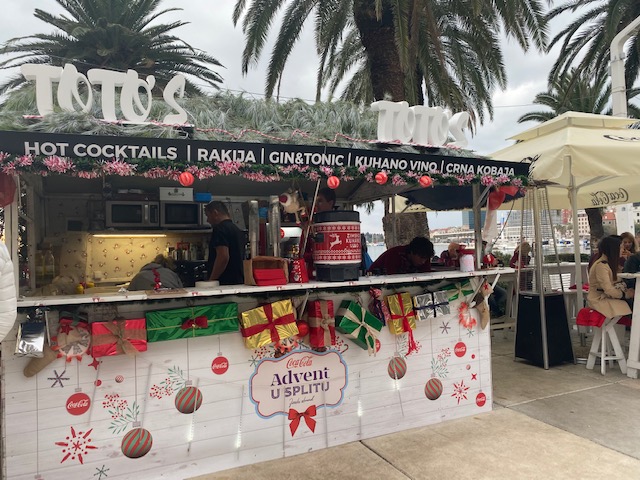
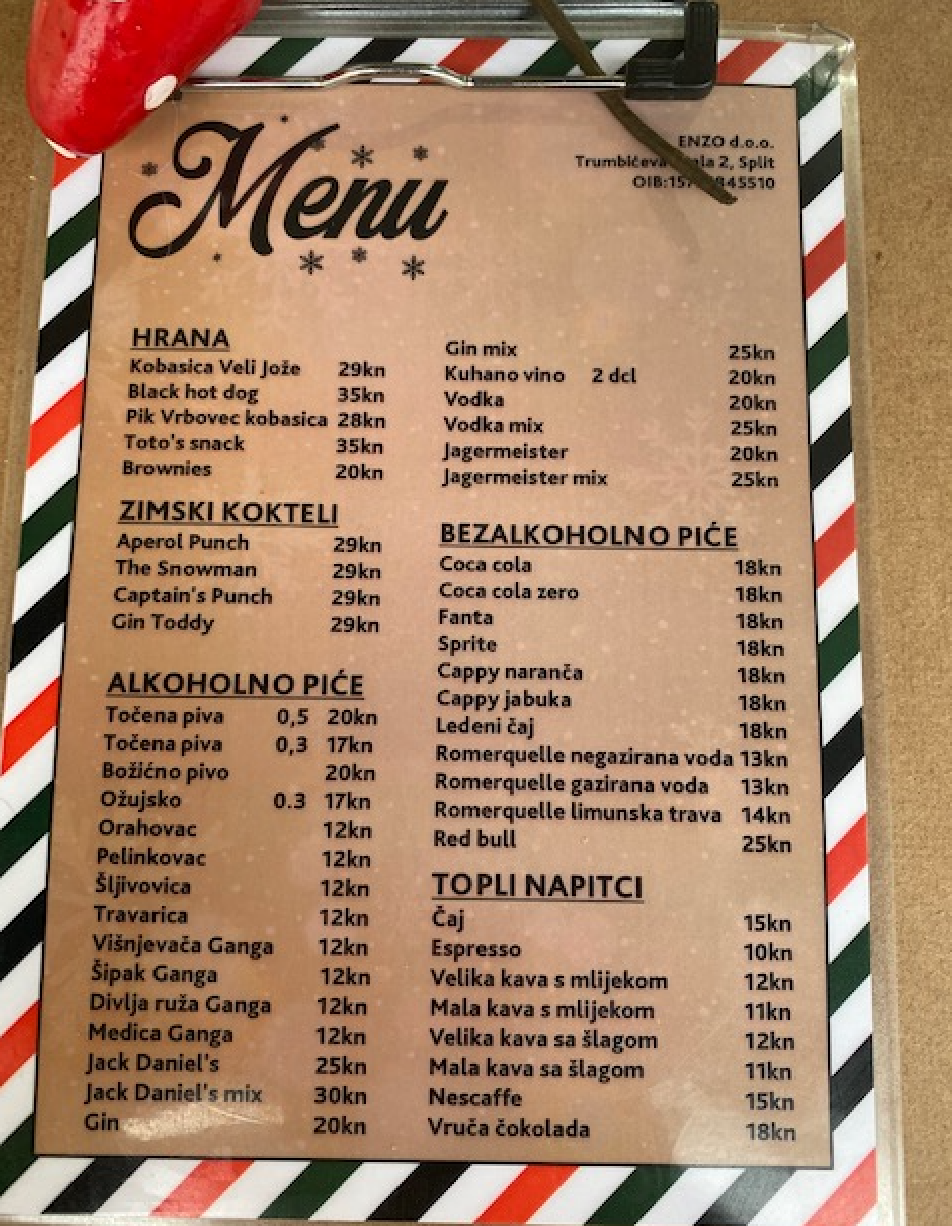
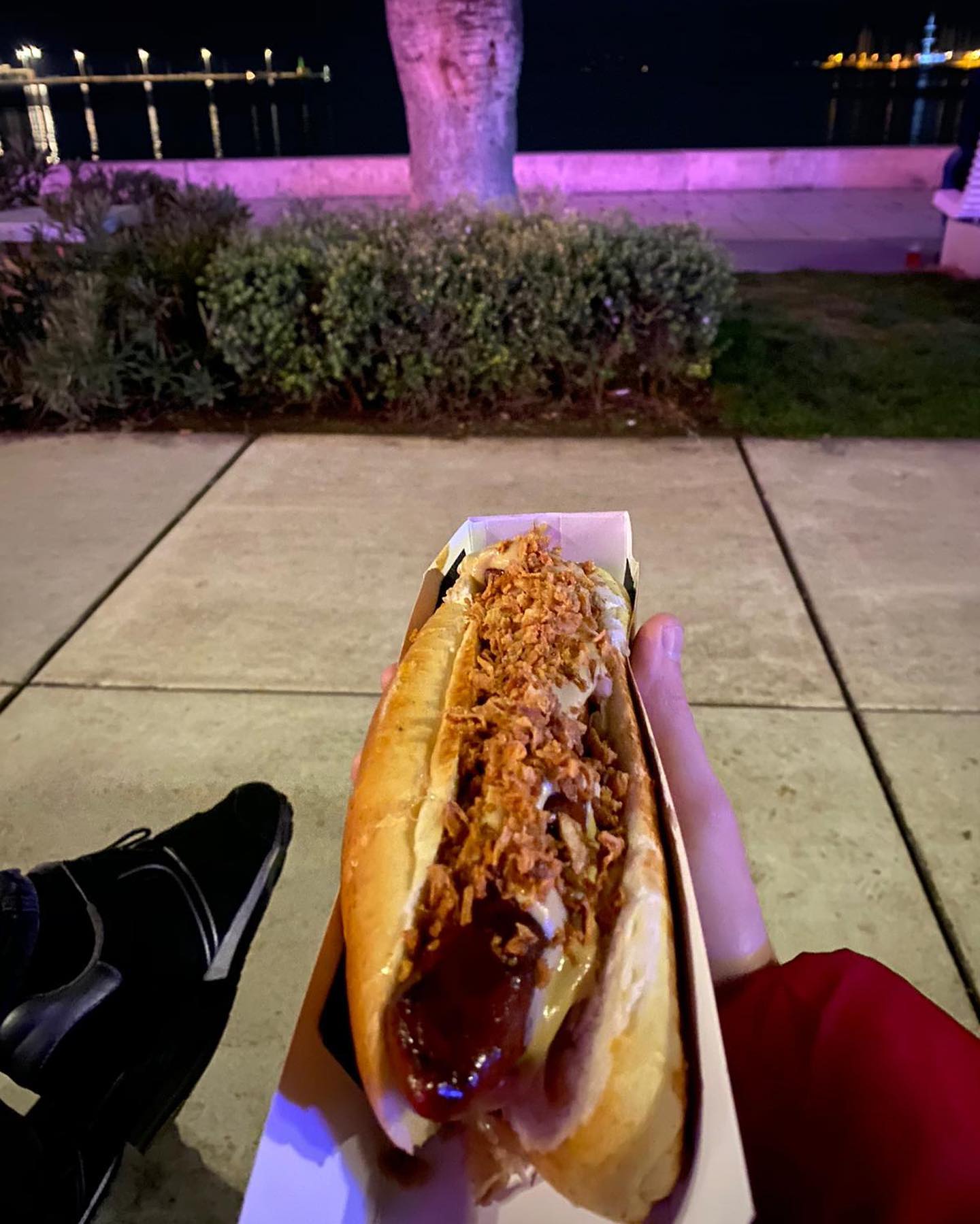
Right next door to Black Dog on the Riva is Toto's Burger Bar, who is also serving up a 'Veli Joze' sausage, a black hot dog, brownies and hot chocolate topped with marshmallows.
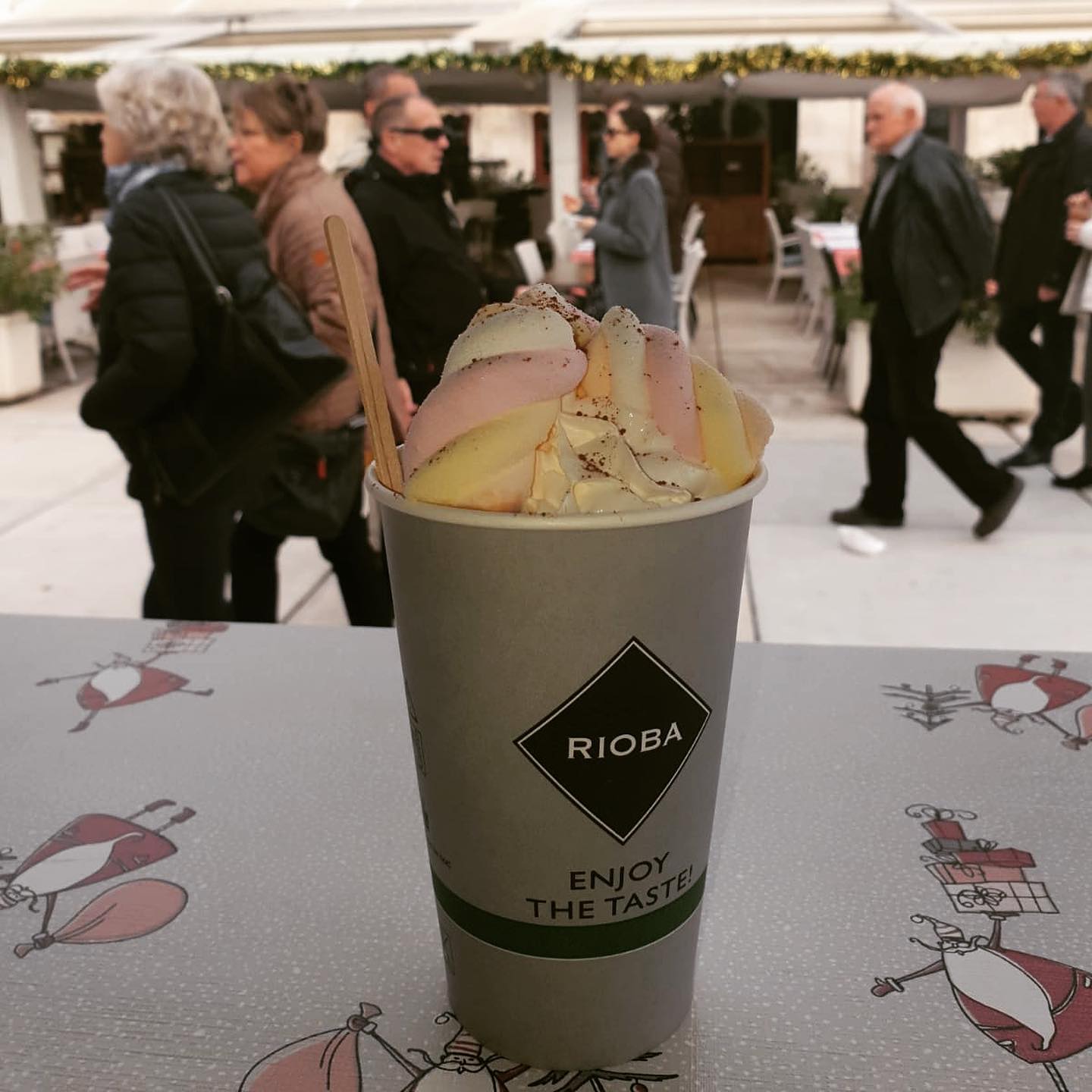
Toto's Facebook
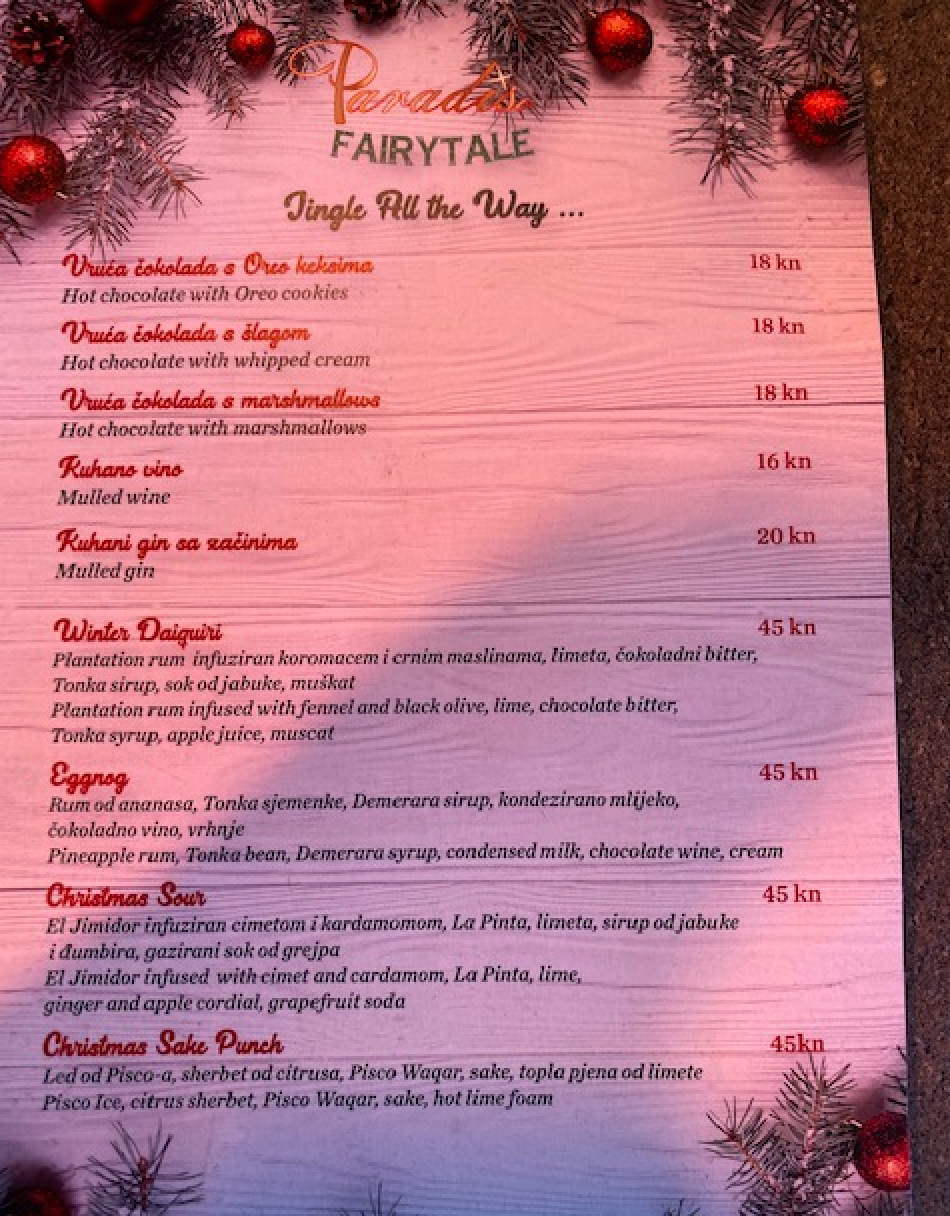
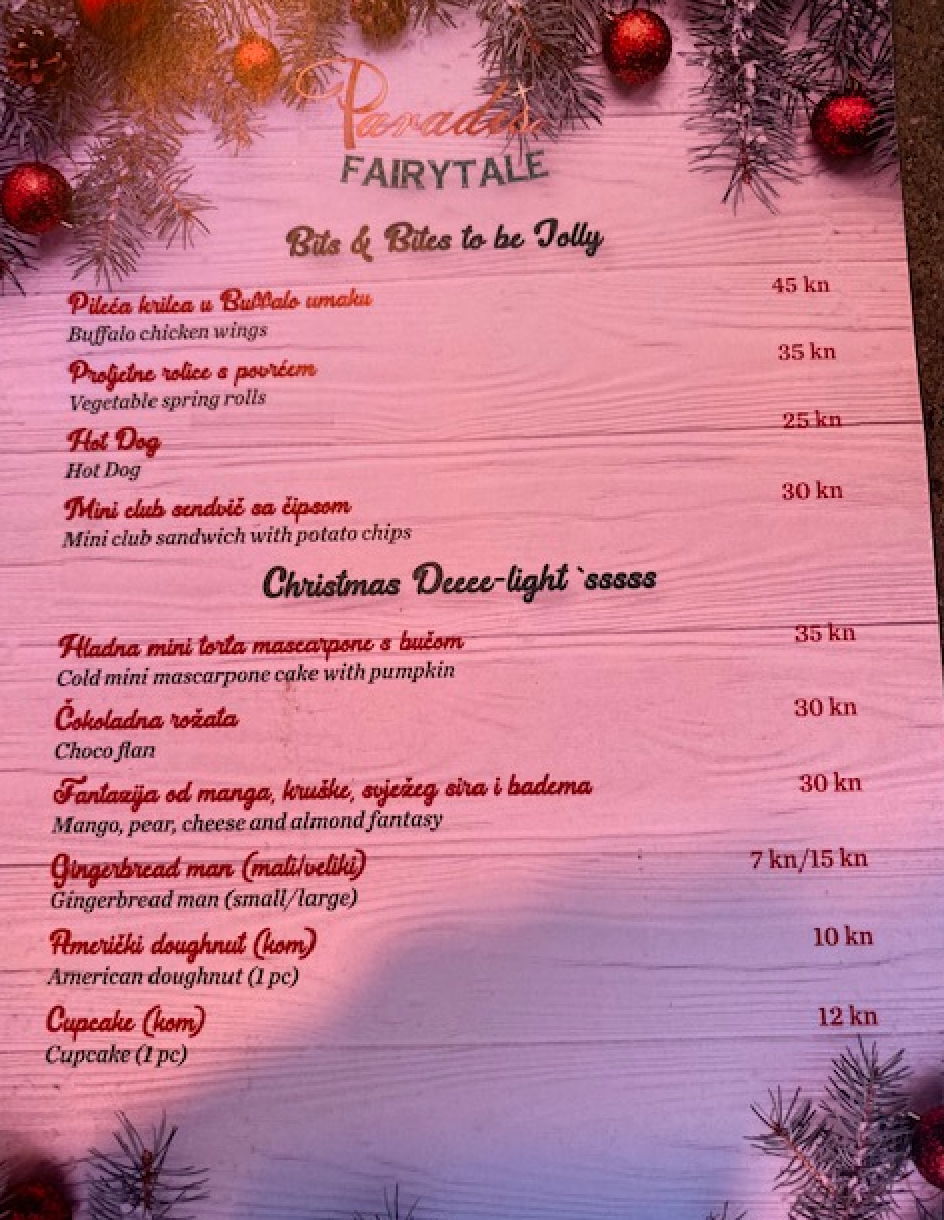
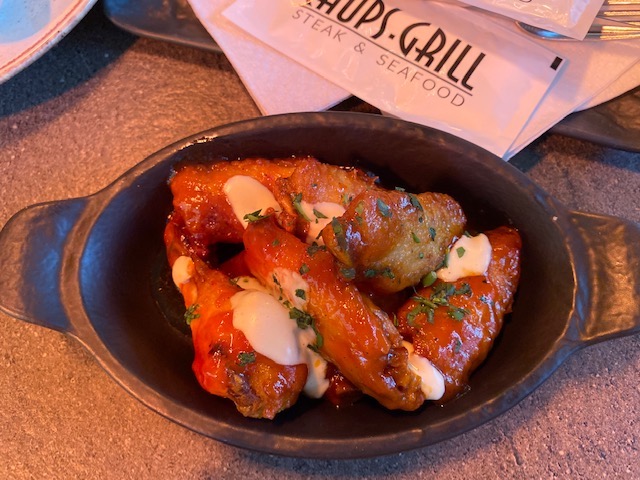
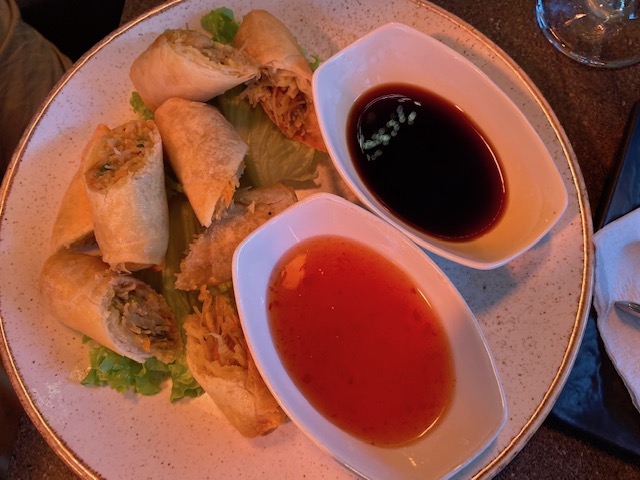
At the Advent Fairytale at Paradiso Bar on Marmontova, you can find buffalo wings, veggie spring rolls, mini club sandwiches and a plethora of desserts - from oreo hot chocolate and American donuts to gingerbread cookies and cupcakes.
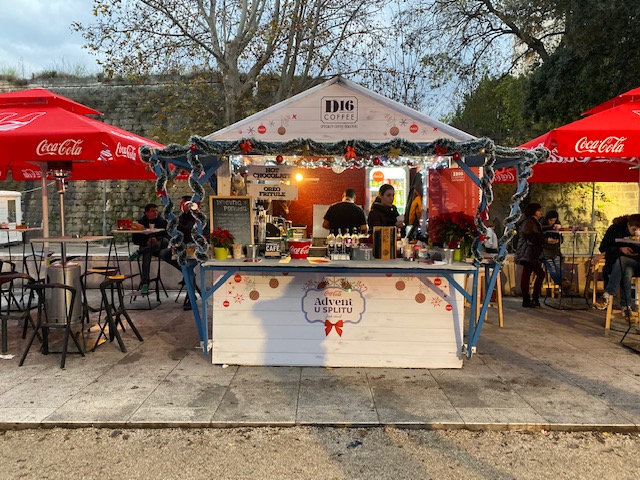
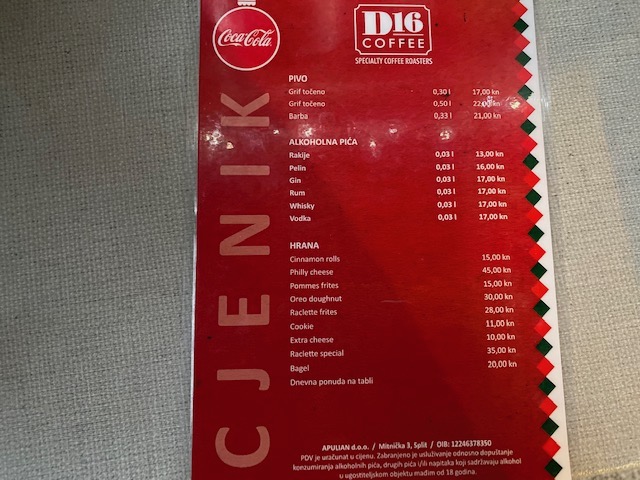
D16 at Dardin is serving up cinnamon rolls, oreo donuts and raclette fries, to name a few.
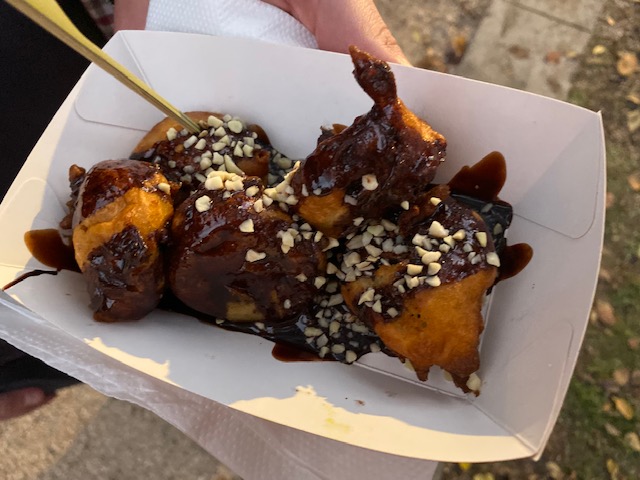
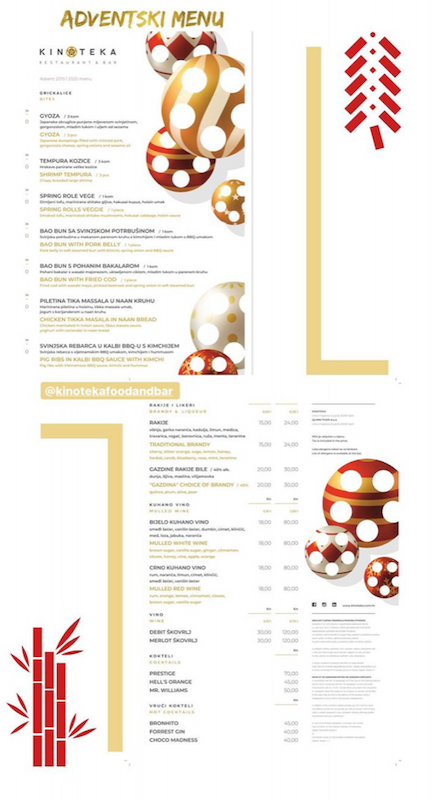
Don't miss out on the special Advent menus at famous Split restaurants Kinoteka and No Stress, where you can find exotic dishes like chicken tikka masala with naan or pork bao buns, or pig ribs and spicy sausages.

Year-round favorites Zinfandel Food & Wine Bar and Brasserie on 7 also boast exciting new winter menus, with braised beef ribs, cod and duck!
Perivoj also does not disappoint this winter, where you can find Croatian Christmas favorites all season long.
You can find the full Advent in Split program for this winter here.
To read more about lifestyle in Croatia, follow TCN's dedicated page.
HNL Round 18 Recap: Hajduk Remains in 2nd, Falls 9 Points Behind Dinamo
December 9, 2019 - The 18th round of the Croatian First League was held from December 6 to 8, 2019. A draw for Hajduk against Inter kept them in 2nd place, but pushed them to nine points behind Dinamo who sits in 1st. Rijeka is now just one point behind Hajduk in 3rd.
Dinamo v. Varazdin (1:0)
Dinamo and Varazdin opened the 18th round on Friday, December 6, 2019, at Maksimir stadium in front of 1,471 spectators.
While the first half went without goals, Dinamo narrowly won with a goal by Gavranovic in the 77th minute for 1:0.
Dinamo is currently in 1st place with 41 points, while Varazdin is in 9th place with 12 points.
Gorica v. Slaven Belupo (2:0)
Gorica and Belupo met in Velika Gorica on Saturday, December 7, 2019.
Belupo’s Goda saw a straight red card in the 9th minute, forcing the away side to play with a man down for nearly the entire game. Gorica found it easy to capitalize on their player advantage and scored both goals in the 18th and 34th minute thanks to Zwolinski and Lovric.
A double yellow for Ndiaye in the 53rd minute equaled the playing field, though neither team was able to score in the second half.
Gorica is currently in 6th place with 28 points, while Belupo is in 7th with 18.
Inter Zapresic v. Hajduk (1:1)
Inter and Hajduk met in Zagreb on Saturday, December 7, 2019, in front of 1,620 fans.
An own goal by Hajduk’s Simic in the 26th minute put Inter in the lead for 1:0, though Eduok was able to equalize for Hajduk to make the game 1:1 at the half, which was also the final score of the game.
Inter is currently in the last place with 12 points, while Hajduk is in 2nd with 32.
Osijek v. Lokomotiva (4:0)
Osijek and Lokomotiva met at City Garden Stadium on Sunday, December 8, 2019, in front of 1,533 spectators.
While the first half went without goals, Osijek made up for their absence in the net in the second half, scoring all four goals then (Maric 55’, Pilj 78’, Kleinheisler 82’, Bockaj 92’).
Lokomotiva’s Kastrati was also given his second yellow of the game in the 62nd minute
Osijek is currently in 4th place with 30 points, while Lokomotiva is in 5th with 28.
Rijeka v. Istra 1961 (2:0)
Rijeka and Istra closed out the 18th round at Rujevica on December 8, 2019,in front of 4,675 spectators.
An own goal by Galilea put Rijeka in the lead in the 15th minute, while Muric increased the lead for the home side with a goal in the 27th.
Rijeka is currently in 3rd place with 31 points, while Istra is in 8th with 12.
You can see the full HNL table here.
To read more about sport in Croatia, follow TCN’s dedicated page.
Works on Hilton Costabella Resort in Croatia Nearing Completion
As Morski writes on the 8th of December, 2019, the investment and development company JTH Costabella d.o.o. organised a tour of the construction site of the Costabella Tourist Complex to present to the media the flow of work on the interiors and exteriors of the Hilton Costabella Resort.
This six-story complex with 132 hotel rooms and 66 apartments in villas, or 280 rooms with 560 beds, and a wellness centre spanning over 4,000 square metres, an indoor and outdoor pool and beach, will provide even the most demanding guests with high quality services.
The visit was attended by Vojko Obersnel, Rijeka's mayor, Jaroslav Třešňák, General Manager of JTH Holding a.s., Borjan Brnčić, Director of JTH Costabella Ltd., Kristjan Staničić, President of the Croatian National Tourist Board (HTZ), Jose Luiz Ruiz, Hilton General Manager, who is also the Director of the Hilton Costabella Resort.
Jaroslav Třešňák said on the occasion of the media tour that the Costabella Resort project could not have been completed without excellent cooperation with the City of Rijeka and with the support of Mayor Vojko Obersnel.
Borjan Brnčić, director of JTH Costabella Ltd., said that that the works currently underway are in their third phase and the aim is to complete the glazing of all of the openings in the villas and install electricity and sewerage, and then they will begin installing tiles and wall coverings.
The completion of the stainless steel pool installation works also regards the main outdoor pool, the large indoor pool, the children's indoor pool and the large luxury hot tub. After the New Year, the installation of the saunas will begin, and the installation of all gastronomic equipment will begin in the complex's restaurants. On the beach, which is slowly taking shape, construction works have been carried out on the breakwater and on pier 1 and pier 2.
The installation of decorative stone and decorative concrete on the pier has also been completed. The construction of the beach pavilion, or the facility that will be located on the beach, should start soon.
The director of the Hilton Costabella Resort, Jose Luiz Ruiz, said that this marks what will be the very first resort from the Hilton hotel chain in Croatia.
''We're proud to be able to bring the service provided by Hilton hotels to this area. Our chain has over 6,000 hotels connected in 17 branches, as well as over 600 resort hotels located in a wide variety of carefully selected locations around the world. Considering that Rijeka will be the European Capital of Culture next year and that tourism in Rijeka is steadily increasing, tourism in this area is has a bright future ahead of it. The Hilton chain has 5 facilities in Croatia, in Dubrovnik and in Zagreb, and the Hilton Costabella Resort will surely be our leading resort hotel in Europe next year,'' Ruiz said.
The Hilton Costabella Beach Resort & Spa will be truly representative, all hotel rooms and villas have private balconies or terraces overlooking the sea. The hotel will have three restaurants: the main restaurant, the beachfront restaurant and the rooftop restaurant overlooking the sea, a lobby bar, a hotel bar and refreshments by the outdoor pool and on the beach, a wellness centre, indoor and outdoor pools, a private beach, a fitness centre, a children's playroom and lounges.
The Mayor of Rijeka, Vojko Obersnel, expressed his satisfaction with the realisation of this enormous investment, emphasising that what has been done so far has exceeded expectations.
''In the Year when Rijeka, as the European Capital of Culture, will welcome guests from all over the world, we'll also open the highest standard hotel resort. We're pleased that Mr. Třešňák, as a tourist who has been coming to Preluk for years, fell in love with our region and decided to invest in the development of our tourism,'' said the Mayor of Rijeka.
Make sure to follow our dedicated travel and business pages for much more.
Touristic Valorisation of Saint Nicholas Fortress Boasts Huge Potential
As Morski writes on the 8th of December, 2019, the final conference of the project ''The touristic valorisation of Saint Nicholas Fortress in the Saint Ante Channel'' presents the results of the reconstruction of the fortress at the entrance to Šibenik.
The results of the project were presented by Prefect Goran Pauk, Director of the ''Nature'' Public Institution of Šibenik-Knin County, Anita Babačić Ajduk, Chief Designer of the Croatian Restoration Institute, Ana Škevin Mikulandra and Renata Tomljenović, research associate at the Zagreb Institute of Tourism.
''If we're using sports vocabulary, then we've reached the semifinals. We have come a long way, but the most important matches are still ahead of us. This project created all the documentation and preconditions for obtaining the funds for the complete and final reconstruction of Saint Nicholas Fortress. The next step is to include the project in the list of strategic projects of the Ministry of Culture of the Republic of Croatia,'' pointed out the Goran Pauk.
The activities and results of the Saint Nicholas Fortress project were presented by Anita Babačić Ajduk.
''First of all, thank you to the great collaborators for the project. We've obtained top quality documents that place emphasis on protection, conservation and sustainable use. This is in line with the principles of operation of our institution and the recommendations of UNESCO. Our concept and the guiding principle in the planning and implementation of projects so far and in the future is the integral sustainable management of natural and cultural heritage. These documents are not only a tool for obtaining new cash from EU funds, but also a guarantee that at the end of the process we'll receive the originally restored fortress in its full glory,'' Ajduk stated.
The main and detailed design of the fortification and renovation was presented by Ana Škevin Mikulandra, Chief Designer of the Croatian Restoration Institute:
''The project provided a solution for the rehabilitation of the dilapidated and damaged building structures of the fort. The conservation and restoration works, the construction rehabilitation and the furnishing are included. The design approach is based on conservation principles with the aim of preserving its monumental integrity and the value, with reversible contemporary interventions, all in order to contribute to the creation of new value and to position the fortress in accordance with global importance.
The Saint Nicholas Fortress' management plan was presented by a research associate of the Institute of Tourism, Renata Tomljenović:
''The plan is an instrument for the sustainable management of the fort and its contact zone. This includes protection, sustainable use, management and visitation, and funding, education and collaboration. The goal is to make the fortress world renowned for its impressive architecture in a unique natural environment, but above all to preserve its authenticity, manage it sustainably, for the benefit of citizens, visitors and future generations,'' she stated.
The project is co-financed by the European Union from the European Regional Development Fund under the Competitiveness and Cohesion Operational Program.
Make sure to follow our dedicated lifestyle page for much more.
EU Statistics: Croatia Has Some of Oldest Planes in European Union
Every other aircraft in Croatia back in 2017 was twenty years old or even older. The latest EU statistics which show the age of Croatia's planes are of concern.
As Adriano Milovan/Novac writes on the 8th of December, 2019, according to these EU statistics, out of the total of 30 aircraft that made up the Croatian aviation fleet for commercial passenger traffic in 2017, 15, or half, were 20 or more years old. The Croatian aviation fleet also had no aircraft under five years old, EU statistics show.
Croatia is among the EU member states with the oldest aviation fleet. Other member states with a larger share of planes older than 20 in operation in 2017 were Sweden, with 55 percent, and Lithuania with 52 percent. Among the EU member states, only Croatia and Cyprus had no aircraft under five years of age.
The obsolescence of the Croatian aviation fleet is also indicated by the EU statistics according to which eight aircraft, or more than a quarter of the total number, were 15 to 19 years old. In 2017, Croatia only had one plane between 10 and 14 years old, while six of them, according to Eurostat, were as young or five to nine years old.
In the EU as a whole in 2017, there were a total of 6,711 aircraft engaged in commercial passenger transport. About one fifth of them, or 21 percent, were under five years of age, and more than a quarter or 27 percent were between five and nine years old, while nearly one fifth or 19 percent were between 10 and 14 years old. Just over a third of EU aircraft, or 34 percent, in 2017 were over 15 years of age, of which about half were aged 20 or over.
The most modern aviation fleet in the EU, according to Eurostat data, is owned by Finland, which did not have aircraft aged 20 or more in operation in 2017. The aircraft fleets of Luxembourg, the Czech Republic, Ireland, Austria and the Netherlands also have a very small share of old aircraft.
The largest number of commercial passenger planes in the EU in 2017 was in the United Kingdom, with 1,312, followed by Germany, with 1,100 planes, and France, with 571 planes, while Cyprus has the smallest number of commercial passenger aircraft.
Make sure to follow our dedicated lifestyle page for more.

Inna Bergman on the Origins and Rise of Israel as a Medical Tourism Destination
December 8, 2019 - TCN caught up with Inna Bergman, CEO and founder of RTMC Medical, at IMTJ 2019 in Berlin to learn the fascinating history of the Israeli medical tourism industry.
TCN was in Berlin earlier this week at the medical tourism 'Oscars', IMTJ 2019, where Bagatin Clinic did Croatia proud by winning International Cosmetic Surgery Clinic of the Year. But it was also a chance to mix and mingle with the movers and shakers of medical tourism in other countries, including Israel. I am very grateful to Inna Bergman, icon of the Israeli medical tourism industry, for taking time in her busy schedule for an hour-long interview with TCN on the origins and growth of the medical tourism industry in Israel - it is a fascinating story.
Tell us firstly about the origins of the Israeli medical tourism story. When did it start?
Although medical tourism has only been officially recognised as an industry with the appropriate regulation in the last decade or so, it has been an established thing for much longer. Its origins date back to the 1960s, when private Arab planes from the Gulf states and other neighbouring countries would touch down at Ben Gurion Airport for treatment. In such cases, there were no issues with paperwork or visas. It was a practical arrangement. This continued up until the Yom Kippur war in 1973. The main medical reasons were oncology and specific surgeries.
Medical tourism from Arab countries began once more in the early 1980s with peace agreements with Jordan and Egypt, whose patients travelled to Israel for treatment. And then, in the early 1990s, came the biggest wave of patients - from the former Soviet Union, a market which today still accounts for about 70% of Israel's medical tourism industry.
The collapse of the Soviet Union allowed former Soviet subjects to travel, as well as to travel for medical treatment. Israel became a very popular destination at a time when many Soviet Jews were also emigrating to Israel. In just a few years, some 1.3 million Soviet Jews emigrated, and there was such a population shift in Israel that 25% of the country's citizens now spoke Russian, Ukranian and other ex-Soviet languages.
There were Russian supermarkets, restaurants and other facilities, and many Russians who needed treatment had Jewish friends who had moved to Israel. This meant that in addition to the excellent reputation of Israeli doctors, there was something familiar about coming to Israel - it was more like Russia in the Sun. Israel had a strong reputation for medical excellence, for new medical protocols and technology, but also for its mobile doctors who went abroad for fellowships to Europe and the USA. This helped to develop a network and image of Israel as an exceptional medical destination. The numbers grew rapidly, with the main reasons for travel related to oncology, cardiology, radiology, rehabilitation, and diabetes.
It was a crazy time, for it all just happened, and there was no system in place to deal with this influx. There was no Internet, mobile phones, credit cards, and patients struggled with basic things such as transferring money from Russia. It really was the Dark Ages, and few people remember it today, but we did what we had to do. I was a nurse in a big government organisation with an MBA in administration in hospital and case management. We simply learned as we went along, from helping patients doing the laundry to being there through the whole procedure. The term 'medical tourism' was still not known - they were simply patients who needed our help.
Other countries joined the market, for example Germany in 1995, and that ate into our market share, but the lack of visa requirement has been a big selling point for Russia. Cyprus, for example, used to be a big destination for Russians until the EU visa requirement came in.
And our international patients found a country very different to the one many envisaged. They came expecting to see camels in the desert and found instead a highly sophisticated Israel. The peak years of medical tourism in Israel were 2012 - 2015 before the Russian economy declined. At that point, about 40,000 patents were coming, but not for a few days, but for weeks, months, even a year in the case of a child oncology patient. When they left, many of them had become part-Israeli.
The market is still dominated by the ex-Soviet countries (70%), but new markets are now evolving, particularly in China and Africa - countries such as Ivory Coast and Nigeria. Where previously, richer African patients might have gone to Germany or the former colonial capitals of London or Paris, more and more are looking to Israel. Israel has a reputation as a hi-tech destination, one which is being fostered around the world by Israeli tech companies being very active internationally. it is opening new markets for Israel for medical tourism.
What are the main types of treatment patients travel to Israel for?
About half of our patients come for oncology. Some patients sadly leave things too late. If they had come a little earlier, they would have much better results, in some cases a full recovery. About 30% come for specific surgeries - spine and orthopedic trauma, while 20% come for general diagnostics and second opinions. People are losing faith in the opinions of local doctors and often come to us for a full check-up.
Technology is changing things, and there is a new niche in the industry - second opinion consultations online. Technology can now make MRI and CT scans available anywhere in the world, and Israeli doctors now deal with many patients from Europe, China and the USA for advice and a second opinion. The advance of technology allows for accurate recommendations from our doctors.
It sounds that the medical tourism industry in Israel is a lot more structured these days after that chaotic start. Tell us a little more about that.
For a long time, nobody collected statistics or even saw the potential of medical tourism or that it was anything more than a sporadic thing. the ministry started to get involved in the mid-1990s, and only in the last ten years has it formalised things. All the medical tourism goes through hospitals and now it is highly regulated. Investment is happening from the ministries of tourism, health and economy, as well as insurance and facilitator companies.
Since January 2018, all facilitators have been highly regulated, in addition to the hospitals. They must register with the Ministry of Health and adhere to a strict code fo ethics. As a result, many smaller companies have disappeared from the market. You cannot do medical tourism effectively without certification and standardisation. There was a high-profile case a few years ago of a facilitator who took money from a Russian patient, did not meet him at the airport and just disappeared. Such things can destroy a reputation, and they are no longer possible due to the high regulation. Hospitals are not free to do what they want with medical tourism, they can only do what the Ministry of Health allows. The ministry regulates, for example, how patients are received, invitations, the treatment plan, and who will meet and treat the patient.
Is there any negative backlash that foreign patients are taking Israeli hospital beds?
Yes, we have had these situations, but mostly this is a matter of politics rather than an actual problem. If you look at the real numbers in an intelligent manner, you will understand that this is not an issue. A mid-size hospital, for example, will see 150,000 Isreali patients a year. The same hospital will see about 1,500 international patients each year, about half of which are not hospitalised - they come for consultations, MRI scans, or second opinions.
I was surprised that you did not mention dental and IVF treatment in your medical tourism breakdown. I would have thought Israel would be strong and competitive in both.
Israel is very strong in dentistry, but it is mostly conducted through private practice. Due to the way that our medical tourism is structured, official medical tourism only counts if it is through hospitals, not in private practice. And so, unlike most countries in the industry, we do not count dental tourism as official medical tourism. Dental tourism from Russia in particular used to be more significant than now due to their own emerging industry, higher prices in Israel, and increased competition elsewhere.
Regarding IVF, Israel is VERY strong in this department. Indeed, in May 2012, the New York Times declared Israel the IVF capital of the world. One thing you should know is that IVF treatment is free and unlimited for Israeli citizens, covered by insurance. We had one case recently of a 45-year-old Israeli woman who gave birth to twins - a boy and a girl - after 20 unsuccessful cycles. Family and children are very important to us. Hence we have the highest number of IVF treatments in the world, some 5,000 cycles per 1 million inhabitants, a crazy number. Only now are we talking about limiting the age of the woman.
Our IVF treatments are available to international patients. Interestingly, we have a large sperm bank, and Chinese patients in particular are interested in Jewish sperm donation, as they value the strong genes which result. The government also permits highly regulated imports of egg donations, so there are many possibilities. So far this year, we have had six live Chinese babies born.
Israeli doctors are at the forefront of progress and innovations in medicine, in medical technology and pharma. Israeli doctors actively participate in various Israeli and International multicentre studies, and the number of Biotech companies in Israel is growing constantly.
Tell us about Dead Sea treatments - is this a gimmick, and is it part of your official medical tourism?
No, it is not a gimmick, and it is also not part of our official medical tourism, as it is more related to spa treatments. But we have excellent results for skin treatments, and many patients have been coming since the 1960s, often twice a year in May and November when it is not so hot. They take regular mud and salty water treatments over a period of 3-5 weeks, and the results are excellent. As this is not done via hospitals typically, it is classified more as regular tourism.
And finally - and perhaps I should have started with this - who is the incredible Inna Bergman, and what is your place in the Israeli medical tourism story?
I was born in Moscow and moved to Israel as a child just after the Yom Kippur war in 1974. I am a nurse by training and worked most of my professional life in intensive care, first in paediatrics, then in cardiac. I got a Masters degree in Boston in public administration in hospitals and case management. I am a mother of two and grandmother of five. When the international patients came in the 90s, I was managing the whole process of their stay, from arranging the doctors and consultations to their travel arrangements and laundry. I was a public servant until 2009 when I retired and opened my own clinic with my beliefs and philosophies on how all this should work.
My department was the first official medical tourism department in Israel. Nobody knew how to do things or even what to do. Back in the mid-1990s, I wrote the first regulation sheets. Now everyone works with these, but back then there was nothing. I put in a recommendation to the Ministry of Health on how to regulate the industry, and the need for accreditation for facilitators. Years went by, and I thought that my work was lost in some pile of papers on an official's desk, but my recommendations were finally accepted and put in motion, and now we have a State law for medical tourism. I am very happy that this exciting market has gone from chaos to regulation.
Inna Bergman is the founder and CEO of RTMC Medical, and you can connect with her via the official website.
For the latest from the Croatian medical tourism industry, follow the dedicated TCN section.
Rosemary and Goat Cheese in Spotlight for Second Gastroadvent Sunday at Chops Grill
December 8, 2019 - The second Gastroadvent Sunday was held on December 8, 2019, at the finest steakhouse in Split - Chops Grill. This time, rosemary, goat cheese, wine and olive oil from Šolta, and radio journalists were in the Advent spotlight.
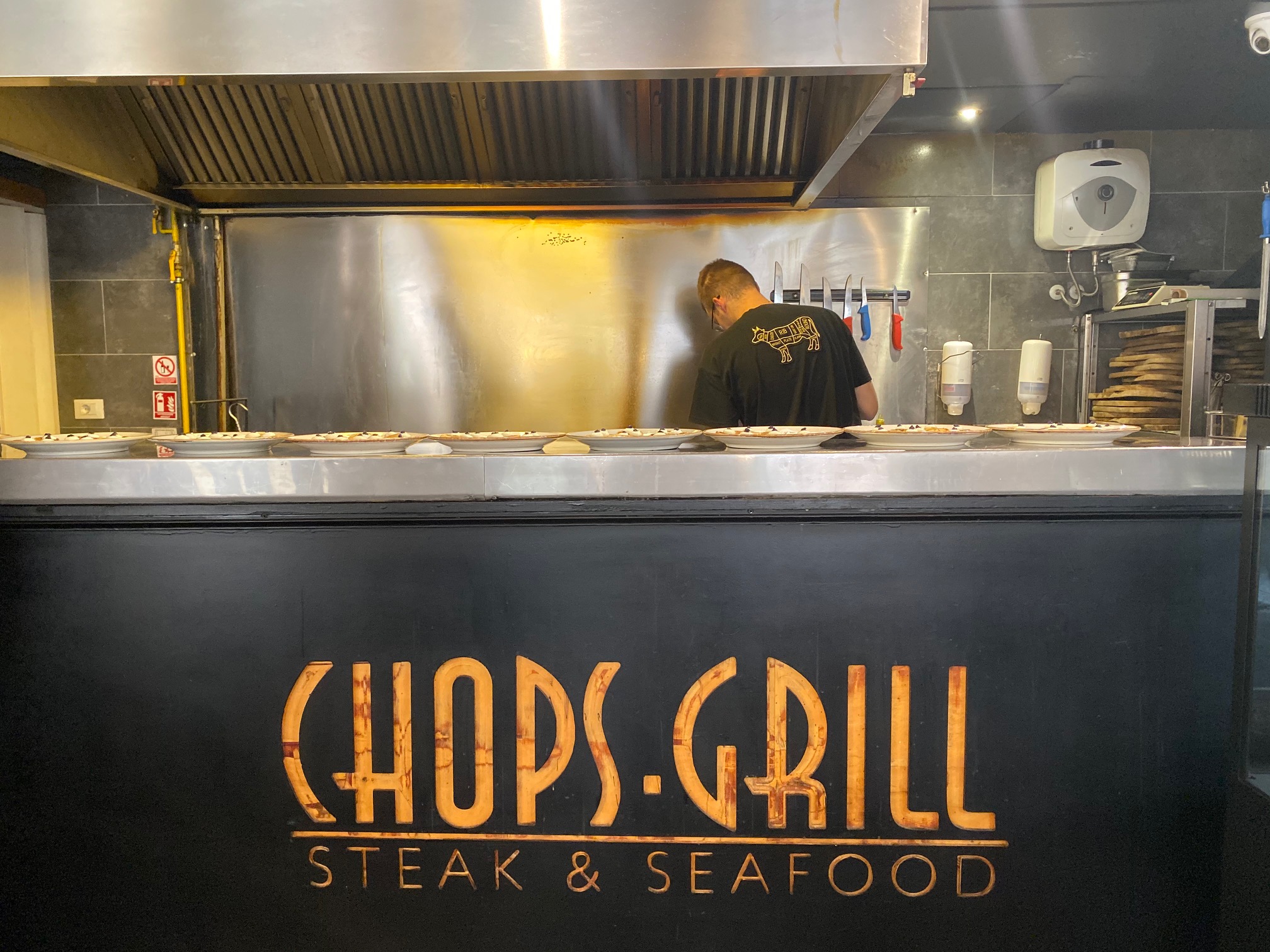
Gastroadvent is a unique manifestation that fuses nutrition, gastronomy, and tourism while highlighting some of Split’s favorite restaurants on the less busy days of December. For the past ten years, the event has promoted the Mediterranean diet and has left a mark through its work on Mediterranean ingredients.
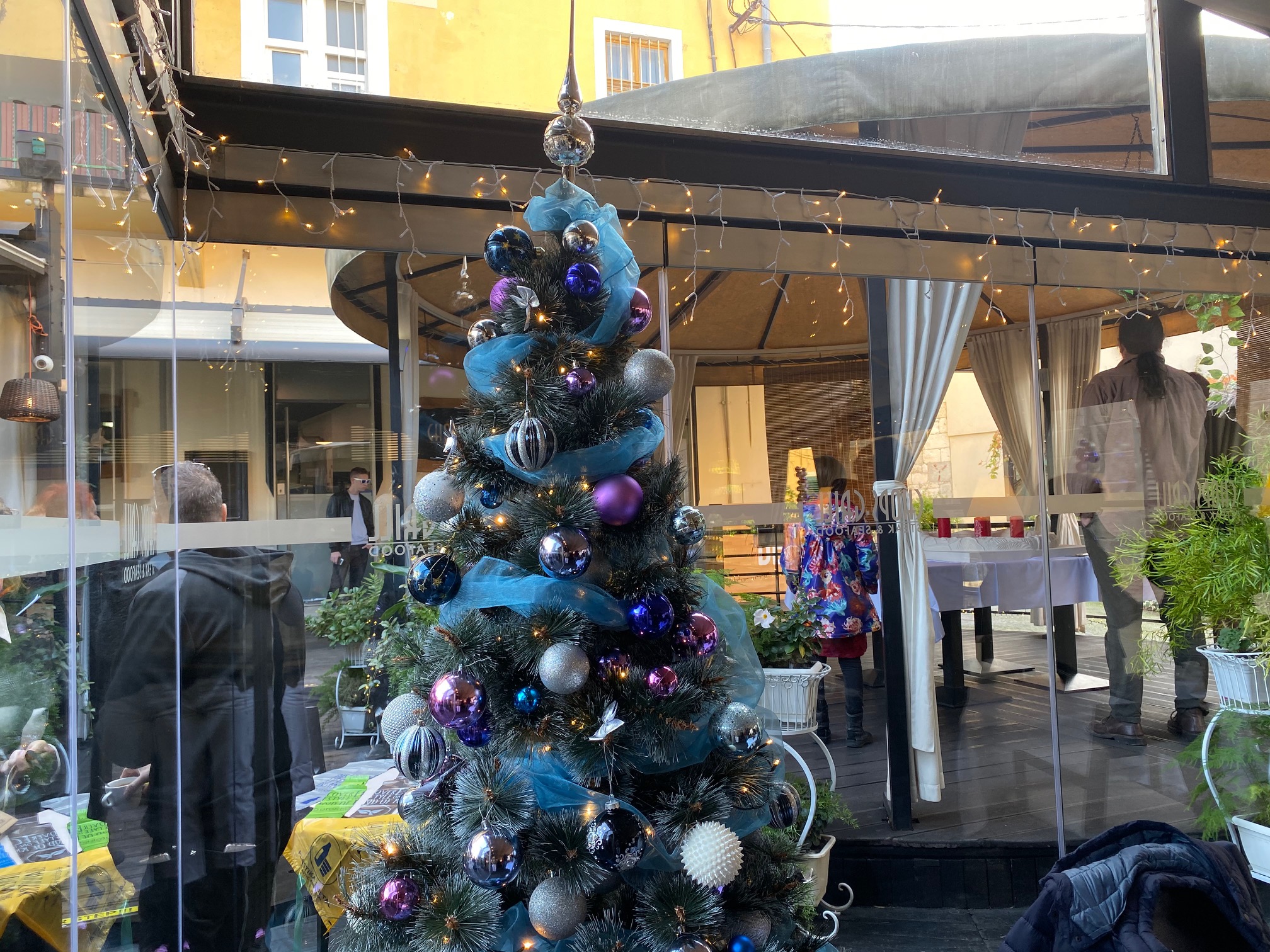
Thus, every Sunday of December, valuable hosts, patrons, partners and journalists gather to honor not only the light they bring to Split, but also to recognize the integral ingredients found in the Mediterranean region.
And this year, the central ingredient of Gastroadvent is invaluable to the city of Split.
Namely, rosemary is a fundamental part of the Mediterranean diet. It is originally from Europe and has been used since ancient times when students decorated their heads with rosemary wreaths, thinking that it has a beneficial effect on memory. Rosemary leaves and the essential oil obtained by distilling leaves are officially medicinal according to European regulations. Rosemary leaf contains natural phenolic compounds and is therefore considered medicine and a spice. By its antioxidant properties, it is the most potent food. It grows on rocky soil, withstands salt and high temperatures, and its habitat is carbonate rocks.
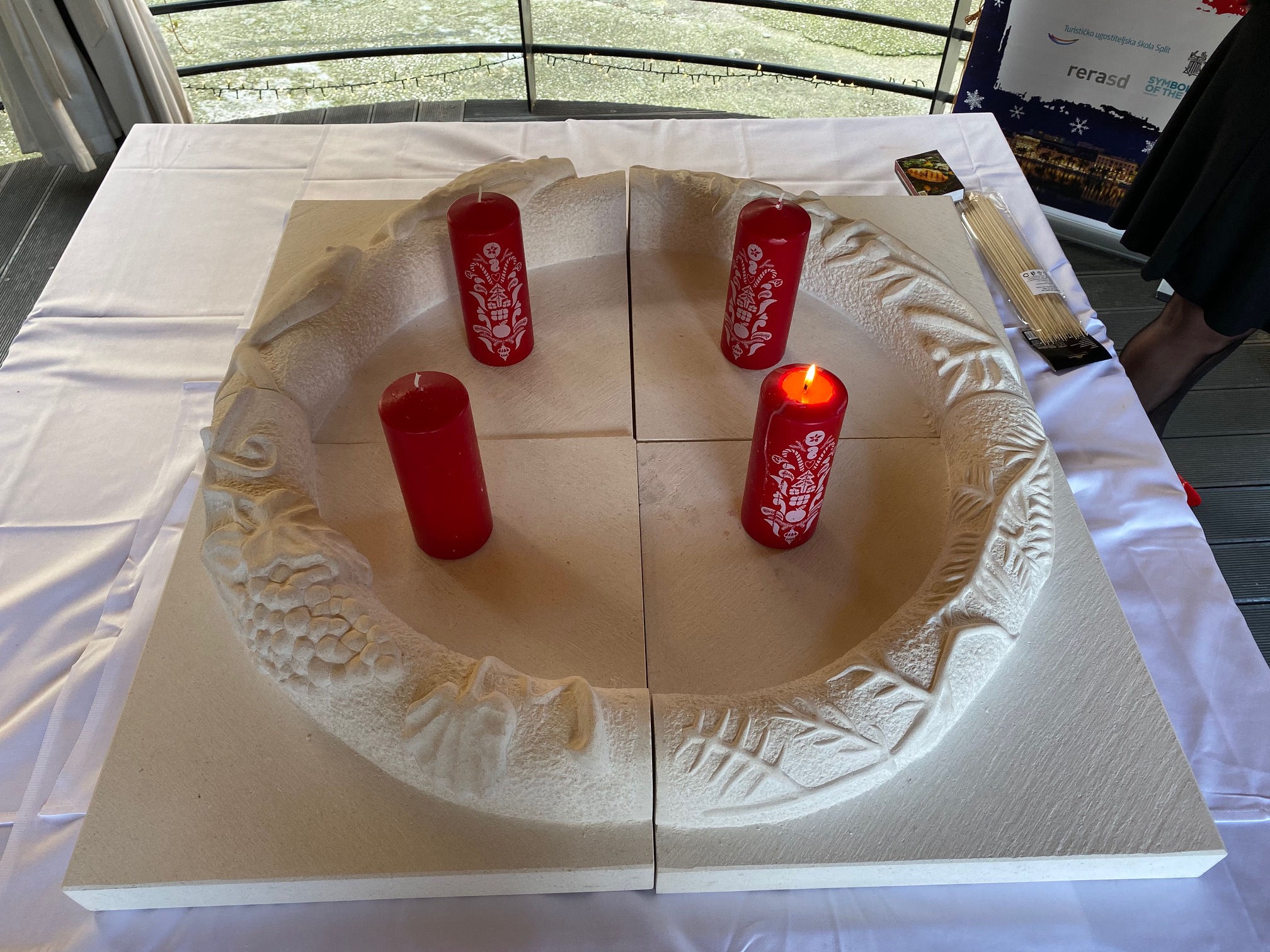
Rosemary could not exist without its home, stone. The same stone that Diocletian's Palace is made of, which was protected 40 years ago by UNESCO. This year's Gastroadvent wreath is made of stone and was crafted by the students of the Stonemasonry School in Pucisca, Brac, which boasts 120 years of existence.
Furthermore, goat cheese is higher in nutrients than all other cheeses. Last year, archaeological excavations near Šibenik revealed that Dalmatia is the home of goat cheese. Namely, according to the American scientists who analyzed and found the DNA of fats in vessels during the excavation, goat cheese was produced in Dalmatia some 7,200 years ago!
Thus, on Sunday, the famed chef at Chops Grill crafted a unique menu illuminating these indispensable ingredients of the Mediterranean.
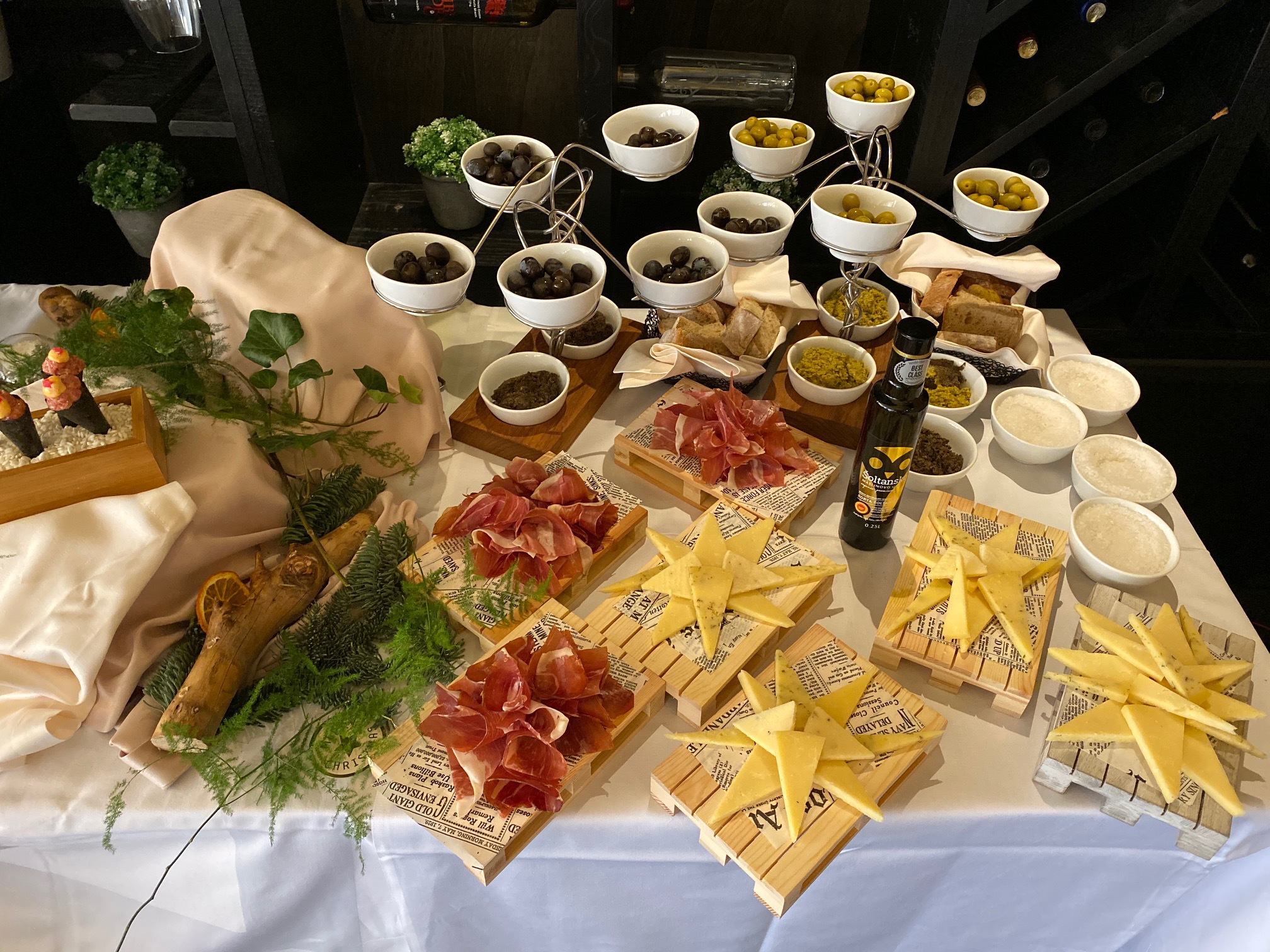
For starters, guests enjoyed lollipops of dates and prunes, with crumbles of hazelnut, pistachios and rosemary, Christmas eggs filled with a foam of potatoes and an aroma of Adriatic pine, truffle and rosemary sabayon, creme fraiche and caviar. The savory ‘Oreo’ was made of coffee and dehydrated black olives stuffed with foie gras cream, parmesan, and goat cheese, while the nori algae cone was filled with quinoa in rosemary oil, tuna pancetta tartar, and caviar of trout and chives.
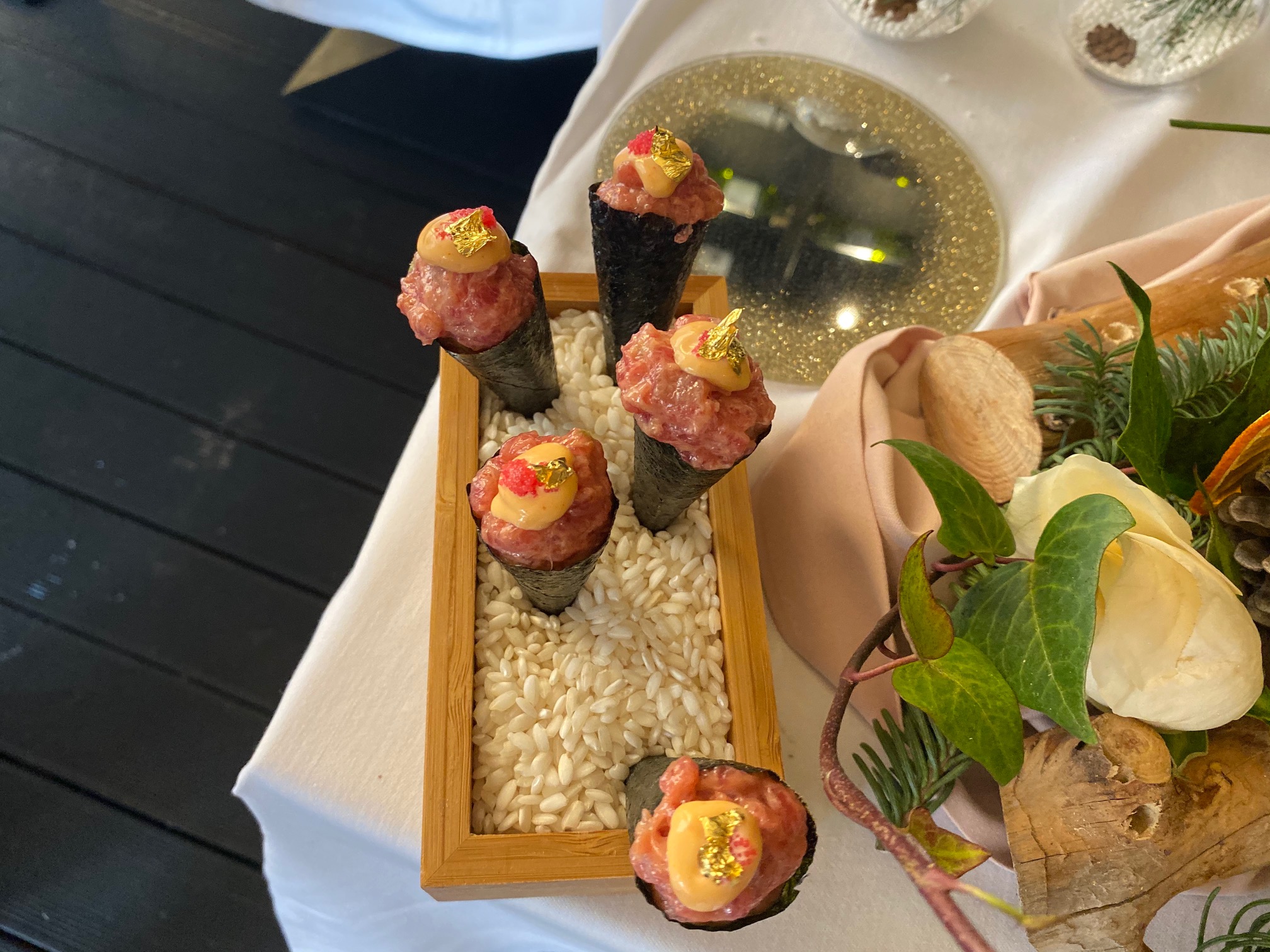
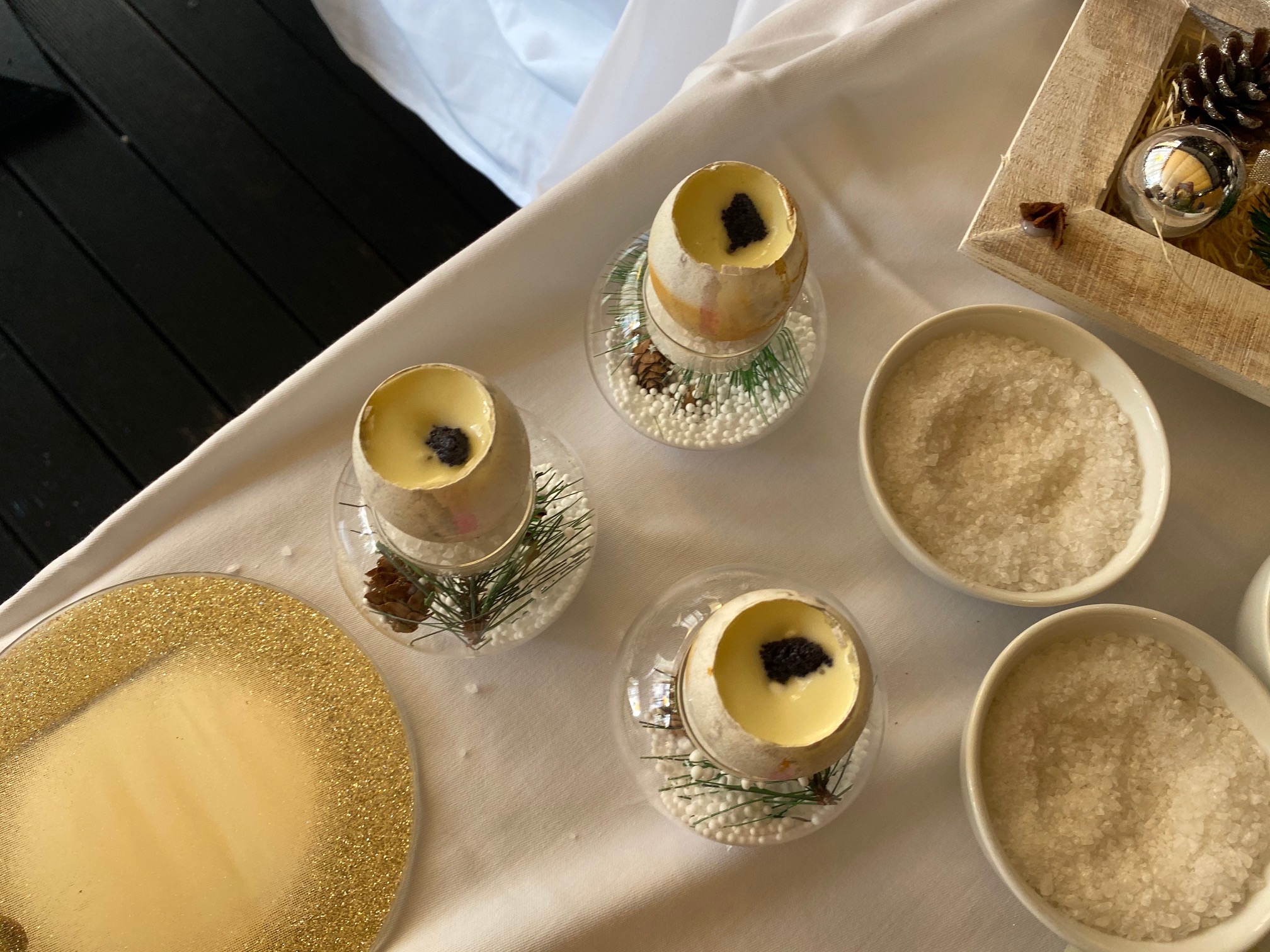
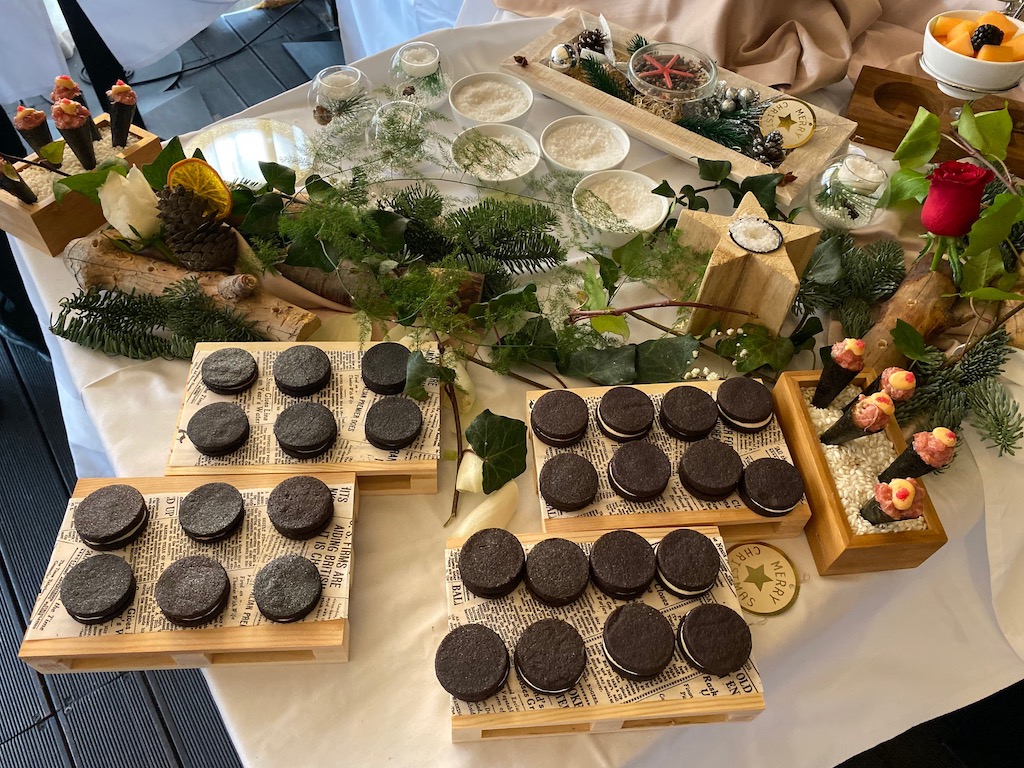
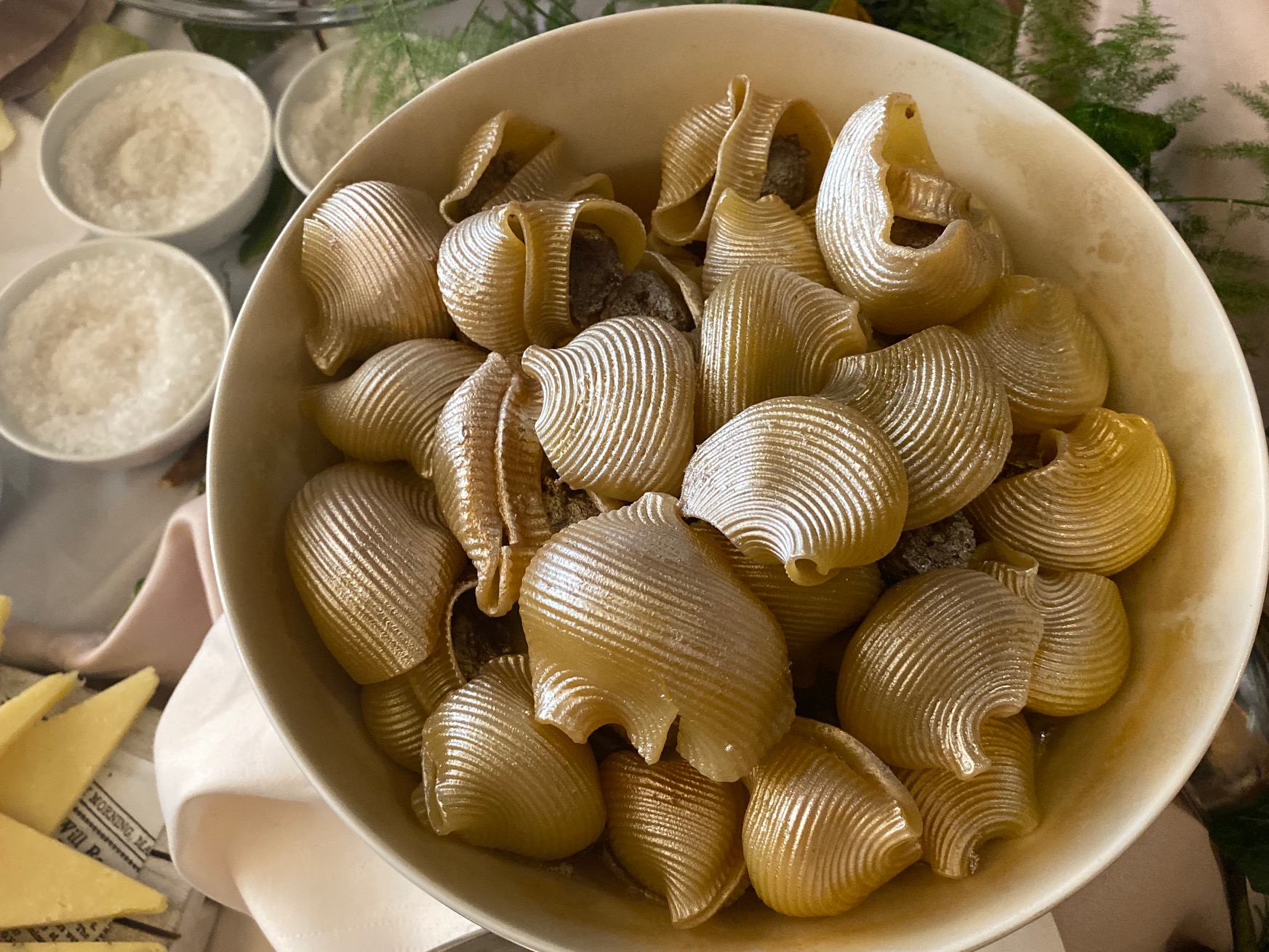
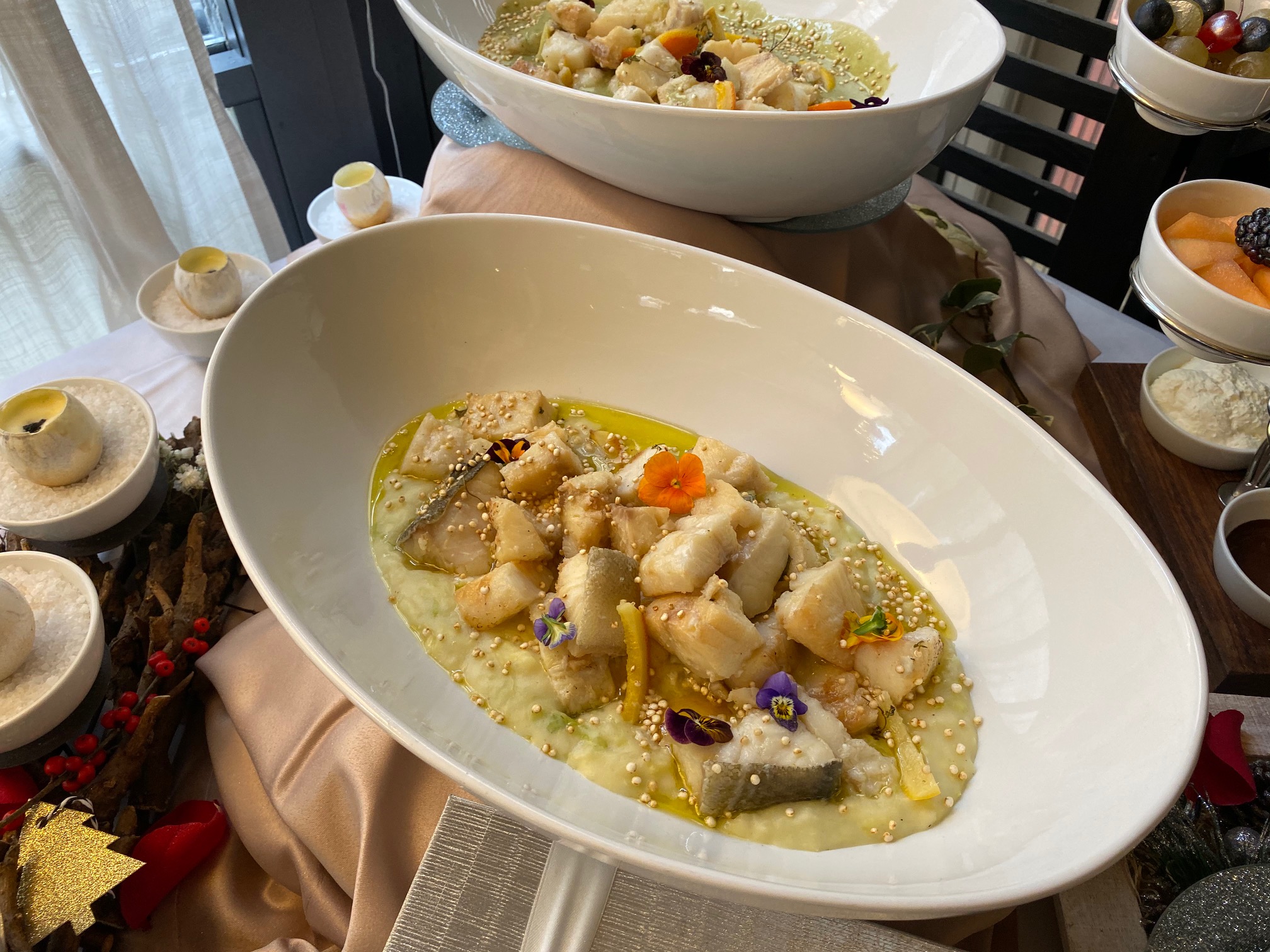
The pasta galettes featured a spicy tomato sauce and Ichiban dashi from black Slavonian pig, while the cod confit was mixed with Mediterranean herbs, kale, potatoes, seaweed and plankton pil-pil. The warm beef wellington was served with potato and rosemary and Perigord sauce of black truffle.
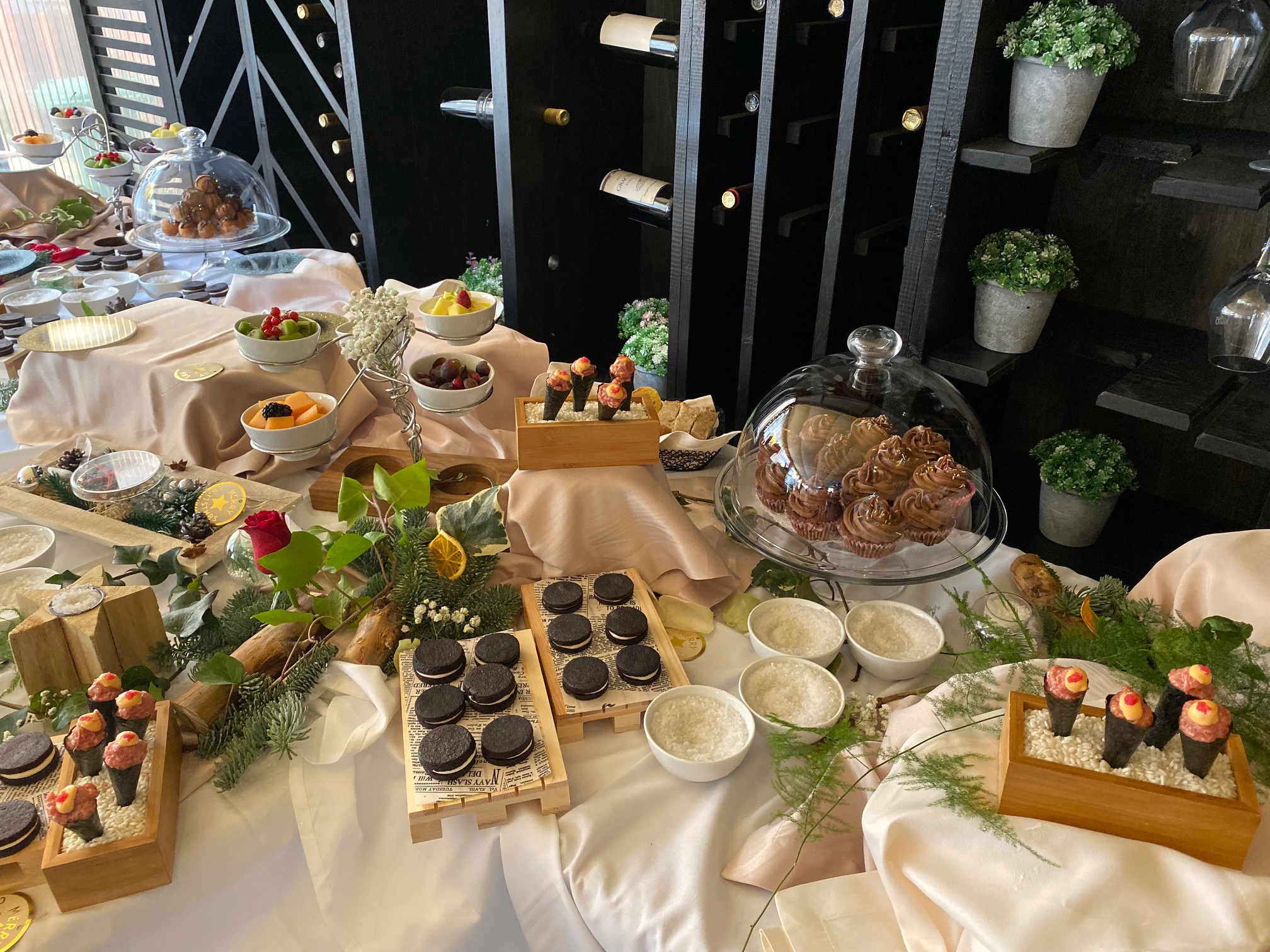
For the sweet moment, in the end, guests could choose from chocolate cupcakes to doughnuts, fresh fruit, goat cheese, white chocolate, white truffle and rosemary honey, and Christmas gingerbread.
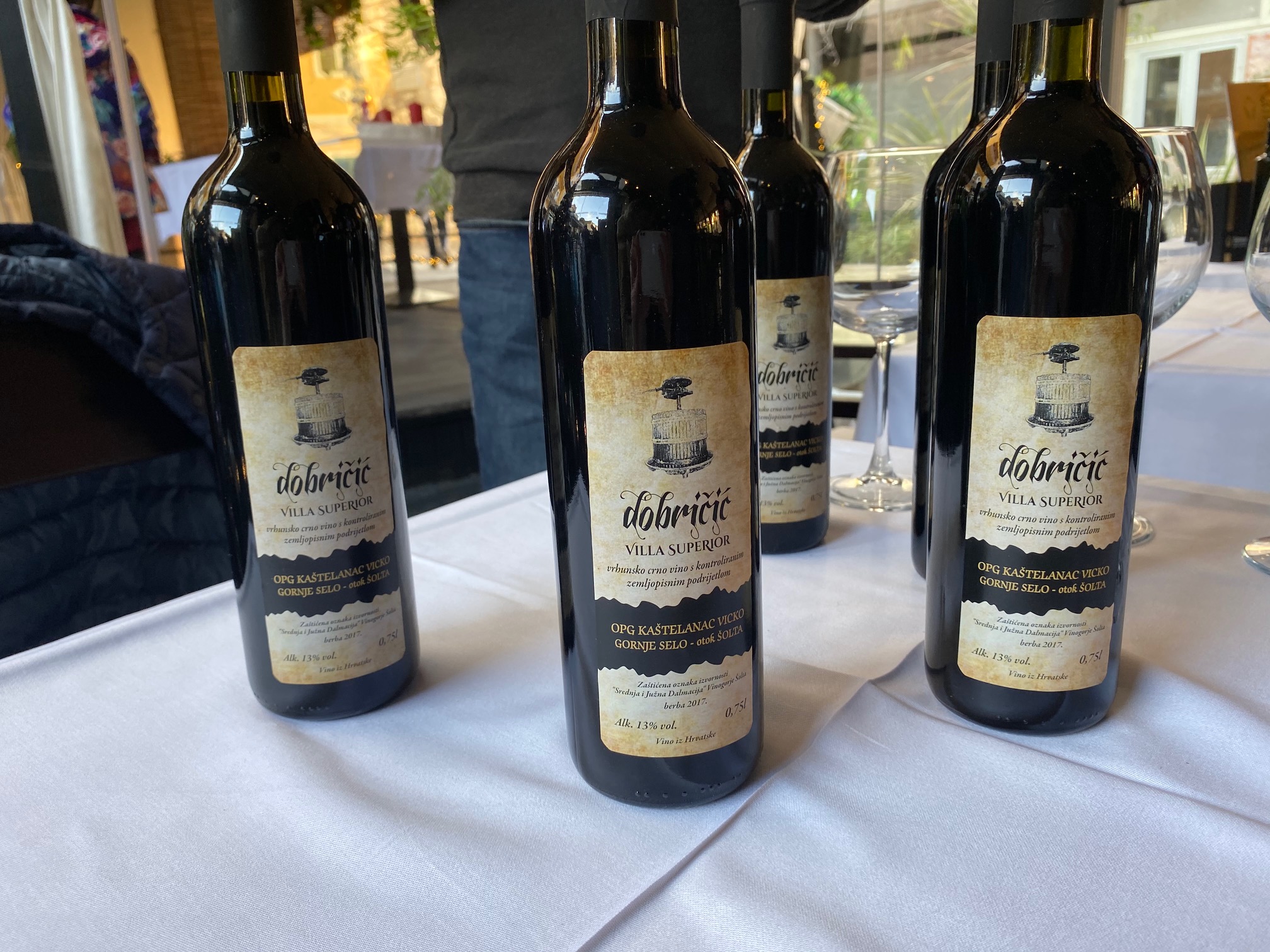
All bites were paired with the Dobričič Villa Superior wine from the island of Šolta, made from grapes of autochthonous Dobričić variety, and characterized by a dark and opaque color. It boasted an intense cherry flavor with a touch of blueberry jam, while the smell could be attributed to dried fruits such as dried figs, nuts or even dried tobacco leaves. The vineyard is located on the rocky southern part of the island and is surrounded by huge drywalls. The vineyard was planted in the early 1960s and is a monument to the time when the production of wine on Šolta was an important factor in the survival of its inhabitants. This vineyard witnessed the decline and near disappearance of this valuable variety, as well as its revitalization. Its longevity definitely affects the rich structure and robustness of this wine.
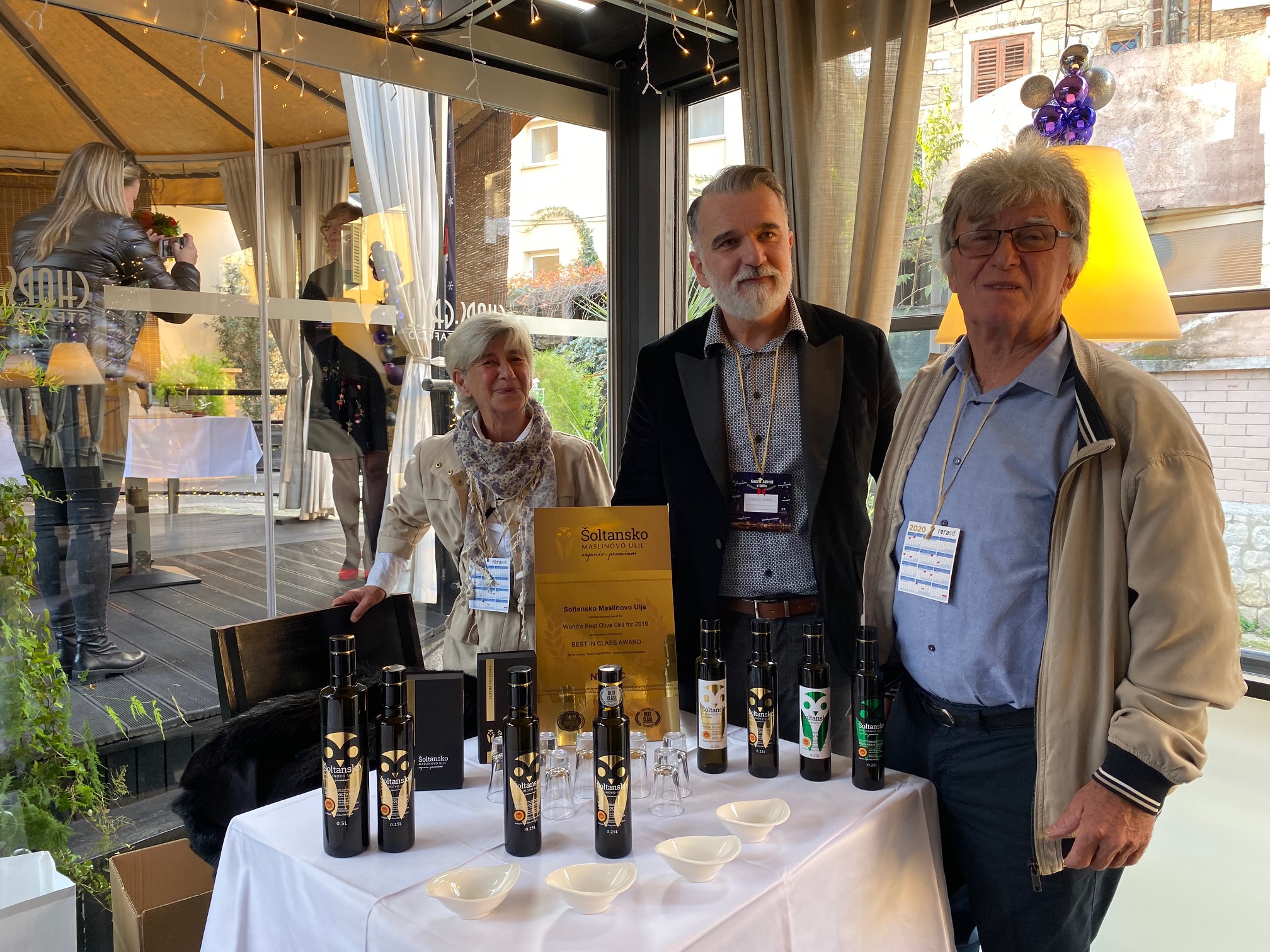
You might also recognize the Šolta Olive Oil on offer after it was crowned "The Best in Class" as the best oil in the class of environmentally friendly monosortic oil of medium intensity in the world at the New York International Olive Oil Competition back in May.
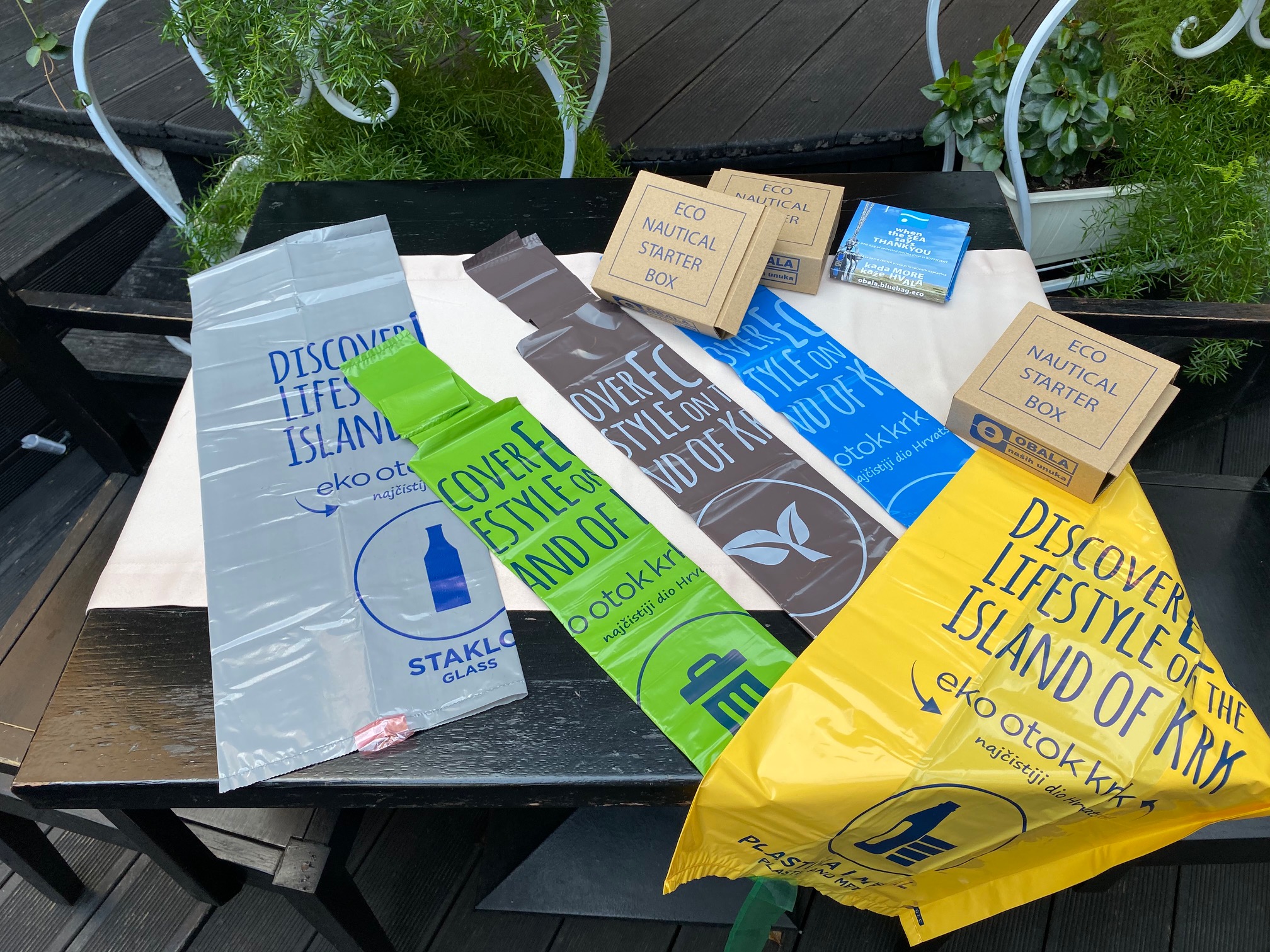
This edition of Gastroadvent even had an environmental touch, as eco nautical starter boxes were displayed to encourage keeping the Adriatic clean.
Gastroadvent is held every Sunday of Advent at a different location in Split. Total Split will be reporting all December long.
To read more about lifestyle in Croatia, follow TCN’s dedicated page.
Presidential Candidate Škoro Says There'll Be No Runoff
ZAGREB, December 8, 2019 - Presidential candidate Miroslav Škoro said on Sunday he would lead a movement that would end fear across the country and that Croatia would celebrate December 22, the date of the presidential election, in unity as there would be no runoff.
Speaking at a rally in Zagreb under the slogan "Now or never!", Škoro said that on December 22 Croatia "will vote 'for' after a long time," which would be the first step in "giving the state back to the people, and that there was no force or party dictatorship that would take the celebration away from them.
Škoro said he would win because the people was behind him and proud and strong war veterans were with him, as well as thanks to the unity of Croats at home and in the diaspora, and with the same heart with which independent Croatia was created.
He said the HDZ party of 30 years ago, when the Croatian state was being created, had nothing in common with the current HDZ. Prime Minister and HDZ Andrej Plenković and President Kolinda Grabar-Kitarović do not have the strength required for change but they dare to say that Škoro has betrayed the HDZ, he added.
"No, no and no," he said, adding that Plenković had betrayed the HDZ and its founder Franjo Tuđman. He had a message for HDZ voters, saying they "must know that a vote for Grabar-Kitarović is also a vote for Plenković."
Škoro went on to say that he wanted to be the president who would unite the suffering but proud and industrious people who had experienced many disappointments over the past 20 years. "I'll be independent of any political, business or private interest. No one will be able to call and tell me what to do. I will be accountable only to the people and if the people give me a thumbs down, I will go of my own accord, you won't have to push me away."
Škoro said he would score a landslide victory because "they have stolen the state from the people." He said it was a sad country whose president was talking about cakes and singing at every opportunity, whose prime minister, because of his ego, would not receive striking teachers for a month, and where one could become parliament speaker with only 808 votes won.
Škoro said he would "restore dignity" to the office of president.
Presenting his platform, he said that in order to carry out the necessary changes, he would ask for greater presidential powers, make it possible to value knowledge, excellence and ability instead of party affiliation, and that the first referendum he would call would be on the Distraint Act so that 250,000 people could have a second chance.
Škoro said he would ask the people's an opinion on something at a referendum and that if the referendum failed, he would resign because he did would not be a president without the people's support.
He said that "after Grabar-Kitarović's defeat in the presidential election," he expected the government to immediately step down, parliament to dissolve, and a new parliamentary election.
The ruling HDZ and the opposition SDP are preparing a big coalition, which would be "the last nail in the coffin of parliamentary democracy," he said, adding that winning the presidential election was crucial for preventing them to "end us all."
He supported increasing the military budget and stepping up the modernisation of the army, saying that the army should be deployed along the border if necessary. He will also demand more EU money for the protection of the Croatian, therefore the European border.
Škoro said Bosnia and Herzegovina would be the first country he would visit as president, and that Serbia must not join the EU before shedding light on missing Croatian defenders and civilians, returning Croatia's cultural artefacts and archives, admitting to the military aggression against Croatia, and suffering the political and other consequences of that aggression, including the payment of reparations to former Serb concentration camp inmates.
More news about Miroslav Škoro can be found in the Politics section.
EPIC 2020 in Dubrovnik: Why Disney, Cleveland & Mayo Clinics are Coming to Croatia
December 8, 2019 - EPIC 2020, the first European Patient Experience and Innovation Conference will take place in Dubrovnik in March, with an A-list lineup of speakers.
"A European patient experience conference in Dubrovnik," said the President of the German Wellness Association as we chatted at the Croatian stand at this week's IMTJ 2019 conference in Berlin. "That looks really cool. I will have to come."
One of things I was most curious about on this week's trip to Berlin was how Croatia's medical tourism stars were perceived on the world stage. Having followed the industry from within Croatia for two years, this was my first glimpse seeing them with their peers from Korea, Germany, and Malaysia.
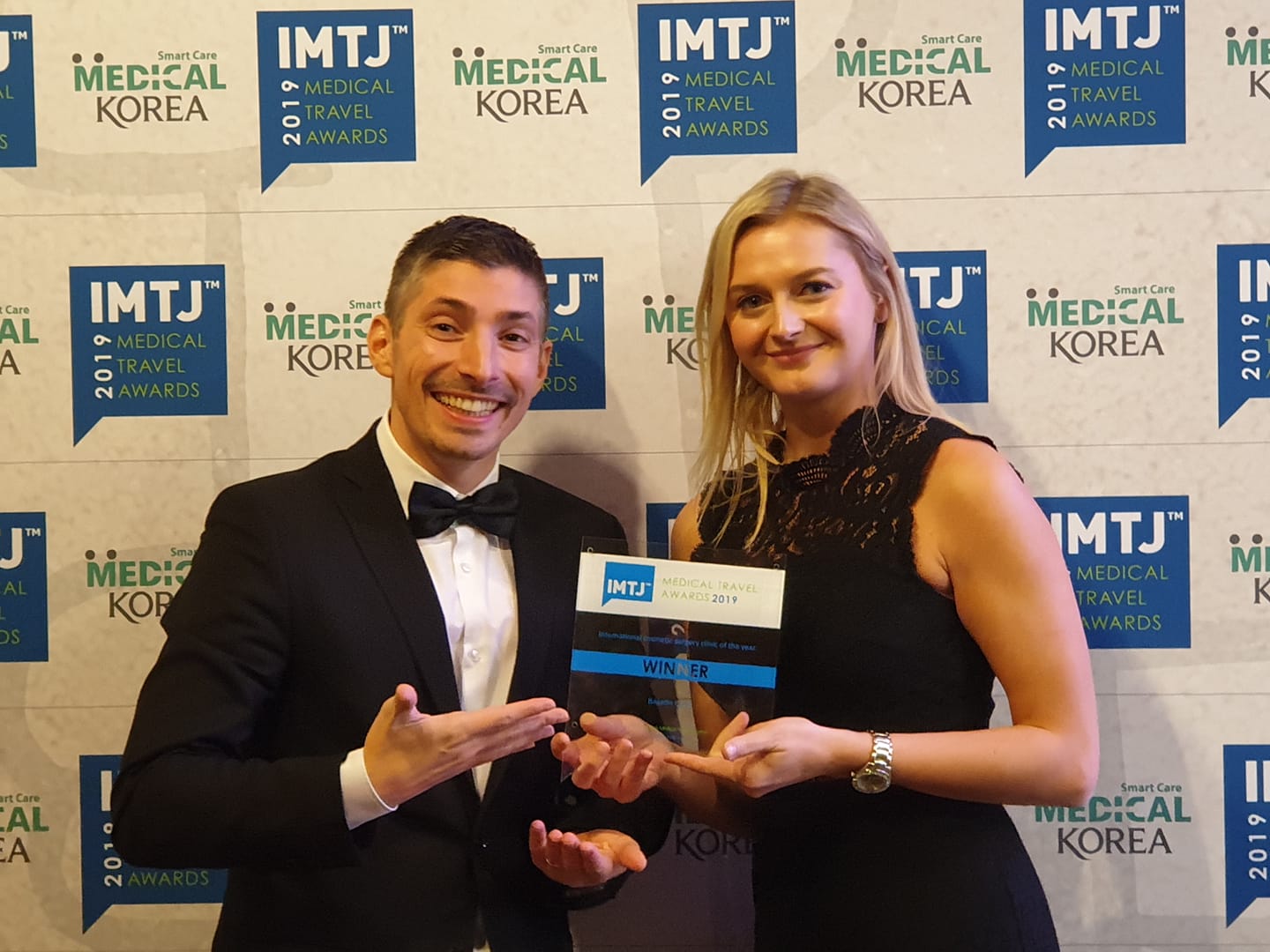
And they did more than make up the numbers, with Bagatin Clinic winning the confidence of no less than 20 expert judges to return home to Zagreb as the International Cosmetic Surgery Clinic of the Year 2019.
Spending time with CEO Ognjen Bagatin is a fun but exhausting experience. His vision is extraordinary, his energy and determination even more so. And so when he told me a couple of months ago that he was bringing Cleveland Clinic to Dubrovnik as presentation partner for the first European Patient Experience and Innovation Conference, I just smiled. I knew it would happen, and I know it will be exceptional. But I hadn't quite anticipated just how much interest the conference would generate within the industry.
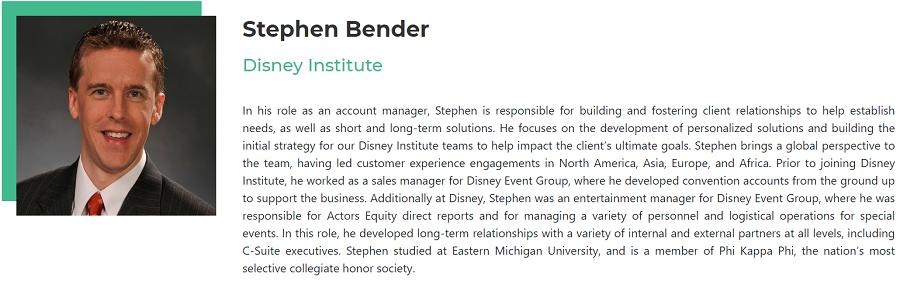
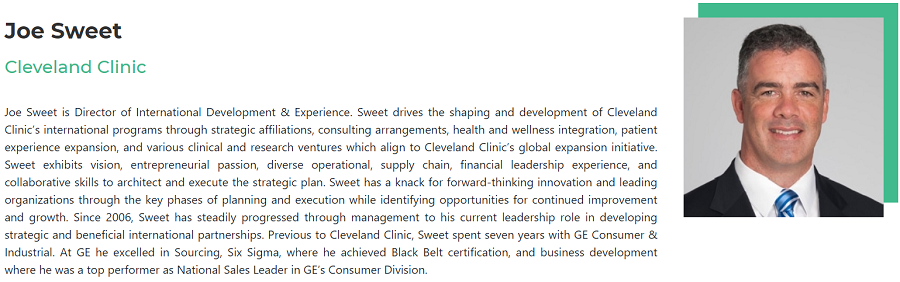
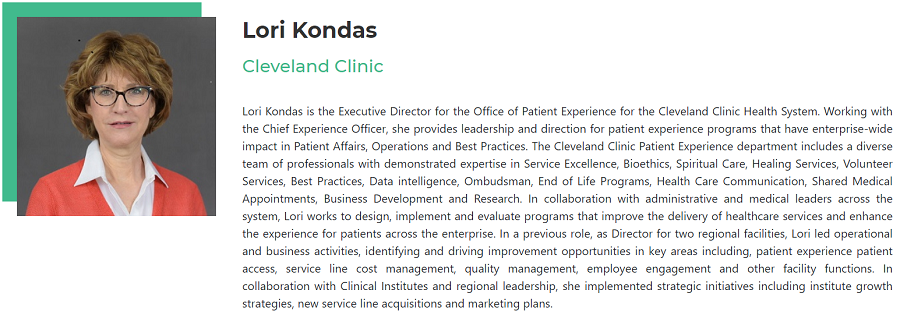
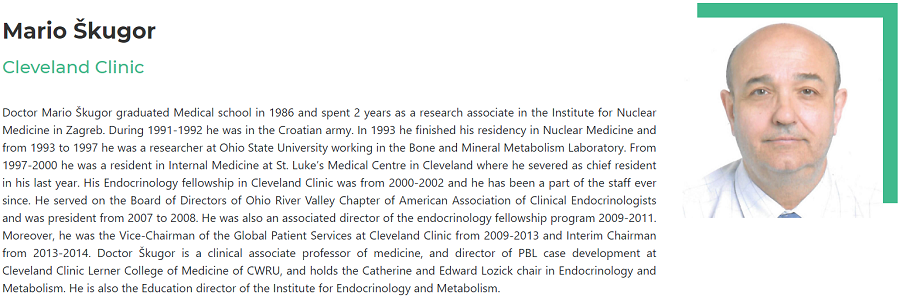
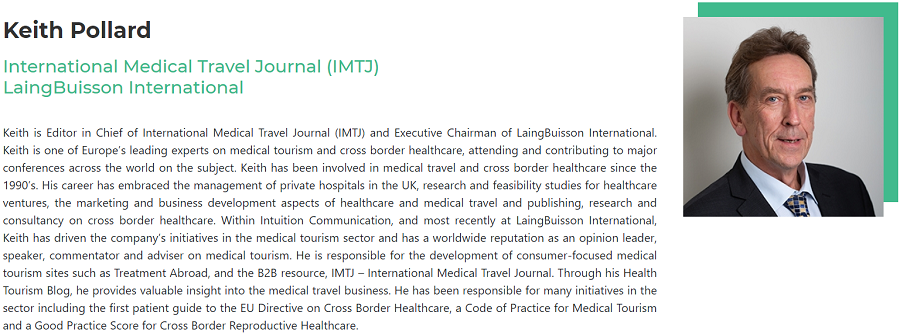
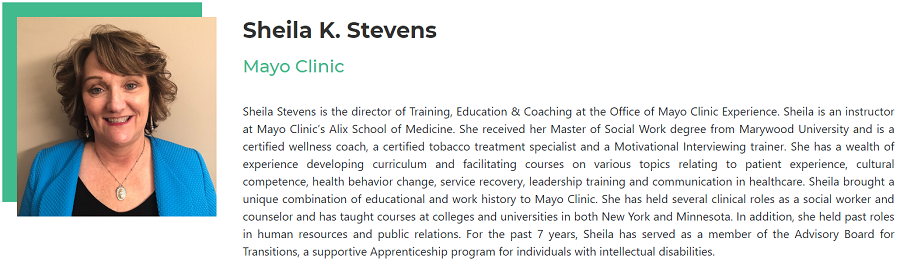
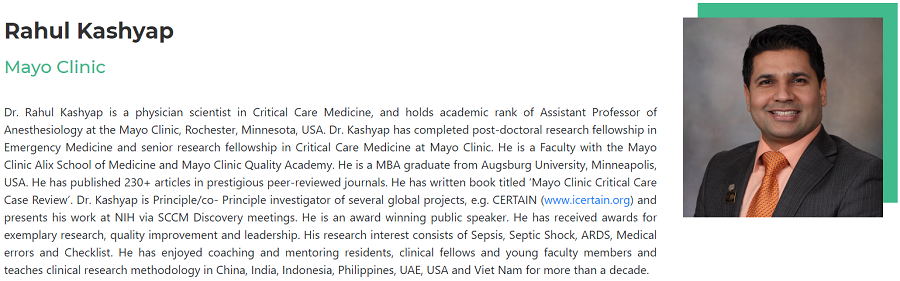
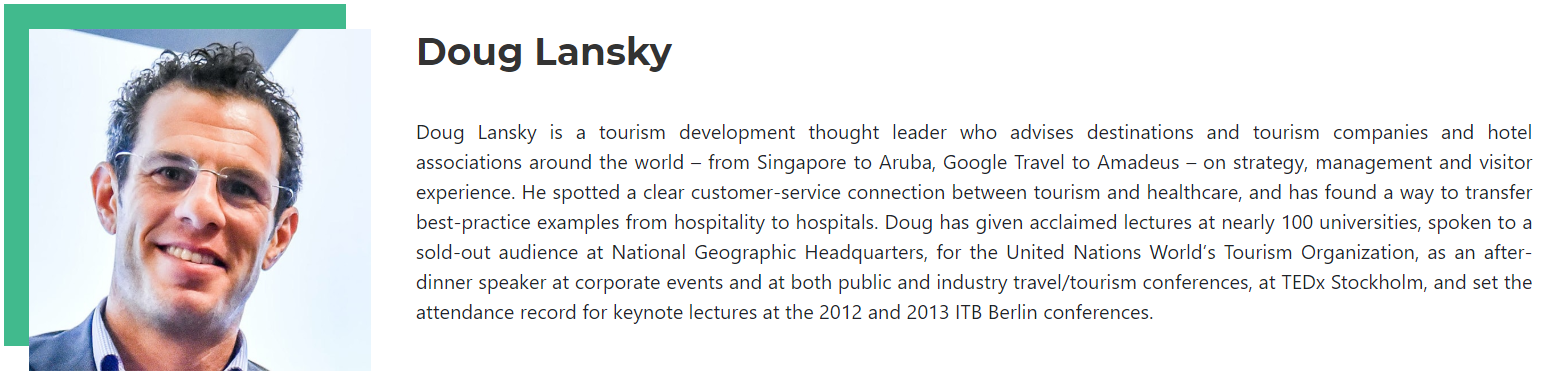
The first inkling of the global interest came at the Crikvenica International Health Conference last month, when a speaker from Mayo Clinic expressed interest in the conference. That initial interest has been transformed into a speaking spot at EPIC 2020, as Mayo Clinic joins a growing illustrious list of speakers from Cleveland Clinic, the Disney Institute and the Editor-in-Chief of IMTJ who will be appearing in Dubrovnik at EPIC 2020 on March 19-21. From the official website:
EPIC brings together some of the most influential physicians, MedTech startups and health professionals from Europe & beyond to the table to improve how your patients will experience healthcare in the near future.
As technology continues to help us achieve previously unattainable results in healthcare, join us for an insiders’ look at which technologies, ideas & innovations are improving the patient experience with some of the leading clinics & healthcare companies of the world so that you can stay ahead.
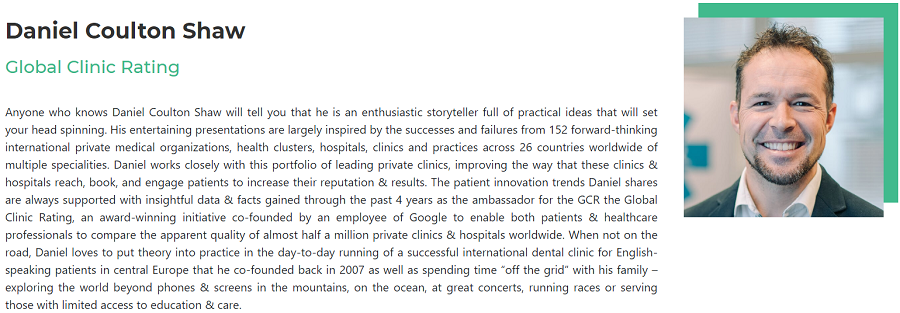
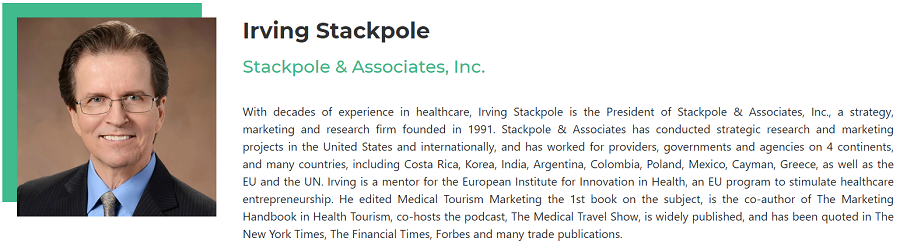
There are many more speakers to be added, but below you can find details on a selection of those already confirmed. It promises to be a great event, and yet one more important step to putting Croatia on the medical tourism world map. Learn more about EPIC 2020 from the official website.
To follow the latest from the medical tourism industry, follow the dedicated TCN section.
Over 300,000 Tons of Food Thrown Away by Croatian Households Annually
ZAGREB, December 8, 2019 - More than 300,000 tons of food is thrown away by Croatian households annually, while at the same time organisations try to incite solidarity with the hundreds of hungry and homeless people.
A survey whose findings were recently published in the Waste Management journal confirmed data that, on average, 75 kg of food per capita is thrown away in Croatia annually, as against 92 kg in Europe.
The survey was conducted in 2017, covering 115 Croatian households. It showed that many of them did not realise how much food they threw away.
Researcher Branka Ilakovac says households account for 77% of the 380,000 tons of food waste in Croatia, as against a little over 50% in Europe.
Eighty-eight million tons of food is thrown away in Europe and 1.3 billion worldwide.
In Croatia, fruit and vegetables account for 46% of food waste. Egg shells, tea leaves and coffee grounds account for 12%, bread and pastries for 9%, potatoes for 8% and meat for 7%. Pasta, rice and dairy products account for the least food waste, 4% each.
Households with more children throw away more pasta, rice and dairy products, while larger households throw away more meat, potatoes, bread, pastries, pasta and rice.
More educated respondents throw away less potatoes, pasta and rice, and those with higher incomes throw away more cakes, milk and dairy products.
An earlier survey showed that nearly half of respondents believed that too much food prepared for a meal was the main cause of food waste, while 29% felt the cause was the purchase of too much foodstuffs.
In order to reduce food waste, one-third of respondents fed it to their dog or cat, while a little over 25% tossed it in the trash, says Ilakovac.
It turns out that the shortcomings of waste management also contribute to food waste as a majority of respondents said they did not have an organised system for the collection and transport of biological waste.
There is room and need to further educate people about sorting waste because we have lost a lot of time, Ilakovac says.
Caritas Croatia has been trying for years to replace the practice of throwing food with donating it. As a result, regulations on food donation were amended in September to eliminate obstacles and make it easier to donate food.
Marija Batinić Sermek of the Agriculture Ministry says donors can donate food even after its best-by date and that they are eligible for tax breaks until the best-by date.
Boris Peterlin of Caritas Croatia agrees that the law is important but says the most important thing is "whether food is donated from the heart."
Household food waste can be reduced via prevention, Ilakovac says, by buying only as much as we need, and not more as is the case now, and by not buying new food until we have consumed the food we have.
Donation works for big retail chains, not only for food near its best-by date or food that has arrived in the stores but also food in warehouses because the chains are aware they will not be able to sell all, Ilakovac says.
She has founded the Food Waste Prevention Centre which is focused on households which, she says, need help with this.
People don't realise they throw away food because they have been doing it all their lives, Ilakovac says, adding that the relationship with food is not at all technical but first and foremost a question of a society's maturity, a society which is responsible towards goods and the environment and shows solidarity.
More food news can be found in the Lifestyle section.