

Climate Activists Stage Protest Outside Government Offices
ZAGREB, November 30, 2019 - Climate activists rallied outside the government offices in Zagreb on Friday calling on the government to adopt urgent and ambitious measures to limit the effects of climate change.
Representatives of the protesters were received by the prime minister's chief of staff, Zvonimir Frka Petešić, and his associates. The protest coordinator Leonarda Smigmator said that they presented their demands and vision and that Petešić said he would try to ensure that their demands were met.
Addressing the protesters, Smigmator said that the new European Commission President Ursula von der Leyen had announced in her inauguration address that she would focus on an ambitious climate programme so that European could be the first climate-neutral continent by 2050. She said that the progress Croatia was making in this regard was miserable.
Smigmator called on politicians to translate their words not just into strategies and plans but also into concrete projects to save the climate.
The protest was organised in Zagreb and Osijek by the youth initiative FridaysForFuture Croatia. The organisers announced a clean-up campaign on the section of Split's Bačvice Beach intended for disabled people, on Saturday November 30.
More environmental protection news can be found in the Lifestyle section.
Meeting Between Government and Striking Teachers' Unions Ends Inconclusively
ZAGREB, November 30, 2019 - A meeting between Prime Minister Andrej Plenković and the striking education unions ended inconclusively on Friday evening after three hours of talks.
Emerging from the meeting, Science and Education Minister Blaženka Divjak said that talks would continue. "Consultations with the unions are continuing," she said.
Divjak said she was pushing for a quick solution that would end the strike already on Monday. "Everyone understands that we should really act quickly, so this dialogue will continue," she added.
The leader of the primary school teachers' union, Sanja Šprem, said that the strike would continue on Monday.
The unions refused the government's offer of a pay rise of 3+3+1 percent for next year, along with a base wage increase of 6.12 percent for all public service employees. The offer was rejected at a referendum by 95.26 percent of primary school teachers, 88.93 percent of secondary school teachers and 69 percent of employees in scientific and higher education institutions.
Teachers have been on strike for 35 days.
The head of the secondary school teachers' union, Branimir Mihalinec, said that they had also discussed job complexity indices. A 6.11 percent increase of job complexity indices is the unions' main demand.
Mihalinec said they had told the prime minister that they were available for talks over the weekend, and if a solution acceptable to the unions were to be found, the unions would end the strike immediately.
Responding to questions from the press, Mihalinec said that a ban on the strike had not been discussed.
More news about the strike can be found in the Politics section.
Zagreb Airport Not Concerned about Poor Performance, Losing Airlines
November 30, 2019 - A handful of carriers are contributing to the airline exodus at Zagreb Airport, and so far, only 69,739 passengers have been added compared to 2018. Should the capital city airport be worried?
Despite the recent announcements that airlines are pulling out of Zagreb Airport, and that its performance this year is a bit worse than the competitors on the coast, the capital city airport sees no reason to worry.
“Since the beginning of the concession in 2013, Zagreb Airport has recorded excellent operational and financial results. We have registered passenger growth of around 46%. While Zagreb Airport handled 2.300.231 travelers in 2013, we welcomed 3.336.310 passengers five years later. This year we are also seeing an increase in our numbers. In 2013 the number of airlines serving the Croatian capital stood at 20, while today it amounts to 33. The number of destinations on offer has also grown from 34 to 52," Zagreb Airport said for Ex Yu Aviation News.
Recall, TCN announced that a handful of airlines are contributing to the airline departure at Zagreb Airport. Like Eurowings, for example, which has terminated its two routes to Zagreb from Berlin and Dusseldorf. Furthermore, Swiss Air and Czech Airlines have canceled their seasonal services next summer from Zurich and Prague.
Ex Yu Aviation adds that we must not forget that Korean Air ultimately ended up discontinuing its service between Seoul and Zagreb in the winter, though their seasonal service will return from April 1, 2020.
“We expect successful operations and passenger growth to continue in the future. We also believe that travelers will recognize our efforts and reward us for our high quality of service,” the airport added.
The high-fees at Zagreb Airport are also a factor. After opening the new passenger terminal in 2017, the fee per each international passenger jumped from two euro to a total of seventeen euro. It also increased its fees by half a euro per domestic passenger to seven and a half euro.
Recall, Eurowings has cited high fees at Zagreb as a deterrent for introducing new routes and will cut the two routes mentioned above. It will only be serving Cologne and Stuttgart from Zagreb.
Eurowings previously said that the fees in Zagreb are “significantly higher than most major European airports, making it less appealing for low-cost carriers."
Ryanair and Wizz Air do not serve Zagreb at all.
“It [Zagreb] is a high-priced airport environment with fluctuating demand. Should the costs come down, we think they would attract us,” Wizz Air said when considering resuming operations to the capital.
EasyJet left the airport in 2014, also citing high fees.
From January - October this year, Zagreb Airport welcomed 2,957,109 travelers, which is up 2.4% and is just under the European average. Overall, 69,739 passengers were added compared to 2018.
Croatian Prime Minister Andrej Plenković said that Minister for Sea Transport and Infrastructure, Oleg Butković, will discuss the airport’s operations with Zagreb Airport’s concessionaire.
To read more about travel in Croatia, follow TCN’s dedicated page.
Business Cafe in Zagreb Hears Croatian Entrepreneur Experiences
As Poslovni Dnevnik writes on the 29th of November, 2019 the Business Cafe in Zagreb event was attended by Mate Rimac, Croatian innovator, entrepreneur and founder and CEO of Rimac Automobili and Greyp Bikes, Joe Bašić, the owner of MPG, known for the Ultra Festival, Urška Sršen, co-owner of the world-famous Bellabeat and Berislav Horvat, Country Managing Partner of EY Croatia, the organiser of the EY Entrepreneur of the Year program in Croatia.
Joe Bašić is a child of Canadian expatriates who immigrated to Croatia in 1997 because of perceived business opportunities and what he deemed to be a excellent quality of life. His Ultra Festival in Split has a signfiicant influence on Croatia's GDP, around 190 million kuna.
"In business, I always follow my heart; it's important for me to do something greater and always give more of myself,'' stated MPG's owner.
Urška Sršen is the co-owner of Bellabeat, who, at just 23 years old, started a business with her partner. Forbes recently listed her on its list of 30 under 30 entrepreneurs. "Although the capital is abroad, I like to live in Croatia because of the quality of life."
As an important link to success, she emphasised parental support that always allowed her the freedom to do what she loved, as her parents encouraged her to be the best at it.
Berislav Horvat shared his first entrepreneurial steps during college with the audience at the Business Cage in Zagreb, and emphasised EY Croatia's efforts to improve the business climate and its results.
''I'm pleased with the changing perception of entrepreneurs and the entrepreneurial climate in society. It's going slowly, but it's getting better. "
When asked what he picked up on in regard to all successful entrepreneurs, and what he deemed to be crucial for success, he replied that it was definitely persistence above all.
His comments on the general perception of entrepreneurs gradually changing was confirmed by the fact that Mate Rimac came to this Business Cafe in Zagreb to meet the teens and children to whom he is an idol.
Mate Rimac, simple and approachable in his performance, answered many questions from the audience openly, simply and honestly, and shared his experience of all of the challenges so far in his entrepreneurial journey. He stressed that at the beginning, they didn't even know what they were doing, that he continues to feel that they haven't succeeded, and added that everything is about business.
"At the end of the day, execution is the most important thing, networking is also important, because it's important for someone to open the door and give us support. We support each other, and we look forward to the success of others,'' he told the audience at the Business Cafe in Zagreb.
The Business Cafe is a small business gathering that has been organised for nine years and has been held in seven countries and 25 cities so far. More than 20,000 visitors attended 300 events, they listened to more than 700 entrepreneurial stories and over 30 million euros worth of business and investments have been made, as well as countless friendships and collaborations.
In addition to the regular Business Cafe, there are also special editions, a guest edition and Business Cafe International, an English edition for foreign entrepreneurs in Croatia.
Make sure to follow our dedicated business page for much more.
Save Bees and Farmers! A Major New Campaign
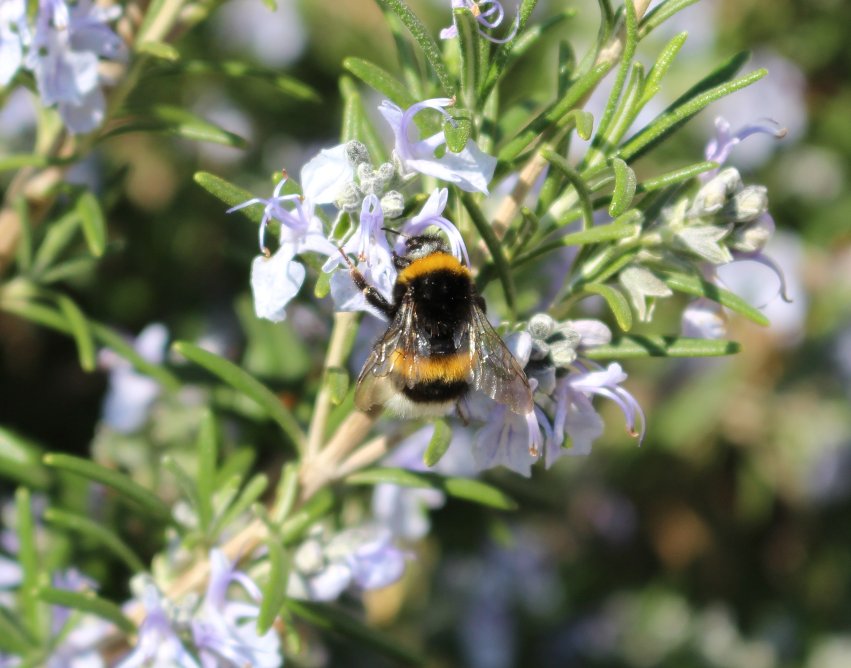
PLEASE HELP! Poisonous food, who wants it? No-one who's got any sense. Yet most of us are eating food laden with pesticides every day, will-he nill-he. All at the expense of the natural environment. It's time for change, and you can help: Support the campaign to make Europe pesticide-free!
Our supply of healthy food largely depends on pollinators, and we are losing them at hair-raising rates. We can't afford this. On Monday 25th November a consortium of European organizations launched the campaign 'Save Bees and Farmers'. The petition is a European Citizens' Initiative (ECI), organized according to the strict rules of the European Commission (EC). If a million people sign, by law the EC has to give serious consideration to the demands outlined in the petition, and decide what action to take. You can read the background to the campaign here.

Beneficial insects of all kinds, including pollinators, are being exterminated by massive use of chemical pesticides on farms, woodlands, parks, gardens, also in public and private buildings. The alarming increase in pesticide use over the last few decades has been accompanied by an equally alarming rise in human health problems, many of which have been shown to have links to pesticides like glyphosate. Neonicotinoid insecticides are a particular concern, with many scientific studies showing their harmfulness, and concerted campaigning to stop or at least restrict their use.
On Tuesday November 26th some 10,000 farmers with 5,000 tractors descended on Berlin to gather at the Brandenburg Gate in protest against new measures aiming to restrict the use of chemical pesticides and artificial fertilizers. The changes have been prompted by rational concerns about the damage to human health and the natural environment caused by so-called 'conventional' farming methods. The farmers view the changes as damaging to their interests, as they fear they will not be able to produce food at competitive prices without chemicals. A parallel protest for similar reasons was staged by French farmers the following day, Wednesday 27th November.
The farmers' protests looked like military parades with their large vehicles lumbering alongside the people on foot in tidy lines. Conventional farming is akin to war, based as it is on the principles that 'enemies' have to be destroyed and nature has to be manipulated and forced into submission, so that perfect-looking crops can be produced in the maximum possible quantity, preferably with the least possible manpower. Profit margins take precedence over all else.

Wars waged against nature are unwinnable. Conventional farming doesn't have to be the norm. It's as bad for farmers as it is for bees - and us. Poisoned food is not the answer to world hunger. The best viable alternative for people and the environment alike is organic farming. There is an ever-increasing demand for organic products, therefore they have a potential market which will expand as more organic products become available. There is growing awareness among consumers that current farming practices are harmful and untenable: the ECI petition to ban glyphosate garnered a million signatures ahead of its deadline, and the current petition for pesticide-free Europe has already raised close to 79,000 in just under five days since the campaign was launched.
Farmers deserve to earn a decent living. Poisons don't qualify as decent. We hope all farmers will come to recognise that pesticide-free practices are for their own good as well as ours. How long will it take them to break free from the smooth talk and slick marketing of the agrochemical companies? At all events it will take time for farming practices to be changed for the better. A lot of adjustment is needed. It takes years for contaminated soil to be freed from the effects of pesticides. The campaign sets a deadline of 2030 for eliminating the deadliest of the pesticides, and 2035 for Europe to be completely free of synthetic pesticides. It can be done, with persuasion from all of us who care about human and environmental wellbeing.
If you believe in a healthy future for Europe PLEASE SIGN THE PETITION!
Vivian Grisogono is President of the Croatian registered charity Eco Hvar, which is one of the supporting organizations for the ECI petition for a pesticide-free Europe
Parliament Votes in Fourth Round of Tax Reform
ZAGREB, November 29, 2019 - The Croatian parliament on Friday voted in a set of nine tax laws making up the fourth tax reform which brings tax reliefs in the amount of HRK 2.4 billion.
The changes bring a lower, 13% VAT rate on food and dessert preparation and serving in and outside catering establishments, and a lower VAT rate for holders of phonographic rights.
As for income tax, the non-taxable income has been raised from 3,800 to 4,000 kuna. Income tax for young people under 25 is reduced by 100% while income tax for young people aged 25-30 is cut by 50%.
As for profit taxation, the limit for taxation with the higher, 18% rate, is raised from 3 to 7.5 million kuna, which means that 93% of entrepreneurs will pay taxes at a rate of 12%, while the current share of entrepreneurs is 85%.
The tax reform also keeps the standard VAT rate of 25%, the total financial effect of that measure being 1.8 billion kuna.
The fourth round of the tax reform brings tax reliefs in the amount of 2.4 billion kuna, and together with the three previous rounds, the total financial effect is 9 billion kuna in tax reliefs.
Parliament today also adopted amendments to the law on ferry transport and occasional coastal transport aimed at creating better conditions for the exercise of the right to transport concessions, particularly for the disabled and children with developmental disabilities.
More tax news can be found in the Business section.
Switzerland, Croatia to Promote Cooperation Even More
ZAGREB, November 29, 2019 - Switzerland is very much interested in further advancing its relations with Croatia, notably in the economic sector, and great cooperation possibilities are opening up in the area of new technologies and tourism, Swiss President Ueli Maurer said in Zagreb on Friday.
There are 30,000 Croats in Switzerland, many Croats have dual citizenship and we can say that Croatia has become a nice face in our everyday life, as embodied by your president, Maurer told reporters after meeting with Croatian President Kolinda Grabar-Kitarović.
Maurer is on an official reciprocal visit to Croatia, six months after Grabar-Kitarović visited Switzerland.
The fact that we have met twice in less than six months proves that relations between Croatia and Switzerland are really excellent, both at the official and at the personal level, said Maurer.
Maurer expressed support for Croatia's accession to the Schengen area, assessing that Croatia is meeting its obligations very well.
He said that his country would strongly greet Croatia's accession to the area of passport-free travel as Croatia had an important strategic position in Europe.
Maurer also expressed satisfaction with cooperation with Croatia in international bodies where the two countries support one another without any reservations.
As regards bilateral relations, Switzerland is very much interested in further advancing the existing good relations, notably in the field of economy. Croatia is a very interesting country for investors from Switzerland, he said, stressing that there were great possibilities in the area of new technologies, such as the blockchain technology.
He noted that there were over 1,000 startups in Switzerland.
Croatia is a stable country that has a highly trained workforce, it belongs to the same cultural circle as Switzerland and in that sense it could serve as a springboard for exports by Swiss companies that would start operating in Croatia and export their products to other countries, Maurer said, stressing that his country was also interested in cooperation in tourism.
You are a friendly nation, you have a beautiful country and we will give you technical support and agree on further points in tourist trade and cooperation, he said.
Speaking of Croatia's EU presidency in the first half of 2020, he said that Switzerland, a non-EU member, wanted to strengthen its cooperation with the EU and expected Croatia's support in that regard.
President Grabar-Kitarović said that Switzerland ranked 12th in terms of investment in Croatia.
Bilateral trade in 2018 was 352 million euro, and Croatian exports to Switzerland have increased this year as well. In the first eight months, they increased by more than 15% to close to 140 million euro, while imports from Switzerland totalled 103 million euro, she said.
Swiss investors have so far invested in the pharmaceutical, mechanical and electronic industries, as well as in the insurance sector, and cooperation in the food industry has been growing as well, it was said.
The two countries also cooperate well in the field of research and technology.
Grabar-Kitarović informed her Swiss counterpart about the priorities of Croatia's EU presidency. "We will advocate a balanced and sustainable economic growth, dealing with burning demographic challenges, strengthening competitiveness and connectivity in the EU and strengthening the security of European citizens, both internal and external," she said.
"We will work on a comprehensive approach to migrations as well as on new EU guidelines in the area of freedom, security and justice and continue to support the EU's active role in the neighbourhood, notably Southeast Europe."
"We will pay special attention to processes that concern better functioning of the Schengen area, which we will join in the near future and which we consider to be of crucial importance for the EU and countries of the European Economic Area," she concluded.
More news about relations between Croatia and Switzerland can be found in the Politics section.
Split Advent Opens this Weekend: Your Guide to Opening Day
November 29, 2019 - ’Tis the most wonderful time of the year - Split Advent is finally here!
On Saturday, November 30, 2019, Split Advent will open on the famous Riva waterfront at 11 am with the performances of the Split Majorettes and Corsa Adriatica. In the evening, the festive opening will be held at 5 pm in Đardin with the traditional lighting of the Advent candle, followed by a music program and a spectacle on ice, which will be led by members of the Zagreb Snowflake Skating Club.
The vibrant program in Đardin continues with the performance of children's choirs and choirs of the international festival Cro Patria. A playful school program will spread cheer on Marmontova Street, and Gustafi will take the Riva stage at 8:30 pm to kick the festivities into gear. From 8 pm at Perivoj, you can enjoy music by DJ Sole.
You can find the full Advent program on the Split Tourist Board website, but we are bringing you some highlights of this weekend's program.
The Croatian National Theater Split is the center of cultural and humanitarian events this winter. Opera lovers will enjoy the performance of Rigoletto at 6 pm, while costumed guided tours of the Meštrović Gallery are organized for elementary school students, where the youngest will be able to explore the entire art space. Advent would not be complete without The Nutcracker, while the vintage images of Split’s most famous photographer Feđa Klarić will light up Gaje Bulata Square.
The concert of the Cro Patria Men's Choir, AMZ Faculty of Electrical Engineering and Computing ZG and Brodosplit twill be held on Saturday at 7 pm in the Great Hall of the Faculty of Medicine in Split, which will be complemented by the Canticum Novum competition evening. Caroling through city streets and squares is an indispensable part of the tradition of Split and Dalmatia, so KUD Jedinstvo will tour the city center to serenade the citizens with traditional tunes. Brass music will be heard from Đardin to the Riva, and all city streets and squares will dance in different musical rhythms and styles.
Đardin will have an Ice Park this Advent, transforming the famous Split meeting spot into a true winter wonderland. A vibrant program and food and drink offer will only complete the experience.
Although humanitarian events are organized in Split throughout the year, around the holidays, they’re a bit more special. Thus, a humanitarian concert by Tomislav Mrduljas will be held at HNK Split. All proceeds from ticket sales will be donated to KBC Split to purchase vital function monitoring devices for the Intensive Care Units Clinics for Anesthesiology, Reanimatology and Intensive Care, co-organized and initiated by Assistant Professor Dr. Sc. Sanda Stojanovic Stipic.
Source: Dalmacija Danas
To read more about lifestyle in Croatia, follow TCN’s dedicated page.
Industrial Production in October Rises Just 0.3%
ZAGREB, November 29, 2019 - In October 2019, industrial production in Croatia went up by 0.3% on the year, while the annual increase over the first ten months of 2019 was 0.9%, the national statistical office said on Friday.
In October 2019, as compared to September 2019, industrial production decreased by 1.3%.
In October 2019, as compared to October 2018, durable consumer goods increased by 8.1%, energy by 6.4% and capital goods by 0.1%, while intermediate goods decreased by 2.6% and non-durable consumer goods by 1.7%.
Over the first ten months of 2019, the most important component of industrial production, manufacturing, went up by 0.3% year on year.
Raiffeisenbank Austria (RBA) said in a comment that industrial production growth in the last quarter of the year was likely to be about 1%.
Domestic demand remains strong but the slowing down of Croatia's main trade partners and low competitiveness curb stronger industrial growth, RBA added.
The modest recovery of industry is evident when compared with 2008, the year before the economic crisis, as today's production volume is 9% lower, RBA said.
More economic news can be found in the Business section.
Education Workers Reject Government Offer, Strike Continues
ZAGREB, November 29, 2019 - The lion's share of education workers who took part in a vote turned down the government's latest pay rise offer so the strike in the education system is continuing, union leaders said on Friday.
In a two-day referendum, 95.26% of the strikers in primary schools, 88.93% in secondary schools and 69% at faculties voted against the offer, reporters were told.
In primary schools, 31,670 workers voted as did 14,046 in secondary schools.
Therefore, said the Croatian Teachers Union, the Independent Union of Secondary School Employees and the Independent Union in Science and Higher Education, the general strike in primary and secondary schools and occasional strikes at faculties are continuing.
Earlier today, it was said that 88% of the strikers from the Preporod union had rejected the government's offer, so they too are continuing the strike in 383 primary and secondary schools.
The rejected offer envisages a pay-rise for education workers in 2020 as well as a 6.12% base pay rise for all civil servants.
Independent Union of Secondary School Employees president Branimir Mihalinec said the results of the referendum showed that education workers would not bargain over wage supplements. "The refusal of the government's offer means that education employees want to resolve the issue of their status through higher job complexity indices."
He said the rejection represented strong support to the unions to continue to demand higher job complexity indices.
Croatian Teachers Union president Sanja Šprem said being underpaid was not the only reason for the rejection. "Education employees have a problem with unnecessary red tape, the hiring freeze, the system of anonymous complaints."
Igor Radeka of the Independent Union in Science and Higher Education said the strike at faculties and science institutions would continue to be held once a week, the next one on December 5.
More news about the teachers’ strike can be found in the Politics section.