

VIDEOS: Great Footage of Large Waterspouts Near Split
November the 29th, 2019 - Sometimes, waterspouts develop on the Croatian Adriatic sea and while these incredible sights are not all that uncommon at this time of year when the weather tends to be unstable, have you ever had the chance to get a clear view of one, and film some waterspouts near Split?
The weather in Dalmatia at this time of year can be pretty all over the place. From warm sunny days that require the removal of jackets and the placement of sunglasses in the middle of November to extreme winds like jugo and bura blowing tables and chairs down the streets. All this can happen in just one day. While this is irritating for residents and tourists alike, it makes for some amazing photos and videos.
As Morski writes on the 28th of November, 2019, Thursday this week was marked by very poor weather conditions along the Dalmatian coast, and these unstable conditions created numerous waterspouts (pijavice). Just after the last set of tumultous weather, it seems that this is the beginning of yet another volatile period. According to Pljusak.com, more abnormally heavy rainfall has hit parts of Dalmatia.
At aound 15:00 on Thurday, a powerful thunderstorm cloud developed above the Brač channel, where an impressive waterspout near Split formed, the largest in the area since August 2018 when Podstrana took a beating by the elements, Dalmacija Danas reports.
The waterspout near Split, despite being very well developed and large in size, thankfully does not seem to have reached the actual shoreline of the City Split. In addition to that, very heavy rainfall began in parts of the city and there was even a brief period of hail in some places.
Watch the amazing videos from Dalmacija Danas' YouTube channel of the waterspouts near Split below:
Make sure to follow our dedicated lifestyle page for much more.
Ivan Meštrović's Sculpture Sold at a Christie's for Over 300,000 Euros
One of the sculptures created by Ivan Meštrović, the Croatian master sculptor, was sold yesterday at an auction in Paris held by the Christie's auction house, for more than six times over the expected price!
The auction house's website shows that. You can see that their estimate of the price is in the range between 30 and 50 thousand euros, while the final price for which it sold stood at a whopping 331,600 euros!
Ivan Meštrović is probably the most famous Croatian sculptor and one of the most famous artists of the 20th century, with his sculptures displayed all over the world, from Zagreb to Chicago.
The Abandoned Woman (Abandonne in French, Napuštena in Croatian) is a remarkable sculpture, made in white marble. Milena Zajović writes for Večernji list about its history: it used to belong to the Italian royal family. Montenegrin princess Elena married into the Italian royal family in 1896 and became the queen in 1900 when her husband Victor Emmanuel III became the king. Queen Elena used to be a friend of Meštrović's, and she probably bought the sculpture from him directly - Christie's says that it was made in 1907, in the early days of Meštrović's career.
The master-piece "The Abandoned Woman" has been shown in public only twice, both times in Vienna, for joint secession exhibitions in 1908 and 1910. The Italian royal probably bought the 58-centimeter high sculpture right after that, and it has belonged to the family since. No one has seen it for decades, and it was considered to have been lost until it appeared at the Christie's auction. The auction house discreetly says that it got to the current owner (before the sale) "by descent."
It has not been made public who the buyer is, as can be expected in such situations. One can only hope that someone in the Croatian governing bodies has decided that this masterpiece needs to come back to Croatia and that Croatia participated in the auction.
Zagreb IT Company Aduro Idea Creates Business Solution for Private Renters
As Poslovni Dnevnik/Suzana Varosanec writes on the 28th of November, 2019, the Zagreb-based IT company Aduro Idea (Aduro Ideja) presented a brand new business solution for renters and private users in Zagreb.
The product is a smart lock called the NCF SmartLock. Digitising the process allows front doors to be opened via a smartphone (or with an unlock code), giving renters a tool that allows guests to open the door by sending what is known as a digital key. It is given for a fixed period of time, and after it expires, the door can no longer be opened.
Aduro Idea is led by director Nenad Raca, who also owns the company. According to him, the project for the commercialisation of the NCF SmartLock business solution is worth as much as 1.9 million kuna, which, with an amount of around 900 thousand kuna, was co-financed under the call for the "commercialisation of entrepreneurship innovation" with ESIF funds under the competitiveness and cohesion operational program 2014-2020.
"The project began back in April 2018, and today we have a Croatian product that can be attached to any cylinder. The NFC SmartLock is designed and constructed entirely from the minds of our engineers. In addition to the software part, where we're most ''at home'', we've also developed electronic and mechanical solutions, all in collaboration with the Croatian distributor of global lock brands,'' stated Raca.
For starters, the smart feature is only to do with unlocking and locking the door with the use of a mobile phone, but according to Aduro Idea's further announcements, various upgrades are coming soon - from the smart ring to the opening doors using face recognition. The competitive advantage of this business solution is reflected in the speed of its implementation, and Aduro Idea has explained that installation takes only two or three minutes for locksmiths. Interestingly, the Zagreb-based IT company intends to link locksmiths to interested customers with targeted distribution.
"We're entering onto the market in January and the final preparations are underway, linking up with agencies to offer renters this business improvement solution is coming next season. We plan to integrate with eVisitor, and when everything is technologically rounded off, the effect will be to create a different and more discrete experience for both parties, the renter won't have to meet with the guest if he doesn't want to,'' says Raca, adding that talks are being held with potential manufacturers in case there is a need for large volume production.
Zagreb's Aduro Idea, with close to 4 million kuna in revenue in 2018, is developing software solutions for foreign clients in Estonia, Latvia, Lithuania, New Zealand, USA and Denmark. They are expanding their business and currently employ just under twenty people. The net salary of the most experienced employees is 15,000 kuna or more, and everyone receives various bonuses.
Make sure to follow our dedicated Made in Croatia and business pages for much more on Croatian products and companies.
Are These Four Croatian Cities Most Vulnerable to Earthquakes?
The recent earthquake down in Albania came as a shock to everyone, and it was felt across Dalmatia, with residents of the Croatian cities of Dubrovnik to Zadar reporting having felt its effects. On top of that, an earthquake also struck Blagaj, near Mostar in neighbouring Bosnia and Herzegovina, which was also felt strongly in Dalmatia.
As Poslovni Dnevnik writes on the 29th of November, 2019, with earthquakes striking very close to home, we really can't be sure when the next time Croatia will be hit really hard by Mother Nature. Which Croatian cities are the most vulnerable of all?
Two years ago, the Croatian Crisis Management Association published a very interesting account on the Croatian cities of Zagreb, Split, Rijeka and Dubrovnik in terms of their respective risk of earthquake casualties, Express reports.
According to the reportsl, the Croatian capital of Zagreb would take quite the hit indeed, at least in its very centre, Split is a surprising case as it is intersected by what have been deemed by the report to be high risk zones, and Rijeka and Dubrovnik, which was totally destroyed back in 1667, when 5,000 of its residents were killed - are also at a somewhat higher risk.
The seismic situation of Croatia and neighbouring Bosnia and Herzegovina is such that the most frequent earthquakes are along the Kvarner coastline, along the Dalmatian Hinterland, between Zadar and Šibenik, around the islet of Jabuk, and especially on the southern Dalmatian islands and throughout Herzegovina. This part of the story is directly related to Croatia's neighbour to the south, Montenegro, and its neighbour to the south, the recently hit Albania. Sources cite an article by students of the Surveying and Mapping Authority which is located in Zagreb.
In spite of all this detailed information, we cannot be truly sure when the next time in Croatia will be hit hard by an earthquake. We can however be certain that at some point in time, it will be. We can also be sure of which Croatian cities in particular a stronger earthquake than those we typically experience is most likely to strike, Express reports.
Make sure to follow our dedicated lifestyle page for much more.
Mustač Extradited to Croatia, Taken to Remetinec Prison
ZAGREB, November 29, 2019 - Former Yugoslav and Croatian intelligence official Zdravko Mustač, who was sentenced by a German court with another Croatian intelligence official, Josip Perković, for involvement in the murder of dissident Stjepan Đureković, was extradited to Croatia on Thursday afternoon.
Mustač arrived in Zagreb aboard a regular flight from Munich around 12:45 and around 14:15 he was admitted to the diagnostics centre of Zagreb's Remetinec Prison. After a medical check-up, he will be transferred to a penitentiary where he will serve the rest of his 40-year prison term.
In late October, Croatia's Supreme Court rejected Mustač's last appeal and his attorney said then that she expected that he could be transferred from Germany to a Croatian prison in about 30 days.
The Supreme Court had rejected as inadmissible Mustač's appeal against its decision upholding an earlier ruling by a Velika Gorica court that Mustač should serve a 40-year prison term to which his verdict by a German court, sentencing him and his associate Perković to life imprisonment for the 1983 murder of Stjepan Đureković, was converted.
The Supreme Court ruled that Mustač's last appeal was inadmissible because the procedure in question concerned the recognition and execution of a foreign court's verdict in line with a special law.
Together with the 77-year-old Mustač, the 74-year-old Perković, too, was convicted by the German court for the same crime and he was transferred to Croatia on July 11.
Even though the German court delivered the same verdict for the two former intelligence officials, the Zagreb County Court, which was in charge of Perković as his residence was in Zagreb, ruled in line with national legislation that he should serve a 30-year prison term. Perković is currently behind bars in Glina.
In August 2016 a Munich court sentenced Perković and Mustač to life imprisonment for their roles in the murder of Đureković, who was killed by as yet unknown perpetrators in Wolfratshausen outside Munich in July 1983.
They both pleaded not guilty and after the German court's verdict they turned to the European Court of Human Rights which they expect to order a new trial.
Mustač's attorney Lidija Horvat recalled that in July 2019 the defence had also filed a complaint of unconstitutionality against the Velika Gorica court ruling and the Supreme Court ruling which imposed and upheld a 40-year prison term against Mustač.
Horvat said they believed that the Croatian courts erroneously applied European law and had therefore asked the Constitutional Court to address the European Court of Justice on the matter of application of the principle of mutual recognition of rulings in criminal cases, to see if by converting the German court's verdict the Croatian courts should have borne in mind that the punishment should not be harsher than it would be if the accused served it in the country where the verdict was handed down.
She recalled in that context that in Germany, where they were sentenced, Mustač and Perković would be granted a so-called obligatory conditional release after 15 years in prison.
More news about the case can be found in the Politics section.
Croatia Interested in Developing Cross-Border Projects with Hungary
ZAGREB, November 29, 2019 - Croatian Prime Minister Andrej Plenković said on Thursday that Croatia and Hungary were friendly countries that were interested in strengthening cooperation and developing cross-border projects.
After meeting with Hungarian Prime Minister Viktor Orban in Osijek, Plenković told reporters that the opening of the newly-built student dormitory of the Hungarian Educational and Cultural Centre in Osijek, whose construction was financed by the Croatian government with 10 million kuna, was a symbol of respect for the Hungarian minority in Croatia.
We are glad the Hungarian government cares about Croats living in Hungary, supporting similar projects and centres that exist in a number of Hungarian towns, added Plenković.
He said that he and his Hungarian counterpart also discussed Croatia's preparations for EU presidency and its priorities - a Europe that grows and develops; a Europe that connects; a Europe that protects; and a Europe that is globally influential.
Plenković added that special emphasis would be put on three major political issues - the regulation of future relations with Great Britain, if the country leaves the EU on January 31; continuation of talks on the EU's next seven-year budget; and a summit meeting of EU and Southeast European countries in Zagreb, focusing on EU enlargement.
Orban said that the priorities of Croatia's EU presidency were close to Hungary, and that both countries believed that EU accession criteria had to be the same for all countries aspiring to join the EU.
Speaking of bilateral relations, Orban said that those relations had historically good foundations, based not only on friendship but also on occasional strategic cooperation.
In that context, minorities have an important role in both countries, Orban said, adding that his government did its best to provide for the Croat minority in Hungary and that he was glad to see Croatia doing its best to enable the Hungarian minority to preserve its identity, culture and education.
He stressed that he was very optimistic with regard to the future.
Answering a reporter's question, Orban said that relations between the INA and MOL oil companies were not discussed at today's talks as they focused on regional issues.
Asked if he and Plenković discussed the suspension of his Fidesz party's membership in the European People's Party (EPP), which was also supported by the Croatian Democratic Union (HDZ), and ways of overcoming the problem, Orban said that he respected the HDZ as the ruling Croatian party very much because he had started cooperating with Croatian politicians back at the time of the first Croatian president, Franjo Tuđman, with whom, he said, he had cooperated well.
He said that the HDZ would always be on Fidesz's side because they shared the same values, and that it would never betray it.
Fidesz will decide about its fate on its own and it has to see if the new EPP leadership, elected at a recent congress in Zagreb, would continue drawing closer to the left or not, said Orban.
Should the EPP continue drawing closer to the left, that is not our path. If the EPP is willing to reconsider what it is doing now and return to Christian-national roots, we can continue acting within the EPP. We need a little time to make a decision, two to three months at least, he said.
Asked if he was following events regarding presidential elections in Croatia and to comment on presidential candidate and former PM Zoran Milanovic's statement that Orban was not his kind of people, Orban said that the decision on the next Croatian president should be made by Croats and that he did not want to make any comments on the matter.
It is a fact that Croatian-Hungarian relations suffered a lot at the time when the politician whom you mention was Croatia's prime minister, said Orban.
More news about relations between Croatia and Hungary can be found in the Politics section.
Misdemeanour Fines for Wearing Balaclavas at Sports Events
ZAGREB, November 9, 2019 - Wearing balaclavas to hide one's identity at sport events will in future be treated as a misdemeanour, according to a bill on the prevention of rioting at sports events that the government sent to parliament for consideration on Thursday.
Fines for wearing apparel to hide one's identity have drawn public interest and it is important to note that spectators will not be punished for wearing fan memorabilia like shawls and hats but only for wearing specific items intended to hide one's identity. Balaclavas make it difficult for the police to identify perpetrators and unlawful conduct at sports events, Interior Minister Davor Božinović said, presenting the bill at a cabinet meeting.
The government today also sent parliament a bill on the Centre for Special Custody which regulates the status of the centre as a public institution authorised to represent children and adults in court proceedings and before other institutions.
The establishment of the centre is regulated by the Family Act and the government now proposes that it be regulated by a separate law.
More police news can be found in the Politics section.
Advent in Sinj Opens this Weekend!
November 29, 2019 - Advent in Sinj opens on Saturday, November 30, 2019!
Although November is not quite over, the sweet anticipation of Christmas is already approaching - and just thinking of the enticing scents of mulled wine and delicious and savory treats guarantees a good time for all generations. Thankfully, a handful of fun and unique holiday festivities are open to anyone looking for Christmas magic in Sinj this winter.

Many different events have been prepared for the youngest, who will even have a Children's Week organized by the association "Cjelovit život", which begins conveniently on the Feast of St. Nicholas. The little ones will enjoy, but also perform in plays, music and dance venues, choir performances, a magician's play, a fairytale fair, a handicraft fair, and even breakfast with a Santa Claus.
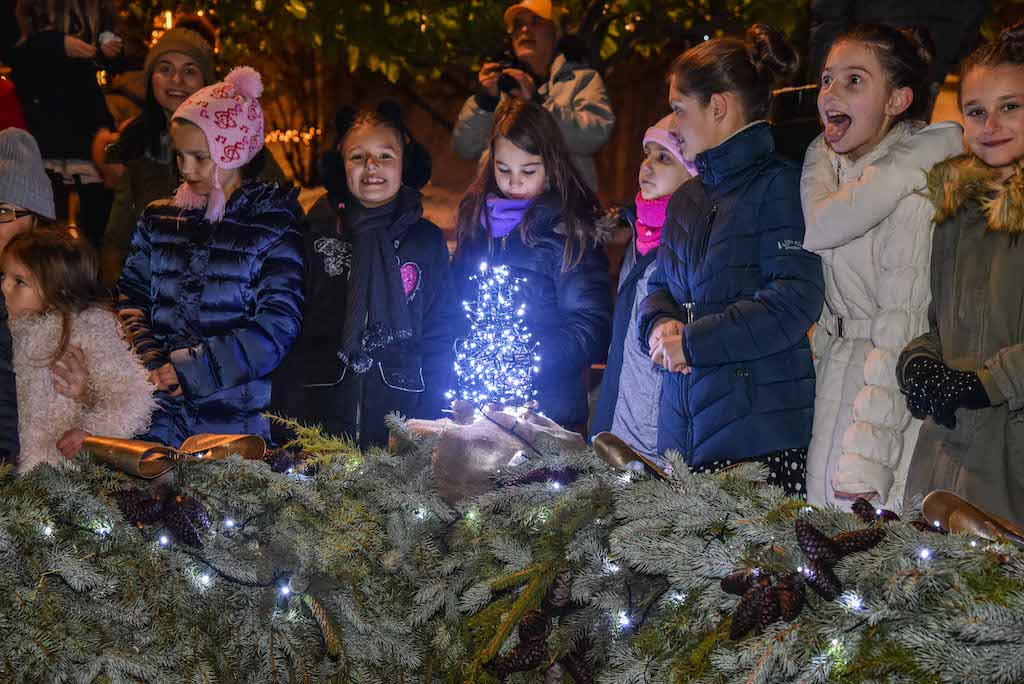
Numerous valuable and active associations from Sinj and the Cetina region have organized several exciting events and actions. The people of Sinj and their guests will be able to enjoy the concerts of Klapa Sinj, Zlatko Jelincic, City Music and Mixed Choir of Sinj, the KUDs Osinium, Vrilo and Brodosplit and the Christmas show of the Sinj Majorettes.
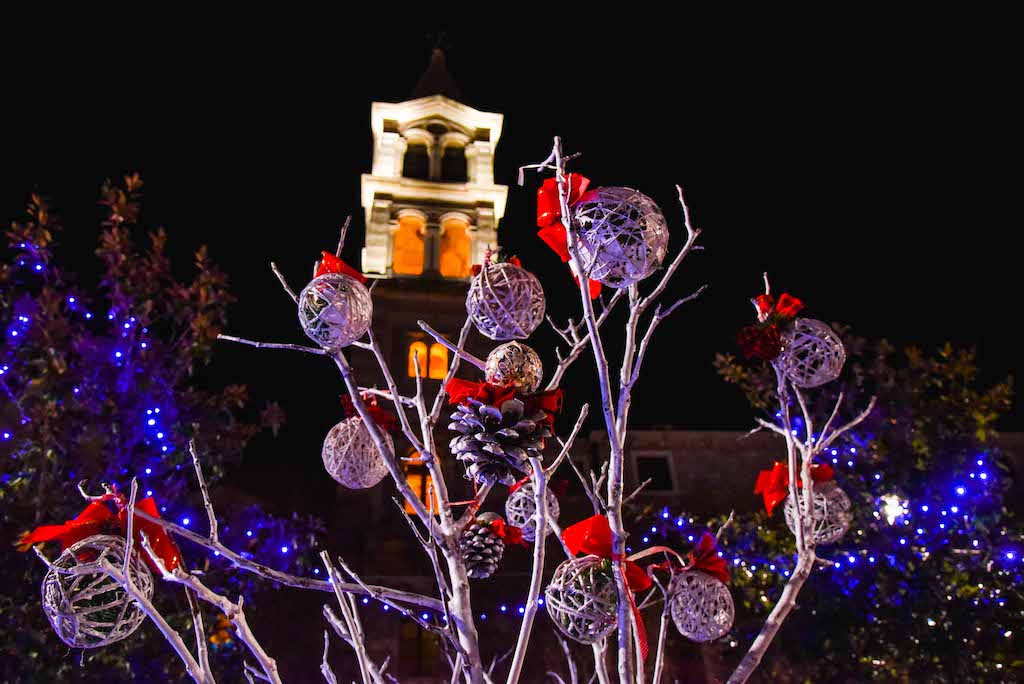
KUD Cetina will light up the town with their performance on the Christmas Eve of the Cetina Region, Sinjski ferali will rejoice in an evening of poetry, prose and Christmas cookies, and the Sinj folk theater will contribute to the holiday atmosphere with their performances. The praiseworthy humanitarian action ‘Pomagati ‘ will also offer help to those in need at this most magical time.

Say good-bye to the old 2019 and hello to 2020 with the youngest at the early New Year's Eve party, or join the older crowd in the evening at King Tomislav Square with a concert including M.O.R.T., and Jurica Padjen and Aerodorom.
Advent in Sinj ends with the New Year's concert and is organized by the City of Sinj, the Sinj Tourist Board, the Shrine of the Miraculous Lady of Sinj, and numerous associations in the area.
The Sinj Tourist Board is looking forward to seeing you at Sinj's Advent!
To read more about Inland Dalmatia, follow TCN's dedicated page.
Croatian Teacher on Ongoing Strike: Why I'm Striking
November the 28th, 2019 - Goran Podunavac, a TCN author and dedicated Croatian teacher from Baranja provides his side of the story of the strike, as well as his thoughts, opinions and the reasons as to why he, as a Croatian teacher, is continuing to strike along with countless other employees in the country's education sector.
I honestly don't even know what day of the strike in which I'm participating we're on now. Instead of being in class with my students, I'm sitting in the classroom with my colleagues and together in we're all commenting in a sense of wonder on the kind of messages being sent out by the heads of the Croatian Government and appropriate ministry.
In their ''parrot-written'' speeches, they repeatedly insist that they don't understand the reasons for the Croatian teachers' strike when they're giving us more than what we're even asking for. While the shameless proposal of our "benefactors" consists of salary supplements, we're standing firmly behind our initial demand. We're looking for a 6.11 percent increase in the coefficient in order for us to keep up with that of others employed in public services.
As an IT teacher, I could close the doors of the school and just go somewhere else to work where I'd definitely be more appreciated and ultimately - I'd definitely be better paid. But I love my job and see the sense and meaning in what I do.
There are many reasons why I'm striking.
I'm on strike because I want my work and other colleagues to be valued in an adequate way, because most of us are university graduates, and is it not shameful that our coefficients are the lowest of all those employed in the country's public sector who hold a university degree?
I'm on strike because I'm dissatisfied with the attitude of all the former and the current policies towards us. I'm on strike because I'm dissatisfied with the possibility of the anonymous reporting of teachers. I'm on strike because I believe that when the introduction of the only current reform in Croatia started, our ministry didn't even take into account at all that the scope of work for which we deserve higher wages was only increasing. For me, this is a strike of dignity and I refuse to give up on it that easily.
When it comes to the question of: ''Am I an uhljeb?'' my students can provide the most honest answer of all. Students who, after twelve years of hard work, still believe that there's hope for a better and brighter future for our country, and to them I say: Continue to be patient.
Don't feel like you've been cast aside and don't be angry with me or the rest of the school staff. I believe that you yourself know how important you are to me. Try to take some time to learn about civic duties during this time. Watch what happens and why, think about the position of power, and watch what a seemingly small man can do if he's in a community of like-minded people who are fighting for their dignity. You and your parents don't need to worry - I won't leave you without knowledge and an education.
Yesterday in the referendum, like most of my colleagues in Croatia, I firmly circled on the ballot paper that I do not accept the government's latest proposal and I'll continue to strike until our initial request is fulfilled. I'm ready to get up again at 04:00 to come along with 50,000 of my fellow educators to Zagreb's Ban Josip Jelačić Square. The solidarity and unity of that day showed me that one should fight for oneself with absolute dignity.
Finally, I'd like to reiterate to our government the very same message from the banner that I boldly and defiantly carried during the protest: "Teachers aren't mindless sheep."
The views expressed in this article are solely my own and may not represent the views of my colleagues or the schools in which I'm employed.
''We won't give up.''
Make sure to follow our dedicated politics and lifestyle page for much more on the Croatian teachers' strike.
Why Ownership of a Holiday House (Even on Vis) is No Longer Fun
November 28, 2019 - Life as the owner of a holiday house in Croatia used to be a lot easier, even on Vis, says longterm Visophile Miles Robinson.
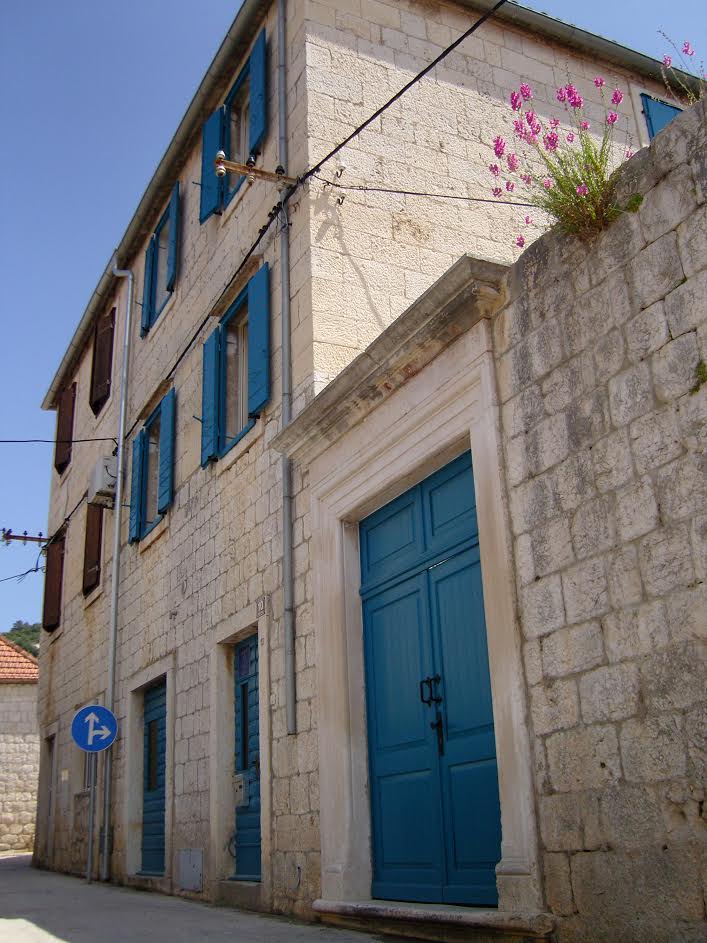
In 2003 my wife fell in love with Vis during a chance visit and by November we were the proud owners of a structurally sound (except the roof!) 200-year-old house in the centre of Kut.
We were lucky. There was only one owner to deal with and we were quickly introduced to a builder who had been ‘broken in’ to English tastes in internal decoration and fittings by two other kindred spirits.
The house has two floors above the konoba, plus a roof space, and originally had four bedrooms, etc. However, in talking to friends at home we were advised “you can never have too few bedrooms” so we removed the upper two bedrooms. This created a large open plan sitting room (which my wife rather grandly calls the ‘salon’!) which has a view over roofs to the bay on one side and roofs to the hills over Kut on the other.
The house was finished and occupied in 2005 and has proved a comfortable, relaxing bolthole for the two of us plus, occasionally, another couple. Fairly soon we made local friends and discovered that the duties of guide and meals in house can take the edge off the pleasure of additional good company after the novelty wore off. The advice was definitely sound!
After a year or so we discovered that other foreign owners were letting their houses when empty. Obviously, this benefitted both the island with extra tourist revenue and more than covered the running costs of the house for the year.
The island authorities, in line with their laissez-faire ‘pomalo’ attitude to island life in general, seemed to be relaxed about our activities
No. It couldn’t last! But now, from the sublime to the ridiculous, the bureaucratic form-filling has got too much, in addition to problems with our bank.
Some of the problems we have brought on ourselves, by asking the authorities what rules, regulations and taxes we were subject to. Big mistake! We should have just kept our heads down.
First, it was the eVisitor system, which requires the owner of ‘every’ rented house to log the full name, date of birth, and nationality, plus arrival and leaving dates, of every person occupying the house. This seems to be exactly the same system that applies to hotels. We got over this by employing a local agent (for a commission) and giving him our personal login and password to access the system!
However the big body blow came in 2017 when we were told that not only was our rental income subject to 13% VAT, backdated to 2015, but that monthly returns needed to be submitted (including zeros) for every month from January 2015; and that these returns needed to be filed by a tax accountant. The only accountant on the island quoted 650 Kn per month, but we found someone in Zagreb who would do it for 450 Kn, plus 25% VAT of course!
And then Splitska bank was sold to Hungarian owned OTP. The transfer of accounts was done without problems, but we were soon told that the only way we could access our accounts was via their mobile app. In the meantime, we had accepted rental deposits from foreign tourists renting our house which were due repayment in their own currency after they had left without damage. OTP told us that their internal rules prevented them from allowing non-resident account holders (us) to make any payments to foreign bank accounts.
Attempting to speak to someone in authority via their “helpline” proved impossible, so I contacted OTP’s Deputy General Manager in Hungary who, eventually, put me in touch with their Complaints Department in Zadar. That was in August.
I have recently received confirmation that they will not lift these restrictions on non-resident account holders, which I have now reluctantly accepted.
It is now finally clear that OTP has no interest in offering a full banking service to non-residents.
When we return to Vis next May I shall see whether the only other bank on the island, Erste, also adopts the same restrictions on non-resident account holders.
I wonder if any of your other non-resident readers have experienced similar problems and are also becoming disillusioned with the obligations of holiday homeownership?