

Customs Officers' Union Also Demands Higher Wages
ZAGREB, December 2, 2019 - The customs officers' union on Monday held a meeting in the Ministry of Labour regarding working conditions and adjusting the wage indices in customs services, with customs officers claiming that their wage indices are 20% lower compared to other employees in the Ministry of Finance.
"Customs officers are working in poor conditions. Legal provisions and the collective agreement are not adhered to. We are rarely given new uniforms and we have to buy our own toilet paper and soap. Overtime work is not paid and regular health check-ups are not conducted," union leader Rino Štorić said after the meeting with the ministry's representatives and in the absence of Labour Minister Josip Aladrović.
Štorić said that legal provisions and the collective agreement for about 2,800 employees are not adhered to.
He claimed that there is a lot of differences in the wage indices within the customs service and that they have warned the Ministry of Finance of this discrepancy for years, but without any response.
"Our last demand was sent to the prime minister personally, yet we did not receive any response. I hope that the government has realised that for years it is has been causing confusion in public services. They are the ones who adopt regulations on indices and define the rules of the game," said Štorić.
The customs officers' union expects a concrete response to its demands within seven days at the most. If the government does not respond in that time, the union will submit a complaint to the International Labour Organisation that workers' rights are not be respected.
Štorić added that customs officers are prepared to wait for the foreign consultants the government has announced will amend the regulation on wage indices.
He added that the union wants its status to be resolved as it is currently exposed to unprecedented pressure which threatens to shut down the union.
More news about trade unions can be found in the Politics section.
Croatian Faces Possible 10 Month Sentence for Painting Franjo Tuđman Statue
The first hearing for the trial of Croatian Filip Drača, a 24-year-old who vandalized the Franjo Tuđman statue in Zagreb with sickle and hammer graffiti earlier this year, was held on Thursday, November 28, 2019. A criminal complaint has been filed against him for property damage, and the State Attorney's Office is seeking a sentence of 10 months and 3 years' probation.
Croatian Inquiry
After Filip Drača sprayed a sickle and a hammer on the Franjo Tuđman statue on January 5, 2019; a public inquiry was launched to bring this perpetrator to justice as soon as possible, as reported by Anja Vladisavljević/Balkan Insight on November 29, 2019. Police have released security camera photos, and many major media outlets have been implicitly urging citizens to 'make a difference'.
Such demonstrations of force appear to send the public a message that the character and accomplishments of Croatia’s first President Franjo Tuđman must not be criticized. To counteract apparent intimidation tactics, a group of left-wing parties and associations organized a protest, and around 20,000 HRK (2700 EUR) has been raised for Drača’s defense.
When Drača was arrested, he confessed immediately. But when asked in court if he felt guilty, he responded that he did not feel guilty for the alleged offence. In an interview with Novosti newspaper in January, he said: “My intent wasn’t that serious, I meant to provoke and tease a little. If I offended anyone, that’s their problem. There is something wrong with anyone who perceives Tuđman and his small comical country as sacred.”
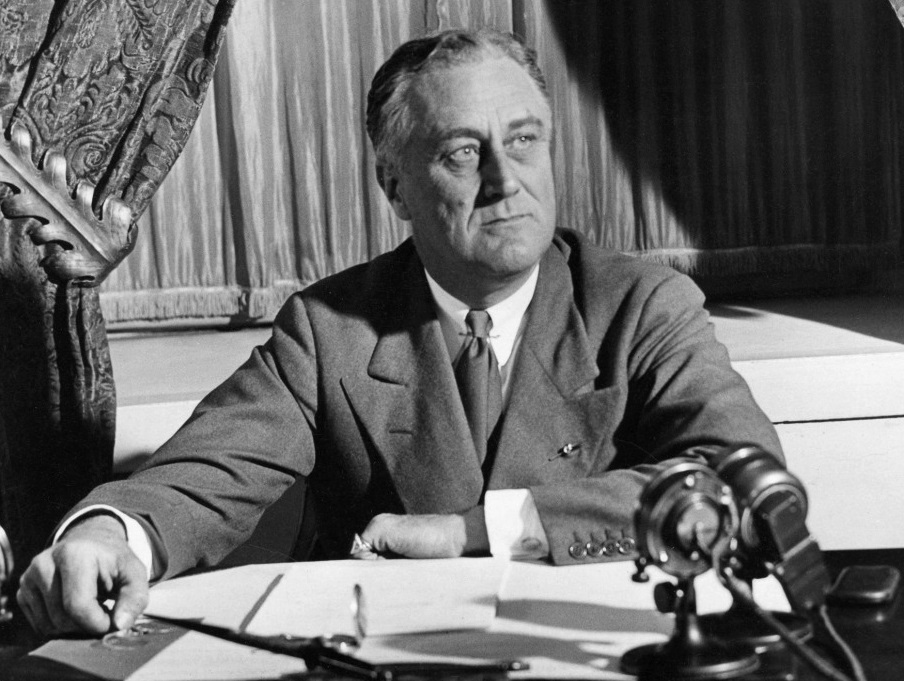
Resembles Franklin D. Roosevelt
The controversial four-meter-high Tuđman statue was unveiled in December 2018, on the 19th anniversary of his death, and was met with protests which resulted in arrests.
Critics have pointed out that the statue doesn’t resemble the Croatian president at all. Defenders indicated that the sculptor had taken considerable artistic license (apparently by softening the president’s distinctive features). In fact, it might be argued that the Zagreb statue looks more like US President Franklin D. Roosevelt, who led the United States out of the Great Depression and back to economic prosperity in the 1930’s.
Graffiti Normally Minor Offense
The first hearing was held Thursday, November 28, 2019 at the Zagreb Municipal Criminal Court. The prosecution claims that the property was severely damaged and that it was the perpetrator’s intention to damage the statue and alter its appearance. But as Drača’s lawyer Lina Budak pointed out, the statue was not severely damaged – nor has its value or usability been diminished.
Budak also believes that a criminal trial should have never been initiated because this is a "minor offense" and the case could have been prosecuted as a misdemeanor. It’s obvious that there are two sets of criteria, she emphasized, since official investigations into graffiti vandalism are rarely initiated, or ever proceed to a criminal trial. As Zagreb Mayor Bandić once said, “Don't make an elephant out of a fly ... if any (monument) is damaged, let us know and we will restore it in two days,” after the statues dedicated to anti-fascists/communists in Dotrščina were vandalized. The question is why don't the same principles apply to the Franjo Tuđman statue.
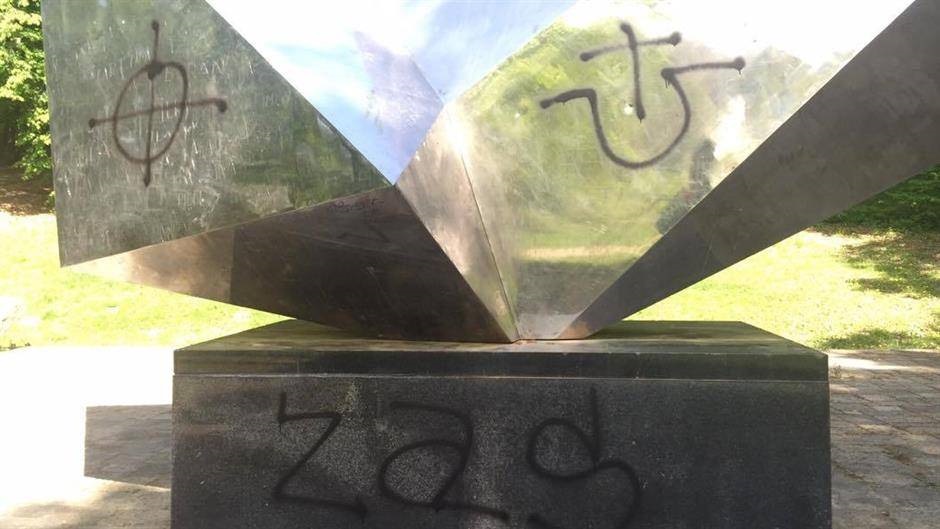
Croatian Anti-fascist Statues Destroyed
It’s worth noting that over 3000 anti-fascist statues have been destroyed in Croatia since the 1990s. That destruction is ongoing, and the culprit is often an "unknown perpetrator". In other words, there doesn't appear to be any government interest in prosecuting anyone who destroys monuments dedicated to anti-fascism.
Repair Costs Not Disclosed
Perhaps the most interesting detail from today's hearing is that the City of Zagreb, which owns the statue, has not yet provided an estimate of the alleged material damage. This means that the criminal complaint was filed without knowing the extent of the damage, which is problematic since the gravity of the offense is directly correlated to the repair costs - whether they amount to 100 or 100,000 HRK.
Regarding damage repairs, the City of Zagreb already pays lump sums of money, among other things, to two contractors who maintain the statue and grounds. Those maintenance contracts include removal of graffiti, so it seems excessive to claim any harm to the 'property owner' or the city.
The hearing ended after the plaintiffs and the defendants had presented their evidence. And, the next hearing is scheduled on February 21, 2020 at 9:00. The trial is open to the public.
To stay updated on the trial of Filip Drača and Croatian politics, follow our page here.
Russian MUZ TV Filming Zagreb Christmas Market
ZAGREB, December 2, 2019 - A crew of Russia's MUZ TV music channel is currently in Zagreb where it is filming Zagreb's Christmas market as well as the SalajLand Christmas light show in Cažma, the Croatian National Tourist Board (HTZ) said on Monday.
MUZ TV is Russia's version of MTV and the production crew will stay in Zagreb until December 4 where it will shoot on site at Zagreb's Christmas market and the SalajLand Christmas light show, which will be broadcast on its Independent Traveler show on December 21.
"In the past three seasons, the show has attracted more than 25 million viewers throughout Russia. I am certain that the show from Zagreb and SalajLand will be an opportunity for a lot of Russians to come to know Croatia as a quality all-year round destination with a very rich offer during the winter months too," HTZ director Kristjan Staničić said.
Daily direct flights between Zagreb and Moscow throughout the year will certainly contribute to the positive trends from the Russian market, added Staničić.
The increase of the tourist turnover from the Russian market this year will be almost 14% and interest by Russian tourists for Croatian destinations is constantly rising, the director of HTZ office in Russia, Rajko Ružička said.
This is the third study tour that HTZ has organised for Russian television. A crew for the "Let's Go, Let's Eat" show on NTV filmed in Croatia in June, and in September the Friday TV did some shooting for its show "Orel I reshka".
More tourism news can be found in the Travel section.
Croatia Will Set Aside 9.4 Billion Kuna for Defence by 2024
ZAGREB, December 2, 2019 - After Croatia was almost given an ultimatum by the U.S. and NATO in Brussels at the end of October, like some other NATO member states, to come up with a plan in six weeks on how to set aside 2% of GDP for defence, Defence Minister Damir Krstičević has told Večernji List daily of Monday that an action plan has been drawn up.
"Croatia will be in the green," he was quoted as saying.
Krstičević and Prime Minister Andrej Plenković are going to London for a NATO summit on December 3-4 and on that occasion they will undertake the commitment that Croatia will be able to set aside said 2% by 2024, when it is estimated that its annual defence budget will be 9.4 billion kuna.
Now Croatia spends about 6.7 billion kuna on defence, so a 40% increase will be achieved by 2024. NATO believes Croatia must invest more in defence and a lot more in the equipment and modernisation of its army.
Although on paper, thanks to a new NATO methodology, Croatia now sets aside 1.68% of GDP on defence, this amount (6.7 billion kuna) includes veterans' pensions, which means that 5 billion kuna is spent annually on the active army.
When salaries are added to the pensions, it turns out that Croatia spends 73% of its defence budget on personnel. Consequently, much less is spent on equipment and modernisation which, Večernji List says, is disastrous, notably after the failed procurement of fighter jets.
More news about defence issues can be found in the Politics section.
Euro 2020: UEFA Grants Croatia Fans 14,000 Tickets for England Match in London
December 2, 2019 - Fourteen thousand lucky Croatia fans will be able to support the national team in their opening match of the Euros against England at Wembley.
On Saturday, November 30, UEFA announced the number of tickets available for the European Championships next summer.
“Fans of the 20 countries that have already qualified for UEFA EURO 2020 will be able to apply for tickets to watch their teams’ games when they go on sale exclusively at EURO2020.com on Wednesday 4 December at 14:00 CET.
Supporters will have until 14:00 CET on 18 December to snap up these must-have tickets for the tournament, which celebrates 60 years of the UEFA European Football Championship, with the final at the world’s most famous football ground, Wembley Stadium in London.
Supporters of the four teams who qualify through the European Qualifiers play-offs will be able to apply for tickets shortly after the completion of these matches, which will be played from 26 to 31 March 2020.
Over half the tickets being made available for all games will be in the cheapest price category, with prices for group stage matches starting at €30 (in Baku, Bucharest and Budapest) and €50 in the other host cities.
This latest round of sales follows the hugely successful general public ticket sales in summer 2019, when 19.3 million ticket requests were received between 12 June and 12 July 2019 for the 1.5 million tickets on offer.
UEFA EURO 2020 is the biggest UEFA European Football Championship ever, with over 3 million tickets available, 82% of which are allocated to all fans,” UEFA announced in a press release.
Thus, Croatia and England fans will receive 28,000 tickets for the first-round match of Group D in London. There will be 14,000 tickets for Croatia fans for the first round of the Euros, scheduled for June 14 at Wembley Stadium in London.
Niksa Martinac of HNS ticket distribution explained how things would work to 24 Sata.
“The federations of the national teams playing each other will share the tickets available for the fans 50-50, with England as the host receiving 1,000 more tickets,” Martinac explained.
Applications for Croatia fans begin on December 4 and end on December 18. A quarter of the tickets held by HNS, which would mean 2,500 tickets for Glasgow, go to those who are old customers' through HNS, that is, those who have purchased tickets in the last three cycles - qualifications and Euros in France, qualifications and World Cup in Russia, and the Nations League. Those not included in that quarter enter the lottery, and everything goes through UEFA.
By the end of January, all those who have applied will be notified. Those who are not selected in the lottery will have a chance if someone fails to pay,” explains Martinac.
Croatia fans will receive 14,000 for the match against England and 10,000 tickets for the matches in Glasgow. The first category of tickets costs 185 euro, the second category 125, and the third category 50 euro.
To read more about sport in Croatia, follow TCN’s dedicated page.
Split Fish Market Moves Indoors, Sellers Banned from Outside
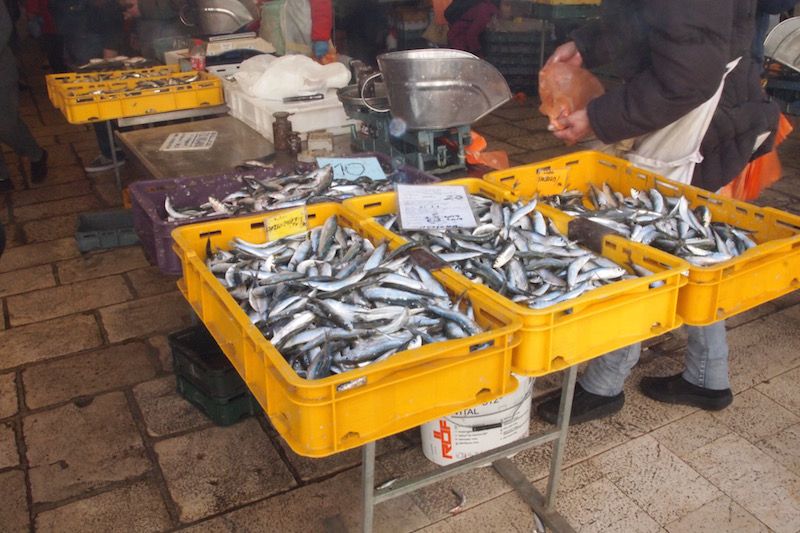
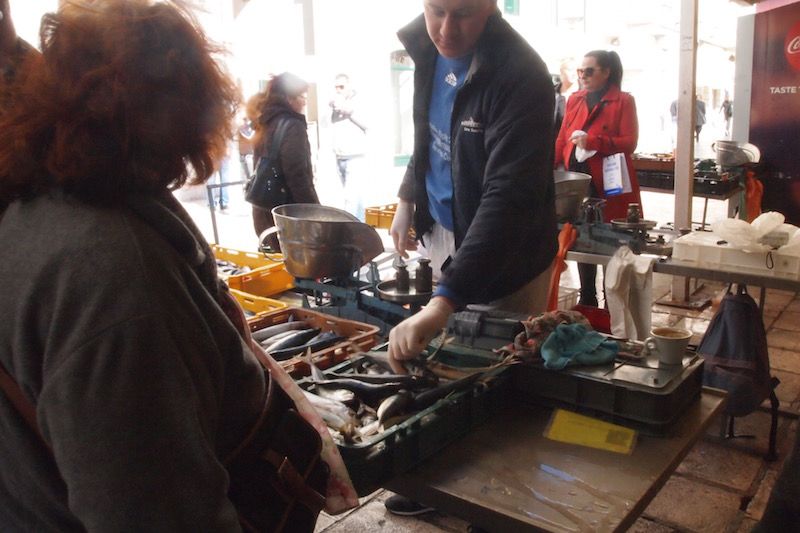
December 2, 2019 - Hippos, a concessionaire of the Split green market and fish market, have banned sellers in the outside part of the Split fish market.
Slobodna Dalmacija reports that from today, fish and seafood will no longer be sold in the outdoor area of the Split fish market, based on the decision by the State Inspectorate and the Veterinary Inspectorate.
The decision to close the outside area was made following the law that prohibits the sale of fish outdoors, i.e., permits the sale of fish only indoors.
Since the exterior of the fish market has only a prefabricated roof, this space is not legally adapted for the sale of fish. However, despite this fact, it should be noted that all fish sellers will get their place in the enclosed part of the fish market.
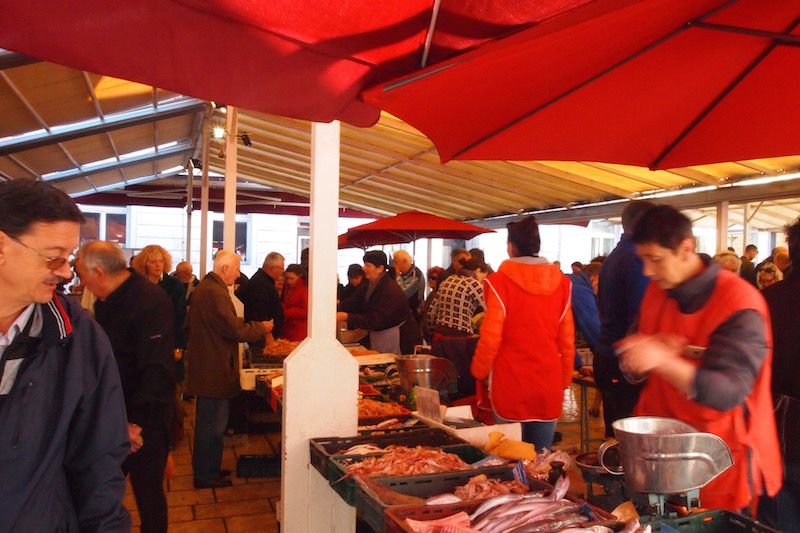
Thus, until further notice, the smell of fish will no longer permeate through Marmontova and the surrounding alleyways, and the famous street will be quieter without the sweet sounds of bargaining.
“There is room for everyone and no one will be neglected. All those who have been selling fish outside the fish market to date will be housed inside.
They may not have the guaranteed comfort as before, they will have to squeeze a little, but no one will be left without a place to sell.
We, as concessionaires of the Split fish market, will abide by all legal provisions, that is, all legally issued decisions,” promises Tvrtko Karoglan, director of Hippos, the concessionaire of the Split green market and fish market.
However, Karoglan points out that he will not give up on outdoor sales. That is, as the owner of the fish market, and with the City of Split and the competent conservation services, he will try to find a way to meet all legal standards to start selling fish outside again soon.
“The Split fish market is a part of the history of this city, and it will surely be unusual for many Split residents buying fish today,” says Karoglan.
Splitski Dnevnik writes that fishers are dissatisfied with this process and the Fishers’ Guild immediately held a meeting on the topic. The fishers voiced that they are concerned about what will happen to the surplus fish that cannot be sold inside due to the market's space, adding that it is necessary to review the decision on who can sell their fish at this market.
Fishers also said that there have been talks about renovating this area for several years, and that the funds have been secured from European funds, but nothing has happened.
The Split Fish Market is a stone building built around 1890. It is located on Marmontova, next to the Split spa. On the stone banks inside the fish market and in front of the fish market, fishers offer fresh fish, crustaceans, various types of shellfish, anchovies, sardines, and river fish daily.
For now, watching seagulls steal sardines from Marmontova will be a thing of the past, as is one of Split’s most famous attractions.
To read more about lifestyle in Croatia, follow TCN’s dedicated page.
Miroslav Škoro for Banning Work on Sundays
ZAGREB, December 2, 2019 - Presidential candidate Miroslav Škoro said in Zaprešić on Sunday he was for banning work on Sundays, that the ruling HDZ party was betrayed by those running it, and that he would return Croatia to the people and political parties to their members.
Škoro said irresponsible conduct had led to the ongoing teachers' strike and that the strike was the result of inaction. On the other hand, when this strike ends, customs officials have announced another and police officers are waiting in line, he added.
We are governed by people who see it differently than those in the private sector. That's difficult to understand for a man whose first job is as a member of parliament or a minister because he has learned to manage the money of others, yet has never created anything himself, Škoro said.
He dismissed accusations that he had betrayed the HDZ, saying he left the party because he did not agree with such an HDZ. "The people running the HDZ have betrayed the HDZ and the HDZ members. And just as I will return Croatia to the people, so will I see to it that I return parties to their members."
Škoro went on to say that his initiative to increase the president's powers envisaged calling a referendum to ban work on Sunday.
He added that he would hand over the signatures collected to back his presidency bid to the State Election Commission on Tuesday.
More news about presidential elections can be found in the Politics section.
Negotiations with Striking School Unions Continue on Monday
ZAGREB, December 2, 2019 - The Croatian government on Sunday evening stated that the negotiations with the striking unions of education-sector employees would continue on Monday, which was why Prime Minister Andrej Plenković cancelled his attendance at a UN summit meeting in Madrid.
One of the leaders of the striking unions, Branimir Mihalinec, said after a six -hour-long round of the negotiations on Sunday that the talks would go on Monday, as well as the 36-day-long industrial action.
"We have concluded that we still need some time for talks and we will continue negotiating tomorrow. We expect the conclusion (of the negotiations) tomorrow," the unionist said in his brief comment on Sunday's meeting in Government House.
"We have also agreed that we will not give statements to the press," Mhalinec said urging reporters not to ask any more questions.
Prime Minister Andrej Plenković was to have attended the opening of COP25 climate summit.
More news about the school strike can be found in the Politics section.
Croatian Identity Theft: Documents on Black Market Due to MUP Chaos
Croatian national security is at stake because criminal organizations have infiltrated the MUP identity document issuing system, which stores the personal information of Croatian citizens and residents, according to Željko Cvrtila, a national security expert and former police chief.
"Low wages, lack of internal oversight, political recruiting, and the interference of politics and money within MUP (Croatia Ministry of the Interior) are the main reasons for the appearance of Croatian identity documents on the illegal market," he added during a brief interview to Renata Škudar/Nacional on November 29, 2019.
Is Croatia's national security at stake?
“This is endangering national security, because Croatia’s document issuing system has been infiltrated, and a lot of original identity cards and passports have fallen into the hands of criminal organizations. The system has been penetrated because the intelligence and security networks in our neighboring eastern states are connected to criminal organizations in these countries and with criminal groups in Croatia. All of this is happening on Croatian territory and that is our biggest problem."
How did so many Croatian documents appear on the illegal market?
"The MUP system is intertwined with various political lobbies and people who are not subject to internal oversight. Procedures are not being properly implemented and the people in charge of these systems are not doing their jobs. There is a lack of oversight regarding employee resources and criminal organizations can easily exert their influence in such a permeable system. The system only works when corrupt politicians and the mafia aren't interfering in politics and business, or providing and returning favors. Otherwise, we’ll have chaos where crime reigns,” concluded Cvrtila.
Read an EU national’s account of MUP abuse here. Find out how to change your address at MUP here. Follow our Lifestyle page here and our Politics page here for updates on MUP and the activities of other branches of Croatian government. The MUP website can be accessed here.
MIT Bootcamp Zagreb: Educational Programme for Innovation
MIT Bootcamp Zagreb is an intensive training program on innovation and entrepreneurship management, being held for the first time ever here in Europe. The first MIT Innovation & Entrepreneurship Bootcamp in Europe was presented on Friday in the Croatian capital.
As Poslovni Dnevnik/Marta Duic writes on the 1st of December, 2019, this is an intensive training program on innovation and entrepreneurship management, which will be held for the first time in Europe, more precisely in Zagreb, with the cooperation of Algebra, FER and the Massachusetts Institute of Technology (MIT). It is MIT's first collaboration with Croatian institutions, and the project is significant not only at the educational level, but for the entire economy as well, as was highlighted at a media conference.
More than 1000 applications are expected, of which 140 participants will participate in MIT Bootcamp Zagreb and 20 seats will be secured for Croatian candidates.
"In six days, key knowledge in a variety of fields, from leadership, innovation, new product and service development, marketing components, etc, will be summarised, and participants have a ''pitch'' in front of investors.
We aim to keep some of these ideas here in Croatia. The MIT Innovation & Entrepreneurship Bootcamp has so far seen 1,200 students pass through it, who then went on to set up around 100 companies and raise more than 70 million dollars, "said Mislav Balković, dean of the Algebra College in Zagreb.
Hrvoje Džapo, the leader of FER's career centre notes that this project is an opportunity to learn from the best about commercialising innovation, because that is exactly what Croatia lacks.
"This is just the beginning of this story, which we want to strengthen the collaboration of academia and institutions with, and we're planning our 10 counsellors who will go through the camp to learn how to identify people with entrepreneurial spirit and potential on the ground, and later we'll transfer this knowledge to regional development agencies and chambers,'' explained Ante Lončar, director of the Croatian Employment Service.
Marija Knežević Kajari, assistant minister of labour, said that the only education left is to activate the existing and future workforce.
"Additional importance lies in the fact that the camp is being held at a time of the rotation of the EU presidency, and we can show Europe that yes, we can," stated Knežević Kajari.
Hrvoje Josip Balen, Member of the Board of Algebra who is also working on the project, notes that this is an opportunity for all businessmen and institutions and that they expect to continue cooperation with one of the world's leading universities in the future.
Make sure to follow our dedicated business page for much more.