

FlixBus and Croatian Railways: Synergy in Future of Sustainable Travel
December 21, 2019 - As integrated transport occupies an increasingly important place in the future of sustainable driving and becomes an alternative to using passenger vehicles, the more transport providers see the future precisely through cooperation. Like the latest project between Flixbus and Croatian Railways.
HRTurizam writes that this step into the future was also confirmed by the first collaboration between the leading European bus carrier and the national rail passenger transport. FlixBus and HŽŽ (Croatian Railways) have networked to their advantage and now, European destinations like Vienna, Rome, Paris or Prague are closer to destinations like Bjelovar, Sisak, Zabok or Koprivnica.
In recent years, FlixBus has developed the largest international bus network with over 400,000 daily connections in 30 countries. By collaborating with HŽ Passenger Transport, an additional 70 destinations from Central Croatia are included in this global network with almost 170 daily departures.
Thanks to this collaboration, travelers can now plan their trip to the most desirable European destinations by combining train and bus rides. Those traveling by train from or to Zagreb from Sisak, Bjelovar, Križevci, Koprivnica, Zabok, Krapina and Karlovac and everywhere the train passes can travel directly to 10 European countries such as Germany, Italy or France with one ticket for both carriers. Available combination destinations and tickets can be found today on the free mobile app and the FlixBus website and at the ticket office of the Sisak railway station.
“From the outset, the mission of FlixBus is to provide everyone with a comfortable and easy journey. Smartly connecting different transport models is crucial in carrying out this mission. Cooperation with Croatian Railways is the next step in the future of integrated travel and an easy journey for all,” said Ante Grbeša, Director of FlixBus CEE South.
Traveling by train is the most environmentally friendly and sustainable in the long run. Accordingly, Croatian Railways focuses its development policy on business and social goals based on the principles of sustainable development. By adapting to the challenges of mobility and increasing the quality of service, they promote integrated transport, which improves the movement of the population to improve the quality of life of citizens.
"The introduction of integrated regular transport creates added value and citizens will be able to use one ticket for train and bus transportation. This type of transport is part of positive European practice and we believe that we will soon offer it in other major cities. Using public transport relieves the city roads, so I hope that citizens will be satisfied with this service and use cars less,” said Željko Ukic, President of Croatian Railways Board.
To read more about travel in Croatia, follow TCN's dedicated page.
Erste Bank: Croatia's GDP Growth to Slow Down to 2.5% in 2020
ZAGREB, December 21, 2019 - Erste Bank estimates that Croatia's GDP growth in 2020 will slow down to 2.5% compared to the 3% forecast for this year, it was said on Friday during a Christmas function for the bank's executives and the media.
Chief analyst at Erste Bank Alen Kovač said that personal consumption and investments were the main generators of growth in 2019 and that investments were supported by better absorption of European Union funds. Kovac expects that these two segments will once again be the main contributors to growth in 2020 and that a relatively strong growth in investments, once again supported by EU funds, would compensate for the potentially unfavourable economic situation abroad next year, which could mean negative risks for Croatian exports.
Those risks are primarily related to Brexit, the potential further deterioration of trade relations between the major powers, and the level of growth in Germany and Italy. Personal consumption and its contribution should remain relatively stable and strong, and that should be supported by positive aspects in the area of disposable income, consumer confidence, the labour market and increased wages in the public sector, Kovač said.
Risks related to the estimated growth rate of 2.5% in 2020 are relatively balanced and investments represent a positive risk, while the global surroundings are a negative risk," Kovač underlined.
He added that growth climaxed in central and eastern Europe in 2018 while it slowed down in the majority of countries in 2019. Croatia is among that group of countries where a mild acceleration occurred, which is a positive exception.
More economic news can be found in the Business section.
NATO General Thanks Croatia, Its Troops for Serving in Afghanistan
ZAGREB, December 21, 2019 - The commander of NATO's Resolute Support Mission and United States Forces - Afghanistan, General Austin Scott Miller, on Friday thanked Croatia and its troops for serving in Afghanistan.
Miller met Croatian Defence Minister Damir Krstičević at the mission's HQ in Kabul, the Croatian Defence Ministry said in a press release.
Krstičević, on an official visit, and Miller talked about Croatia's contribution to the Mission, NATO's plans for the Mission's future and the security situation in Afghanistan.
Miller thanked the Croatian people, saying that serving in Afghanistan was important for all NATO states, for partnership within NATO, and that it was important to protect everyone.
He also thanked Krstičević and Croatia for their dedication and the committed service of its troops in Afghanistan.
"Croatia is one of the 36 countries participating in the mission in Afghanistan. Together with our partners, we are contributing to the establishment of international peace and security, we are counselling and mentoring Afghan forces so they can assume responsibility for peace and security in their state," Krstičević said, adding that he was proud to hear Miller praising the Croatian troops.
Krstičević and Miller extended greetings to the 11th Croatian contingent in Afghanistan and their families for the upcoming holidays.
More news about Croatia and the NATO can be found in the Politics section.
A Very Successful Year on Hvar, Overview of Awards and Highlights
December 20, 2019 - It has been a tremendous year for Hvar Town, from the reopening of Europe's oldest public theatre to being voted the best island in Europe. An overview of some of the highlights.
In 2018, Hvar celebrated 150 years of organised tourism in Europe, the first place to offer such tourism with the founding of the Hvar Health Society on May 15, 1868. It was the latest milestone in Hvar's illustrious tourism journey over the last one and a half centuries. Could year 151 being anything special too?
Oh yes!
After years of flirting with party tourism, 2019 was the year when the direction of Croatia's premier island was reset. A number of important heritage openings and awards set the tone for what has once again been an exceptional year for the island which boasts the most UNESCO heritage of any island in the world.
Reopening of Hvar Public Theatre.
May 1 was an historic day for Hvar culture. For finally, after a renovation process of some 20 years, the oldest public theatre in Europe was once again opened. Built in 1612, the theatre celebrated its 400th year in 2012, and it is a symbol of the high level of culture that existed on Hvar in years gone by.
Take a tour of the theatre in this excellent drone footage released at the time of the opening, and learn more about the theatre in an interview with the author of its history, Mirjana Kolumbic.
Reopening of Arsenal.
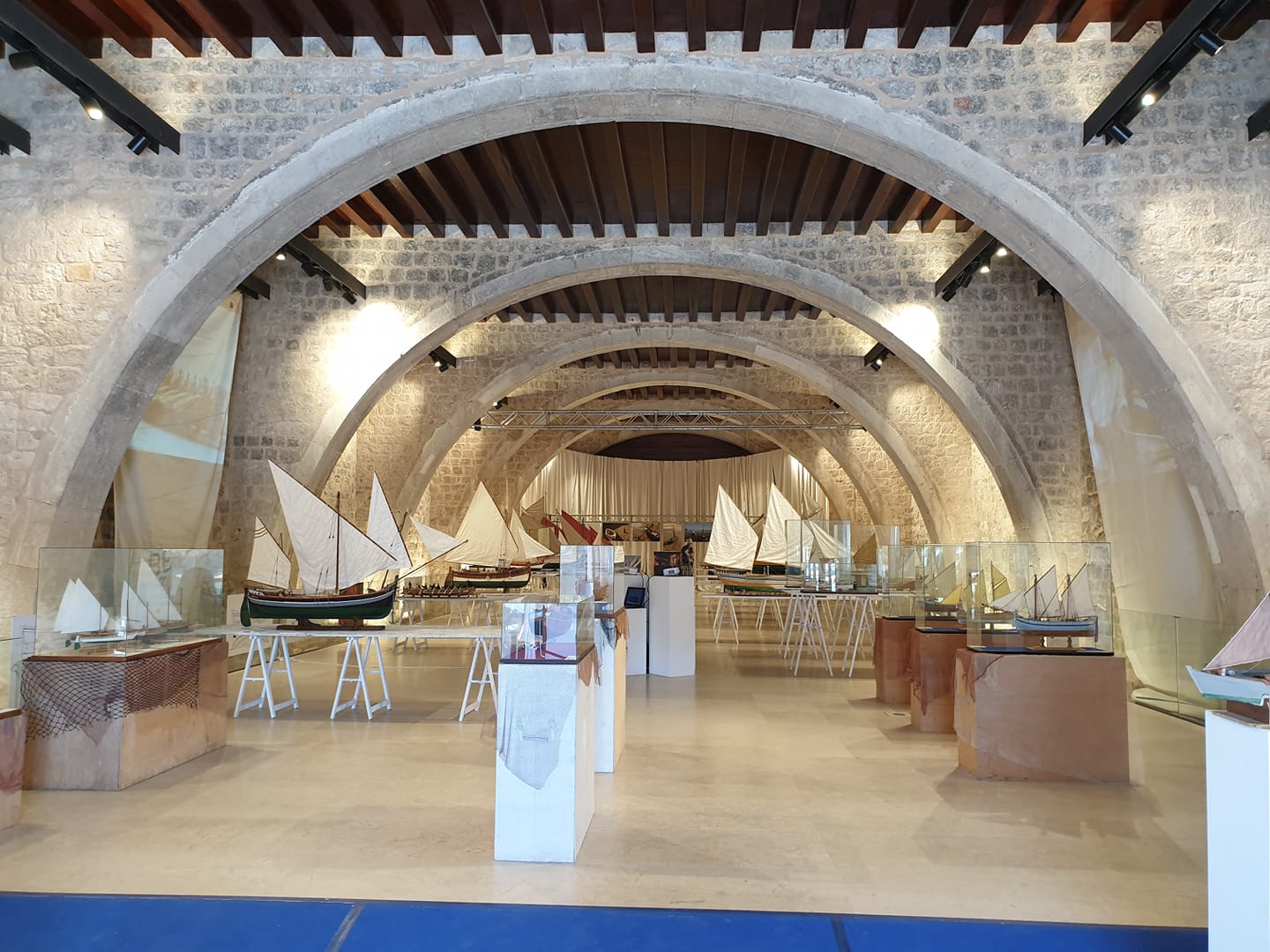
The theatre is located on the first floor of the imposing Arsenal building, which guards the entrance to the main square in Hvar Town. The Arsenal has undergone plenty of renovation of its own in recent years, a journey which included the discovery of Roman ruins underneath its structure. Renovations were finally completed, and it reopened as a premium event and exhibition centre for the town.
Opening of Palace Elisabeth, hvar heritage hotel, the first 5-star hotel on the island.
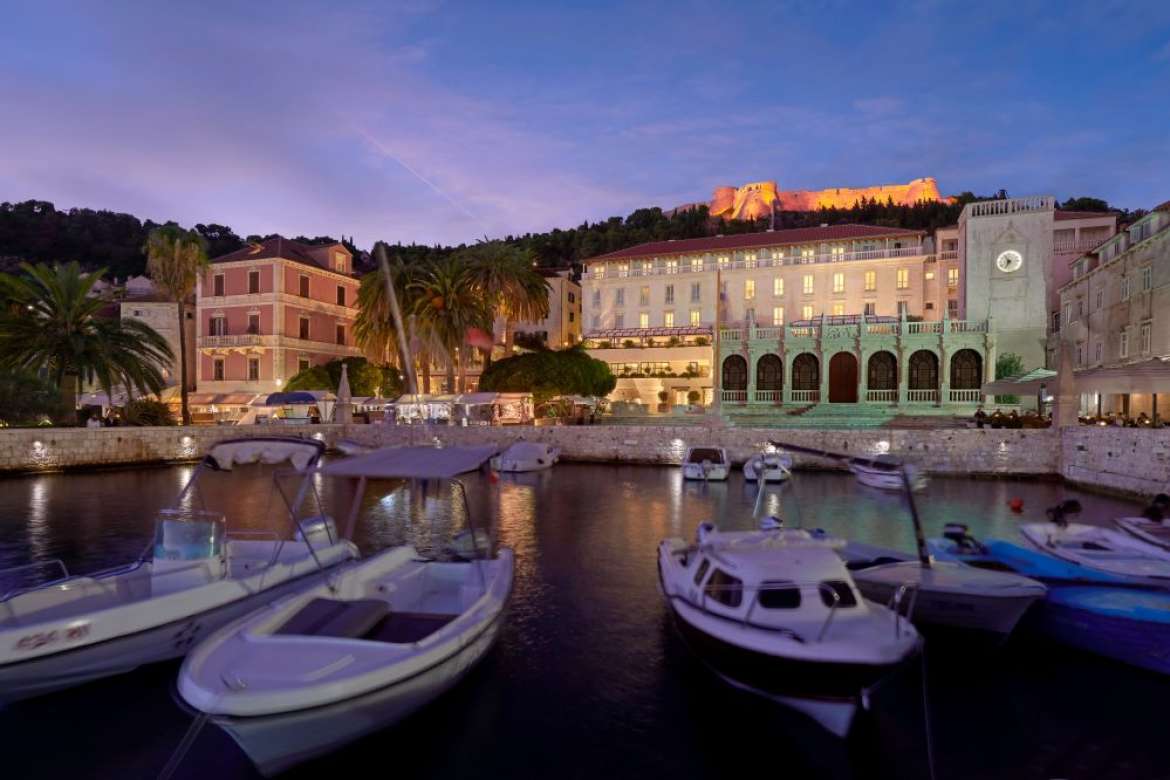
Renovation was also taking place across Dalmatia's largest square (some 4,500), as the location of the origins of the oldest organised tourism in Europe was enjoying a 100-million-kuna facelift of its own. Palace Elisabeth, hvar heritage hotel, opened its doors on September 1, the first-ever 5-star hotel on the island. It was a gorgeous fusion of modern luxury and exquisite heritage details. The opening party in October was quite a night, and now Hvar Town finally has a world-class hotel to complement the destination.
IQM - measuring the improvement in quality.
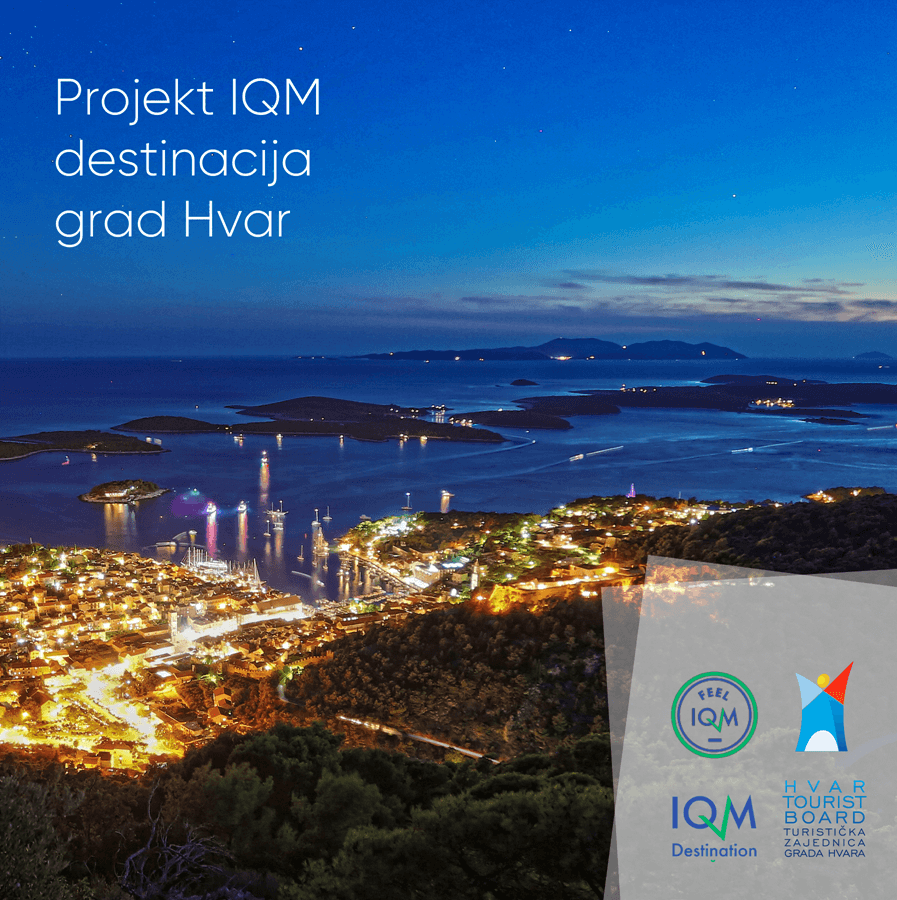
Measuring quality and improvement in tourist destination in Croatia has always been problematic and anecdotal, simply because there has been no mechanism of quality control. That changed recently with the introduction of the IQM (Integrated Quality Management) destination standard, and Hvar Town was one of the first in the country to adopt it. And the first concrete results were impressive:
The project was implemented on a total of 122 tourism facilities in Hvar, 94 were accommodation facilities (hotels, hostels, private accommodation, camps...) and 28 hospitality facilities (restaurants and cafes) and the results for the first eight months of the year indicate that Hvar achieved a higher and better score than for the same period last year.
In the Guest Rating Score (GRS), Hvar achieved a score of 89.5 of the possible 100 points which is 1.7% better year-on-year. The city aims to achieve a score of 90. Of a total of 10,655 evaluations of services (560 more than last year), the quality of hospitality services were assessed with a score of 96. The score for price compared to quality was 94, location scored 92 and cleanliness 93 points. Hospitality facilities were given a score of 89.4 or 1.6% higher than last year while the quality of food scored 88.7. The food quality received 88.7 points and services 91, while the ratio of price and quality in the reviews restaurants and cafes was 85.
Conde Nast votes Hvar the number one island in Europe, maybe Travel + Leisure too.
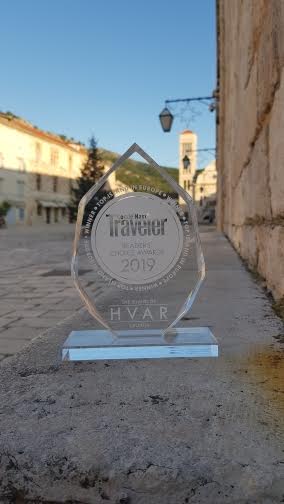
Back in 1997, readers of influential travel publication Conde Nast Traveler voted as one of the ten most beautiful islands in the world, a tag which has stuck with the sunshine island ever since.
This year, a record 600,000 readers cast their votes once more for Hvar, and Hvar was voted the number one island in all Europe. And who are we to disagree?
And it is not just Conde Nast. Hvar has also been nominated for the best island in Europe in the 2020 Travel + Leisure World's Best Awards. Voting will take place until March, 2020.
Five island tourist boards join into one Destination Management Organisation.
After years of promoting the island's towns separately, the five tourist boards of Hvar officially signed a contract of cooperation which will see them transformed into a destination management company, working together to promote the island as one. With more money allocated to joint advertising, the benefits for the islands' tourism promotion should be significant.
The return of Bahrain McLaren, a global brand launch on Croatia's premier island.
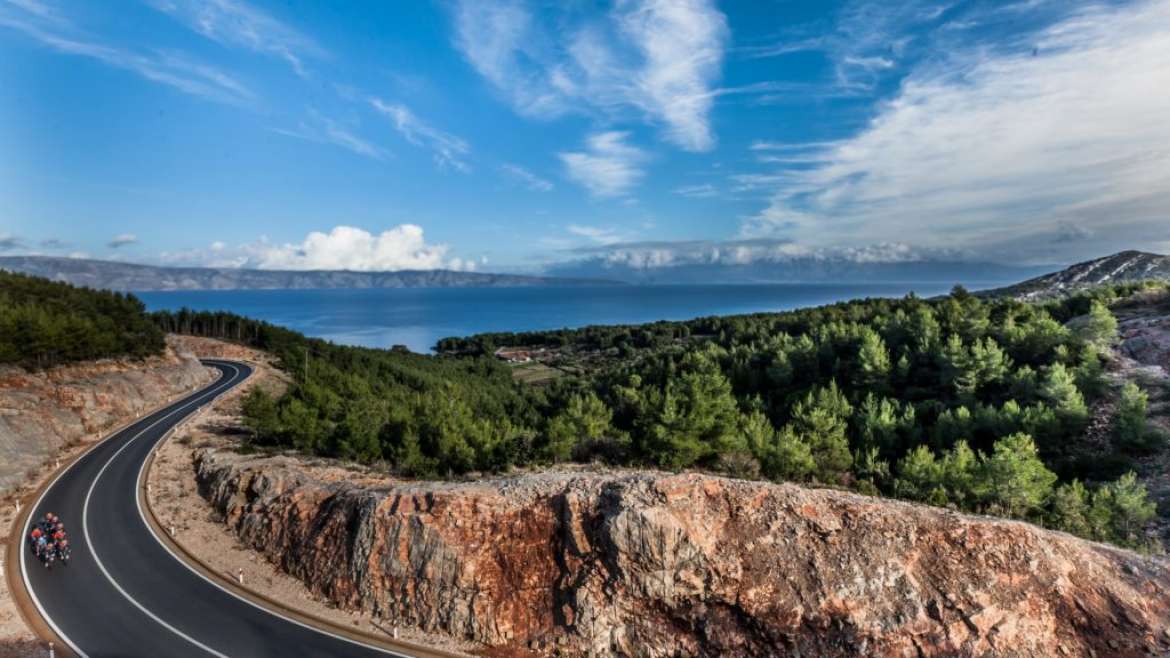
There were many visitors to Hvar this year, tourists and otherwise, but one world-class fixture each December in recent years has been the cycling team of Bahrain Merida, one of the very top teams in the sport, who have discovered that Hvar is an ideal place for winter training. The whole Bahrain Merida team of 80 descended on Hvar for the third winter this month, immediately after the exciting announcement of their new partner, McLaren. Bahrain McLaren will become the official name on January 1, but it was on Hvar that this new partnership first took to the roads.
Suncani Hvar Hotels among the awards and nominations.
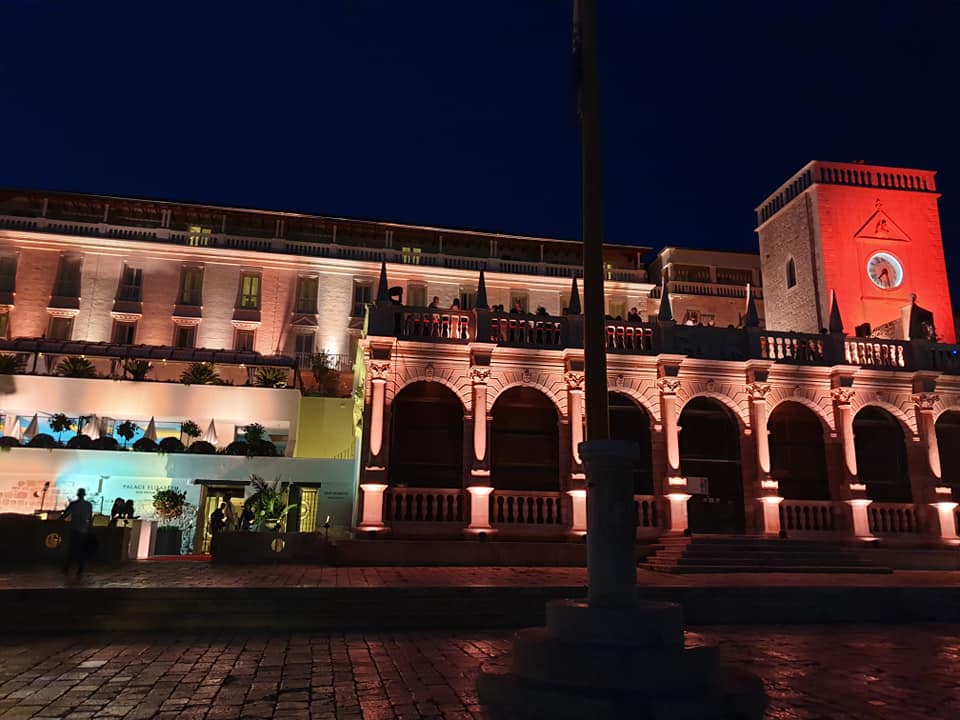
The hotel story of the year on Hvar was, of course, Palace Elisabeth, which has already aroused plenty of media and industry attention. Already one of the Leading Hotels of the World (one of only 6 in Croatia), Palace Elisabeth featured heavily in international media, including USA Today, The Daily Telegraph, Elite Traveler, and Robb Report, as well as being named by Architectural Digest as one of the world's best-designed new hotels for 2020.
But the media love and recognition was not confined to Palace Elisabeth, and Hotel Amfora was included in TripAdvisor's top 30 family resorts in Europe, while Hotel Adriana has been nominated by Travel + Leisure in the Best Croatian Hotels category.
And, in more good news for the luxury traveller, the second 5-star hotel on the island is due to open in April in Maslinica, close to the ferry in Stari Grad.
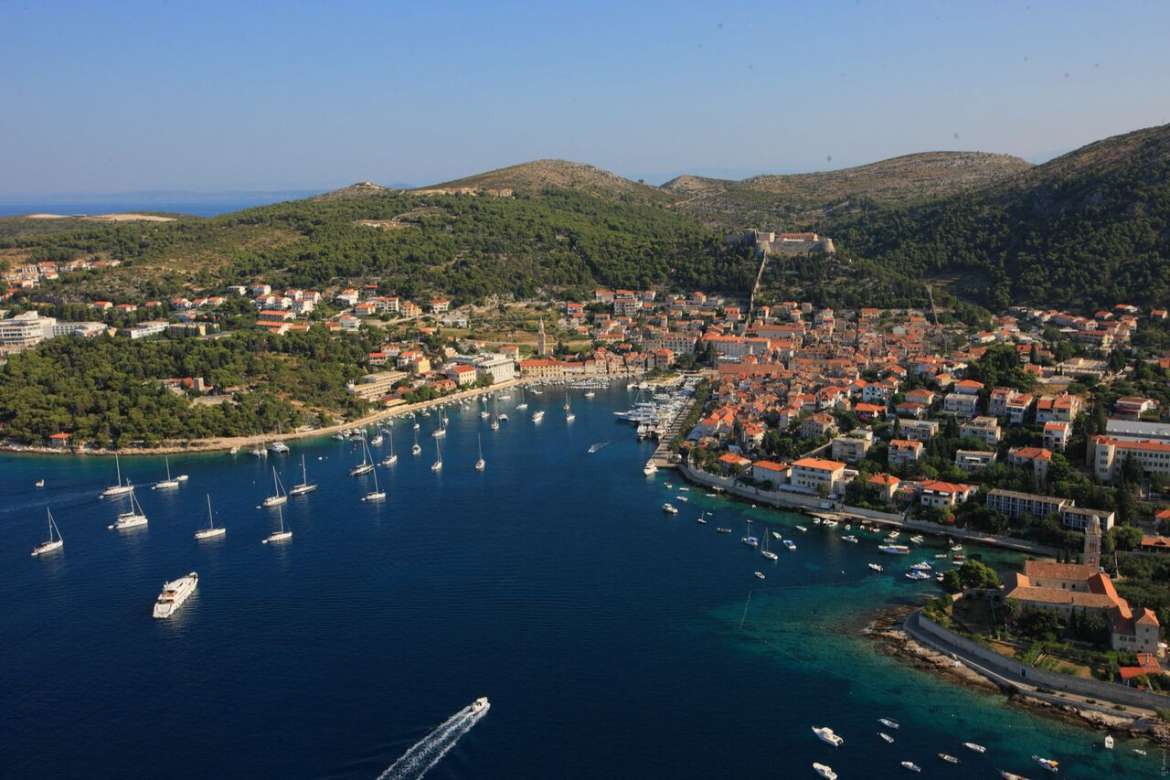
The season in numbers, a platform to build on.
By November 15, the 2019 season had already become the busiest in the town's post-independence history, with 210,942 arrivals and 763,629 overnights. Key target markets, the UK and USA, were among the top five growth markets:
UK 31,139 arrivals + 4.64% 115,782 nights + 5.13%
US 30,907 arrivals + 7.51% 75,323 nights + 5.73%
France 10,096 arrivals + 8.80% 30,237 nights + 4.99%
Brazil 8,059 arrivals + 14.3% 22,110 nights + 13.41%
Ireland 6,408 arrivals + 43.26% 21,925 nights + 39.46%
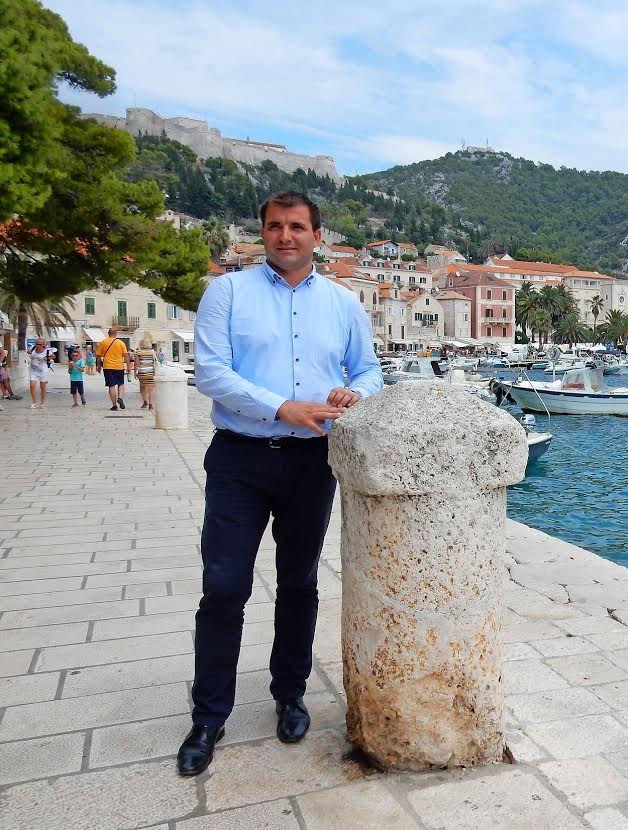
A great year, and all bodes well for a successful 2020. More reflections on 2019 and what to look out for in 2020 from Hvar Tourist Board director Petar Razovic in a recent TCN interview.
National and University Library Revamped for Croatia's EU Presidency
ZAGREB, December 20, 2019 - The highest Croatian officials on Friday presented a revamped National and University Library (NSB) in Zagreb, which in the first six months of 2020 will be the seat of Croatia's presidency of the European Union.
"We are wrapping up a project that is significant for Croatian culture and science and we can freely say that today this prominent institution is getting an additional congress and conference facet," Prime Minister Andrej Plenković said.
95 million kuna has been invested to prepare the NSB for Croatia's presidency of the EU, Plenković said at the ceremony that was also attended by Parliament Speaker Gordan Jandroković, the Croatian members of the European People's Party (EPP) in the European Parliament, European Commission Vice-President Dubravka Šuica, representatives of the diplomatic corps, religious dignitaries and media workers.
A 550-square-metre hall has been prepared to host numerous meetings during the presidency, as have eight smaller halls for up to 60-80 people, a press centre, a dining room for delegates, translators' and TV booths, video walls and a medical office.
The NSB will be the first building in Croatia with a 5G network which is still being used non-commercially.
Plenković said that the renovated NSB would serve to host various activities after Croatia's EU presidency, such as congresses, government activities, university activities and activities of the alternative theatre scene.
Croatia takes over the six-month rotating EU presidency from Finland on 1 January 2020.
More news about Croatia and the EU can be found in the Politics section.
Atlantic Clinches Partnership with Vivas in Bid to Take Leading Position in Coffee Market
ZAGREB, December 20, 2019 - Croatia's leading food and beverages producer, Atlantic Grupa, has decided to enter into a strategic partnership with the Vivas cafes chain which includes almost 300 coffee shops and bars, the Zagreb-headquartered group said in a press release on Friday.
"The collaboration is a part of Atlantic’s well-defined strategy to take a leading position in the Croatian coffee market and achieve expansion in the growing segment of out of home consumption," reads the press release.
In this way, Atlantic significantly strengthened the espresso segment, which is expected to generate an additional eight million kuna in sales revenue thanks to the newly-established cooperation with Vivas led by former national football player, Dario Šimić.
Atlantic produces 24,000 tonnes of cofffee a year.
"With approximately 24 thousand tonnes of coffee produced annually, the Atlantic Group is the leading coffee producer in the region," said Mate Štetić, the new General Manager of the SBU Coffee in Atlantic Group.
"We are the leading company in the Serbian market with our brand Grand kafa, the undisputed leader in Slovenia with the brand Barcaffe and an ambitious contender for the leading position in the Croatian market, where our market share has increased from 4 to the current 15.5 percent since the Atlantic's acquisition of Droga Kolinska in 2010. With a share of almost 21 percent in total revenue, coffee is the largest individual business unit in Atlantic Grupa and certainly one of the strategically most important units for future business development," Štetić was quoted as saying.
More news about Atlantic Group can be found in the Business section.
Croatia Court Decision: Gay Couple Allowed to be Foster Parents
For the very first time in Croatia, a Zagreb court rules that same-sex married couple Ivo Šegota and Mladen Kožić have the right to be foster parents, and the Ministry of Demography, which rejected their request to provide foster care last year, must implement the new decision within 60 days, this time in accordance with domestic and international legislation.
It stems from yesterday’s decision by the Zagreb Administrative Court, which annulled previous decisions including the refusals of the Center for Social Welfare and the ministry, according to Kristina Turčin/Jutarnji List on December 19, 2019.
Croatia Court Decision Final: No Appeal Allowed
“The court's decision is binding, and an appeal is not allowed, so this judgment is final. The written ruling has not yet arrived, but as stated during the announcement, the court accepted our argument in the lawsuit, based on Croatian regulations and the European Convention on Human Rights. As a result, the court ordered the relevant government agencies to implement the new decision in accordance with the judgment. We believe that the agencies will respect the court decision,” stated Sanja Bezbradica Jelavić, the attorney representing Ivo Šegota and Mladen Kožić.
“We are overjoyed. As we told the judge, this is the Christmas gift we didn't dare hope for,” Šegota revealed.
In 2015, he and his partner Mladen Kožić were among the first couples to enter a life partnership after the Life Partnership Act was passed in Croatia. Their desire to grow their family and raise children has existed for a long time.
Request to Adopt Rejected: Court Case Pending
“We have wanted to be parents for a long time. Therefore, shortly after our partnership ceremony, we submitted a request to the Center for Social Welfare to become adoptive parents, but were rejected immediately, which is why we have also initiated a lawsuit in the Zagreb Administrative Court, which is still pending,” according to Šegota.
They were not discouraged and started considering other options, such as foster care.
“We gave it a lot of thought. We are aware that this is temporary, rather than permanent childcare, and that foster parents are not adoptive parents, but we have concluded that this option is still a dream come true,” he continues.
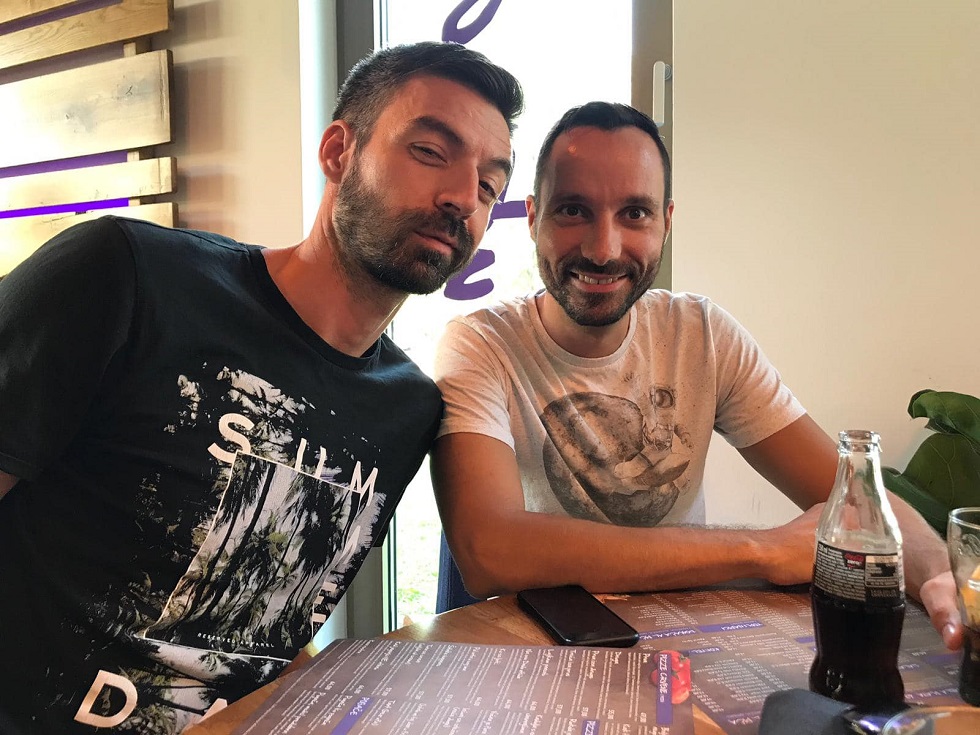
Applied to Become Foster Parents as Adoption Alternative
Therefore, Šegota applied with his life partner Mladen Kožić to the Zagreb branch of the Center for Social Welfare to become foster parents in the summer of 2017.
“Our application was very well received, especially by the psychologist and the social worker, who were particularly pleased when we announced that we were interested in fostering two or three children. Zagreb lacks foster families, especially those with the capability and desire to foster more than one child, which is why the centers are often forced to separate biological brothers and sisters,” he explained.
They both underwent an extensive psychological assessment process, during which they performed parenting skills tests, interviews, and discussed their motives for becoming foster care providers. A social history evaluation was also performed to assess their environment and family support network.
Center Rejects Foster Application Even Though Requirements Met
“We completely satisfied the requirements, received a positive assessment and everyone seemed pleased that this was happening. However, suddenly the center stopped contacting us. After the positive evaluation, we should have begun compulsory foster care training, which would have been followed by obtaining a foster care license. Suddenly, we could no longer get a response, and then in early December 2017, we were informed in writing that there were no legal prerequisites for initiating the licensing procedure because we are in a life partnership,” Šegota recounted.
They were very disappointed, he says, because after the initial response, they had hoped everything would be okay. After all, the Life Partnership Act clearly states that life partners are supposed to be legally on par with heterosexual spouses. As lawmakers have often pointed out, the only right that can be challenged is joint adoption of children - but not foster care, which is a profession and does not imply permanent childcare.
“We immediately submitted complaints to the Ministry of Demography about the center’s decision, but they rejected our appeal. We had no option but to institute legal proceedings,” they concluded.
Discrimination Lawsuit Initiated in July 2018
Their lawyer Bezbradica Jelavić initiated the lawsuit in July 2018. She noted that the center had begun the official evaluation of Šegota and Kožić in accordance with the Foster Care Act, but despite conducting a full procedure, which lasted four months, the center eventually rejected their request "because of a lack of legal presumptions.”
"Such a sudden detour in the evaluation process led us to the conclusion that there was a directive from above to treat these applicants differently. Considering the abrupt termination of the proceedings which were already underway, and even though the plaintiffs had met all the legal requirements, it's obvious that the Center for Social Welfare's treatment of the applicants was discriminatory due to their sexual orientation." The lawsuit further outlined the plaintiffs’ right to equal treatment and family life according to the law. National regulations, the constitution and international treaties guarantee the prohibition of discrimination as specified by the Convention for the Protection of Human Rights and Fundamental Freedoms.
"The plaintiffs state that they became aware that the Center for Social Welfare had abruptly discontinued another foster care evaluation involving life partners. This case, which had reached a later stage in the assessment, indicated that discrimination against same-sex couples exists within the organization," the lawsuit concludes, and cites several judgments from the European Court for Human Rights regarding similar cases, which were decided in favor of same-sex couples.
Well-Being and Interest of Children Should Come First
In the lawsuit, they also cautioned that the sole focus of the foster care profession should be the interest and well-being of children, not the sexual orientation of the foster parents, especially given the fact that the demand for foster parents is extremely high.
"Thus, by rejecting the request for foster care, the Center for Social Welfare in Zagreb violated not only the applicant's fundamental human rights, but also the right of a child or more children to quality accommodation and care, which they would receive in a stable family setting." According the center’s own evaluation, Šegota and Kožić demonstrated that they could provide this kind of environment, before their application was summarily rejected.
“The court fully accepted this argument in the lawsuit,” confirmed Bezbradica Jelavić, attorney for the couple.
Šegota and Kožić believe that the ministry and the foster care team at the Center for Social Welfare will respond quickly to the decision by the Zagreb Administrative Court. However, since the verdict has just been published and a written explanation is still pending, the Ministry of Demography has not yet been made aware of the details and could not comment or announce how it would react.
Excited to Finally Become Foster Parents
“We have patiently awaited this verdict. And we’re excited because we believe that we’ll be licensed as foster parents within the next few months and a child will arrive in our family. Or more children,” Šegota hopes.
He points out that this decision is completely in line with the foster care profession because, he emphasizes, foster parents do not have a right to a child, but every child has a right to a family.
"We hope that our family will be the right one for a child," he conveyed. Kožić adds that it is good that the decision has been redirected to the requirements of the profession because the rights of a child should not be the topic of daily political debate.
“The government, after adopting the new Foster Care Act, reiterated that they did not want to explicitly allow life partners to provide foster care because it contradicts their worldview, but at the same time they indicated that if the court rules otherwise, they will respect the court's decision. Now the court has provided children who don’t have a family with an opportunity for Santa Claus rather than a Grinch. Because it is the right of every child to grow up in a loving family, and not in an orphanage,” Kožić concludes.
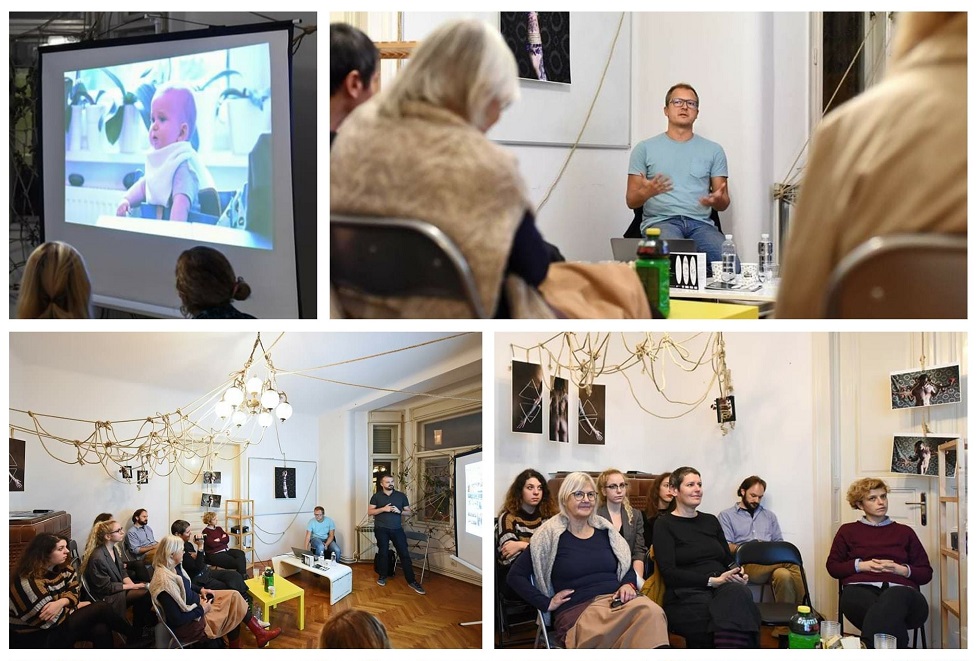
Founding Members of Croatia Based ‘Rainbow Families’
Šegota and Kožić are among the founders of the Croatia based group “Rainbow Families,” which is modeled after similar organizations worldwide, and brings together LGBTIQ couples and individuals who have children, want to have children, or would like to learn more about the rewards and challenges of raising a family.
Members of the organization first came together in 2011 in a psychosocial support group organized by the Zagreb Pride Association, led by psychologists Iskra Pejić and Matee Popov. After completing two support group cycles, the group members continued to meet and socialize as an informal citizens' initiative. Then, they established a forum and a website. In 2017, their association was officially registered. In 2018, they published an illustrated book titled "My Rainbow Family,” which was first book in Croatia to feature children with same-sex parents. In 2019, they organized the first international conference on rainbow families called “Our Children Are Fine.” Rainbow Families regularly organizes group activities and gatherings, which continue today.
For non-traditional families in Croatia, sharing experiences with others in similar circumstances can be very rewarding and fulfilling. In Rainbow Family meetings, LGBTIQ parents, and those planning parenthood, are given the opportunity to share their experiences and get to know each other.
Full Joint Adoption by Same-Sex Couples Legal in Seventeen European Countries
Full joint adoption by same-sex couples is legal in seventeen European countries: Andorra, Austria, Belgium, Denmark, Finland, France, Germany, Iceland, Ireland, Luxembourg, Malta, the Netherlands, Norway, Portugal, Spain, Sweden and the United Kingdom. Another five: Estonia, Italy, Slovenia, San Marino and Switzerland permit stepchild adoption in which the registered partner can adopt the biological and the adopted child of his or her partner in some cases. In Croatia, a life partner may become a partner-guardian over their partner's child, which is somewhat comparable to stepchild adoption. The new policy in Croatia follows that of Greece in which same-sex couples in a civil partnership may become foster, but not adoptive, parents.
Follow our Politics page for more information on LGBTIQ rights in Croatia.
Croatian Post Begins Using Robots, Lowering Service Costs
As Poslovni Dnevnik writes on the 20th of December, 2019, Croatian Post (Hrvatska pošta) has introduced autonomous pallet transport robots made by the Croatian company Gideon Brothers to their workforce in their brand new sorting centre, thereby strongly supporting the development of core business as the most important determinant of the Post 2022 Strategy, which links machines, people, products and business systems.
Robotic systems reduce overall service costs, shorten service cycle times and increase the efficiency of energy systems.
Robots do not replace humans in the workforce, but they act as their efficient tool and help them to achieve goals they had never imagined being able to do before their appearance. This principle is also guided by the aforementioned Croatian robotics and artificial intelligence company - Gideon Brothers.
Along with a quality business solution, this principle was Croatian Post's guiding principle in deciding to launch a pilot project for the use of autonomous pallet transport robots in their new sorting centre.
The pilot project will be implemented over the next four months in Croatian Post's warehouse and sorting facility, and human workers who will be working alongside the new robots will be trained during this period. Robots in the Croatian Post warehouse will assist with the picking and transportation of goods, while in the sorting room, they will serve to transport shipments from vehicles to the processing and preparation points ready for delivery.
A self-propelled logistics robot can carry as much as 800 kilograms of cargo and safely maneuver around people, equipment and other moving machines. These Croatian robots are equipped with autonomy technology based on visual perception, which combines in-depth learning with stereoscopic cameras to create a new generation of robotic vision.
All this shows that Croatian Post is very open to new opportunities offered by technology which can provide a competitive advantage and thus help the Croatian economy to use and create opportunities that bring new technologies, enabling a full circle of continuous development.
Make sure to follow our dedicated business and Made in Croatia pages for much more.
Meet the Wine Roads of Croatia: Ludbreg in Varazdin County
December 20, 2019 - Some regions are better organised for wine tourism than others in Croatia - meet the Ludbreg wine road.
Living on a beautiful island of wine on Hvar, as I did for many years, in a picturesque region of Dalmatia whose wines are exported all over the world, I was constantly amazed that there are no official organised wine roads, as this is surely a great opportunity not only for tourism but to develop and promote one of the strongest aspects of life in Dalmatia.
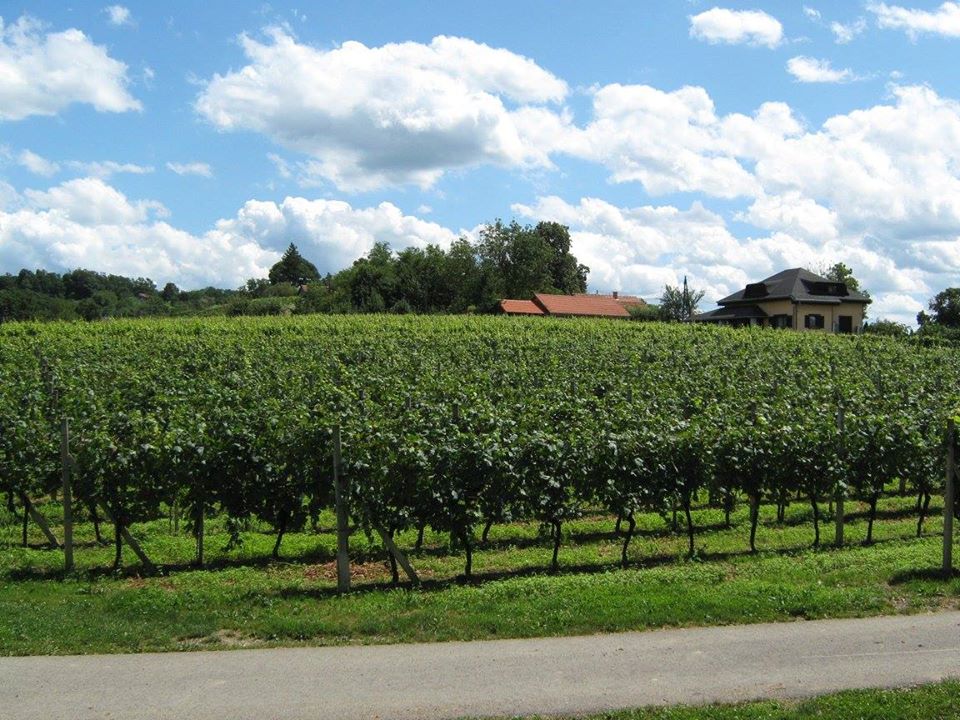
Cross the border into neighbouring Bosnia and Herzegovina, for example, and the first sign that you see is promoting the wine road of Herzegovina. And so too, all around Croatia, but sadly not in Dalmatia - at least for now. Things are a little more organised elsewhere in the country, including a very cute corner of northern Croatia, where white wines are king, and the closest vineyards to the centre of the world - Ludbreg in Varazdin County, which I first visited a few years ago. I was immensely impressed by the effort put in by enthusiastic local winemakers and restaurants to create the Ludbreg Wine Road, as well as the quality of the wines themselves. In their own words (a translation of their Facebook page, which you can follow here):
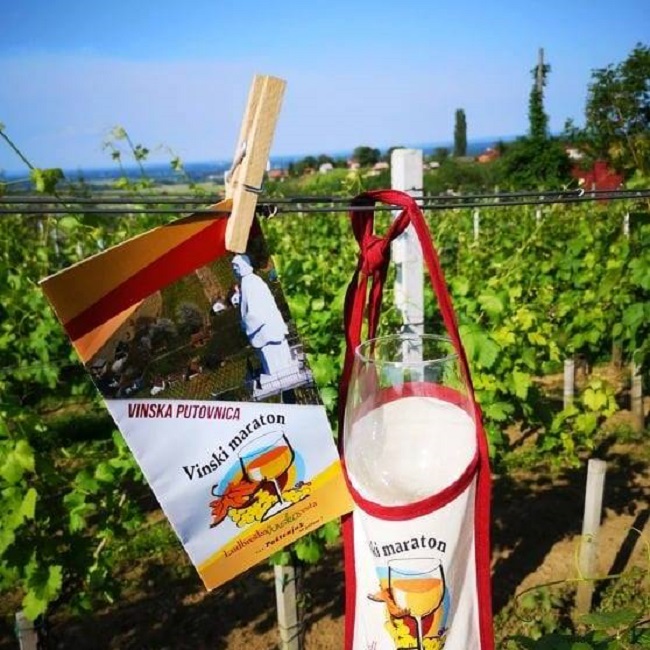
Once upon a time, in the 12th century, in the hills above Iovia (Ludbreg) lived a beautiful Ludberga. She was a skilled winegrower and she always worked hard in her vineyard and produced her famous sweet wine. At that time, everyone knew about Ludberga’s wine and beauty. As the years passed without Ludberga, Iovia’s Hills (the Ludbreg Winegrowing Area) were slowly forgotten. Wishing to restore the Ludbreg Winegrowing Area to its former lustre, the Ludbreg Wine Road was established.
The Ludbreg Wine Road is located on the hills of the Ludbreg Winegrowing Area, which is an integral part of the Zagorje-Međimurje sub-region in the Continental Croatia Winegrowing Region.
The aim and purpose of the association is to promote wine tourism and its tourist presentation through a comprehensive wine area whose wine road includes wine checkpoints (wine-houses and cellars), and thus expands and stimulates the development of tourism, not just in the Town of Ludbreg, but also in the entire Ludbreg area and beyond.
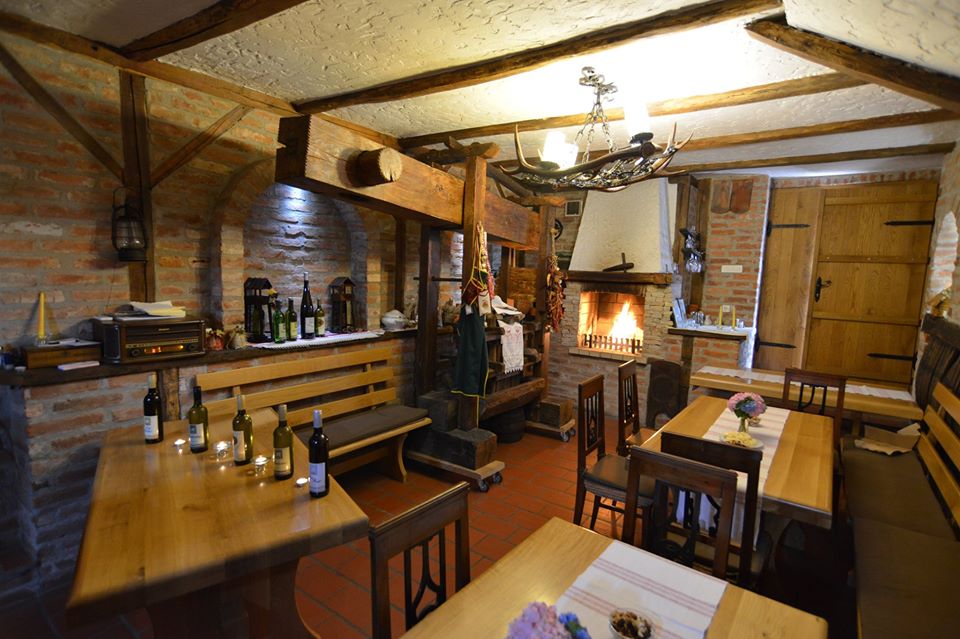
The Ludbreg Wine Road includes: Restaurant/Tasting Room “Arabella” Globočec, Wine Cellar “Makar”, Wine House “Kirić”, Restaurant “Črn-Bel”, Winery “Stručić”, and Tasting Room “Kežman”.
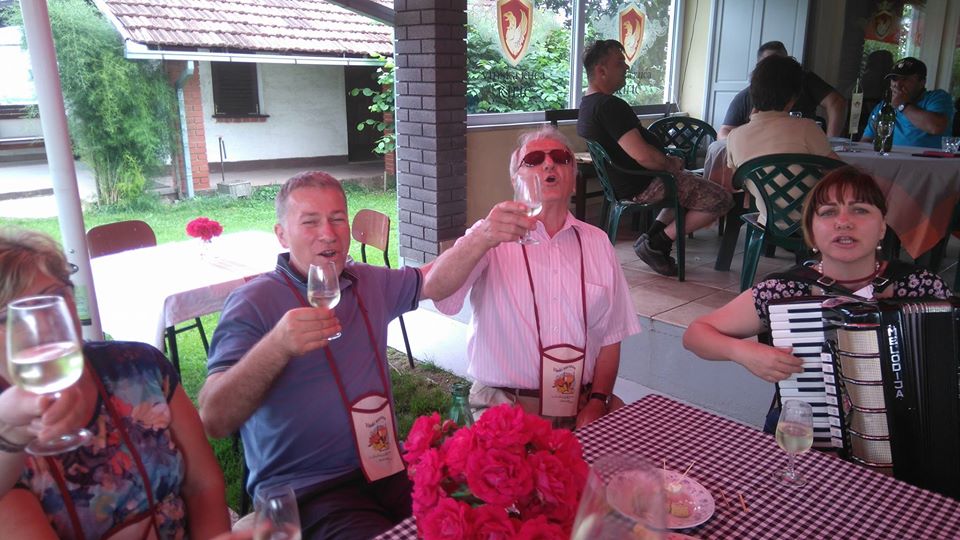
Here you can try: Graševina, Riesling, Pinot Blanc and Pinot Gris, Sauvignon, Green Silvanac, Chardonnay, Traminac, Moslavac and Manzoni, Muscat and Pinot Noir, Frankovka, Cabernet Sauvignon and, of course, our Poštenjak. In addition to the wines, the offer includes authentic “hilly” delicacies from the Ludbreg area.
Poštenjak, or “wine without malice”, is a quality wine that contains 70 percent of Graševina, 20 percent of Chardonnay and 10 percent of Pinot Gris. The wine is named after a popular character, honest and naive Dudek from the Croatian TV series “Gruntovčani”, written by screenwriter Mladen Kerstner, who was originally from Ludbreg.
The Ludbreg Wine Road includes a statue of St. Vincent with a viewpoint. This statue of St. Vincent is the tallest such statue in Croatia and even in the world, and offers a view of Varaždin County, Koprivnica-Križevci County, Međimurje County and neighbouring Hungary.
Also, we always take care of cleanliness and environmental protection of the area around the wine road.
So, if you would like to taste or drink a glass of wine and try some “hilly” delicacies, you can find us in the very centre of the world.
Learn more about the wines of Lubreg in the video below from G.E.T. Report (in Croatian), and to learn more about one of the most fascinating towns in all Croatia, check out TCN's visit to Ludbreg here - amazing place.
Grant Agreements Worth 126 Million Kuna Signed to Promote Excellence in Science
ZAGREB, December 20, 2019 - Grant agreements valued at 126 million kuna intended to promote excellence in science were signed in Zagreb on Friday between state institutions and 24 faculties and institutes.
Minister of Science and Education Blaženka Divjak said that there had never been so many opportunities in Croatia for investment in science and that the intention was that the best be given a chance.
Speaking about current projects, Divjak underlined that these were not only projects with a good scientific basis but with great applicability so that citizens could benefit from science.
State-Secretary at the Ministry of Regional Development and EU Funds Spomenka Đurić said that after large infrastructure projects were funded, now applied research has not been forgotten.
The Science and Education Ministry conducted the selection process for these grants and the projects were assessed by independent experts.
The projects included those relating to water purification and obtaining energy from composite material by using solar radiation, conducted by the Faculty of Chemical Engineering in Zagreb, digitisation and advancing nutritive care for chronically ill patients in the Split University Hospital, and "A new start for old Croatian vine types" conducted by the Zagreb Faculty of Agronomy.
Among the grant beneficiaries are the Faculties of Geodesy, Geotechnology, Food-Biotechnology, Nature Studies and Mathematics, Forestry and Textile Technology in Zagreb, the Faculty of Construction, Architecture and Geodesy in Split and the Faculties of Electrical Engineering, IT and Computing, Construction, Agriculture and Food Technology in Osijek.
More science news can be found in the Lifestyle section.