

Gastroadvent at Hotel Salona Palace Explores Flavors of Roman Cuisine, Rosemary, and Goat Cheese
December 22, 2019 - The fourth Gastroadvent Sunday was held on December 22, 2019, at Hotel Salona Palace, inside the Tusculum restaurant in Solin. This time, rosemary, goat cheese, and print media journalists were in the Advent spotlight.
Gastroadvent is a unique manifestation that fuses nutrition, gastronomy, and tourism while highlighting some of Split’s favorite restaurants on the less busy days of December. For the past ten years, the event has promoted the Mediterranean diet and has left a mark through its work on Mediterranean ingredients.
Thus, every Sunday of December, valuable hosts, patrons, partners and journalists gather to honor not only the light they bring to Split, but also to recognize the integral ingredients found in the Mediterranean region.
And this year, the central ingredient of Gastroadvent is invaluable to the city of Split.
Namely, rosemary is a fundamental part of the Mediterranean diet. It is originally from Europe and has been used since ancient times when students decorated their heads with rosemary wreaths, thinking that it has a beneficial effect on memory. Rosemary leaves and the essential oil obtained by distilling leaves are officially medicinal according to European regulations. Rosemary leaf contains natural phenolic compounds and is therefore considered medicine and a spice. By its antioxidant properties, it is the most potent food. It grows on rocky soil, withstands salt and high temperatures, and its habitat is carbonate rocks.
Rosemary could not exist without its home, stone. The same stone that Diocletian's Palace is made of, which was protected 40 years ago by UNESCO. This year's Gastroadvent wreath is made of stone and was crafted by the students of the Stonemasonry School in Pucisca, Brac, which boasts 120 years of existence.
Furthermore, goat cheese is higher in nutrients than all other cheeses. Last year, archaeological excavations near Šibenik revealed that Dalmatia is the home of goat cheese. Namely, according to the American scientists who analyzed and found the DNA of fats in vessels during the excavation, goat cheese was produced in Dalmatia some 7,200 years ago!
Thus, on Sunday, December 22, we gathered at Hotel Salona Palace, a unique luxury resort that exudes the ancient spirit of old Salona, at the very entrance of which is located. The location has determined the charm of its content, which is a combination of ancient elegance and modern comfort, all combined with a quality and personalized service.
The hotel has 47 rooms, indoor and outdoor swimming pools, a spa & wellness center, fitness room, conference rooms, banquet and a la carte restaurant and parking, and green areas that turn it into a peaceful oasis ideal for getting away from everyday stress. What sets it apart from everyone else is the cultural and historical heritage that surrounds it and is woven through visual messages throughout the hotel.
The fourth Gastroadvent candle was lit by print media journalists at the Tusculum Restaurant, where all guests were offered a special gastronomic story inspired by Mediterranean and Dalmatian cuisine. The newly renovated Roman Tavern was the perfect backdrop to complete the 10th Gastroadvent in Split. Throughout the year, this restaurant offers guests a menu based solely on local and homemade food, emphasizing quality, Croatian produce and eco-farming.
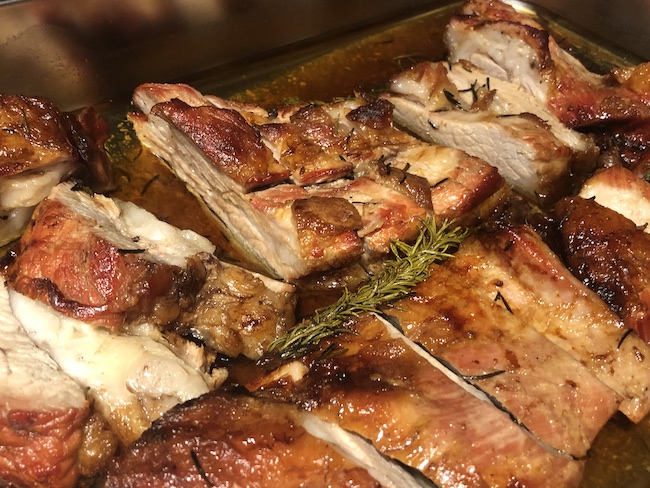
The sumptuous dining table by the restaurant’s ambitious chef was inspired by exploring Roman cuisine, goat cheese and, of course, rosemary. The menu included Dalmatian pašticada with homemade gnocchi and rosemary, filet of lubin fish with bacon and goat cheese, grilled vegetables with goat cheese, and roast veal in wine and rosemary.
Dario Stipaničev
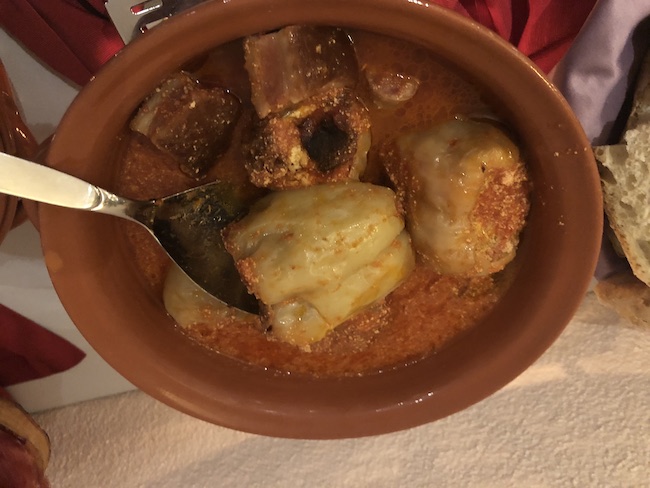
The menu expanded into stuffed peppers with goat cheese, chicken fillet with white wine and rosemary, baked potatoes stuffed with goat cheese and rosemary, a Mediterranean pogača and classic Dalmatian cod (or bakalar).
Dario Stipaničev
For dessert, there was a fresh goat cheese pie, while the chef displayed an assortment of rosemary cookies and cakes.

Dario Stipaničev
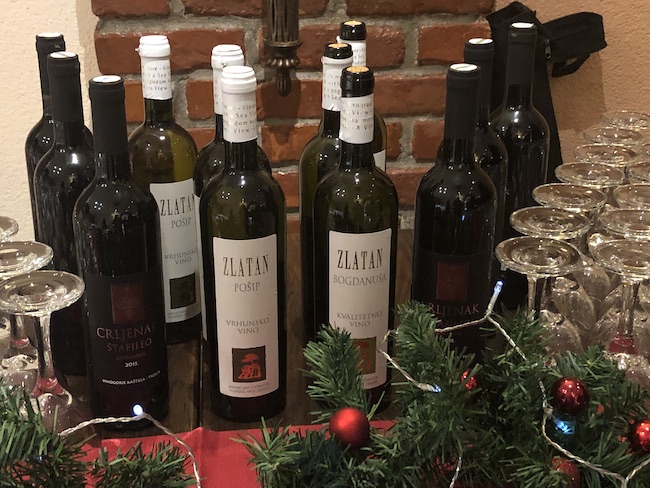
All dishes were paired with Plenković wines from Hvar and the Kaštela Crljenak Vuina.
Gastroadvent is held every Sunday of Advent at a different location in Split.
To read more about lifestyle in Croatia, follow TCN’s dedicated page.
Croatia Presidential Election: Grabar-Kitarović, Milanović go to Round Two
According to election results released at 5h CET (with 99.98% votes processed) on December 23, 2019; Croatia President Kolinda Grabar-Kitarović and former Prime Minister Zoran Milanović will advance to round two of the Croatian presidential elections on January 5, 2020. Miroslav Škoro, a popular folk musician, who was closely trailing Grabar-Kitarović in the early exit polls, will not advance to the second round.
Here is a breakdown of the final results for all eleven presidential candidates:
29.55% - Zoran Milanović – Former Prime Minister | SDP
26.65% - Kolinda Grabar-Kitarović – Current President | HDZ
24.45% - Miroslav Škoro – Folk singer and former Croatian Parliament Representative | Independent
5.87% - Mislav Kolakušić – Former Judge and EU Parliament Representative | Independent
4.61% - Dario Juričan – Legal name: Milan Bandić. Filmmaker and Performance Artist | Independent
2.89% - Dalija Orešković – Former Chair Conflicts of Interest Croatian Parliament | Independent
2.31% - Ivan Pernar – Member of Croatian Parliament | Party of Ivan Pernar
1.12% - Katarina Peović – Former member of Zagreb City Council | Workers’ Front
0.95% - Dejan Kovač – Economist and Princeton graduate | HSLS
0.21% - Anto Đapić – Former Osijek Mayor and Former Member of Croatian Parliament | DESNO
0.15% - Nedjeljko Babić – Regional party candidate | HSSČKŠ
First Woman President of Croatia
Kolinda Grabar-Kitarović, born April 29, 1968; is the fourth and current President of Croatia since 2015. She is the first woman to be elected to the office since the first multi-party elections in 1990. At 46, she also became the youngest person to assume the presidency.
Before her election as president, Grabar-Kitarović held several governmental and diplomatic positions. She was Minister of European Affairs from 2003 to 2005, the first female Minister of Foreign Affairs and European Integration from 2005 to 2008, Croatian ambassador to the United States from 2008 to 2011 and the NATO Assistant Secretary General for Public Diplomacy from 2011 to 2014.
Grabar-Kitarović was the only female candidate in the Croatian presidential elections held in December 2014 and January 2015 and was runner-up in the first round. She proceeded to narrowly defeat incumbent President Ivo Josipović in the second round. Her strong performance in the first round was unexpected, as most opinion polls had given President Josipović a strong lead. In the second round, Grabar-Kitarović defeated Josipović by 1.48%, which was the closest percentage margin of any presidential election to date.
She was a member of the conservative of HDZ (Croatian Democratic Union) from 1993 to 2015 and was also one of three Croatian members of the Trilateral Commission, but was required to resign both positions upon taking office as president in 2015, as Croatian presidents are not permitted to hold other political positions or party membership while in office. In 2017, Forbes magazine listed Grabar-Kitarović as the world's 39th most powerful woman.
Grabar-Kitarović’s 2019 presidential campaign has been marked by a series of gaffes and apparent missteps. She enjoys a warm political association with controversial Zagreb Mayor Milan Bandić, whose party officially endorsed her candidacy. Last week, she claimed during a campaign rally in Osijek that she had secured jobs for Croatian citizens to work from home for 8000 EUR, after they had received training abroad.
After refusing to debate other presidential candidates before the first election round; she relented and agreed to one debate with all eleven candidates on HRT (Croatian Radio Television), a public network frequently accused of favoring the president’s former political party (HDZ). Even though only three of the eleven presidential candidates were consistently polling in the double digits, Grabar-Kitarović refused offers by commercial networks to debate her top two contenders. She justified her decision by indicating that she believed all the presidential candidates should be heard. The resulting debate, which took place just days before the election, was a two-and-a-half-hour fiasco, in which all eleven candidates were given opportunities to discuss their views on abortion, religious education, corruption, border control and gay pride.
Former Prime Minister of Croatia
Zoran Milanović, born October 30, 1966; is the former Prime Minister of Croatia, a position which he held from December 2011 to January 2016. He was the leader of SDP (Social Democratic Party of Croatia), the largest centre-left political party in Croatia, from 2007 to 2016. He served as Leader of the opposition twice, from 2007 to 2011 and from January to November 2016, when Davor Bernardić succeeded him as SDP leader.
After graduating from the Zagreb Faculty of Law, Milanović began his career the Croatian Ministry of Foreign Affairs. He served as an advisor at the Croatian Mission to the European Union and NATO in Brussels from 1996–99. In 1998 he earned his master's degree in European Union law at the Flemish University in Brussels and was an assistant to the Foreign Minister of Croatia for political multilateral affairs in 2003.
In June 2007 he was elected President of SDP, following the death of Prime Minister Ivica Račan. In 2011, Milanović initiated the formation of the Kukuriku coalition, uniting four center-left political parties. The coalition won an absolute majority in the 2011 parliamentary election, and SDP became the strongest party in parliament. Milanović became Prime Minister on December 23, 2011, after the parliament approved his cabinet.
Milanović’s term as Prime Minister was marked by Croatia's entry into the European Union. His cabinet introduced changes to the tax code, passed a fiscalization law, and began several large infrastructure projects. Milanović also supported the expansion of same-sex couples rights and introduced the Life Partnership Act.
Following the 2015 election, he was succeeded as Prime Minister by Tihomir Orešković. Milanović led the four-party coalition until the early parliamentary elections in September 2016. Following a surprise defeat, Milanović announced his withdrawal from politics. He then entered the consulting business and worked as an advisor to Albanian Prime Minister Edi Rama.
On June 17, 2019; Milanović announced that he would be running for President of Croatia as the SDP's candidate in the upcoming election. Under the slogan “A President with Character,” he ran his campaign based on center-left principles and values, and his record as prime minister. He acknowledged making mistakes as Prime Minister and does not want to increase the powers of the Croatian presidency, which have been reduced since President Franjo Tuđman’s term ended in 1999. Milanović also insisted that he would not participate in a presidential debate without Kolinda Grabar-Kitarović’s guaranteed participation, which was verified a day before the presidential debate was broadcast on HRT.
Popular Musician Fails to Advance
Miroslav Škoro, born July 29, 1962; is a Croatian pop-folk musician and politician. His music is characterized by its traditional tamburitza sound, updated to appeal to a contemporary audience.
Born in Osijek, Škoro completed his degree in Civil Engineering at the University of Osijek. He subsequently spent some time in the United States of America where he attended the Community College of Allegheny County for two years.
He emerged on the Croatian music scene with his debut album “Ne dirajte mi ravnicu” (Don’t touch my prairie) and produced a song of the same name, which would go on to be one of the most famous Croatian songs. In 2002, Škoro collaborated with controversial right-wing singer Marko Perković on the song "Reci, brate moj" (Tell me, my brother). They continued their collaboration on the single "Sude mi" (They're putting me on trial), which was dedicated to former Croatian general Ante Gotovina.
In addition to a music career, Škoro has enjoyed a career in politics. From 1995 to 1997, he was the Croatian general consul to Hungary. Between 2001 and 2006, Škoro was the Chairman of the Board of Croatia Records. In 2007, he joined HDZ (Croatian Democratic Union) and won a seat in the parliament the same year. Škoro took office in January 2008 but resigned ten months later due to his disappointment over the way he felt that politicians were being treated by the Croatian media.
On June 23, 2019; Škoro announced his candidacy in the 2019 Croatian presidential election. In a video message on his Facebook page, Škoro indicated that changes to the constitution are needed and that the president should have more powers. He maintained 3rd place in pre-election polls, close behind Grabar-Kitarović and Milanović. His campaign was supported by several right-wing parties including HKS, Hrast and Most.
Škoro’s presidential campaign has been marked by controversy. He was living in the United States during the Homeland War while many of his peers remained in Croatia defending her borders. He indicated that he would pardon convicted Croatian war criminal, Tomislav Merčep. During the presidential debate, he promised to send troops to secure the border to prevent illegal migrants from entering Croatia. Škoro also violated terms of the “election silence” at least three times since it went into effect 24 hours before election day and ended at 19h after the polls closed. During the election silence, candidates are forbidden from campaigning.
Follow our Politics page for updates on the 2019/2020 Croatian presidential elections.
NGO Says Presidential Elections Proceeding Smoothly
ZAGREB, December 22, 2019 - Voting at polling stations in Croatia's presidential elections is proceeding smoothly, except for two cases of delayed opening of polling stations, reported by non-anonymous citizens to GONG, this election monitoring nongovernmental organisation said.
Citizens also reported not having been informed of procedures and deadlines for the registration of changes regarding the place where they planned to vote and of changes in the address of their polling station in relation to the previous election.
"Since that it was previously confirmed that party members had been appointed to electoral committees and the State Election Commission (DIP) replaced them, we call on citizens to report possible similar irregularities," the NGO said.
GONG said that it had also received reports of organised transport of voters to polling stations in Bosnia and Herzegovina.
The cost of transporting voters to polling stations is treated as part of electioneering costs, GONG said but noted that, in line with DIP's opinion at the last presidential election, the cost should not be treated as such if on buses there are no pictures or messages of individual presidential candidates and the service of transport can be used by all voters under equal conditions.
In the current presidential election, an increase was registered in the number of voters who have new ID cards with permanent residence addresses abroad and it was reported in Bosnia and Herzegovina, Germany and Serbia, the NGO said, noting that its mobile teams were also monitoring the voting process in Bosnia and Herzegovina and Serbia.
More news about the presidential elections can be found in the Politics section.
More Croats Support European Union Today Than at 2012 Referendum
ZAGREB, December 22, 2019 - A survey shows that more than 40 percent of Croatians have a positive opinion about the European Union, while as many as 81 percent know that Croatia is taking over the presidency of the Council of the European Union for the first time on January 1, 2020, the Jutarnji List daily reported on Sunday.
The survey, financed by the EU, was carried out by the IPSOS Puls agency between November 27 and December 3. A total of 1,005 Croatians took part in the survey.
If a referendum on accession to the EU were to be held today, 68 percent of the respondents would be in favour and 28 percent would vote against. In 2012, 67 percent of those who went to the polls supported accession to the EU and 33 percent were against it.
As many as 43 percent of the respondents see the EU in a positive light, mostly those in the 18 - 30 age group.
More news about Croatia and the EU can be found in the Politics section.
Voter Turnout Better Than Five Years Ago
ZAGREB, December 22, 2019 - Close to 16% of Croatians with voting rights cast their ballots in Sunday's presidential vote by noon and the turnout was higher than five years ago, the State Election Commission (DIP) said.
The turnout of 15.75% is better than at the last presidential elections five years ago, when 13.19% of the electorate had voted by 11.30 a.m.
The turnout by noon in Sunday's presidential vote is 2.5% higher, meaning that 100,000 voters more voted in today's elections than in 2014, said DIP deputy chair Ana Lovrin.
A total of 3.855 million eligible voters are choosing between incumbent Kolinda Grabar-Kitarović and ten other candidates.
A total of 6,533 polling stations have been opened, including 6,409 in Croatia and 124 in 47 foreign countries, including 44 in Bosnia and Herzegovina.
Polling stations close at 7 p.m.
DIP will release its next report on the turnout at 5 p.m.
Preliminary election results, based on returns from 15% of polling stations, will be released at 8 p.m.
More news about presidential elections can be found in the Politics section.
Rimac C_Two Prototypes Initiated: Hello World - Croatian Hypercar Excellence (VIDEO)
December 22, 2019 - Another day, another piece of Rimac magic. Check out the latest from the RImac C_Two prototype in this stunning video.
Last week I wrote an article listing my top 30 discoveries and best experiences of 2019 in Croatia. It was quite a list and it has been quite a year. The article was popular and widely shared, and I have had several requests to make it an annual list, a nice way to finish the year with a wave of positivity. A nice idea, and I will.
But having lived here for 17 years and travelled to almost every corner of this wonderful country, just how many incredible places are there still left to discover?
LOTS! Including this little factory in Sveta Nedelja. With so much happening at Rimac Automobili, a visit is not long overdue, and I look forward to learning much more of the story.
For the story is magnificent. I will leave you with the latest, in the words of the Rimac Automobili YouTube channel:
Following years of development and detailed computer simulations by the engineering team at Rimac, the Rimac C_Two prototypes are now being tested on tracks and in testing facilities around the world. The first batch of prototypes is undergoing vehicle dynamics, powertrain, passive safety and crash tests since spring 2019, pushing components such as tires and suspension to the limit. Following years of development and detailed computer simulations by the engineering team at Rimac, the Rimac C_Two prototypes are now being tested on tracks and in testing facilities around the world. The first batch of prototypes is undergoing vehicle dynamics, powertrain, passive safety and crash tests since spring 2019, pushing components such as tires and suspension to the limit.
The Rimac C_Two is one of the world's most powerful and fastest all-electric hypercars. Designed, developed and manufactured at Rimac’s Zagreb HQ in Croatia, the C_Two bends the rules of driving and motion. Performance is on tap from zero, with 2300 Nm of torque instantly available. With its immense power density and lightweight construction, the C_Two is capable of 0-60 in 1.85 seconds and can hit a top speed of 258mph. We are currently finalizing the development of the C_Two ahead of its production start at the end of 2020.
To follow the latest in the Rimac story, check out the dedicated TCN section.
Croatian Health Insurance Fund Unveils Method to Shorten Waiting Lists
As Poslovni Dnevnik/Marija Crnjak writes on the 22nd of December, 2019, according to the Croatian Health Insurance Fund (HZZO), patients will have what they needed ordered by their family doctors, while procedures such as MR and CT scans, as well as cataract examinations and gastroscopies will be booked by specialists or hospital administrators.
This manner of doing things will reduce waiting lists, help to prevent confusion and aid both patients and the hospitals conducting the procedures themselves, ensuring a better delivery of service and more satisfaction on both ends.
The brand new, unique calendar for ''ordering'' diagnostic procedures for patients in hospitals was launched this week, which should introduce more order in queues and reduce waiting lists for nine medical procedures, and so far, 42 of 64 Croatian hospitals have been included in the calendar, the Croatian Health Insurance Fund (HZZO) stated on Thursday.
The Croatian hospitals included are those that have a compatible IT system, while other hospitals will be networked in properly by May next year. The new ordering method currently covers nine long-awaited procedures, MR and CT scans, Holter ECG, heart ultrasounds, ergometry, cataract surgery, breast ultrasounds, thyroid gland ultrasounds and gastroscopies, and the Croatian Health Insurance Fund's plans are to continue to expand this list.
As mentioned, according to HZZO's new method, patients will have what they needed ordered by their family doctors, while procedures such as those listed above will be arranged by specialists or by hospital administrators. Patients will also be able to cancel their appointments through the eGrađanin (eCitizen) health portal, as well as arrange for the changing of the dates and medical institution for certain procedures.
"A single ordering calendar will prevent multiple patient orders from hospitals, which currently unrealistically increases waiting lists, and ordering by OIB automatically prevents the same person from ordering at another institution," HZZO Director Lucijan Vukelić said during a recent press conference.
Since the establishment of the system on December the 15th, 2019, as many as 1088 multiple orders have been detected in just three days, meaning that the Croatian Health Insurance Fund's new system works.
Make sure to follow our dedicated lifestyle page for much more.
Rovinj to Increase Amount of One-Off Cash Assistance to New Parents
The one-off cash sum for the birth of a second child has been increased in Rovinj, Istria, meaning that in the next year it will amount to 3000 kuna, and for each subsequent child, 4000 kuna will be paid out to parents.
As Glas Istre/Nina Orlovic Radic writes on the 22nd of December, 2019, the last session of the City Council of Rovinj, the decision on social welfare was financially ''fattened up'', meaning that the total amount allocated from the budget to certain categories of citizens rose to 4.7 million kuna in total. The implementation of this decision will commence on the first day of January 2020.
A major breakthrough was made for young parents, or future residents of St. Euphemia's coastal city. Specifically, the cash sums Rovinj will provide to new parents has been increased. When it comes to the 1,500 kuna the city provided parents for their first born children, this one-time financial assistance will be raised by 500 kuna. Furthermore, parents living in Rovinj who have a second child will receive 3,000 kuna, while for the third and each subsequent child after that, parents will receive 4,000 kuna each.
In regard to the new measures for families with children, the City of Rovinj will fully subsidise the cost of kindergarten and elementary school student meals when one parent exercises the right to work part-time in order to provide more enhanced child care or if they need to leave their job because of the need to care for a child with severe developmental disabilities.
Regardless of income, the cost of services for parents who have two or more children in Rovinj kindergartens will be more favourable as the cost of kindergarten will be subsidised at thirty percent for the second child, and for the third and at the next children - it will be subsidised by Rovinj by fifty percent.
The new measure in Rovinj also includes single-parent families and single parents, whose monthly income does not exceed 2,000 per person kuna, for whom the city's monthly subsidy will be fifty percent of the total cost of services. In addition, the amount refunded to parents who drive their children independently to Pula to the rehab centre in Veruda or the school in Pula has been increased from 70 kuna to 80 kuna. The new measure also introduces the right to cover the costs of assessing a child's development at the Rehabilitation Day Care Centre in Pula.
Along with the new (or) "reinforced" subsidies from Rovinj, it's worth recalling the well-known subsidies that continue to be awarded, such as the co-financing of the transportation of high school students, financing the transportation of children with disabilities who are transported in an organised manner to Pula.
''I consider that the adoption of the proposal of the decision on social welfare was extremely important. The proposal seeks to further improve the care for the most vulnerable groups of citizens, beneficiaries of the guaranteed minimum benefit, persons with disabilities, and pensioners with lower pensions. It also seeks to financially facilitate and improve the status of families with more children,'' said Mayor Marko Paliaga, adding that by passing this decision, the City of Rovinj not only showed its social sensitivity and care towards its citizens, but also its leadership position in creating a better, more comfortable and secure future for its residents.
Make sure to follow our dedicated lifestyle page for much more.
As Barcelona Seeks Independence, Some 1992 Catalan Help for Croatian International Recognition
December 22, 2019 - As the sentiment of self-determination blows from London to Barcelona, a look at the Catalan factor in Croatia's road to international recognition in 1992.
One of the things I enjoy about living in Croatia is the constant level of learning about its fascinating history, both ancient and much more recent. My arrival in Croatia from Somaliland in 2002 was very accidental and due to a Croatian National Tourist Board video, and while I have learned a lot about Croatia since then, there is still so much to learn, even about the first decade or so of independence prior to me buying a house in Jelsa.
It was a big surprise, for example, to learn which sovereign nation was the first to recognise the newly independent Croatia back in 1991. I am sure every Croat knows the answer well, but how many others do?
The answer is Iceland.
Not long before I moved to Croatia, I found myself watching a movie in a Mumbai hotel room called Shot Through the Heart. It was a story of two Yugoslav marksmen who were expecting to achieve Olympic glory for Yugoslavia at the Barcelona Olympics in 1992. Apparently based on a true story of two Sarajevo friends, one Muslim and one Serb, their Olympic dream was shattered when war broke out and they found themselves shooting not at a Catalan target for Olympic gold, but rather at each other.
The film has been shelved in the back of my head for years until recently when I heard about a Catalan delegation visiting Croatia as part of Catalan diplomatic efforts to secure support for their bid for autonomy from Madrid. As TCN reported at the time, neither Croatia's President or Prime Minister met with the delegation from Barcelona (unlike Slovenian President Pahor), but they were warmly received by Varazdin County Prefect, Radimir Cacic, who spoke at length about the areas of interest for economic cooperation.
"But you do know about the small but significant Catalan contribution back in 1992 as Croatia was trying to establish international recognition, at the Barcelona Olympics?" asked a friend when the topic came up over a beer.
I little like the Icelandic recognition, I had no idea, but memories of the two sharpshooters in the movie came back, as well as a thought that it must have been quite an impressive diplomatic effort to not only get Croatia recognised by the Olympic family, but also competing under its own flag both at the 1992 Winter Olympics in Albertville, France, and the Barcelona Summer Olympics, where every Croat will tell you their newly independent country won silver in the basketball against the 'Dream Team' from the USA - watch the final below.
It turns out that the speed of Croatia's acceptance in the family was helped along by a great friend of Croatia, International Olympic Committee chairman, Juan Antonio Samaranch, a Catalan. The Croatian Olympic Committee was only formed in October, 1991, and just four months and seven days later, Croatia was welcomed into the Olympic family, before it was granted a seat at the UN. Things moved even quicker after that, with an invitation to the Olympic Games after being accepted into the IOC, a record timeline.
The first appearance of Croatian sportsmen under the Croatian flag, which was led by the first President of the COC, Antun Vrdoljak today a member of the International Olympic Committee (since 1995), will have a special place in the history of Croatia at the Olympics. In addition to the basketball silver, Croatia also came home with two bronze medals in tennis, thanks to Goran Ivanisevic and Goran Prpic. Watch Ivanisevic reflect on the medals of 1992 below.
And the Samaranch effect did not end there, as Visnka Staresijna noted in a recent article on the subject in Slobodna Dalmacija:
A few years later, under the auspices of Juan Antonio Samaranch, a sculpture of our Drazen Petrovic was erected in the park of the Olympic Committee headquarters in Lausanne. It was the first sculpture of an individual athlete to be erected in an Olympic park.
Croatia expressed its gratitude, as Samaranch became one of the first recipients of its highest State honour, the Grand Order of King Tomislav. The Grand Order of King Tomislav is the highest state order of Croatia. It is usually awarded to top foreign officials for their contribution to the improvement of Croatia's good standing internationally as well as achievements in developing international relations between Croatia and their respective countries. It is awarded by the President of Croatia.
Mr. Juan Antonio Samaranch, president of the International Olympic Committee, which included the Croatian Olympic sport into the great worldwide community of the Olympic movement, contributing to the international recognition of the sovereign and independent Republic of Croatia. His merit has enabled Croatian athletes to represent their nation for the first time in history in the Olympics in Albertville and Barcelona, thus permanently joining the global Olympic family. With this extraordinary act, the Republic of Croatia was included in the International Olympic Committee before being invited to be a member of the United Nations.
The path to Catalan independence may or may not succeed, but if it does, I wonder what little historical nuggets young Catalans of the future will learn about the origins of their independent State, such as the Iceland love and Catalan Olympic support that are now part of independent Croatian folklore.
Croatian State Leasing Business Premises and Garages in Zagreb
As Poslovni Dnevnik writes on the 22nd of December, 2019, on Saturday, December the 21st, 2019, the Croatian state announced a tender for the lease of state-owned business premises, in addition to the 24 business premises, two garage spaces in attractive locations in the Croatian capital city of Zagreb are on offer.
State property (Državne nekretnine) d.o.o., which deals with property owned by the Croatian state has announced its eighth tender for the lease of business premises, with which they have concluded this year's tenders. The specificity of this year's tender is that two garage places in the Zagreb city districts of Trešnjevka Jug and Stenjevec are being offered, for which offers from interested parties can be submitted by individuals, and the rent of garage spaces can be arranged for a period of 10 years.
With this latest tender, the Croatian state announced a total of 26 business premises for lease in Zagreb, Split, Karlovac, Pula, Varaždin and Sisak, and the location in Zagreb is in a highly attractive area right in the heard of the tourist zone, more precisely in Radićeva and Tkalčićeva - two very central locations.
When it comes to the garage places advertised in this tender, in addition to legal entities and natural persons who have a registered obrt or who perform an independent professional activity, all natural persons can compete.
The garages on offer for lease belong to the category of business premises in accordance with the appropriate law which governs such processes.
The business premises are to be leased out as seen, and the leases are to be concluded with the best bidder for a period of ten years. Bids are to be submitted to: Državne nekretnine d.o.o., Planinska 1, 10000, Zagreb by noon on January the 29th, 2020, and an hour later there will be a public opening of the bids at the Ministry of State Property in Zagreb, at 10 Ivan Dežman street.
Over the last two years, Državne nekretnine d.o.o. has offered 250 business premises as an indirect stimulus to entrepreneurship in local communities on the Croatian market, and in those same two years, 160 business premises have been leased.
Make sure to follow our dedicated business page for much more.