

Numerous Chinese Companies Have Cooperation With Croatia on Radar
As Poslovni Dnevnik/Marija Brnic writes on the 5th of November, 2019, the opening ceremony of the Chinese International Import Fair, which is being held for the second time in Shanghai in order to increase imports and reduce trade surplus, has featured four companies from Croatia, with a total of twelve more Croatian businessmen attending the Croatian-Chinese Business Forum.
The forum has been organised by the Croatian Chamber of Commerce (HGK), and in addition to presenting Croatia's economic and investment potential, more than thirty Chinese companies have expressed interest in concrete business talks with Croatian entrepreneurs. Among the companies whose representatives have travelled to Shanghai, some are already successfully operating on that huge market, but small, little-known companies are also testing the ground.
Pan Parket, Podravka, Zdenka, Inovatus Services, Adiratic health & care travel agency, Exotrade Rijeka, Education Travel Worldwide, Foto revija, Milena, and even the agricultural cooperative Gospoja iz Vrbnika and AMPnet IO and Intereuropa Global are looking for new opportunities in this populous country.
This year, the fair brought together around 150 countries and regions, as well as international organisations, with nearly 4,000 companies presenting themselves on a staggering 400,000 square feet of exhibition space.
The fair was officially opened by Chinese President Xi Jinping, who sent out the message that it is important that there is mutual understanding and that people can connect, while preventing wars, protectionism and unilateralism. According to the organisers, last year, the first Import Fair was effective - 90 percent of the deals were completed, with a contract value of around 52 billion euros in total.
The Croatian Chamber of Commerce, which officially opened its representative office in Shanghai during the last fair, pointed out that Chinese interest in cooperating with companies from Croatia is growing, especially after the 16 + 1/17 + 1 Summit in Dubrovnik. The Croatian Chamber of Commerce also allows companies from Croatia who are interested in doing business in China to use their office space, and so far, they say, about 20 companies have expressed interest.
Make sure to follow our dedicated business page for much more.
Men's Olympic Handball Tournament to be Held in Croatia? Maybe
November 6, 2019 - The International Handball Federation has decided on the hosts for the Olympic Handball Qualifiers... and Croatia could be one of them.
Gol.hr reports that before the European Championships, which will be played in Austria, Norway, and Sweden from January 9 to 26, 2020, the International Handball Federation (IHF) has designated the hosts of the qualifying tournaments for the Olympic Games in Tokyo next year.
The tournaments will be played in the spring of next year, from April 17-19, and each of the two best teams will compete in the Tokyo Olympics.
France, Germany, and Norway were selected as hosts, while Croatia was named as the reserve country.
So, what exactly does this mean?
A total of 12 teams will compete in the Tokyo Olympics, four of which are already known: Japan automatically qualifies as the host, Denmark as world champion, Argentina as the winner of the Pan-American Games and Bahrain as the winner of the Asian Qualifying Tournament.
There are eight more spots open, and one of them will be known at the end of the upcoming European Championships. Namely, the best national team at the Euros, not counting Denmark, who has already qualified, will also secure their spot in Tokyo.
Thus, if Denmark takes the gold, then the European Championship finalist will book the spot for the Olympics. This is why it could be important for Croatia.
Namely, if one of the three teams designated to host the qualifying tournaments (France, Germany, Norway) wins the European Championship title (or loses to Denmark in the final), then the qualifying tournament will not be played in that country but in Croatia, which will step in as the first reserve.
Croatia has already hosted this qualifying tournament once, and namely, back in 2012 when the Cowboys locked their spot for the London Olympics in Varazdin, defeating the national teams of Iceland, Japan, and Chile.
This time, the competition will undoubtedly be much stronger, and it could only help Croatia if they were to secure their spot for Tokyo at one of the Croatian halls, in an atmosphere that would be excellent.
However, the best-case scenario, of course, would be if Croatia were to skip this qualifying tournament all together… though they’d have to become the European champion first.
To read more about sport in Croatia, follow TCN’s dedicated page.
Split Mayor on Failed Kopilica Metro: "Line Not Discontinued, but Transformed"
November 6, 2019 - Split mayor Andro Krstulovic Opara commented on discontinuing the metro from Kopilica to the ferry port, saying that the line had not been discontinued, but only transformed into an integrated bus and rail link between the Split airport and the ferry port.
Opara explained for Slobodna Dalmacija: “You journalists called it the metro, we never called it that, it is yet to become that. The line between Kopilica and the City port has not been discontinued; it has been transformed into a transportation link connecting our airport with an integrated line. Anyone who buys a ticket at the Split airport for 25 kuna can board the train Kastel Luksic and continue to the ferry port, which has a stop in Kopilica as well.
We changed the timetable because the passenger intensity is lower and is now getting a new shape by merging Kastela, Solin, and Split, which is what we wanted. This is just the beginning of a long story that will have its finale when we connect the airport with the ferry port. We have now combined it by integrating the bus and rail,” the mayor explained.
When asked by a journalist about the difference between the metro and the line that usually departs from Kastela, stops at Kopilica and continues to the ferry port, Opara replied that, in the meantime, an integrated ticket had been released that has been used in recent weeks.
He explained that passengers now have the opportunity to take an exclusive "Promet" bus line from the airport to Kastel Luksic, and then use the same ticket for the train to the ferry port, which stops in Kopilica.
Of course, the ultimate goal is to connect the airport with the ferry port by rail, for which not all the necessary preconditions have been created, which primarily relate to the construction of part of the railway line in Kastela itself. According to the mayor, this will not happen so fast. However, Opara announced interventions that will occur around Split next year.
“During the winter, we will start the works in Dujmovača; something halted the building permits on Širina and in Sv. Kaji, but as far as I can tell, this has been resolved, so next year, we will have those two stations ready. A process is underway at Trgu hrvatske bratske zajednice to change the DPU, which is necessary to get started on opening that station.
There were two tenders for the HZPP to design the underground station, and the second one succeeded. It will give new meaning to all this work that we insist on doing,” said the mayor.
How much money would be spent on the entire project could not be said at this time, except for that Promet would participate by contributing one-third of the whole amount.
When asked if the City profited from passengers traveling between Kopilica and the ferry port this summer, Opara explained that this could not be discussed because the project has just begun.
"The project may not be as popular in the beginning as it will be in the future, but we were ready for it," he added.
Thus, connecting the airport and the ferry terminal will not be feasible until next summer.
“I have to say openly that for our part, we did everything we needed, the Ministry also, and doubts existed with our colleagues in Kastela. I am glad to hear that they have introduced a railway line in the changes to the spatial plan, which is also envisaged by the Spatial draft plan of Split-Dalmatia County. However, the tracks they offered were still under evaluation. We expect that this will take a full year and that a quality route will be decided. Until then, we will make amendments like this with integrated traffic,” Opara concluded, saying that the whole process has taken too long.
To read more about travel in Croatia, follow TCN’s dedicated page.
Emirates Looking to Develop Zagreb Service, Closely Monitoring Dubrovnik
November 6, 2019 - Emirates’ Senior Vice President for Commercial Operations in Europe, Thierry Aucoc, talks about the potential of the service to Zagreb and further developing Croatia in the future.
Emirates launched a daily service to the Croatian capital from Dubai back in June 2017, which worked from May 31 to the end of October this year. The winter timetable on this service is operated by Emirates' partner flydubai, which reduced the number of flights this winter from seven to four per week on Wednesdays, Fridays, Saturdays, and Sundays. However, during the Christmas and New Year holidays, flydubai will increase the number of flights to six a week.
Ex Yu Aviation reports that Emirates sees potential in the Dubai-Zagreb service, and is even monitoring the progress of Dubrovnik.
“We decided to launch Zagreb a bit more than two years ago and it is corresponding with our development in Europe. We have a wide coverage in Europe, and we understood that Croatia has big potential for two reasons. First, it is a destination that is really interesting for travel from Asia, Australia, China and Taiwan. Therefore, there is a lot of incoming traffic to Zagreb and the entire country in general. From Croatia it is a way to offer the local population a link to our Dubai hub. There is a lot of demand from Croatia to the world. This is primarily to Dubai but also beyond, for example, to destinations in the Indian Ocean and Southeast Asia, such as Phuket in Thailand,” said Emirates’ Senior Vice President for Commercial Operations in Europe, Thierry Aucoc.
Aucoc added:
“I was checking the results of airports in Croatia and I was amazed to see that many have double-digit growth. I noticed that Zagreb is now at 3.5 million passengers per year, which is a very good result. We are monitoring other airports in the country too. We are closely following the performance in Dubrovnik because we are offering seasonal flights to this city through Flydubai”. Aucoc went on to say that 258 Croatian nationals work at Emirates.
On October 26, 2019, the Emirates seasonal service between Dubai and Zagreb concluded. Emirates' partner flydubai operates the winter service. Aucoc said that Zagreb was the first to implement the new route-sharing strategy between the two airlines.
“Zagreb is an example of how much our cooperation with Flydubai managed to improve our results. We served the route in winter with our Boeing 777 aircraft. Then last year, the route was maintained for five months by Flydubai aircraft. This winter, Flydubai will operate for the entire winter season because it emerged that this route is not as strong in winter, so we can still continue serving Zagreb well,” said Martin Gross, Emirates’ Area Manager.
Gross also spoke about reducing the number of flights to Zagreb this winter, which is down to four flights per week.
"Zagreb was operated with Boeing 737 MAX equipment but had to be moved to the B737-800. Therefore, the entire flight plan had to change and has been partially reduced. Now we have to see when the B737 MAX is allowed to fly again.”
To read more about travel in Croatia, follow TCN’s dedicated page.
Golf in Zagreb? Bring Your Own Clubs, Kilts, Whisky and Bagpipes
November 5, 2019 - The Kings of Accidental Tourism may not know how to develop golf tourism, but how about these chaps? Meet golf in Zagreb with a Scottish twist, complete with kilts, bagpipes and a wee dram or three of whisky.
Life is utterly superb at the moment, and for the many people who ask me how I can live in Croatia when so many are leaving, my genuine reply is - how could you possibly live anywhere else?
This country goes from the surreal to the sublime, and the gods are dealing some particularly random cards in recent weeks. It all started, I think, when I came across a British phone box in the middle of the oldest continuously inhabited town in Europe, dating back some 8,300 years (the town, not the phone box). It turned out the British phone box in Vinkovci was just the tip of the iceberg - one thing led to another and now I know all about Yorkshire puddings on the menu of a Vinkovci restaurant and why some chap from Leeds decided to open an English pub in the middle of a field literally in the middle of nowhere in eastern Croatia. A really fabulous story that I encourage you to pursue here.
And as I was recounting the story over lunch at the excellent G2.5 diaspora conference today, I concluded to myself that I would never again come across such a superb story in Croatia.
And then, not five minutes later, I found myself approached by a gentleman who asked if I was the guy from Total Croatia News. He wanted to talk about golf.
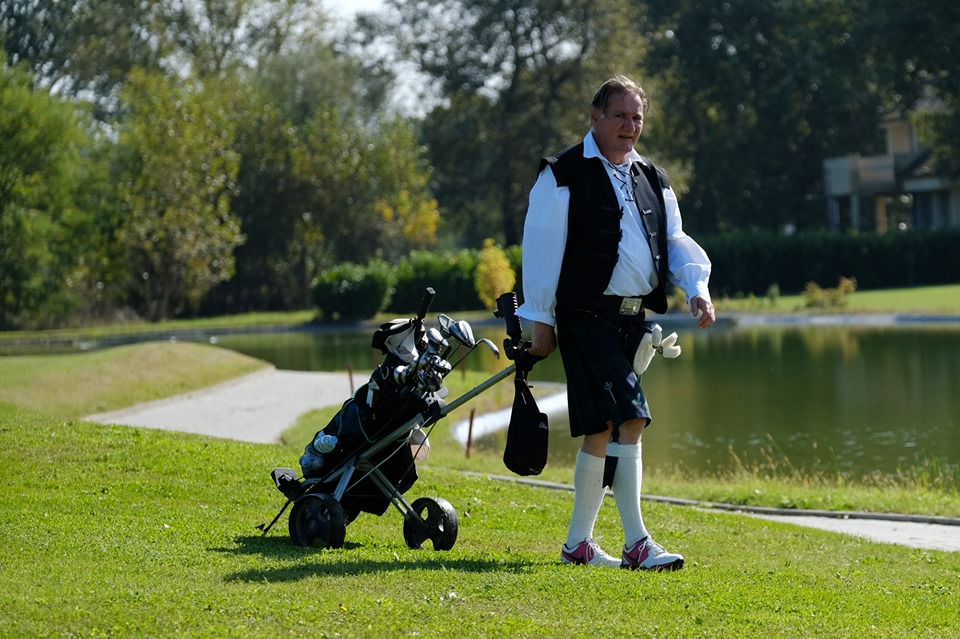
And not just any kind of golf, but the kind played in Zagreb for three years now - in kilts!

Golf, of course, is a subject I have written about at length in recent months. Our old heroes, the Kings of Accidental Tourism, have had the development of golf courses as a key part of their tourism strategy for a good 20 years now, since 1999, in fact. And, after straining every sinew in the pursuit of new golf courses over 20 years, the Kings have managed to add just one new course in that time. Oh yes, and to receive a lawsuit for half a BILLION dollars from a disgruntled Israeli golf investor in Dubrovnik.
But while the Kings may not be delivering, nothing can dampen the passion of Croatia's golf-loving community. Or the quite superbly unique nature of some of the events they throw.

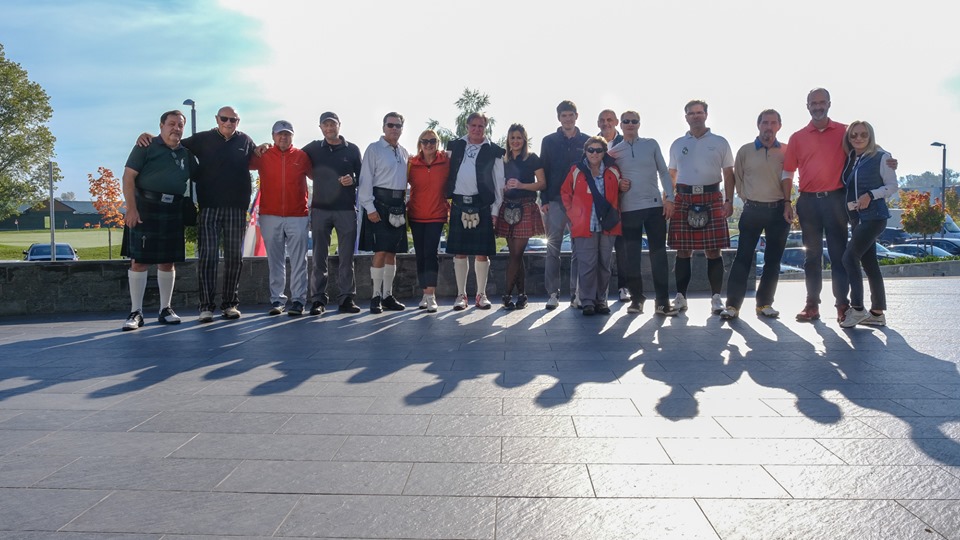
My new friend wanted to talk about the Zagreb Golf Club and the things they get up to. He told me about an event called the Annual Autumn and Scottish Golf Tournament, which took place last month for the third year in a row.
Where the players wore kilts.
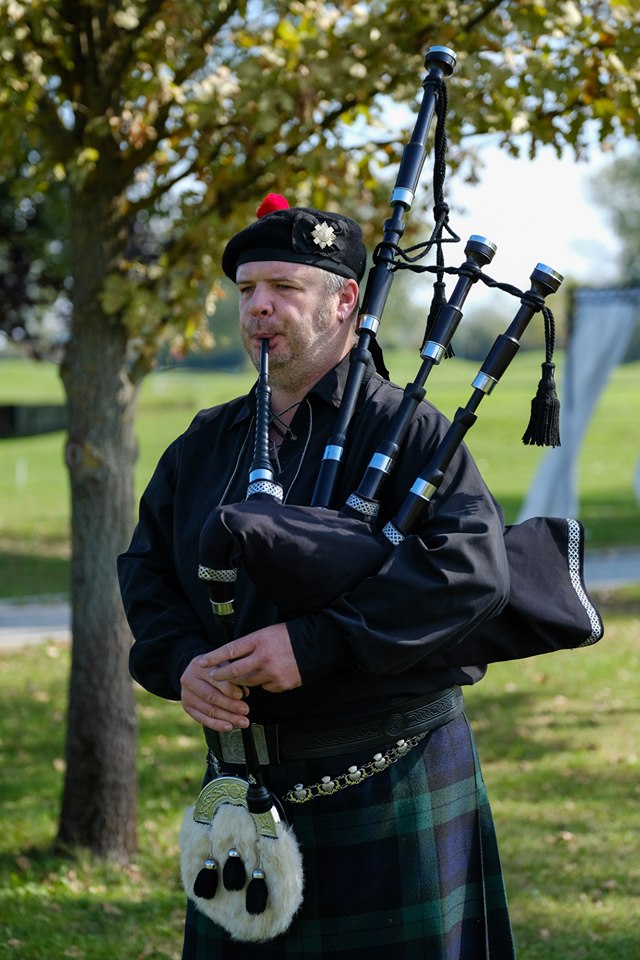
To the tune of bagpipes.

Yeah, right, I said to myself, asking if there was a website or Facebook page where I could see evidence of this totally unlikely scenario.
There was.
Incredible.
And even more incredible, this has somehow never made it into the media in three years.

Truly superb, and put me down for a wee dram next October.
Now, with UK phoneboxes, English pubs in fields, and golf in kilts, can anyone point me in the direction of a more random story in Croatia? Answers to This email address is being protected from spambots. You need JavaScript enabled to view it. Subject Subllime.
As for Golf Club Zagreb, learn more about it from the official website, and follow the latest on Facebook. Great photos by Nikola Žufika.


Meeting G2.5 Opened by Croatian President Kolinda Grabar-Kitarović
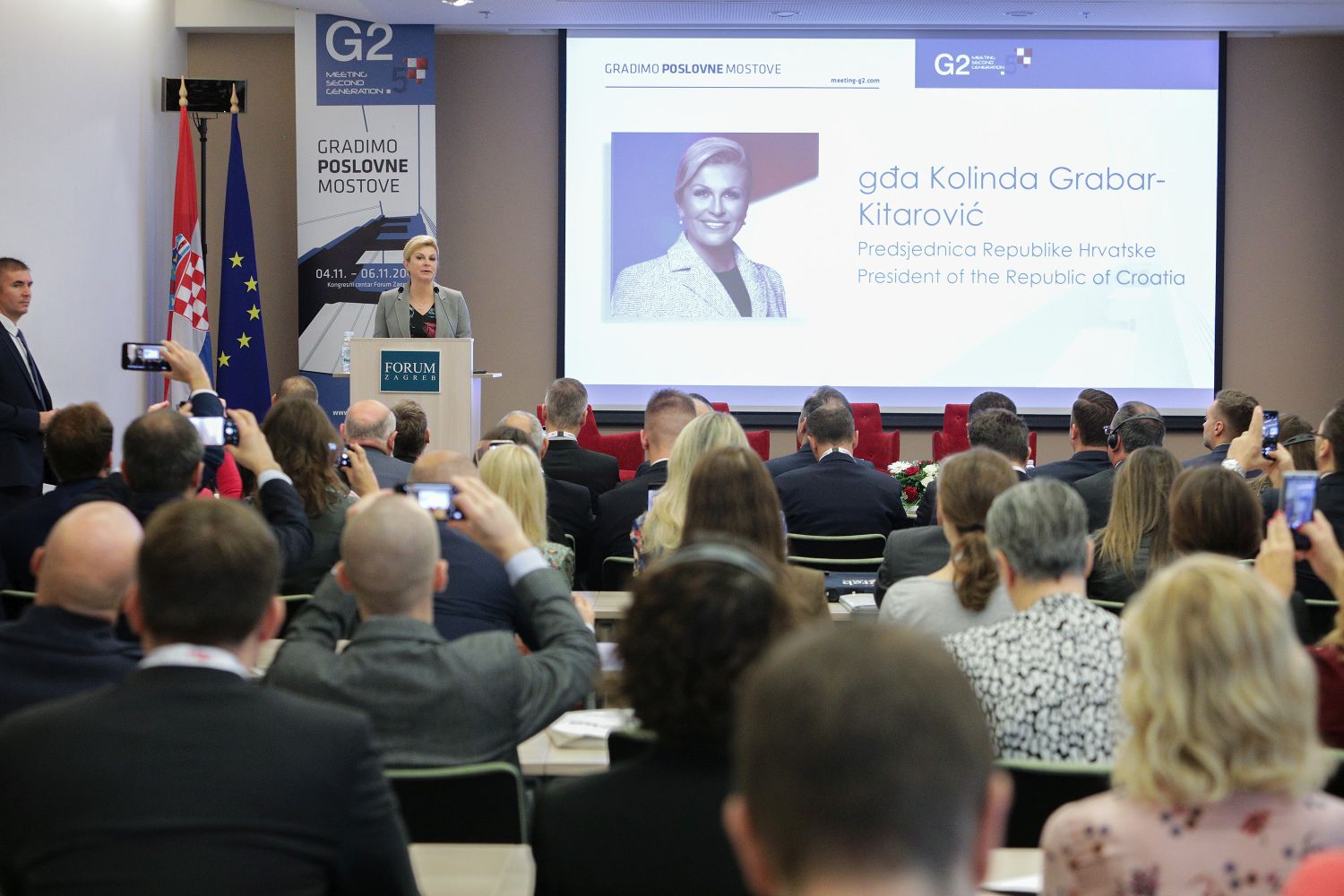
Croatian President Kolinda Grabar-Kitarović officially opened the MEETING G2.5 Conference - Let's Build Business Bridges today.
The fifth edition of the conference aimed at creating business connections between the homeland and Croatians living abroad started today in Forum Zagreb Conference Centre, and it brought together over 200 businesspeople with Croatian heritage from 18 countries. In her address to the participants of the conference, the Croatian President said that there's an entire population of Croatia living abroad today, so it's essential to listen to what the immigrants are telling and suggesting to us. Although we were able to take some steps forward in our economy, there's a long road ahead of us. If we want to develop faster, we need to make room for the entrepreneurs to do what they know best. She told the audience that their experience and knowledge are the wind in the back for so many, especially for young people, which allows them to play a vital role in our future. She invited everyone to keep working together for a better tomorrow, as we build the new Croatia.
The conference started yesterday with a pitch session - the competition between the six Croatian start-ups which presented their innovative projects in 10 minutes to the jury. The jury comprised of entrepreneurs from Croatia and abroad, and they found the start-up Miret to be the best. They want to produce the most ecological sneakers in the world, and their award is to participate at no charge in a workshop held by the PWC consultancy company, as well as to have a promotional video produced by the magazine "Poduzetnik." Clover, MeshPoint, STEM, Worcon, and Venatus Jones also participated in the session.
The presentation of the five successful Croatian franchises was held at the conference, all of whom are members of the Association of Franchises with the Croatian Chamber of Commerce. Those were Body Creator (a program for weight loss and body sculpting, which has been around for 18 years), Business Cafe (a concept for business networking, being held in 7 countries), Direct Booker (an agency for private accommodation booking with 21 offices in 7 countries), Place2go (a specialized magazine distributed and sold in 15 countries) and Surf'n'fries (selling fries in carefully designed packaging in over 60 stores in 20 countries on four continents). Around 200 franchise systems are operating in Croatia, with roughly 17000 employees in about 1000 locations. There is room for improvement, as currently, only 12% of those franchises have Croatian origins.
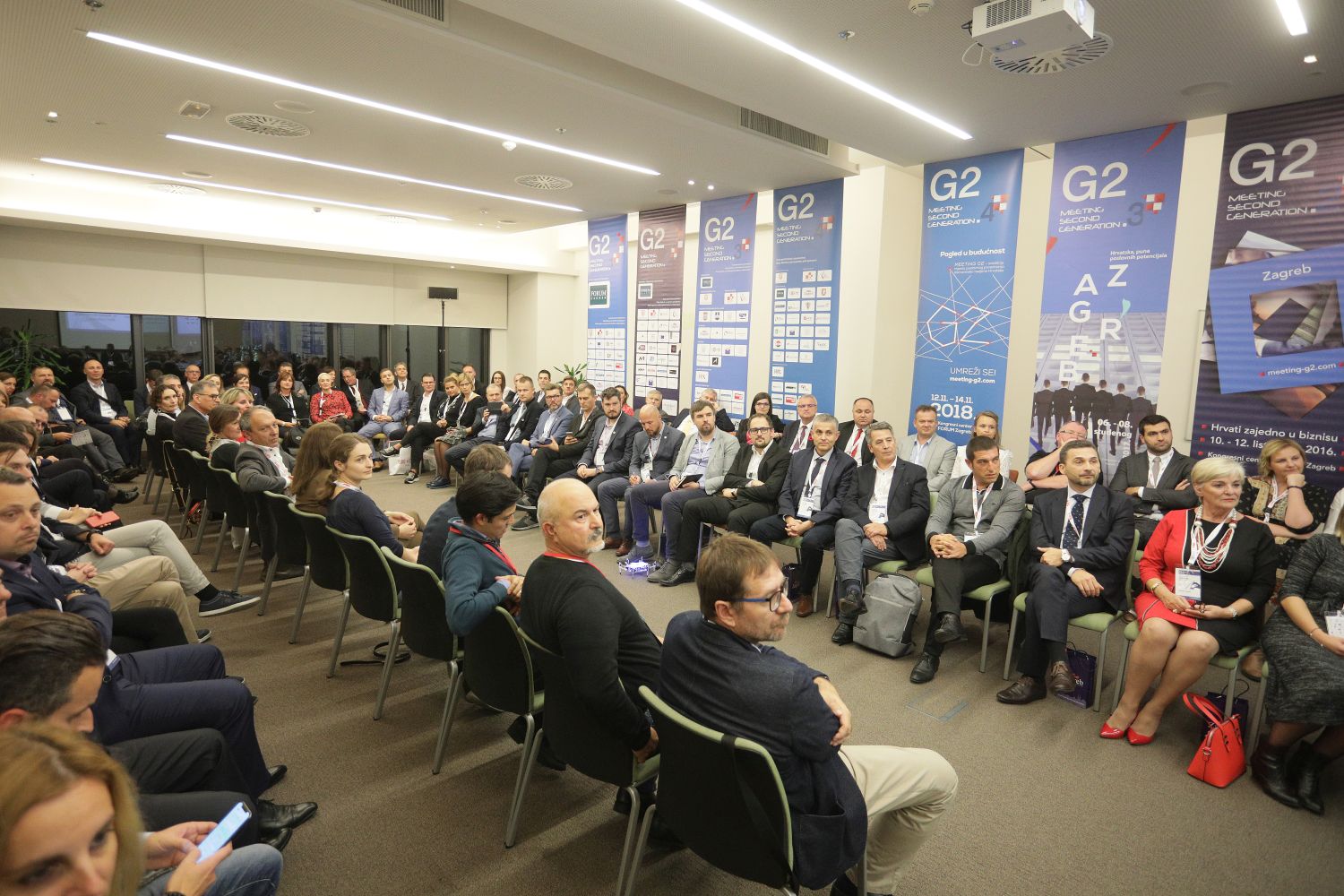
Each participant at the Meeting G2.5 conference got the opportunity to present their business and highlight who (s)he wants to connect to during the Who is Who in G2 program. That way, numerous successful projects were presented at the same time, including projects from the construction, metallurgy, IT, HR services, consulting, and communication management. Five-panel discussions are also on the schedule, with over 30 participants, well-known Croatian entrepreneurs from Croatia and abroad, as well as the representatives of the national and regional administration. Fashion, novelties in the IT sector in Croatia, remarkable Croatian exporters, strong business bonds between Croatia and Canada as well as the experiences of working in Austria as an entrepreneur will be discussed. Between the panels, several inspirational business stories were told by Marko Buzolic from Plava Laguna, Vlado Lendvaj from the Croatian IT Association, and Tomislav Anadolac and Hrvoje Bušić - the creator of the world's best gin.

The program of the Meeting G2.5 was completed by brief lectures held by professor Božo Skoko, who talked about the development of the identity and branding of Croatia, the lobbyist Natko Vlahović on the importance of the upcoming Croatian presidency of the European Union, and the esteemed designer Boris Ljubičić on the importance of the design and the creation of the Croatian visual identity.
Learn more about G2.5 on the official website.
Programming by Croatian Public Broadcaster Not in Keeping with Current Trends
ZAGREB, November 5, 2019 - The law on the Croatian public broadcaster HRT, passed in 2010, provides for the production of programming that is now outdated and not in keeping with current trends, Andreja Arežina Grgičević, editor in chief for the HRT's website and non-linear media services, told the South East Europa Media Forum (SEEMF) in Zagreb on Tuesday.
"We need more money to be able to produce new content because we will find ourselves in a situation where we are fighting big players such as Netflix and Amazon. We, of course, do not have that money because since 2012, when the monthly subscription was set, we have been getting the same amount of money and have had to produce more programming," she said.
She added that of the monthly fee of 80 kuna, 55 kuna goes towards the production of programming and the rest to the Media Pluralism Fund and other institutions connected with broadcasting and the activity of the public broadcaster.
"If we now decided to increase the subscription fee, and under the law it could be up to 1.5 percent of the average monthly salary in Croatia, we would immediately face pressure from various social groups, not just political ones. Speaking about the HRT can score political points, and it can be heard in public that public television is not needed, that it does not produce the kind of programming it should and that the subscription fee should be lowered," Arežina Grgičević said.
She said that the HRT was facing pressure from political and social groups and was trying to produce programming in accordance with the HRT Act and the agreements with the government while at the same time trying to cope with fast changes in the media sector.
"We are in a situation where we have to abide by the law and where politicians decide on the director general and choose the Programming Council. We cannot speak of immediate dependence on politics, but pressure is coming not just from politicians but also from different social and interest groups," Arežina Grgičević said.
Speaking at a panel discussion on public media services facing financing problems and political pressure, Professor Viktorija Car of the Zagreb Faculty of Political Sciences said that the situation at the HRT in the last 15 years was "the worst ever" because the management was incapable of ensuring prerequisites for satisfactory programming benefiting all citizens.
Belmin Karamehmedović, the director general of Bosnia and Herzegovina's BHRT public broadcasting service, and Susanne Pfab, the director-general of the German public-service broadcaster ARD, also spoke about problems faced by public media services.
More news about Croatian Radio Television can be found in the Lifestyle section.
Lonely Planet Proclaims Kvarner Best International Destination for 2020
As Novac/Lea Balenovic writes on the 5th of November, 2019, at one of the world's largest tourism fairs which is currently being held in London, Kvarner was named the Best Travel Destination for 2020. In addition to that flattering title given to it by the Lonely Planet tourism magazine, it has been highlighted as a must go destination and listed among the Top 10 regions of the world.
Tom Hall, Vice President of Lonely Planet, found Kvarner worthy of such a high level of recognition in the fact that "Kvarner is a fantastic region where tourists have a lot to experience."
Croatian Minister of Tourism Gari Cappelli, as well as Kristjan Staničić, Director of the main office of the Croatian National Tourist Board (HTZ), agreed, while Zlatko Komadina, the prefect of Primorje-Gorski Kotar County, stated that along with natural beauty, a clean sea and air, rich historical and cultural heritage and excellent and diverse gastronomy in Kvarner, the offer of health tourism is to be especially emphasised.
''This is a reward for all those who work in tourism in Kvarner, but also for all of the residents of our county who are known for being good hosts and promoters of all that our region has to offer, and one of these things is certainly health tourism,'' Komadina stated, adding that Kvarner is known precisely as the region of health.
On the other hand, Irena Peršić Živadinov, director of the Kvarner Tourist Board, focused on cultural tourism that this particular Croatian region has to offer.
''The award and recognition from Lonely Planet are the result of many years of work, but also proof that all of our results don't just come by chance. From the hosting of the extremely important World SKAL Congress in October next year, the title of Rijeka as the European Capital of Culture, to the presidency of Croatia by the EU Council Presidency in 2020, it's clear to us that there is a crucial tourist moment for the Kvarner region,'' she said.
Make sure to follow our dedicated travel page for much more.
Jandroković Points to Importance of "Belt and Road" Initiative
ZAGREB, November 5, 2019 - Parliament Speaker Gordan Jandroković, who held a speech in Shanghai on Tuesday, underscored the excellent China-Croatia cooperation in several areas as well as the significance of the "17+1"and the "Belt and Road" initiatives for this cooperation, the Croatian parliament said in a press release.
Addressing an economic forum within the 2nd China Import Expo, which brought together over 1,500 guests from all over the world, Jandroković spoke about regulations and a business climate conducive to opening markets and the role of governments and prospects of multinational companies.
Jandroković said that the role of governments and national parliaments was to create conditions favourable for entrepreneurs and development of economy.
In this context, he said that Croatia permanently upgraded its framework for doing business in the country.
He added that in the last four years, Croatia conducted reforms aimed at making it easier for companies to do business and at boosting Croatia's competitiveness, and some of these reforms are an overhaul of the tax system, reduction of the administrative burden, and improvement of the investment framework.
"Croatia is moving up the rankings of economic freedoms, which shows that Croatia is more and more open and attractive as a business and investment destination."
He boasted that Croatia is successful in slashing its deficit and public debt, which has resulted in the improvement of the country's credit rating and, consequently, in enabling businesses to be more profitable in the country.
As for the bilateral cooperation, Jandroković recalled the ongoing construction of Pelješac Bridge by the China Bridge and Road Corporation.
More news about relations between Croatia and China can be found in the Politics section.
Škoro: Army Should Be Included in Protecting Border
ZAGREB, November 5, 2019 - Presidential candidate Miroslav Škoro said on Tuesday that the primary task of the Croatian police was to protect the territory and citizens of Croatia, but that it would be good if the military also joined in because the border police were stretched to their limit.
"We want to be part of the Schengen area and we have our own law on the movement of foreigners. We need to know who comes into the country, who moves around and passes through, and of course, protect the territorial integrity of Croatia and all its citizens. We have enough competent people who know how to treat migrants and which of them should be accorded protection," Škoro told a press conference in Dubrovnik.
He said that the problem of illegal migration should be tackled at its source rather than put up fences along the border. He also said that this problem should not be dealt with by using force but by improving border control.
"We need to control the border, and ours is one of the longest in the European Union, but the police obviously have neither enough personnel nor resources for that job. That's why it is logical for other services to join in to help ensure better border control," Škoro said.
He said that there was not much talk of illegal migration in Croatia and that he himself had become convinced of the importance of this issue while on the campaign trail. He said that on his way to the south of the country he had been stopped by the police once and had been even searched once for illegal migrants. He said that in conversations with people living in border areas he had seen for himself that they lived in fear, fearing for their property and for their children.
Asked if Croatia was becoming a border state, Škoro said that Croatia had been a border state through history, adding that it should negotiate with Schengen countries. "This right, obligation and responsibility should be equally felt in Brussels, Madrid and Velika Kopanica," he said.
Škoro said that since 2000, the office of President had been held by persons who did not have great ambitions to participate in political life, as result of which this office was reduced to a sinecure.
"I don't want to be a figurehead and I don't need a sinecure. I want to listen to the people and participate in their initiatives. Currently all that is ignored and the people are good only when they vote, while this small clique is preoccupied with their CVs and continuing their careers in the EU. I would like for the President to have greater powers and to truly participate in the creation of better living and working conditions in this country. It is not enough if someone gets five million votes in elections and is reduced to the role of a notary-public who signs a piece of paper from time to time. That will change with this election," Škoro said.
More news about presidential elections can be found in the Politics section.