

Cohres Discusses Linking Tourism and Technology in Croatia
November 6, 2019 - Cohres junior analyst Kristina Boras talks linking tourism and technology in Croatia.
Croatia is a small country that has shined on the world stage for many reasons, one reason largely being tourism, but another being the innovative technological advancements. By linking its established tourism sector with the advancing technological sector, Croatia can make sustainable improvements and capture new opportunities.
There is an ongoing discussion about whether or not Croatia’s tourism sector is sustainable and what improvements can be made to maintain the success and growth of the sector. One of the main issues regarding Croatia’s successful tourism is the seasonality that limits it to approximately a mere 80 days during the summer months with most of the overnight stays occurring on the coast. The Croatia 365 Conference aimed at making year-round tourism a reality in Croatia was held for the third year in a row on September 24, 2019, in Zagreb. Although, this year there was a greater focus on the topic of creativity and new technology, which are ever-changing and are proving to be crucial components to the sustainability of the tourism sector.
It is imperative to stay current on quickly evolving technological trends that have the potential to transform the tourism sector and help Croatia align with consumer demands. Emerging technology has already begun heavily transforming and stimulating the tourism sector more than ever before. Croatia’s technology sector has received recognition from many global investors and companies. Infobip and Sentinel Marine Solutions are two examples of successful Croatian technology companies that have the potential to apply solutions in many aspects to the travel and tourism sector. Infobip has become one of Croatia’s tech superstars and a global leader in omnichannel engagement with their messaging platform that is used by reputable companies such as Whatsapp, Uber, and Oracle etc. Sentinel Marine solutions allows boat owners and fleet managers connect to their boats and offers the first-ever context-aware recommendation engine that is able to generate a list of places to visit at sea. These are only current examples but one can imagine the endless amount of opportunities that could arise when connecting to the tourism sector as technological innovation advances in Croatia.
Why is the adoption of technologies crucial for Croatia’s tourism sector?
Technological advancement paired with globalization has provided us with instant access to information at our fingertips, which has influenced tourism as a result. Travellers often publicly share their reviews as ratings online regarding quality of food and service. This is common practice among tourists that helps others find the best places and avoid the worst at a certain destination. Therefore, travellers hold a majority of the buying power in this market as they influence the success of tourism and sustainability.
The introduction of the sharing economy has also allowed for an abundance of competitors in the sector. For example, Airbnb offers tourists a greater variety of unique accommodations as an alternative to booking the generic hotel room. These innovative competitors have sprung up in several areas of tourism and as a result, businesses must differentiate and keep up with emerging technologies in order to maintain their positions in the sector. With 20% of Croatia’s GDP being produced from its tourism sector alone (Statistic from Total Croatia News), adapting to technology to sustain this successful industry is crucial.
Recommendations:
- Mobile Apps - Rather than seeking travel agents, travellers have begun planning their trips through mobile applications that give them instant access to recommendations and allow for hassle-free trip planning. Applications are also used for choosing where to dine, what activities to do, and ordering taxis upon their arrival. This is starkly different from the traditional methods of asking for recommendations at the reception desk or looking through flyers offered in hotel rooms.
- Conversational AI – This refers to AI that works similarly to a chat bot. It allows for someone to message a programmed speech-based assistant, or chat bot, that can respond to them quickly and during 24 hours a day, every day of the week. In regards to tourism, these bots could answer questions or offer recommendations solely based on consumer preferences, resulting in a more personalized and satisfied experience. Bots can be programmed to automate tasks based on consumer behaviour and apply that information to various services offered by a company.
- Virtual Tours – Tourists travel for the experience, and virtual reality can give them next level insight on what to expect on their next or potential trip. Before their trip, to ensure a great experience, travellers search for pictures, reviews, videos and social media posts to get a better idea of what to expect on travels. For example, to avoid disappointment, a tourist will search for reviews for a hotel and find out that the beautiful photos do not quite match reality. Virtual reality, however, boosts transparency, shortens the time customers spend on research, and reduces misinterpretation by giving future tourists a more immersive look at what they can expect.
- Consumer Data – The large amount of data tourists generate on their journeys fuels strategic growth decisions made by companies involved in the sector. The data that is being collected and considered includes customer behaviour, spending habits, preferences, demographics and interests in activities. Information on this behaviour allows for businesses to gain a better insight on what tourists want and what they could do to improve their experience. This could come in the form of recommendations to offer guests, to improve customers and what parts of their offerings could be improved. Marketing strategies could also be tailored to the data collected, and a personalized message can be offered in accordance to what travellers want to experience.
The technology and methodology mentioned has the potential to play a large role in extending Croatia’s seasonality and potentially promoting year-round tourism by expanding to the vineyards, lush forests, mountains and rural areas. Rich data, smart technology and the potential of efficient marketing methods has the ability to reach a wide target audience with a personalized message that targets various segments of Croatian tourism. Aside from coastal tourism, eco-tourism in Croatia has grown and is not restricted to the summer seasons. Eco-tourism can implement technology to offer personalized experiences to travellers who are keen on exploring ”untapped locations” and are searching for “local experiences.” The travel planning site müvTravel released a list of Top 30 Millennial Travel Destinations for 2019 and has found that young people are more interested in “activities that focus on sustainable and personalized local experiences.” Croatia has an abundance of heritage, culture and natural resources that are attractions beyond the summer months; and provide the desired original and local memories that more and more travellers are seeking. Luckily for Croatia, it has beautiful natural landscapes and also an innovative workforce that should be a foundation to become a year round tourist destination.
References
https://www.revfine.com/technology-trends-travel-industry/
https://www.fingent.com/blog/emerging-technology-trends-in-travel-tourism-industry
To read more about business in Croatia, follow TCN's dedicated page.
Designer Ksenija Vrbanic Named Best Female Entrepreneur in Croatia in 2019
November 6, 2019 - Today, XD Xenia Design products are sold in about thirty countries. Along with Ksenija Vrbanic, this year's best female entrepreneur laureates are Blaženka Mičević, Ariana Vela and Kata Barišić.
Designer Ksenija Vrbanic, the founder of XD Xenia Design, was named this year's best female entrepreneur in Croatia. She was presented with the Most Inspiring Female Entrepreneur of the Year award at the fifth Best Female Entrepreneurs in Croatia award ceremony organized by Women in Adria, a network gathering female entrepreneurs and businesswomen.
Although clothing production is an industry that has almost disappeared in Croatia in recent decades, Ksenija Vrbanic has proven that you can succeed with the right mindset, even in the international market. Today, she employs 50 people and exports her products from Ksajpa near Čakovec to 28 countries on five continents.

This, together with her company's steady income growth, has earned her the status of the most successful female entrepreneur in Croatia this year.
"We work locally, but think globally. Fashion knows no boundaries, and we were able to prove this with our vision, knowledge and persistence", said Ksenija Vrbanic, a designer who does not hide how many hardships she has faced on her path to success. She started exporting almost twenty years ago, at a time when Croatia was not a member of the European Union, with only eight employees and no possibility of getting a loan for products intended for export. Despite this, the designer from Međimurje had huge success with her creations in the most prestigious fashion capitals like Paris and New York. She is already recognized on the international fashion scene, and the Most Inspiring Female Entrepreneur of the Year award is her highest national award.
The Women in Adria network bestowed awards in three other categories. Blaženka Mičević, director of Agrodet, was named the Most Promising Female Entrepreneur, and Ariana Vela, consultant and founder of EU Projekti college, was named Female Micro-Entrepreneur of the Year. Kata Barišić, founder of the webshop for creative gifts PokloniMe, who also organised the Zagreb Time Travel tour last year, won the Start-up Potential award. Her innovative service enables tourists to learn about Croatian capital by travelling through time. Thanks to enhanced and virtual reality, historical events and characters are "brought to life". Kata Barišić now plans to implement this service in Dubrovnik and Rab.

"This year's award ceremony for the Best Female Entrepreneurs in Croatia is taking place for the fifth time. In these five years, we have discovered a number of female entrepreneurs who not only have a strong impact now, but are also important for the future of Croatian entrepreneurship and the society as a whole. Their example should be followed – from self-employment to the employment of others, and export. This path, as we heard today, is not easy, but we hope that the state will recognize their efforts and start acting in the common interest, i.e. the one leading to new jobs and development of the economy", said Ivana Matić, founder of the Women in Adria network.
EU funding specialist Ariana Vela, who was awarded the title of Female Micro-Entrepreneur of the Year, hopes that she will devote herself to the further development of infrastructure projects and the digital transformation of public administration in the coming period. She added that the prerequisite for the latter was for the state to opt for this process.
Surveyor Blaženka Mičević, the newly awarded Most Promising Female Entrepreneur of the Year, became an entrepreneur after leaving the public sector. Three years after this daring decision, she developed a company with seven employees that provides a unique land management service.
"I didn't want to be a sinecurist, so I decided to build my own business from what frustrated me most at my job. We turned the most common problem of real estate investors, i.e. "you're missing one paper", and our expert knowledge and experience into a business", said Blaženka Mičević.

The award ceremony for the Best Female Entrepreneurs in Croatia hosted by the Women in Adria network was organized with the support of the Ministry of the Economy.
The partners of the project are Seat, A1, Raiffeisenbank, UniCredit Leasing Croatia, FINA – Financial Agency, Mark Pjetri Jewellery, Intimina and Merkur osiguranje.
To read more about business in Croatia, follow TCN's dedicated page.
Openness of Chinese Market Seen as Chance to Increase Croatian Exports
ZAGREB, November 6, 2019 - The openness of the Chinese market to imports is an opportunity which Croatia must take better advantage of, and Chinese companies are expected to increase their investment in Croatia, a Croatia-China business forum was told in Shanghai.
The forum, organised by the Croatian Chamber of Commerce (HGK), was held on the margins of the 2nd China International Import Expo. It involved 12 Croatian and 30 Chinese companies and was attended, among others by, Croatian Parliament Speaker Gordan Jandroković, Economy Minister Darko Horvat, Agriculture Minister Marija Vučković and HGK President Luka Burilović, the HGK said in a press release on Wednesday.
Jandroković called on Chinese companies to invest in Croatia and said that Croatia wanted to increase exports to China and balance out trade. He said that B2B talks would further contribute to business cooperation between the two countries, notably to boosting Croatian exports to China and Chinese investment in Croatia and increasing the number of Chinese tourists visiting Croatia.
Horvat said that Croatia was moving up in the global competitiveness rankings and that this was proof that it was becoming easier to do business in Croatia. He said that the Chinese economy was interesting not just because of its size but also because of its focus on investment in research and development.
"That's why they are among the global leaders in innovations, which are the foundation of and key to further growth in all countries," Horvat said, stressing that Croatia had been declared the most desirable European travel destination in China last year. "That is certainly a great recognition for our country. However, our intention and our mission is to do all we can in order for Croatia to be recognised as a desirable investment destination as well," he added.
Burilović said economic relations between Croatia and China were improving and that Croatia should take better advantage of the openness of the Chinese market to imports.
Last year Croatian-Chinese trade exceeded 1 billion dollars, which proves that Croatia can be competitive on such a large market, Burilović said.
Assistant Tourism Minister Frano Matušić highlighted the importance of the Chinese market to the Croatian tourism industry. "The potential is huge. We believe in even better results, and last year they were 20 percent better than the previous year, which was a record year," he said.
More news about relations between Croatia and China can be found in the Business section.
Finance Minister Boasts about Responsible Management of State Finances
ZAGREB, November 6, 2019 - During a debate in parliament on Wednesday about amendments to this year's budget, Finance Minister Zdravko Marić boasted about responsible management of state finances while the opposition had a different view.
"Croatia has a balanced budget. For four years in a row we have not crossed the originally defined limit. We are acting in line with our financial capacity," Marić said presenting the amendments to the most important financial document for the state.
The amendments foresee an increase in revenues of 1.6 billion kuna or 1.2% to 137.7 billion kuna while overall expenditure is being decreased by 1.3 billion kuna, from 140.3 billion kuna to 139 billion kuna.
Referring to macroeconomic indicators, Marić underscored that it was clearly visible that economic activity was growing, that positive trends had been identified in some economic sectors but that certain challenges were also visible.
In the first half of the year, economic growth was 3.1% with a strong contribution from personal consumption, the minister said, adding that the government was glad about increased investments and that the export of commodities and services had continued to grow, albeit not at the rates recorded in previous years.
Bridge MP Miro Bulj accused Minister Marić of boasting about the budget revision but that he did not present the "most important truth."
"The most educated Croats have emigrated and last year made remittances in the amount of 5% of GDP or 2.4 billion euro, that is a disastrous policy," Bulj said.
Emigration and demography are aspects that go beyond a one-year budget, Marić retorted.
"You were one of those who raised their hand to reduce teachers' salaries," Marić responded to MP Gordan Maras (SDP) who asked where (Marić) had managed to find 120 million kuna he was now offering education-sector workers and why there was no money to meet their demands worth 400 million kuna yet there was 280 million kuna to buy out the APIS IT - Information System and Information Technologies Support Agency, which is owned by the City of Zagreb.
"Are you buying (Zagreb) Mayor (Milan) Bandić's support?" Maras asked.
"Your government reduced job complexity indices and wages, while this government has raised wages by 18.3% without any tax changes," Minister Marić responded.
"Next year's budget foresees a 2+2+2% (wage increase), but the additional 120 million kuna, to be secured if the regulation on job complexity indices is not defined, is not foreseen by the 2020 budget. Neither was an additional 2 percent foreseen for this year, yet we managed to come up with those funds through redistribution," Marić said.
More budget news can be found in the Business section.
NBA Croatian Heritage Night to be Held at Madison Square Garden and Staples Center
November 6, 2019 - Croatian Heritage Night will be held during two different NBA games this season, at Madison Square Garden in New York and the Staples Center in Los Angeles.
The NBA features a record number of Croatians this season, with seven taking the court to be exact. Thus, multiple times this season, we’ll find our players up against one another, which has prompted the creativity of certain teams.
Namely, after the NY Knicks successfully hosted Croatian Heritage Night last season, which featured Klapa Astoria and folk dancing by Lindo when Mario Hezonja welcomed then Indiana Pacers’ star Bojan Bogdanovic, the NY club has announced the return of Croatian Heritage Night on November 18, 2019.
“Join the New York Knicks for a Croatian Heritage Night on November 18th against the Cleveland Cavaliers and Ante Žižić! This offer provides special savings off of individual game tickets.
The first 300 purchasers from this link will receive a Croatian Heritage specialized t-shirt! After completing the simple checkout process, share your personal link with friends and family so they can join you at the game,” reads the description of the event, which you can find more information about here.
The LA Clippers have also caught the Croatian fever and announced their own Croatian Heritage Night after Christmas when Ivica Zubac faces the Croatia national team captain, Bojan Bogdanovic, and the Utah Jazz.
“LA Clippers present Croatian Heritage Night: Saturday, December 28, 2019, vs. Utah Jazz at 7:30 PM. Order your tickets online, use promo code "CROATIAN", and receive a Commemorative Croatian Heritage Shirt. We look forward to seeing you at the game!”
Anyone interested in watching the Croatian clash at the Staples Centre next month can find more information here.
The first Croatian Heritage Night hosted by the NY Knicks saw over 700 Croatians attend, so it'll be interesting to see what the new season brings.
To read more about sport in Croatia, follow TCN’s dedicated page.
HND Leaves Task Force Working on Electronic Media Bill
ZAGREB, November 6, 2019 - The executive committee of the Croatian Journalists' Association (HND) on Wednesday decided to leave the Ministry of Culture task force working on a bill on electronic media, the HND has reported.
The HND said that the ministry had not incorporated any of its proposals in the draft bill which the HND submitted to the ministry in late August after it had been presented with the working material in late July.
"We note that the HND entered the task force responsibly, in good faith and with the best intentions, expecting that we all had the same goal - to improve the media in Croatia in performing their democratic role in society," the HND said.
The HND considers that it is not good that after 15 years the ministry has decided, without having defined a media policy or adopted a new media law, to prepare only the bill on electronic media of all media-related laws.
"We regret that we were not included in the entire process of defining the content of comprehensive legislation and we are under the impression that decisions were adopted outside the task force," the HND noted.
The HND's most important proposals were to secure the independence of the Electronic Media Council and transparency in selecting its members, increase the financing of the fund promoting electronic media pluralism and diversity, and clearly define the fund's mission.
The HND proposed that the fund's resources be used exclusively to support quality media content and professional journalism, that the law incorporates the obligation to adopt statutes of editorial boards in electronic media, that abuse of public money for advertising be prevented and that the share of broadcasting licences for non-profit media be determined.
The HND underscored that the bill on electronic media was geared towards further commercialisation of the media and requested that priority be given to local media production, particularly by the Croatian Radio and Television public broadcaster.
In conclusion the HND noted that its proposals for the new bill were based on the association's document "Eight demands against censorship" that it had forwarded to the government during a protest rally by reporters earlier this year.
The HND decided to abandon the task force after Culture Minister Nina Obuljen Koržinek on Monday told a SEEMF media conference that the bill on electronic media would be put to public consultation in two to three weeks.
More news about the status of journalists in Croatia can be found in the Politics section.
The Guardian Praises Istrian Peninsula: This is Tuscany for Millennials
The respected British newspaper, The Guardian, usually has many fine things to say about all regions of Croatia it discovers, and the gorgeous Istrian peninsula is now taking the limelight, with a journalist from The Guardian referring to it as the Tuscany of the millennials.
As Novac writes on the 6th of November, 2019, the Istrian peninsula, a picturesque and very affordable corner of Croatia, could become the new Tuscany, writes journalist Eva Wiseman, putting the question of whether Istria is the ''perfect holiday'' destination.
Visiting Istrian cities like Rovinj, Pula and Buzet, the British journalist concluded in an article published in The Guardian that this part of Croatia, namely the Istrian peninsula, could become the new Tuscany for millennials.
Eva states the fact that are forbidden there, as the streets are too narrow and the stones are too polished. The food, as the journalist says, is influenced by Italy, but is significantly cheaper. Because of this, it attracts younger tourists for whom neighbouring Italy is much too expensive. The journalist also notes that there aren't that many Britons, despite recently introduced cheap flights from the United Kingdom directly to the Istrian city of Pula.
The Arena in Pula, which once hosted gladiator fights, the author writes, today serves as a stage for numerous concerts and film festivals. In Buzet, however, she met the family behind the “Prodan Tartufi” truffle shop, saying that the forests there had “some of the richest soil in the world with white truffles”.
“Back to Rovinj, where the stone town shines pink as the sun goes down, we jump to the beach to cool off. That night, we eat fresh fish at the edge of a cliff, watching the old men dive in the water below,'' Wiseman writes.
From basic information it states that return flights from London to Pula with Ryanair are a mere 83 British pounds (720 kuna), and double rooms at Rovinj's Grand Park Hotel cost 155 pounds (1350 kuna) with breakfast.
Make sure to follow our dedicated travel page for much more.
Emotion to Business: G2.5 Redefining Croatian Diaspora Relationship with Homeland
November 6, 2019 - Meeting G2.5, the fifth edition conference connecting the business-minded entrepreneurs of Croatia and its diaspora took place this week. A great success with some very positive seeds planted.
Of all the complicated relationships and aspects of life in Croatia, none is arguably harder to understand for a foreigner like me than that of the Croatian diaspora and the homeland. When I started TCN four years, I had little concept of the Croatian diaspora, and none whatsoever of the differing relationships between various sections of that diaspora.
It didn't take me long to get my first lessons...
With relatively little English-language news coming out of Croatia, and with many second and third generation diaspora unable to speak much Croatian, TCN became a natural source of news for many who lived outside the Homeland. And it didn't take long for a naive foreigner to start upsetting people, from the very first day of TCN in fact. Looking for a signature interview to launch TCN, I thought I had done rather well by scoring an interview with Croatia's Minister of Foreign Affairs, and it was an education to receive a torrent of abuse from Sydney at the very mention of Vesna Pusic.
With time, I learned that the relationships with the Homeland were understandably linked to the reasons for emigration. Many New Zealand Croats, for example, considered themselves more Dalmatian than Croatian, their reason for emigration largely economic when Croatia was part of the Austro-Hungarian Empire. In Australia, by contrast, there was a sizable influx during the Tito era, the main reason being political persecution. As a result, emotions about the former Yugoslavia period and mention of the 'T' word evoke very strong and entrenched emotions. All totally understandable.
There was one aspect of the diaspora experience which united all sections of the diaspora, however, or so it seems to me. Intense disappointment with their experiences of financially supporting the newly-independent Croatia with investments, many of which were made with emotion, and a large proportion of which was abused by those in Croatia entrusted with those investments.
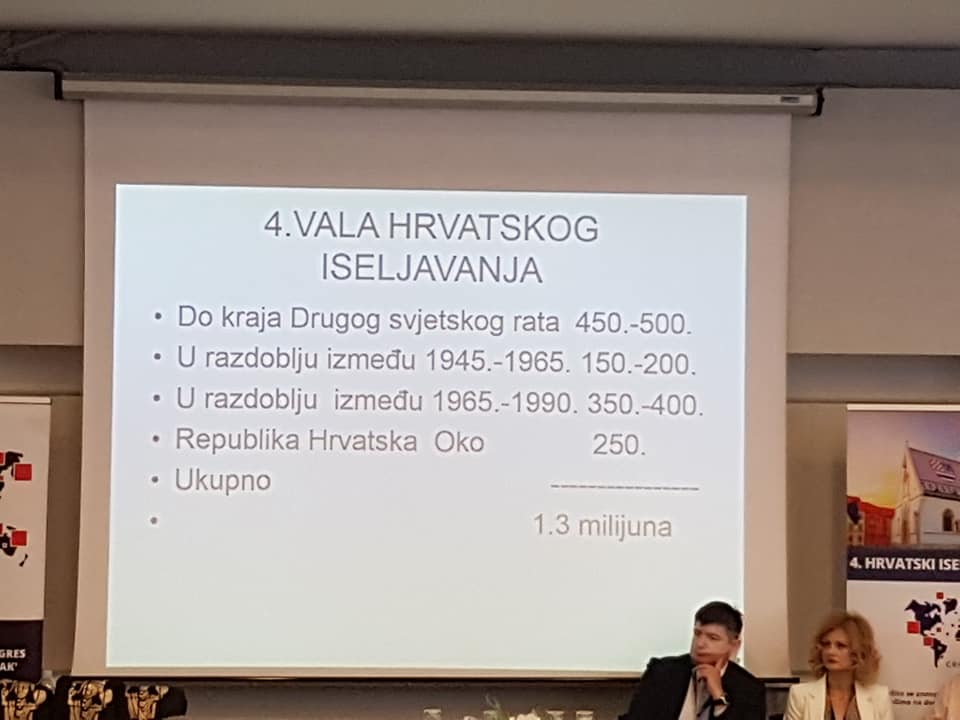
I was invited to speak at a diaspora conference in Osijek last year, the first time I had been to a diaspora conference. I was not quite sure what to expect, but my initial impressions on the first day were quite depressing. There was such a focus on the tragic stories of the past and the waves of emigration that I felt almost as an intruder at a funeral. Thankfully, the mood lifted with the energy of the younger business-minded generation, who wanted to look forward. I particularly remember Ognjen Bagatin, CEO of Bagatin Clinic lifting the mood of the entire conference - you can read my reflections of the whole event here.
And if I had to grade the conference between emotion and business for that Osijek conference, it would have been Emotion 9, Business 1. Nothing wrong with that, just my perception.
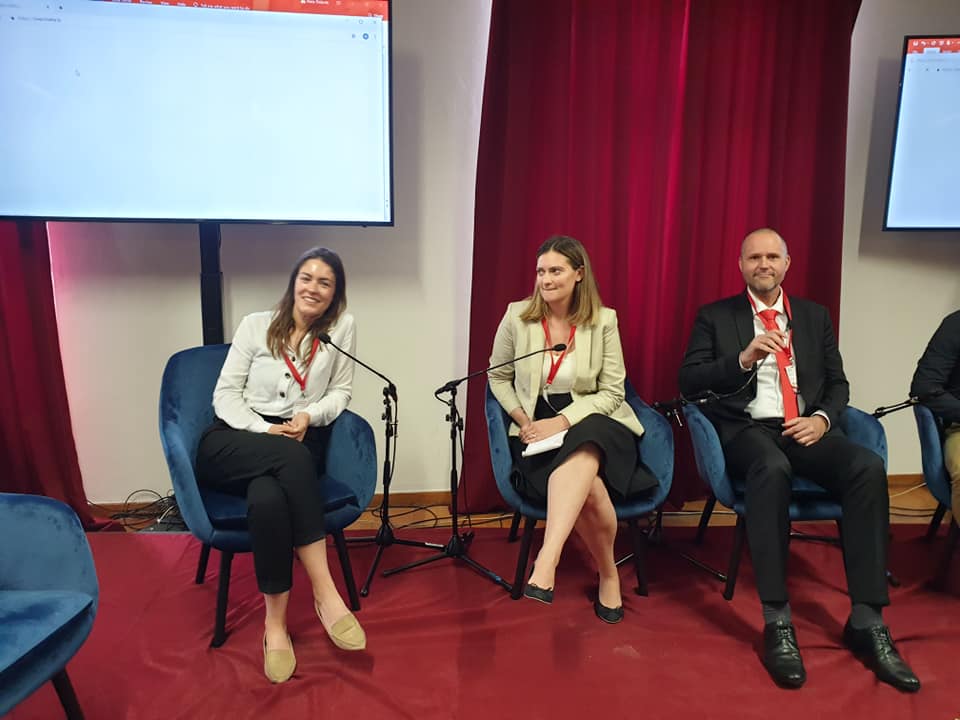
The 2nd Diaspora Tourism conference in Split earlier this year was an altogether different affair, with a lot of younger blood in the audience, and a LOT more positive stories. Panel after panel of successful returnees told their stories and if the aim was to send a message to the diaspora that perhaps it was time to take a fresh look at investing in the Homeland, the conference achieved considerable success. There was still plenty of emotion built into the programme, however, and my foreign fly on the wall report is here.
Emotion 4, Business 6.
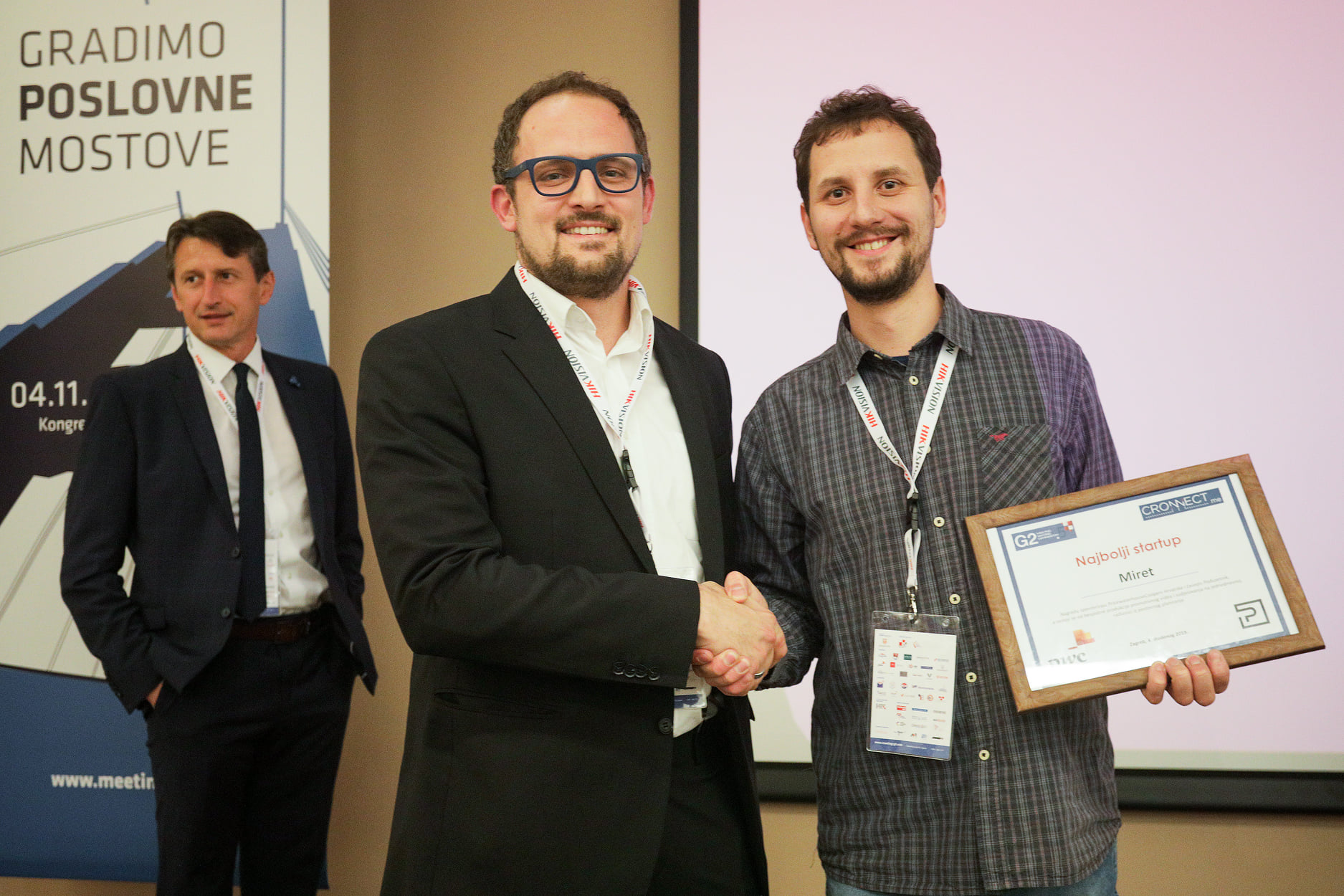
This week saw the fifth edition of Meeting G2, a Zagreb diaspora conference much more focused on business and building meaningful bridges between entrepreneurs in the Homeland and the diaspora. I attended last year's event, G2.4 and was impressed by the business focus and real discussions taking place, as well as the focus on promoting and presenting young Croatian businesses with potential. But this year's event was outstanding, on so many levels.
Ante Lucic's Cronnect initiative once more presented five great startups looking for investors, and the experienced Croatian jury chose their winner - Miret, the eco shoe startup business from Duga Resa. We will have an indepth interview with Miret on TCN shortly - it is a great product.
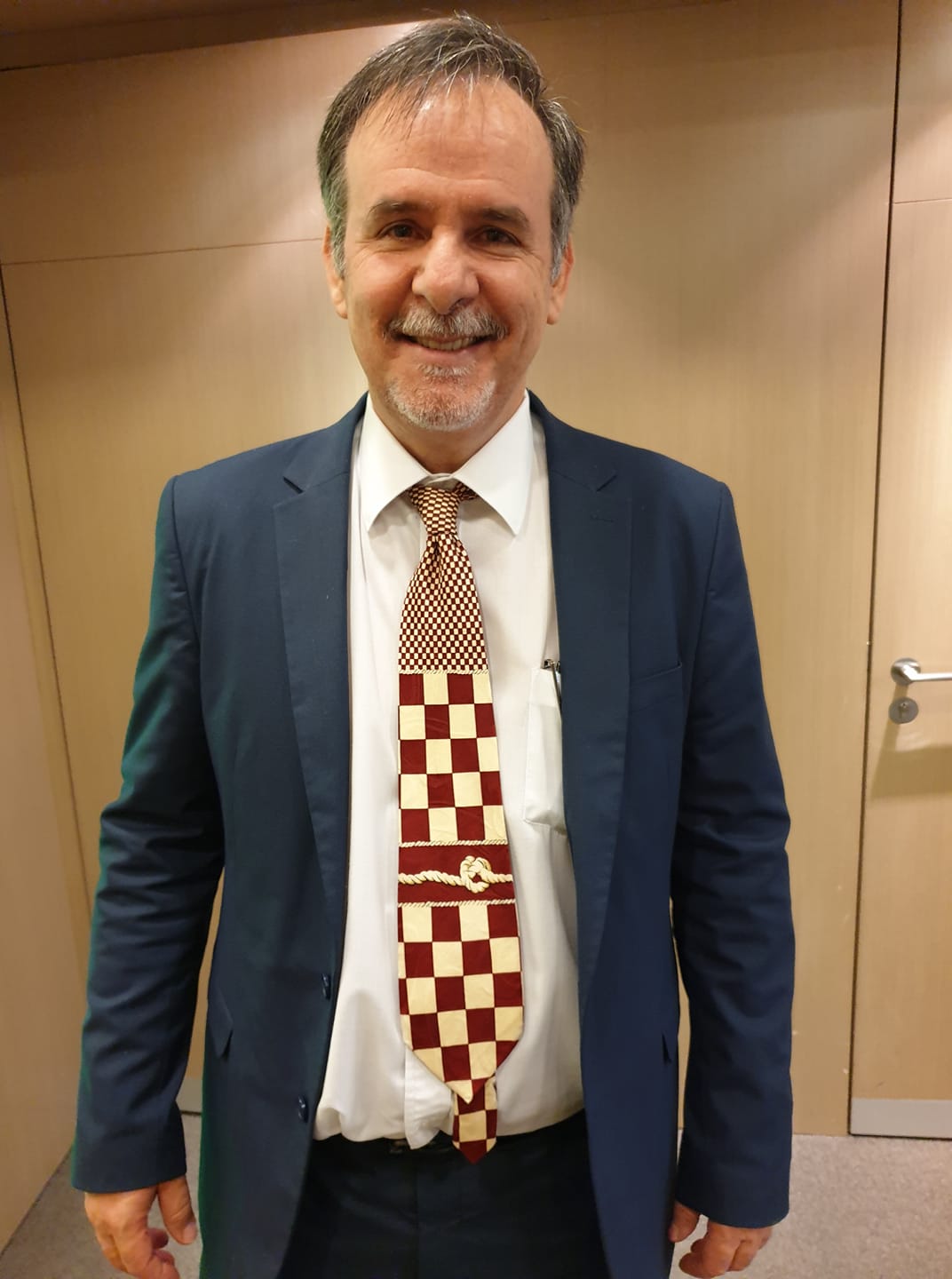
There was plenty of patriotism on show as well, with the style awards going to Josip Hrgetic, one of the G2.5 organisers. Great tie!
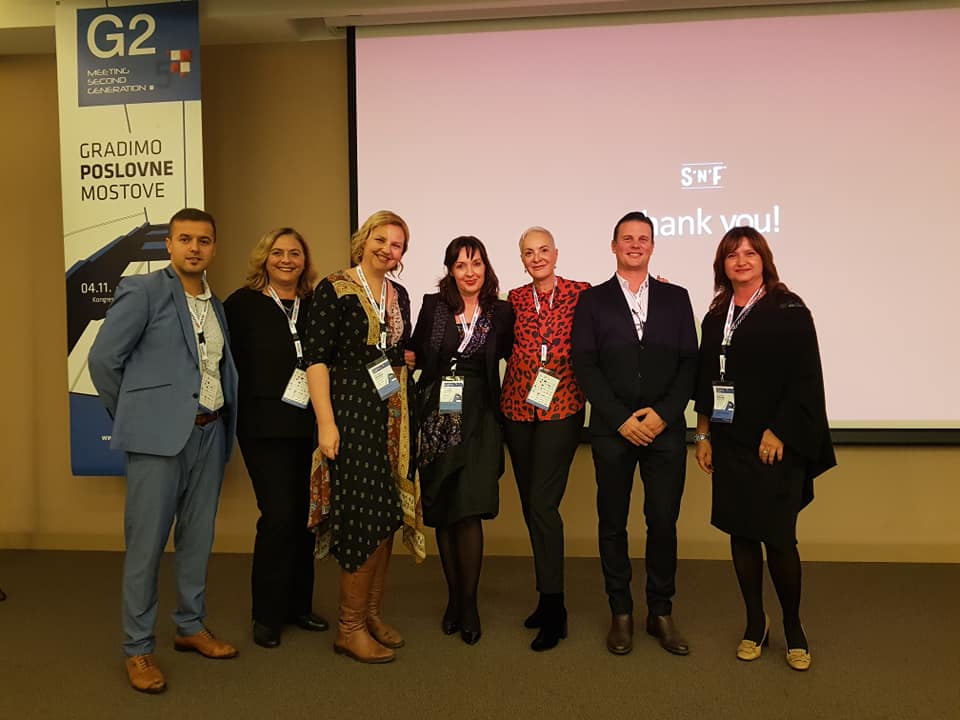
Five of the most successful Croatian franchises were also given their chance to present and impress in search of new franchisees.
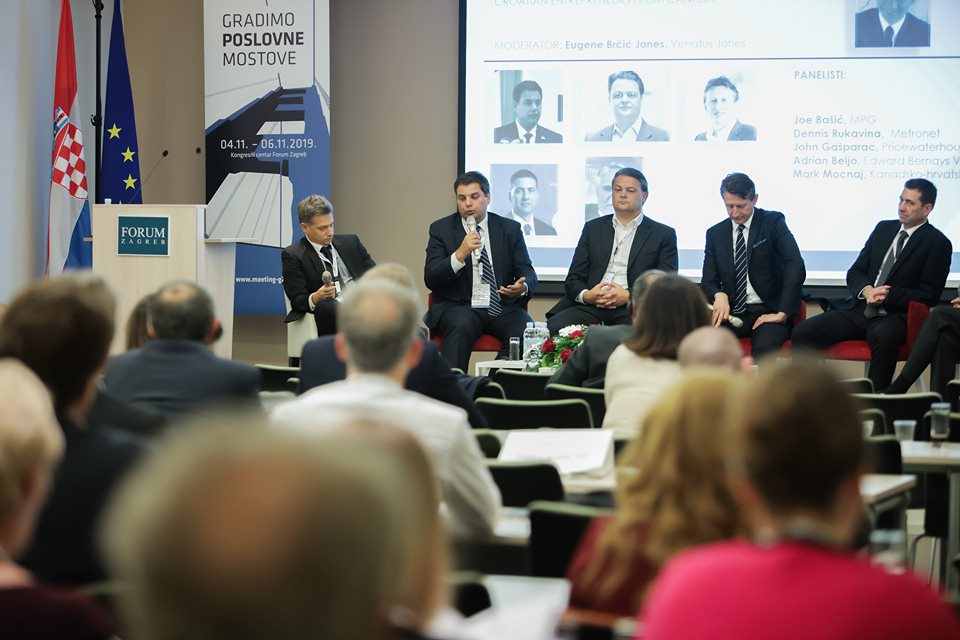
There were several excellent panels, such as the powerful and successful Canadian Croatian diaspora business community.
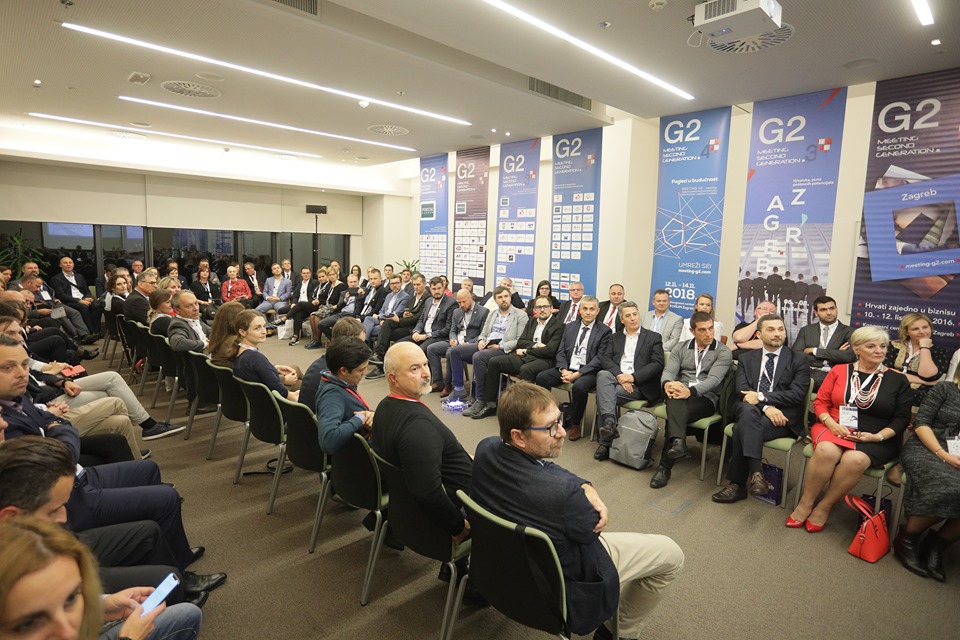
But arguably the most useful aspect of the entire conference was the networking. From my experience, many conferences make the mistake of trying to pack in too many presentations, leaving little or no time for delegates to actually meet each other and forge connections. And in this regard, G2.5 was outstanding. The opening evening included a session called Who's Who in G2? Every participant was given 30 seconds to say who they were, where they were from, something about their company, and what was their interest in G2.5. With more than 100 people to listen to, the session was expertly controlled by Aco Momcilovic, and it was interesting to watch people making mental notes of people to approach now that they knew who they were.

And they networked. I must have been to over 30 conferences in Croatia in the last three years. None has come close to the connections I made yesterday, both in person and in my inbox since I left the conference about 20 hours ago. Several others I spoke to had the same feeling. Yes, there was emotion - and some incredible ties... - but this is a conference which is firmly focused on concrete connections, projects and solutions.
Emotion 1, Business 9.
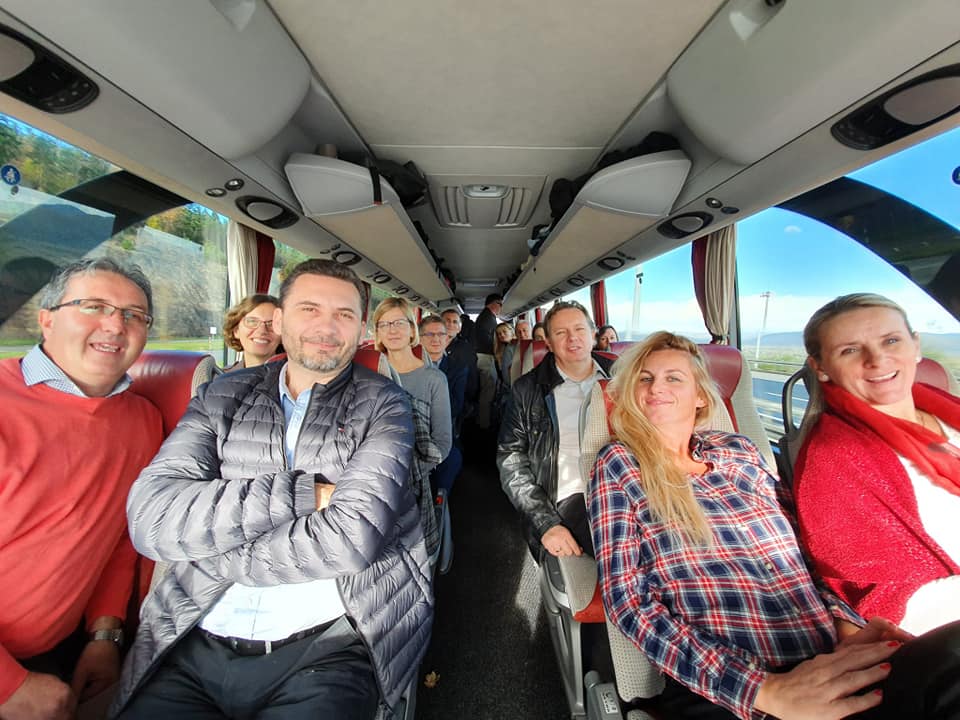
That emotion may rise a little today, as the final day of the conference includes a field trip to Zadar, as well as a visit to the tuna farm of one General Ante Gotovina.
The message is clear. Croatia is very much open for business, but this time not on emotion as in the 1990s, but with serious, successful and determined entrepreneurs. Those bridges are being built slowly, and it is a journey that this foreign fly is very much enjoying following.
To learn more about Meeting G2.5, visit the official website.
For the latest from the Croatian diaspora, follow the dedicated TCN section.
Croatian Families Misusing State Subsidies to Purchase Parents' Apartments
As Index writes on the 5th of November, 2019, for two years now, the state has been subsidising loans for young Croatian families who are buying a home for the first time. The beneficiaries of such loans pay the state, or taxpayers, who provide money to the state, up to half the instalment of the loan for the first five years.
This is clearly a pretty good scheme in itself, and some have, according to RTL Vijesti, found ways to commit legal fraud.
Thus, some beneficiaries of APN loans, that is, subsidised loans from the Croatian state, bought the flats or houses from their own parents. RTL writes about at least five such examples, in five different cities. It is easily possible that there are also many, many more cases like this.
There are also cases where children donated their own apartment to their parents and then applied for APN loans.
So far, over 3,300 loans have been approved and the average loan amount is over half a million kuna. The average rate is about 2,800 kuna, so the state pays 950 kuna of that amount. The loans are negotiated with the banks and it is up to them to determine whether or not someone is buying the apartment from their parents.
''Bankers usually look at the situation and check whether it's a real sale in each case,'' says Martina Mataić Škugor, a real estate agent.
If the buyer and seller have the same last name and the same address, then the entire story does get called into question, but agents say: changing your address is enough to fool the banks.
''A banker may ask if you're in any kind of relationship with the seller, if the buyer says no, it's a coincidence, the banker will not go so deeply into it and say: Well, come on, show me your birth certificate now,'' explains the real estate agent.
Željko Uhlir, HNS secretary at the Ministry of Construction, says there's no real harm in it.
''Whether it's a little left or right, we were able to help people out. As for the money remaining within the family and having to return it, well... these are loans. Someone will have to return it. There's no harm done to society or the state. The bank gave someone credit, he didn't just take it from the state,'' says Željko Uhlir (HNS), secretary of state at the Ministry of Construction.
Asked if this is fair, Uhlir says of course it isn't, however, it is unknown how many such cases there are.
Why is the state getting involved in housing sales at all is a question worth asking. Many economists believe that the state should not subsidise the purchase of apartments at all. This, they believe, has led to an increase in the price of apartments.
"The fact is that since these incentives came about, housing prices have risen at the same time. That's a strong correlation," says Zoran Löw, CEO of Lipa.
This isn't the first case that Croatian families have been caught ''cheating'' with state-owned apartments. There have been numerous cases where POS flats have been used for tourist purposes, which is by no means intended.
Make sure to follow our dedicated lifestyle page for more.
68 Million Euro Mega Project to Give City of Zagreb New Southern Entrance
Croatian Motorways (HAC) and the City of Zagreb have embarked on an extremely expensive joint project to give Zagreb a brand new southern entrance in order to attempt to relieve troublesome traffic issues and jams.
As Poslovni Dnevnik writes on the 6th of November, 2019, the construction of the viaduct above the Ranžirni kolodvor (station) should begin next year, giving Zagreb a totally brand new, southern entrance to the city.
This will relieve the Buzin junction and the Velika Gorica road, where huge traffic jams are often created, causing enormous and clearly needless traffic issues when entering the Croatian capital city by road. Those who have usually been using the entrance via Buzin to join or leave the bypass, will be able to do so at the Jakuševac junction after the construction of the viaduct above the Ranžirni kolodvor when the project is completed.
Croatian Motorways (HAC) expects that as much as fifty percent of the traffic from Buzin will be diverted to Jakuševac owing to the construction of this viaduct, which, as stated, will provide enormous relief for drivers entering Zagreb, as the average annual daily traffic between these two junctions is as high as 57,912 vehicles.
According to Vecernji list, HAC and the City of Zagreb are embarking on this joint project that, in addition to the construction of the overpass, of which HAC is in charge, includes the reconstruction of Sarajevo road, which will also receive a new tram line, with the City of Zagreb being responsible for that part. The implementation of the project will also improve the connectivity of the Croatian capital city with its international airport.
The estimated value of the investment stands at an eye-watering 68 million euros. Of this amount, the viaduct and junction on Sarajevo road are worth 48 million euros, while the reconstruction and extension of the road will cost 13.3 million euros in total. On top of all that, the construction of the new tram line would cost 6.7 million euros. Croatian Motorways say they want to launch a viaduct tender early next year and start work by the end of 2020.
Make sure to follow our dedicated lifestyle page for more. If it's just Zagreb you're interested in, give Total Zagreb a follow or check out Zagreb in a Page for all you need to know about the bustling Croatian capital.