

70,000 Eligible Voters to Be Outside Croatia for Skiing on Election Day
ZAGREB, January 2, 2020 - As many as 70,000 eligible voters will be outside Croatia on their skiing holidays on 5 January when the country holds a presidential runoff election and only 5,095 of them have registered themselves for voting outside their place of residence, the Jutarnji List daily said in its issue on Thursday.
The data about the number of Croatian skiers outside the country on 5 January was collected from travel agencies that organise winter travel arrangements. They show that about 110,000 Croatians could be on their skiing holidays next weekend, and of them a third are underage children who cannot vote in elections, which means that 70,000-80,000 are eligible voters.
The Public Administration Ministry and the State Election Commission (DIP) say that 5,095 voters have requested a certificate for voting outside the place of permanent residence.
The data was used by the daily to estimate how many skiers are likely to "abstain" from voting in the second round of the presidential elections in which the incumbent president Kolinda Grabar-Kitarović seeks her reelection and her rival is former Prime Minister and Social Democrat leader Zoran Milanović.
Thus, the daily newspaper concludes that a rough calculation suggests that 65,000 Croatians will not go to polling stations because of their winter holidays.
The daily recalls that five years ago when a runoff included the then incumbent president Ivo Josipovic (SDP) and Grabar Kitarović as the contender, also 4,876 voters had been given certificates for voting outside their place of residence.
During the 11 January 2015 runoff, Kitarović garnered 50.74% of the vote, that is 1,114,945 ballots, while her predecessor Josipovic won 49.26% (1,082,436 ballots), which means that she won 32,509 votes more than Josipovic.
Therefore, it is no wonder that since the start of the election campaign, Milanović has been complaining about the dates for the presidential election process, as he believes that the absence of that portion of the electorate could impact the final result in the probably cliffhanger presidential election runoff.
More news about presidential elections can be found in the Politics section.
E! Entertainment Founder Larry Namer to Film Documentary on Croatia
Croatia gets an enormous amount of publicity, but it's quite something else when Larry Namer, the founder of one of the most watched TV channels in the world decides to fly to Zagreb with plans to film a documentary about Croatia for the wildly popular American channel.
As Poslovni Dnevnik/Marta Duic writes on the 2nd of January, 2020, Larry Namer, a well known American media mogul, is the founder of E! Entertainment Television, which is, as previously mentioned, by far one of the most famous TV channels in the entire world.
On his channel, the ultra-popular reality show Keeping Up with the Kardashians, which follows the lives of Kim Kardashian and the rest of her family, has been broadcast since back in 2007.
Larry Namer was brought to Croatia by his associate producer Ana Muhar Blanquart Zagreb, and the reason for his arrival was the documentary series Explore the World.
It is a series consisting of twelve episodes, done in documentary style, that should be presented to the viewers of the Chinese television stations Youku and Mango TV, which have more than 700 million subscribers, among other carefully selected world destinations. What better way to present gorgeous, urban Zagreb to tourists on a distant market?
Larry Namer, who has been producing various TV projects for the Chinese market for years now, especially those aimed at the younger, more affluent, travelling population, noted that this year alone, as many as 110 million Chinese tourists are on their way to various destinations worldwide, and Zagreb offers just about everything young and rich Chinese nationals might be interested in - friendly people, historical beauty and significance, culture and long, rich traditions.
They will be filming a documentary about Croatia as a country, which will be a great promotion of the country in general. American Larry Namer, who has been working in show business for more than fifty years now, got better acquainted with Zagreb and discovered his favourite locations in the capital. He also enjoyed coffee with famed Croatian fashion designer Aleksandra Dojčinović.
Make sure to follow our dedicated travel page for more.
Many Croatian Companies Lag Behind for Fear of Abandoning Old Ways
As Poslovni Dnevnik/Darko Bicak writes on the 2nd of January, 2020, the names of companies who under the name of their brand boast city names such as London-New York-Tokyo, are generally large global companies that, due to the nature of their business, must be based in various parts of the world. Although there aren't many Croatian companies of that size and power, every once in a while there are Croatian companies that deploy their headquarter posts and spread their wings abroad.
There are numerous companies of the kind across European and world capitals, and one is Startaparat, with Zagreb-Vienna-Dubai under its name. The Startaparat company is comprised of three women Sanja, Tanja and Helena. Behind them, as they point out, lies a strong, longstanding friendship which has grown through working together at the Bruketa&Žinić OM agency.
Tanja Škorić was a creative director in Zagreb and later a partner at Bruketa&Žinić Vienna. Helena Rosandić Šepić was the director of B&Z in Baku for a number of years, and after that she went to Vienna, too. Sanja Petek Mujačić spent thirteen years in that agency, most of which as a director and board member. Startaparat was initially founded in Vienna back in 2017 by Tanja and Helena, and Sanja joined them in early 2019 as a partner and director of the Zagreb office.
Startaparat's main focus is to create innovative communications solutions that build digital age brands and organisations. Whether it is startups or already established Croatian companies or indeed foreign ones, they help them to adopt a culture of innovation, creativity and change, to reach their absolute full potential.
In fact, they work with Croatian companies and foreign ones that want to grow faster, developing from their original ideas to creating a winning marketing concept. Their business model itself changes the established processes of the communication industry - building a network of teams and experienced professionals/consultants with whom they collaborate on projects - from HR professionals, people operating within the complex digital world, communicators, designers, developers, business consultants, and so forth. Having a presence and experience across different markets gives them priceless insight into a variety of trends, knowledge and practices - giving their solutions some serious strength and weight.
In addition to Vienna in Austria and Zagreb in Croatia, this year, they have a ''set up'' of offices in Dubai, and plans to expand to even more countries. Sanja is a kind of primus inter pares, and today she attributes her competencies to her general education and extensive experience. Sanja, who is otherwise an art historian, has spent her entire marketing career focusing on how technology is changing the world.
"It used to be more from the perspective of marketing and communications, and in the past two years it has been growing from the perspective of management and work in organisations. My favourite topic is storytelling in business, and how much power and strength of the stories in the business environment I reveal to the teams of the largest Croatian companies through interactive workshops. In addition, I'm dedicated to the hot topic - employer branding, but my vision is that that's not only an HR topic, but that it also combines communications and marketing,'' explained Sanja Petek Mujačić.
She added that for several years now, Croatian companies and foreign companies have been intensively introducing technology into all aspects of their business. "The goal is to improve processes, accelerate product development and marketing, improve customer experience - all to meet the increasingly dynamic and rapid market and customer demands.
''Old'' organisations and well-known brands are constantly under the influence of fast moving startups and disruptive innovations. Technology is one solution to how to be prepared for market competition, but the focus shifts to a key company resource - people. Thus, the priority becomes the intensive adaptation of the way in which we work and collaborate, which motivates and inspires us, that is, how companies are organised and how they communicate and create,'' noted the Startaparat director.
She explained that many Croatian companies are still guided by old, outdated principles of management, which, as she says, are in line with the needs of our grandparents' time and not in line with modern business at all.
"In most cases, Croatian companies are not yet ready for radical change - creating a shallower organisation, abandoning the command and control model, less internal bureaucracy//. A system without a strong hierarchy, risk-averse. But... they're slowly moving in that direction.
This transition is not simple and easy, but I believe that the benefits of the changes will be great and will have multiple implications for employee engagement and motivation, and definitely for the creation of innovative and relevant solutions, products and services,'' said Petek Mujačić.
Make sure to follow our dedicated business page for much more on Croatian companies, products and services.
Foreign Minister Attends Ceremony in Vienna for Croatia's EU Presidency
ZAGREB, January 2, 2020 - Foreign Minister Gordan Grlić Radman on Wednesday attended a ceremony of the unveiling of a cravat on the facade of the Croatian Embassy in Vienna, symbolically marking the start of Croatia's presidency of the European Union after which he was at the traditional New Year's Day concert by the Vienna Philharmonic Orchestra.
"We are marking the start of Croatia's presidency of the Council of the European Union while the red cravat, some three and a half metres long hanging from the balcony of the Croatian Embassy building in Vienna is symbolic. I think it will be noticed by everyone," Grlić Radman said.
"The tie (cravat) is recognised as a Croatian brand and in that way, we are attracting the attention of Austrian citizens," he added.
The unveiling of the cravat preceded this year's philharmonic concert and it is a great honour and pride for Croatian officials to be invited to this concert, Grlić Radman said who was invited to attend the concert by his Austrian counterpart Alexander Schallenberg.
Austria was one of the first countries to recognise Croatia's independence and continued to help it in later processes, Grlić Radman recalled.
Twenty-five years ago, Austria joined the EU and "today it is a great friend and we enjoy its support," he added.
Grlić Radman thanked Schallenberg for his invitation to attend today's concert on the occasion of marking Croatia's presidency of the Council of the European Union, saying that this was a "historic moment" for Croatia.
Schallenberg expressed Austria's support for Croatia in that process.
"Austria supports Croatia's presidency of the Council of the EU one hundred percent. Croatia is reliable and we know that it will do that job very well," Schallenberg underscored.
He said he was pleased his Croatian counterpart was in Vienna on the "first day of the New Year and the first day of Croatia's presidency of the Council of the European Union," and recalled that the Union is faced with huge tasks from adopting the budget, enlargement and neighbourhood policy and assessed that the EU is in good hands in Croatia.
Referring to bilateral relations between the two countries Schallenberg said that "not only is there a historical connection between the two countries but there is also a close human connection."
About 80,000 Croatians live in Austria and more than 1.2 million Austrians visit Croatia during their annual holidays, he recalled.
"They are close human ties and we have a very good economic cooperation. Austria is the number one investor in Croatia and with regard to bilateral relations, we can say that they couldn't be better," Schallenberg concluded.
Minister Grlić Radman believes that during its presidency Croatia will show "political credibility of its government and all its institutions, officials and in particular the foreign ministry as the coordinator of all activities."
"We are faced with a huge job and task and we have to do that job in the best way possible in the interest of all EU members, primarily based on regulating relations between the Union and the United Kingdom," he said.
The multiannual financial framework too is a challenge which "is pretty complex because various approaches exist in member state," believes Croatia's minister.
The meeting of the leaders of Eastern European and Western Balkan countries is a challenge because there are differing approaches when it comes to the issue of the Union's enlargement, he added.
Grlić Radman attended a breakfast held to mark the 25th anniversary of Austria, Sweden and Finland's accession to the European Union, which was attended by their host, the Austrian minister Schallenberg as well as Sweden's Prime Minister Kjell Stefan Lofven and Austria's Chancellor Brigitte Bierlein.
More news about Croatia and the EU can be found in the Politics section.
Minister Satisfied with Double-Digit Growth in Tourist Spending
ZAGREB, January 2, 2020 - Tourism Minister Gari Cappelli has expressed satisfaction with the indicators showing a growth in the Croatian tourist trade, and in this context, he underscores the importance of 20% growth in tourist spending.
Tourist spending has risen by about 20%, and those are financial indicators that boost tourism, he told the national broadcaster (HRT) on Wednesday evening.
Cappelli commented on the statistical figures provided by the Croatian National Bank (HNB) showing that Croatia earned 9.44 billion euro in revenues from foreign tourists in the first nine months of 2019, which is an increase of 769 million euro or 9% over the same period in 2018.
Also, last year tourist arrivals increased by 5%, and overnight stays by 2%-3%.
Cappelli underscores that fact that in 2019, the average spending per tourist stood at 97 euro as against 79 euro of the average tourist expenditure in 2017.
The average tourist expenditure rose to 144 euro in hotels, while it stands at 94 euro for guests in private accommodation, and 62 euro in holiday-makers accommodated in camping sites.
More news about Croatian tourism can be found in the Travel section.
EU Funds Totalling 1 Billion Kuna Allow Croatia to Purchase New Trains
As Poslovni Dnevnik/Josip Bohutinski/VL writes on the 1st of January, 2020, with the help of EU funds, HZ Passenger transport will receive just over 1 billion kuna this year for the purchase of 21 brand new electric motor trains.
Out of the cohesion fund, HZ Passenger transport will receive 880.3 million kuna, ie 85 percent of the eligible costs, while the remaining 15 percent will come directly from the state budget. After signing the contract for the award of these grants of 1.03 billion kuna, HZ PP will launch an international public tender for the actual procurement of the new trains.
The Ministry of Maritime Affairs, Transport and Infrastructure says that thanks to EU funds, HZ PP will thus modernise its electric vehicle fleet with eleven suburban and ten regional trains, which will provide passengers with much more comfort, reduce their travel time, provide greater capacity and more reliable transportation, therefore improving the competitiveness of services provided by the trains overall.
They also state that the project which has been financially facilitated by the use of EU funds is a continuation of the work of addressing the advanced age of the fleet of trains. HZ PP has so far acquired 27 brand new trains, in accordance with the contract it signed back in 2014 with Končar - Electric Vehicles on the procurement of 44 new trains, worth a massive 1.6 billion kuna in total.
However, back then, only half of the amount was secured with HBOR's credit, so that in the first phase of the procurement, twenty electric motor trains were delivered for the suburban and regional lines and one diesel-electric train was procured for regional transport.
In the meantime, HZ PP secured 130.5 million kuna for the purchase of an additional four diesel-electric motor trains for regional transport without VAT with money from a World Bank loan.
Three have already been put out on the market, meaning that currently 27 new trains are currently running on Croatian railways. From the loan of the World Bank and Eurofima, HZ PP plans to realise a contract with Končar by the year 2022, which will result in the delivery of nineteen more new trains (seven diesel-electric and twelve electric motors), arriving from 2021 to 2024.
Make sure to follow our dedicated lifestyle page for more.
VIDEO: Sibenik Tradition Continues as People Swim On New Year's Day
2020 is officially here and with it come a wave of new year's traditions. One of them is a Sibenik tradition in which people jump into the sea at exactly midday on the new year's maiden day.
As Morski writes on the 1st of January, 2020, for the eighth year in a row now, the people of Sibenik have been jumping into the cold sea at exactly noon on new year's day and the aim of today's action is to raise awareness about the protection of the Adriatic fishery fund, as well as the ever concerning threat of climate change.
Several hundred people gathered today at a beach in Sibenik where the bravest of Sibenik locals and one Split woman, boldly rushed out into the sea at noon, marking the beginning of a brand new year, according to local portal SibenikIN.
''I came back here after eight years, when I was the only woman to swim in Sibenik on January the 1st. This year, I'm once again the only woman doing the New Year's swim and I can't wait to enter the sea,'' said the Sibenik native Jelena Bura who now lives in Split and as such normally swims in Split's Firule in the winter, and all that matters to her is that she has enough sun.
Kresimir Ivancevic made sure not to miss out on the Sibenik tradition of jumping in for a new year's swim at noon either.
''I think there are 18 of us, and the sea is seven degrees. My fitness team didn't drink tonight, so we didn't have to sober up. We want to always be ready, and we already went swimming here a week ago to assess the situation. There are really a lot of people here today,'' Kresimir said in conversation with SibenikIN.
The youngest swimmer taking part in this Sibenik tradition today was four-year-old Noah, for whom it was not at all cold. His parents added that they had even swam in the Cetina river three times in December, and nobody caught a cold.
Make sure to follow our dedicated lifestyle page for more.
Croatia Hotel Renovation Project Abandoned in Downtown Pula
A well-known Croatian entrepreneur has abandoned his plans to transform a historical building in Pula, Croatia into a hotel and lost his 785,000 HRK (105,000 EUR) deposit after he was informed by government officials of unexpected additional costs.
Another Failed Croatia Real Estate Venture
Another real estate venture has failed in Croatia, this time in the historical center of Pula according to Barbara Ban/Novac/Jutarnji List on December 31, 2019. This project involved the renovation of Scracin building, which formerly housed the Croatian Pension Insurance Office (HZMO) and Croatian Health Insurance Office (HZZO). The building is located next to the Zlatna vrata (Golden Gate) or Slavoluk Sergijevaca (Arch of Sergius) landmark.
The buyer, renowned Istrian entrepreneur Kristijan Floričić, allegedly abandoned the purchase of the building priced at 15.7 million HRK (2.1 million EUR) and lost a sizeable deposit of 785,000 HRK (105,000 EUR) after he realized that, due to the number of unanticipated conservation projects and required research, he would not be able accomplish everything he had planned, which was to transform the property into a hotel. In December, TCN covered another much larger failed real estate venture, which was abandoned by investors for eerily similar reasons, on the island of Pašman. Back in Pula, the Scracin building is on the market again as of December 11, under the exact same conditions and for the exact same price.
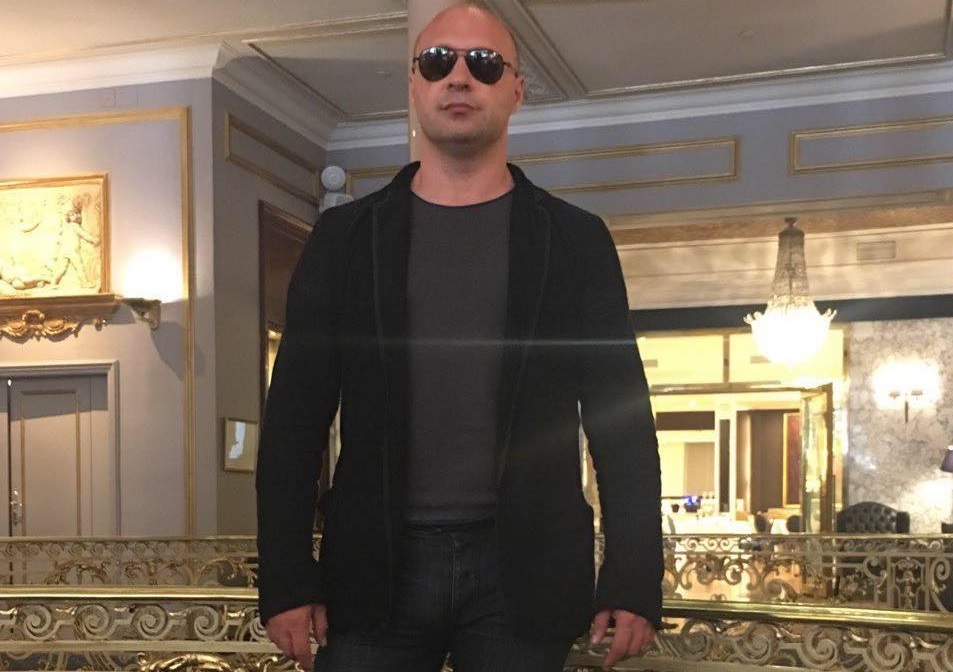
Kristijan Floričić | Facebook
Buyer Informed of Costs and Restrictions After Deposit
Unofficially, problems arose after Floričić submitted his offer, and he found out that he would have to invest a considerable amount of money in research before he could move forward with his renovation plans. The conservators would not allow specific renovations to the building and the conditions they set for the buyer allegedly amounted to a multi-million HRK investment, which is why Floričić decided in the end that the project would be unprofitable. What kind of research was necessary and whether that research required a multi-million HRK investment could not be confirmed because the Pula Conservation Department could not be reached for comment. But this building, built between 1880 and 1881, and destroyed in a 2014 fire, will unfortunately remain vacant until further notice.
The building owners are claiming that Floričić knew what kind of property he was buying because the tender noted that the building was a cultural asset.
Building Registered as Protected Cultural Property
“According to the provisions of the Law on Protection and Preservation of Cultural Property, before the procedure of sale by public tender, the real estate was offered to the Republic of Croatia (Ministry of State Property), the County of Istria and the City of Pula. These authorities showed no interest in the purchase, and on October 10, 2018; a public tender for the real estate sale was published in Narodne novine, Glas Istre, and on the HZZO and HZMO websites.”
“The tender stated that the so-called Scracin Palace is a property of a cultural value and had been entered in the Register of Cultural Properties of the Republic of Croatia and the List of Protected Cultural Properties. Each potential bidder had the opportunity to inspect the real estate, as well as access to the Register of Cultural Properties of the Republic of Croatia. The buyer also had the opportunity to inform the ministry of their potential plans related to the renovation of a cultural property,” the Croatian Health Insurance Office pointed out.
They added that the bidder had fulfilled all the conditions of the tender and his bid had been selected as the most favorable one, but he eventually decided that he did not want to finalize the purchase contract.
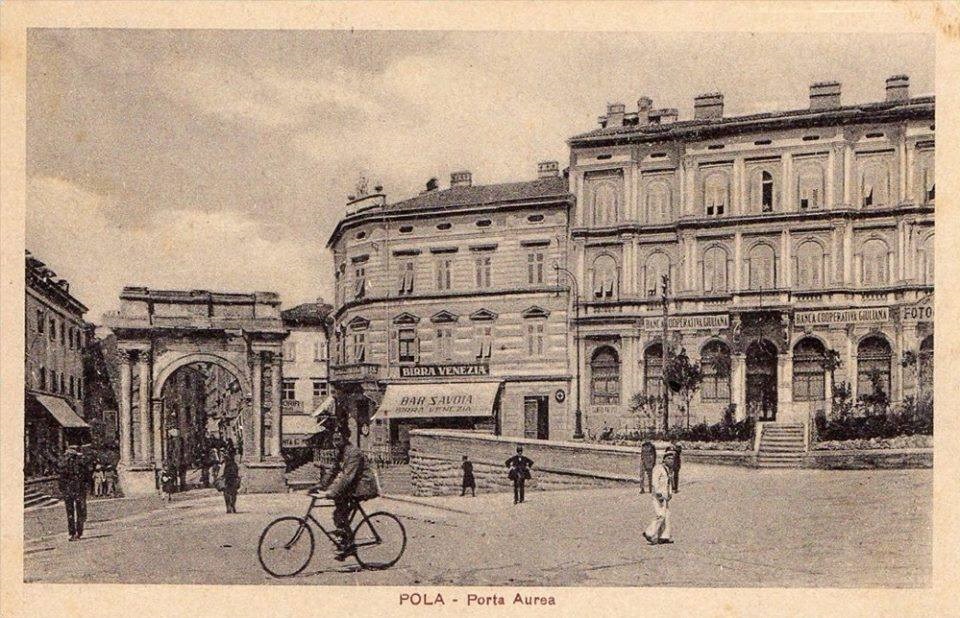
Zlatna vrata and Scracin Building | Vintage Postcard | Facebook
Buyer Abandoned Purchase and Lost 105,000 EUR Deposit
“After the conditions for the finalization of the real estate purchase contract were fulfilled (the prior consent of the Governing Council of the co-owners and the Government of the Republic of Croatia), the selected bidder-buyer was invited to finalize the purchase contract. However, the buyer abandoned the finalization of the purchase contract because, according to him, the real estate has certain material defects which make it impossible to use for the specified purpose, which was the completion his planned project. Since the co-owners of the real estate do not believe that the material defects were not known to the bidder at the time of submitting the bid, the selected bidder has lost the right to recover the deposit,” according to a statement from Croatian Health Insurance Office.
They add that it was stated in the conditions of the public tender that the successful tender applicant was obliged to finalize a purchase contract with the sellers of the real estate within 30 day from the invitation to finalize the purchase contract. Otherwise he would forfeit his deposit.
Building Back on the Market: Same Price and Conditions
The building is now on sale again for the price of 15.7 million HRK (2.1 million EUR) as it was previously and is available to view as of January 14. Bidders are required to pay a five percent deposit of the initial price of the property, or 785,000 HRK (105,000 EUR). The deadline for bid submissions is January 17, and bids will open to the public on January 23. The building itself is about one thousand square meters, with an additional 576 square meter building and a 15 square meter auxiliary building. They state that the property is for sale in its current state, which is "as-is".
Follow our Business page to keep track of failed (and successful) business ventures in Croatia.
Economy Sector Ministries Have Ambitious Plans for 2020
ZAGREB, January 1, 2020 - Ministries in charge of the economy have ambitious plans for 2020 including the construction and reconstruction of roads, railways and ports as well as improving macroeconomic indicators and the business climate which should lead to improvement of standard for citizens and facilitate doing business for entrepreneurs.
The Finance Ministry says that the 2020 budget is directed to further tax reliefs of 2.3 billion kuna for workers and entrepreneurs.
The ministry forecasts that intake of EU funds in 2020 will amount to 18.1 billion kuna and that the trend of decreasing the public debt to GDP ratio will continue.
Croatia is also due to enter the European Exchange Mechanism (ERM II) in the second half of the year.
The ministry forecasts a general government surplus of 0.2% of GDP in 2020, 0.4% in 2021 and 0.8% in 2022.
When it comes to the public debt, at the end of 2015 it amounted to 84.4% of GDP and at the end of 2019 it was reduced to 71.3% and by the end of 2020 it is expected to decline to 68%.
Favourable trends on the labour market are expected to continue and unemployment should continue to fall toward to 6.3% in 2022.
A set of legislative amendments entered into force on January 1 as part of the fourth round of tax reforms which among other things means that the non-taxable income threshold will be raised from 3,800 kuna to 4,000 kuna. Income taxes for young people under 25 years of age have been reduced by 100% while income taxes for those aged between 26 and 30 have been cut by 50%.
Economy, Entrepreneurship and Crafts Ministry plans to continue with reliefs for entrepreneurs and reducing or abolishing parafiscal levies.
An action plan is prepared to liberalise the services market by deregulating professions.
Amendments are expected to the legislation regulating working hours for stores to on Sunday, which are aimed at introducing non-working Sundays.
The ministry also plans to co-finance R&D projects for entrepreneurs through state subsidy schemes
Sea, Transport and Infrastructure Ministry underscores that 2020 will be marked with works to the railway network.
The current projects, which are underway, are estimated at 1.2 billion euro and during 2020 the Croatian Railways (HZ) passenger transport fleet will be upgraded with electric trains. These investments are set at 1.03 billion kuna. A project to improve the safety of railway/road level crossings is planned with the installation of equipment valued at 127.7 million kuna.
Several significant road construction projects have been announced including the construction of access roads to Pelješac Bridge with a total distance of 30.13 kilometres and valued HRK 990 million kuna as well as a new multimodal platform for the Split agglomeration including the towns of Solin, Stobreč, Dugi Rat and Omiš with a total investment value of 2.4 billion kuna.
Another significant project in road infrastructure is the completion of the first stage of the Istrian motorway with a tender for another tunnel through Učka Mountain.
Investments of more than 453.8 million kuna are planned for Croatian ports.
A national broadband aggregation infrastructure will be built with a value of 780 million kuna.
Croatia plans to determine its first 5G city and to adopt a national plan for the development of broadband access throughout the country for the period 2021-2027.
Environment and Energy Ministry says that 2020 will be marked with the preparation and adoption of a global and European strategy on biodiversity.
It expects to adopt the first national Strategy of adapting to climate change for the period until 2040 with a view to 2070 and it also plans to prepare a national action plan for the next five-year period that will contain priority measures in that regard.
More economy news can be found in the Business section.
Speaker Jandroković Attends New Year’s Concert in Vienna
ZAGREB, January 1, 2020 - Croatia will do its best to show its ability and vision during its presidency of the Council of the European Union and it expects support from all friendly countries, including Austria of course, Parliament Speaker Gordan Jandroković said on New Year's Day in Vienna.
"It's a great honour and pleasure to be in Austria today on the occasion of Croatia's presidency of the Council of the European Union," Jandroković told reporters.
The Croatian parliament speaker and his wife arrived in Vienna at the invitation of his Austrian counterpart Wolfgang Sobotka, to attend the traditional Vienna Philharmonic Orchestra New Year's Day concert.
Jandroković also notes that the EU is faced with a demanding period and that the key challenges are the next seven-year budget of the EU bloc and Brexit.
"We will do our best to show that Croatia has the capacity and vision to be at the helm of such an important organisation," Jandroković underscored and added that he expects the "support of countries, particularly friendly countries. That is why I am grad that I am in Austria today."
Croatia took over the six-month rotating presidency of the Council of the European Union on 1 January 2020 from Finland, six and a half years after entering the European bloc.
"This is a very important day for Croatia. After six and a half years of membership and the long battle for full membership, today we are at the helm of the EU, which is a huge responsibility," said Jandroković. Together with his host Wolfgang Sobotka, Jandroković viewed an exhibition in Heldenplatz square dedicated 25 years of Austria's EU membership and on the occasion of Croatia assuming the EU presidency.
Sobotka said that Austria is a "friendly and important country for Croatia which has taken over the presidency of the Council of the EU."
He recalled that Croatia had recently hosted several international conferences and said that it had done that very well and that everything it had undertaken was also in Austria's interest.
"I think that Croatia is well prepared for the presidency of the Council of the EU and I look forward to its presidency in the first half of this year," Sobotka said.
Jandroković and Sobotka conducted a working meeting after the concert to discuss bilateral relations, European topics and southeast Europe.
More news about Croatia and the EU can be found in the Politics section.