

More Than 160 Loggerhead Turtles Have Passed Through Pula Aquarium
As Glas Istre/Borka Petrovic writes on the 1st of January, 2020, once upon a time, in the middle of winter, turtles would arrive at Pula aquarium's turtle recovery centre cold and sick, and today in the winter, turtles with injuries to their limbs caused by their entanglement in nets, plastic waste and various types of marine waste arrive throughout the winter.
All this speaks volumes about the fact that there is more and more garbage being dumped in the Adriatic sea, notes Aleksandra Bel Dajković, the manager of Pula aquarium.
Just a few days ago, a very small and thin turtle in a seriously bad condition arrived at Pula aquarium and is currently being housed in the Sea Turtle Recovery Centre. The turtle was named Free Wings, after the boat on which the crew found the animal caught up in a net in which a rope, various pieces of plastic and a branch got tangled.
As has since been learned from the manager of Pula aquarium, Aleksandra Bel Dajković, because of all that waste she has been dragging behind her body for who knows how long, her right right fin was necrotic and she was completely exhausted. Fortunately, as soon as she received an infusion, she was immediately energised and Pula aquarium's staff are confident that she will recover very quickly at their recovery centre.
The turtle has already begun to eat on her own, she especially loves sardines and squid, and the wound on her fin has been cleaned with antiseptic every day, with special honey being added to it for recovery, Bel Dajković who cares for with two other loggerhead turtles along with Free Wings. The two other turtles are Marvin and Ryan, who are both young. Four such young individuals who had been recovering at Pula aquarium have already been successfully returned back to sea following recovery.
Marvin was found caught in a net with a large open neck wound, while Ryan was found tangled up in waste. Due to a significant injury to his fin, he was recently amputated in Zagreb, but he is also now recovering well.
The Sea Turtle Recovery Centre, as Bel Dajković explained, was officially formed back in 2006 and co-financed by Pula aquarium, but turtles were being admitted for recovery even before that date. In all, more than 160 turtles have passed through it so far, and most of them have successfully recovered and been returned back to sea.
''It's interesting how the situation has changed over the years. Once upon a time, large individuals came to us, and now there are more and more young ones. On the other hand, in the middle of winter, the turtles that arrived were cold and unwell, and today in winter, turtles arrive with injuries to their limbs caused by their entanglement in nets, plastic, and various types of marine waste,'' she said.
Otherwise, sea turtles are among the most endangered animal species and are therefore protected by numerous national and international regulations. They have been strictly protected in Croatia since 1995. Despite their protection, sea turtle populations are declining dramatically throughout the world, and so are the Croatian turtles. It has therefore proved necessary to establish sea turtle recovery centres worldwide.
The Pula Sea Turtle Recovery Centre operates within Pula aquarium and cares for injured sea turtles from across the Croatian Adriatic. On arrival at the centre, each turtle undergoes a thorough examination to determine its health, assess the severity of any injuries, or identify any disease. The turtles located in the centre are housed in pools with flowing seawater maintained at a temperature suitable for their recovery (25 °C).
The daily care for the sea turtles located in the centre consists of regular feeding, the cleaning of their pools and thorough health checks. The turtles are fed on a daily basis, usually with sardines. Their recovery takes place under the supervision of a veterinarian who prescribes the treatment required. After recovery, and before being released back into the sea, the turtle is tagged. The tag contains the turtle's number, which allows the individual to be identified if found again and to compare their condition (weight, health) with previous data.
In addition to treatment and care, the activities of the centre are related to the education of the general public on turtles. One form of education is the public release of recovered sea turtles, which takes place every June on World Sea Turtle Day, and sometimes twice a year. This event has already grown into a traditional and very popular event with an increasing number of citizens and tourists participating every year.
Make sure to follow our dedicated lifestyle page for more.
Officials Extend Best Wishes for New Year
ZAGREB, January 1, 2020 - Prime Minister Andrej Plenković on Tuesday extended his best wishes for the New Year, saying that his government would continue working to improve living standards and ensure even development of all regions in Croatia.
He said that in the past year the government had consolidated economic growth, continued with tax cuts and structural reforms, launched many infrastructure projects, considerably increased the intake of EU funding and restored the country's credit rating to investment grade.
2020 will be a year of further economic development and international positioning of Croatia, especially during its presidency of the European Union which should give an extra impulse to the political and economic affirmation of the country, Plenković said.
"Confident that together we continue building and leading the Croatian society in the right direction towards prosperity and wellbeing, I wish you a lot of happiness, good health and all the best in the New Year 2020," the prime minister said in his message.
Incumbent President Kolinda Grabar-Kitarović, who is running for her reelection, on Tuesday visited Krapina-Zagorje County and the town of Marija Bistrica where she wished everyone all the best in 2020 and in the hope that the New Year is the best ever. During her tour of that northwestern county, she stopped in a few municipalities and towns.
The president also releases her greetings on the website of her office.
"I wish the best of health and happiness in 2020 to all Croats, Croatian citizens in Croatia, Bosnia and Herzegovina, and that we continue working for a better and more prosperous future of our Homeland in a spirit of community and patriotism," says the Croatian head of state.
Parliament Speaker Gordan Jadroković on Tuesday extended a message for the 2020 year wishing prosperity in the private, family and business life of Croatian citizens and expressing hope that the new year is an incentive for thinking about one's own contribution to the further strengthening of Croatia.
"I wish that in the spirit of optimism and unity, the beginning of the new year can serve as an incentive for thinking about one's own contribution to the further strengthening of our homeland and the Croatian society in resolute endeavours to address all the possible challenges," Jandroković writes in his seasonal greetings.
"Our joint aim is to see to it that Croatia is developed as a prosperous country, with stable and strong institutions and economic and demographic growths, in parallel with the strengthening of social equity and solidarity for the purpose of creating a high-quality, dignified future of all the Croatian citizens," he added.
As for the national parliament, Jandroković promised the work on further strengthening of the legislative framework and adoption of legislative proposals meeting the demands and needs of all citizens in order to raise the quality of their life and promote political stability.
Jandroković recalls the legislative activities taken by the parliament to date have created a positive economic atmosphere that is supposed to "encourage us to invest more knowledge, commitment and thinking in the development of social, political and economic values in our homeland."
The Sabor will give its strong contribution to efforts to ensure the accomplishment of the goals and priorities of the Croatian presidency of the Council of the European Union for the purpose of creating a stronger Europe "in a world of challenges", Jandroković says in the message he forwarded on his own behalf and that of the parliament.
"I wish a happy New Year to all Croatians and all citizens who have chosen Croatia as their homeland," he added.
More politics news can be found in the dedicated section.
Croatia Assumes EU Presidency
ZAGREB, January 1, 2020 - Croatia took over the presidency of the Council of the European Union on 1 January 2020 from Finland, six and a half years after entering the European bloc.
The beginning of the Croatian presidency will be formally marked on 9 January when members of the European Commission are due to come to Zagreb and when a concert on that occasion is going to be held in the Croatian National Theatre. A concert will also be held in Brussels on 15 January to mark the start of the Croatian presidency, and this will coincide with the anniversaries of Croatia's international recognition on 15 January 1992 and the completion of the peaceful reintegration of the Croatian Danube region on 15 January 1998.
On 9 January, Zagreb will host a meeting of the European Commission under the helm of President Ursula von der Leyen and the event, which will take place in the Croatian National and University Library (NSK) complex, will be co-chaired by the Croatian government.
The presidency over the EU is seen as an opportunity to promote the country-in-chair and making the local society more sensitive to EU-related topics.
On 8 January, the day before the EC meeting, about 60 prominent correspondents of EU member-states from Brussels will arrive in Zagreb. It is a regular practice for the country presiding over the EU to invite groups of correspondents from Brussels city at the start of the six-month-long EU presidency. On that occasion, journalists are briefed about the priorities of the presidency of the country concerned and they can also see cultural and natural landmarks of the presiding country.
During their stay in Croatia, the foreign correspondents will be received by Prime Minister Andrej Plenković and will also visit Plitvice Lakes and the northern Adriatic cities of Rijeka and Opatija.
"A strong Europe in a world of challenges" is the slogan Croatia has chosen for its presidency. The programme of its EU presidency is based on four themes or pillars - A Europe that develops; A Europe that connects; A Europe that protects; and An influential Europe.
In the next six months, about 1,400 meetings will be held at various levels, and most of them will take place in Brussels. Ministerial meetings in April and June will be organised in Luxembourg, according to standard practice.
In Croatia, a total of 161 events in relation to the presidency will be held. One of the major events will be a summit meeting between the EU and the Western Balkans, set for 7 May in Zagreb.
Apart from that, eight informal gatherings will take place in Zagreb, three in the biggest Adriatic city of Split and one in the coastal resort of Opatija.
Nine ministerial conferences will be organised in Croatia: five in Zagreb and four outside the capital city. A few expert-level meetings will be held in the eastern city of Osijek.
Some of the events which will take place in Croatia will focus on consumer protection, defence, organ transplantation, cohesion, migrations, demographic challenges, tourism, the European Social Fund and transport infrastructure.
On 27 December, the Croatian government prepared a very detailed and extensive programme of its presidency of the Council of the European Union in the first half of 2020. The 50-odd-page document sets out Croatia's national priorities and has been aligned with the EU's new strategic programme for the period 2019-2024 and the guidelines of the new European Commission.
In the next six months Croatia will be chairing the Council of the EU, formerly called the Council of Ministers, which is one of the EU's two legislative bodies, made up of ministers from member-countries' governments.
The Council meets in different configurations, depending on which topic is discussed, such as the Agriculture and Fisheries Council, the Justice and Home Affairs Council, etc.
Apart from the above-mentioned four main priorities, the programme of Croatia's presidency also contains priorities for all ten configurations of the Council of the EU.
With regard to the priority "A Europe that develops", Croatia's presidency will advocate a balanced, sustainable and inclusive growth of the EU that takes account of the specificities and needs of all member-countries, their regions and citizens, reads the programme.
As for the second priority, "A Europe that connects", Croatia will encourage policies directed at promoting the EU's infrastructure connectivity and at bringing its citizens closer, primarily through education, culture and sports.
With regard to the third priority, Croatia's presidency will work to further build the EU as an area of freedom, security and justice based on shared values, democracy and the rule of law, including internal security, better protection of the external borders, achieving the full operability of information systems, strengthening resilience to external threats as well as to hybrid and cyber threats.
Croatia's presidency will advocate the continuation of a consistent, effective and credible enlargement policy, as an investment in the stability, security and further economic development and connectivity of the European continent, reads the part entitled "An influential Europe."
More news about Croatia and the EU can be found in the Politics section.
Tourists Filled Half of Croatian State Budget in 2019's First 9 Months
The Croatian state budget has been half filled by tourist revenue generated by foreigners during the first 9 months of 2019, marking an increase when compared to the first 9 months of 2018. While this marks a considerable increase, the source of the money is worrying indeed.
As Morski writes on the 31st of December, 2019, according to the Croatian National Bank (CNB/HNB), in the first nine months of 2019, foreign tourist revenues amounted to a massive nine billion and 447 million euros in total, representing a nine percent increase, or 769 million euros, over the same period last year.
''This year, we achieved 5 percent more tourist arrivals with an increase of 9 percent. Over the next year, with the introduction of the "Croatian Tourist Card" (Cro card), which we estimate will increase revenues by an additional 1.35 billion kuna, I'm sure that we will lay the groundwork for further enhancing the value of our tourist offer and thereby further emphasise ourselves on the world tourism market,'' said the Minister of Tourism, Gary Cappelli, when announcing the results on 2019's tourism revenue.
In the third quarter, that is, during July, August and September 2019, revenues from foreign tourists amounted to an impressive six billion and 638 million euros, which represents a nine percent increase, or 553 million euros, when compared to the same period last year's revenues of six billion and 85 million euros during that same time period.
It is not bad news that Croatia has enjoyed a steady 9 percent increase, but it is worrying that this is half of the Croatian state budget as a whole, and it has been generated by foreign tourism.
When converted to Croatian kuna, foreign tourists left 71.3 billion kuna in Croatia during the first 9 months of this year, while the total Croatian state budget stands at around 140 billion kuna.
Unfortunately, tourism, despite being Croatia's strongest economic branch, still cannot possibly compete with the production and exports industry. Any stronger influence on tourism development would throw Croatia to its knees, so this self-praise done by Minister Capelli should be taken with a dose of rational reflection and concern.
Make sure to follow our dedicated travel and politics pages for much more.
Seven Banks Remain on HNB's List of Systemically Important Financial Institutions
ZAGREB, December 31, 2019 - The Croatian National Bank (HNB) on Tuesday released an updated list of systemically important financial institutions (SIFI) which continued to include seven commercial banks.
The seven banks are Zagrebačka Banka (ZABA), Privredna Banka Zagreb (PBZ), Erste&Steiermaerkische Bank (Erste), Raiffeisenbank Austria (RBA), OTP Banka Hrvatska, Addiko Bank and Hrvatska Poštanska Banka (HPB).
In 2016, the HNB started applying the criterion of the capital conservation buffer (CCoB), which is a certain percentage of a bank’s total exposures that needs to be met and its objective is to conserve a bank’s capital. When a bank breaches the buffer, automatic safeguards apply to limit the amount of dividend and bonus payments it can make.
The central bank applies a 2% rate of CCoB to five commercial lenders: ZABA, PBZ, Erste, RBA and OTP, while Addiko is subject to a CCoB rate of 1% and HPB is subject to 0.5%.
The 2% rate applied to the five banks remained the same as at the start of the year, whereas Addiko's rate was reduced by one percentage point in comparison to the start of 2019 and HPB's rate went up from 0.2% to 0.5%.
More news about banks can be found in the Business section.
President and Prime Minister Reject Claims by Former President's Adviser
ZAGREB, December 31, 2019 - The president and government's public relations offices on Tuesday rejected claims and accusations by a former adviser to the president, Mate Radeljić, regarding his dismissal.
"Croatian President Kolinda Grabar-Kitarović does not have any need to further comment on the case regarding her former adviser Mate Radeljić. The president has on several occasions publicly reiterated that Mr Radeljić had never been requested by (security) services to resign and that they had discussed his departure several times. We note that the President herself selects and dismisses her advisers," the president's office said in response to Radeljić's claims.
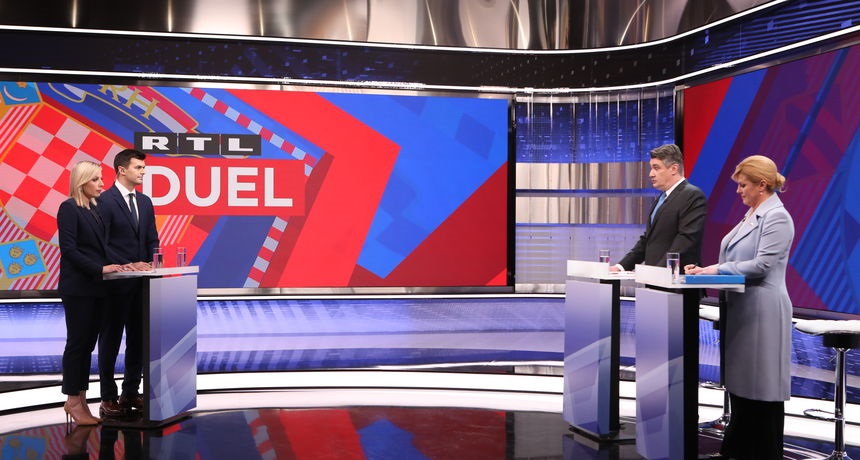
Radeljić accused Grabar-Kitarović of lying during a televised debate on the RTL channel on Monday evening when she said that she did not abuse the Security-Intelligence Agency (SOA). Radeljić claimed that the president had exploited SOA to threaten him and prevent him from his further activities. He noted that a few days after he had spoken with a SOA agent, Grabar-Kitarović personally informed him that Prime Minister Andrej Plenković had "asked her to replace him and that she had to agree because without the support of the Croatian Democratic Union (HDZ), she would not be able to win the (re-) election."
The government's spokesman Marko Milić referred to Radeljić's statement as yet another in a series of lies tossed about in the media, underscoring that the prime minister has never impacted the selection or replacement of the president's advisers.
"The theory that 'Plenković asked Kolinda Grabar-Kitarović to replace Mate Radeljić and that she had to agree to that because without the HDZ's support she could not win the election' is yet another in a series of lies tossed into the media by those who, by repeating these defamatory statements are acting as if they hope for Zoran Milanovic to get back into power. The president herself selects and dismisses her advisers. The prime minister has never impacted the selection or dismissal of the president's advisers," Milić told Hina when asked to comment on Radeljić's statement.
More news about presidential elections can be found in the Politics section.
Croatia President's Campaign Demanded TV Network End Debate
According to a statement released by RTL this morning, an adviser to the Kolinda Grabar-Kitarović campaign demanded that RTL end yesterday’s debate due to the Croatia President’s fatigue. However, both campaigns had already agreed in advance that they would permit the debate, which began at 20h yesterday, December 30, 2019; to last longer than 90 minutes.
In addition, both candidates publicly agreed to continue the debate when asked by RTL moderators during the broadcast, according to Vijesti/RTL on December 31, 2019. The debate, which attracted over 1 million viewers, lasted almost two and a half hours and ended around 22:30h.
RTL Releases Statement About Ending Debate
“The end of the debate was requested by Advisor to the President of the Republic, Ms. Renata Margaretić Urlić, who arrived at RTL studios with members of Croatia President’s campaign headquarters. During the debate, she entered the television control room and demanded that 'due to the prolonged duration of the debate and fatigue of the president, it must end immediately.' When asked by the debate’s editor if that was the official position of the campaign headquarters, Ms. Margaretić Urlić replied that she had 'entered on behalf of the headquarters.'"
The RTL debate moderators conveyed the request (without mentioning who it came from) to presidential candidates Kolinda Grabar-Kitarović and Zoran Milanović, but also offered them the opportunity to continue the debate, to which they both publicly agreed.
Former Croatia Prime Minister Responds
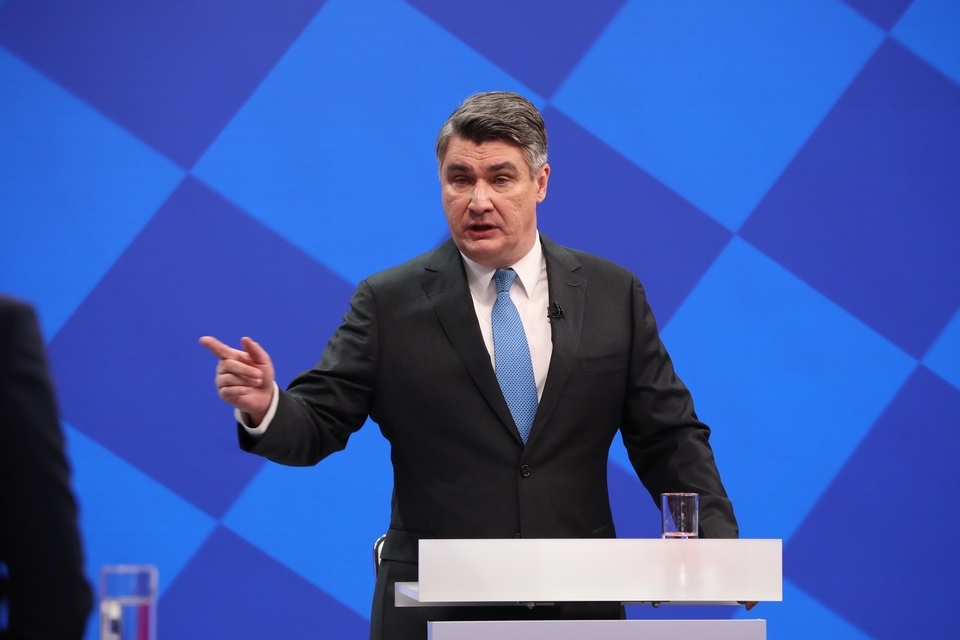
Upon learning of his opponent’s campaign demand to end the debate; Milanović wrote on Facebook:
“I came to a television debate last night with a severe cold and fever, but at no point did it occur to me to put my mild health problems ahead of the rights of our citizens to see and hear what the presidential candidates have to say. Getting tired of the debate in front of Croatian citizens whose trust you are seeking; what does that mean? If you are not able to talk for two hours about topics that are plaguing Croatia, then you are not capable of leading Croatia. Unless the reasons and motives for interrupting the debate have to do with something else…”
Indeed, the former Prime Minister appeared to have a runny nose and his sniffling was audible, if not distracting, during the entire debate.
Highlights from Monday’s Presidential Debate
Here are a few highlights from the debate according to Index on December 30, 2019:
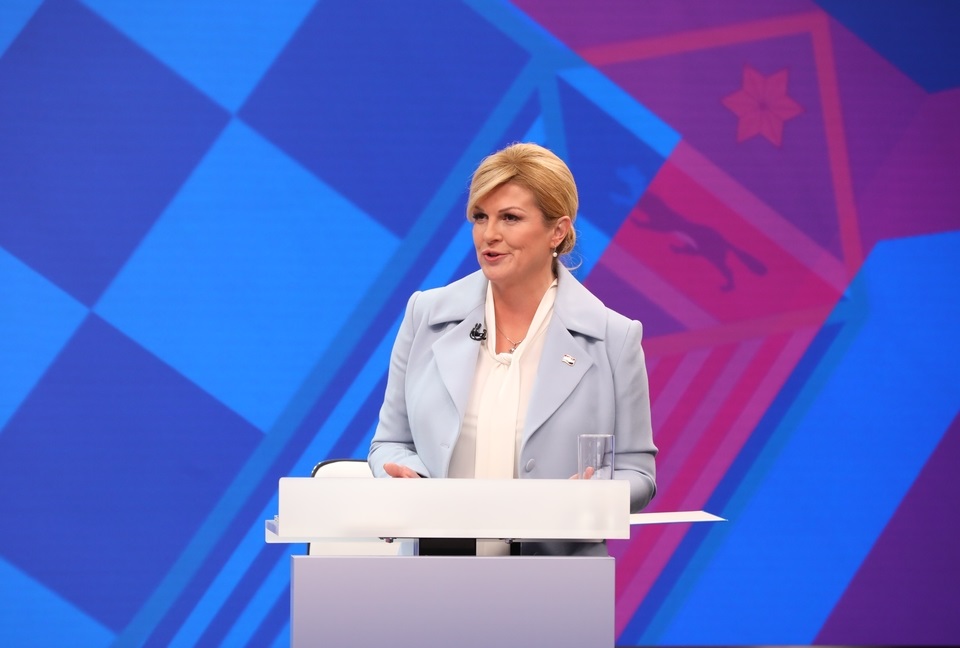
Ms. Grabar-Kitarović, why are you the best choice?
Kolinda: "What I am offering is a program. Our country was in crisis five years ago. The exodus of young people had already begun, and Croatia is in a better position today. I believe that our citizens should take those preexisting macroeconomic factors into account. Every citizen lives better now. I was the change that was needed in 2014, and now I'm looking for continuity."
Milanović got the same question: Why is he a better choice than Kolinda?
Milanović: "I have experience. I will behave in a positive predictable way. I left government while (Croatia) was in a period of growth."
Kolinda: "Croatia was devastated at the time of my arrival and the flames of pessimism were burning."
Milanović: "The year of 2015 ended with growth in the fourth quarter. Interest rates were at their lowest and there was growth in the GDP."
Kolinda: "In terms of experience, apart from experience in Croatia, I have international experience.”
Milanović then pointed out that the Sanader government, in which Kolinda had an appointed seat, still owed Croatia 135 billion HRK (18.1 billion EUR). Note: Former Prime Minister Ivo Sanader was just convicted of corruption and sentenced to 6 years in prison.
Mr. Milanović, is there anything about Kolinda’s leadership worth commending? Is there anything you would continue to do?
Milanović: "I would not continue."
Mr. Milanović, Vučić attended Kolinda's inauguration, would you have invited him?
Milanović: "I was a career diplomat. Sanader brought Kolinda on board. I did not invite Vučić to Croatia. I do not think that this should be taken out on Serbia. I would not have invited Vučić. But its necessary to work with these people (Serbian citizens). And I mean work with them, not hug them, then create diplomatic chaos and fan flames."
Kolinda: "I'm fanning flames…I said that until he fulfills his promise to find the missing (from the Homeland War), there wouldn't be another in-person meeting."
Milanović: "You were the right hand of political commissioner Ivo Sanader. Vučić create a circus here, and that's your contribution. I can talk to Vučić about missing people, but time goes on, and business goes on too. I will deal with the missing as well as business matters."
Should Croatia block Serbia on its way to the EU?
Milanović: "No. That country has the misfortune of being led by a junkyard war guy. This man is working on behalf of the Belgrade bazaar, but he is not leading the Serbian state and people. But I see a partner (in Serbia) and Croatian companies are working there."
Kolinda: "I decided to stay in Croatia, I am the daughter of a butcher who advanced in position."
Milanović: "You are from a wealthy family and a very slippery person. My father left the (Communist) party."
Kolinda: "For as much as my father had worked in Yugoslavia, he could have been a billionaire in another country."
In Bosnia, most of the voters support HDZ. How can you convince them that you are a better choice?
Milanović: "It doesn't appear that I have their support. But I don't blame them. I'm here to help. When it was necessary to give them millions in funding, we were there. We invested in a series of targeted projects, including building Catholic schools. My conscience is at ease."
Kolinda: "Congratulations. But it would be a good idea to listen to them a little more. You consider them to be second-class citizens and want to deprive them of suffrage."
Milanović: "When did I say that?"
Kolinda: "I am fighting for Bosnia and their voters. For years I have been advocating for Bosnia to enter into a concrete plan for NATO membership."
What do you think about Trump?
Kolinda: "Trump is the President of the United States, and there is currently a court process against him. I did not choose the President of the United States. The way I treat him is governed by my goal of taking care of Croatia's interests. At this stage, we are in the process of signing a double taxation treaty. We are also in the process of abolishing the visa (compulsory for Croatian citizens wishing to visit the US). Of course, I would meet with him in person."
Milanović: "I would not comment on Trump, that was not my choice."
The Euro could be introduced to Croatia in 2023. Are we prepared?
Kolinda: "I think we were ready during the first Sanader government. We moved away from that during your government."
Milanović: "Again, Sanader. A little more and the man will become a demigod. We were not members (of the EU) at the time. While you were hunting for generals (Croatian generals who were indicted by the War Crimes Tribunal and in hiding) around the world, we didn’t have any chance of entering."
Milanović: "Croatia could soon become eligible if it cuts its public debt. Look at the Czech Republic, Hungary and Poland, they are not entering the eurozone, but they could. These are older countries, and they are calculating. The claim that loans will be cheaper does not hold water. That correlation simply doesn't exist. But I'm not against it and am interested in discussing the options. These are complex topics…”
What is your relationship with (Milan) Bandić? What does he have to offer?
Kolinda: "He is the mayor of Zagreb. Everyone is innocent until proven guilty. We cannot find someone guilty and then prove that they are innocent. How many people have been imprisoned and then it turned out that they were imprisoned without cause? This is a principle I will always fight for."
Milanović: "In Croatia, fools are making a living from work, and members of the HDZ are making a living from missing evidence. I defeated him (Bandić) in SDP, and then expelled him from the party. He became your friend when he got out of detention."
Kolinda: "The presumption of innocence exists for everyone."
Milanović: "It is a disaster; this man came into my life when I defeated him in the party elections. These are friends of Ms. Kitarović. Bandić is dangerous and it's a disgrace for the city I live in. Not because he’s Herzegovinian, that’s my origin too, but it's a shady crowd."
Kolinda: "That's a man you once called your friend. I'm working with him to open kindergartens, build stadiums, deal with graffiti."
Let's say you are in Herzegovina and you run into (Zdravko) Mamić, what would you do?
Kolinda: "I would say come back to Croatia and face justice."
Milanović: "I would probably shake hands. I wouldn't say anything to him. He already knows what people think. He is a phenomenal manager, but I don't know why he became a thief."
A video of the debate can be accessed here.
Both presidential candidates will meet for two more debates before the election. On Thursday, January 2, 2020 at 20:05h they will debate on HRT. And on Friday at 20:20h they will face off on Nova TV.
Follow our Politics page for news on the upcoming presidential election in Croatia, which will take place on Sunday, January 5, 2020. We will be providing by-the-minute exit poll results and final election results after the polls close at 19h Central European Time (CET).
Industrial Production Down in November
ZAGREB, December 30, 2019 - Croatia's industrial production shrank by 0.4% compared to November 2018, whereas output in the first eleven months of 2019 rose by 0.8% compared to the corresponding period in 2018, the national statistical office (DZS) said on Monday.
The DZS data show that November's industrial production also fell in comparison to October 2019, by 0.7%.
Broken down by industry group, November's production of durable consumer goods saw the biggest rise of 17.5% on the year. Energy production increased 8.3%, and non-durable goods by 1.4%.
On the other hand, the production of capital goods declined by 18.9% and of intermediate goods by 0.4%.
Broken down by types of industrial production, mining and oil and gas production declined by 13.9%, while manufacturing shrank by 3.1%. The provision of electrical energy, gas increased by 16% in November, year on year.
Total industrial sales in Croatia in October grew by 2.3% from September, while according to working-day adjusted data they dropped by 3.1% year on year, according to figures from the national statistical office (DZS).
In October, compared with September, total seasonally and working-day adjusted industrial sales went up by 5.7% on the domestic market and by 0.4% on the foreign market.
A monthly comparison of statistics shows that energy sales dropped by 14.2%, while sales of capital goods increased by 9%, sales of non-durable consumer goods by 6.1%, sales of durable consumer goods by 5.7% and sales of intermediate products by 4.1%.
Year on year, total working-day adjusted industrial sales dropped by 1.1% on the domestic market and by 5.8% on the foreign market.
Energy sales declined by 32.7%, sales of intermediate products by 1.9% and of capital goods by 1.8%, while sales of non-durable consumer goods rose by 6.4% and those of durable consumer goods increased by 3.4%.
In November 2019, the retail trade turnover was higher in real terms at both the monthly and the annual level, with October's annual growth of 3.1% slowing down to 2.5%, the Croatian Bureau of Statistics said on Monday. On the month, the retail trade turnover was higher in real terms by 0.3%.
The retail trade turnover of non-food products (except automotive fuels and lubricants) increased by 5.6%, while the retail trade turnover of food products decreased by 0.2%.
In November 2019, as compared to the same month of the previous year, the retail trade turnover was 2.5% higher in real terms, reflecting a continuation of positive trends in retail, although the annual growth rate slowed down.
Annually, the retail trade turnover of food, beverages and tobacco increased by 3.4% and of non-food products (except of automotive fuels and lubricants) by 5.5%.
At the annual level, the retail trade turnover in real terms has kept increasing since June 2019. After May, when there was an annual decrease (-1.9%) after 56 months of growth, in June consumption jumped 5.9%. In July it went up 3.7%, in August 1.2%, in September 3.5% and in October 3.1%.
In the first 11 months, the working-day adjusted retail trade turnover in real terms increased by 3.6% compared to the same period of the previous year.
Commenting on the data, Raiffeisenbank Austria (RBA) analysts said the improvement of the consumer confidence index, at its highest level to date, indicated that positive annual retail trade growth rates would continue.
Moderate inflation, salary growth, relatively strong consumer lending and a high inclination towards spending confirm expectations that this year's retail trade will record solid results, mirroring the positive trends in personal consumption, RBA said, adding that personal consumption would be the main GDP growth generator this year.
More economy news can be found in the Business section.
Sanader's Government Set Record in Borrowing, Račan's Carried Out Most Reforms
ZAGREB, December 31, 2019 - In the last 20 years Croatia's debt has increased sixfold, HRK 50 billion kuna to nearly 300 billion, the Večernji List daily says in its Tuesday edition, citing figures that show that the HDZ government of Ivo Sanader set the record in borrowing while the most reforms were carried out by the government led by Social Democrat Ivica Račan.
The political rise of Zoran Milanović has refuelled debates about his government having been the most spendthrift. The statistics, however, show a different thing.
The leader in terms of borrowing was the HDZ government led by Ivo Sanader and his successor Jadranka Kosor, during whose four-year term (2008-2011) public debt rose by 95 billion kuna, more than doubling in the two terms, says Večernji List.
Milanović's government increased the debt by around 73 billion kuna, Račan's by around 40 billion and Plenković's by around 15 billion.
Economists, however, warn that adding up public debt is like comparing apples and oranges.
"Macroeconomically, we are talking about different environments. It would be more sensible to judge reforms and their impact on long-term growth," says Željko Lovrinčević of the Institute of Economics.
"The term of the Ivo Sanader government was a period when loans were sought for infrastructure projects that were financed by the Croatian state, and there were both rational and irrational investments," said Lovrinčević.
Milanović's government led the country during the period of a very deep financial crisis, when deficits were a way to maintain the country's financial system and prevent complete chaos.
"It was a period of record-high interest rates, unlike the current situation, with artificially created low interest rates. The two periods are almost incomparable, in terms of both sources of financing and capital prices," said Lovrinčević.
Sanader and Milanović did not have at their disposal EU funds available to the incumbent government, which is macroeconomically the most successful one, if the short term of PM Tihomir Orešković is disregarded, as public debt has been falling as measured by its share in GDP, however, neither Sanader nor Milanović performed well in terms of structural reforms.
"Running the country was most difficult during the term of the Ivica Račan government, it was a heterogeneous coalition that led the country in a transition from a semi-military model of state functioning to a civilian economy. That is when most progress was made in structural reforms," Lovrinčević believes.
Lovrinčević previously compared growth rates in Croatia with rates in other transition countries behind which Croatia lagged by 30%.
Paradoxically, but Croatia lagged the most behind during the term of the first Ivo Sanader government, from 2004 to 2007, when economic growth was 14% lower than in other transition countries, unlike the most successful, Ivica Račan government, during whose term the national economy lagged behind by 2%.
Račan's government raised GDP by around 18% during its term and at the time Croatia's economy grew faster than the economies of the Czech Republic, Slovakia, Hungary and Slovenia, which from today's perspective looks like science fiction, says Večernji List.
More economic news can be found in the Business section.
All Restrictions Imposed on Croatia Due to Classical Swine Fever Lifted
ZAGREB, December 31, 2019 - All restrictions imposed on Croatia due to classical swine fever have been lifted, allowing uninterrupted trade in live pigs, pork and pork products within Croatia and the European Union, the Ministry of Agriculture said on Tuesday.
The order terminating the order on measures to prevent the emergence and spreading of classical swine fever went into force on December 27, the Ministry said.
Croatia has thus been removed from the lists in the EU member states which imposed strict restrictions on the marketing of live pigs and pig products originating from the Croatian counties of Vukovar-Srijem, Karlovac, Sisak-Moslavina and Slavonski Brod-Posavina.
The Ministry said this was the result of comprehensive veterinary inspection measures aimed at eradicating the disease among domestic pig and wild boar populations after the last outbreak of classical swine fever in Croatia ten years ago.
More agriculture news can be found in the Business section.