

ECHR Rules in Favour of Croat Who Complained about Conditions in Zagreb Jail
ZAGREB, November 1, 2019 - The European Court of Human Rights (ECHR) on Thursday stated in its judgment in the case of Dušan Ulemek versus Croatia that inadequate conditions in the Zagreb jail reached the level of "degrading treatment".
The court says in a press release that Ulemek, a Croatian national, who was given a prison sentence of 18 months for aiding and abetting robbery, complained in his application about the conditions of his detention in two prisons and of a lack of effective domestic remedies.
The applicant spent 27 days in Zagreb Prison in 2011 and the rest of his sentence in the Glina jail before being released on parole in September 2012.
He complained about the conditions of his detention in Glina Prison while still incarcerated.
Among other things, he alleged overcrowding, a lack of facilities, the poor organisation of activities, that he had been harassed by other prisoners, and that he had been kept isolated. His complaints were dismissed by the prison’s governor, a sentence-execution judge and the appeal court.
"On his release he began proceedings for compensation for the allegedly inadequate conditions of his detention in both prisons. His claim was rejected at first instance, on appeal and by the Constitutional Court," reads the press release.
"Relying in particular on Article 3 (prohibition of inhuman or degrading treatment) of the European Convention on Human Rights, the applicant complained about the conditions of his detention in both prisons."
The Strasbourg-court ruled that there was violation of Article 3 (degrading treatment) – concerning the conditions of Mr Ulemek’s detention in Zagreb Prison.
It ruled that there was "no violation of Article 3 – concerning the conditions of Mr Ulemek’s detention in Glina State Prison"
Article 3 of the European Convention on Human Rights is about prohibition of inhuman or degrading treatment.
The applicant is entitled to an award of just satisfaction: 1,000 euros (non-pecuniary damage) and 2,890 euros (costs and expenses).
The ruling is not final, and both sides can appeal against it before the Grand Chamber.
Ulemek's lawyer Lidija Horvat told Hina on Thursday that the ruling was of great importance for rights of incarcerated persons.
More human rights news can be found in the Politics section.
Millions to be Invested in Split Old Town Hall, Symbol of Pjaca
November 1, 2019 - The Old Town Hall in Split, located within the bustling Pjaca, will shine once again.
Slobodna Dalmacija writes that the City of Split has announced a competition for the archaeological research, renovation and interior decoration of the historic building in People's Square, or what Split locals know better as 'Pjaca'.
These activities are an integral part of the EU project "Palace of Life, City of Change", financed by the European Regional Development Fund through the ITU mechanism of the Urban Agglomeration of Split, and the value of this part of the project is estimated at 7.2 million kuna.
The Neo-Gothic Old Town Hall building will retain its current size, layout, and height. Renovations will be carried out on the floors, all floor structures, and the roof.
Architect of the project, Josip Ružić, said that by removing the existing walls and modifying the inter-story structures, the intention is to achieve an open and flexible exhibition space on all three floors. This will allow the heritage facility to be used for new functions and to hold seminars, lectures, concerts, receptions, and the like.
The Old Town Hall could also serve as a place where the mayor would occasionally receive high-ranking guests, and suitable furniture for the first floor will be specially brought in for the occasion. The dropped ceiling will be removed and a wooden cassette ceiling installed, with thermal insulation required. The base of the pillars in the loggia that were cut off during the earlier interventions will be reconstructed and add the missing part of the stone base.
The existing wooden windows and doors will be replaced with new ones, but in the same style. Anti-theft foil is envisaged on the windows, with additional thermal insulation and sun protection.
On the ground floor, the reception area, souvenir shop, control room, and toilets will be located along the existing loggia and the exhibition area, and all the facilities mentioned above will occupy a quarter of the space, while the rest will be used for exhibiting. An 18th-century illustrated monograph of Diocletian's Palace, authored by Scottish architect Robert Adam, will be displayed on the touch screen.
The north side of Old Town Hall will provide access for people with disabilities, up to the ground floor level by a ramp, and access to the second floor by elevator. A stone staircase with a wrought iron fence will be retained. On the first and second floors, there will be showrooms, and the attic is intended for mechanical installations, storage, and office space.
The interior design project is signed by Nikolina Jelavić Mitrović, a leading author in the area, who designed and executed 12 permanent exhibitions of museums in Croatia and more than 130 exhibitions in our leading museums and galleries. For the Vukovar City Museum housed in the Eltz Castle and the Museum Alka of Sinj, she received prestigious European awards.
The designer notes that, given the importance of the building, it was approached with the utmost care and that all possible installation equipment would be kept as hidden or as noticeable as possible.
“In addition to the installation of a modern ventilation system, a microclimate control system is envisaged, which will allow the exposure of the most sensitive and valuable exhibits. The space on the first and second floors will have microclimate control when needed, so that the most sensitive exhibits can be exposed,” says Jelavić Mitrović, adding that there will be automatic glass doors on the floors that provide stable microclimate conditions.
Unlike the existing lighting, the new lighting will be flexible, able to move around, and allow for better adjustment of light intensity depending on the purpose. There will be built-in speakers on the ceilings.
The project envisages a system of dismantling panels that will allow the window openings to be covered, thus providing more exhibition space.
“No use of the walls is envisioned, but the exhibitions will be shown exclusively on the billboards. The character of the space is a bit darker as the walls will not be white, and the usual exhibit white color will be secured by the use of disassembly panels. The panels will be able to change color depending on the exhibition,” notes the designer, pointing out that the panels will be able to be placed freely in the space, but also against the wall using a special suspension system to create a continuous exhibition surface.
The coat of arms on a glass wall in the center window is planned on the first floor, which was created when the town hall was Neo-Gothic. The coats of arms will be made of colored glass, and not painted on glass as it is now.
However, archaeological research on the Old Town Hall comes first.
“A small part of Pjaca has been explored. In Split, you never know what you can discover when you start to open something; it may be something ingenious and completely alter our project... If any graves and artifacts are found, it will be taken to a museum. Who knows, it might be good to find something crazy,” Nikolina Jelavic Mitrovic joked.
To read more about lifestyle in Croatia, follow TCN’s dedicated page.
Meet Zagreb Red Sox, Only Boston Affiliated Baseball Club Outside of US
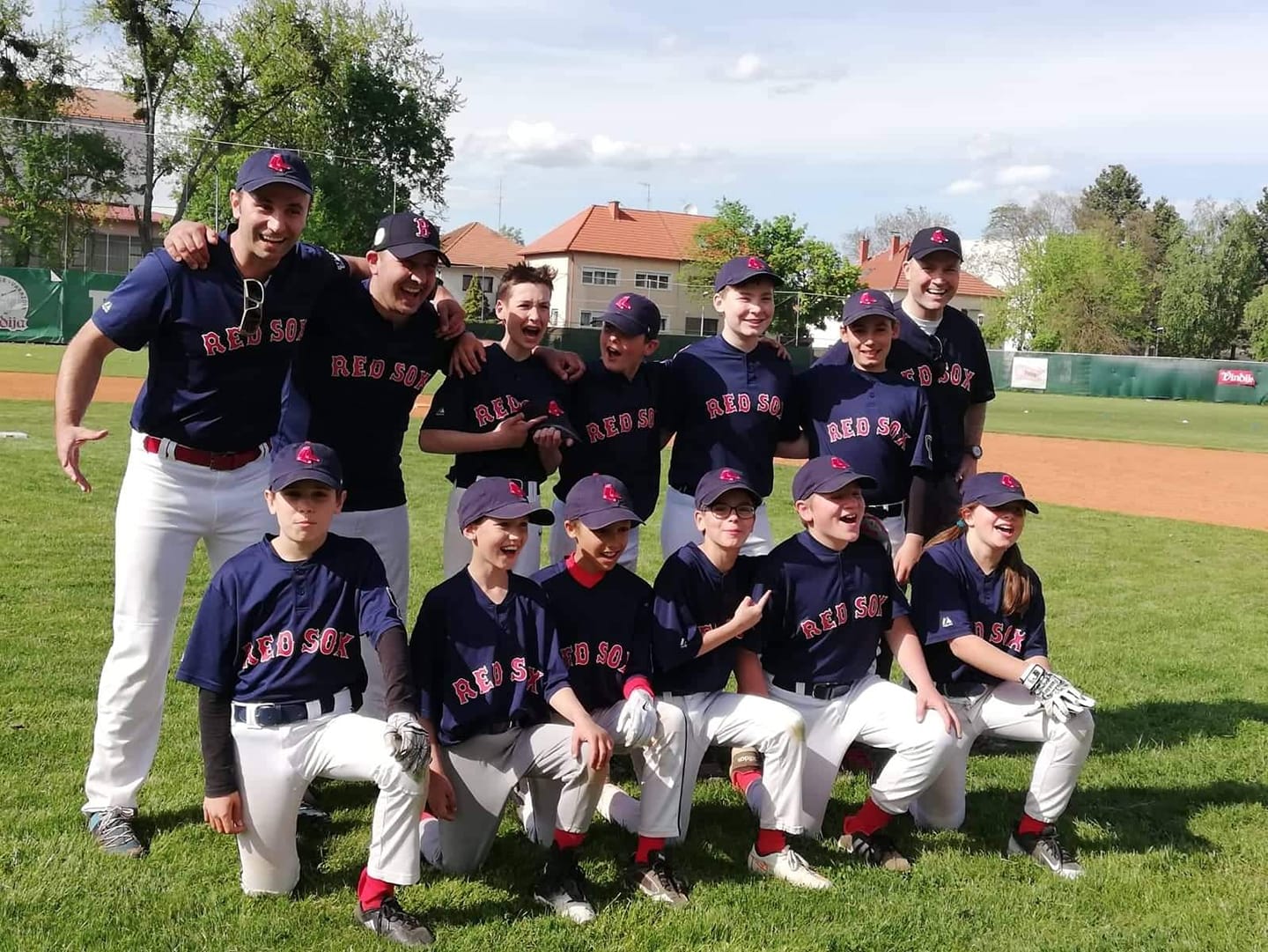
November 1, 2019 - Established in 1901, the Boston Red Sox are one of America's most recognizable sports teams. Today, you can find a part of them in Zagreb. Meet the Zagreb Red Sox, the only Boston-affiliated baseball club outside the US.
“We were connected through the US Embassy and were joined by the third-oldest military organization in the world… so they called us from Boston and sent us everything... it’s a crazy story!”
Izvor Ocvirek (37), president of the Zagreb Red Sox baseball club, begins with enthusiasm in an interview for 24 Sata.
But let’s backtrack a minute.
Namely, one of the largest and most famous baseball clubs in the world, the Boston Red Sox, adopted one of the three baseball clubs in Zagreb.
“It’s like if Barcelona took a branch of Stupnik. And we are the only baseball club outside the US that is a Boston affiliate,” said Ocvirek proudly.
The American sports giant, whose value, according to Forbes, is $3.2 billion, also brings in annual revenue of $516 million and spends $247 million on player salaries. That said, it wasn’t all that surprising that they immediately sent equipment to Zagreb and dressed the players from head to toe.
"Each kid carries $200 - $250 worth of equipment," the president added.
But the story doesn't stop there.
“They offered to fund our infrastructure improvements, and even build a baseball stadium! But the problem is that we don't have the terrain, at all,” said Vice President and head coach Ozren Zec (37).
Since there are no more playgrounds in Središće, Zagreb’s three baseball clubs (Zagreb, Medvednica and ex. Novi Zagreb, now Zagreb Red Sox) are left with just one place to play, on Jarun. The Zagreb Red Sox train in a meadow, without a parcel of land suitable for the Americans to build in reach.
“We are the best dressed in our league, and we practice in a meadow. We can’t even train with the right ball, to ensure we don’t damage a car or window, but practice with hollow balls that are lightweight, and only play with the real ball during games,” said Zec. Ocvirek added:
“And the Americans, distinguished guests from the Embassy, visited us in our meadow. And they enjoyed it. Because they felt our love and sincerity.”
Boston also connected them with the Little League, an organization that runs young baseball competitions around the world.
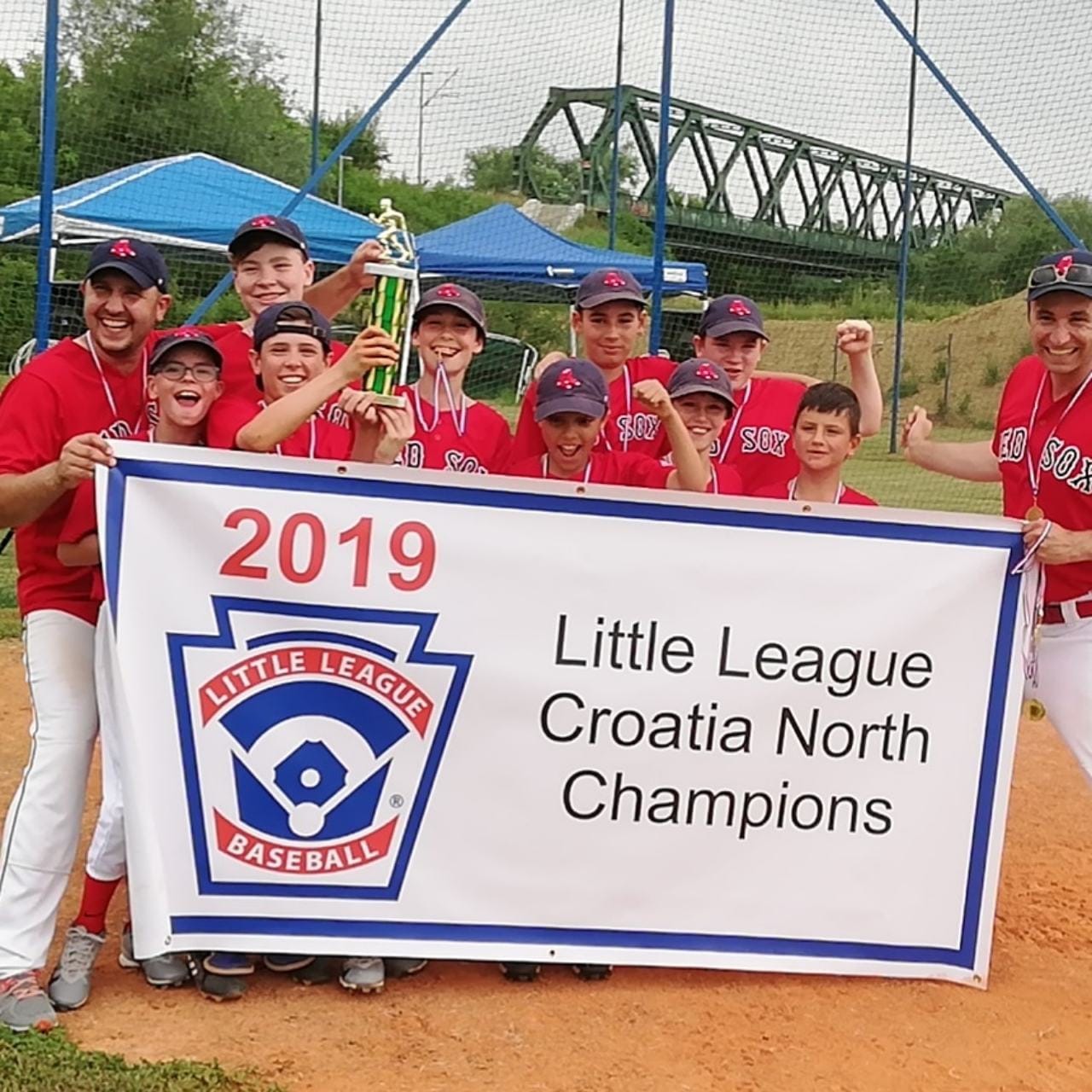
“This is a competition we started in 2016, and it is played in parallel to the Croatian Championship, for ages up to 12 years. There are between five and seven clubs with us, and millions of players around the world, even parts of Africa, India, Pakistan... It's the most massive competition in the world. The Little League is well known in America and has powerful marketing,” Zec explains, and continues:
“We got into this story by chance, when Robert Mathers, an American Embassy employee, came to us at one game and asked if his son could come to practice baseball. He hooked us up with Ambassador Robert Kohorst, who is a big Little League fan. And after his term in office, he wants to volunteer in the organization to follow his grandson.”
The second pillar between the Embassy and the Boston Red Sox was the AHAC (Ancient and Honorable Artillery Company of Massachusetts), the third-oldest military organization in the world, founded in 1638. Its representatives, along with a group of Boston businesspeople, visited Zagreb and liked the idea of adopting a small club from Zagreb. That company is affiliated with the Red Sox owner, who also enthusiastically embraced the idea. Thus, the Zagreb Red Sox were born.
“Their eyes narrowed when I told them the legend that after one victory, Napoleon asked who was in his unit, and they replied that it was mostly Croats, so he said 'Give me 100,000 Croats and I will conquer the world!’” Ocvirek revealed.
There are no Croats in the Boston Red Sox, or the MLB, but that could change.
“We have just under 50 boys, and now we are enrolling in new ages 8-15. We cooperate with the Embassy as well as the American School in Zagreb. More than ten boys attending the American school play with us, but only one of them has played baseball in the US before. We convincingly won the Little League this year. Other clubs were known to have the best kids, and I believe they won't anymore,” Zec added.
The Boston Red Sox even invited the Zagreb club to watch their games, train, and learn something new.
“We have entered their development program, where there is also education for coaches and players, or maybe their coaches will come here to teach us. They are aware of the popularity of baseball in Croatia, but the MLB is working intensively to increase its popularity in the rest of the world. That's why some MLB games were played in Europe this year,” Ocvirek says.

Thus, this small baseball club won the hearts of Americans and became a link between Boston and Zagreb; and a gathering place for the American community in Zagreb.
Translated from 24 Sata
To read more about sport in Croatia, follow TCN’s dedicated page.
City of Zagreb and Dinamo Reach Agreement on New Maksimir Stadium
November 1, 2019 - The representatives of the City of Zagreb and the football club Dinamo Zagreb agreed at a meeting on Thursday that a new Maksimir stadium would be built on the site of the existing stadium.
Gol.hr reports that a meeting between representatives of the City of Zagreb and representatives of football club Dinamo Zagreb was held on Thursday, where they decided to build a new stadium on the site of the existing Maksimir Stadium. The new stadium would be built in partnership between the City and the Zagreb club.
While there has been a lot of talk over the past year about building a new stadium in the Croatian capital, it seems that Thursday’s meeting has finally taken a step to move things forward.
The press release from the city office reads in its entirety:
"The Mayor of the City of Zagreb, Milan Bandic, and his associates met at the City Administration today with representatives of GNK Dinamo, led by President Mirko Barisic and President of the Executive Board Vlatka Peras, and discussed plans to build a new Maksimir football stadium.
It was concluded that this space is viewed as a complex entity through an urban competition that will resolve the issue of a football stadium with auxiliary grounds and an athletic stadium with the appropriate infrastructure.
It was agreed that Dinamo would make a final decision at its Assembly with clear guidelines defined by FIFA and UEFA about the standards for the construction of a new stadium at the site.
It was also defined that the new stadium project would be built in partnership between the City and GNK Dinamo.
Following the decision of the Dinamo Assembly, further steps can be taken regarding the realization of this historical project that is extremely important for Dinamo - an icon of Zagreb sport, essential for the city of Zagreb, its sports memory, and for all Zagreb and sports fans," concludes the statement by the City of Zagreb.
To read more about sport in Croatia, follow TCN’s dedicated page.
Croatia Airlines Posts 48.4 Million Kuna Loss in First Nine Months
ZAGREB, October 31, 2019 - Croatia Airlines' losses in the first nine months of 2019 stood at 48.4 million kuna, while net profits in the third quarter alone were 41 million kuna, the company said on Thursday.
Despite the profits generated in Q2 and Q3, it was not enough to cover the losses generated in the winter months, the airline said, adding that the operating loss in the first nine months of the year amounted to 30.4 million kuna.
Operating revenues in said period were up 1.4% on the year, while the passenger turnover was the same as in the first nine months of 2018.
In the first nine months of this year, Croatia Airlines transported 1,701,571 passengers, with 2% more passengers flown internationally. Domestically, the number of passengers decreased from the first nine months of 2018.
During this year's summer season, the airline's planes flew to eight Croatian and 30 international destinations in 24 countries. The company operated direct flights between Zagreb and 24 destinations in 22 European countries.
More news about Croatia Airlines can be found in the Business section.
Greens: Climate Change Should Be Priority of 2020 EU Presidency
ZAGREB, October 31, 2019 - The president of Croatia's ORaH party, Antun Petrović, and the international secretary of the German Greens, Jamila Schaefer, said on Thursday it was extremely important that climate change remained a priority in chairing the European Union in 2020.
Speaking at a joint press conference, Petrović said he hoped that "A Europe that protects", one of the four key areas on which, according to the government, the Croatian presidency of the Council of the EU will be based, meant protection of the environment, climate and human rights, and not the external border, ORaH said in a press release.
The two parties expect the Croatian and German governments to continue next year the trend set by Finland during its presidency and set climate change as one of their EU presidency priorities.
ORaH said Schaefer arrived in Croatia to discuss cooperation, but also to check the human rights situation in the wake of reports of inappropriate police treatment of migrants on the border.
The common task of the EU is that the governments of all member states protect human rights and check all credible reports on violations, Schaefer said.
She warned that climate change knew no national borders and that slowing it down required coordinated action by all European countries, ORaH said.
More news about environmental protection can be found in the Lifestyle section.
Croatian Company Creates Device to Aid People Who Stutter
As Poslovni Dnevnik/Lucija Spiljak writes on the 30th of October, 2019, this Croatian-made device is named Stuey, based on the English word ''stuttering'', and the process of patenting and protecting intellectual property is ongoing. It is estimated that more than 70 million people are tortured with this problem in the world, while that number in Croatia stands at around 70,000.
Although the exact cause for stuttering is unknown, most scientists today consider stuttering to be a neurological condition that interferes with speech production. Daily situations involving speech cause high levels of stress and tension for people who stutter, leading them to avoid social interactions, which can often cause serious mental health problems such as anxiety and depression.
Damir Skoko recognised that telephone calls tend to be among the most difficult situations for people who stutter, so he came up with the idea of developing the electronic Stuey device two years ago in order to try to help people who stutter by trying to make telephone communication easier for them. He first researched the market and then kicked off the project.
"As an extension of the hands-free phone kit, it connects to a mobile phone and, using an innovative method, allows the stuttering person to make the desired call. I can't speak in more detail about the specific technical characteristics of the device. It's not some high-tech speech modification solution as many people think; the solution is actually quite simple and comes from having good knowledge about stuttering issues,'' explains Damir.
To further the project, he conducted research among people who stutter, and the results, as he said, were useful.
"All of the respondents rated their stuttering as more frequent during a telephone conversation than in general. Furthermore, 89.2 percent of the respondents believe that such a phone-assisted device will reduce their stress and tension levels and increase their quality of life," the Croatian innovator said. He is still working on all of the details, and with his team he is primarily striving to minimise the product's dimensions.
"Over recent months, I've been intensively working on device development in collaboration with a young Zagreb-based electronics development company. Firstly, I'm thinking of getting the device certification for Europe and America, defining the sales channels and dealing with marketing activities,'' Damir explains.
In his business, he says, he will focus on the market area of health and quality of life, and in particular on devices for assisting people who stutter. Although he is aware that competition exists in this particular area, he is convinced that there is still plenty of room for progress.
"For business success, it's necessary to move in line with market needs and recognise opportunities in the environment, so I'm open to opportunities in other areas in addition to the issue of stuttering," Damir added.
He is a graduate engineer with ten years of experience in projects in Croatia and abroad, but has always had ambitions for private enterprise and starting his own business. He sought opportunities and sought to further inform himself about market needs.
He received useful guidance at the Croatian ZICER Blue Office (Plavi Ured). He then received financial support that helped him get started developing the products and preparing the devices for the global market.
As he is already in contact with certain foreign organisations for stuttering persons, his desire is to present Stuey first to the largest such organisation in Europe - the British Stammering Association.
There is also a significant Stuttering Association in America, the National Stuttering Association - therefore, this Croatian entrepreneur will primarily focus on presenting and promoting the device through various worldwide stuttering associations and organisations.
Make sure to follow our dedicated Made in Croatia and business pages for much more.
Croatian Auto Club Creates Interactive Map with EuroVelo and National Cycling Routes
October 31, 2019 - Cycling in Croatia? Croatian Auto Club has just released a new interactive map with the cycling routes across Croatia.
A novelty on the Croatian Auto Club's (HAK) interactive map is the cycling routes that pass through Croatia as a contribution to implementing the Cycling Tourism Development Action Plan resulting from the 2020 Tourism Development Strategy. In the future, HAK wants to publish smaller routes by county, in addition to other facilities provided for cycling tourists.
The Croatian Auto Club, with the help of the Coordinating Body for the Development of Cycling Tourism in Croatia (cyclotourism.hr), wants to popularize this type of tourism, enriching its interactive map with new content.
To begin, as part of the interactive map, HAK has published EuroVelo cycling routes passing through Croatia with a brief description of each route and the ability to download the route in KML and GPX format for navigation devices.
In addition to EuroVelo cycling routes, there are also cycling routes that cross Croatian roads. The ultimate desire is to establish a national network of cycling routes.
In early 2019, cooperation with the Croatian Auto Club Information Center was initiated when they agreed to set up cycling routes on the interactive HAK map. Representatives of the Coordination Body have provided GPX tracking for EuroVelo and national cycling routes for this purpose.
This project is the result of long-term cooperation between the tourism and transport sectors and the desire to establish a national network of cycling routes as a basis for a stronger development of cycling, cycling infrastructure and, ultimately, cycling tourism.
Currently, county tourist boards are collecting data from routes for entry regarding lengths, altitudes, route markings, and developing cycling tourism infrastructure such as rest areas, services, accommodation and overnight accommodation, food and beverage service and the like.
Cycling tourism as a tourist product is a relatively young term, and it occupies an increasingly important place in Croatia and tourism. It is imperative for these tourists to navigate our roads safely, with well-marked routes, and be able to find the accommodation around them. Since 2015, when the Cycling Tourism Development Action Plan was adopted, Croatian counties have provided a variety of facilities for tourists looking for an active holiday.
To read more about travel in Croatia, follow TCN’s dedicated page.
Luxury Livka Bay Tourist Resort on Solta Listed as Strategic Investment Project
October 31, 2019 - The first phase of the "Livka Bay, Solta Island" tourist resort, valued at almost 509 million kuna, was announced as a strategic investment project of the Republic of Croatia by the Government, at the proposal of the Ministry of Economy, Entrepreneurship, and Crafts.
Slobodna Dalmacija reports that it is a private investment project, financed by private capital and prepared for many years by the investor company Azurna uvala d.o.o. based in Stomorska on the island of Solta.
According to Minister of Economy Darko Horvat, this elite tourist resort will include the construction of a five-star hotel with a total capacity of about 100 rooms, with a spa and wellness center, restaurant, cafe, and beach club for hotel guests.
"The project also envisions 29 villas and 23 bungalows, which will be branded by an elite hotel operator, and in the first phase of the project, 250 new jobs will be created,” Horvat said.
The project was first spoken about as a strategic investment back 2016, and earlier this year, director of Azurna uvala Milenko Bijedic, which represents the project investor British investment house Dolphin Capital Investors, said that the project would be completed by 2023, noting that infrastructure work could begin this fall.
He also stated that the total value of the project is estimated at just over one billion kuna, of which 509 million kuna, which was declared strategic for the Republic of Croatia, refers to the first phase. In April this year, Azurna uvala signed an agreement with the Ministry of Economy, Entrepreneurship, and Crafts, which was also mentioned by Minister Horvat at the Government session.
Azurna uvala was founded in 2005. Bijedic said that the project's biggest challenge is evaluating the infrastructure in Livka Bay, because there is currently no access roads and internal roads, provision of water and electricity with transformer stations, and a wastewater system with all necessary purifiers, in order for construction to begin.
Bijedic also revealed that the actual owner and investor in the project, British Dolphin Capital Investors, is ready for this investment as soon as all the paperwork has been resolved and that so far, 183 million kuna of private capital has been invested in the preparation and development of the project.
To read more about travel in Croatia, follow TCN’s dedicated page.
Draft Budget for 2020 Supported by Government
ZAGREB, October 31, 2019 - The Croatian government on Thursday sent to the parliament a draft budget for 2020, envisaging 145.1 billion kuna on the revenue side and 147.3 billion kuna on the expenditure side.
Thus, the government plans 6.7% higher revenues in comparison to the original 2019 budget, that is 5.4% more in comparison to the revised budget which was also tabled to the parliament today.
The expenses in the next year's budget are higher by five percent, that is by seven billion kuna, in comparison to this year.
As a result, the projected budget gap in 2020 is put at 2.15 billion kuna, accounting for 0.5% of Gross Domestic Product.
However, trends in extra-budgetary users' accounts and in local authorities' accounts as well as the consolidation of the necessary adjustments for next year makes way for the projection of a surplus of the consolidated general government at 0.2% of GDP, Finance Minister Zdravko Marić said.
The draft budget has been prepared with the assumption that Croatia's economy will grow 2.5% in 2020, Marić said.
The revision of the 2019 budget, which was sent today into parliamentary procedure, reads that total revenues would increase by 1.6 billion kuna (1.2%) to 137.7 billion kuna, whereas the expenditure side would be reduced by 1.3 billion from 140.3 billion kuna to 139 billion.
As regards the expenditure side, this reduction is mainly on the back of the savings on the interest rates, as 796.9 million kuna has been saved that way.
The biggest rise in the expenditure side has come from outlays for employees, and 849.6 million rise in the outlays for pensions.
The government also set aside 350 million kuna for the first stage of the construction of the future LNG terminal on the island of Krk.
More budget news can be found in the Politics section.