

Istria: Diving Tourism Resulted in 200,000 Overnight Stays
Diving tourism in Istria resulted in 200,000 overnight stays and has become a strong motivator for visiting the peninsula.
According to Barbara Ban/Novac/JutarnjiList on November 14, 2019; as many as 200,000 overnight stays were recorded this year in Istria by tourists who came for one reason: diving. This number was reported at a meeting of the Diving Tourism Professionals Group at Croatian Chamber of Commerce in Pula on Wednesday. However, this figure does not include the number of day visits, which is very high during diving season, which lasts about six months.
- There are numerous diving centers operating throughout the year. Diving is a strong motivator for tourists who prefer a more unique vacation, so diving centers are also recognized as an important factor in the development of tourism in the County of Istria. Therefore, as the group pointed out at the Chamber of Commerce in Pula; it is important to cooperate with the local community, and network with other providers of tourism. By working together, they can create the highest quality destination service which meet the needs of guests in every segments of their stay.
This year, permits have also been granted for performing underwater activities in inland waters and territorial seas in areas where cultural assets are located, based on a public report issued by the Ministry of Culture.
- Diving centers are pleased with the cooperation with the Ministry of Culture and they have a mutual interest preserving the underwater cultural heritage of the Adriatic. Diving centers play an important role in the conservation of the undersea and ecology. After diving, divers often return with the waste they have collected offshore, says Marko Srečec, president of the Diving Tourism Professionals Group.
For this purpose, the group has launched an initiative with municipalities and cities for cooperation in the field of ecology and marine conservation.
- During the coming year, the group plans, among other things, to organize guest lectures at colleges and high schools in order to promote diving tourism as a profession and present activities to as many potentially interested young people who could find employment in diving centers, concluded Srečec.
For more information on tourism in Croatia, follow our travel section. More information about diving in Istria can be found here.
Sveti Martin na Muri Wins Prestigious EDEN Title for Wellness Tourism
November 15, 2019 - Sveti Martin na Muri is the new national European Destination of Excellence (EDEN) in the field of wellness and well-being tourism.
HRTurizam reports that this prestigious title, which has been awarded by the European Commission since 2006, was awarded to Sveti Martin na Muri in Ilok, the city which, with Vukovar and Vučedol, was the national EDEN winner for 2016/2017 on the topic of cultural tourism. In addition to the winning destination, four finalists, famous destinations for health and wellness tourism - Stubičke Toplice, Daruvar, Tuheljske Toplice and Krapinske Toplice - were presented at the ceremony held at Odescalchi Castle.
"Health tourism has seen the fastest growth in the tourism industry with an annual rate of 15 to 20 percent and strongly influences the creation of year-round tourism. Seven percent of tourists come to Croatia motivated by health reasons, while eight percent come for wellness offers, and it is also known that such guests are good consumers, who on average spend 20 to 30 percent more than the “classic” tourists. Therefore, I am extremely pleased that the theme of this year's EDEN Award is wellness and well-being and that Croatian wellness destinations have recognized the opportunity for additional promotion in the European broadcasting market through this project,” said Croatian Tourist Board Director Kristjan Stanicic, adding that he sincerely congratulates the representatives of Sveti Martin na Muri, as well as all other finalists.
The winning destination, or winner of the EDEN title, will be promoted on the official website of the European Commission and the Croatian National Tourist Board, and according to Slavia Jacan Obratov, Director of the Sector for the Tourist Board and Product Development in the Croatian National Tourist Board, the winner and finalists will be presented at the European level and join a European network of destinations promoting sustainable tourism.
Since the beginning of the project, the Croatian National Tourist Board, with the system of tourist boards and in cooperation with the Ministry of Tourism, has conducted EDEN selection following the set topics given so far by nine national EDEN winners and 36 finalists.
The latest winner, Sveti Martin na Muri, is a recognizable wellness destination for continental tourism. Rudi Grula, head of the Međimurje County Tourist Office, says it is a local community highly aware of sustainable tourism.
"The synergy of all stakeholders achieves the competitive advantage that makes Sveti Martin na Muri stand out over similar destinations. Terme Sveti Martin is the bearer of new trends in wellness and well-being through innovative offers linked to the anthroposophical principles of Rudolf Steiner, biodynamic agriculture and a wide range of active holidays,” said Grula.
And the wellness industry is looking for authentic and innovative products, which was pointed out in the panel “Wellness and well-being of tourism - are we following trends?” held at the ceremony. Eminent Croatian experts and tourism professionals - Slavija Jačan Obratov on behalf of the CNTB, Ivana Kolar, owner of Julius Rose, Izabela Vrtar, editor-in-chief of Sensa magazine, Marcel Medak, director of Bizovac Spa, Manuel Magdić, manager of Pannonian Health cluster, concluded that Croatia has the potential and resources to develop health and wellness tourism, as demonstrated by this year's finalists of the European Destination of Excellence. It is this segment of tourism offer that can be the basis for the development of non-traditional tourist destinations such as those promoted through the EDEN project.
To read more about travel in Croatia, follow TCN’s dedicated page.
Second Adria Business Network Held at Algebra LAB in Zagreb
November 14, 2019 - The second Adria Business Network event was held at the Algebra LAB in Zagreb, organized by entrepreneurs Željka Barišić and Kristina Krstinić. The event is aimed at business networking in Croatia and the region, creating business opportunities and encouraging continuing education. Through the event, everyone is offered the chance to find new clients and enter into lucrative deals.
Guest lecturer Damir Bicanic, head of Funderbeam SEE, pointed out what is needed to receive an investment through the Funderbeam platform, how many investors are currently within the platform, and what projects have been invested in since January 2017 when the platform came to Croatia.
Adnan Mehmedovic Medo, CEO/Director of Marketing, PR & Business Development of Fresh Island Festival/RNB Confusion, also guest speaker at the event, briefed the attendees on what is needed in a presentation to make investors invest €700,000 and shared information on events and festivals with global potential coming to Croatia next year.
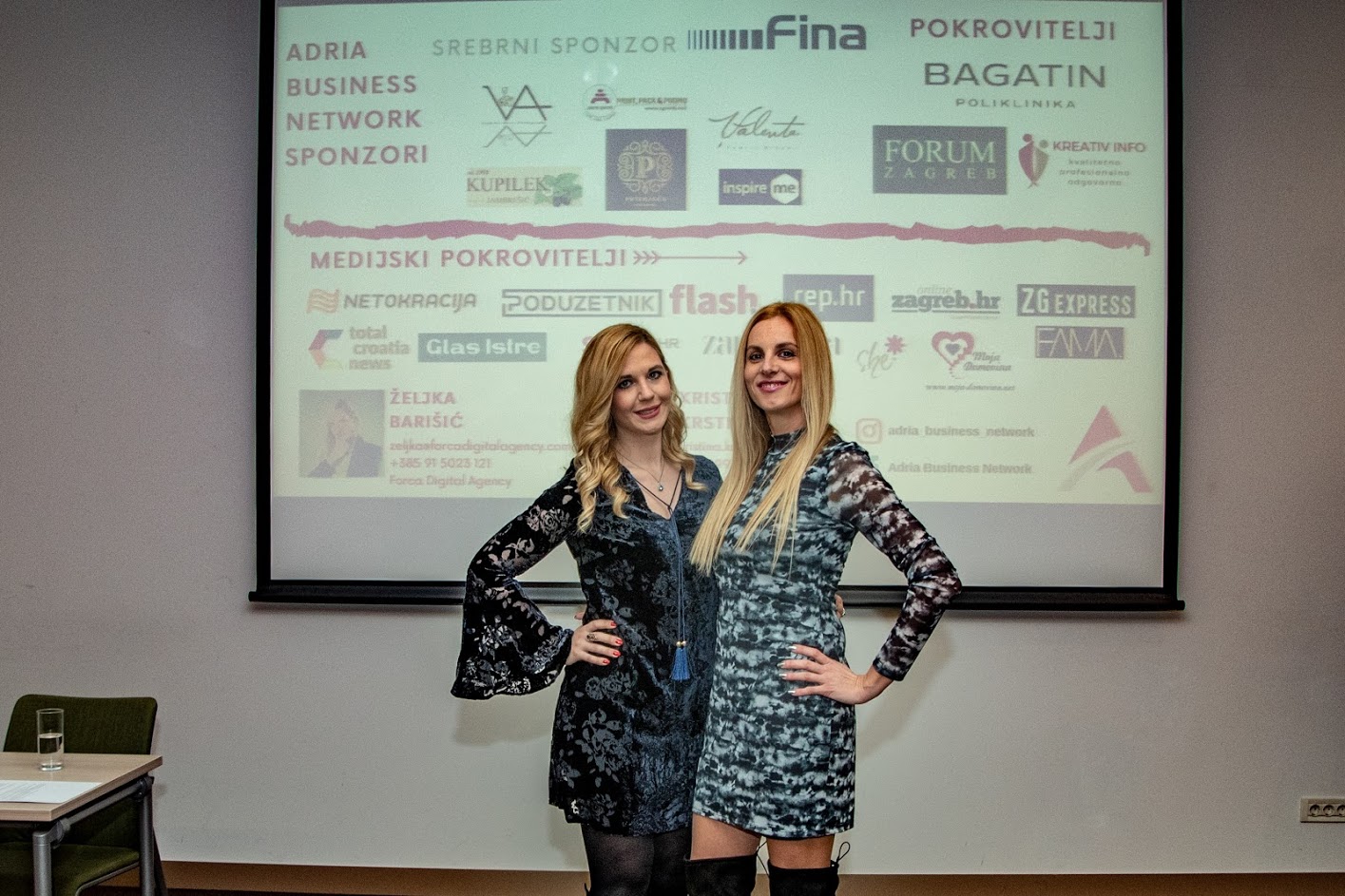
“An extremely inspiring evening in which, thanks to our guest lecturers, we learned the details of doing business through Fuderbeam, as well as the novelties of the entertainment industry coming to Croatia in 2020. With each new event, we strive to provide current participants with up-to-date information and developments in the business world, and this is our imperative,” said Željka Barišić, an entrepreneur and one of the founders of Adria Business Network.
Kristina Krstinić, also an entrepreneur and founder of Adria Business Network, had the following opinion about the event: “With the arrival of Fundrbeam in Croatia, as an innovative global company financing platform, not only is capital easier for innovative domestic companies, but the overall procedure is easier for potential investors. As a business consultant, I have had the opportunity to work with several successful innovative companies in Croatia, and I believe that such platforms are not only welcome but also indispensable, as they encourage the development of products with significant added value, and thus contribute to the global growth of innovations, which are very important in to today's world."
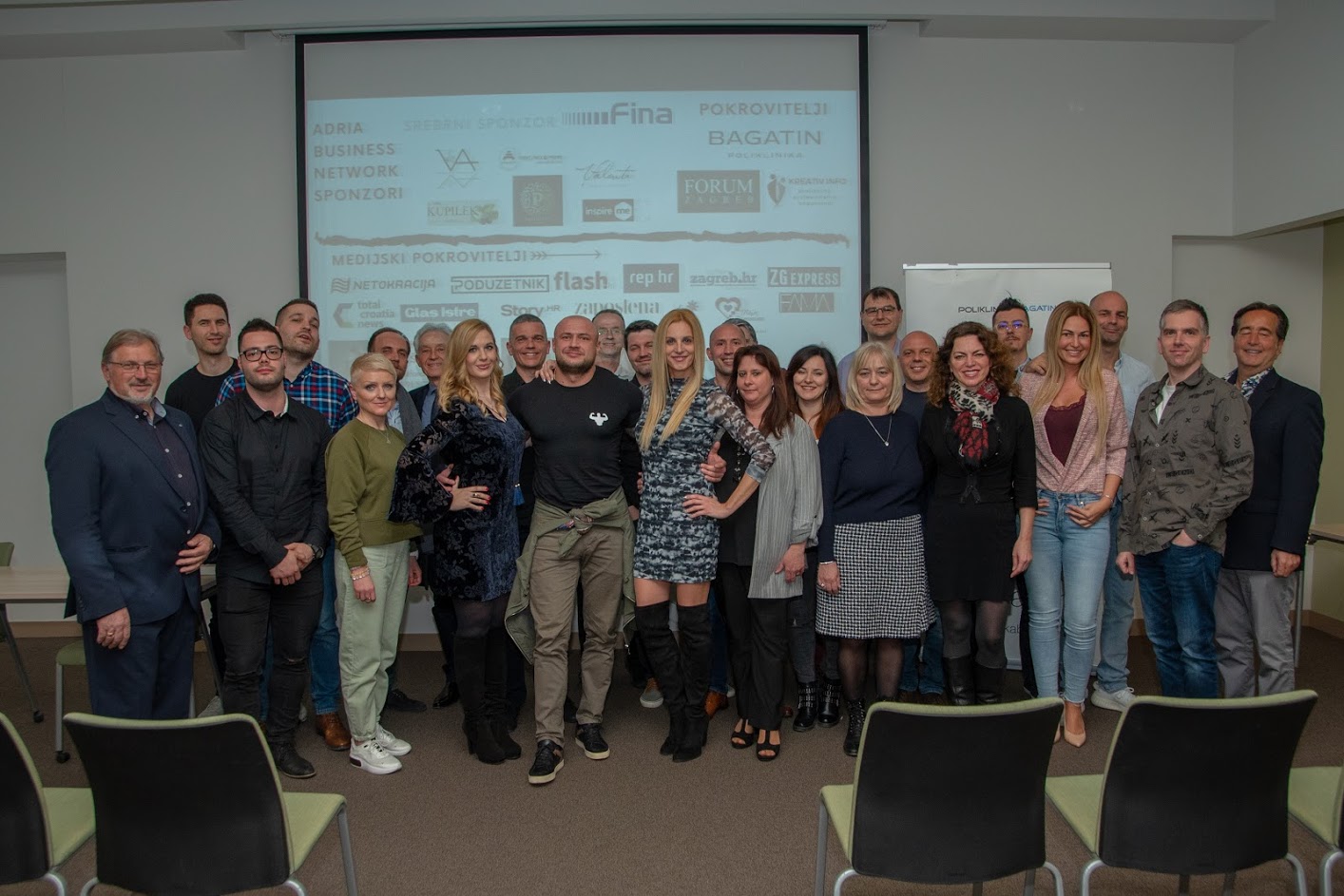
The new face of the event was Joseph Novosel, aka DearLeaderJoe: “I come to the event and find out that people are getting hundreds of thousands of euros in investments through the Funderbeam platform. I tore up my party membership card and knocked on Funderbeam's door. Thank you to the organizers for connecting us.”
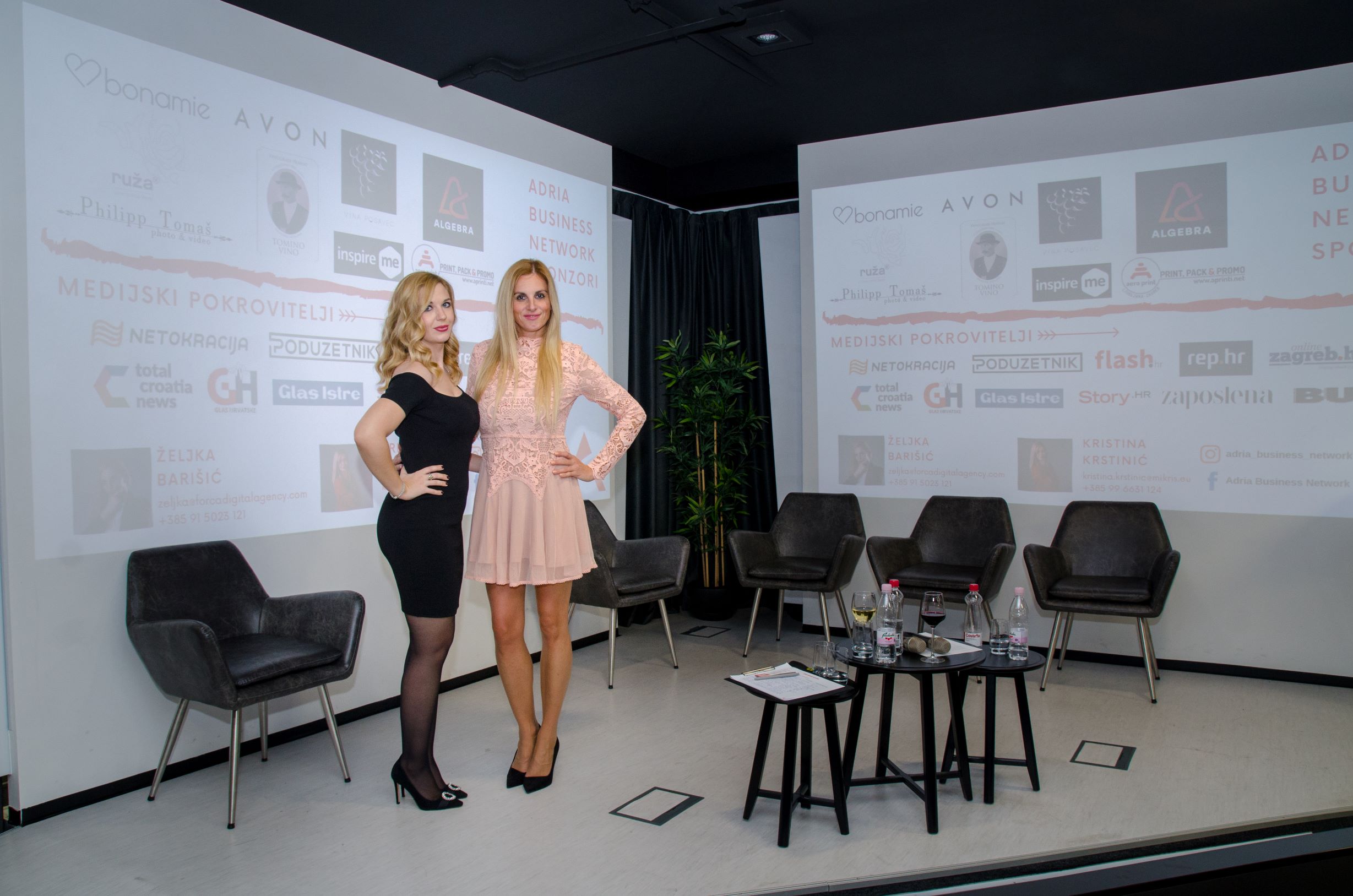
Fashion brand Bonamie dressed the presenter and the event organizers for the evening, while hair was attributed to Ruža Salon, a symbol for quality and beauty.
The general sponsor of the event is Algebra, while the other sponsors are photographer Philipp Tomaš, Avon, InspireMe, Vina Posavec, Tomino wine, Aero Print.
The media sponsors of the event are magazine and portal Poduzetnik, magazine and portal Zaposlena, Netokracija, Bug, She.hr, Zagrebonline.hr, Story.hr, Rep.hr, Glas Istre, Glas Hrvatske, Flash.hr and Total Croatia News.
The next Adria Business Network event takes place on 18.12.2019 at 6 pm at the Bagatin Clinic, when it is hosted by the director of the Bagatin Clinic, Ognjen Bagatin.
You can follow Adria Business Network on Facebook here.
To read more about business in Croatia, follow TCN's dedicated page.
Parliament Adopts 2020 Budget
ZAGREB, November 14, 2019 - The Croatian parliament on Thursday adopted the state budget for 2020 with 80 lawmakers voting in favour, 41 against and one abstention.
The budget, proposed by the government, plans 145 billion kuna on the revenue side and 147 billion kuna on the expenditure side, and a majority of government departments can expect a rise in their funding from the state budget.
The budget has been prepared with the assumption that Croatia's economy will grow 2.5% in 2020.
The government plans 6.7% higher revenues in comparison to the original 2019 plans, that is 5.4% more in comparison to the revised budget which was also adopted by the parliament today.
The expenses in the next year's budget are higher by five percent, that is by seven billion kuna, in comparison to this year, and by 8.3 billion kuna in comparison to the revised budget in 2019
As a result, the projected budget gap in 2020 is put at 2.15 billion kuna, accounting for 0.5% of Gross Domestic Product.
HDZ party whip Branko Bačić said on Thursday that the vote on the state budget earlier in the day showed how strong the ruling majority in the parliament was, stressing that he did not share the view that the budget did not include striking teachers' demands.
"The documents that had to be adopted were adopted by a majority of more than 80 votes, which proves the strength of the ruling coalition and the HDZ group. I don't think that the budget does not include education-sector workers' demands for a six percent wage increase because the government did secure funds for that increase. You would not be able to tell from the budget if it refers to an increase in the base wage or an increase in the job complexity index because the total amount of the increase is as demanded by the education-sector unions and next year each teacher and employee in the education sector will get a wage increase as demanded by the unions," said Bačić, adding that therefore there was no longer any reason for the unions to continue striking.
Commenting on the European People's Party (EPP) decision not to hold sessions of its Presidency and Political Assembly in the Croatian Parliament on November 20 and 21, as originally planned, but at a different venue in Zagreb, Bačić said that the EPP did not want to cause any inconvenience either to its members or the HDZ, and that it wanted to avoid creating the impression that the Croatian Parliament was leased to a political group.
Bačić said this was not about giving in to demands by the opposition in the Croatian Parliament but about a proposal and decision by the EPP, made in agreement with the HDZ, so that the planned political event could be held in a pressure-free atmosphere.
The EPP, the strongest political group in the European Parliament, will for the first time hold its electoral congress in Zagreb on November 20-21. The event is hosted by HDZ leader and Prime Minister Andrej Plenković and EPP President Joseph Daul. More than 2,000 delegates from some 40 countries will be discussing current European policies. The EPP congress will elect a new EPP leadership.
More budget news can be found in the Politics section.
Central Bank: GDP Growth Picks Up in Third Quarter
ZAGREB, November 14, 2019 - Croatia's real GDP growth picked up in the third quarter of 2019, the Croatian National Bank (HNB) said in a statement from a meeting of the HNB Council on Thursday.
The HNB Council discussed a report on the latest economic and monetary trends and adopted a semi-annual report on the financial situation, the degree of price stability and the implementation of monetary policy in the first half of 2019.
According to available monthly indicators, real GDP growth accelerated in the third quarter of 2019. Following stagnation in the second quarter, unemployment continued to decrease, while employment growth slowed. In the third quarter, nominal wage growth picked up slightly, with wages in the public and private sectors increasing, the central bank said.
The annual consumer price inflation rate in September remained at August's level, at 0.8%.
Financing costs mainly continued to decrease, also thanks to the accommodative monetary policy stance. The annual rise in bank lending slowed to 3% at the end of September as a result of a decrease in corporate lending.
In the second quarter of 2019, the general government budget ran a surplus of slightly under 2.5 billion kuna, an increase of 200 million kuna compared with the same period in 2018. The strong revenue growth, backed by the favourable effect of growth in personal consumption and imports as as well as the greater use of EU funding, was offset by roughly equal growth in expenditure, the HNB said.
More news about Croatian economy can be found in the Business section.
VIDEO: Stormy Jugo Batters Mljet National Park, Damage Inflicted
As Morski/Daina Dabelic writes on the 13th of November, 2019, hurricane-like storms and a fierce jugo wind that has been giving the Dalmatian coast an intense beating over the last few days has unfortunately knocked down a large number of trees in Mljet National Park.
The nature conservation services of NP Mljet, the Montokuc DVD and the Mljet JVP (fire departments) were engaged in trying to keep on top of and clear the devastated trees yesterday and that action has continued on into today in order to attempt to keep roads and promenades open and clear, especially in case of emergencies, the likelihood of which is of course heightened in these adverse conditions.
''Our services will have a lot of work to do in the coming days as well, given the number of trees that have been taken down, while only the trees which have fallen on the most essential areas are currently being removed.
Stormy jugo winds have also dragged in large amounts of waste from the seashore, which will all need to be rehabilitated over the coming months. The damage to the coastal walls and docks will be assessed after the withdrawal of the sea, as will the ecological dam in the Soline channel, which protects Mljet's lakes from the pollution of waste being dragged in from out at sea.
Major damage to the vessels which belong to this Mljet-based institution and the island's inhabitants has been prevented by great efforts and the 24-hour on-call duty shift from Mljet's park ranger and the technical service.
''We're afraid that such storms, and as such necessary interventions like these will become more and more frequent as a consequence of climate change that we're now experiencing, and each of us should think about how we can help to try to ensure a better tomorrow together,'' they say from the beloved Mljet National Park.
Watch the video of the intense storms here:
Make sure to follow our dedicated lifestyle page for much more.
Irish Dream or Illusion? Osijek Doctor Returns to Croatia From Ireland
As Poslovni Dnevnik writes on the 13th of November, 2019, following the surge in Croatian nationals heading abroad, which has been and continues to be extensively monitored by the media, there is a growing trend of returning people who have experienced life and work for several years in Western Europe, yet decide to return home to Croatia and try their luck again here at home.
The fact that this trend of return doesn't solely regard people who have gone to Ireland to work in positions that don't require higher education is evidenced by the case of Dr. Delalle, a psychiatrist from Osijek who after three years in Ireland, decided to return home to a Croatian institution, more specifically to KBC Osijek.
According to Glas Slavonije, this doctor, who worked at the aforementioned Osijek hospital since 1986, and was head of child psychiatry at KBC Osijek from 2003 to 2015, says openly that the reason for her departure has never been dissatisfaction with the institution or system, but was solely because of family and financial reasons, and of course, the idea also came from a dose of professional curiosity.
''Within a month, I got a job at an Irish Government hospital, but it was a 45-minute bus and train ride and then another four miles on foot. All this is quite exhausting at my age, especially when you come from Osijek, where everything is at your fingertips,'' recalls Dr. Delalle when recalling some of the problems there.
This psychiatrist also worked for a while in the department for child and adolescent psychiatry in a public government hospital, and although she was initially very enthusiastic, disappointment with the system quickly followed.
In the end, she resigned from this institution, worked for a while in various other institutions, but nostalgia to return home to Croatia still prevailed.
''Financially, there were high incomes and as a psychiatrist you could earn about 5,000 euros a month there, but housing is very expensive and when you pay all the expenses, you're left with an only slightly higher income than you get in Croatia. For a doctor with scientific titles, length of service and on-call duty can also bring you a very nice income here.
It was interesting to go there, see it, experience it all, but I became nostalgic. I wanted to be close to my family and friends again, be where my home was. Thanks to the understanding of the director of KBC Osijek, I was given the opportunity to work at the Clinic for Psychiatry at KBC Osijek again.
''This is an experience that can enrich everyone, but in the end you see that despite all of Croatia's flaws, our system is still much more accessible, more professional, and significantly more empathetic to the needs of the patient,'' Dr. Delalle concluded.
Make sure to follow our dedicated lifestyle page for much more.
Deadline Extended for Payment for Ex-Communist Political School in Kumrovec
ZAGREB, November 14, 2019 - The government on Thursday extended a deadline for the payment of the necessary amount by the Zhongya Nekretnine company for the Kumrovec-based Hotel Zagorje until 31 December.
In mid-June, the government decided to sell the Kumrovec-based Hotel Zagorje, which used to be a political Communist school in the former Yugoslavia, to Zhongya Nekretnine company that has been the sole bidder, at the price of 14.09 million kuna (1.9 million euro).
Chinese businesswoman Yu Jiang is a co-owner of the Zhongya Nekretnine company and during her visit to the compounds in that northwestern Croatian region she said that according to an initial estimate, around EUR 20 million would be invested in the entire project.
The premises of state-owned Hotel Zagorje, which is in a dilapidated condition, covers 27,000 square metres.
The new owner was expected to pay the purchase price within 30 days upon the conclusion of the sales contract. Upon the company's failure to do this within the initial deadlines, the government enabled the bidder to pay the necessary amount until the end of this year.
In the event that the bidder missed the new deadline, the advance payment of 598,000 kuna will be retained by the government.
More Kumrovec news can be found in the Lifestyle section.
First Round of Presidential Elections Set for 22 December
ZAGREB, November 14, 2019 - The government on Thursday decided to call the first round of the presidential elections for 22 December, and deadlines relevant for the procedure start running on 21 November.
The official campaign in the run-up to the first round of the elections will take a fortnight.
Presidential hopefuls can collect signatures of voters for their candidacies from 22 November until midnight of 3 December, and the minimum number required is 10,000 signatures. The State Electoral Commission has a 48-hour deadline as of 3 December to announce the official list of eligible candidates.
The official campaigning starts with the publication of that list and ends at the midnight 20 December. A ban on electioneering is imposed on the day before election day and until the closure of polling stations.
The second round of the elections is envisaged for 5 January.
In the event that not one of the presidential candidates wins more than 50% of the votes on 22 December, the two first candidates will compete in the run-off vote in two weeks' time.
The incumbent president, Kolinda Grabar-Kitarović won her first term on 11 January 2015. She has recently officially confirmed that she would run for a second term.
Her main contenders are Zoran Milanović, a former prime minister and former leader of the Social Democratic Party, as well as Miroslav Škoro, a singer-turned-politician who is perceived as a conservative candidate. Croatian member of European Parliament, Mislav Kolakušić, a judge-turned-politician, has also announced his candidacy, and he is perceived as the candidate of anti-establishment movements.
Also, a former diplomat Ante Simonić said he would compete in the elections.
An independent candidate Dejan Kovač has been supported by the HSLS party, and the unofficial list includes also lawyer Dalija Orešković, who was at the helm of the Conflict of Interest Commission, starlet Ava Karabatić, three members of parliament Ivan Pernar, Tomislav Panenić and Vlaho Orepić, and filmmaker Dario Juričan.
More news about presidential elections can be found in the Politics section.
European People's Party Won't Hold Meetings in Croatian Parliament
ZAGREB, November 14, 2019 - Neither the presidency nor the political assembly of the European People's Party (EPP) will hold a meeting on the premises of the Croatian Parliament (Sabor), the Croatian Democratic Union (HDZ), a member of the EPP group said on Thursday confirming media reports that, after all, the Sabor will not be a venue for the EPP gathering in Zagreb.
The European People's Party is holding its Statutory Congress on 20 and 21 November in Zagreb.
Some of the technical meetings were initially planned to take place in the Parliament Hall (Sabornica), however, in the meantime the EPP decided to change the location for those technical meetings so as to avoid any damage to the group's reputation, according to the tabloid 24 sata.
The initial plan was that technical meetings on 19 November should take place in Sabornica, and the EPP was supposed to pay 74,488 kuna for the rent of the venue.
The decision of the Croatian Parliament's presidency to allow EPP meetings in the parliament and to collect some funds for that rental job infuriated the Opposition which then for weeks severely criticised the ruling Croatian Democratic Union.
The EPP Congress will be co-hosted by Prime Minister of Croatia and (HDZ) leader, Andrej Plenković, and EPP President Joseph Daul and EPP Secretary General Antonio Lopez -Isturiz, the EPP says on its website.
"The Congress in Zagreb will focus on effective policies to combat climate change, on empowering the younger generations and the Western Balkans."
The Congress will also elect the EPP Presidency, including the President, Vice-Presidents, Treasurer and Secretary General. 2,000 participants from more than 40 countries have been invited to participate in the Congress in Zagreb, the EPP says.
More HDZ news can be found in the Politics section.