


Could Croatia's Infobip End Up on New York Stock Exchange?
Infobip, a truly impressive company from Vodnjan, Istria, is continuing to go from strength to strength alongside the likes of Rimac Automobili - could it find itself on the New York Stock Exchange and go down in Croatian economic history?
As Poslovni Dnevnik/VL/Zoran Vitas writes on the 14th of November, 2019, the Croatian publications Poslovni Dnevnik and Vecernji List are awarding the most prestigious business awards in the country this year yet again.
The title of Economist and Economic Event of the Year will be awarded to the most successful and strongest business person and business event in Croatia, whose business or influence crucially affected the economic trends in the country, and also improved the established economic and social climate.
Although it isn't being talked about too much yet, the news that Vodnjan's incredible company Infobip could be listed on the New York Stock Exchange was one of the biggest pieces of economic news so far this year, and it's certainly news that has attracted the most attention, alongside Hyundai's massive investment in Rimac Automobili.
While it remains a pleasant piece of news, it is in actuality quite logical for Infobip to make an initial public offering that would finally push it towards gaining the title of Croatia's first ''unicorn'', a newer company worth more than 1 billion US dollars. It's been a while since all of that was first discussed, and that once very distant possibility has now steadily begun to take on a somewhat more palpable contour.
"We'll make an IPO decision in two years. This needs to be prepared for, it was only four months ago that we first employed a finance chief with a background in investment banking and corporate finance. For example, we've monitored transfer prices so far, and logistically we can pass the audit done by Ernst & Young for us, as we have 65 offices in countries around the world. However, starting this year only, we've started to use finance as a lever for the development of the company,'' Silvio Kutić, co-founder and CEO of Infobip, said in a recent interview with Poslovni Dnevnik.
For the first time since Infobip has existed, it has a Chief Financial Officer. The man in question is Mario Baburić, who has engineering experience in addition to vast experience in the world of finance. In the first interview he gave when he took up the position, back at the beginning of September, he revealed to Vecernji List that his main task was to provide a solid foundation for Infobip's IPO.
''IPOs may be the next phase, but before that, companies usually find a serious private investor who can acquire a minority stake by recapitalisation, and these funds will help us in the next two to three years to grow further.
We need some 12 to 24 months to prepare for IPOs. By carefully selecting investors with a good reputation, we will get an extra spring in our step in terms of our future plans for a stronger presence in the US and other markets. After that, we'd be ready for a campaign in about two years, that is, we could sort out a story like an IPO. The need for our services is growing, so we're also thinking about private capital to help us grow, and we are looking for a solution to that in the next few months. Internally, the finance department is now being strengthened in order to be ready for this possible IPO,'' Baburić said at the time.
Another high-profile person from the business world is engaged in preparing such ''gigs'' across the Atlantic in New York. This is Boris Nemšić, the former head of Vip, later Mobilkom, and then CEO of the consulting company Delta Partners in Dubai. He is now head of the Infobip Advisory Board.
"I'm going to focus on the bigger picture, but also on managing the company so that, if we choose to do so, we're ready for potential foreign investors," Nemšić told Bloomberg, one of the world's most influential business portals, which closely follows the activities around this remarkable company from Vodnjan, Istria.
''The fact that everything surrounding this is being taken very seriously has been confirmed by the involvement of a commercial bank in America. It is of interest to many of the world's most renowned investors in the industry. Of course, when choosing a future investor, we need to look at what's best for us, not only the price of money and valuation, which is of course important, but how to get an adequate partner who will further help us with their advice and experience,'' they say from Infobip.
''If such a partner may already have had a similar company in his portfolio and helped it to enter the New York Stock Exchange, then there are people who can help us further with that experience. Our owners know very well how the business and the company are developing, which is why we're only talking about a minority stake because we already have quality leadership. The investment bank we've engaged in this process is Citi,'' Mario Baburić told Vecernji List in early September this year.
It is quite obvious that when it comes to the Infobip IPO, it will be a unique but also a turning point for the Croatian economy as a whole. At that point, should it come, Croatia will have a confirmed global player with solid roots in the largest market - the US market - in the most competitive sector of them all.
Make sure to follow our dedicated business and Made in Croatia for much more.
Croatia-USA Defence Forum Held
ZAGREB, November 14, 2019 - Croatia can be proud of its defence industry and the progress it has made, Defence Minister Damir Krstičević said at a Croatia-USA defence forum in Zagreb on Wednesday, according to a statement from the ministry.
The event was organised with the aim of encouraging further economic cooperation and relations between the USA and Croatia in the defence and security sector.
"Croatia is turning resolutely to the future in terms of state policy, research and economy. We are particularly proud of the Croatian defence industry and the progress it has made," the minister said, citing in that context the UTILIS company, which was granted co-funding by the European Structural and Investment Funds for a 4.5 million kuna project which the European Defence Agency has called the first full defence project to be awarded money from the European Structural and Investment Funds.
Krstičević said that the EU and Croatia were strategic partners to the USA, noting that Croatia-USA defence cooperation was strong, constant and very concrete, as evidenced by numerous US donations of various military and other equipment in the last 20 years.
The Croatian-US defence forum was organised by the American-Central European Business Association and the Croatian Defence Industry Competitiveness Cluster, in cooperation with the US Embassy, the Defence Ministry and the Zagreb Innovation Centre.
The event was also attended by US Ambassador Robert Kohorst and Croatia's Ambassador to the USA, Pjer Šimunović.
Ambassador Kohorst said that over the past decade the USA had invested more than 600 million euro worth of assistance in Croatia's defence sector, adding that he looked forward to the further development of Croatia-USA relations.
More news about relations between Croatia and the USA can be found in the Politics section.
Teacher Unions Reject Government Offer, Strike to Continue
ZAGREB, November 14, 2019 – Teacher unions on Wednesday rejected a new offer by the government to end the strike and said that it was even lower than what they had been offered last week, adding that the current teachers' strike would continue and that further negotiations had been suspended until further notice.
At negotiations at the Ministry of Labour and Pension System, the government presented a new proposal to the unions - the already proposed increase of 6.12% of the base wage and an analysis of the entire wage system in the public sector to include the job complexity indices of employees in primary and secondary schools, and in the science and higher education sector.
The new element in the government's proposal is the signing of an agreement on a wage supplement in education and science which defines the government's obligation to give all employees in the education system a 2% wage supplement if it does not amend the regulation on job complexity indices by 30 June 2020. The government offer also said that teachers would be paid for the days they were on strike until November 15.
The head of the secondary schools union, Branimir Mihalinec, said that last Tuesday the government offered the option of increasing the job complexity index by 2% and was now offering an optional 2% increase in supplements, which is financially a lower offer than the one of a 2% increase of the job complexity index.
"This offer is lower than the one that was put to a referendum and that teachers are resolutely rejecting. We are disappointed. Croatia does not deserve a government like this," Mihalinec said underscoring that the unions did not sign the offer.
He added that that meant that the strike would continue and that any further negotiations with the government were suspended until further notice.
More news about the school strike can be found in the Politics section.
Croatia Requests Explanation for Disappearance of Yugoslav Succession Funds
ZAGREB, November 14, 2019 - After media reports that Croatia asks Serbia to give it back 148.5 million dollars, which is a part of the total succession fund after the break-up of the Yugoslav Federation (SFRY) and which Belgrade reportedly unlawfully spent, Foreign Affairs State Secretary said on Wednesday that Croatia demanded the explanations of how the funds went missing.
The State Secretary Andrea Metelko Zgombić told reporters that Croatia would insist on the compensation of those funds.
The Zagreb-based Večernji List daily reported on Wednesday morning that at the time of its disintegration the then Socialist Federal Republic of Yugoslavia (SFRY) had 645.55 million dollars deposited in foreign currency accounts in banks outside the federation.
According to the model for the distribution of this sum in the succession process, Croatia is entitled to 23% of that amount, which means that Croatia should get 148.5 million dollars.
However, at the start of the negotiations on the distribution of that part of the succession sum, Serbia informed the other countries-successors that only 56 million dollars had been left on those accounts, declining to give any explanation where the rest of the money had ended up, the daily said.
According to the daily, Croatia possesses evidence and documents showing that Serbia used that money to pay the foreign debts of its companies in the 1990s.
During the fifth meeting of the Standing Joint Committee for monitoring the effective implementation of the succession agreement, which was held in Zagreb on Wednesday, Croatia raised the issue of those funds.
"Croatia will insist that the explanation should be given of how that money disappeared and also on the mechanisms for compensation to be provided by the country which is found to have used those funds unlawfully," said Metelko Zgombić.
The Agreement on Succession Issues regarding the former SFRY was signed in Vienna in 2001, and entered into force in June 2004.
The document reads that the foreign currency accounts of the SFRY in mixed banks had 645.55 million dollars.
Metelko Zgombić said that all sides in the negotiations showed "understanding" and were willing to sit at the table to discuss this matter.
Since the entry into force of the agreement, the Standing Joint Committee of senior representatives of each successor State, held only five meetings.
The Croatian official admitted on Wednesday evening that the implementation of the agreement was going on at a slow pace, since each decision of the Joint Committee must be adopted unanimously.
More news about Croatia and the former Yugoslavia can be found in the Politics section.
Mercedes Monument in Imotski to be Completed by June 2020
November 14, 2019 - The long-awaited construction of the monument to Mercedes, a favorite vehicle for generations of Imotski citizens, has finally begun in the Inland Dalmatian town.
Vijesti.hr reports that the terrain has been cleared and foundations will be laid when weather conditions allow. The monument to the legendary 115 model will be built in its original size and will weigh 36 tonnes.
Brand in the pocket, home in the heart, Mercedes in the garage - the old rule of Imotski natives.
"If you don't have a Mercedes, you'll have a hard time finding a girl. You cannot even sit in the front rows at church. Mercedes has one big rating, all the other cars, I will not name the brands, I must not, are for one use and can no longer be improved,” said Imotski Oldtimer club president Ivan Topic.
"It doesn't make sense for me to look for another car at all - only Mercedes, and that's it. I don't even think about looking at anything else,” said Ivan's daughter, Matea Topic.
The iconic 115 model will be carved with Imotski stone.
"The stone is from Imotski and we collected it carefully. He had to wait a year to keep it from cracking. The sculptors are ready; it is already slowly being processed. We will lay the foundation on the first beautiful day after these rainy days,” said Topic.
"It's a positive to me. Otherwise, this is the city with the most Mercedes and that's the only thing people adore; it's Volkswagen and Mercedes in the Imotski region,” said Viktor Dropuljic of Imotski.
"Factories should be erected, not monuments to some idols," said Hrvoje Glavota of Imotski.
"Mercedes is one ordinary thing that drives you from point A to point B. It doesn't matter to me, Mercedes, Renault, Fico," said Zora Celan of Imotski.
On the other hand, statistics say that of the 16,000 cars in Imotski, more than 8,000 are Mercedes. Thus, the monument will be built by June next year.
“There was a big storm, my wife and I had been married for a long time and we had no children - and then what happened, we conceived in this car. She gave birth to a beautiful son,” said Ivan Topic.
The whole project will cost around 300,000 kuna, and apart from the Mercedes Museum, the monument will be an even bigger attraction in the area.
To read more about lifestyle in Croatia, follow TCN’s dedicated page.
Croats in NBA: Mario Hezonja Solid in Portland Loss
November 14, 2019 - Ivica Zubac scored seven points in the Clippers loss to the Houston Rockets, while Mario Hezonja scored double-digits in Portland's defeat to the Raptors.
The Houston Rockets defeated the Los Angeles Clippers 102:93. James Harden, who finished with 47 points, was most credited with the Rockets win. Harden added six rebounds and seven assists to his 47 points. Russell Westbrook tallied 17 points and Clint Capela had 12 points and 20 rebounds.
Kawhi Leonard, on the other side, had 26 points, 12 rebounds, and seven assists, while Lou Williams scored 20. Ivica Zubac played ten minutes and added seven points, four rebounds and two assists for the Clippers.
Houston has come to its fifth win in a row and eighth this season. They are currently third in the Western Conference. The Clippers suffered their fourth defeat and are in fifth place.
The Boston Celtics recorded their ninth straight win by defeating the Washington Wizards 140:133 in a game where Bradley Beal scored 44 points and added five rebounds and six assists.
The winning team also featured Kemba Walke, who scored 25 points, five rebounds and one assist, while Jason Tatum scored 23 points, three rebounds, and four assists.
Ja Morant was the hero of the Memphis Grizzlies against the Charlotte Hornets. In the last second, he hit the winning basket for 119:117.
The Grizzlies have thus reached their second win in a row, fourth in the season, and are 13th in the Western Conference. Charlotte suffered their fourth straight defeat, seventh overall, and is ranked 12th in the Eastern Conference.
Morant was the most efficient on the Memphis team with 23 points and 11 assists, while Marko Guduric recorded 17 points with two rebounds. Terry Rozier, on the other side, had 33 points, five rebounds, and six assists.
The Portland Trail Blazers recorded another defeat after losing to the Toronto Raptors 114:106 at home. Pascal Siakam led the Raptors with 36 points and six rebounds, while Fred Van Vleet added 30 points and seven assists.
Rodney Hood led the Blazers with 25 points. Double-digits were also recorded by Mario Hezonja, who scored ten points in 14 minutes (1/2 for two-pointers, 1/3 for three-pointers, 5/6 free throws) and added six rebounds.
Other results include the Los Angeles Lakers' 120:94 victory over the Golden State Warriors. The Minnesota Timberwolves celebrated 129:114 against the San Antonio Spurs. Orlando Magic celebrated 112:97 against the Philadelphia 76-Sixers.
Source: Index.hr
To read more about sport in Croatia, follow TCN’s dedicated page.
Croatian Singer to Melania Trump: Come Back to Balkans!
Melania Trump is the inspiration for Croatian singer Miki Solus' new single “Melanija”. Everything will be fine as long as the CIA and the FBI don’t come knocking on his door! “Melania has completely lost touch and has not been in Slovenia for ten years. She's alienated herself."
In the Balkans, Melania could be an inspiration for how just how far you can go with “a little bit of English,” but Solus urges her to go even further and reconnect with her homeland. He also believes she could use her considerable influence for a greater good.

“I find it interesting that Melania has completely lost contact with her Slovenian homeland and the entire Balkan region. She has reportedly not been in Slovenia for ten years, let alone to her birthplace. She's alienated herself, and I want to remind her, through my song, to think about her roots a little! Who she is and where she comes from...and to influence her husband a little since she is in such a powerful position to do something good for this world,” Croatian singer Miki Solus reveals to Barbara Marinović/100posto on November 13, 2019; and introduces his new hit single: “Melanija”.
The song is dedicated to the first lady of the United States, Trump's wife and “Slovenian Rose” - as the Croatian singer teasingly calls her in his new single. This performance by Miki Solus could also get him into lots of trouble! When asked if he's afraid of The Donald's retaliation – because this song is not flattering to Trump at all; he replies, "Reprisals? What do I know? I don’t know. I’m a little scared, I'm thinking, Uh-oh, what if someone deletes my YouTube video in ten days, what if the CIA or the FBI come to my door, but I hope there won’t be any retaliation.” If the FBI knocks on the door of his Zagreb apartment - Solus will surrender to the mighty powers! What else can he do? “I would be powerless in that situation. I could fight and sue against this or that, but against the FBI or the US...I don’t stand a chance, the song will be gone and maybe I will be too…I'll disappear, yeah.” Miki jokes.

Making a Decent Living After Years of Work and Patience
He has been patiently working on his career for a long time and has just recently begun to make a decent living. “I've been doing this for seven or eight years since I released my first album. But it became serious about two or three years ago.”
“Everything started when I began working in theater and writing for others. It’s easier for me to write for others. As much as I try to do everything I do in a unique way, I cannot be as free when I work for someone else. Nevertheless, we can still deal with some more universal topics. Writing for others is a departure from myself, where my first goal is to be as innovative as I can. I try to express myself in a quality way but in a more standard pop form.”
Professor of Croatian Language and Art History
If he weren’t writing songs, he would be teaching. Soon Solus will obtain his degree as “Professor of Croatian Language and Art History” and he has already completed his teaching fellowship. “If I didn't have this (career in music), I would be teaching in school. I have already finished my fellowship and it was great. I would definitely like to work as a teacher for at least a couple of years, purely to get that experience because it’s a great job for someone who loves it.” When it comes to music, this unusual professor loves to study and is self-taught. He is learning to play various instruments himself. “I am learning to play the trumpet, and am nearly finished with that, and will begin studying violin next year. I never attended music school and am self-taught. I started near the end of high school, found some old guitar and began learning. In the age of the Internet one can really learn a lot. It's simple with instruments, at least in my opinion. When you learn to play one instrument, the next one comes easier...The principle is the same, one must simply master the physical aspects, but the whole philosophy is the same. It seems to come easy for me.”
Born in Germany and Built a Career in Croatia
He was born in Germany and came to Croatia when he was only three years old. “I lived in Germany for the first three years of my life and then my parents moved back here. I would not go back, I know how to write good songs, and I do my best in Croatian, so I'm fine with living here. As long as I can make my music and have an audience - I'll be fine”. He is aware that it would be easier to build his career in a larger country and sing in English, but he loves everything that he experiences in his home country. “There is a smaller audience for alternative music in this region. When considering concerts throughout the Balkans, there are two or three cities that are serious about this genre. There would be more of an audience elsewhere but also more competition. Working in the Croatian language is an advantage because we work among a small number of artists, relatively small, and it’s easier for me with a smaller crowd.” Solus reveals.
As one of the more talented young people in the alternative scene, this Zagreb-based musician will admit privately that he is rather boring and ordinary. “I walk the dog, watch football, go out with my girlfriend, and hang out with my friends. I enjoy walking my dog three times a day and love nature. I also like to go to the zoo and to Sljeme. It's a great break from making music, which requires a certain level of concentration, especially when working on a computer. Therefore, nature and animals are my best break from everything.”
He doesn’t have any specific ambitions except for continuing to make singles and albums. “’Melanija’ is coming out, and then I plan to drop two, three or four more singles by summer. The new album is planned for release before summer, and then I’ll quickly begin working on songs for the next album,” Solus says. Of course, unless everything is thwarted by Trump and his nefarious administration!
For more entertainment news follow our lifestyle page.
Check out Miki Solus' website here. Find him on Facebook here and on Instagram here.
Miki Solus / Melanija
Music / Lyrics: Miki Solus
Arrangement: Miki Solus / Silvio Pasarić
Melania, who did you marry for?
Melania, don’t you know your husband is a fool?
Melania, instead of a young husband
you married a rich old snail.
Melania, this is a cry from the Balkans
Melania, come back to us someday
Melania, you can stop the war
save this world, f*** the marriage.
Because you are a Slovenian Rose, and he is a maniac
let’s find you a husband who is not a psychopath
or ugly, because you are a delicate flower
Melania, save the world.
Melania, who made you do this?
Melania, how did you fall in love with that b******?
Melania, I know that you see a saint in him
but your husband is a walking bag of trash.
Melania, this is a cry from the Balkans
Melania, come back to us someday
Melania, you can stop the war
save this world, f*** the marriage.
Because you are a Slovenian Rose, and he is a maniac
let's find you a husband who is not a psychopath
or ugly, because you are a delicate flower
Melania, save the world.
Slovenian Rose, save the world!
Slovenian Rose, save the world!
Ivan Jug from Restaurant Noel Becomes Second Croatian Advanced Sommelier
One of the co-owners and the chief sommelier of the Michelin-star awarded Noel restaurant from Zagreb, Ivan Jug, has achieved the title of Advanced Sommelier.
He has achieved that accomplishment when he passed the exam with the Court of Master Sommeliers, the most prestigious organisation in the world for the certification of the sommeliers, Kult Plave Kamenice writes. The Advanced Sommelier is the third level of the certificate given by the organisation, and it's the final step before the highest professional title of Master Sommelier.
Ivan Jug is now joining Siniša Lasan, the head sommelier from the Dubrovnik's Proto restaurant, who has been the Advanced sommelier for a little over a year now. The exam has taken place in Freigut Thallern, a wine hotel located near Vienna in Austria. 22 professional sommeliers applied to the certification exam, and only 9 of them were advanced to the Advanced level, which proves how difficult and demanding of a hurdle it is. In order to become an Advanced Sommelier, one has to show the advances they've made since they took the exams for levels one and two, both in the skills and in the theoretical knowledge. Much more focus is put on the service, and encyclopedic knowledge of the wine styles and regions is required. In addition to that, the candidates need to know in detail the work of the winemakers from each of the wine regions.
The Court of Master Sommeliers recommends that candidates prepare for the Advanced Sommelier exam for a year or two. It takes three days to take the test, which consists of theoretical tests, practical tests and the blind tasting of six different wines on the last day. The results are published several hours after all the applicants have completed the tests, and it's strictly forbidden to publish the questions anywhere. The circumstances and the demands of the exams themselves have gotten even more strict recently, after the scandal which erupted after it was found out that some people got their hands on the exam problems unauthorized.
But, Ivan Jug didn't need that type of help, as he is one of the leading Croatian sommeliers, current sommelier champion of Croatia and has ASI international gold diploma, the highest level of the certificate. His achievement is just another evidence of the increasing quality of the sommelier scene in Croatia, which is becoming an important part of Croatian tourism and hospitality industry.
Echoes and Messages from Meeting G2.5 Conference – Building Business Bridges
Zagreb, 12 November 2019: The Meeting G2.5 Conference – Building Business Bridges - was held last week in Zagreb.
Croatia should help businesspeople in their work and support connections that create business eco-systems
- At the three-day Meeting G2.5 Conference, over 200 businesspeople participated, of which over 70 were successful businesspeople of Croatian descent from 18 countries.
- The conference finished with a business excursion to the town of Zadar, where participants visited the Pelagos fish farm, which is owned by general Ante Gotovina, while the town’s authorities organised a presentation on Zadar’s touristic and commercial potential in the town’s Prince’s Palace, with an emphasis on Zadar’s new business zone, Crno.
- As part of the conference, particularly inspirational speeches were given by Božo Skoko, Boris Ljubičić, Marco Buzolić and Tomislav Anadolac.
- Marco Buzolić: “Our chambers of commerce must carry out a united strategy, and we must create a virtual ring that will connect Croatians around the world so that, together, we can create a more prosperous and stronger Croatia.”
The Meeting G2.5 Conference – Building Business Bridges – which was held last week in Zagreb, didn’t just bring together over 200 participants, of which over 70 were successful businesspeople of Croatian descent from 18 countries, but also sent out some important encouraging messages to the broader public.
Marco Buzolić, a member of the Plava Laguna board, explained how at the beginning of this year he moved to Croatia after his grandparents had left the country 117 years earlier. Although he’s Chilean, Buzolić stated that he was also a proud Croatian and that he believed that, through his work and rich experience, he could help his homeland. He stressed that the greatest capital that Croatia has is her people. While discussing the greatest problems for returnee emigrants and people of Croatian descent who move to Croatia, he also presented solutions: the Croatian language can be learnt before, and after, arrival in Croatia; adaption to the way of life is necessary; acceptance of the Croatian work culture requires open and honest communication; and, finally, the key elements for every individual are resilience and adaptability. Buzolić called on the Croatian government to increase the number of initiatives that are geared towards attracting continual investment from the Croatian diaspora.
“Our chambers of commerce must carry out a united strategy, and we must create a virtual ring that will connect Croatians around the world so that, together, we can create a more prosperous and stronger Croatia,” he said.
Tomislav Anadolac, co-owner of the Zagreb company Duh u boci (Spirit in a Bottle), revealed how he and his business partner Hrvoje Bušić created, in just two years, the best gin in the world, Old Pilot’s Gin. Using only organic ingredients from across Croatia, they’ve succeeded in creating a taste that’s won the most prestigious prizes in the global beverage industry.
“We wanted to show that things in Croatia aren’t as bad as they’re often presented to be. Here it’s possible to create the best products for the whole world, even when there’s no tradition of such production. Dreams can be realised, and what we need most is self-confidence, optimism and dedicated work,” concluded Anadolac, an ‘old pilot’.
Inspiring presentations were also given by Croatia’s most well-known designer Boris Ljubičić, as well as professor Božo Skoko – Croatia’s most well-known expert for branding. Prof. Skoko presented the conclusions of the working group for the identity and brand of the Republic of Croatia (RH), which was founded by the Croatian president.
“The important elements of identity, as a foundation for the RH brand, are: a brave, industrious and proud people; a safe and relaxed lifestyle; natural beauty and diversity; a preserved country and innovation, as the groundwork for new investments; social responsibility, through education and healthcare available to everyone; a rich cultural and historical heritage; and ‘sweet and salty’ food – that is, a good authentic gastronomy,” he said.
Presenting seven directions for the development and management of the RH brand, prof. Skoko said, “Croatia has all the predispositions for becoming a country that’s tailor-made for people.”
At the end of the conference, Boris Ljubičić gave a witty 15-minute presentation of his work, and presented his own life project – the creation of Croatia’s visual identity, as a nation, and of the Croatians, as a people. The author of the world-famous red-and-white chequers – kockice – showed and described a series of examples of the visual elements and branding of countries across the world. He captivated his listeners with the rich meaning of deceptively simple works, demonstrating that an aesthetically uniform design can, at the same time, carry a number of important messages for the easier identification of a country and people. Of course, Ljubičić’s graphical world is filled with ‘kockice’ in various variations and shapes, which is also his conclusion: “Kockice, that’s what we Croatians are!”
The conference continued on its third day with a business excursion to the town of Zadar. Participants first visited the Gaženica port where the Pelagos tuna farm, which is owned by general Ante Gotovina, successfully exports its produce. The farm’s management informed the participants about the history of fishing in Croatia, as well as the beginnings and development of their farm, which exports virtually all of its produce to Asia, especially Japan.
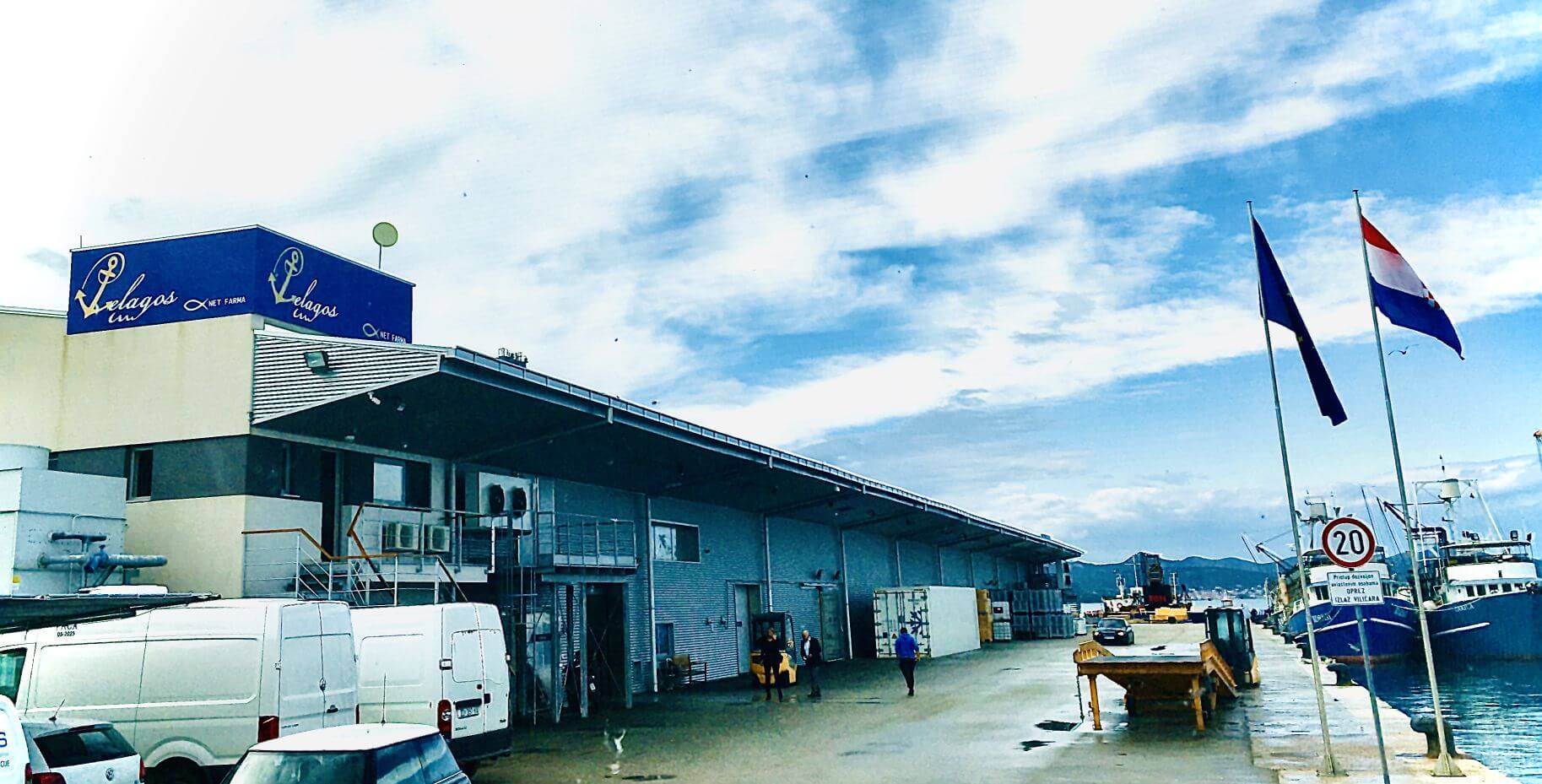
During the visit, the rapid increase in fish farming worldwide was highlighted, along with the fact that the demand for fish on the European and world markets considerably outweighs the supply of quality fish. As a maritime country with largely unpolluted waters, Croatia therefore has enormous potential to redevelop its fishing industry, including the creation of similar companies and fish farms.
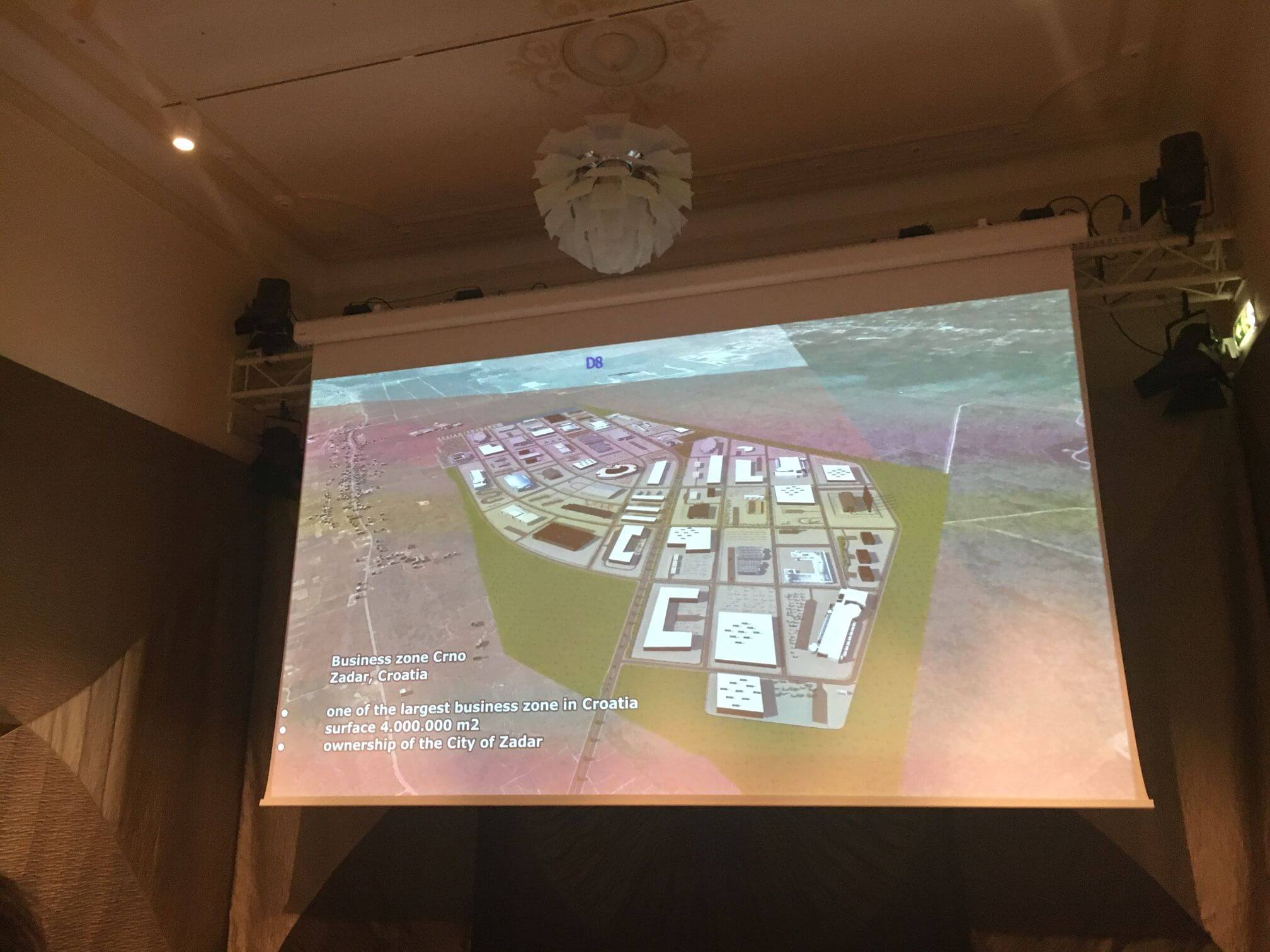
The business excursion continued to the Prince’s Palace in Zadar where the mayor of the town, Dr Branko Dukić, and his colleagues greeted the participants. From the representative of the town and the county chamber, conference participants heard the latest facts and figures on the area’s touristic and other commercial activities. The business zone Crno, which Zadar has been promoting to foreign investors around the world, attracted the most attention and questions. Crno, in Zadar’s hinterland, encompasses 400 hectares, and its proximity to transport infrastructure is especially attractive: only one kilometre from the A1 Zagreb-Dubrovnik highway, three kilometres from Zadar’s airport, four kilometres from the Gaženica port and four kilometres from Zadar’s industrial gauge.
“We began the Meeting G2.5 project with the aim of connecting Croatia with her diaspora, and to present the potential that such a connection can have for commerce. In five years, we’ve met businesspeople with Croatian roots from as many as 29 countries. During that period, over 950 participants have come to our conferences. Among them, more than 280 businesspeople from overseas have met with 300 Croatian companies. We’ve organised over 40 panels, represented over 40 start-ups and, every year, travelled on business excursions across Croatia. All up, we’ve connected practically a thousand people. That’s our contribution. However, again we come to the question: why has that significant potential not been realized? What do we have to do to take a step forward? We think that all Croatians beyond Croatia need to become ambassadors of the country. Croatian institutions have to recognise that and encourage Croatian diaspora communities and the people within them to more actively represent Croatia and Croatian products,” emphasised Josip Hrgetić, president of the Meeting G2.5 association, the organiser of the conference.
Media contact:
Meeting G2.5 Conference
Email: This email address is being protected from spambots. You need JavaScript enabled to view it.
To read more about business in Croatia, follow TCN's dedicated page.
Hate Speech Should Be Punished, Not Just Removed
ZAGREB, November 13, 2019 - The Human Rights House on Wednesday organised a round table discussion at which it was said that dealing with the problem of hate speech required a good and broad social discussion and that hate speech should not only be removed but should also be punished.
"Hate speech constitutes a violation of human rights of marginalised groups, LGBT persons and members of ethnic minorities and it constitutes a basis for racial discrimination. That is why it is not enough to just remove it from the public arena but those who spread it should be punished," said Human Rights House programming director Ivan Novosel.
The round table discussion, held under the title "Regulating hate speech on social networks - challenges to the exercise of the freedom of expression", focused on an announced law on the prevention of undesirable behaviour on social networks. The purpose of the round table was to gain an understanding of the experiences and challenges of regulating hate speech on social networks in Germany and discuss possible challenges in the Croatian context.
Novosel warned that if the German model was copied, it could have a negative impact on the freedom of expression and operation of the media because, he claimed, experiences in Germany bore witness to the censorship of content on social networks and its removal without prosecution.
Assistant Justice Minister Vedrana Šimundža-Nikolić said that a working group was studying and comparing different laws in an effort to recognise the regulations that could or should be adopted in Croatia.
She said that the laws and solutions of other countries would not be "copied" and that the ministry would follow Human Rights House discussions and use its conclusions in its future work.
She also said that on-line hate speech and similar conduct should be restricted and banned and that a way should be found at EU level to impose certain rules of conduct on social networks to prevent any hate speech and intolerance.
More news about NGOs in Croatia can be found in the Lifestyle section.