

Zagreb Advent Presents Nutcracker Theme, Expands to New Locations
November 15, 2019 - ‘Let the magic begin!’ is the slogan of this year's Zagreb Advent, which will officially start on November 30 in the streets of the capital, with the traditional candle lighting in Mandusevac.
24 Sata reports that the central theme of this year’s Advent is the Nutcracker, which will be seen in several locations in the Upper and Lower Town - in the Gric Tunnel and the Oktogon. The director of the Zagreb City Tourist Board, Martina Bienenfeld, announced that there would also be Zagreb Tourist Board awards through the Zagreb Be There application.
In addition to the Nutcracker, the emphasis this year is also on environmental awareness and reducing the use of plastics. There will also be easier access for people with disabilities at specific locations.
In addition to traditional locations such as Advent on Zrinjevac, the Ice Park, European Park, Gric Tunnel, Christmas Fairytale on Ban Jelacic Square, Fuliranje, and others, new locations were announced which will expand the event this year.
The new locations include the Film Advent at Tuskanac, which will screen Christmas movies for all ages at 11 am and 5 pm at the Tuskanac Cinema, and at the Advent in front of HNK, guests can enjoy cultural events on the stage in front of the theater. A novelty this year is the Oktogon pass where concerts will be held.
Eleven festive music festivals have been announced around the city, like Advent postcards, Advent under Lanterna, Evenings with Brahms, Adventfest in the Cathedral, and Advent Classic Fest.
The Museum of Arts and Crafts, Croatian History Museum, and Museum of the City of Zagreb will organize special exhibitions and programs. They also announced a concert by the Swedish Professional Choir at Advent in Zrinjevac and Maksimir for the Feast of St. Lucy on December 10th.
Advent on Prekrizje will also return, where visitors will be able to find out all about Croatian customs, and it is open on weekends. In addition, ZET will introduce an exclusive line only for the specified location.
To read more about travel in Croatia, follow TCN's dedicated page.
Croatia Basketball to Host Olympic Qualifying Tournament in Split
November 15, 2019 - Croatia Basketball will host one of the Olympic qualifying tournaments in Split from June 23 to 28, 2020. They will return to the Dalmatian capital for the first time in 21 years.
The FIBA Executive Board decided on Friday at a meeting in Geneva that Croatia, or Split, will host one of the four qualifying tournaments for the Tokyo Olympics next summer, reports the Croatian Basketball Federation.
The Olympic qualifying tournaments are one of the most important and prestigious FIBA competitions, and the winner of each of the four tournaments will secure a place at the Tokyo Olympics. As each of the 24 national teams that have qualified for the tournaments has already proven to be high quality, the tournaments will certainly be very attractive for spectators.
The Olympic qualifying tournament in Split will be held from June 23 to 28, 2020.
"This is a big deal for Croatian basketball, after Eurobasket 1989, it is the strongest and most important competition on Croatian territory and should be used to promote basketball in that region and throughout the country, and we will do our best to get our best result,” said coach Veljko Mrsic after learning the good news.
"In order to talk about the odds, however, we have to wait for the draw and see who will come and with what kind of squad. It will depend on the NBA as well, because the finalists will not be able to perform," said Mrsic. For Croatia, Mrsic would have to worry most about Ivica Zubac and the LA Clippers, as well as Croatia captain and current Utah Jazz Bojan Bogdanovic.
In addition to Croatia, the tournament organizers will be Canada (Victoria), Lithuania (Kaunas) and Serbia (Belgrade). Six teams will compete in each of the four qualifying tournaments, with only the top-ranked going to Tokyo.
The draw for qualifying Olympic tournaments will take place on November 27 in Geneva.
The following nations will play in the qualifying tournaments: Angola, Brazil, Czech Republic, Dominican Republic, Greece, Croatia, Italy, Canada, China, Korea, Lithuania, Mexico, New Zealand, Germany, Poland, Puerto Rico, Russia, Senegal, Slovenia, Serbia, Tunisia, Turkey, Uruguay and Venezuela.
In the men's competition, the Olympic Games have already been secured by Japan as the host and seven teams from the World Cup, including two from Europe (Spain, France), two from the Americas (USA, Argentina) and one each from Oceania (Australia), Africa (Nigeria) and Asia (Iran).
To read more about sport in Croatia, follow TCN’s dedicated page.
Break Time Presents Three New Collections in Time for Holiday Season
November 15, 2019 - 'Tis the season at Break Time!
While we still have a good month and a half before Christmas hits, it’s never too early to get ahead on your holiday shopping. Thus, with their faithful customers in mind, Break Time has added three new collections to their selection of nautical jewelry just in time for you to accessorize the whole family at Christmas.

Namely, all three collections feature the original Yacht Club anchor, explicitly designed for Break Time by the brilliant design team of Attila Kim and Bogdan Ciocodeica.
The limited-edition version of the Yacht Club by Break Time® 4cm anchor bracelet is an absolute innovation in the world of nautical jewelry.
What makes it so unique is that you’ll find a screw at the top of the anchor so that the rope and the top can be separated from the body of the anchor. This means that Break Time fans can now buy just one anchor and add as many different ropes as they desire (with over 25 available). By alternating the ropes, you can enjoy an entirely new bracelet for every outfit or special occasion!
Customers can also choose between the big Yacht Club bracelet (at 4 cm) as the perfect gift for your man, or the mini Yacht Club (2 cm), which is adored by women and children as a delicate and ideal gift this Christmas.

All Yacht Club by Break Time® original bracelets are handmade in Split using stainless steel anchors that are fully waterproof and fit any wrist (yes, they are 100% customizable). The anchor can be personalized with the engraving of your choice, and during Advent, engraving will be completely free - online and in stores!
The new Break Time collections are available online here, and from December 1st, customers in Croatia will be able to find them in the Break Time stores at Ilica 14 in Zagreb and Zadarska 1 in Split.
To read more about lifestyle in Croatia, follow TCN’s dedicated page.
Croatian Chef from Orahovica Opens Croatian Restaurant in Taiwan
Croatian chef Saša Medved, 42, from Orahovica, never dreamed that he would even end up in the Far East when he left Croatia, let alone create the business story of his life there.
As Poslovni Dnevnik/Goran Jungvirth writes on the 15th of November, 2019, Medved told Poslovni Dnevnik how he came up with the idea to open a restaurant which served Croatian cuisine in a country where people barely know a thing about Croatia, but that it was precisely because of this that Croatia can now be experienced in Taiwan, thanks to the launch of its business idea.
When and why did you move to Taiwan?
I never thought about leaving Croatia. But at the urging of a friend, back in 2013, with a loan of 850 euros, I went to Ireland. After just five days I got my first job, but at first it wasn't easy. After the first job, I got a second, a third... Basically, I was collecting work experience in Ireland and getting better jobs. I spent almost 7 months in a hostel and made some good, honest friends there, and eventually I met my wife, a native of Taiwan.
How did you come up with the idea of a Croatian restaurant with Croatian cuisine?
I went to Taiwan on holiday, and after two or three days I was craving ''normal'' food... anything but rice and noodles. I visited European restaurant after European restaurant and came to the conclusion that absolutely none of them had any real, authentic food. Everything is Taiwanese. The bread is sweet (if they have any on offer, that is), the dishes are completely unseasoned, etc., I could write a novel about it. I couldn't believe how most restaurants work here, how they convince the Taiwanese that their dishes are authentically European, Indian, American, Italian... and they all have a similar, impersonal taste. That's where I came up with the idea that I could open a 100% authentic Croatian/Slavonian restaurant here. I weighed up the pros and cons of the idea for a year and eventually got it off the ground, I got all of my savings together and went to Taiwan in January 2016.
How did you get started?
When I came to Taiwan, honestly, I didn't know where to start. Everything is different, a completely different world, at some moments completely "illogical" for us "from the west". We decided to start first with a small booth in Qishan, where my wife has a house. The offer was very modest. We used to make burgers, kabobs, meatballs, and sometimes sarma and lemonade.
Were there any initial business difficulties?
There were days when we sold absolutely nothing, moments when we thought about leaving everything and going back to Ireland because our main idea was authenticity and strictly adhere to it. After a while, people became interested in our food and we became popular. After 6 months, we started thinking about a small restaurant, no luxury… a couple of tables, closed doors and air conditioning. Believe me, it is not at all comfortable to be on the street all day in the heat and impossible humidity, so the climate was a huge motivation for me.
As we were looking for a suitable space, an opportunity to rent an old house in the city (Kaohsiung) came up. The lower floor of the house was remodelled to a place with much desired air conditioning, and we lived upstairs. The construction style is completely different here, everything goes up in height, so let's say the living room is on one floor, the bedroom on the other, the kitchen, the toilet, etc on a third, which to me personally is very impractical.
Still, it got started. What was the turning point?
The space was really modest, 6 tables in a semi-dark room, a small cabinet like a counter and that's it. We literally had one light bulb in the middle of the bar. No matter how modest, it was ours and it was moving forward steadily.
Within a few months, we stood out as something different from the others and people began to take an interest and come in increasing numbers. In the next 6 months, we completely renovated the lower floor and made a decent place out of it. From the installation of electricity to the carpentry, I've been forced to learn and do it myself because the cost to foreigners, especially in the restaurant business, is incredibly high. The amount of work in the restaurant was constantly increasing and we decided to hire one person, then two, three, four… Everything was finally going as we'd imagined, so we started thinking about a slightly bigger and better place. After 2 years we moved to the centre of the city.
Who are your main guests... Taiwanese or foreigners?
For the most part, our guests are Taiwanese, I'd say 95 percent, which is our goal. Constant advertising through all available media is targeted at the locals, with foreigners mostly coming upon the recommendation of the hotels where they're staying.
I see that you offer kabobs, sarma, kremšnite, what foods are do the Taiwanese like best?
The menu is very most because we do only those things that can be done 100% the same as in Croatia and so only one person prepares all of those meals, myself. Slavonian čobanac, Slavonian sausages, paprikaš, ražnjići, ćevapi, mixed meat, sarma, stuffed peppers, knedle with plums, vegetable soup and mushroom soup, kremšnite, pancakes and ice cream.
What would you highlight as your best specialty?
Slavonian čobanac, sarma and Slavonian sausages are the most accepted and praised dishes.
Reading the reviews, I've seen that you also create a good impression of the Croatian atmosphere. How do you achieve this?
We have come to be known as the most authentic European restaurant in town, which we're incredibly proud of! Kaohsiung is a huge city with three million inhabitants. There are thousands of restaurants and still a mass of people who have never heard of us. But maybe not for long, because you can hear a good voice from far away.
What are your future business plans?
We're probably opening another restaurant in the next year.
How is your life here?
Everything here seems pretty upside down, most of all the lifestyle. For example, most Taiwanese people hang out only on social networks and at lunches or dinners that are agreed months in advance. There's no way you're going to call someone and say, "let's have a coffee and a chat.'' But chatting on Facebook or any other social network is constant. There's time for that. To me personally, it all comes down to work and thinking about work 24/7.
Do you miss Croatia, do you come here for holidays and do you ever think of coming back?
I have absolutely everything here that I wouldn't even dare to wish for in Croatia. And on the other hand, I'm satisfied, I'm still not thinking about returning, and when I say return, I mean to Ireland! Never say never, but returning to Croatia doesn't seem attractive to me, at least for now.
All those stories about where people were in 1991, Ustashas, Chetniks, Partisans and many other things... I don't miss that at all. It's unfortunate that even now, after 7 years since I left, every year I meet the same people sitting in the same places and talking about the same problems and nobody does absolutely anything. General lethargy! In Croatia, it seems that time has stopped. So much so that Taiwan is at least 20 years ahead, and not to mention Ireland and the rest of Europe.
Make sure to follow our dedicated Made in Croatia, business and lifestyle pages for much more.
ZET's Electric Cars Fail Miserably But Zagreb Company Still Confident
It seems that ZET's attempt to become a bit more environmentally friendly has fallen flat on its face, at least for now. The twelve electric cars that the Zagreb transport company procured to transport passengers around the Croatian capital have averaged in at a mere one passenger per day.
As Poslovni Dnevnik writes on the 15th of November, 2019, ZET also warned that since last December, the twelve electric cars have been driving in Zagreb's Lower Town (Donji grad) only, while in Gornji grad (Upper Town) they have been operating since July, while around the Jarun lake area, they have been operating "recently".
According to ZET's data on the tickets they sold to tourists for taking them on tours around the city using electric vehicles, they sold just under 400 tickets, which means that the twelve "e-city tour vehicles" have been driving just one passenger each day in the centre of the Croatian capital since last December, meaning that since these golf cars were put into circulation, they've earned four thousand kuna.
According to what ZET told Vecernji list, they're still not operating these vehicles in Gornji and Donji grad on a daily basis ''because they don't drive in adverse weather conditions'' and because of “the frequent special traffic regulations in the city centre, such as those created to allow for sporting, cultural and other events''. Despite what seem like excuses, these e-vehicles are still very much a hit, at least according to ZET.
''With the introduction of these electric vehicles, the tourist offer of Zagreb was further enriched, which has been confirmed by the praise and positive comments from numerous guests,'' they claim.
''Following the technical evaluation of tourist lines so far, preconditions have been created for intensifying the service starting with Advent, while in 2020, additional service development and connections, ie, integration with our other tourist lines, are expected,'' the Zagreb public transport company points out.
Make sure to follow our dedicated lifestyle page for much more. If you're interested in Zagreb only, give Total Zagreb a follow or check out Zagreb in a Page for all you need to know.
Tibetan Yoga, Meditation, and Retreats: Divota Apartment Hotel Opens a New Chapter
November 15, 2019 - We here at Total Croatia News have showered Divota Apartment Hotel with praise since the very beginning, and it’s not hard to see why. A traveler favorite and top choice on TripAdvisor over the years, Divota truly is one of Split’s brightest sparks.
However, this integrated boutique hotel is using its success to turn a new leaf in 2020 with the introduction of Tibetan wellness practices, many of which will be new experiences to the Dalmatian capital.
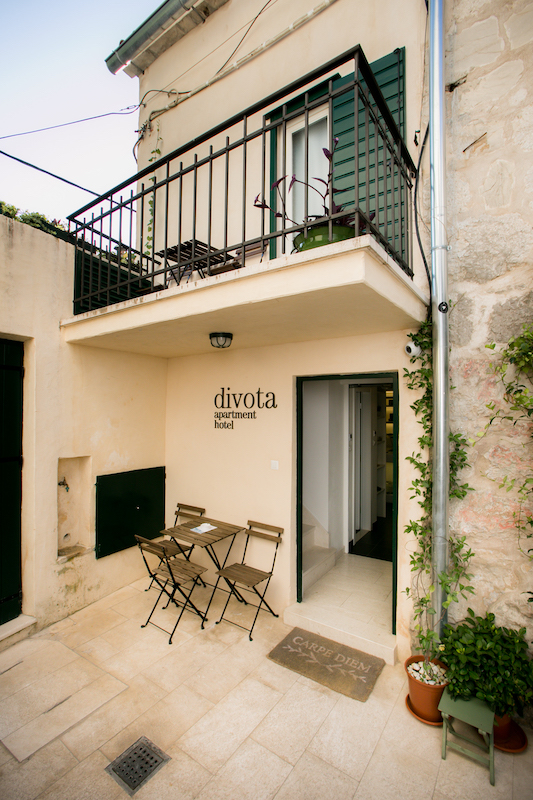
Divota has been using energy work in their spa and their general company culture for the last few years, which has now become a springboard for their newest offer.
As a result, Divota will lead guests to live a more holistic life.
Thus, in 2020, Divota is turning to meditation and yoga, following the lineage of the Tibetan master Tulku Lobsang Rinpoche, who introduced Tibetan healing yoga and many more techniques from the Buddhist Vajrayana tradition, to Europe.

Divota owner Andrea Wassmer gave us a closer look.
"This year, we are opening a yoga garden, meditation center, and the Divota bistro healthy corner.
We will offer our own retreats, Lu Jong retreats and invite masters and other teachers to hold retreats with us, such as Shai Tubali, who will conduct an Easter retreat in the spring and return in September to hold one focusing on the seven chakra personality types," said Wassmer.
Namely, Shai Tubali has been an international speaker, author and spiritual teacher since 2000, and is considered one of Europe's leading experts and innovators in the field of chakras and the subtle system.
For Easter this year, Shai Tubali will hold a silence & anti-aging health retreat about the healing powers of springtime at Divota Apartment Hotel in Split.
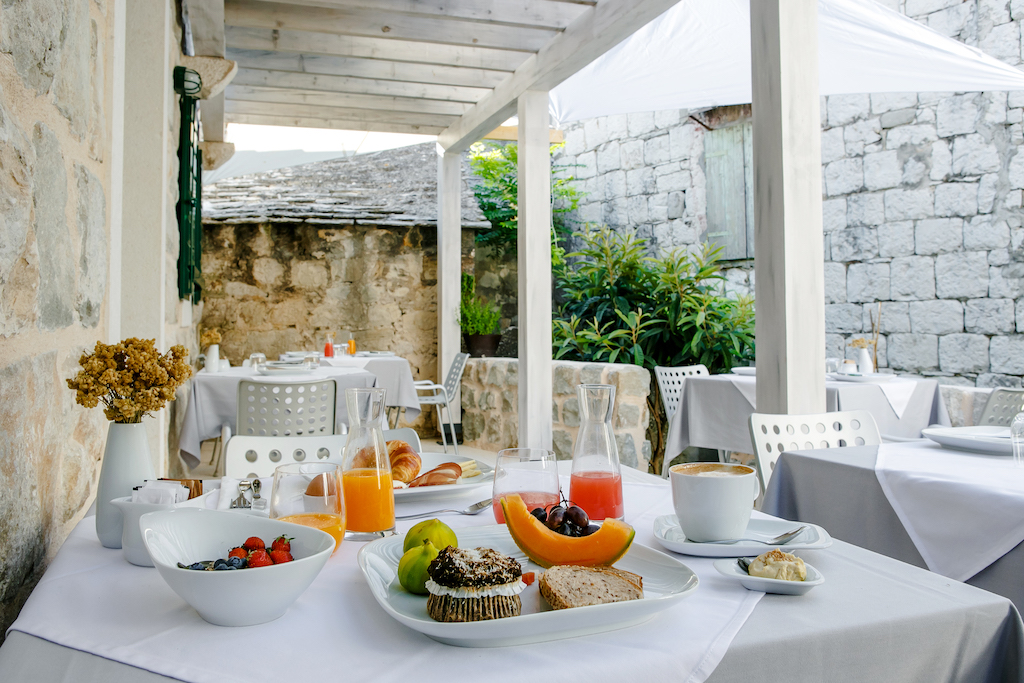
Divota will also host Tibetan Healing Yoga classes in the new Yoga Garden from April 14, 2020. They will run daily from 06:30-07:30.
But that's not all.
In March, monks from Bhutan and Nepal will visit Divota to build a stupa, or a commemorative monument that is a symbol of enlightenment and is associated with loving-kindness and compassion. They will return in July to create a sand mandala, known as a sign of impermanence.
"We also look forward to having our teacher Tulku Lobsang Rinpoche visit in July for three workshops: Lu Jong - balancing the five elements, Tsa Lung - the energy body, and Tummo - our wisdom fire,” concluded Wassmer.
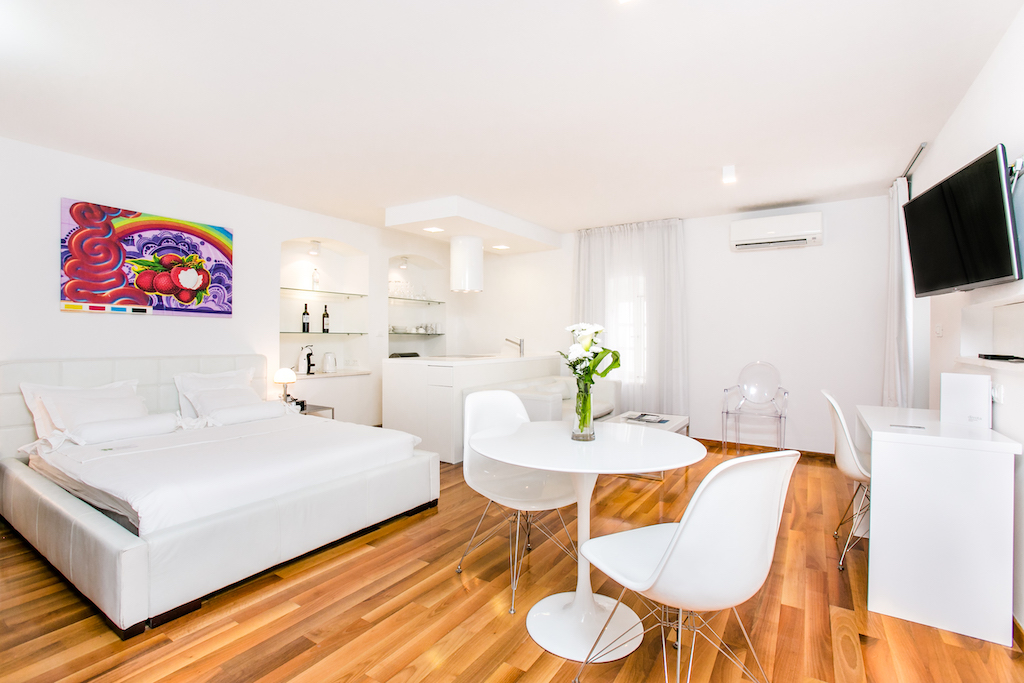
Divota Apartment Hotel is an unmatched integrated boutique hotel located in the heart of Split that has added a spark to the Varos neighborhood since it first opened its doors.
Formed by 13 stone houses sprinkled around this historic Split suburb, Divota boasts cozy rooms, studio apartments, and an authentic Dalmatian villa, while its breakfast room, spa, and concierge are just some its perks.
A pioneer in harmonizing the Mediterranean authenticity of the area with a contemporary and stylish twist, Divota operates with high hotel standards, allows guests a full range of services, and promises a powerhouse of professionals to ensure your stay is decorated with all of the right elements.
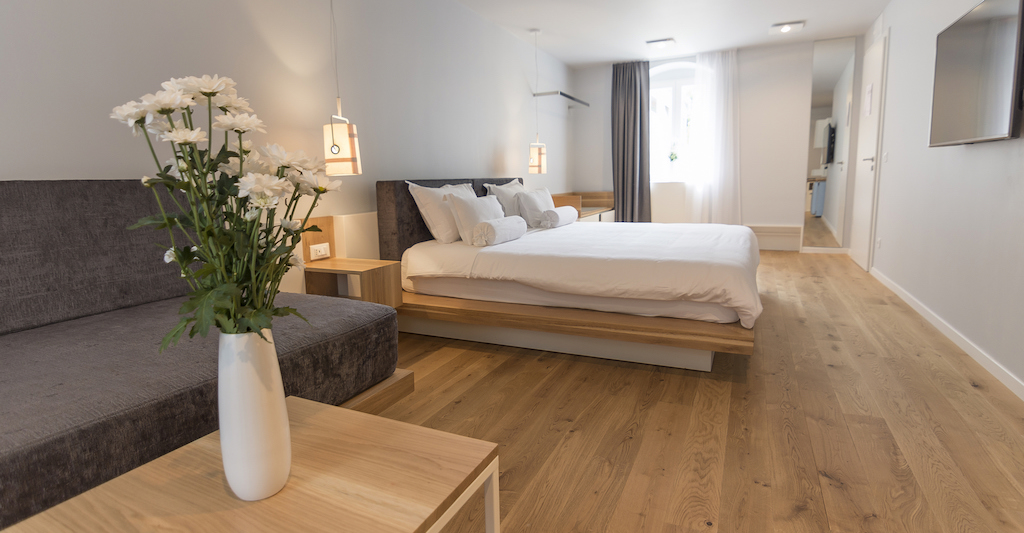
To make sure you never miss a Divota beat, be sure to follow them on Facebook and check out their rooms, studio apartments, and villa here.
To read more about travel in Croatia, follow TCN's dedicated page.
IDS MEP Valter Flego Seeks Connection Between Istrian Y and Slovenia
An Istrian Democratic Assembly (IDS) MEP has proposed better road connections between Istria and Croatia, primarily involving the Slovenian motorway and the Istrian Y.
When it comes to good neighbourly relations between Croatia and its neighbour to the north, Slovenia, things have been bad at worst and petty at best over the last few years. The border dispute has led both countries to quite childish jibes and Slovenia will likely continue to try to block Croatia's Schengen entry for as long as possible because of the country's refusal to recognise and therefore implement the arbitration court's decision on the border.
As Glas Istre/Dubravko Grakalic writes on the 15th of November, 2019, an IDS Member of the European Parliament, Walter Flego, emphasised in his brief debate in the European Parliament the need to create transport links between Croatia and Slovenia.
"I come from Istria and I recognise the importance of international and cross-border co-operation in an area. Clearly, I'm not just talking about projects and events, but also about infrastructure. We've got some excellent examples at the very top of the EU, such as the Interreg interregional cooperation program, which has funded more than sixty very valuable projects. When talking about Istria, we have a great example of connection and cooperation between two water supply lines - the Istrian water supply system from the Croatian part of Istria, and the Rižan water supply system from the Slovenian part of Istria,'' Flego cited.
"We need a connection between the Istrian Yp to the Slovenian motorway network in order to reduce congestion during the tourist season. That's why I ask that cohesion policy funds not be cut and that is why I'm asking for such an item to be placed in the 2021-2027 budget. This would enable our people in Istria to live and work more easily and simply. Our countries are not isolated islands, so let's invest in the coming years in projects that connect us, so that residents and tourists can live and work freely throughout the year, but also enjoy their well-deserved holidays,'' said IDS's Walter Flego in Brussels, Belgium.
Make sure to follow our dedicated politics page for more.
Poor Croatian Publishing Climate Leads Publishers to Other Continents
As Poslovni Dnevnik/Sasa Paparella writes on the 15th of November, 2019, the start of this year's Interliber coincided with the bankruptcy of Algoritam, once a leading Croatian publisher. On the occasion of the opening of the much loved book fair, Culture Minister Nina Obuljen Koržinek said that after the collapse of Agrokor and the bookstore chain Algoritam MK, which had almost dragged domestic publishing to its knees, the situation in the industry had "stabilised".
Croatian publishers, however, don't fully agree with this statement, noting that there is still not enough bookstores in Croatia, and the question is what will happen to the existing ones - The company Hoću knjigu (I want a book) which took over most bookstores from the failed Algorithm chain, lost a massive two million kuna last year.
As it isn't easy to do business in Croatia whichever way you look at it, and indeed whichever industry you're in, some of Croatian publishers are instead choosing to put their energy into conquering foreign markets. Thus, the children's books published by Zagreb's Kašmir promet have seen as many as 12 million copies sold in China in the last five years alone. The circulation of their 40 or so titles averages 300,000, and sometimes exceeds half a million copies.
"We have six publishers in China, and three more have visited us now during Interliber. The story began back in 2014 when we were exhibiting at the Seoul Fair, our books there were liked by the Chinese, and they invited us to take a tour. It lasted a month and we toured the twelve largest Chinese cities, and my wife Andrea Petrlik Huseinović had exhibitions of her illustrations, too. We signed the books for three to four hours a day, they feel like we're stars. When we had to go to the car, people ran after us to sign more books,'' Huseinović recalls.
They have been successful on other continents outside of our own here in Europe as well - in South America, more precisely Colombia, they have one title which was printed in seven issues, and in Mexico, they have one title currently being proofread (Poljski miš i gradski miš/The field mouse and the city mouse).
"If we hadn't expanded, we'd have disappeared a long time ago! With the money from the sale of rights over there, we're manahing to cover the business here at home,'' says Huseinović.
Despite various problems, Slavko Kozina, the new president of the Publishers and Bookstores Community (ZNIK), remains very optimistic about the state of things.
"There's no longer any drama in the industry, but recovery is slow. The state is now more concerned with things, the Ministry of Education has once again started providing money after ten years to buy books for school libraries - this year that amount stands at 5 million kuna, and a total of 20 million kuna will be distributed from EU funds in the coming years. In addition to that, the Ministry of Culture is providing 33 million kuna in grants and for book purchases, and we have an Entrepreneur in Culture contest,'' Kozina says.
The problem is with Croatian bookstores, there are enough of them only in the very centre of Zagreb. The famous Morpurgo Bookstore in Split has been closed for two years now. The new owner of the space, a vulcaniser, wants to open a cafe in one of Europe's oldest bookstores, but the space is protected so he's failed in that venture, and the City of Split is trying to get ownership of it by offering it in exchange for another property.
“Although Hoću knjigu does well at Joker and in the Mall of Split, the city needs at least one more serious bookstore. Our interest is dispersion, which is why ZNIK has just launched the Mediterranean Book Festival in Split,'' Kozina notes.
Make sure to follow our dedicated lifestyle page for more.
Officials Express Condolences After Passing of Branko Lustig
ZAGREB, November 15, 2019 - Prime Minister Andrej Plenković on Thursday expressed condolences to the family of film producer Branko Lustig, who died on Wednesday at the age of 87, stressing that the artistic work of Croatia's most successful film producer and associate of the Academy of Motion Picture Arts and Sciences was marked by the tragedy of the Jewish people and his suffering as a former inmate of Auschwitz and Bergen-Belsen as well as the suffering of his family.
"I was deeply saddened to learn about the passing of the great Branko Lustig, the most successful Croatian film producer, actor, prominent collaborator of the US Academy of Motion Picture Arts and Sciences, collaborator of the world's biggest film directors, president of the film Festival of Tolerance, Croatia's only two-time Academy Award winner, winner of the Golden Globe award and an honorary citizen of Zagreb.
"His entire artistic work was marked by the tragedy of the Jewish people, his suffering as a former inmate of Auschwitz and Bergen-Belsen and the suffering of his family, killed in concentration camps.
"The life mission of Branko Lustig, as he said, was defined forever by the last words of his fellow sufferers - to tell the world how they lived and how they died. And he did it in the best possible way, with his impressive work on Schindler's List, one of the greatest Holocaust films of all time for which he deservedly won his first Academy Award as well as a Golden Globe award," Plenković said in his letter of condolence to the Lustig family.
He recalled that Lustig gave his Academy Award to the Yad Vashem World Holocaust Remembrance Centre in Israel and initiated the establishment of a foundation dedicated to collecting recordings of interviews with Holocaust survivors.
"Branko Lustig tirelessly made movies and he also held lectures at Croatian and international universities and schools for decades, focusing on the education of young people. One of his messages that we must remember is that weapons of mass destruction are not bombs but hate among people, intolerance and blindness and if one forgets that, it would mean that evil has won.
"The truth is that Branko Lustig has won with his artistic and human mission," Plenković said in the letter of condolence.
Croatian President Kolinda Grabar-Kitarović on Thursday extended her condolences to the family of film producer Branko Lustig, her special advisor on the Holocaust, who died on Wednesday at the age of 87, stressing that he had dedicated his life to spreading the truth about the past and teaching new generations that respect for the dignity of every person was the only right way to live.
Lustig was born to a Jewish family in Osijek in 1932. During WWII he was detained in Auschwitz and Bergen-Belsen. Most of his family were killed in concentration camps all over Europe.
"It was with deep sadness that I learned of the death of Mr Branko Lustig, a world-renowned film producer, two-time Academy Award winner, president of the Festival of Tolerance, a man who dedicated his life to the mission of spreading the truth about the past and teaching the new generations that respect for the dignity of every person is the only right way to live."
Grabar-Kitarović recalled in her letter Schindler's List, an Academy Award-winning film about the fate of the Jewish people during Nazism and individuals who had the courage to oppose it, which Lustig produced.
"It was his way of addressing the issue of those who during the Holocaust perished before his eyes, of protecting them from oblivion, a testimony and warning to all that hate is a tragedy of humanity," Grabar-Kitarović said in her letter.
"He was a convinced humanist... as my special advisor on Holocaust issues, he was a valuable associate, notably in joint projects such as one to erect a monument to victims of the Holocaust, to be implemented in cooperation with the City of Zagreb," the president said in the letter of condolence.
Croatian Culture Minister Nina Obuljen Koržinek on Thursday expressed her condolences to the family of film producer Branko Lustig, stressing that his role in the Croatian society was great and that his death was a huge loss.
The prominent film producer and two-time Academy Award winner Branko Lustig died in Zagreb at the age of 87 on Wednesday.
Lustig was born to a Jewish family in Osijek in 1932. During WWII he was detained in Auschwitz and Bergen-Belsen. Most of his family were killed in concentration camps all over Europe.
Lustig was a great name in the Croatian and international cinematography, an Academy Award winner and much more than that, Obuljen Koržinek told reporters outside the government offices.
"He had an important role in society in recent years. He promoted the culture of remembrance, he launched the Jewish Film Festival and later the Festival of Tolerance, testifying with his life about the importance of never forgetting the horrible crimes that he survived, but he also sent a message of inclusiveness and tolerance, saying that he had forgiven but not forgotten."
More news about Branko Lustig can be found in the Lifestyle section.
Date for Presidential Elections Not to Everybody’s Liking
ZAGREB, November 15, 2019 - Presidential candidate Zoran Milanović said on Thursday that the decision to hold the presidential elections on December 22 was "thievery and a disgrace," accusing the Croatian Democratic Union (HDZ) of attempting to reduce the number of citizens going to the polls and to 'kill' the campaign for the second round of the election by timing it during the holiday season.
Milanović said in a Facebook post that he condemned the government's decision to hold the first round of the election on December 22, referring to the decision as "thievery and a disgrace" for three reasons.
"HDZ wants to reduce the number of people who will vote both on December 22 in the first round - when all those the HDZ has forced to emigrate to Ireland have not returned to Croatia yet - and on 5 January when more than 100,000 voters are on holiday with their families and children, who have saved for the entire year and will not be able to return to Croatia to vote in the second round," Milanović wrote.
He said that that was deliberately killing the campaign for a possible second round because it has been set for the holiday season "in an effort to hide all the emptiness of the HDZ candidate."
Milanović claimed that this deviates from the practice and rules that Jadranka Kosor too stuck to when in 2009 the first round of the election was called for the period between Christmas and New Year.
He concluded that Prime Minister Andrej Plenković's aim was to prevent citizens from choosing a better Croatia.
Prime Minister Andrej Plenković said on Thursday evening that the Social Democratic Party's presidential candidate Zoran Milanovic's statement that the decision to hold the presidential election on December 22 was "thievery and a disgrace" was actually "an interesting signal of his weakness" as a candidate.
"As far as I know, presidential elections in Croatia are regularly held ahead of the New Year. The calendar has been such since President Franjo Tuđman died in December 1999," Plenković recalled.
Since 1990, five presidential elections have been held. The third presidential elections were held on 24 January 2000 after Tuđman died on 10 December 1999.
The last elections for the head of state were held on 28 December 2014 (the first round) and 11 January 2015 (the second round) when the incumbent Kolinda Grabar-Kitarović defeated the then President Ivo Josipovic.
"This candidate has a lot of problems and is full of fear," Plenković said, predicting that the incumbent president would win the second term in office.
More news about presidential elections can be found in the Politics section.