

Croatian Telecom Mobile Network Among World's Top Ten Fastest
As Poslovni Dnevnik writes on the 2nd of November, 2020, Ookla, a global leader in applications, data and analysis for fixed broadband and mobile network testing, has recognised Hrvatski Telekom/Croatian Telecom mobile network as one of the ten fastest mobile networks in the world in the year 2020.
This impressive ranking of the Croatian Telecom mobile network is based on Ookla’s analysis of millions of tests run by users across each network to test Internet speed using a variety of applications on the web and mobile platforms. Speedtest awards for leading network providers are determined using a Speed Score tool that includes measuring the network speed of each service provider (download and transfer) to rank network speed performance.
Back in July, for the second year in a row, Croatin Telecom received as many as two Ookla awards - for the fastest mobile network in the Republic of Croatia and for the best mobile coverage. In addition to that, Croatian Telecom also received the award for the best mobile network and for the best broadband coverage based on an international analysis conducted by umlaut (formerly P3).
This year, the Croatian company was the first in all of Croatia to start commercial operation of the 5G network, which is the foundation of the future technological development of the economy and society. The commercial 5G network is based on Dynamic Spectrum Sharing (DSS) technology, the application of which enables the current use of existing frequencies for 5G. Dynamic spectrum sharing technology enables the rapid implementation of a 5G network and reduces the need for new base stations and locations on specific 5G frequencies.
For the latest travel info, bookmark our main travel info article, which is updated daily.
Read the Croatian Travel Update in your language - now available in 24 languages
Join the Total Croatia Travel INFO Viber community.
Pandemic Trip Report: From Split to Barcelona and Back During COVID-19
November 3, 2020 - So, what’s it like traveling during a pandemic? My COVID-19 trip report from Split to Barcelona and back.
Traveling during a pandemic - a good idea?
Let me start by saying that I do not encourage anyone to travel during a pandemic unless you absolutely have to or are 100% healthy.
In my case, I have not had to travel for any reason since the COVID-19 outbreak in Croatia in early March.
That is, until now.
You see, when COVID hit Croatia like a hurricane back in the spring, my partner, who had been playing for a water polo club in Split, was thanked for his time and left without a job and an apartment 48 hours before Croatia went on lockdown, and the EU borders closed. He left for Australia in a hurry, his homeland, and a safe haven where he could still train with the Australia national team to prepare for the Summer Olympics. We were quite naive at the time.
We said goodbye, not knowing when we’d see each other again or if he’d ever make it back to Europe, given the circumstances, but we remained hopeful.
Fortunately, a contract arrived from Barcelona in the summer, where his career would continue whenever he could get there. And as the COVID situation developed in Europe, a journey that was meant to begin in September finally surfaced in October. After 7 months, he was back in Europe. I booked a trip to see him a few weeks later.
While seeing him was my priority, I was also the safe keeper of three massive bags of his belongings - and I needed to get what I could to Spain.
We monitored the status of flights and corona developments in the days leading up to my departure on Thursday, October 29, and as the cases rose around Europe, the less hope I had that things would go smoothly. However, I was ready for whatever the outcome, with a negative COVID test in hand.
Unlike the first wave, flights were not abruptly canceled this time around, and my first leg from Split to Stuttgart on Eurowings was on schedule.
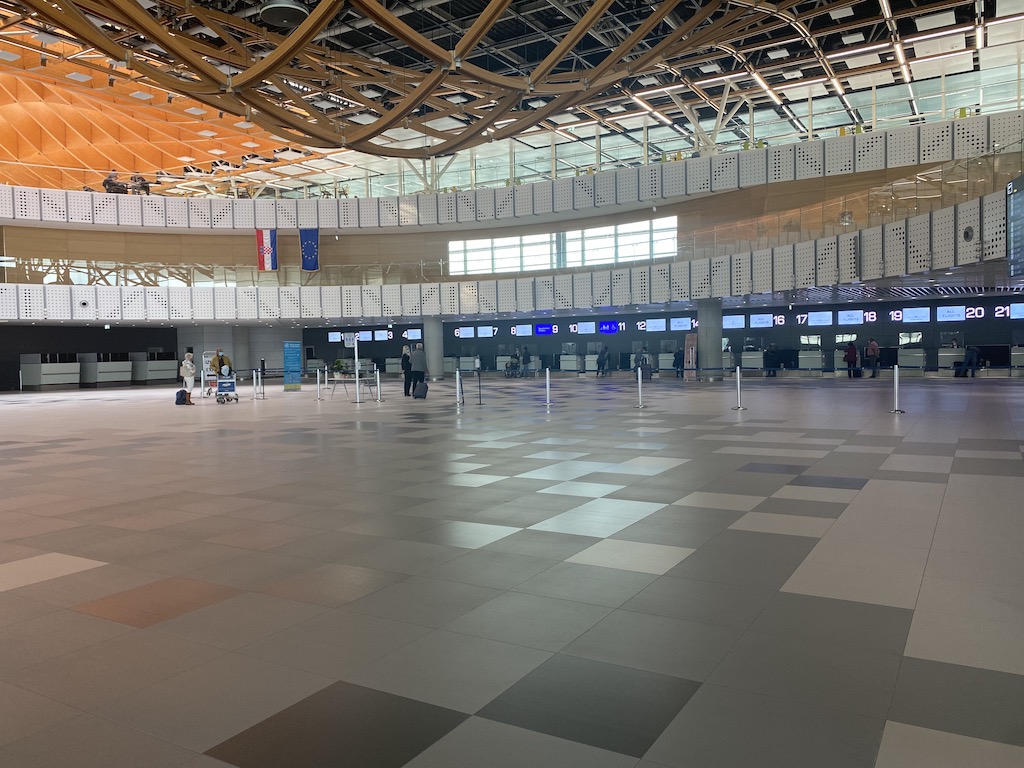
I arrived to Split Airport an hour and a half before I was to take off and was greeted by a rather empty check-in, although not a totally unfamiliar sight this time of year.
Since I was traveling on two different airlines to get to Barcelona (Eurowings to Stuttgart and Vueling to Barcelona) and was checking a bag, I technically needed to enter Germany. Remember, Croatia is on Germany's high risk list, and unless you have a negative test, you need to go into self-isolation once you've entered.
The flight attendant panicked before knowing I had a negative COVID-19 test in hand and assured I would have no issues. She then checked the entry forms for Spain to make sure I had everything I needed. I did.
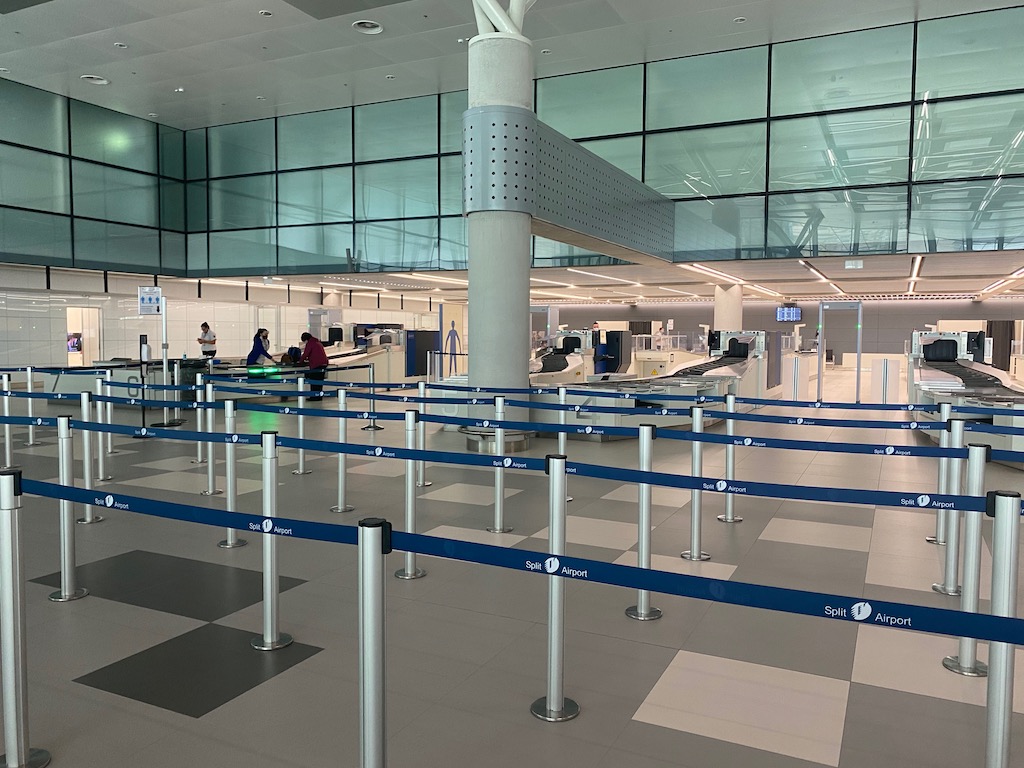
The security line at Split Airport - heaven.
After I made my way through security and passport control, I waited at the gate. One cafe and the Duty-Free shop was open. All seating was marked, so passengers maintain a social distance.
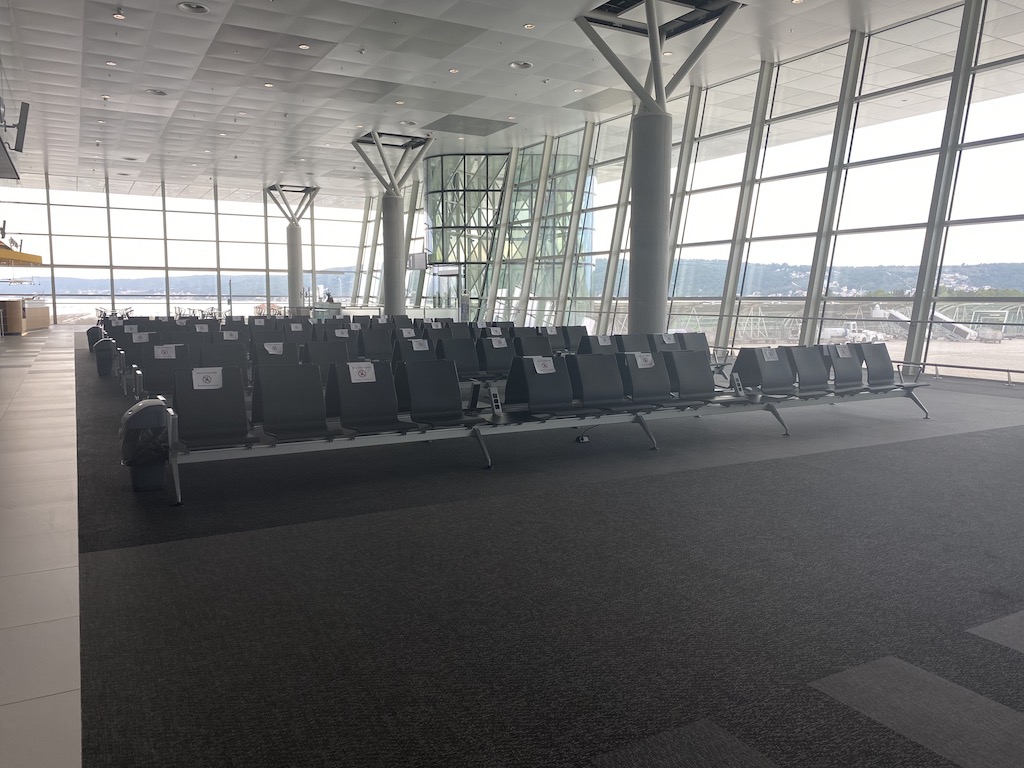
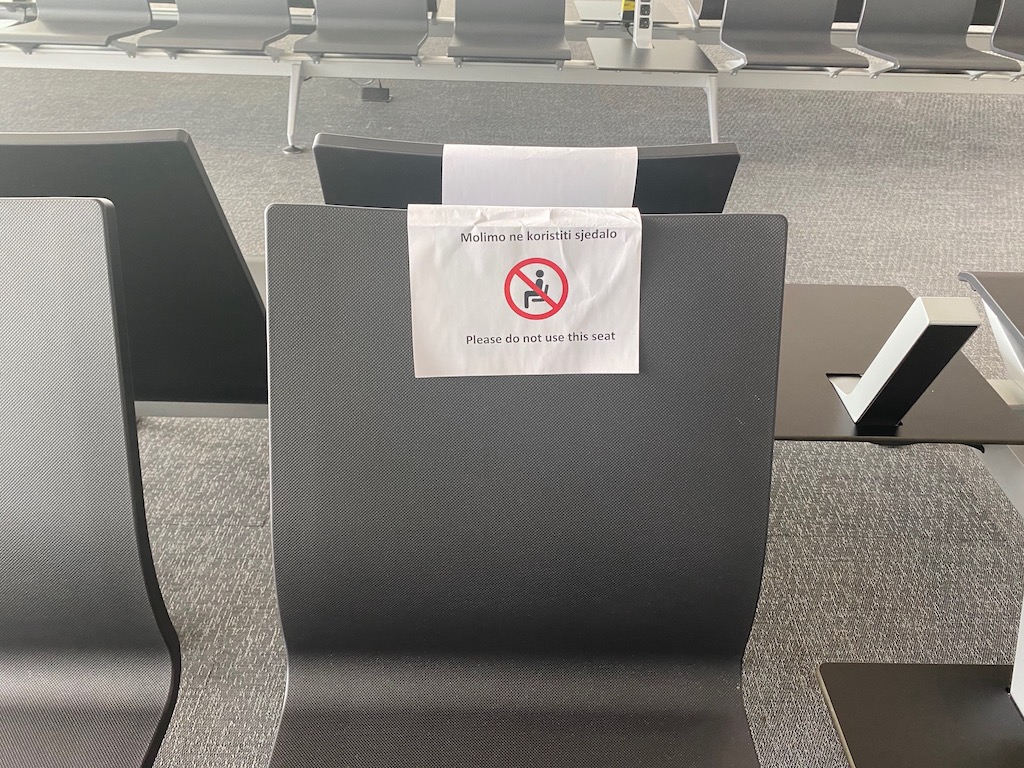
It wasn't long before the gate area drew a crowd, and I was beginning to think that the nearly empty seat assignment I saw just a few days before was no longer. Perhaps it had something to do with Germany announcing a lockdown on November 2.
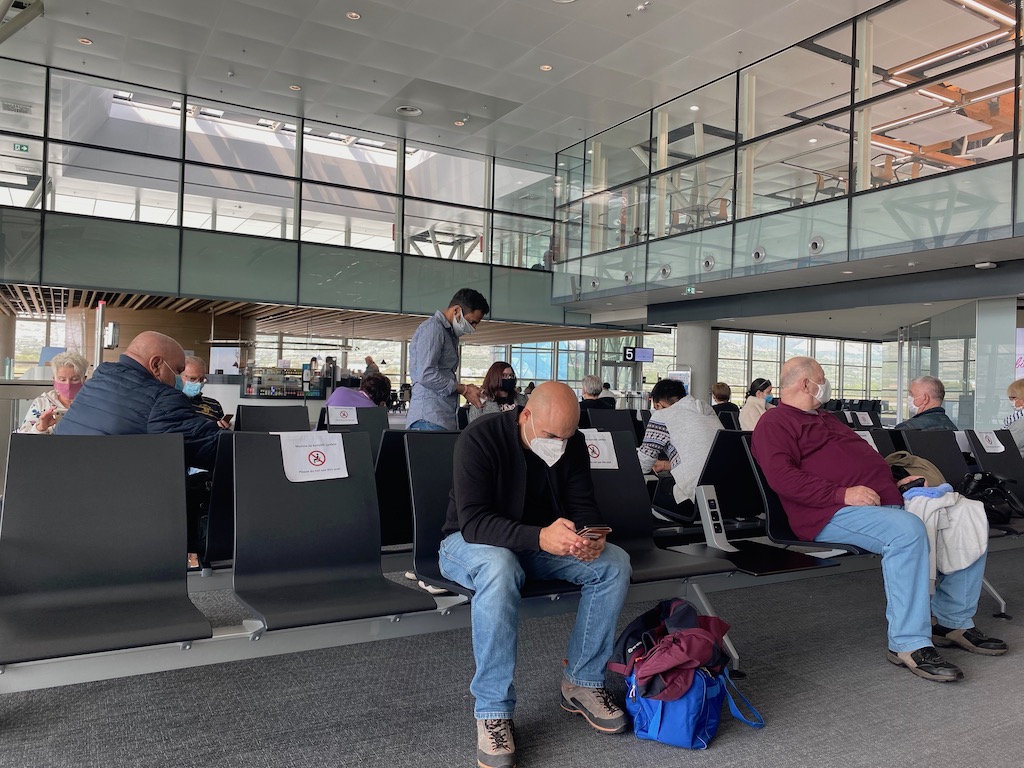
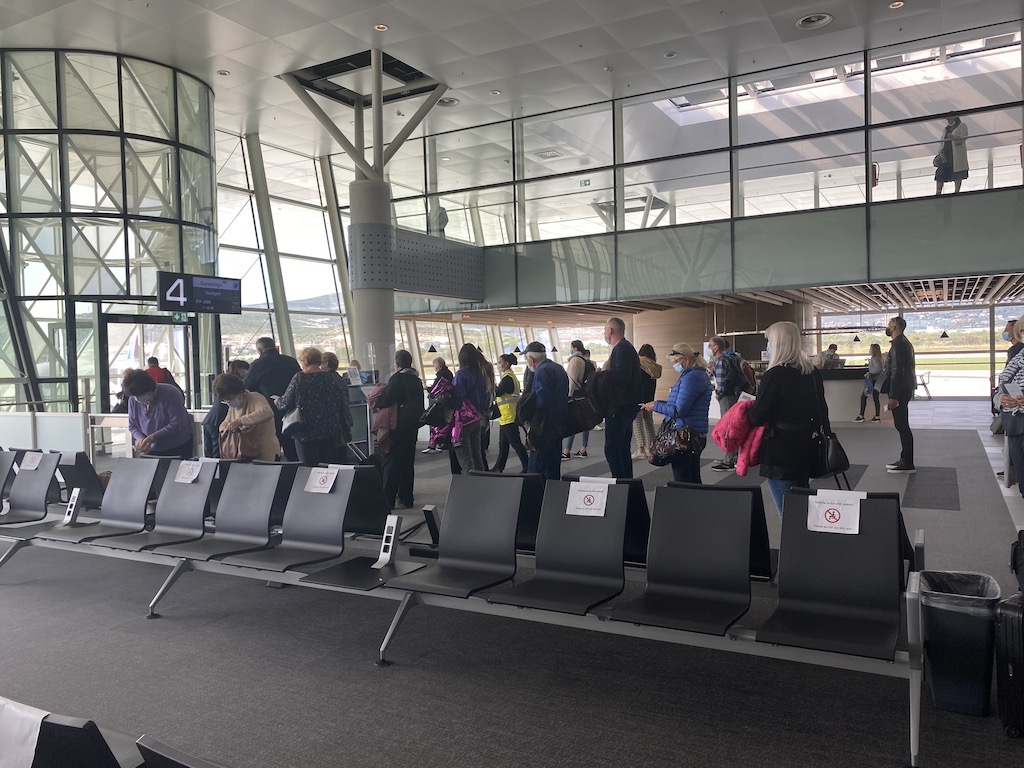
Masks are mandatory in the airport and on the flight. Numerous airport employees ensured everyone was not only wearing a mask but the right one. Cotton masks are not permitted on flights, and disposable masks were distributed if anyone needed one.
It was good that everyone followed the mask rule because, unfortunately, it was nearly impossible to maintain social distance on the way to Stuttgart.
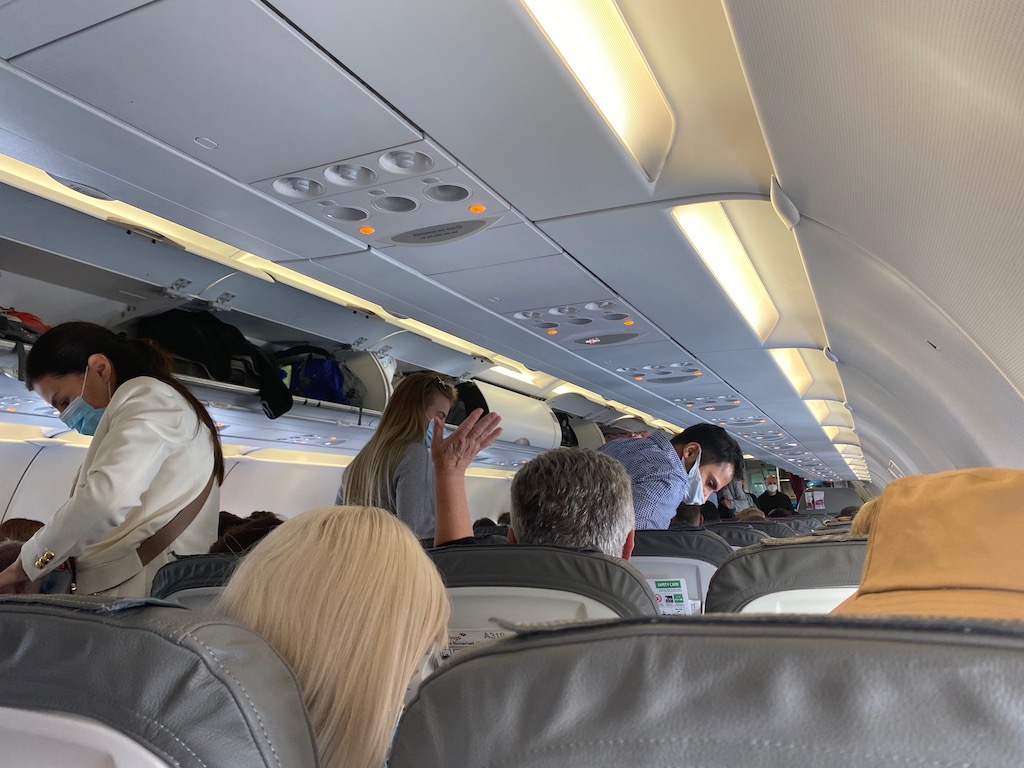
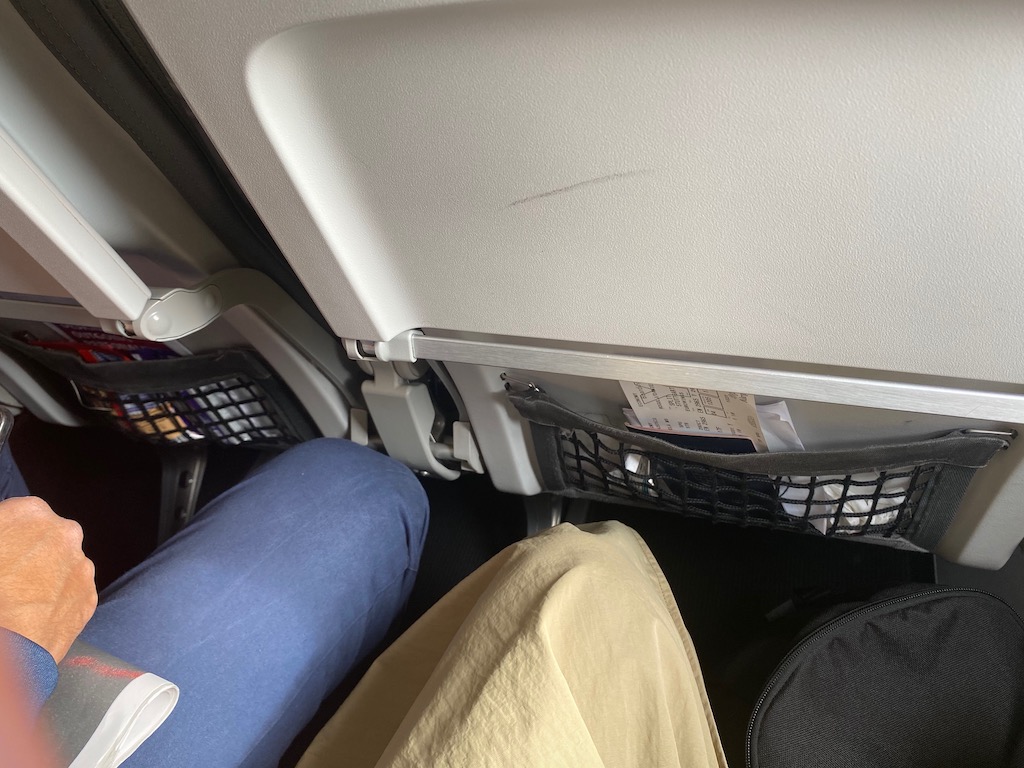
Smooth sailing so far, that is, until we disembarked the plane in Stuttgart and into passport control chaos. You see, all passengers are to be given a Public Health Passenger Locator form to fill out on the flight. This is then to be collected by the flight attendants at the end of the flight. Our Eurowings flight attendants failed to do so.
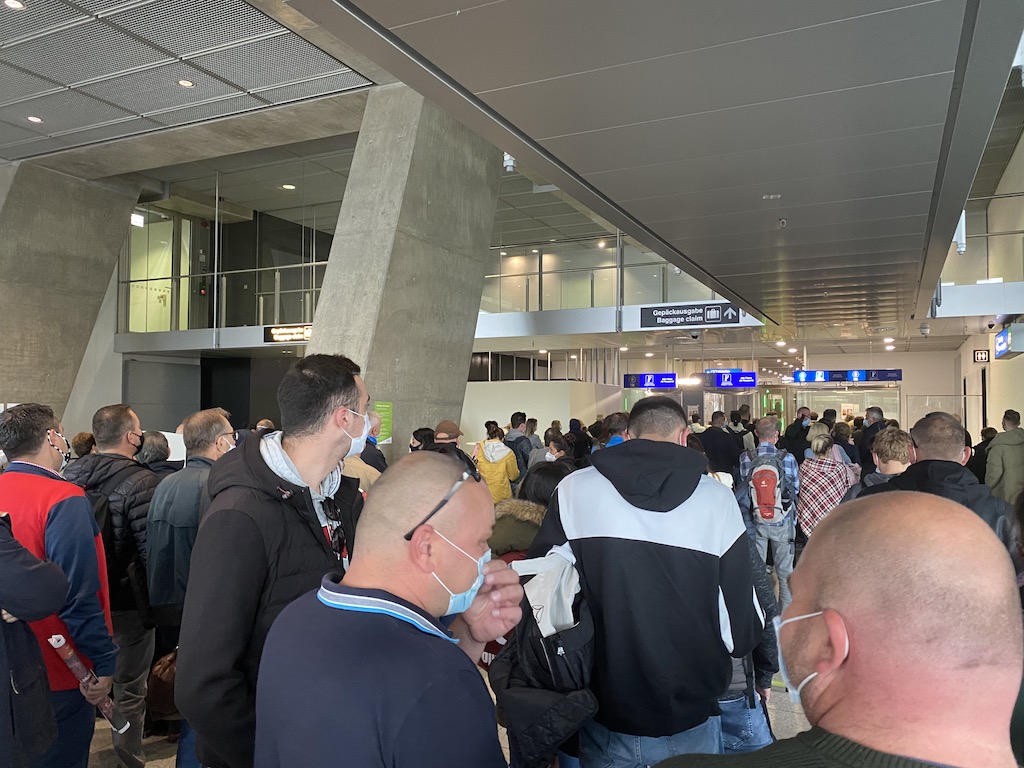
Not only were over 100 people pushed into the passport control area from my flight and another that arrived at the same time, but there was no order, nor was there anyone to ask for help. A good half hour into waiting, an officer arrived with the forms, calling for everyone who needed one to fill them out as they are required at the window.
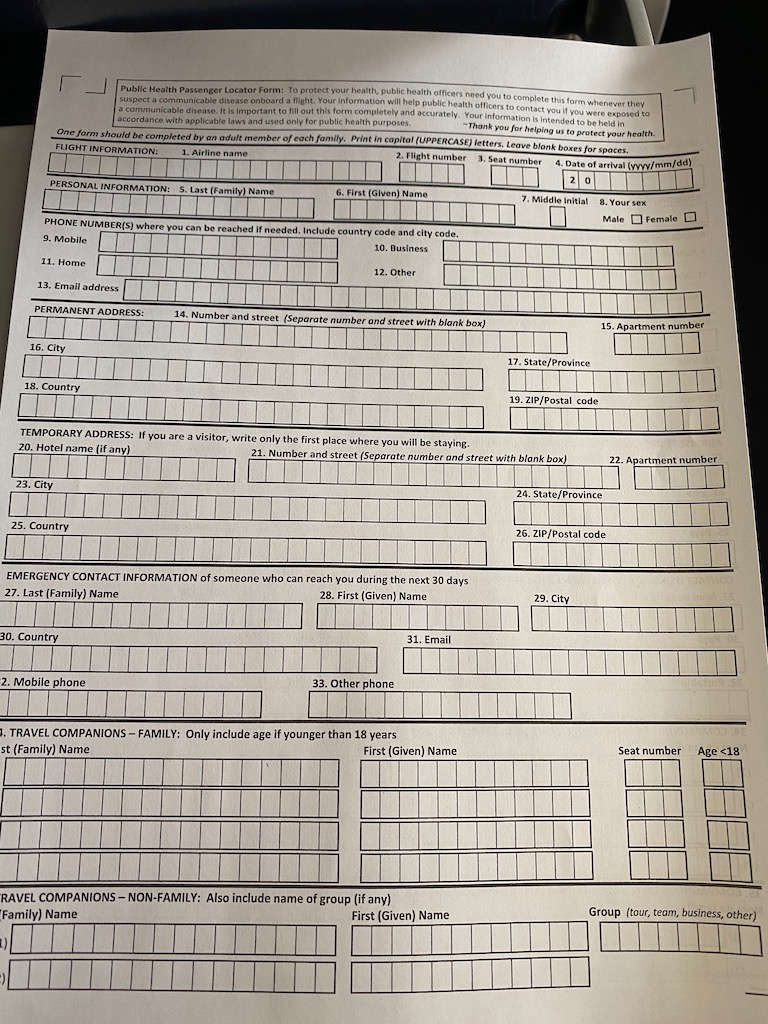
A photo of my form from one of my return flights on Air France
But the only forms they had were in German.
Crowds then gathered at the walls as we looked for translators to help us fill out the form. Some passengers yelled and the police had to escort someone out.
Since I wasn't staying in Germany and had a flight in just a few hours, I did not need to provide a temporary address and wrote 'not staying.' Once I finally made it to the window, they quickly looked at my passport, form, and negative test, and I was on my way to the baggage claim. Even though that went quickly, the entire passport control process took over one hour.
After I picked up my bag and went outside for fresh air before checking in for my next flight, a call from my partner made things worse:
"It looks like there is a ban on movement in Barcelona now. I am not sure what it means for you traveling, but it comes into effect at 6 am on Friday." It was 3 pm in Germany on Thursday. I knew I couldn't do anything until I got to Spain, and there was no turning back from Stuttgart now. I accepted that my 3.5-day trip to Spain might be extended.
I made my way up to departures to check into my Vueling flight to Barcelona with two hours to spare. The woman at the counter said nothing about the new measures, nor did she seem worried.
"Can I see the QR code on your entry form for Spain?"
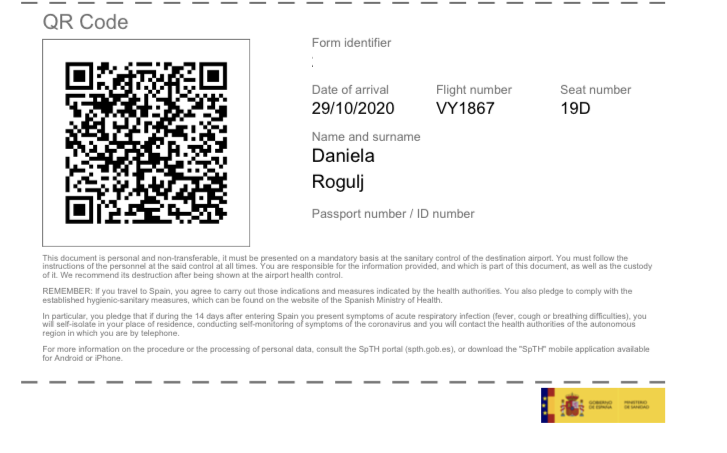
And I was on my way to security.
My Vueling flight to Barcelona was not nearly as full, and a seat between my row buddy and me had me feeling much safer than the Stuttgart fiasco I had just experienced. Two hours later, I was in Barcelona and only needed to scan the QR code at the airport to ensure I was healthy.
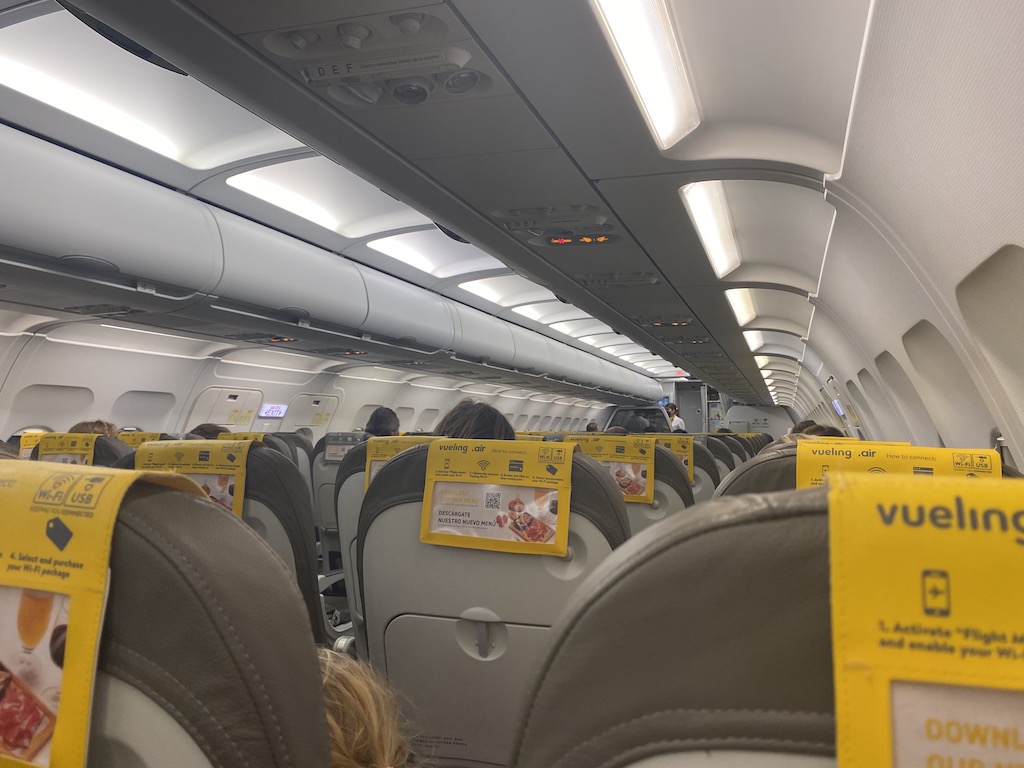
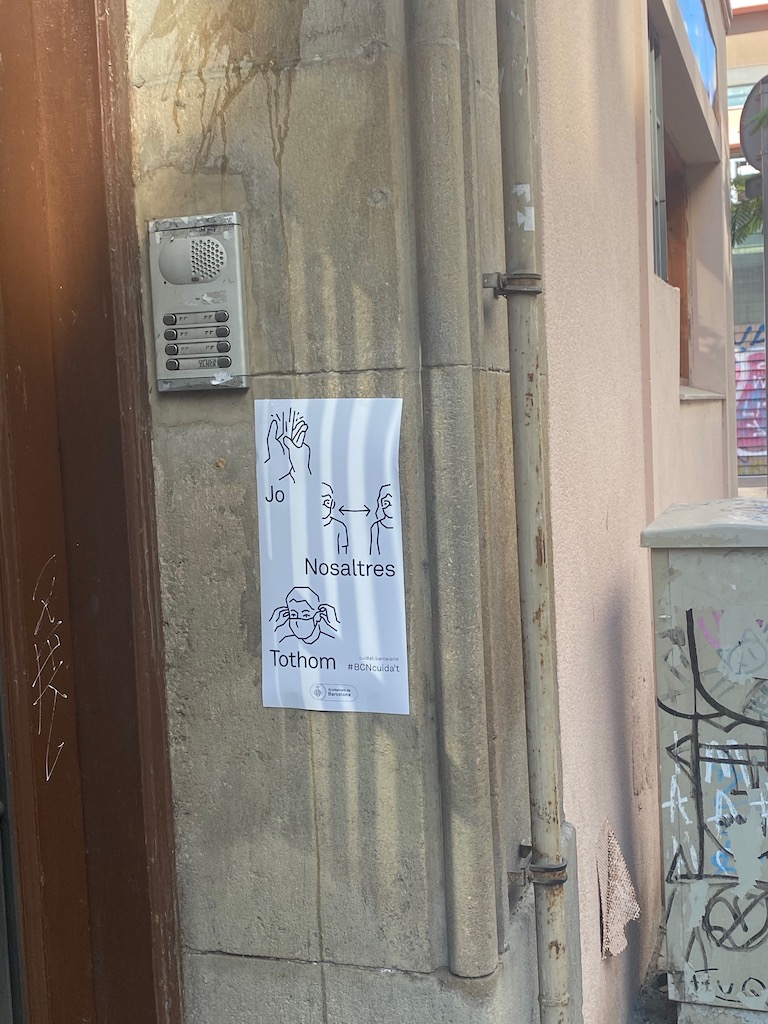
The atmosphere in Barcelona was not nearly as morbid as I anticipated. The COVID-safe hotel we booked took our temperature upon arrival and asked a series of questions about whether we had been infected or had any symptoms. Masks are mandatory inside the hotel and everywhere outside - and everyone in Barcelona followed the rules.
Hand sanitizer is placed at the entry to all shops around the center, which I noticed is used by 99.9% of people entering. While restaurants and bars are closed, delivery and pick up thrive, and the options were endless.
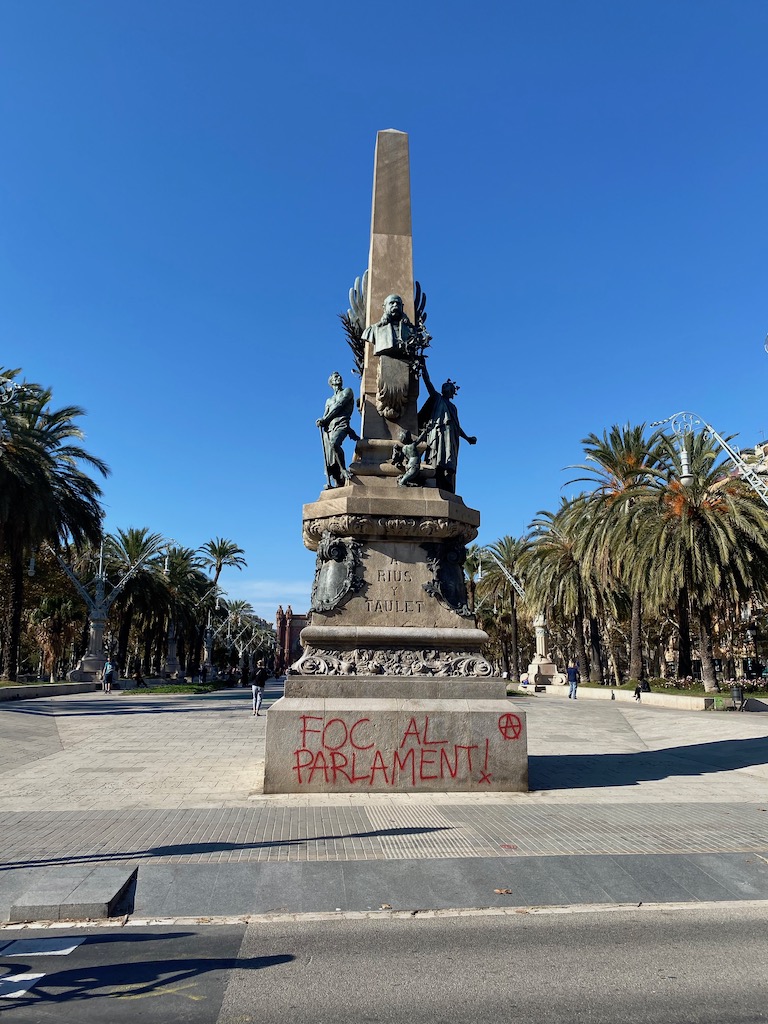
However, not everyone was pleased with the new measures on movement, and on Friday evening, the first day the measures came into force, some protestors were violent.
"Hundreds of people chanting “freedom” and “this is theft” took to the streets of Barcelona on Friday to protest against tough new coronavirus lockdown restrictions. Violent clashes with police lead to at least 12 people being arrested.
Bars and restaurants have been closed in Catalonia since the middle of October. But confronted by the spread of the virus, a 10 pm curfew has now been introduced as well as a ban on people leaving their home towns during all saints weekend," reported EuroNews on Friday.
"The measures imposed by the government of Spain and the Catalonian authorities more specifically don’t have any logic to them,” said one protestor. “They make no sense. What they should do is take more measures for hospitals, provide them with staff and material to help them to overcome this pandemic- not impose measures of social control on us," they added.
Police raced up and down the street of our hotel, where angry protestors burned trash bins 100 meters away. "I don't think your delivery food is going to make it," the hotel receptionist said.
Our food came, in the end, and the disarray lasted a little over an hour.
On Monday morning, my wonderful weekend in Barcelona came to an end, though I did have my hesitations about how I would get to the airport during a curfew that lasted from 10 pm to 6 am (my flight was at 6:20). I ordered a taxi with the hotel reception who assured me there would be no issues. My taxi arrived at 4:30, and I was at the airport 20 minutes later. The streets were empty.
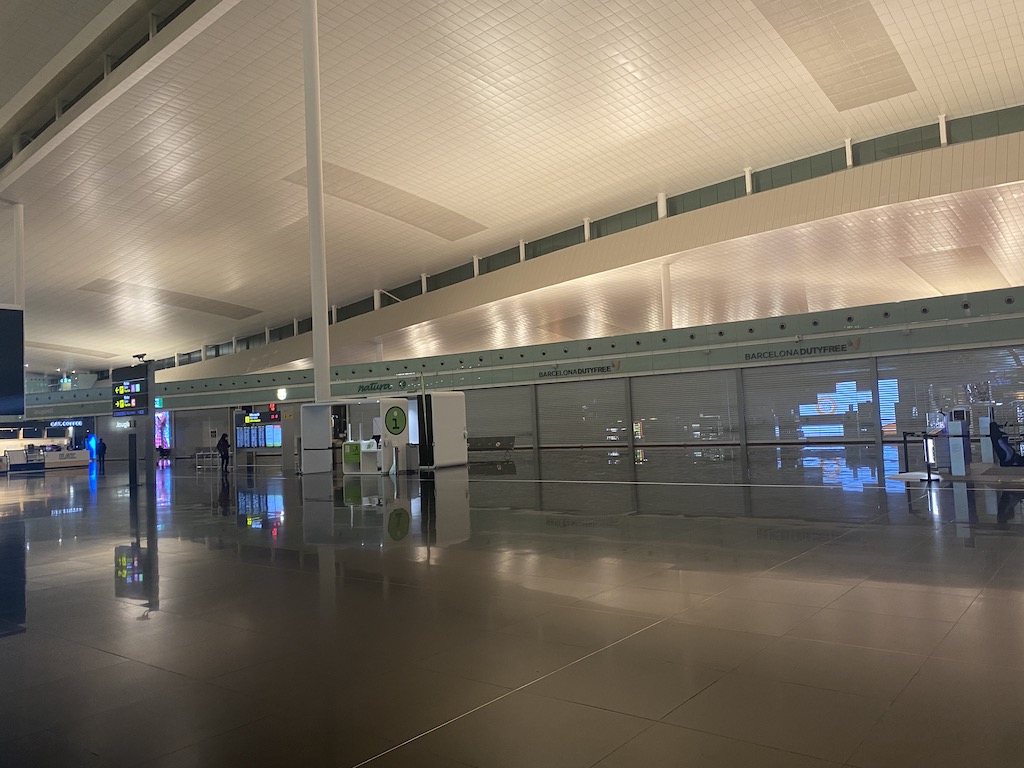
Getting through El Prat Airport was a piece of cake, considering I was traveling with only my carry-on back to Split. The line for checked baggage, however, was long - even at 5 am.
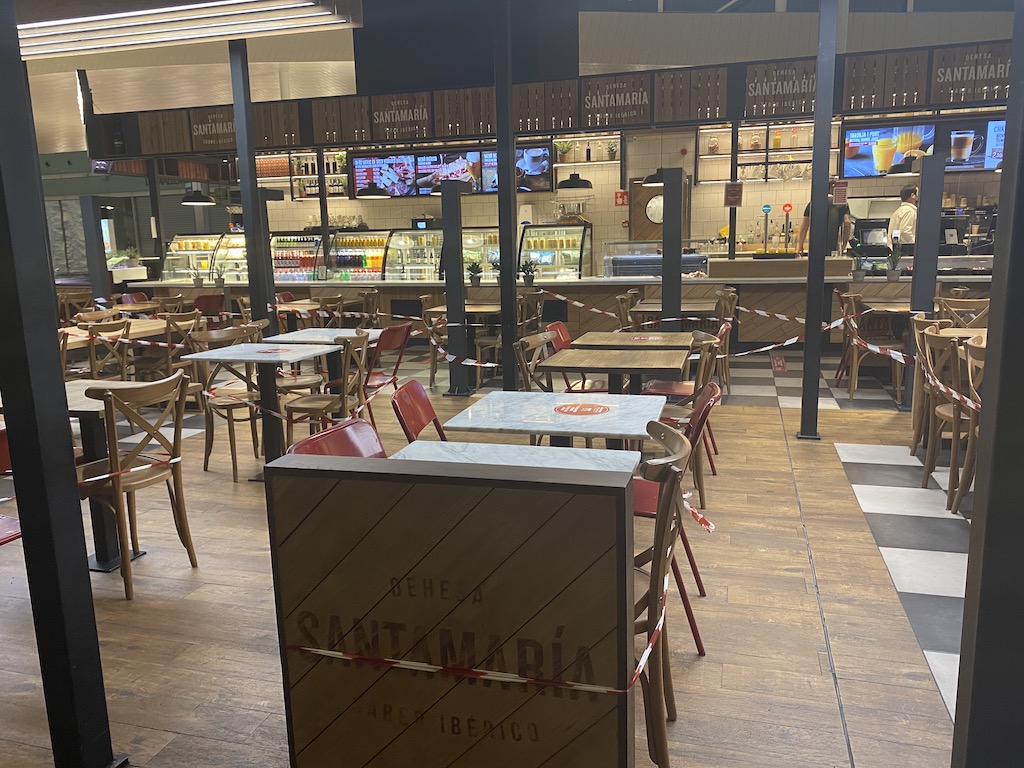
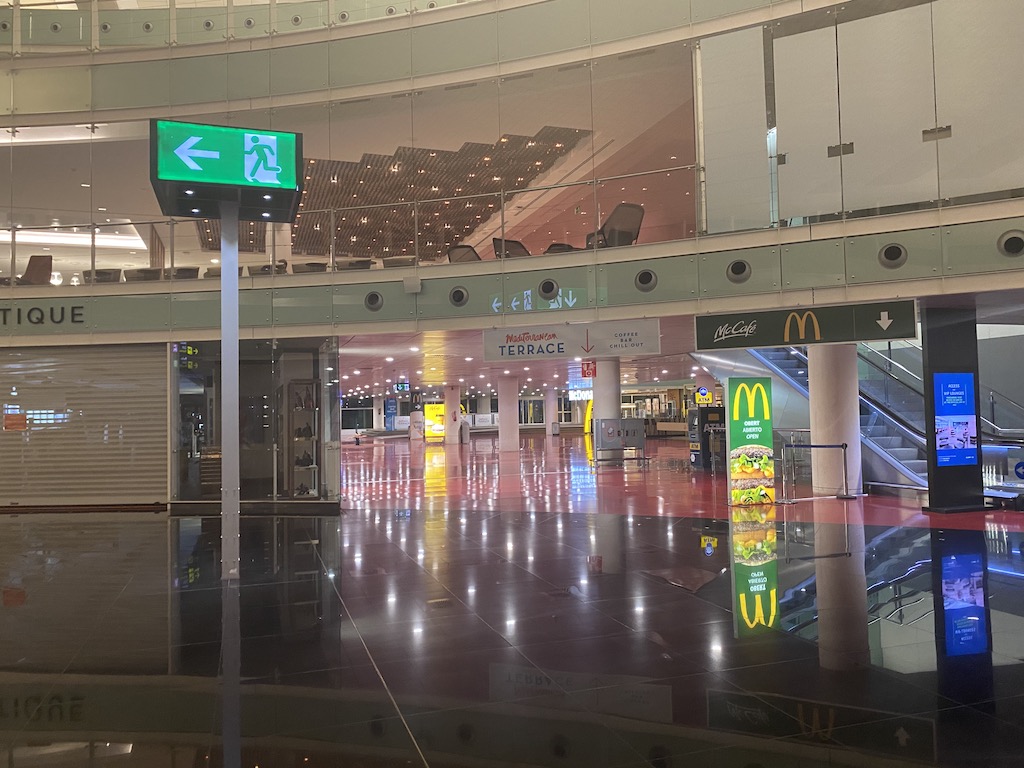
It was a rather eerier morning at the airport as most everything was closed until 6 am - or closed due to the pandemic.
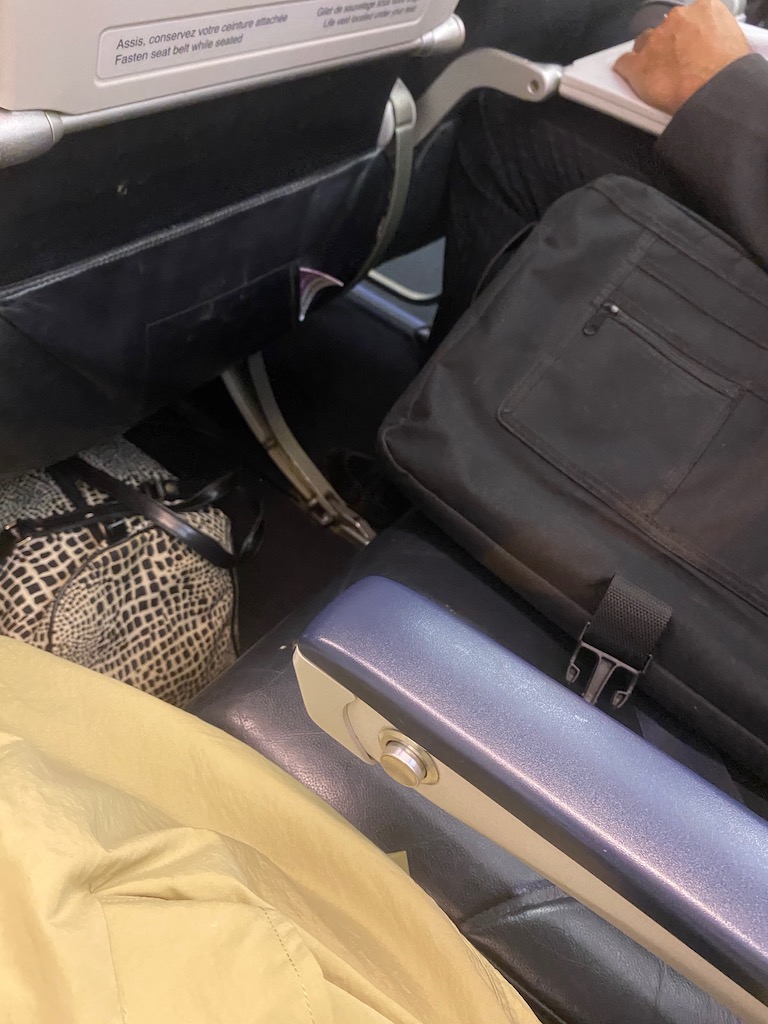
I flew Air France from Barcelona to CDG Paris, which was mostly full. I was one of the lucky ones to have no one in the middle seat.
Arriving in Paris was a dream. Airport employees could be found at every point to make sure crowds never formed and passengers were getting where they needed. On my rather long walk to my connecting flight to Zagreb, I even noticed an Antigen Testing Center.
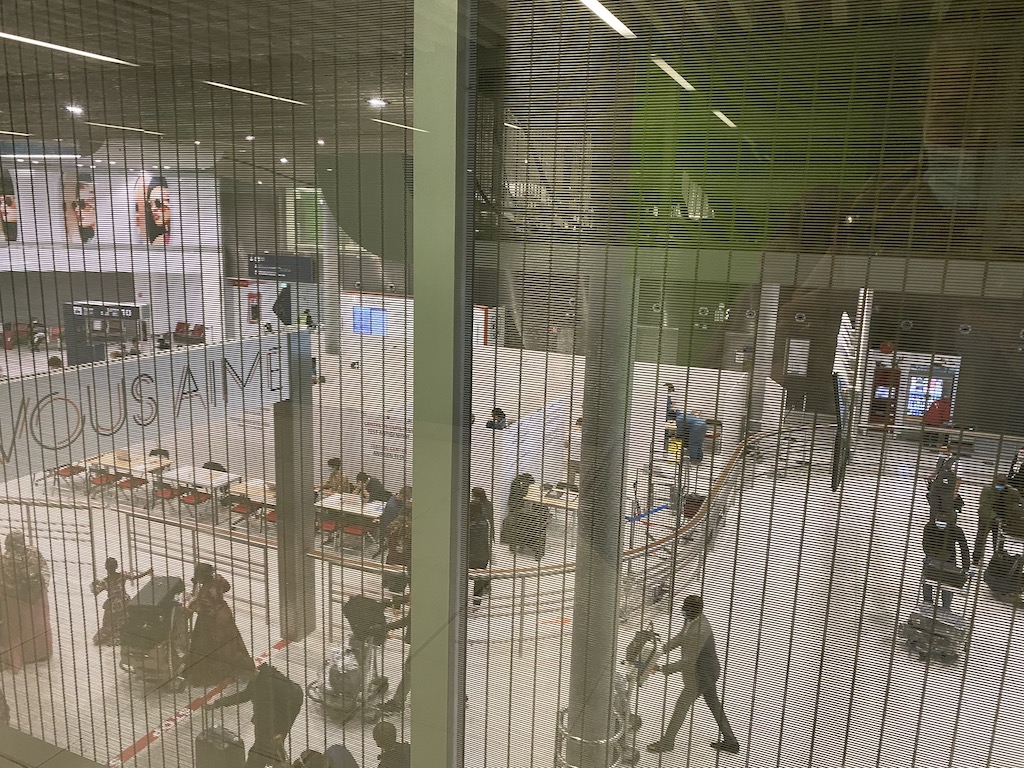
CDG felt awfully familiar, and not so much unlike the travel we are used to. Apart from the travelers in Hazmat suits.
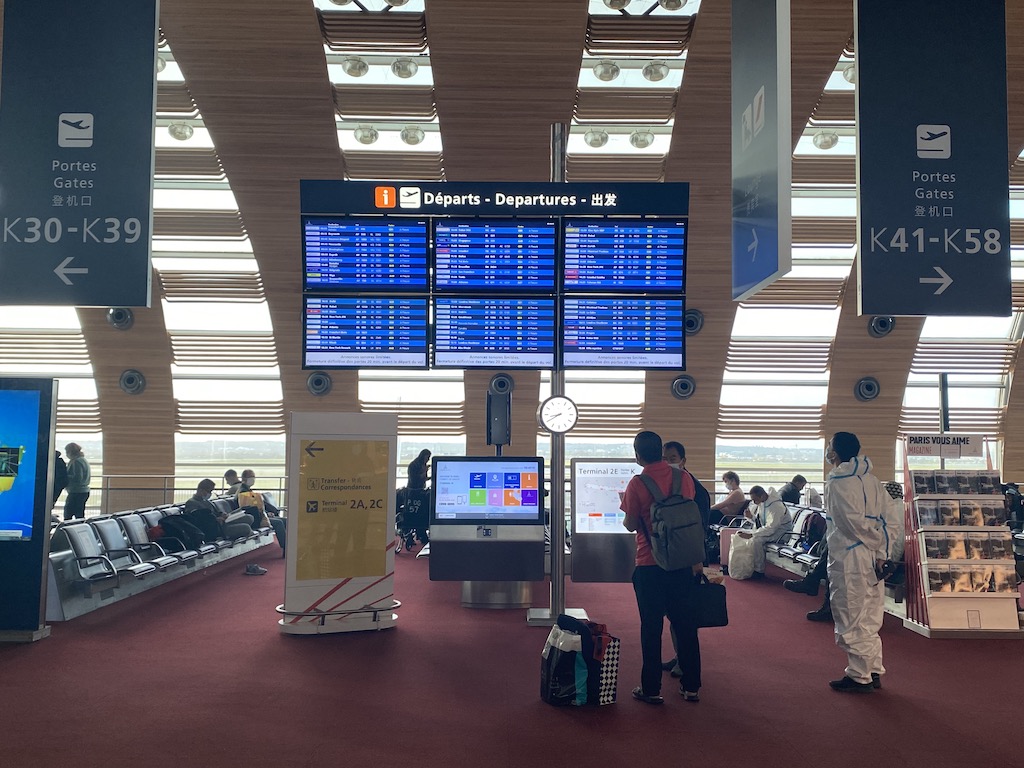
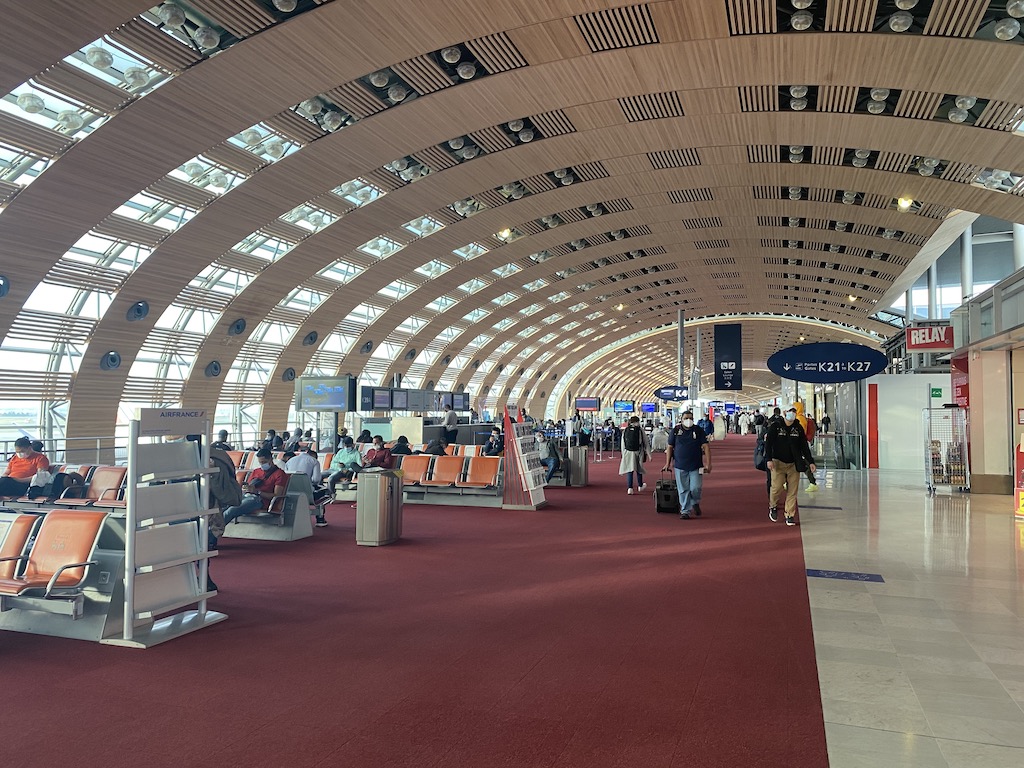
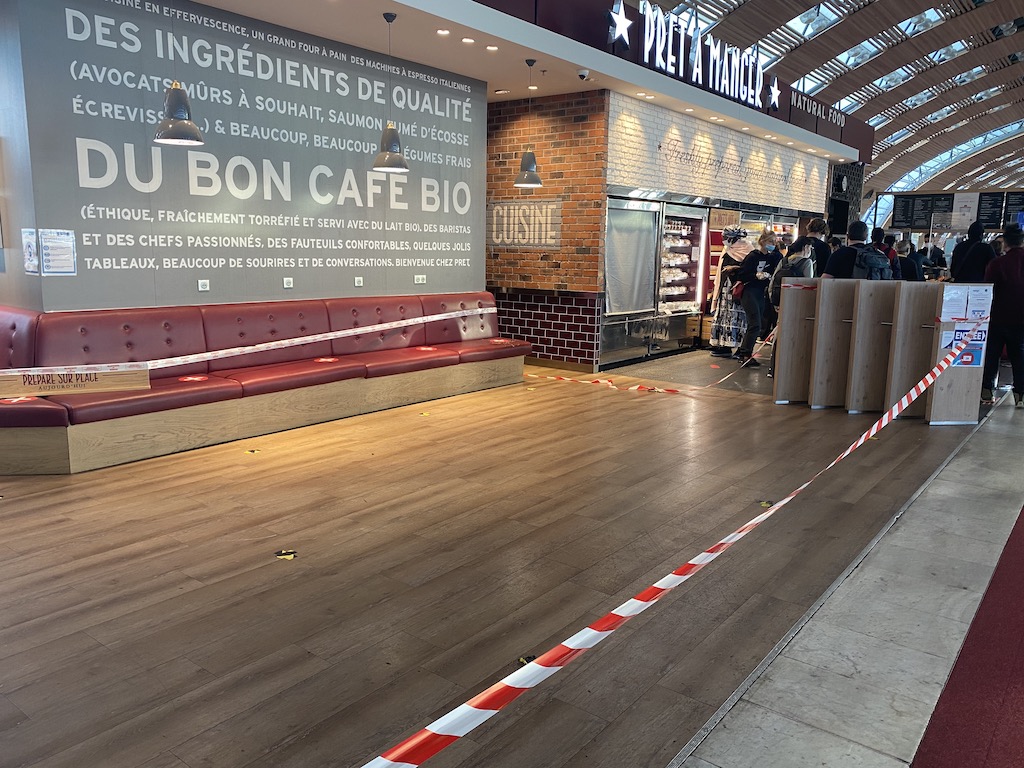
Most shops and food stops were open, though seating areas were closed off.
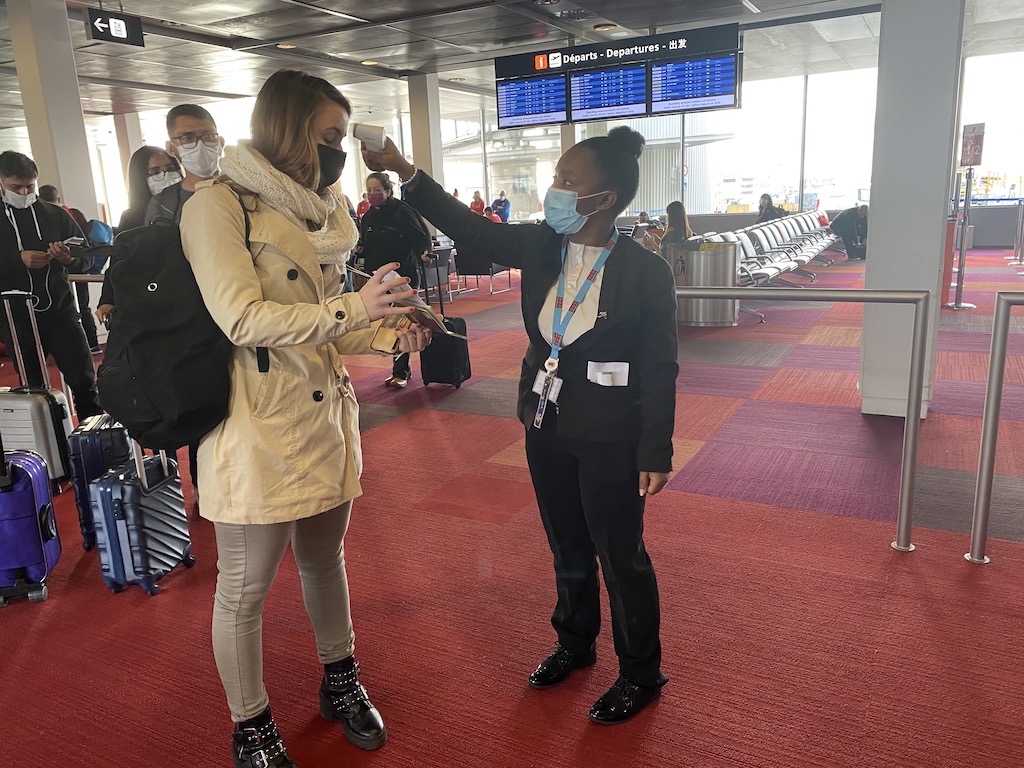
Our temperatures were checked before boarding the Air France flight to Zagreb.
The flight to Zagreb was unexpectedly full and included a Spanish Judo team and young Europeans escaping to the capital for looser measures. I have never been more relieved to get back to Croatia in one piece.
Only one more flight to go before I was back in Split...
Zagreb Airport was covered in signs reminding passengers to wear masks, keep a distance, and wash their hands.
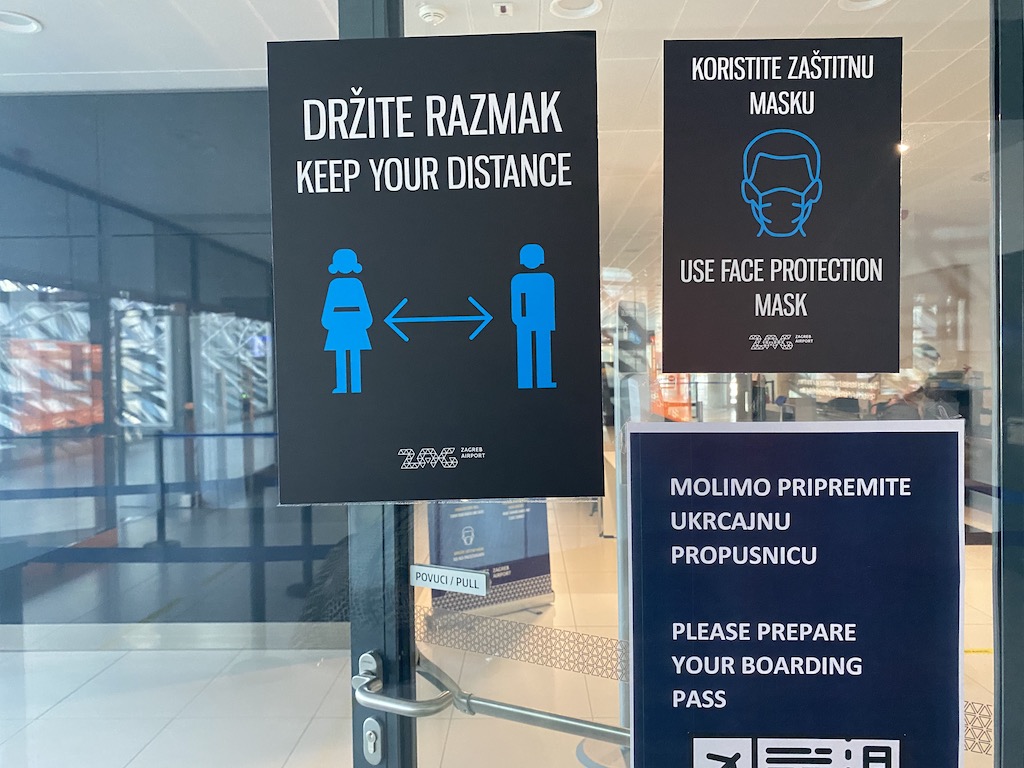
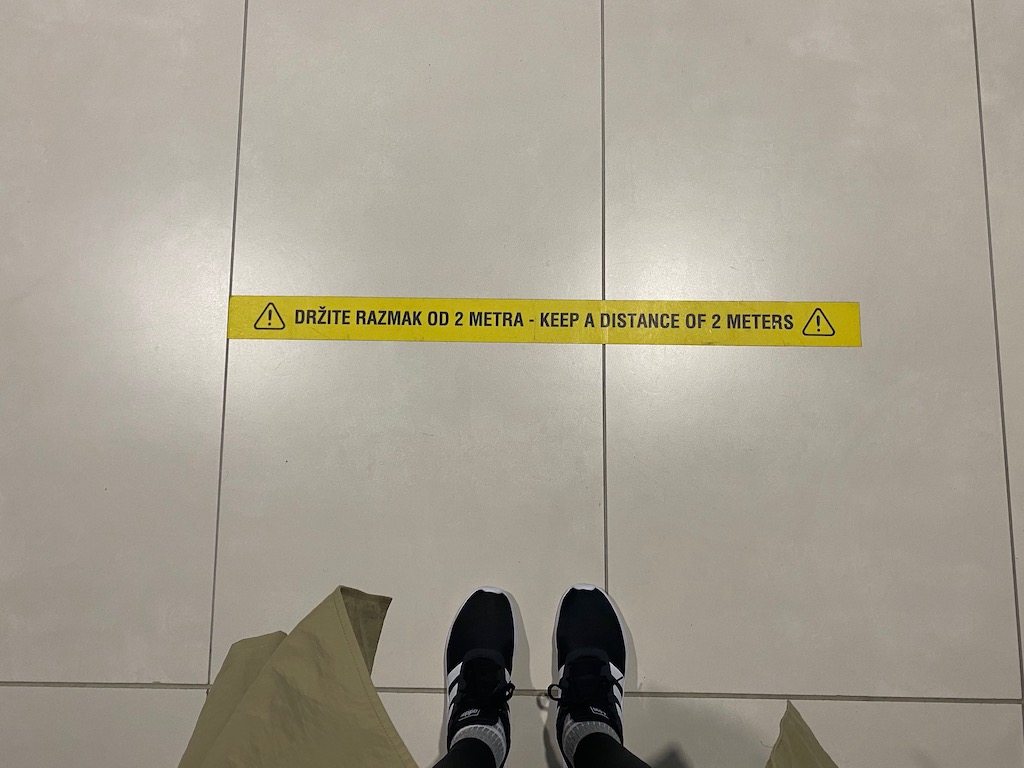
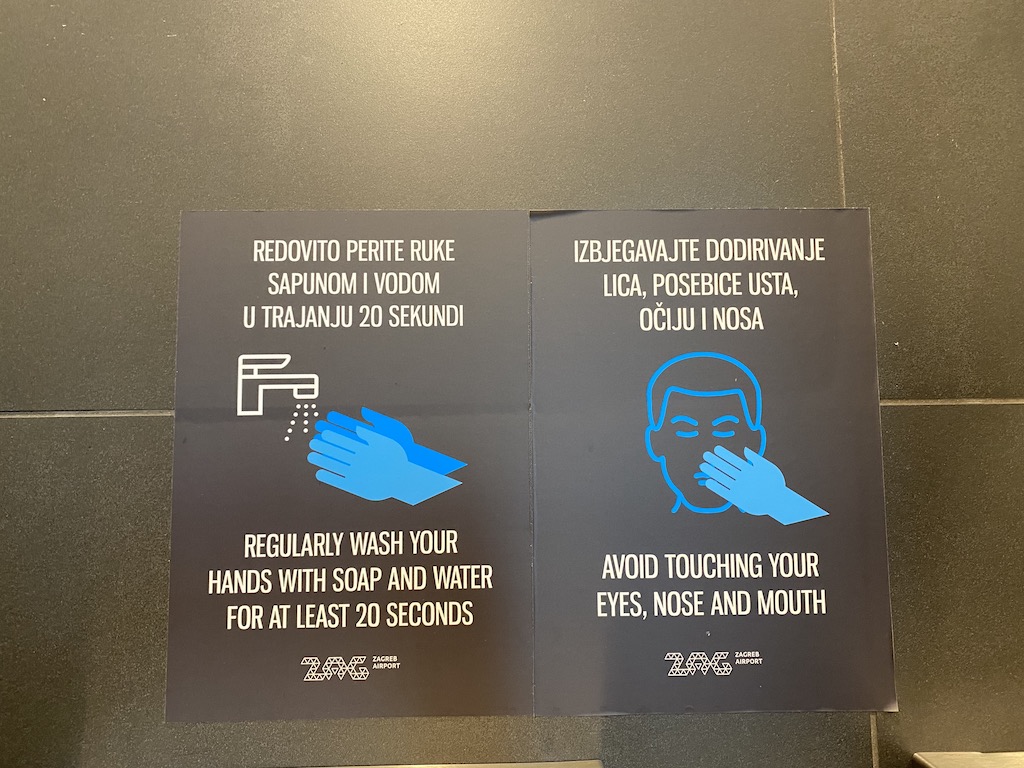
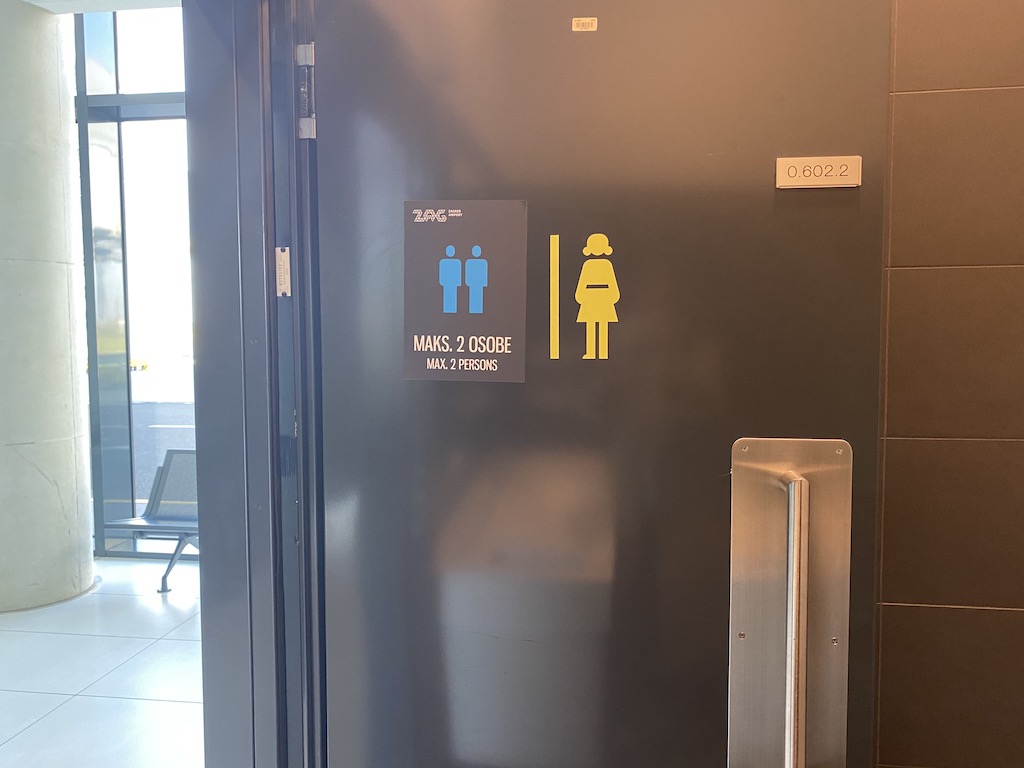
There was even a group of Americans waiting to board my flight!
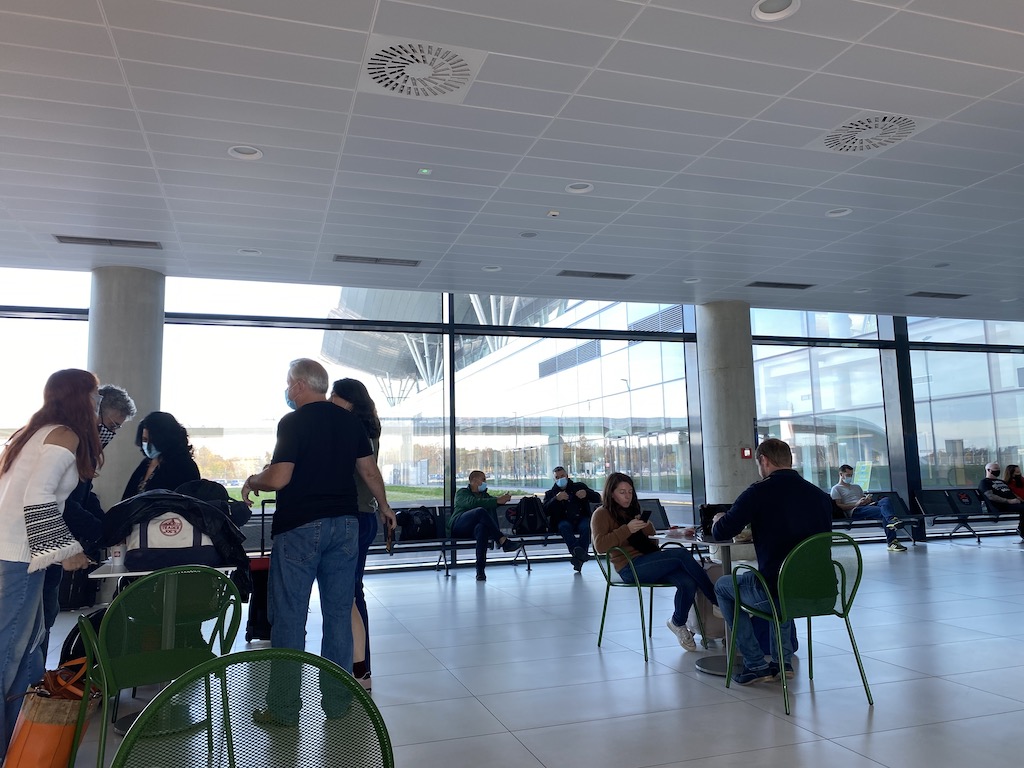
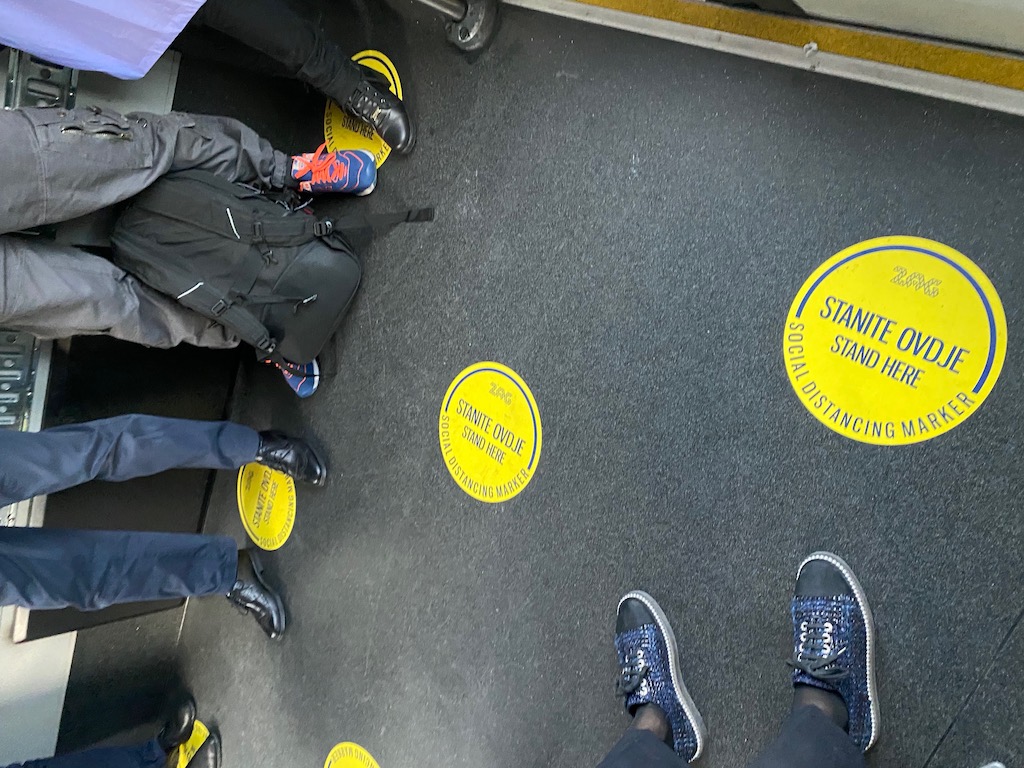
Markers reminding us to social distance were also found on the bus to our plane.
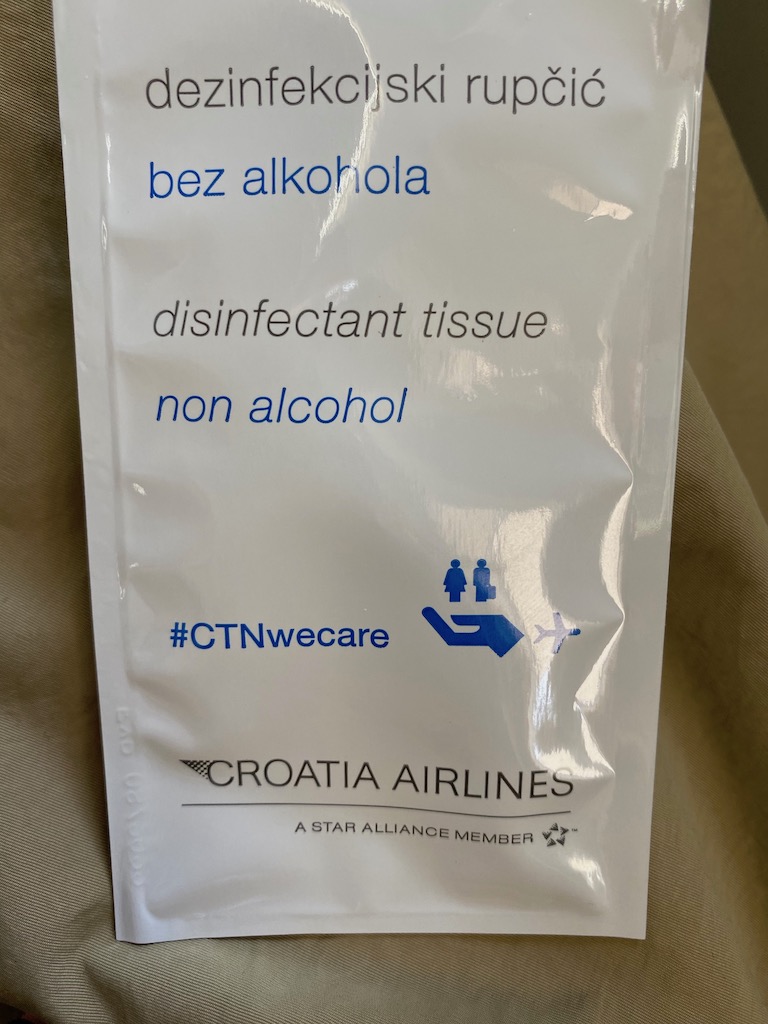
The last leg of my journey, from Zagreb to Split on Croatia Airlines, was also surprisingly full. We were greeted with hand sanitizing wipes as we entered the plane.
After a painless walk through Split Airport, I was on my way home to self-isolate, just to be safe.
Traveling during a pandemic, would you do it?
For the latest travel info, bookmark our main travel info article, which is updated daily.
Read the Croatian Travel Update in your language - now available in 24 languages.
Plenkovic: No Room for Panic while Fighting Coronavirus
ZAGREB, Nov 3, 2020 - Prime Minister Andrej Plenkovic said on Monday that there was no room for panic during the struggle to limit the spread of coronavirus.
In his interview for the national broadcaster HTV, Plenkovic also commented on the criticism levelled by President Zoran Milanovic against his cabinet and its actions to contain the spread of the epidemic.
"There are people who make serious efforts in the struggle against coronavirus and there are those who compare the virus with tooth decay or claim that handshaking is o.k. and that one should not wear a protective mask. Such statements carry messages about undermining the discipline and recommendations made by epidemiological experts," Plenkovic said, alluding to some previous statements made by Milanovic.
"The national COVID-19 crisis management team operates, based on the law, and under the supervision of the government. All that we do is in the interest of the health conditions of our citizens and for the purpose to contain the spread of the epidemic," Plenkovic said.
Asked by the anchorwoman whether after the political one-upmanship between the Office of President Zoran Milanovic and his cabinet, cooperation between him and the president was possible, the premier said that the cooperation was possible to the extent envisaged under the constitutionally defined powers.
"It is is possible as much as necessary," he added.
Plenkovic said that Croatian healthcare system had enough capacity to cope with the pressure imposed by the current situation.
"We can now see that there are indications of a slower growth of (the epidemic) than it was a few weeks ago," he said.
There is no need for panic as the healthcare system is strong enough to endure this pressure and that the actions being taken to handle the epidemic are based on the strategy that is proportional to the dynamic of the infection, he said.
Commenting on the first 100 days of the second term of his cabinet, Plenkovic recalled that the elections had been held in early July, at the most opportune time, and that since the establishment of the current cabinet, they had prepared the 2020 budget revision, a draft budget for 2021 and a new round of tax reform, and they had also made important steps in combating corruption.
Flights to Croatia: Condor Announces Zurich to Split, Tunisair Introduces Zagreb-Monastir Next Summer
November 3, 2020 - The latest news for flights to Croatia as Condor announces Zurich to Split next summer, and Tunisair plans to connect Zagreb and Monastir for the first time since 2014.
Croatian Aviation reports that the German leisure carrier Condor announced one new route to Croatia in next year's summer flight schedule - Zurich to Split.
Namely, Condor is opening its first base outside Germany, and in the summer of 2021, this well-known airline will base two A320 aircraft and launch nine international routes from Zurich.
Palma de Mallorca, Tenerife, Gran Canaria, Olbia, Heraklion, Kos, Rhodes, Larnaca, and Split are new destinations for Condor Airlines from Zurich next summer. This airline is responding to the requests of Swiss tour operators with whom it will cooperate even more actively next summer season.
Condor Airlines will make its first flight on the Zurich - Split route on April 30, 2021, and tickets are already on sale on the airline's official website.
On the Zurich - Split route, Croatia Airlines and Swiss Edelweiss operate in the summer flight schedule, making Condor the third airline on the same route.
From April 30 to May 23, 2021, the line will operate twice a week, every Friday and Sunday. From May 25, the third flight of the week will be introduced every Tuesday, and Condor will operate with three flights a week until October 5, 2021.
Condor will offer as many as 26,280 seats on the Zurich - Split line next summer.
Condor Airlines flight schedule on the route Zurich - Split - Zurich
Tuesday: Zurich 06:40 - 08:20 Split 09:20 - 11:15 Zurich
Thursdays and Sundays: Zurich 16:45 - 18:25 Split 19:25 - 21:20 Zurich
Furthermore, Croatian Aviation reports that Tunisia's national airline Tunisair planned to launch a charter route between Zagreb - Monastir at the end of May this year (once a week, on Wednesdays), which was to operate until the beginning of October.
Zagreb and Monastir were last directly connected back in 2014, and there have been no direct lines between Tunisia and Croatia for a long time.
Due to the impact of COVID-19, Tunisair decided against launching this line in the summer of 2020 but instead has announced its flight schedule for the next summer season in which it plans to launch a charter line between Zagreb and Monastir.
The regular charter line is currently announced from June 2 to September 29, 2021, only slightly shorter than the original plan for this year’s summer flight schedule.
Monastir 18:00 - 21:10 Zagreb 21:55 - Monastir 23:00
In the 2021 summer season, the line will operate once a week, on Wednesdays, with B737-600 aircraft with a capacity of 126 seats in the fleet of this carrier. According to the original plan, A320 aircraft with a higher capacity than the currently announced B737-600 was to operate on the route.
For the latest travel info, bookmark our main travel info article, which is updated daily.
Read the Croatian Travel Update in your language - now available in 24 languages.
Croatia Condemns Terrorist Attack in Vienna
ZAGREB, Nov 3, 2020 - Croatia's Prime Minister Andrej Plenkovic on Monday evening condemned the terrorist attack in Vienna, and expressed solidarity with the Austrian people after multiple shootings in the first district in the Austrian capital.
"Croatia stands by you at these these difficult moments," the Croatian premier wrote on his Twitter account.
Croatia's Foreign and European Affairs Minister Gordan Grlic Radman also condemned the terrorist attacks as an act of violence and hatred.
During the multiple shootings in the centre of Vienna, at least four people, including a perpetrator, were killed, the local police stated.
Austrian Interior Minister Karl Nehammer told the Austrian ORF broadcaster that several gunmen perpetrated attacks at six locations near the Vienna synagogue. Nehammer said later that at least one of the perpetrators was an Islamist terrorist.
The centre was cordoned off, and a police operation was under way.
According to the local authorities, at least 15 people were wounded in the shootings and some of them sustained serious injuries.
The attack was condemned by Germany, France and the European Union. European Council President Charles Michel labelled the shootings as a cowardly attack and said that the EU stood by the Austrians.
Adria Business Network #12 Tackles Tourism in New Age, Challenges and Visions for 2021
November 3, 2020 - Adria Business Network #12, organized by successful entrepreneurs Željka Barišić, owner of Forca Digital Agency, and Kristina Krstinić, owner of MIKRIS Project Management, will be held on November 17, 2020, at 6 pm at the FORUM Zagreb Congress Center, Radnička cesta 50, 1st floor.
In the first part of the event, the guest is Jako Andabak, owner of the largest hotel chain in Central Dalmatia Bluesun Hotels & Resorts, which consists of 11 hotels, 4 resorts, and 1 camp where he combines many years of experience and tourist traditions of Brela, Tucepi, Bol, Supetar and Starigrad Paklenica innovation, with new technology and implementation of international standards.
His professional path has been marked by efficiency, determination, and clarity in making decisions that are always based on knowledge, innovation, and a healthy dose of risk. Simultaneously, in addition to extremely responsible work, he was engaged in scientific work and won awards for numerous innovations.
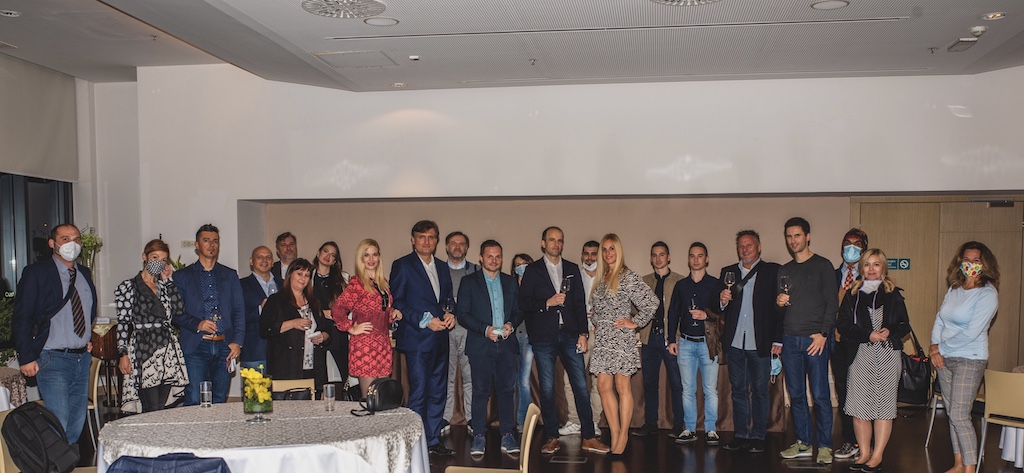
Through his business career, he shows that he is the one who, guided by unmistakable intuition and exceptional life and business experience - creates new standards in entrepreneurship.
The second part of the event is followed by a personal presentation of all those present through a one-minute pitch.
Finally, in an informal gathering with quality sponsor wines, everyone present will have the opportunity to share experiences with other participants.
The number of spots is limited, and you can secure your place on time by registering HERE.
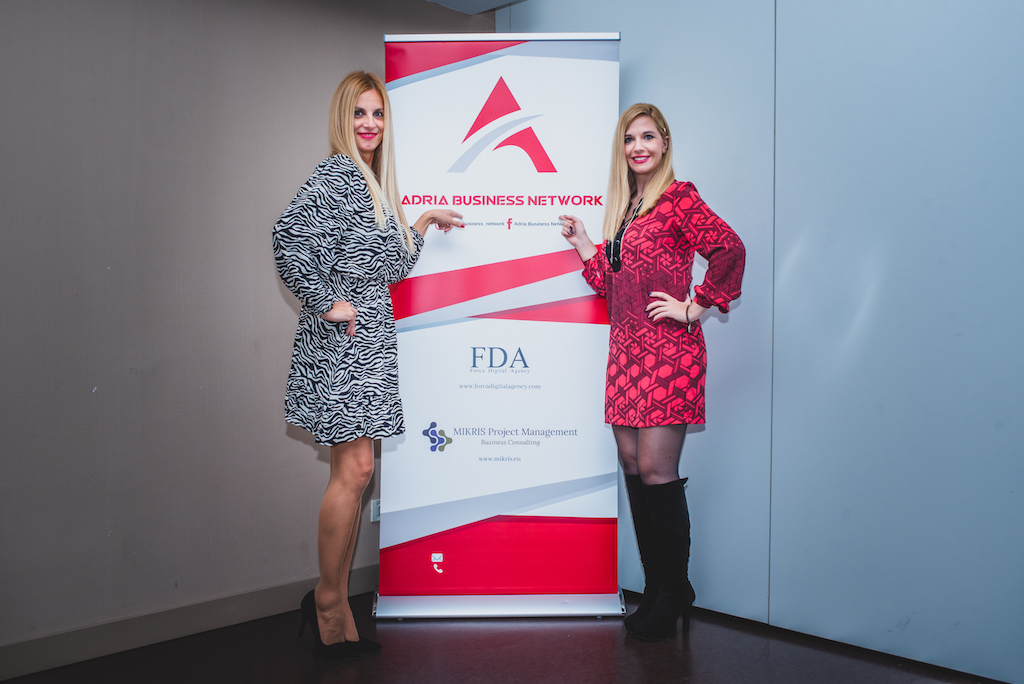
The diamond partner of the event is A1. Silver sponsors are FINA and ManpowerGroup. The event sponsors are the Bagatin Polyclinic, the FORUM Zagreb Congress Center, and Kreativ info.
Partners are Vladimir Abicic Photography, Aero Print, Kupinovo vino - Kupilek and Valenta wines.
The event's media partners are the magazine and portal Poduzetnik, magazine and portal Zaposlena, Netokracija, She.hr, Zagrebonline.hr, Rep.hr, Glas Istre, Flash.hr, Moja Domovina, Total Croatia News, Fama, ZgExpress, and Radio 92 FM.
To read more about business in Croatia, follow TCN's dedicated page.
New President, New Rules: Hajduk Sacks Mario Stanic as President's Advisor, Who's Next?
November 3, 2020 - With Luksa Jakobusic as the new president of the Split club, many changes can be expected, the first of which occurred on Monday as Hajduk sacked advisor Mario Stanic.
Mario Stanic is no longer an advisor to the Hajduk president! After a desperate and disastrous start to this season, the former great player and legendary member of the Croatia national team left Poljud. He arrived at the club 11 months ago as an adviser to former president Marin Brbic, and after Brbic's resignation at the end of July, he did not advise practically anyone. His role overlapped with the role of sports director Ivan Kepcija.
"As of today, Mario Stanic is no longer an advisor for sports policy to the President of the Management Board of HNK Hajduk and will no longer perform any function in the Club.
We wish Mr. Stanic a lot of luck and success in his future career," Hajduk announced on Monday.
One year ago, Hajduk fired coach Damir Buric, and after five years, Igor Tudor returned to the club as a coach. Stanic also brought a new sports director, the young Ivan Kepcija.
Upon their arrival at the club, Stanic and Kepcija promised continuity in the coaching staff and promotion of Croatian players, but Hajduk's poor play is proof that they failed.
Luksa Jakobusic, the 11th consecutive president, took over the club on Friday and announced a sharp turn in operations. After Hajduk's third consecutive defeat, the current team at Hajduk is anything but safe, and Stanic's departure could be sensed immediately after Jakobusic's first address as president.
Namely, at the official presentation, Jakobusic said that he did not need an advisor and thus questioned the future of Mario Stanic at the club.
"Someone allowed Hajduk to be in that position, and because of that, the president does not have to leave. I want Stanic to explain the logic of departures and arrivals of players, especially arrivals, and how they intend to continue. In that context, I would also talk about Kepcija. There is a lot of illogicalities. Either one is not for the coach or the sports director is not the one."
After Stanic's dismissal, the key question is whether Kepcija will remain the club's sports director. Jakobusic will speak to him and make another important decision soon. Hari Vukas led the afternoon training at Poljud on Monday, though many believe it could be his last.
Source: Index.hr
To read more about sport in Croatia, follow TCN's dedicated page.
Interliber Zagreb Canceled, But Will Be Streamed Online
November 2, 2020 – Due to the worsening of the epidemiological situation in Zagreb and all of Croatia, the biggest book fair in Croatia won't be held this year. The organisers announced that Interliber Zagreb is canceled, but publishers and booksellers have responded with an online project.
For the first time in 43 years, the well-known Zagreb book fair, Interliber, will not gather book lovers at the Zagreb Fair (Zagrebački Velesajam). The fair was supposed to be held in accordance with the COVID-19 measures, but organisers announced on Monday, November 2, 2020, that the entire fair was being canceled. So far, the fair has not been in question, and the organisers recently announced that they would still hold it in compliance with all epidemiological measures, which they have planned in detail and published on their website. However, the situation with the coronavirus pandemic has worsened in Zagreb, but also in all of Croatia, which is why they decided, at least for now, to cancel the fair.
"Due to the [worsening of the] epidemiological situation, and following the recommendations of the National Civil Protection Headquarters and the Civil Protection Headquarters of the City of Zagreb, Interliber, the 43rd International Book Fair, which was supposed to take place from 10 to 15 November 2020, is unfortunately postponed. The new date will be set in accordance with the calming of the epidemiological situation, and we ask esteemed exhibitors and citizens for understanding. Let's stay responsible," reads the statement on their Facebook event.
As Hina reports, in an official letter to the publishers, it is pointed out that the new situation will be analysed this week with the representatives of the Association of Publishers and Bookstores at the Croatian Chamber of Commerce (ZNK), and several term options will be jointly considered in order to hold the fair as soon as possible, in accordance with the calming of the epidemiological situation, as well as the health risk for exhibitors and visitors.
Anticipating the possibility of such a situation, and in order to at least partially reduce the loss of income due to the non-maintenance of Interliber, the ZNK has been working for two months on preparations for the "A book for Everyone and Everywhere" project, which, as the ZNK President Slavko Kozina explains, will transfer Interliber's activities to online platforms, bookstores, and HRT3.
"Expecting problems, we were preparing alternatives in parallel that were epidemiologically and economically responsible," Kozina told Hina. He explained that this is a platform called "A book for everyone and everywhere", and includes a common website, where online shopping will be done, and includes popular fair prices in all bookstores throughout the Republic of Croatia (therefore, over 100 bookstores), and the "Premium program" run by Croatian editors, which includes the organisation of a "Promoter with a writer" meeting to present new books.
Everything will be streamed on the ZNK website, that is, on the third program of Croatian Radio Television (HRT3).
"In other words, we will have Interliber dislocated to the online world, to bookstores, and to HRT3," Kozina said.
The entire project is organised by ZNK HGK (Croatian Chamber of Commerce) and in co-organisation with the Ministry of Culture and the City of Zagreb, and the public will be informed about the details of the project at a press conference to be held by the end of this week.
"Publishers and booksellers are communicating with each other and everything will be published soon. We're sorry because we supported this project until the last minute, and we want to transfer at least a little of that 'crowd', where 120,000 people came to Interliber every year, into this story. What's good is that this time people in Metkovićcwill be able to buy books at good prices, hear new things from writers and I think that with this, we'll respond in the best possible way to the non-maintenance of Interliber," said Kozina.
AmCham Gives Its Recommendations for Tax Reform in Croatia
ZAGREB, November 2, 2020 - The American Chamber of Commerce (AmCham) in Croatia on Monday welcomed the four tax reform rounds to date as well as tax changes announced for 2021, presenting its recommendations for tax reforms with a series of tax exemption measures, including more significant income tax cuts.
AmCham appreciates the government's efforts in tax relief for the economy and entrepreneurs doing business in Croatia and welcomes the measures thus far through four rounds of tax reforms as well as those announced which are expected to enter into force at the start of 2021, AmCham Executive Director Andrea Doko Jelusic said.
According to Doko Jelusic, AmCham works on proposals for further tax relief aimed at attracting investments and boosting the competitiveness of Croatian employers in attracting and keeping workers.
AmCham has recently presented "Recommendations for Tax Reform in 2020" which contain a number of measures to improve the functionality of the taxation system, including measures for income tax reliefs and other types of income.
AmCham says that it has new proposals regarding changes to the tax treatment of "remuneration in kind" and option plans.
AmCham for increase in non-taxable part of income
AmCham suggests that the non-taxable income amount should be increased from HRK 4,000 to HRK 4,800 and that the 24% income tax rate should be reduced to 12% while the 36% tax rate should see a more significant reduction. That would lead to greater purchasing power, increased consumption and greater economic activity, AmCham said.
Reducing the 24% income tax rate to 12% would further relieve the tax burden on "middle" income earners, while the reduction of the 36% tax rate would boost investments, attract regional corporate headquarters and increase the share of higher-income professions. The 36% tax rate should significantly be reduced or applied only to gross monthly earnings of more than HRK 75,000, said AmCham.
It also recommends changes to the tax treatment of "remuneration in kind" so that the market value of remuneration in kind be considered as its gross value for the purpose of tax and contribution payment.
AmCham further suggests that the amount of non-taxable bonuses and reward be increased from HRK 5,000 to HRK 12,000.
Non-taxable allowance for work from home
AmCham also took into consideration allowances for workers' health as well as the need to introduce a non-taxable allowance for work from home.
Considering the additional costs that workers have working from home and where it is not possible to necessarily separate certain business costs from household costs such as electricity, central heating and the like, AmCham suggests the introduction of a non-taxable fixed amount to cover these costs.
AmCham notes the example of Slovenia where the non-taxable allowance for work from home is 5% of the wage but no more than 5% of the average wage (which now is more than €90 a month).
AmCham also gives a dozen general recommendations, including on the extension of deadlines for filing income and profit tax returns, stressing that current regulations allowing the transfer of tax losses for the next five years do not stimulate long-term investments, particularly for high technology, and that this period should be extended to 10 years.
HUKA: Increased Traffic and Revenue on Croatian Motorways in 2019
ZAGREB, November 2, 2020 - The total number of vehicles on Croatian motorways in 2019 increased by 4.19% compared to 2018 while motorway toll revenue amounted to HRK 3.15 billion without VAT, which is a rise of 4.89%, the Croatian Association of Motorway Road Toll Concession Holders (HUKA) said on Monday.
The association's national report of the motorways notes that the total motorway network in Croatia at the end of 2019 covered 1,306 kilometres of motorways that were managed by four companies: Hrvatske Autoceste (HAC), Bina-Istra, Autocesta Rijeka-Zagreb (ARZ) and Autocesta Zagreb-Macelj.
The length of the network of motorways did not change in 2019.
Investments for the construction of new motorways in 2019 amounted to HRK 434.56 million while investments in the current sections amounted to HRK 389.91 million, which is a total of HRK 824.47 million. Investments of HRK 716.48 million are planned for the construction of new legs and HRK 661.06 million for already constructed sections.
The total number of vehicles on motorways in 2019 increased by 4.91% compared to 2018 or 86,660,015 vehicles with each of the companies generating an increase in turnover.
HUKA recalled that Croatia operates a closed toll system on its motorways with tolls at exit and entry points.
The report notes that last year a total of 2,697 accidents were recorded on the motorways with 31 fatalities and 459 people sustaining injuries.
The total number of accidents increased by 3.71% compared to 2018 while the number of fatalities decreased by 8.82% and there was a fall of 18.76% in the number of people injured in those traffic accidents.
(€1 = HRK 7.568318)