

MOST and HDZ Differ in Their Approach to Conversion of Swiss Franc Loans
The issue of possible lawsuits by banks against Croatia due to forced conversion of Swiss franc loans into euros could become an obstacle in political negotiations between HDZ and MOST.
Exploring Croatia's Intangible UNESCO Heritage: Klapa
This special way of a capella singing is one of the trademarks of Dalmatia. There is almost no local town without its local “klapa“. The term stands for a singing group of 4 to 10 (usually) male singers who sing local Dalmatian klapa songs. The word “klapa” origins from northern Italian dialect meaning group of friends. It has been in use from the 19th century when first klapa singing groups started to form. The special way of singing which klapa uses was inscribed in the UNESCO intangible heritage list in 2012.
Each klapa singing group has the leading tenor voice, followed by a second tenor and baritone and bass voices. The main characteristics of klapa are multipart singing, a capella homophonic singing, and specific klapa song lyrics.
The singers form a semi-circle and the tenor starts singing and then others follow – the second tenor sings in parallel thirds, the bass and baritone sing their part. Serenade like sotto voice, falsetto singing and high pitched tessitura are also common in klapa singing – everything is adjusted in order to get the best blend of voices. All this makes klapa performances emotional and unique.
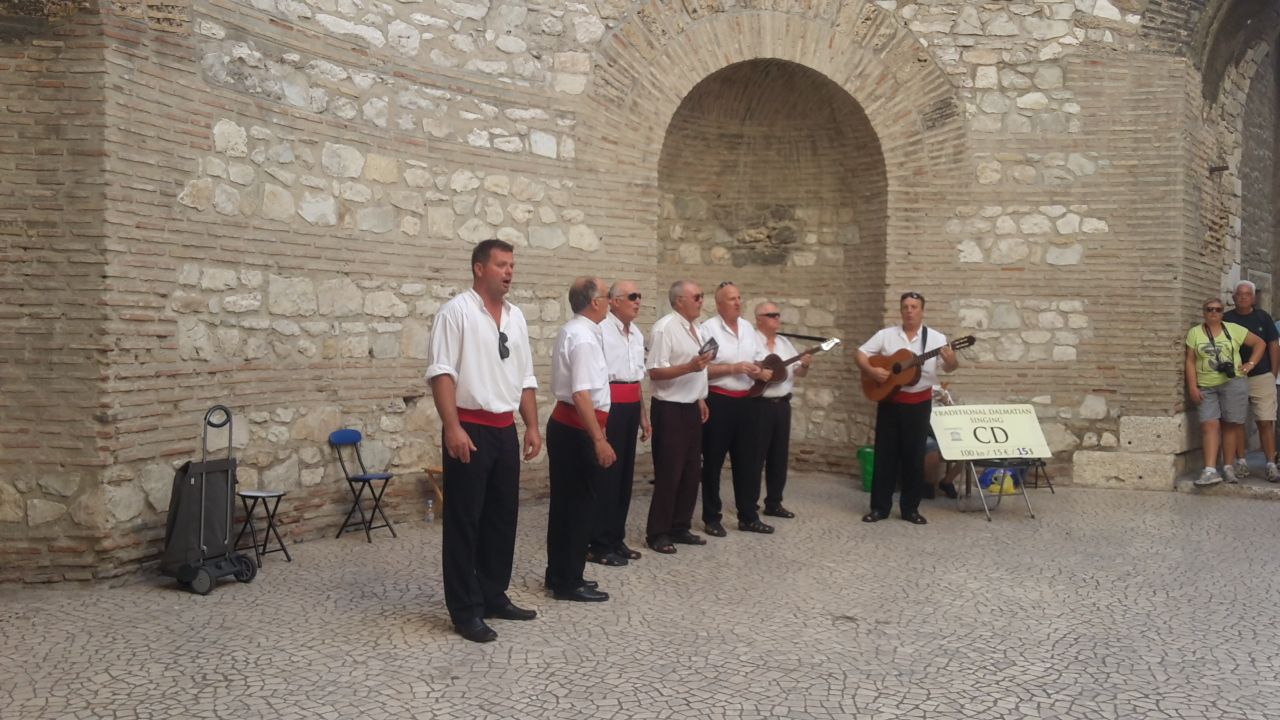
Klapa singing was always in correlation with local group of friends, who would gather in a nearby konoba, play cards, eat grilled fish and drink wine and of course sing local songs in this multipart singing form. At first, this was a spontaneous way for friends to spend time together until today whe it has become one of the most popular aspects of Croatian culture and something worth presenting to the wider public. The songs are in Croatian and main themes are everyday situations, local habits, Dalmatian lifestyle and of course love. Actually love is the most common topic for a klapa song. The lyrics can be understood by locals only, but the beautiful interpretation and way of singing can leave anyone breathless.
Klapa singing is one of the Croatian UNESCO intangible heritages that are quite popular – the klapa groups are part of the mainstream now. You can find live klapa performances in almost every Dalmatian coastal town, especially during summer – usually they will be more amateur singers who gathered that day. “Real” klapa groups will perform on local festivities, festivals, special events and have their own live concerts. As this music form became really popular in last few years, it is not uncommon to have klapa concerts which sell out arenas and stadiums. Some of the well-known klapa groups are Klapa Cambi, Klapa Intrade, Klapa Rišpet, Klapa Šufit, Klapa Iskon and many more.
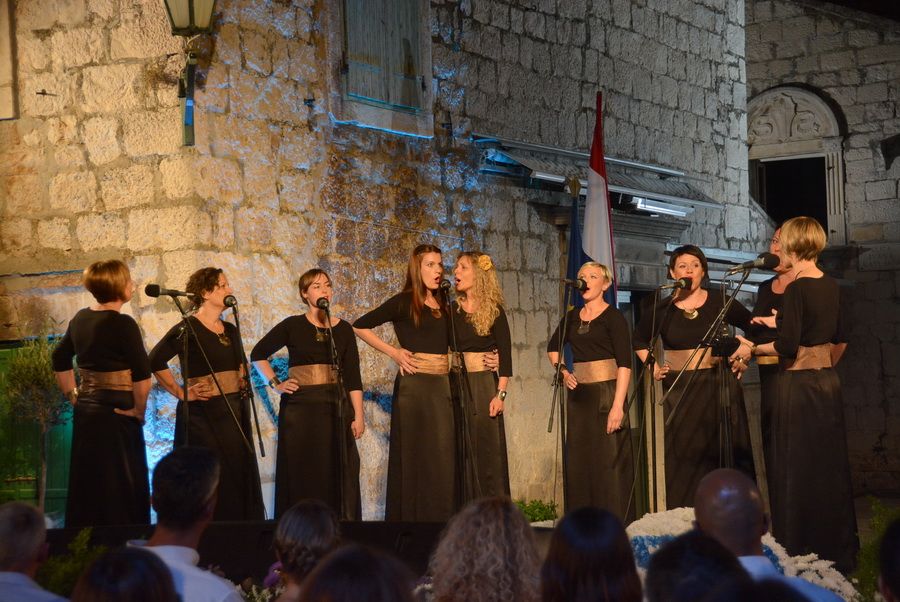
Although klapa is usually all male singer group, female klapa groups became huge in the last few years and they add to diversity of this music genre. In order to adjust to the mainstream music, they often have collaboration with famous Croatian singers and include instruments in their performances. If you want to go to the special event dedicated just to klapa multipart singing, then you should go to Klapa Festival in Omiš. Since 1967., every summer is the perfect time to go there and listen live klapa music, especially this year when it was the 50th anniversary of this festival. Even though klapa songs are often part of popular music in Croatia, especially in Dalmatia, this UNESCO heritage is preserved with the help of cultural organisations too, like ensemble LADO, The National Folk Dance Ensemble of Croatia. The musical director and bandmaster of the ensemble LADO, Dražen Kurilovčanin said klapa multipart singing is a phenomenon related to traditions from urban parts of Dalmatian and the roots can be found in Glagolitic church singing. In collaboration with some of most respected musicians and professionals like Ljubo Stipišić- Delmata, Dinko Fio and Joško Ćaleta, the ensemble has almost all the klapa tunes from Dalmatia and Dalmatian inland. The ensemble has special vocal group who often sing for different festivities.
The authentic a capella, multipart singing is definitely something worth keeping as essential part of Dalmatian culture and klapa songs and music always have a special place in local people lives.
Now listen and enjoy klapa:
Source: Dalmatian klapa festival, Ministry of Culture, Scardona Discography, Lado Ansambl
When Will LNG Terminal Project in Croatia Finally Be Launched?
After many delays, the time has perhaps come for a LNG terminal on the island of Krk to be constructed.
140 Million Kuna 5-Star Campsite for a Small Pag Town
In the municipality of Povljana on the island of Pag, a 140 million kuna strategic investment for a campsite will come to fruition: Autokamp Punta Nova.
The First Istria Gourmet Festival Begins with Top-Notch Lectures, Roundtables and Cooking Shows
Istria Tourist Board, in cooperation with hotel company Maistra, has organized the first Istria Gourmet Festival with an aim to introduce new global trends and design perspective for the future development of Istrian gastronomy. The one-day event will be held on Monday, October 10 in the old tobacco factory on Obala Vladimira Nazora in Rovinj.
Mali Lošinj Certified as One of the Top 100 Sustainable World Destinations
At the conference “Global Green Destination Day” held in Ljubljana from September 27-28, Mali Lošinj received the prestigious certification of 'Top 100 Sustainable Destinations in the World' in 2016 - once again upholding the title of sustainable tourism in Croatia.
A Center for Healthy Life Boosts the Tourist Offer in Zenta
A Road Cycling Grand Prix Takes Off in Dugopolje
In Dugopolje this past Sunday, September 25, yet another sporting event took place: the road cycling race 'Grand Prix Dugopolje' which was first held two years ago.
A Seaplane Rescues an Injured Turtle in Croatia (Photos)
A rather unusual mission for the crew of a European Coastal Airlines seaplane on September 27, 2106.
Parliament to Meet for First Session on 14 October
First round of consultations concludes without a prime minister-designate.