

Production of Paper Straws in Croatia Begins: First in Entire Region
As Poslovni Dnevnik/Sergej Novosel Vuckovic writes on the 22nd of November, 2019, entrepreneur Goran Mačinko has launched the only production of paper straws in Croatia and the region, which from 2021 will have to be used instead of plastic in the European Union. As a partner in Antela, 150,000 euros has now been invested, and the eco straws are already present in some retail chains, and will also be in hotels in Istria.
They look ''real'', and they are ''real'', and the future is already being produced right here with the production of paper straws in Croatia. The 31-year-old entrepreneur decided not to wait in 2021 when EU member states would have to ban the use of disposable plastic products, according to an EU directive which was passed this year, and started the production of paper straws in Croatia.
Straws, along with cutlery, glasses and other similar items, have just been blacklisted as plastic products in the EU, as they have been found to be among the biggest environmental nuisances, since they are mostly used once and then thrown away, creating waste that is difficult to dispose of, causing a growing environmental problem.
Mačinko is a partner and the co-owner of the Antela company registered near Poreč in Istria, which he founded back in 2015 with his Slovenian colleague Bostjan Zemljič, otherwise the founder of a company of the same name, which has been operating in neighbouring Slovenia since 2007. As a processor paper items, it processes about 400 tons per month and then sells 1000 tons.
"In Istria, Antela covers the Croatian market and will in the future open production facilities more closely geared to the needs of tourism. We're engaged in the distribution of our own products from Slovenia as well as distribution of other brands, starting with paper items and all accompanying items (cleaning agents, reusable gloves, and all the little cleaning supplies,'' Mačinko says before describing his business trip, which he recalls, in the winter of 2017, being ''born' again'' with the idea of paper straws.
"We realised that we knew about paper processing technology and that such an investment in manufacturing wouldn't present a barrier to us. After studying the plastic straw market and the decision on the ban within the EU, this further encouraged us, and so we started," Goran says.
But the startup of the plant based in Poreč was preceded by long and extensive preparations, including some trips to China. For some 8 to 12 months, they negotiated with manufacturers and potential suppliers of paper and equipment, toured plants in the Far East, inspected everything they were interested in, got organised and managed to get hold of the machinery and bring it from China.
"All Chinese manufacturers' machines are made of stainless steel to meet the technical requirements of production. If you take the negotiation period into account, the machines have been being procured for more than a year and a half, and today we're working closely with the manufacturer to troubleshoot. We've invested about 150,000 euros in the plant. The entire amount is from our own funds as a recapitalisation of the company by our Slovenian partners and by us. Additional investments required working capital and this was secured from Antela's regular business," Mačinko revealed.
He admits that the establishment of the facility was not without its initial growing pains which are quite characteristic of doing business here in Croatia.
"There were a lot of problems, there were initial hiccups, but we had no problems with the local and state institutions. All the procedures were clearly described,'' Mačinko explains.
Today, according to the information available to them, they are the only operational manufacturer of paper straws in Croatia and the region. They received a lot of positive reactions and media attention.
According to Mačinko, they are now opening the door to contracting new jobs, with company revenues expected to be around two million euros this year alone, and they expect growth with a new product to be 30-35 percent, which will allow for more employment, as currently only five of them are working there.
"The potential has been recognised by two large hotels in Istria and we're in negotiations and the test phase. We're also in talks with a number of retail chains where some have already placed the products on their shelves," Mačinko says.
Make sure to follow our dedicated Made in Croatia page for much more.
Croatia Could Enter ERM II in Second Half of 2020
ZAGREB, November 23, 2019 - If it implements the measures it is obliged to implement, Croatia could enter the European Exchange Rate Mechanism (ERM II) in the second half of 2020, European Commissioner for the Euro and Social Dialogue Valdis Dombrovskis told the conference "Future of the euro area as a currency union - Croatia on the path to the euro" on Friday.
The conference was organised by the Croatian Statehood Foundation, the Hanns Seidel Foundation and the Wilfried Martens Centre for European Studies.
Croatia needs to fulfil 19 measures in six various areas which it undertook to do in a letter of intent for membership of ERM II and the banking union. These measures are related to strengthening the capacity of the national statistics office, improving the business environment, state assets management, strengthening foundations for economic growth, etc.
Dombrovskis addressed the conference via video link and said that the efficient implementation of the measures and obligations was essential and that if it occurred, Croatia could enter the ERM II in the second half of 2020 already.
Dombrovskis added that joining the eurozone was a huge challenge for Croatia but that those efforts would pay off in terms of greater stability, opportunities and prosperity.
Finance Minister Zdravko Marić said that Croatia's two letters of intent were accompanied with an action plan that sets out all the activities and measures. Two areas related to monetary and fiscal policy have already produced results and now focus is being shifted to structural policies, which includes state assets management and further facilitating business.
Evaluation by European institutions and eurozone members will depend on the quality of the results that the measures produce, Marić said, adding that Croatia would have to be in the ERM II for at least two years during which compliance with the Maastricht criteria would be tested. "If Croatia was in the ERM II today it would meet all five Maastricht criteria," he added.
He recalled that the national economy was highly euroised, noting that removing the currency risk was high on the list of benefits of introducing the euro. As for the negative aspects of accession to the euro area, he cited the fear of price hikes among citizens.
The government has mechanisms to deal with that, such as dual pricing for the period of at least six months prior to and after the introduction of the euro, as well as tax policy measures, notably those regarding VAT, said Marić and noted that the experience so far showed that the lowering of the standard VAT rate did not necessarily result in lower prices.
Croatian National Bank Governor (HNB) Boris Vujčić said that the banking union was established with the aim of protecting taxpayers as much as possible from poor bank policies. That also entails supervision of systemically important European banks by the European Central Bank.
Vujčić added that Croatia's accession to the common system of bank supervision was a precondition for entering the ERM II but that he did not consider it a major benefit in itself considering that Croatia has a very stable banking system, which is much better capitalised than the euro area banking system.
More news about the introduction of euro can be found in the Business section.
Teachers' Union Leaders Expect Solution to Be Reached Next Week
ZAGREB, November 23, 2019 - The leader of the secondary school teachers' union, Branimir Mihalinec, said on Friday evening after a meeting with government representatives that "finally a good meeting has been held" and that they were getting closer to a solution.
"Meetings will continue and we expect a solution to be reached next week. It will then be put to a vote by our members," Mihalinec told the press.
He did not specify what the solution included, and when asked if this meant that the protest announced for Monday was cancelled, he said that the protest would be held in Zagreb's main square Trg Bana Jelačića at 12.05 hours on Monday as planned.
The secretary general of the primary school teachers' union, Ana Tuškan, said that the strike was continuing. She added that they were glad that they were finally invited to talks and that they finally talked.
"We hope that we will manage to hold a few more meetings with government representatives," she said. "We are satisfied that we were able to talk. Today is the 30th day of the strike and we have basically talked for the first time."
Asked if the issue of job complexity indices was finally on the table, Tuškan replied in the negative. "There were no offers, we only agreed that we hoped that there would be more meetings and that we would try to solve this problem," Tuškan said.
Prime Minister Andrej Plenković said on Friday, after a meeting between government representatives and representatives of striking teachers' unions, that the meeting was yet another attempt by the government to find a solution, promising that he would do his best so that agreement was reached and an end was put to the ongoing strike.
"We deeply believe that there is no reason for the strike or for any major protest. It makes no sense to go on strike when wages are going up," he said in an interview with Croatian Television.
He would not specify the offer discussed at today's meeting, saying only that there was agreement not to talk about the details for the time being as additional consultations within the unions as well as in the government were necessary.
Asked who was responsible for the current situation, the PM said that some of the responsibility rested also with Science and Education Minister Blaženka Divjak.
"Each minister answers for their own department. I expect this problem to be solved. She has been trying to contribute constructively, she has been making effort and there is no dilemma about that, but certain statements that she made in recent days are not good or acceptable," he noted but would not say if Divjak's replacement had been discussed, saying only that he primarily wanted to run a government that ensured a better life for all citizens.
"I don't like when something that we have invested a lot into is transforming into a political protest. I want to be clear - children have to go to school and young people need to be educated."
Asked if the school year was at risk, Plenković said that he would do his best so that an agreement was reached and an end was put to the strike.
More news about the strike can be found in the Politics section.
FISA World Rowing Organization Declares Sinkovic Brothers Best in World!
November 23, 2019 - The Sinkovic Brothers have added to their collection of accolades with the latest honor received by the FISA World Rowing Organization.
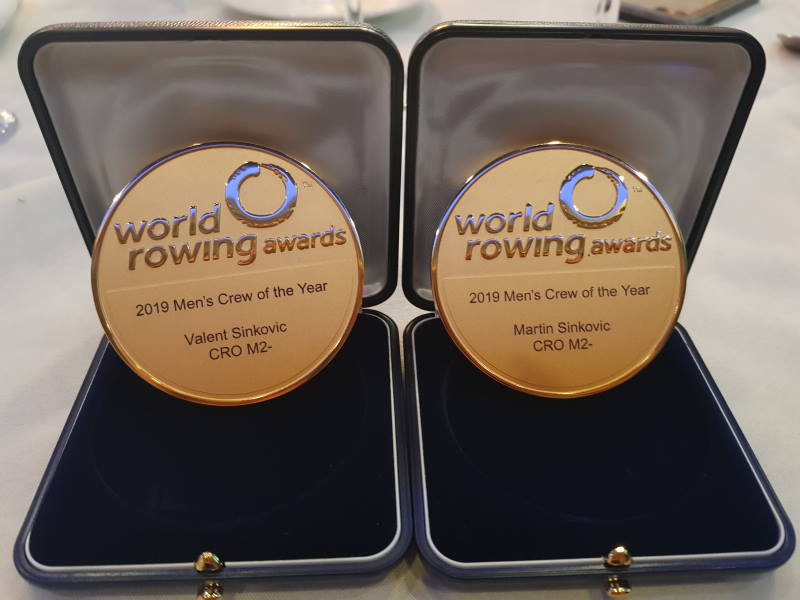
At an awards ceremony in London, the world rowing champions Martin and Valent Sinkovic were selected as the 'Best Male Crew of 2019' in the coxless pairs discipline.
This is another wonderful recognition for the European, world, and Olympic winners, who have proven once again that their work and results are acknowledged worldwide.
"We are delighted with the award because this is a great confirmation of how much we are worth in the world. Perhaps the biggest confirmation is that we have moved into a new discipline and that is where we have been able to defend the world title,” said Valent Sinkovic.
The Sinkovic Brothers' excellence was officially recognized by the World Rowing Federation in 2016 when Martin and Valent were named best male crew, while coach Nikola Bralic was named the best rowing coach in the world in 2015.
“It is a great honor when a World Organization in your sport chooses you to be the best crew in the world in two different disciplines. They recognized our results, that's a big deal and a big motivation for the Olympics. We are now training very hard for Tokyo to try and win the best medal in coxless pairs, thus writing the history of rowing,” said Martin Sinkovic.
Press
FISA awards the 'Best in 2019' in seven categories for best male and female crew, best para-rowing crew, best coach, a special award for contributing to rowing as a sport, an award for the university rower who has demonstrated the core values of rowing in all aspects of life, and the world rowing award for sustainability.
The best rowing crews and coaches were nominated by spectators, rowing enthusiasts, and the media, and the finalists were selected by the FISA Council on the basis of their candidacy. In addition to the Sinkovic Brothers in the Men's Crew of the Year competition, there were also national teams from China, Germany, Ireland, and the Netherlands.
Source: Zagreb Express
To read more about sport in Croatia, follow TCN’s dedicated page.
Karepovac Then and Now: City of Split Releases Photos of Landfill Progress
November 23, 2019 - Split mayor Andro Krstulovic Opara praises the work done on rehabilitating the Karepovac landfill in Split over the last two years.
On November 22, 2017, the rehabilitation of the infamous Karepovac landfill began. In the past two years, the former eyesore of Split has become a rehabilitated and landscaped area. After about one million cubic meters of old waste was moved and transformed in the first year of operation, in the second year, transport, hydro and electrical infrastructure was built, and a landfill cassette of about 70,000 square meters with slopes for one million cubic meters of new waste.
Mayor Andro Krstulovic Opara said of Facebook that he is satisfied with the work done so far.
“It was a time of temptation and challenge, as I announced on the first day of rehabilitation, November 22, 2017. Congratulations to the workers and the whole team involved in this project, especially since they didn't miss even the challenging moments that followed us from the beginning. It wasn't easy, but after more than five decades of carelessness, Split's shameful hill was repaired. Thanks to the citizens for their patience, especially those from Dračevac, Kila, Mejaši, Kamen-Šine, Sirobuja, and the neighboring Solin, as they can now raise their children in a healthy environment,” said the mayor, emphasizing that the fight for health and a clean environment is the first priority of the city government, which they will continue to work on.
“I will only be completely satisfied and proud when we, together with Čistoća, lead the responsible disposal of our waste. We can and must do it better, for the benefit of Split and future generations,” Opara Krstulović concluded.
Recall, the first phase of the Karepovac rehabilitation was completed in May 2018. The second phase of Karepovac’s rehabilitation envisages its greening, and the third and final phase foresees the sanitation of the area where the garbage will be disposed of in the future, and finally the closure of the landfill, assuming that all the waste is driven to Lećevica.
To read more about lifestyle in Croatia, follow TCN’s dedicated page.
What's Open in Dubrovnik this Winter? Tourist Board Announces Restaurant Promotion
November 23, 2019 - The Dubrovnik Tourist Board is working to keep the city alive this winter with new promotional activities for restaurants.
HRTurizam writes that given the increasing number of international and domestic flights during the winter months and the interest and growth in visitors, the Dubrovnik Tourist Board is preparing promotional activities and printing a monthly "Winter restaurants" leaflet this winter, containing a list of open restaurants, pizzerias, and fast food spots during the month of December. The brochure will include special working hours, to ensure that guests staying in Dubrovnik are as informed as possible and that outdoor restaurants are better promoted during the offseason.
During the 2019/2020 winter season, Dubrovnik will be connected to seven international destinations: Croatia Airlines-Frankfurt, British Airways-London, Vueling-Rome and Barcelona, LOT-Warsaw, Aegean Airlines-Athens, and Turkish Airlines-Istanbul.
Aiming for better cooperation with restaurants and better available information, the Dubrovnik Tourist Board has invited all owners of restaurants, pizzerias and fast food to email them by Tuesday, 26 November by 3:00 pm, with their opening dates and opening hours during December, especially on Christmas Day, Christmas, New Year’s Eve and New Year’s Day. They should also include their contact by phone, web, or Facebook page and if they have any special offers available.
This year, the City of Dubrovnik decided to reduce the public area for restaurant tables and chairs by 10% for all facilities that use 25,00 m2 or more. Furthermore, the lease term of public areas has increased to 5 years, which will undoubtedly bring some security to catering businesses.
Also, in an effort to prolong the tourist season, the City of Dubrovnik has proposed a measure that should encourage owners of restaurants in the historic core to work in the winter months.
In accordance with the new amendments to the Decision on the lease of public spaces in Article 6, a new paragraph on the rent exemption for caterers in the Old Town has been added if caterers operate in the winter months.
The measure refers to rent exemption for public areas of caterers predominantly serving meals (restaurants, taverns, pizzerias) in the historic core, if they carry on their business from December 1, 2019, to February 29, 2020.
To read more about travel in Croatia, follow TCN’s dedicated page.
Šibenik Through the Eyes of a Local: 5 Things Most Tourists Miss
November 23, 2019 - Šibenik is one of Dalmatia's most interesting and underrated towns. Now go a little deeper through the eyes of a local with 5 things most tourists miss.
TCN recently began an internship programme with three students from the Faculty of Political Science & Journalism at the University of Zagreb. After an excellent first article from Janja Sestak, next up please give a warm welcome to Ana Samodol who decided that she wanted to write something about her native town for her first article. I sent Ana a link to my article, Sibenik: 25 Things to Know about UNESCO's Fortress City and suggested she come up with an article on 5 things that most tourists miss that were not included in my list.
And then Ana produced THIS! I for one did not know 90% of the article below - a great start, congratulations.
(Photo credit Romulic & Stojcic)
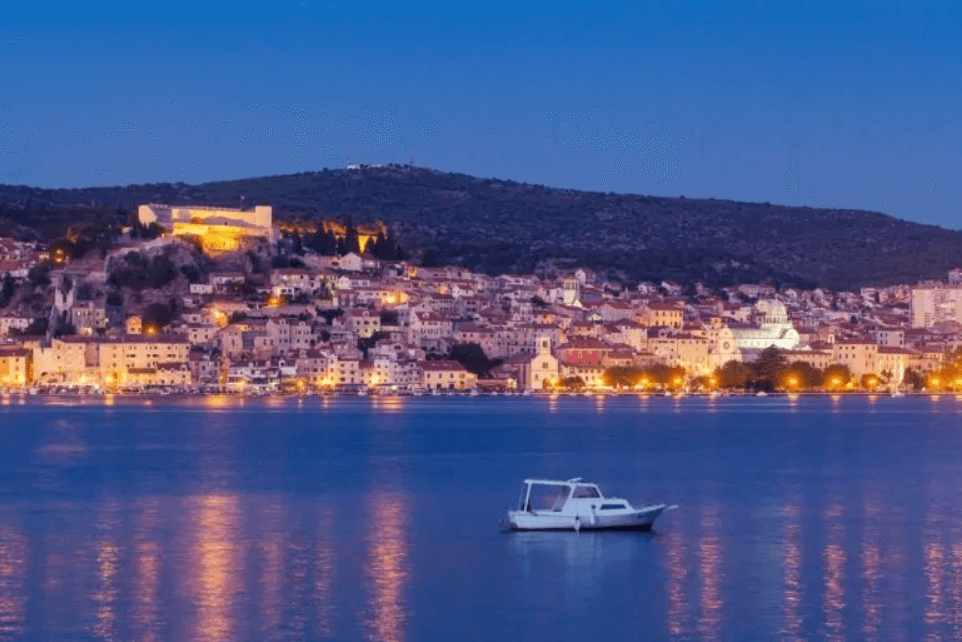
Šibenik through the eyes of a local - so what are the things that most tourists miss once you have been to the famous cathedral and fortresses?
Šibenik has a lot of historical cultures and myths, but many famous people also come from Šibenik. I am sure that you have heard of Dražen Petrović, the legend of Croatian basketball, often called sport's Mozart. But did you know that the Phoenix Suns' basketball player, Dario Šarić is also from Šibenik? And that he and Dražen lived in the same neighborhood and played in the same sports hall.
In addition to its sports stars, Šibenk is also birthplace to some actors and directors, such as Goran Višnjić, whom you may remember from the iconic TV show ER. Director duo Ivo and Vinko Brešan, father and son, are also from Šibenik. Films such as Kako je počeo rat na mom otoku (How The War Began On My Island) and Svećenikova djeca (Priest's Children) are even filmed in the Šibenik area.
And now that we have mentioned a few famous sons, let's explore the city away from the tourist crowds.
Four Wells (Četiri bunara)
No tourist visits Šibenik without visiting its most beautiful attraction, the UNESCO World Heritage Site of the Cathedral of St. James. Now walk approximately 20 meters more and visit the Four Wells. Here's the story behind the Four Wells.
A few meters from the Cathedral of St. James you can find a plateau where people took water from wells years ago. Local people built it because of periods of drought and military siege. The construction was supervised by Juraj Dalmatinac, who is famous for building the Cathedral of St. James. After some years people forgot where they got water from in the past, so it was abandoned and forgotten. But years later townspeople who love history and architecture decided to reconstruct all four wells, renovate the floor and give it its former appearance. If you are the fan of older music, like 60s and 70s, Azimut is a great place for you to go out. And guess where is it located? Under these four wells!
During the summer there is live music outside on beautiful summer nights. Check out their Facebook page.
Walking Trail in St. Anthony's Channel (Šetnica u kanalu sv. Ante)
(Photo credit Sibenik Tourist Board)
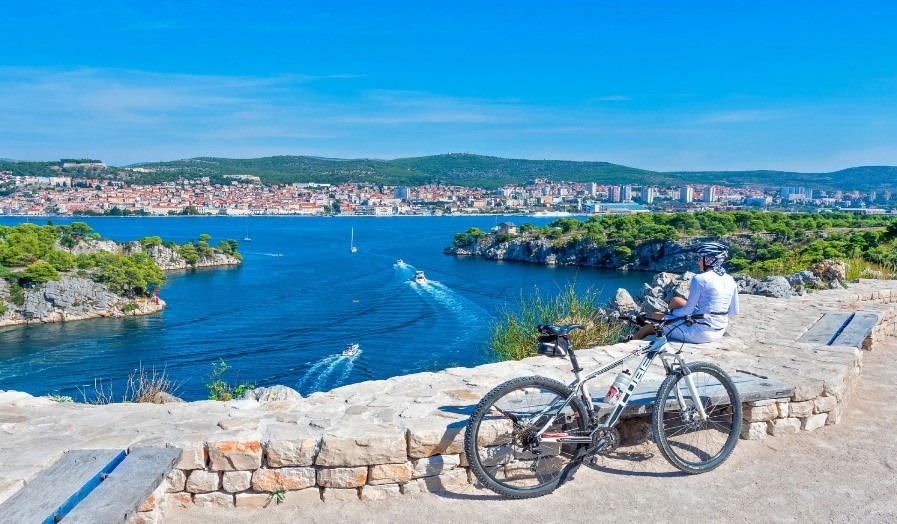
The Fortress of St. Nicholas is Šibenik's second UNESCO World Heritage Site, but you can also walk and ride a bike on a walking trail in St. Anthony's Channel. In addition to cycling, you can also take family walks, jog and sightsee. On that trail there is a beautiful panoramic view to Šibenik, the Šibenik archipelago and St. Nicholas Fortress.
In that area, you can also discover Hitler's Eyes (Hitlerove oči), where you can see the beauty of the sea and take a walk in the tunnel. Hitler's Eyes is the name of a bunker which the Nazis started to construct. It was built to accommodate the Schnellboot, but was never in fact used. By the end of World War II, they had only dug the rock, which later the JNA (former Yugoslavian Army) took, reconstructed it and used it for the same purpose.
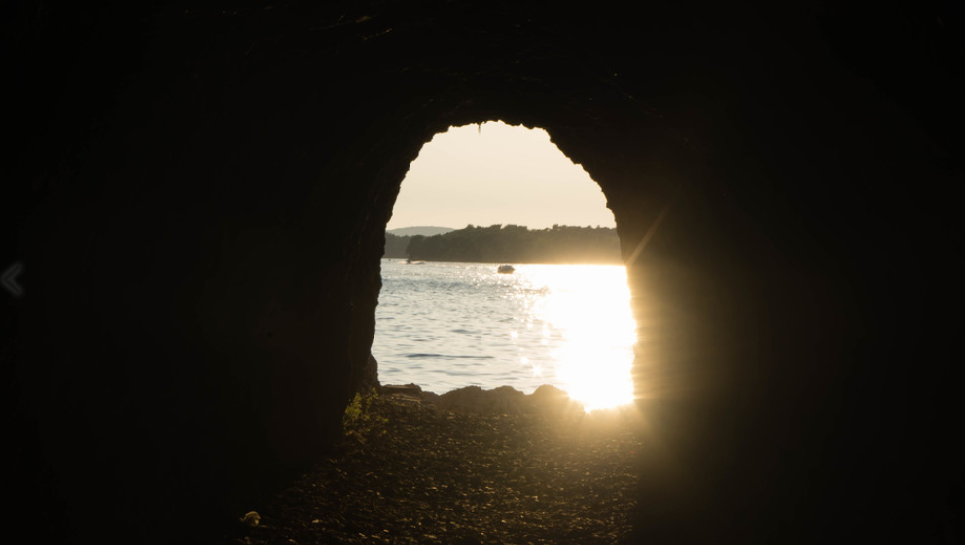
(Photo credit Sibenik Tourist Board)
While there visit the old JNA barracks, where the Kako je počeo rat na mom otoku? was shot. Anyway, walking around the area of Hitler's Eyes and walking trail, the abandoned building used to be the JNA's barracks. The windows are secured with metal railings and metal webbing. These days, the warehouses are 'decorated' with graffiti. This place is ideal for film locations, so that's why Vinko and Ivo Brešan used that location to film their famous film. It is available to you for free.
Roberto de Visiani's Park (Đardin)
(Photo credit Sibenik Tourist Board)
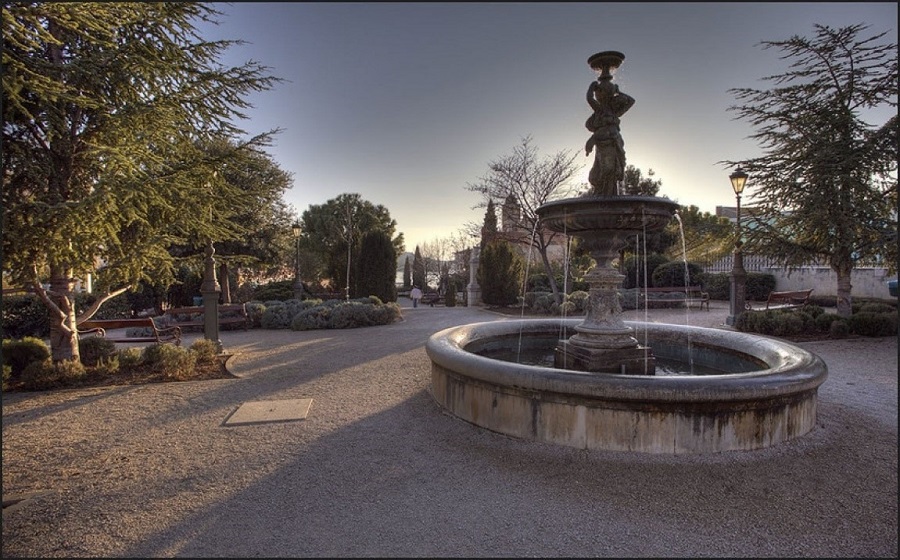
Walking around the centre of town, don't miss Roberto de Visiani's Park, which locals call Đardin (from the Italian: giardino, means: garden). That park is one of the most beautiful Dalmatian parks, where culture and landscape combine. Here you can enjoy the richness and diversity of Mediterranean flora created by a man who celebrated Šibenik in the past whose name is Roberto de Visiani. He was a renowned explorer of our flora and a reformer of the oldest botanical garden in Europe, which is located in Padua. The park is located in the centre of town, between Poljana and the Šibenik waterfront. It was renovated in 1995 when the park space was mostly occupied by Mediterranean plants.
The park has three fountains and they have beautiful sculptures. During the summer it is relaxing to sit there on the benches and enjoy the summer breeze. But Đardin is also lively during the winter, especially during the Advent season. Then Đardin is decorated with Christmas decorations and also has Christmas carols. The town also organizes concerts and often has a DJ. If you want to set free your own childlike spirit or you have children of your own and you want to surprise them, nearby you have an ice rink.
St. Ana Cemetery (Groblje svete Ane)
St Michael's Fortress is one of Croatia's most spectacular buildings and even hosts concerts for the likes of Bryan Ferry, but the cemetery that is close to the fortress is often overlooked? A cemetery of myths and legends. The story takes place at the time of the Inquisition, when many believed in vampires and witches. They heard a rumour that a man who previously died wass actually a vampire, and that he woke during the night and killed the townspeople of Šibenik. Locals went crazy and they opened his grave. When they opened his grave they unleashed the plague. The man had died of the plague, and by opening that grave, they awoke the plague in Šibenik. That's the legend how the plague was brought in Šibenik.
Šibenik bridge (Šibenski most)
(Photo credit Romulic & Stojcic)
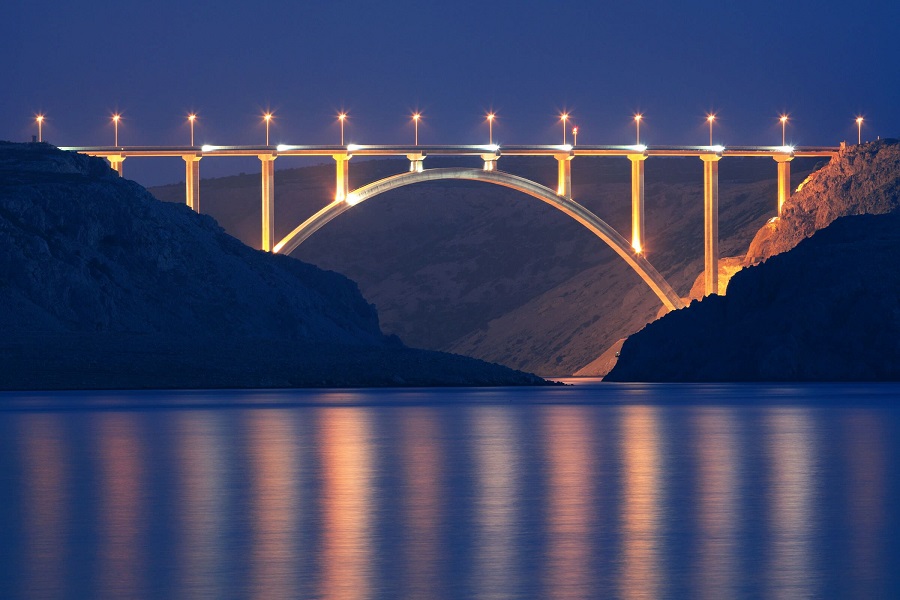
Šibenik bridge is one of the famous sights and destinations of Šibenik. It connects Šibenik with surrounding places such as Jadrija, Srima, Vodice, etc. The bridge is the most famous symbol of Middle Dalmatia, some 40 metres above the sea. The bridge also gives you an opportunity to do bungee jumping, if you are adventurous and brave enough. It is very safe, but you have to have a lot of nerves and courage to do it. Before you go jumping, you go through the brief instruction of jumping, where they check equipment, height and weight. This is necessary because of the length of the rope that is used for you to jump.
If you are less adventurous, there are other ways to feel the beauty of Šibenik bridge. If you are with your car, park it there and enjoy the panoramic view of Šibenik's monuments. Also on the other side you can explore the panoramic view of a small place called Zaton. On the bridge, you can take pictures and enjoy the beauty of Šibenik and the Adriatic sea. There is even a hotel where you can stay by the bridge called - yes, you guessed it - Hotel Panorama.
Take in a little more of the magic of this wonderful fortress city in the video below, and learn more in the Total Croatia Sibenik in a Page guide.
International Firefighting Exercise Held at Sea Near Pula
ZAGREB, November 22, 2019 - A closing firefighting and anti-pollution exercise was held at sea off the northern Adriatic city of Pula on Friday, with 27 firemen - nine each from Istria, the Slovene port town of Koper and the Italian region of Friuli Venezia Giulia - participating.
Minister of the Interior Davor Božinović attended the exercise, which was conducted after a two-year training of a joint unit, the first such unit in Europe, consisting of firefighters from three countries and formed to protect the common sea as part of the EU project "North Adriatic Maritime Incident Response Group - NAMIRG".
"All modern security challenges are of a cross-border nature, which means that they require a cross-border response. To be successful in that, we must exercise and today's exercise is a result of two years of effort invested by firemen and members of the Croatian Army, police, the Croatian Red Cross and their partners from Slovenia and Italy," said Božinović.
He said that with the exercise Croatia had earned a certificate for putting out fires at sea.
"In recent years we have had serious accidents at sea. Croatia now has a new capability and that is the biggest value of this exercise, with efficient interaction between the Coast Guard and the Croatian Air Force to the emergency medical service and the Red Cross. The incumbent government insists on the integration of capabilities so that we can respond to any situation," Božinović said, adding that Croatia had excellent staff and was well equipped for situations such as the one demonstrated during the exercise.
More news about firefighting in Croatia can be found in the Lifestyle section.
Peović to Advocate Demilitarisation, Exit from NATO
ZAGREB, November 22, 2019 - The presidential candidate of the Workers' Front party and the Socialist Workers' Party (SRP), Katarina Peović, said on Friday that if she won the presidential election, she would be a completely different president than the HDZ's Kolinda Grabar-Kitarović and would advocate demilitarisation and Croatia's exit from NATO.
"I will push for radical changes in the interest of the national majority, including protection of available and free health care and education, demilitarisation, a reduction of investments in the military, the withdrawal of Croatian troops from international military missions, and ultimately, Croatia's exit from NATO," Peović said at the launch of a campaign to collect citizens' signatures for her candidacy in downtown Zagreb.
The Workers' Front and the SRP want a better and more just society, which is what a majority of people in Croatia also want, and that means that we need radical changes, protection of education, healthcare, housing and food, she said.
"Privatisation, plunder and ownership transformation have put us in a situation in which we have to defend our basic needs. They cannot be defended within the framework in which we live today. Radical changes are necessary, which is why we have joined in these elections," Peović said, noting that her rivals advocated only cosmetic changes and keeping the country on the current course.
Even though presidential powers mostly concern protocol, Peović said that the conduct of the incumbent president bore witness to the importance of appointing to that position a person who advocates the basic needs of the majority.
Apart from Zagreb, Peović will be collecting citizens' signatures for her candidacy in Split, Pula and Rijeka as well as in Makarska, Varaždin, Samobor and Sisak.
More news about Katarina Peović can be found in the Politics section.
CeCe Winans' Christmas Album with Zagreb Philharmonic Orchestra Up for Grammy Award
November 22, 2019 - Gospel diva CeCe Winans has been nominated for a Grammy Award for her album with the Zagreb Philharmonic Orchestra, which was recorded at the Vatroslav Lisinski Concert Hall in Zagreb.
The huge news came earlier this week when the nominations were announced for the 62nd Grammy Awards, set to air on January 26th in Los Angeles, California. However, the Zagreb Philharmonic Orchestra is fighting with CeCe Winans in a category you might not expect - the best gospel album.
Namely, the 55-year-old legendary gospel singer is up for the best gospel album for Something’s Happening! A Christmas Album, which she recorded along with the Zagreb Philharmonic Orchestra at the Vatroslav Lisinski Concert Hall in Zagreb.
CeCe Winans has already won 12 Grammys and can boast millions of albums sold. The Detroit-based gospel singer is currently unmatched in terms of circulation.
Behind the album’s production is the label Parma Recordings, an American record company which also has a presence in Croatia.
Parma Recordings recalled their time recording the album:
“Nashville-based CeCe Winans is the best-selling female gospel artist of all time, having sold over 12 million records worldwide and winning 12 Grammy Awards to date during her career. With plans set for her latest album to ring in the 2018 holiday season, Ms. Winans’ production team wanted to add extra power to her performance—and what better way to do that than with a full orchestra? For this job, PARMA Recordings was called on to plan, contract, and produce the sessions with the Zagreb Philharmonic Orchestra. Having just completed successful sessions with the Zagreb Philharmonic, who recorded for Croatian composer and dear PARMA friend Matej Meštrović, we were more than happy to work with this talented ensemble once again.
Together with our friends, Session Engineer Jan Košulič and Assistant Engineer Maroš Hlatký, Bob and team took part in directing the session, bringing each piece to its fullest potential. In all, the session, which covered classic Christmas melodies such as Silent Night and O Come, O Come, Emmanuel, saw a successful couple days of recording with the Zagreb Philharmonic. PARMA is pleased to have made this recording project possible—the results of which are now available to the listening world.”
You can listen to the Grammy-nominated album here.
To read more about lifestyle in Croatia, follow TCN’s dedicated page.