

Dialysis Tourism, an Emerging Medical Niche in Sabah, Malaysia
November 22, 2019 - The medical tourism industry is expanding rapidly, with niche specialties emerging in certain destinations. Niches such as dialysis tourism in Sabah in Eastern Malaysia.
Life as a blogger turned journalist is never dull, and I have learned to expect the unexpected each day, but there are some things in life that you really don't expect.
If someone had told me, for example, that I would be on a plane to Malaysia this summer, I would have told them they were crazy. But there it was, an invitation from the Malaysia Healthcare Travel Council to attend the first-ever Medical Travel Media Awards in Kuala Lumpur. It was an invitation my wife and I were both surprised at and delighted to accept. I had been very curious about Malaysia and its health tourism since I first heard about it a year ago at the Crikvenica International Health Tourism conference after first listening to and then interviewing Malaysia Healthcare Travel Council CEO, Sherene Azli.
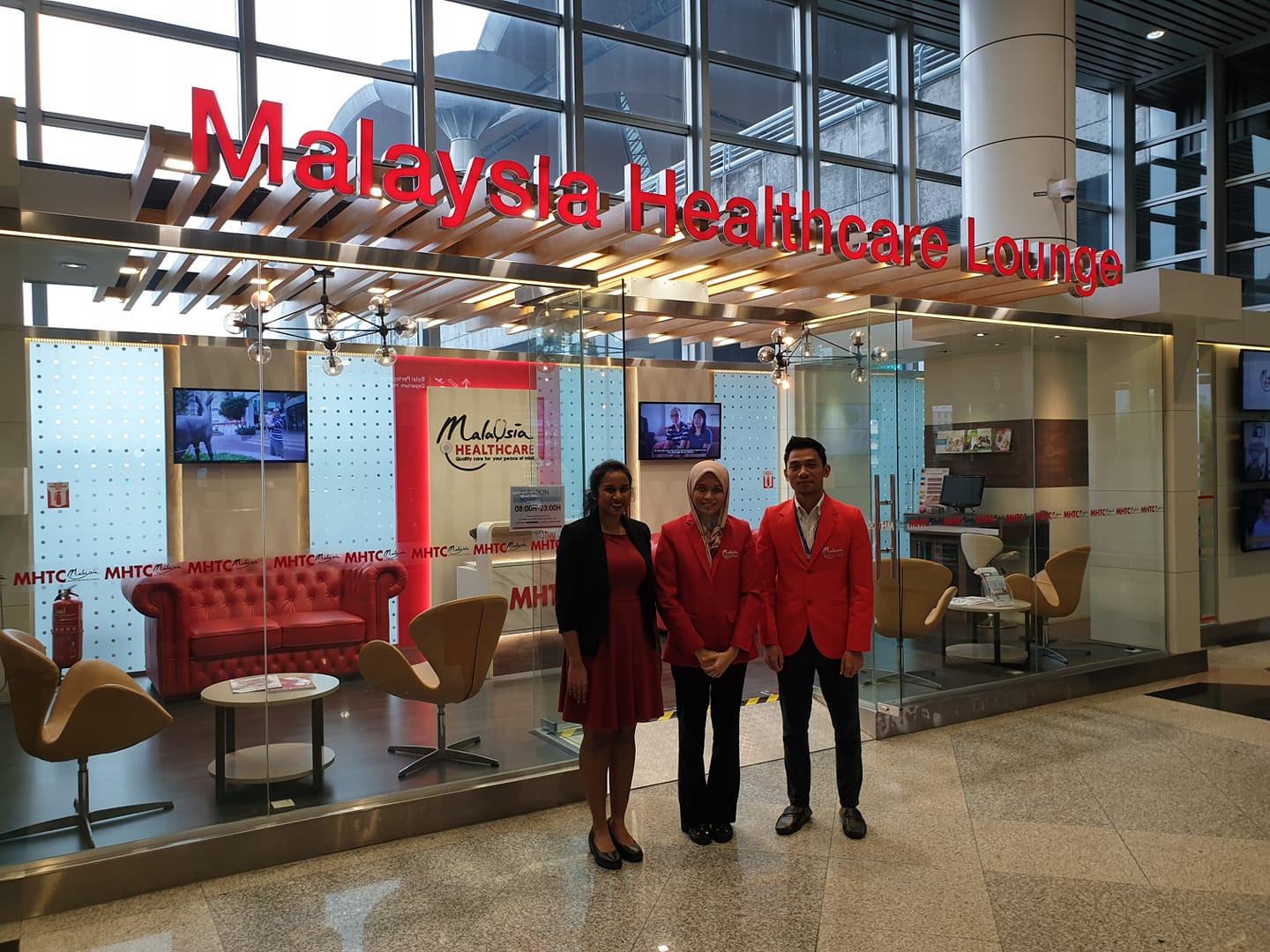
Sherene's fantastic presentation on how all the Malaysian stakeholders had come together in a public-private partnership to develop a national brand and deliver high-class product was beautifully delivered and left a lot of medical tourism stakeholders from Croatian looking on with envy. I was delighted to accept an offer of 5 days touring Malaysia and some of its medical facilities as part of my trip.
One of the things that impressed me about Sherene's presentation was the efforts Malaysia is putting into patient comfort and ease of travel. Apparently, they had a fast-track passport procedure for medical tourism guests, even a dedicated medical tourism arrivals hall, from where transfers, including wheelchair assistance, are there to facilitate immediate transfer to the clinic. Although my destination was the hotel and not a clinic, the smoothness of transfer and hospitable welcome was a great start after a long flight.
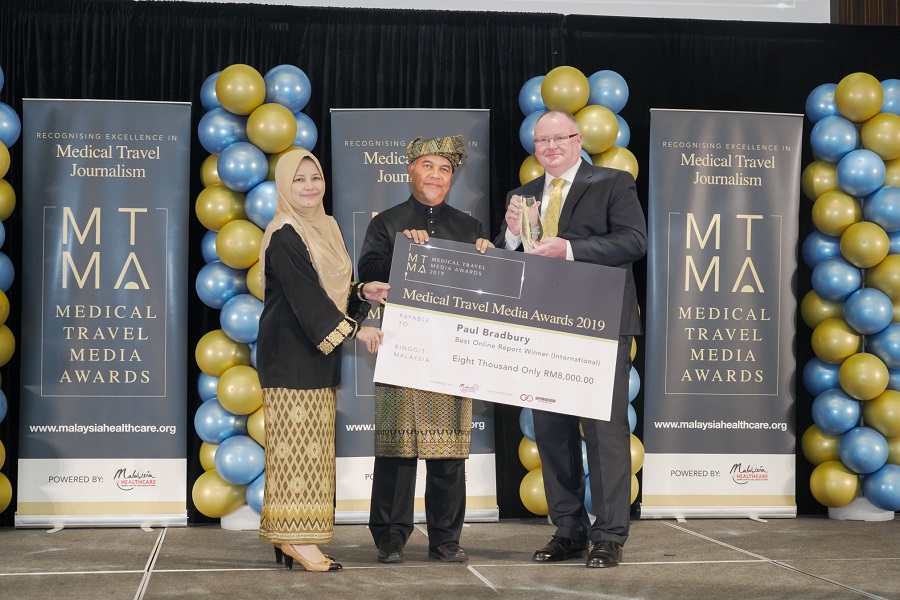
It was lovely to see Sherene again - she is a wonderful and very inspirational lady - and I certainly did not expect to in such circumstances. I certainly did not expect to win the award for Best International Online Feature, but I will take it - thank you!
And while it was obviously nice to win some journalistic recognition, I was actually more keen to see Malaysia itself and learn more about its medical tourism industry. Over the coming weeks, I will be publishing a few articles on some of the initiatives going on in Malaysia, from the fascinating work at the Malaysia National Heart Institute in Kuala Lumpur, to niche tourism concepts that I had never heard of before, such as dialysis tourism.
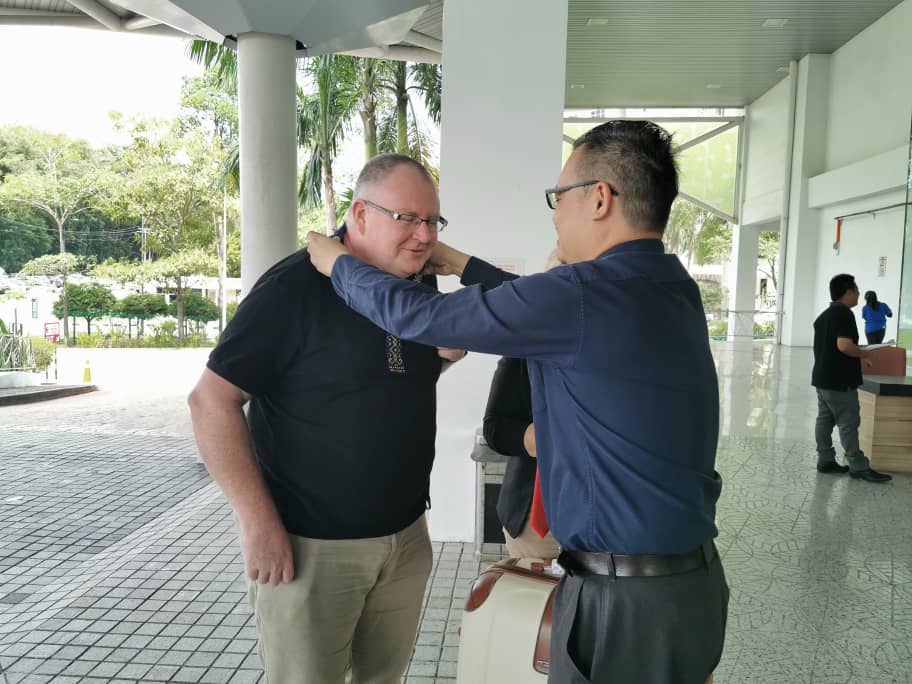
Yes, dialysis tourism. The first time I heard the term 'dialysis tourism' was shortly after arriving at KPJ Sabah in Kota Kinabalu, the first clinic to introduce it to Malaysia.
My association with medical tourism is now about two years old, and although I have learned a lot following the potential of the medical tourism industry, I have much more still to learn, and so trips like this are a real education. There is a lot of rubbish written about medical tourism, and a lot of generalities. It was when reading IMTJ editor Keith Pollard's blog about an article I had written about Zagreb's strategic plan which got me thinking about niche medical tourism a little more. In the article, he wrote:
The services to be promoted are listed as:
Dentistry, cosmetic surgery, cosmetic/aesthetic services, ophthalmology, internal medicine, orthopaedics and executive health checks. Well, that’s seven services embracing a plethora of healthcare activity. In which of these does Zagreb have real strengths?
49 market niches. Seven markets, seven very broad services. That’s 49 market niches. E.g. Let’s sell:
Executive health checks to the UAE. Ophthalmology to AustriaOrthopaedics to Russia…and 46 others. Of these 49, which should Zagreb pursue and which are the priorities?
Malaysia's health tourism industry is much more cohesive and developed than back home in Croatia, and there is plenty to learn and replicate, such as identifying and developing niches.
Why dialysis tourism, and why only in Sabah, on the island of Borneo? The very helpful team at KPJ explained that while Indonesia is the main market for medical tourists, they were also looking to attract the wealthy medical tourists from Brunei, which has sufficient dialysis needs to make it an interesting market. That, as well as the fact that the lack of reliable and available dialysis facilities for tourist use means that travel options for people needing dialysis treatment - and their families - is extremely restricted.
What if those high-quality facilities were made available in a top tourist resort such as Sabah, affording a new freedom of travel and tourism experience for those on dialysis, and their families? The concept made complete sense when it was presented, and a quick Google search afterwards showed that while dialysis tourism in Malaysia was not unique, there were actually relatively few places offering it. Indeed, looking at IMTJ listings for dialysis tourism yielded just one listing, in the UK.
But KPJ Sabah is not content with just offering basic dialysis tourism - there are also sessions of dialysis kinesiology, a concept which was also new to me. Rather than embarrass myself trying to explain, why not learn more from a professional - Dr Kenneth Wu with the video explanation above.
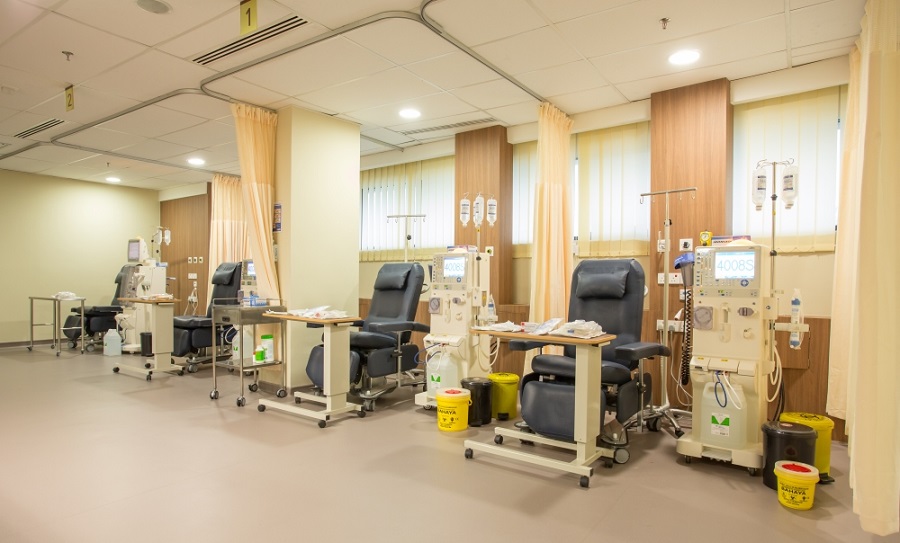
And KPJ Sabah is not alone in its dialysis tourism offer. Gleneagles opened recently in Kota Kinabalu and is also offering dialysis tourism - here is their dedicated room, above.
And there is certainly market potential. According to Kidney.org:
Over 2 million people worldwide currently receive treatment with dialysis or a kidney transplant to stay alive, yet this number may only represent 10% of people who actually need treatment to live.
Of the 2 million people who receive treatment for kidney failure, the majority are treated in only five countries – the United States, Japan, Germany, Brazil, and Italy. These five countries represent only 12% of the world population. Only 20% are treated in about 100 developing countries that make up over 50% of the world population.
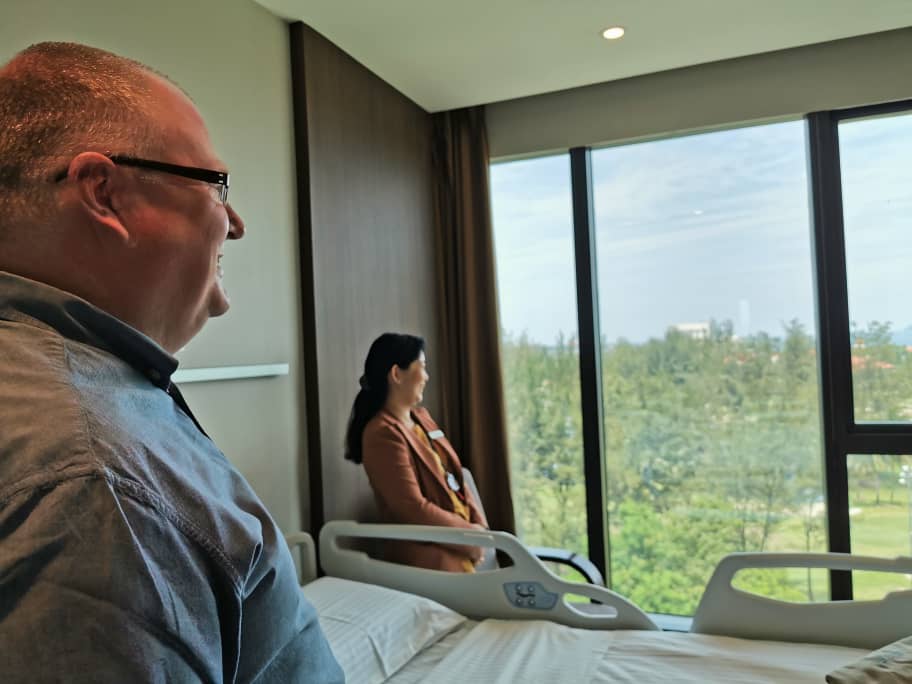
The facilities in both centres were excellent, and the accommodation was extremely clean and comfortable, with lovely views - especially for golf lovers at Gleneagles - an 18-hole course awaited at the end of the garden.
It is certainly niche tourism, but an interesting concept to develop, and certainly one which could bring new freedom to those reliant on dialysis treatment.
And if you are looking for a spectacular destination to explore with the knowledge that your dialysis needs are covered to a very high and professional standard, Sabah is stunning. Check out the video below for a flora and fauna rain forest feast. Highly recommended.
To learn more about dialysis tourism and other medical tourism options in Malaysia, visit the Malaysia Healthcare Travel Council website.
Outlook Origins Festival Announces Curators, New Location and 2020 Dates
November 22, 2019 - The new Outlook Origins music festival will take place at The Garden Resort in Tisno next summer.
Outlook Origins will be music for the heads. For 2020, the festival line-up is being carefully curated by a handful of the scene's most influential artists and tastemakers such as Goldie, Flava D, Mala and more.
After a decade establishing itself as the most iconic and essential bass music event in Croatia, 2020 sees Outlook Festival open an innovative new chapter with the announcement of Outlook Origins. This all-new proposition for 2020 takes place across three special locations; The Garden Resort in Tisno for the main festival, world-famous Barbarella's for after-parties and St Michaels Fortress for an all-new and very special opening concert. Spanning genres in unprecedented style, Outlook Origins celebrates the best in drum & bass, dubstep, grime, garage, reggae and beyond with 12 world-renowned pioneers. Calibre, Goldie, Lenzman, Zed Bias, Mala, DJ Storm, Flava D, D Double E, The Bug, Iration Steppas, Fliptrix and Mungo's Hi Fi curate this special edition. Taking place from 30th July–4th August, it will reinforce the foundations on which the festival was built over 10 years ago and final Early Bird tickets are available now for just £120 +BF.
Jamie Crumpton
Over those years, Outlook has become known as an international community of like-minded music-fans who keep the celebration of sound system culture alive. It has built a reputation for offering the very best in bass music from big-name pioneers, red hot new talents and everything in between. The Outlook Curators will continue in that tradition as they represent the full spectrum of music you’d expect to find at Outlook from forward-thinking artists, pioneering labels and unconventional promoters.
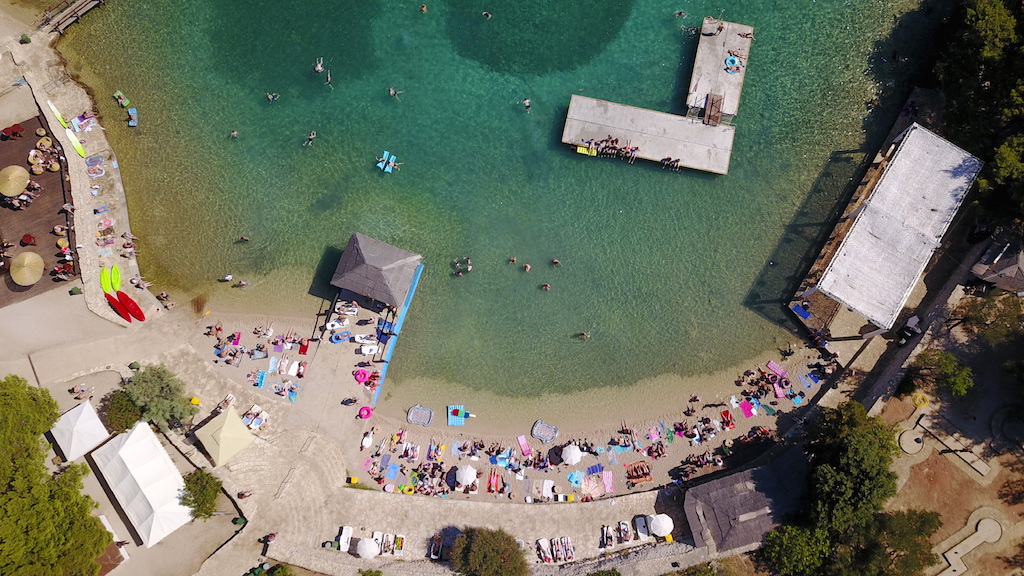
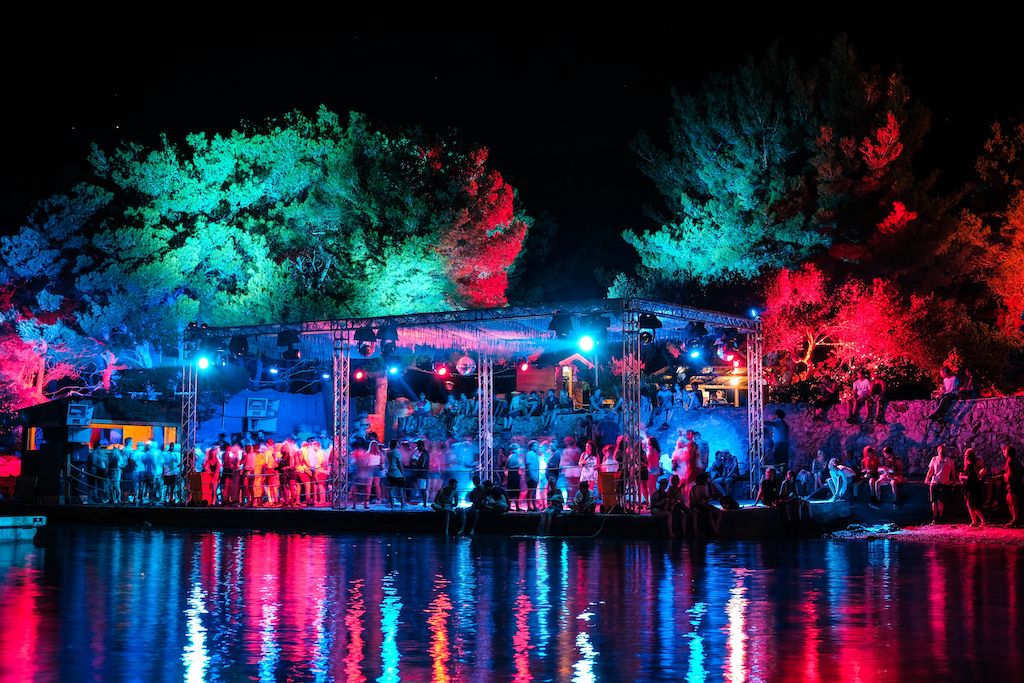
The breathtaking natural bay of The Garden Resort in Tisno will be one of the settings for this year’s series of epic parties. The idyllic beach plays host to daytime beach parties unlike any other, while the infamous outlook boat parties set sail from the harbour, with lots more to be announced. Unique for Outlook Origins is the all-new opening concert in 2020, which takes place atop a fortress in Sibenik just a short drive down the coast. More will be revealed soon on that one, but for the after-parties, the world-famous Barbarellas open-air club nearby will offer plenty of opportunities for festival-goers to soak up the sound of their favourite artists, all powered by Leed’s famous Sinai sound system.
And so to the curators: an essential feature of Outlook for over a decade, it’s only right that Metalheadz head honcho Goldie is among the tastemakers joining Outlook Origins. The maverick innovator – who helped write the future of the jungle scene with landmark releases that still sound like they were kidnapped from tomorrow – has an assured reputation as one of the UK's most legendary, and lively figureheads. His Metalheadz boat parties and stage takeovers are the stuff of Outlook legend so his special touch on the 2020 programme is hugely anticipated.He is joined by long-time associate DJ Storm who made waves alongside her great friend and DJ partner Kemistry. Back in the nineties, the duo helped establish the legendary status that Metalheadz still carries today after Goldie built up label around them. To this day, Storm leads the charge for female DJs worldwide and is a true trailblazing force of nature.
Then comes The Bug, the man who mixes up dancehall, noise, grime, hip hop and dubstep into his own twisted, rib rattling new forms on labels like Ninja Tune, Hyperdub and Soul Jazz Records. A famously uncompromising artist who brings aggression, masochism, intensity and tension to his sets, he is never one to be missed. Fellow pioneer Mala has featured at Outlook Festival since day one and stands as one of the most respected artists in the game. Stirring dubstep’s musical melting pot with its most primal ingredients before it even had a name, Mala was a founding member of DMZ as well as founding one of dubstep's most established labels: DEEP MEDi. His history is tied up with Outlook so his input in 2020 is special indeed.
The North Quarter head honcho Lenzman also joins for the 2020 edition with his unique brand of drum & bass, which remains simultaneously soulful and uplifting while offering ravers a heavy-dose of bottom end. A true fan of samples, with a passion for drawing out the musicality in his selections, you’ll often hear hip-hop cuts and odes to the old school sliced within his sets. Another Outlook Festival regular and artist from the soulful end of the spectrum, Calibre is one of bass culture’s most enduring artists. Forging his own distinctive brand of drum and bass with the introduction of lyricism, Calibre has consistently pushed boundaries. A true forward-facing producer, he dips drum and bass into everything from dub to techno, house to ambient and jazz and soul and the results speak for themselves: having arguably contributed some of drum & bass’ biggest anthems.
Nicholas Leer
Out representing the explosive area where garage, grime and bassline music intersects, Flava D is one third of TDQ alongside Royal T and DJ Q, and an essential member of the influential Butterz label; she stands as one of the most important producers in the worlds of bass and garage, embodying the future of UK bass music. An innovator of the UK grime scene, the unmatched D Double E is one of the original artists to cultivate the genre from the roots of jungle, drum and bass and garage. Fusing elements of dancehall, jungle beats and rap into his verses, he represents the true origins of grime so there’s no one who does it quite like D Double E. Next is Fliptrix, one of the most exciting and significant artists when it comes to his contributions to UKHH. The multifaceted artist is considered to be one of the hardest working heads in the scene with his focus as a solo artist also shared with being one-quarter of acclaimed outfit The Four Owls (Big Owl) and the Managing Director of High Focus Records (Zander).
Also joining will be UKG stalwart, broken beat fanatic, dub connoisseur Zed Bias who has rightly earned his status as UK legend, an indisputable originator in his own right but also as a long-standing member of our Outlook family, as well as world-famous Glaswegian selectors Mungo’s Hi-Fi from the Scotch Bonnet label and Iration Steppas, whose sound is incomparable: melding “dubs inna year 3000 style” alongside Roots, Reggae, Dancehall and everything in between.
This is an innovative and exciting new development in the rich history of Outlook that once again promises to be the best place on the planet to experience all forms of bass music.
For more information, visit the Outlook Origins website.
To read more about lifestyle in Croatia, follow TCN's dedicated page.
Iločki Podrumi Present Their Innovative Graševina from the Adriatic
Iločki podrumi, a winemaking company from the eastern Croatian town of Ilok, invited Total Croatia News to the presentation of their innovative wine - Graševina from 2011, which has been kept underwater for a year.
We wrote about the Vino i vruja event, and you can read more about it here.
The presentation of the wine was held in Matiz bar in Zagreb, a day before the VINOcom festival, and it included the tasting of the "ordinary" Graševina Velika berba 2011 ("Big Vintage"), followed by the tasting of the same wine which has been kept underwater for a year.
Graševina Velika berba 2011 is an exceptional vintage of the Graševina from 2011, when the winemaker Vera Zima recognised the ideal conditions for the vintage and decided to make a great wine from it, destined to be kept for a long time and be cherished. She put some of it in the ideal conditions of the old cellar built in 1450, where it was held at a constant temperature of 14°C. It was first introduced to the Croatian market in 2015, and it has won many awards and compliments, as it is often said that it's the best vintage of Graševina ever made in Croatia. It's a mature Graševina from the Danube river region, luxurious, full of flavour, wonderfully varietal but with amazing tertiary aromas present.
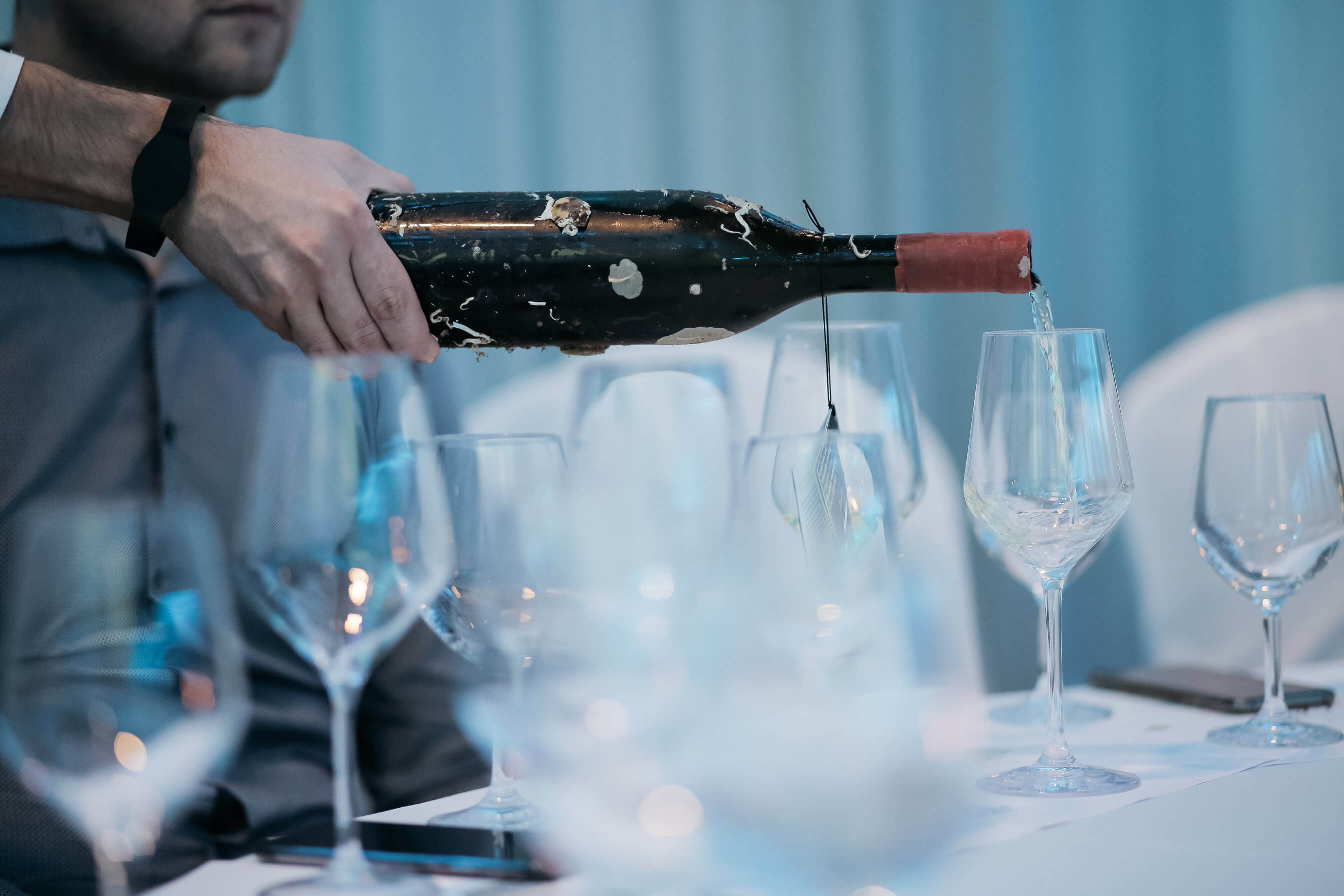
Then, last year, a decision was made to experiment with that fantastic wine, which has been developing wonderfully in the bottle and put some of the bottles into the Adriatic, and not just anywhere, but in a location near freshwater wellsprings, where the temperature is almost constantly at 7°C.
After a year spent in those conditions, the 1,100 bottles were taken out, and journalists and partners were given the rare opportunity to taste it. The first thing you notice, after having tasted the version of the wine which wasn't submerged, is that the underwater version, dubbed "Wine with a touch of the Adriatic" (Vino s dodirom Jadrana) is different.
Davor Butković, a prestigious Croatian wine journalist, said that the wine tastes as if it has gone through a facelift while in the sea, and the others agreed with him. Karmela Tancabel, a member of the Board of Iločki podrumi highlighted the intense bouquet of the wine, its minerality and freshness, and how the wine tastes younger than its counterpart. Saša Špiranec, a Croatian wine expert, mentioned that you could almost feel the sea in this wine, although it obviously never came in direct contact with the sea.
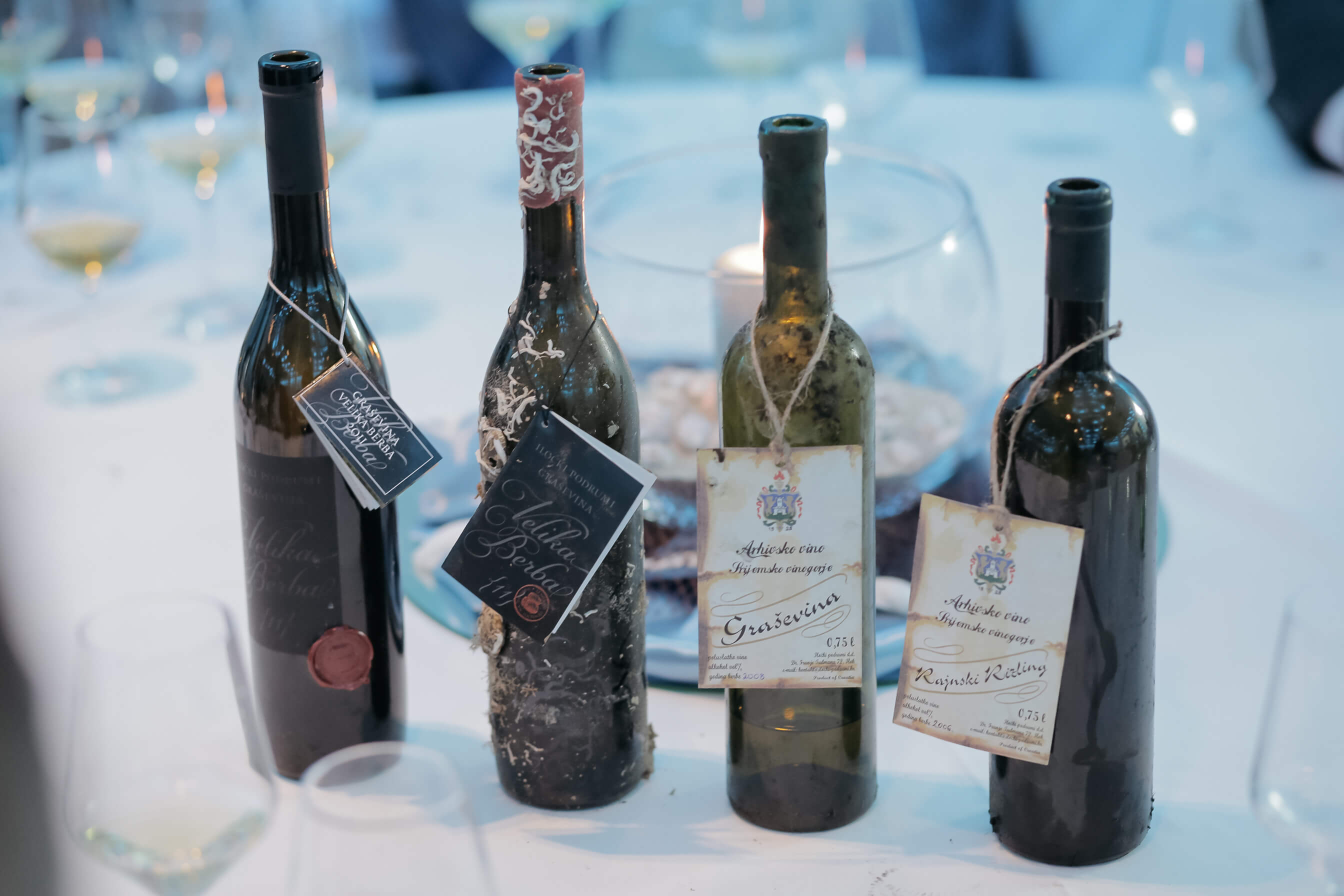
After that, our hosts surprised us with two additional wines from their archives, the fantastic 2008 Graševina with an amazingly long aftertaste and the strong potential of even further aging in the bottle and a fabulous sweet Rajnski Riesling from 2006, which tastes like most delicate apricots and honey and pure joy. Those two wines were presented by a young, "next-generation" enologist, Marko Marko.
If you decide to visit VINOcom, don't miss the opportunity to taste some of the Iločki podrumi wines!
Last Year Individuals and Companies in Croatia Donated 9 Million Euro
ZAGREB, November 22, 2019 - Last year about 9 million euro was collected from 2,632 donors - individuals usually donated for health care while companies donated to the non-profit sector, a panel discussion heard on Thursday.
An analyst from the Catalyst Balkans philanthropist foundation, Zorana Brozović, explained that the foundation has monitored data about volunteer charity campaigns in Albania, Bosnia and Herzegovina, Montenegro, Kosovo, North Macedonia, Croatia and Serbia since 2013. These donations do not include those by state institutions nor those by religious institutions, she added.
Brozović underlined that the funds collected in various campaigns were balanced and not centralised to the capital city, and that this is particularly pleasing.
"There hasn't been any great oscillation seen over the past three years when we talk about donations collected. Last year we recorded 2,623 individual donations of 8.9 million euro," she said.
Highlighting that the foundation collects information on individual donations, she added that available sources indicate that a lot of donors wish to remain anonymous.
"Most donations are made by companies and they usually donate to the non-profit sector, as much as 66%," Brozović explained. When it comes to donations by individuals, Croatians mostly donate for health care (40%) and marginalised groups (33%). This includes the disabled, intellectually handicapped, women and children who have suffered violence, and the aged.
However, in Serbia and Bosnia and Herzegovina an increased involvement of citizens has become obvious and more money is being collected at charity events, whereas in Croatia companies are the biggest donors (51%).
Brozović believes that the media do not cover that segment enough and said that last year the foundation recorded 9,678 media reports on charities, mostly in national media.
A reporter for the HRT national broadcaster, Maja Sever, said that it was worrying that the media don't show sufficient interest in the topic of altruism. She recalled that after 15 years HRT removed the "Croatia Live" TV show and added that these topics need to be worked on systematically and not as individual stories.
More news about charity efforts can be found in the Lifestyle section.
Culture Minister Presents Croatian EU Presidency Priorities in Brussels
ZAGREB, November 22, 2019 - Culture Minister Nina Obuljen Koržinek presented the priorities of the Croatian EU presidency relevant to her department at a meeting of the EU Education, Youth, Culture and Sport Council in Brussels on Thursday.
Speaking to the Croatian press after the meeting, she said that during its EU presidency in the first half of next year Croatia would organise a conference on risk management in the conservation of cultural heritage.
"It is an important topic in the context of climate change and other risks to heritage. What has been going on in Venice in the last few days shows how important that is," Obuljen Koržinek said, referring to the flood threatening Venice.
Croatia will also organise a conference on media literacy, in late March or early April. "That is a topic for the future, how to teach young generations to use the media and social networks, to behave responsibly and become resilient to fake news," the minister said.
Also discussed during the Croatian EU presidency will be mobility in the cultural and creative sector.
Croatia has prepared a varied cultural programme that will be presented in the EU member states and other countries in the first half of 2020.
"The programme provides a very good overview of our rich heritage as well contemporary artistic content, including music, theatre and exhibitions. I believe we will use these six months well to bring Croatian culture closer to the public across the EU and in Brussels," Obuljen Koržinek said.
More culture news can be found in the Lifestyle section.
Plenković, Varadkar Talk Brexit, Croatia's Role as EU Chair
ZAGREB, November 22, 2019 - Prime Minister Andrej Plenković and his Irish counterpart Leo Varadkar met in Zagreb on Thursday and talked about Brexit, which could happen during Croatia's EU presidency in the first half of 2020, and preparations for negotiations on future UK-EU relations.
We are confident that Croatia will do an excellent job as EU chair, Varadkar said.
Croatia is taking over the presidency at the beginning of 2020, in the year when Brexit could really happen, he added. Britons are going to the polls on December 12 and if incumbent Prime Minister Boris Johnson wins, Varadkar expects the deal to be ratified soon.
Whoever becomes prime minister and forms the government, we will gladly sit down, listen and work with them, he said, adding that regardless of the election result, he could tell the Irish that there would be no hard border between Ireland and Northern Ireland.
Brexit doesn't end with the United Kingdom's exit from the EU but enters the next stage, negotiations on trade, security and political partnership with the UK, Varadkar said.
We expect the withdrawal agreement to be ratified soon and to launch negotiations on future relations, said Plenković. He recalled that if Brexit happened, the EU's Brexit negotiator Michael Barnier would become negotiator for future EU-UK relations.
The UK has been given another Brexit delay until January 31.
Plenković said that reaching an agreement on future relations by the end of 2020 was very ambitious but not impossible because "where there is a will, there is a way."
The two prime ministers also talked about the EU's 2021-27 budget, enlargement and EU membership prospects for Southeast European countries, which will also be the focus of Croatia's presidency.
The European budget should be appropriate and support long term successful policies, such as the cohesion policy as well as the common agricultural policy, which is very important for our rural communities, said Varadkar.
More news about relations between Croatia and Ireland can be found in the Politics section.
Forska Liga: Hvar Has World's Most Football Clubs Per Capita (and a Great League!)
November 22, 2019 - It has a football club for every 1108 inhabitants, a highly competitive league, and a football tradition dating back to 1913. Meet football on Hvar and the Forska Liga.
1911 is an important date in the history of Croatian football. For it was in this year that a few Croatian students in Prague went for a few beers in a pub called U Fleku and decided to form their own football club.
And so Hajduk Split, easily the most famous Croatian football club (and a club with arguably the most fascinating history in the world) was born.
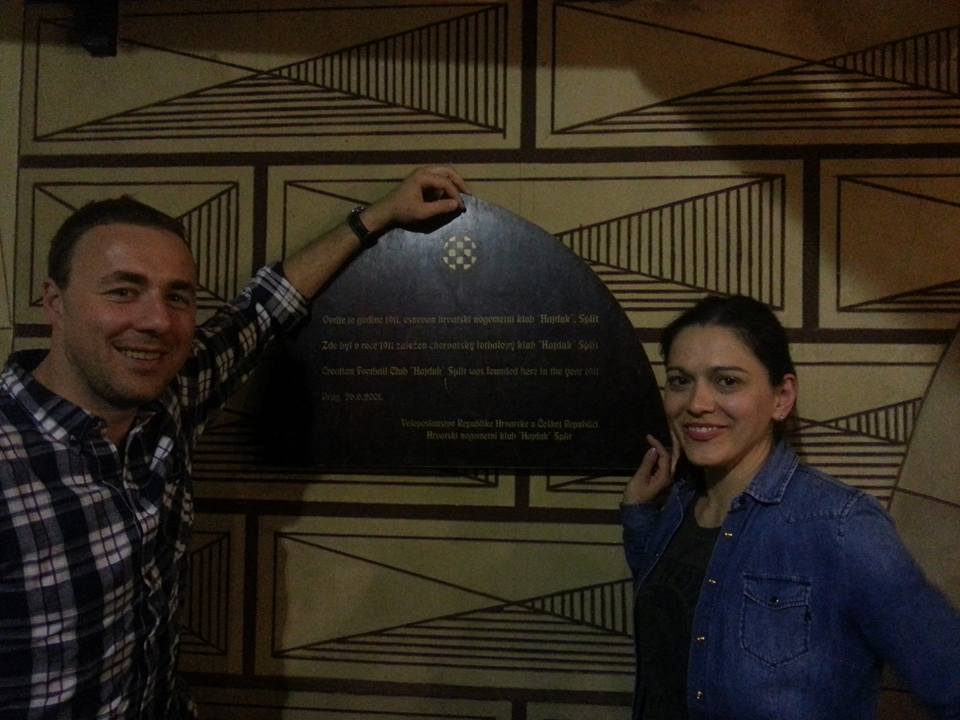
The club - and the pub - still exist today, and a plaque commemorating the event still exists today. It has become a must-visit for all Hajduk fans, and I am very grateful to former Croatian National Tourism Board director in Prague, Jelena Bilic, and her lovely new husband (congratulations!) for taking me on the pilgrimage back in 2016.
But a date which is not quite as widely celebrated was two years later, 1913, for that was the year that the football tradition on the island of Hvar began with the founding of two clubs in Stari Grad, Balkan and Nois. A tradition which would take root to such an extent that a century later, as Hajduk spectacularly celebrated 100 years of existence (see the incredible scenes from Split in the video below), Hvar was also able to claim something incredible - not only a fully functioning island league called Forska Liga (For is the dialect word for Hvar), but the biggest number of football teams per capita in the world. An amazing one football team for 1100 people according to the 2011 census.
The Forska Liga did not start until 1969, having been made possible with the new road to Sucuraj, but there was an incredible number of football teams on such a small island before that, as this table from Island Hvar Info shows.
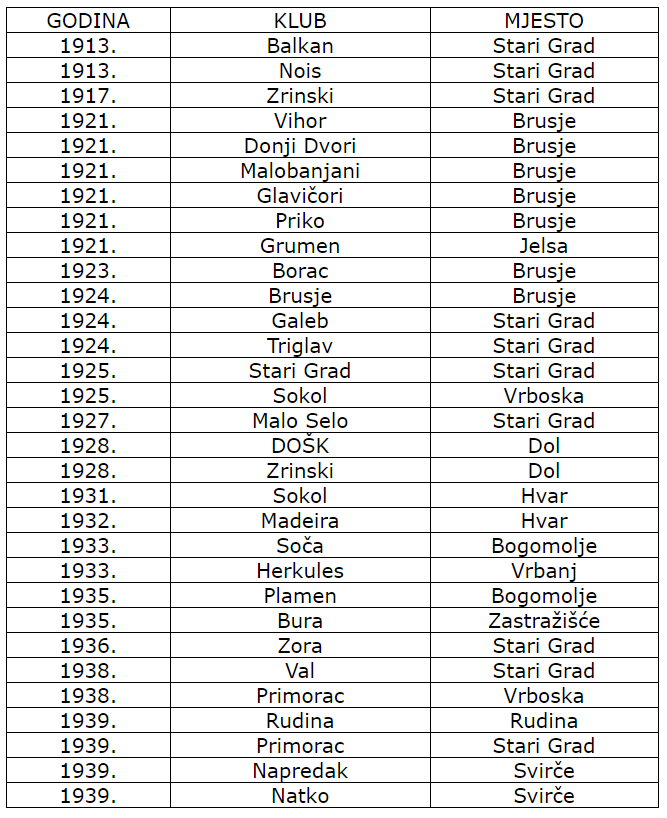
Five clubs from the village of Brusje in 1921 alone! Incredible.
The culture of competitive football on Dalmatian islands grew, and there was a competition in 1963/4 season which finished like this:
1. Hajduk Vela Luka
2. Omladinac Lastovo
3. Hvar
4. Brodograditelj Korčula
5. Zmaj Blato
6. Jadran Smokvica
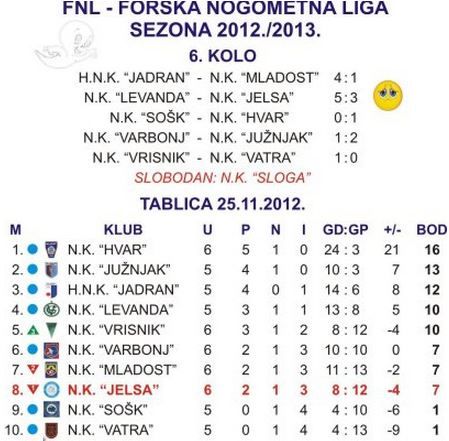
These days, and particularly after the Homeland War when the Forska Liga restarted, things were much more organised. I don't know how many island leagues there are in the world, but I suspect not many. The Forska Liga takes place during the winter months, after the grape harvest and before Easter. There are currently ten clubs, who play each other home and away. Apart from the football, this is a very social event which brings islanders together during the long winter.
And the footballers' wives play their part too. I have one such friend, who told me that the wives have the 'honour' of taking it in turns to wash the muddy football strips after every game.
When I started Total Hvar several years ago, I used to follow the Forska Liga quite closely and would always publish the results and table as soon as possible to get ahead of the other local portal. You can keep up with the latest on the Forska Liga on this dedicated Hajduk forum.
The Total Hvar coverage was not the only interest in the Forska Liga at that time. The 2011 season even had its own documentary, as Hvar TV followed the story of NK Levanda from Velo Grablje, a village with a population of just 5, but with its own football team (players came from Hvar and Split with family connections to Velo Grablje). Incredibly, Levanda won the league, the perfect end to the story of the documentary, the trailer of which you can see above.
The 2011 census recorded a population of 10,948 on the island. This means that there is a football club for every 1100 inhabitants, which is surely the densest population in the world. And indeed, the number was even lower, as two teams from Pitve and Sveta Nedjelja stopped playing in recent years. Current teams are:
“Hvar” from Hvar Town, “Jadran” from Stari Grad, “Sloga” from Dol, “Jelsa” from Jelsa, “Varbonj” from Vrbanj, “SOŠK” from Svirče, “Levanda” from Velo Grablje, “Vatra” from Poljica, “Vrisnik” from Vrisnik, and “Mladost” from Sućuraj.
The oldest team still playing is Jelsa, which has changed its name a few times since its founding in 1921. But that means that 100 years of Jelsa football tradition will be marked in 2021 - how will that be celebrated?
Amazing stuff, but did you also know that this very sporting island also had its own women's football league as well. The Hvar women's 5-a-side league ran from 2003-2010, and had an impressive 11 teams at its peak. Learn more here.
To learn more about the amazing island of Hvar, check out the Total Croatia Hvar in a Page guide.
Why Are Croatian Teachers Striking? Most Important Questions Answered
Unless you've been living under a rock, you've likely heard that Croatian teachers are striking. While the reasons for that might seem obvious to some, there has been quite a considerable amount of misunderstanding as to exactly why this is taking place, or how it managed to reach the levels it has in the first place. Here are the most important questions about the Croatian teachers' strike - answered.
As Jutarnji/Marijana Cvrtila writes on the 21st of November, 2019, the strike of Croatian education employees has been going on for a while now, and the Croatian Government's obvious aversion to addressing numerous enormous issues that have been threatening this has been going on for a very long time.
Why did the education unions go on strike?
Due to the long-standing government neglect of the sector in which 68,000 Croatian primary and secondary school staff (and not only Croatian teachers) are seeing far smaller salaries than those employed in other types of public service take home every month.
More precisely, the coefficients of employees in education, according to union calculations, are about 6.11 percent lower than the coefficients of other public servants in the field of healthcare, social care, higher education, culture, etc., who work in jobs of a similar complexity of work.
What are education unions on strike seeking?
They are seeking an increase in the coefficients of all employees in the education system through the amendment of the coefficients regulation, which would increase their salaries by an average of 600 kuna gross, or 300 kuna net. Unions have so far indicated that they are ready to negotiate a payout dynamic, that is, they would accept the possibility of offsetting this coefficient over time, for example, to increase the coefficient by three percent immediately and another three percent early next year, or by some similar sort of model.
What is the Croatian Government offering as a solution to this issue?
The Croatian Government has been altering its offers to the unions so far, but none of them put on the table to date have aimed for a coefficient increase in the humble amount requested. In the conciliation process in early October, the government offered the unions the introduction of a special education allowance of four percent under the 2 + 2 model, the first part of which would be paid as early as October the 1st of this year and the second part (of two percent) from June the 1st next year.
When the unions refused that offer, Prime Minister Andrej Plenković announced a 6.12 percent increase in the base pay for all public and civil service employees from next year (education, healthcare, social care, culture, police, customs, government offices and ministries, etc.). and subsequently, educators were offered a two percent increase in their coefficients after the 30th of June next year if the government failed, in the meantime, to correct the regulation on coefficients in public services. With its latest offer, the government has turned that coefficient increase into a two percent increase since the same date, which was interpreted by the unions as an even worse offer, since such an increase would ultimately result in a smaller increase than the coefficient.
Why don't school unions want to accept the government's offer?
First of all, because for the growth of education employee coefficients of 6.11 percent, the state needs to allocate just over 400 million kuna annually, and the government has repeatedly insisted that they simply can't provide this amount. At the same time, they've announced a 6.12 percent increase for around 240,000 public and civil servants from next year on, which will cost the state budget about 1.7 billion kuna in total.
In addition, the growth of the base pay for education employees is not the same as the growth of coefficients because it doesn't eliminate the wage gap currently seen between education staff and those employed in other public services, it actually only deepens it.
How much does a working day for employees in education cost the state, or how much does the state actually lose if ''strike days'' are paid and the teachers aren't working?
According to the Ministry of Science and Education, the total gross daily cost for education employees costs the state about 30 million kuna, so that's the amount that is "lost" if all 68,000 education employees are on strike and have been paid during that strike. Croatian teachers' daily wages are on average 315 kuna.
Until when can the strike last?
The unions say that the strike will continue until the requirement for coefficient growth of 6.11 percent is properly fulfilled. As things currently stand, every school has been without teaching for over a week now, and the Ministry of Education proposes to compensate for this on Saturdays, by shortening the holidays or even by extending the school year.
It seems that each school will have to decide what they're going to do to balance things out on their own, and in some areas they have announced that this decision should be taken at the level of counties and cities, taking into account the staff members and how much time they spent on strike.
Make sure to follow our dedicated politics page for much more.
Beta Software Develops Communication Platform for Corporate Users
As Poslovni Dnevnik/Lucija Spiljak writes on the 21st of November, 2019, Croatian IT company Beta Software has developed a communications platform for corporate users. They recently introduced their application, Bizar, to the public after five years of developing and refining it.
Skyhighgrowth and BizDev Genius from Serbia and Zeromolecula and Aynclabs from Zagreb have joined the project in recent months, and the app is available today on all platforms, including Android, iOs and desktop. Company CEO Marko Čumbrek revealed how the application works and what makes it stand out in the proverbial "sea" of many similar ones.
Beta Software's Bizar application contains private and group conversations so that employees do not have to "exit" the application, as is usually otherwise the case, but have multiple types and levels of privacy for all projects.
The application boasts a Hidden option for ''hidden status'' messages, Private for private ones and Open and Public ones related to public projects. Within these messages, each project can be broken down into separate segments and access can be given to each individual or group that needs access to that part of the project or information.
"We can assign tasks to projects which need to be executed that are timed so that the application reminds you when and what task to complete, who should do it and for what project. It sounds complicated, but this is common in fast-moving companies that want to have everything under control,'' explains the CEO of Beta Software.
They are aware of the demanding path of market penetration, as companies such as Google, Microsoft, Slack and Monday are their strong competition, but they have still managed to come to grips with the competitive and demanding market.
Čumbrek points out that applications like Beta Software's Bizar are sought after on global markets where fast communication is absolutely imperative.
"In companies, saving time and the speed of solving tasks and projects is crucial today, especially if those companies have to separate themselves from the competition and win," Čumbrek adds. Among other things, they also offer rebranding applications, so any business can have a personalised Bizar application with their own name and logo on it. In translation; for larger clients, they also make the desired changes that competing companies, for example, don't offer.
"We're flexible because large clients and the market are asking for us to be like that. When you're like our competition, where each of them [those companies] is worth a couple of billion dollars, they have a lot of owners and some are on the stock market, you can't easily adjust and you're slower in acting and even in making decisions.
Of course, we had offers for some companies to initially be part of the Bizar project, but we didn't want to seek approval for every move precisely because you're typically very slow at the time.
Today, Beta Software has more than 40 external associates and four full-time employees based in Dubrovnik, where it was launched in 2007.
Make sure to follow our dedicated Made in Croatia page for much more.
Investments in Croatian Startups to Reach 120 Million USD in 2019
As Poslovni Dnevnik/Bernard Ivezic writes on the 21st of November, 2019, the largest VC fund investing in startups in the EU has announced that Croatia is the 20th largest in continental Europe in terms of investment and that its number of developers is growing. Investments in Croatian startups this year will reach a record 120 million US dollars according to Atomico, which is otherwise Europe's largest startup fund.
In an annual review of "The State of European Tech 2019", Atomico states that Croatia is twentieth in Europe in terms of received investments in startups.
This is the best description of the Croatian startup scene since the 2016 report, when Atomico put Croatia on the startup map of Europe for the very first time, and when it announced that 100 million US dollars had been invested in startups here between 2012-2016. Atomic's announcement for 2019 is even better when one considers that this year is not the largest by number of major startup investments.
Back in 2015, there were five in Croatia. A year later, there were ten, then eight, and then ten again last year. Atomico also released some information about business angels in Croatia for the first time. It states that in 92 percent of cases, they are men. On the other hand, it is interesting that in the neighbouring countries of Bulgaria and Macedonia as many as 24 percent of business angels are women. The majority of business angel women are in Switzerland, making up 27 percent of the total business angels in that country. In neighbouring Slovenia, that figure stands at 13 percent.
According to the largest startup fund in Europe, there are 35,300 developers in Croatia, making it the 28th country on the old continent. Needless to say, this is a very poor position indeed. However, Atomico has recognised that the number of developers is increasing, and there were 29,700 of them last year alone.
Infobip is expected to reach the status of a company worth more than 1 billion US dollars during the first half of 2020, finally placing Croatia on the list of countries with such companies operating within it.
In Europe, unicorn startups exist in as many as 20 countries. Atomico concludes that the largest communities of Croatian startups are located in Zagreb, Split and Rijeka.
Make sure to follow our dedicated Made in Croatia and business pages for much more.